BIO continues to rise; can longevity AI agents help revive DeSci?
TechFlow Selected TechFlow Selected
BIO continues to rise; can longevity AI agents help revive DeSci?
BIO has recently risen against the trend, as an AI-driven revolution in longevity research is quietly unfolding on-chain.
 Navigating Web3 tides with focused insights
Author: Nicky, Foresight News
The token BIO of Bio Protocol has recently performed impressively. According to Bitget data, the price of BIO rose from $0.056 on August 6, 2025, to a peak of $0.2081 on August 22, representing an increase of over 270%.
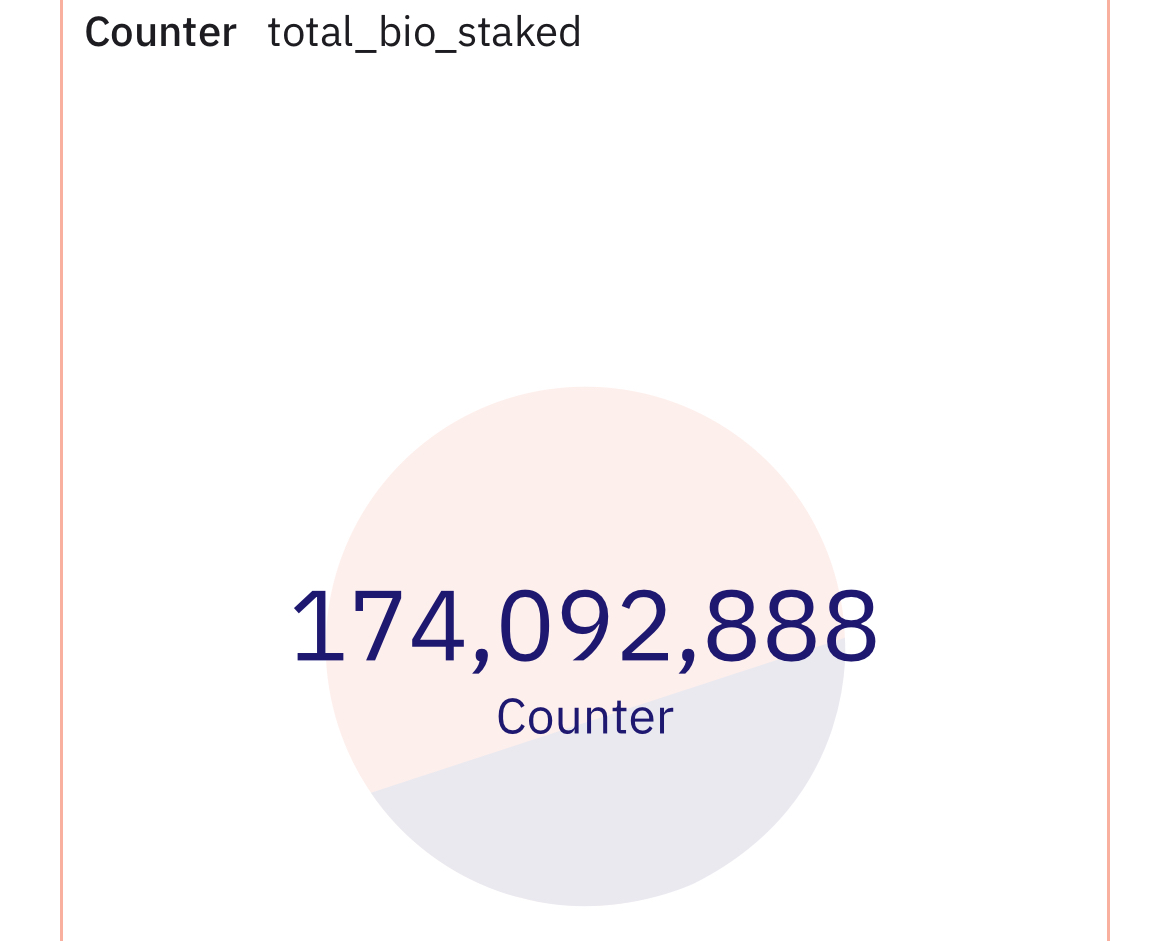
Currently, approximately 174 million BIO tokens are staked, accounting for about 9.3% of the circulating supply of 1.854 billion. Meanwhile, BIO is listed on several major exchanges including Binance, Coinbase, and Bithumb.
At the end of 2024, the DeSci boom lasted only a few months. After BIO's listing on Binance, its token performance was nothing short of a "disaster"—after reaching a historical high of $0.8 upon launch, it steadily declined, hovering around $0.05 by August 2025, down more than 90% from its peak. So what exactly caused BIO’s revival?
Tracing back to the project's origin, on November 8, 2024, Binance Labs (now YZi Labs) announced an investment in Bio Protocol. Although specific details were not disclosed, this move signaled mainstream capital’s recognition of the DeSci sector.
As a representative project in the DeSci space, Bio Protocol aims to "transform early-stage biotech research funding and commercialization models" by building a network of biotechnology DAOs.
Leveraging blockchain technology, it enables global scientists, patients, and investors to jointly participate in new drug development, addressing traditional pain points such as "concentrated funding in big pharma and closed-off research outcomes." It facilitates global participation in funding and co-developing new drugs, especially targeting rare diseases, longevity research, and emerging health issues.
On June 3, 2025, the DeSci project token PYTHIA began its upward trajectory, rising continuously from $0.0168 to $0.122 on August 14—an increase of 626%.
On July 31, 2025, Coinbase simultaneously listed two DeSci project tokens—BIO and RSC—marking the re-emergence of DeSci into the Western mainstream cryptocurrency market's spotlight.
Since then, VitaDAO’s token VITA has climbed from $1.17 on August 1 to a high of $2.22 on August 22, achieving an overall gain of 89%. Cerebrum DAO’s token NEURON also performed strongly in August, with monthly gains exceeding 180%. CryoDAO’s token CRYO gained over 200% this month, ValleyDAO’s token GROW rose 76%, and HairDAO’s token HAIR increased by 67.5%. Clearly, DeSci is recovering.
Aubrai: How Can AI Scientists Rewrite the Rules of Longevity Research?
In 2025, Bio Protocol accelerated its iteration. On August 21, Bio Protocol partnered with VitaDAO to launch Aubrai—the first BioAgent Launch project—marking the official rollout of its "decentralized research agent" initiative. The sale lasted only 24 hours, requiring users to stake BioXP and contribute BIO tokens to participate. AUBRAI’s TGE will take place on August 25.
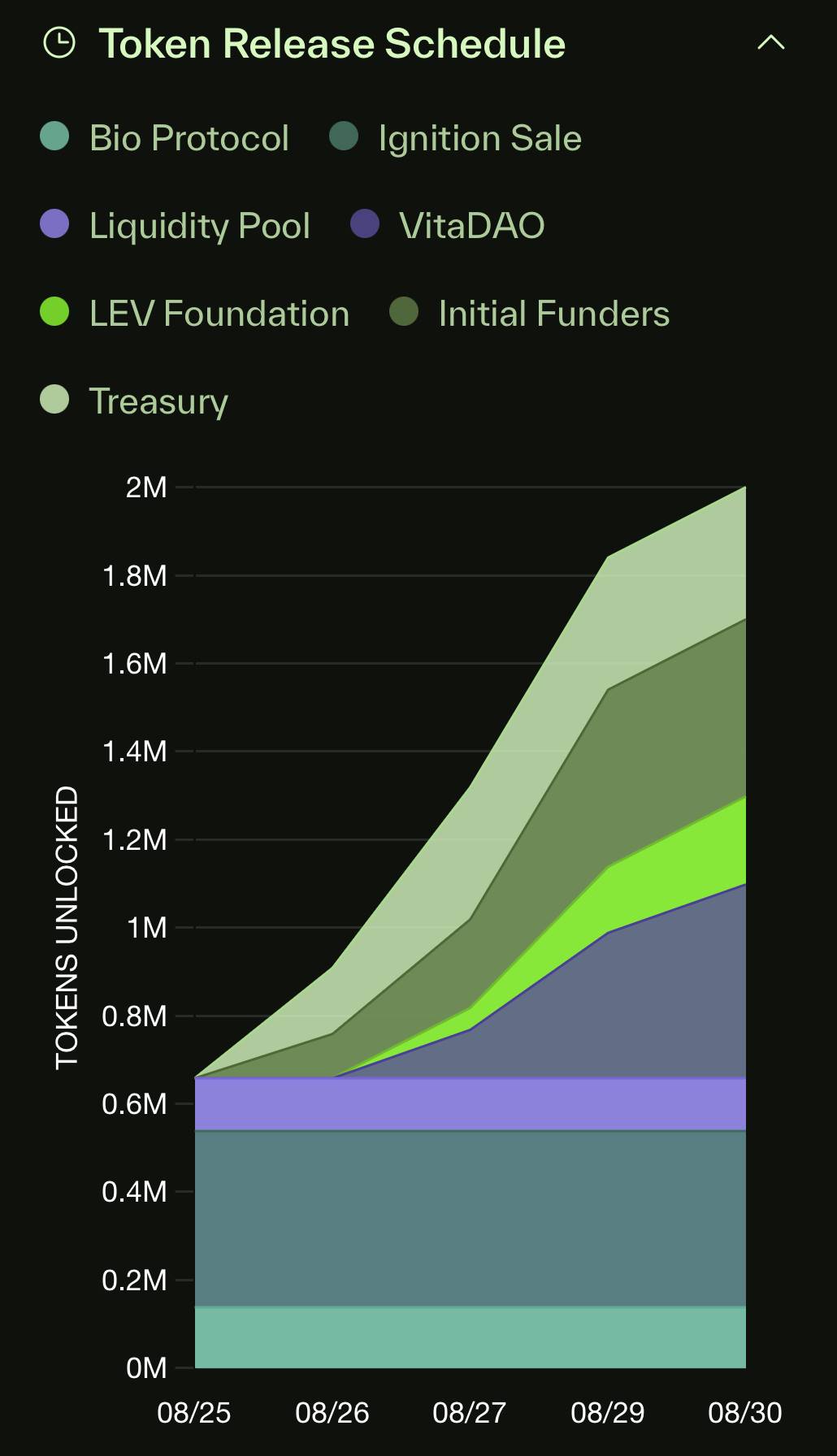
The tokenomics for AUBRAI have been released: total supply is 2 million tokens, allocated as follows: 20% for sale, 6% for liquidity pool, 15% to treasury, 20.1% to initial funders, 10% to LEV Foundation, 22% to VitaDAO, and 6.9% to Bio Protocol.
Aubrai originates from the private lab data of longevity research pioneer Dr. Aubrey de Grey, who proposed the Strategies for Engineered Negligible Senescence (SENS), aiming to prevent age-related diseases by repairing cellular damage caused by aging. He holds a bachelor’s degree in computer science and a PhD in biology from Cambridge University and authored books such as *The Mitochondrial Free Radical Theory of Aging* (1999) and *Ending Aging* (2007).
Dr. de Grey currently serves as Chairman and Chief Scientific Officer of the LEV Foundation. The foundation focuses on longevity research, with its flagship project “Robust Mouse Rejuvenation” testing combinations of late-stage interventions through large-scale mouse lifespan experiments. Conducted in collaboration with Ichor Life Sciences, these experiments emphasize damage repair approaches while avoiding gene modifications or other early interventions, accelerating clinical translation to humans.
Another LEV project, “Transplants on Demand,” explores tissue engineering and funds Keinice Bio’s cryopreservation technology using supercooled helium gas to achieve vitrification of organs. This avoids the toxicity issues of traditional cryoprotectants, aiming to provide “off-the-shelf” young organ replacements to combat organ failure due to aging.
The LEV Foundation also supports the Alliance for Longevity Initiatives, a 501(c)(4) nonprofit organization aimed at advocating U.S. government policy support for longevity research. By collaborating with experts, it raises public awareness about chronic diseases related to aging and seeks national-level funding.
Through these efforts, his private lab has accumulated thousands of unpublished research notes, internal experimental data, and collective knowledge across the global longevity field. These previously restricted “private research assets,” once accessible only to core team members, are now integrated by Aubrai as training data.
In practical applications, Aubrai has transformed de Grey’s team workflow. It manages over ten complex longevity studies, compressing manual review processes that previously took weeks down to just days. It identifies dosage conflicts, timing mismatches, and hidden biases—even uncovering new problems the team had not noticed.
According to the official roadmap, Aubrai has already received joint funding from Bio Protocol and VitaDAO for the RMR2 pilot study, aimed at validating candidate interventions and optimizing dosing methods. Community scientists can experience its collaborative capabilities as a “co-scientist” via the closed-test CHAT UI. Wallet integration supports self-custodial EOA wallets built on the Coinbase Developer Platform, featuring limited transaction authorization.
Future plans include launching semi-autonomous agents in Q4 2025 (integrated with Base AgentKit, supporting full transaction execution and financial autonomy), opening the FAILURE DB database (recording negative results and design flaws to avoid repeated errors), and ultimately achieving “fully autonomous research”—delivering end-to-end scientific output from hypothesis generation and experiment design to wet-lab execution and paper publication.
V2 Upgrade: Building an Efficient “Research-Capital” Cycle
The launch of Aubrai is made possible by Bio Protocol’s V2 upgrade. The V2 version adopts a “launch and grow” philosophy, enabling sustainable growth through a community-driven launchpad:
-
Low-valuation launch: Inspired by platforms like Pump.fun, initial project valuation is reduced to a $205,000 FDV, with 37.5% of tokens directly sold; each user can purchase up to 0.5% of the total sale allocation;
-
Sustainable liquidity: All raised funds (in BIO tokens) automatically generate an LP pool combined with 12.5% of the token supply. A 1% fee is charged on every secondary market transaction (70% to the project treasury, 30% to the protocol), creating a positive feedback loop of “increased trading activity → more research funding → accelerated progress → renewed market interest”;
-
Points-based incentive system: Users earn BioXP points through staking, governance voting, community outreach, and participation in new launches. Points can be used to secure allocations in low-valuation projects.
These mechanisms elevate Bio Protocol from a “research funding platform” to a “research ecosystem operating system,” solving not only funding challenges but also enhancing research translation efficiency through community incentives and automation tools.
DeSci’s “Long-Termism” and the Future
BIO’s market performance and the successful launch of Aubrai have brought the DeSci sector back into the public eye. However, the field still faces persistent challenges: long research cycles (even with Aubrai accelerating experiments, translating longevity therapies from lab to clinic still takes years), short market patience (crypto investors are accustomed to “quick surges and crashes”), and regulatory uncertainty (high compliance costs associated with human trials).
Regarding this, Binance founder Changpeng Zhao stated in an exclusive interview with Foresight News: “DeSci and meme coins are polar opposites. DeSci projects have long cycles, while the crypto industry’s investor attention span is generally short. Meme coins get all the hype, leaving such projects overlooked. But in the long run, their contribution to humanity and society is immense. I believe they will eventually succeed—it’s just uncertain when.”
Join TechFlow official community to stay tuned
Telegram:https://t.me/TechFlowDaily
X (Twitter):https://x.com/TechFlowPost
X (Twitter) EN:https://x.com/BlockFlow_News
 Foresight News