Web3 IP Financialization and a New Paradigm for Cultural Production: City Protocol Empowers Mocaverse Across Its Full Lifecycle
TechFlow Selected TechFlow Selected
Web3 IP Financialization and a New Paradigm for Cultural Production: City Protocol Empowers Mocaverse Across Its Full Lifecycle
City Protocol's empowerment is not only technical but also a strategic risk hedge, helping Mocaverse shift from short-term hype to long-term value accumulation.
 Navigating Web3 tides with focused insights
Introduction: Mocaverse’s Ecosystem Evolution and Market Signals
In the Web3 ecosystem, Mocaverse—Animoca Brands’ flagship IP—has evolved from a simple NFT collection into a multidimensional cultural and identity network encompassing the $MOCA token, Moca Chain blockchain, AIR Shop ecosystem store, and alliances with projects like Cool Cats.
This evolution is no accident, but rather the result of community-driven momentum and technological integration.
Recently, City Protocol’s deep collaboration with Mocaverse on the MOCASTR issuance delivered significant market signals.
MOCASTR, Mocaverse’s first IP Strategy asset, serves as a bridge between culture and finance, providing funding and allocation support to the ecosystem through treasury mechanisms. This explosive growth was not random—it stemmed from the cultural and dissemination energy injected by City Protocol’s IP Strategy framework, along with accumulated purchases of underlying assets.
On the day of issuance, Mocaverse NFT trading volume surged threefold, setting an all-time high. Simultaneously, City Protocol used its treasury to repurchase 48 Mocaverse NFTs, becoming the 14th largest holder of Mocaverse, further strengthening ecosystem support.
These dynamics not only boosted Mocaverse’s floor price (up 70% post-issuance) but also demonstrated the structural implementation of City Protocol’s “IP Strategy.”
Reflecting on this process, we can apply Pierre Bourdieu’s theory of cultural capital: Mocaverse’s symbolic value—such as its five tribes (Dreamers, Builders, Angels, Neo-Capitalists, and Connectors)—was originally abstract community identity, but under City Protocol’s framework, it has been transformed into accumulable economic capital. This transformation is not linear; instead, it operates via a flywheel effect, similar to Jeff Bezos’ growth model at Amazon: initial momentum is amplified cyclically, where cultural production drives dissemination, which in turn enhances financial liquidity.
Further consideration suggests that, if we set aside potential risks such as market volatility or regulatory uncertainty, this model could address the persistent liquidity weakness in the NFT market in recent years (global NFT trading volume declined by 30% in 2024), offering Mocaverse a sustainable growth trajectory.
City Protocol’s empowerment goes beyond technology—it represents a strategic risk hedge, helping Mocaverse shift from short-term speculation toward long-term value accumulation.
After the IP Strategy Launch: Building a Cultural-Financial Closed Loop
City Protocol’s core framework consists of a three-layer cultural-financial cycle:
1. Top layer: Strategic Finance Layer (MOCASTR Treasury)
2. Middle layer: Cultural Production Layer (Totem City)
3. Bottom layer: Dissemination & Attention Layer (Viral City)
This design draws strong inspiration from Chris Anderson’s Long Tail theory, leveraging digital tools to amplify niche IPs like Mocaverse’s tribal narratives into mainstream asset markets. The launch of MOCASTR marks Mocaverse’s formal integration into this closed loop: as the first IP Strategy asset, it not only provides a capital allocation mechanism but also injects foundational cultural momentum through Totem City and Viral City.
From a practical standpoint, the innovation of this framework lies in transforming IP from static assets into dynamic economic engines, further driving cultural network effects—where each doubling of community size leads to exponential value growth.
1. MOCASTR: The Liquidity Foundation Driving Mocaverse’s Perpetual Capital Cycle
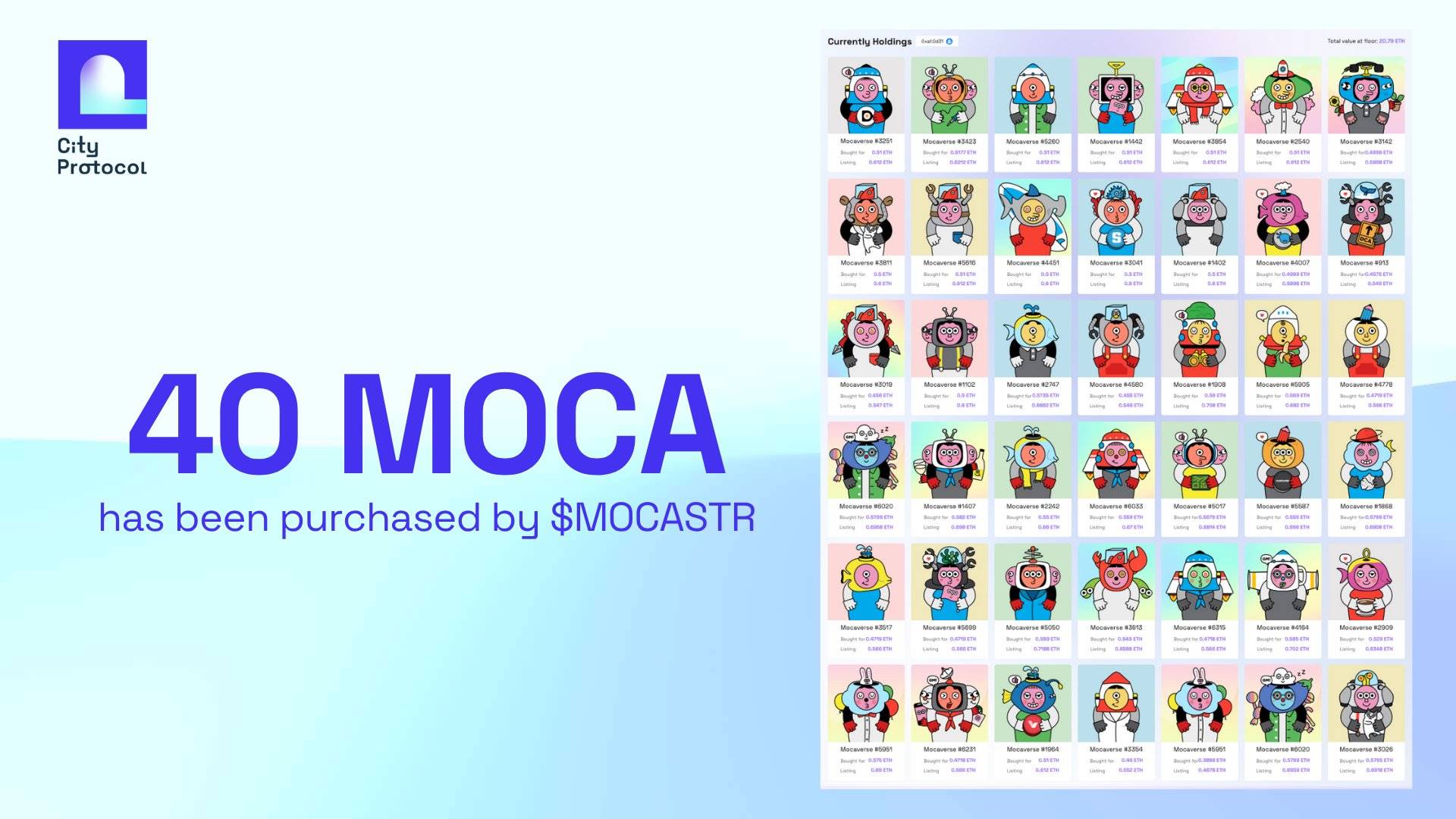
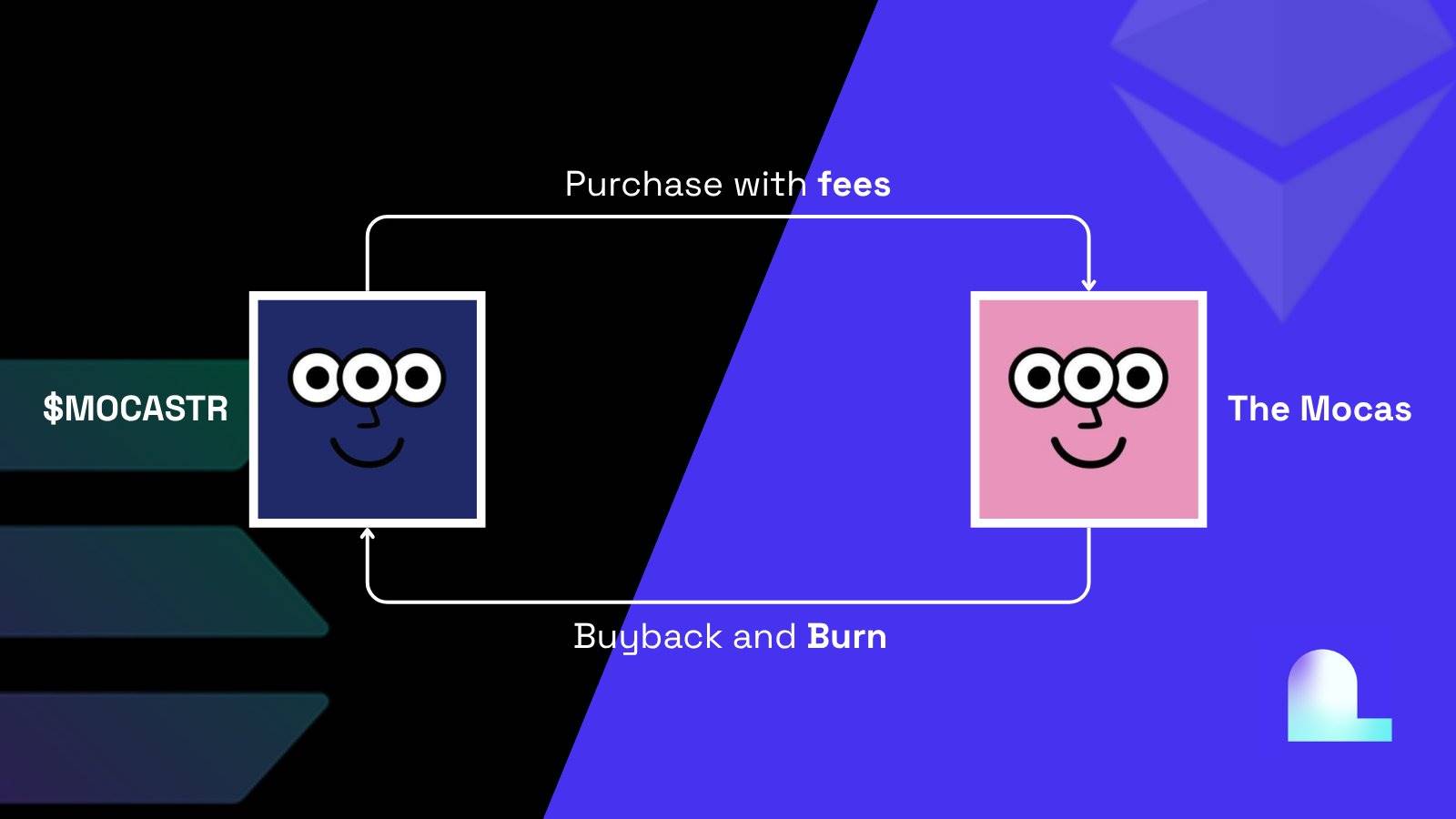
MOCASTR is the first on-chain tokenized Digital Asset Treasury (DAT) jointly launched by City Protocol and Mocaverse, designed to enable self-reinforcing growth of IP assets through an automated transaction fee mechanism. Its design directly addresses a key pain point in Web3: while RWA TVL exceeds $100 billion, IP-related assets suffer from fragmented liquidity and insufficient community incentives. MOCASTR embeds Mocaverse’s Mocas NFTs into the DeFi framework, allocating 80% of the 2.5% transaction fee toward NFT buybacks, with the remainder expanding the treasury and operations—realizing the native logic of “trading equals appreciation.”
The core of MOCASTR is a dynamic flywheel: it monitors floor price fluctuations in real time, buys back undervalued assets, resells them at a premium, and reinvests profits back into the token ecosystem. The “cultural-financial cycle” described in the whitepaper becomes tangible here—the top-tier strategic finance layer provides capital support, enabling Mocaverse to transition from passive holding to active investment. Retail users can participate in high-conviction strategies with small amounts of $MOCASTR.
Early data confirms this: after MOCASTR’s launch, Mocaverse NFT sales surged and community interaction rates increased fourfold, proving the viability of the “capital as culture” integration path. In a context of weakening NFT markets, MOCASTR fills the gap between DeFi and IP, injecting sustainable cash flow into Mocaverse.
2. Viral City: A Fan-Driven Propagation Engine Activating Mocaverse’s Viral Growth

Viral City, as the attention and dissemination layer, is essentially an AI-powered UGC protocol that transforms fans from passive consumers into active creators.
This design deeply captures the trend of modern IPs achieving explosive spread through user-generated video content on social platforms: on Instagram, TikTok, and YouTube, fan-created short videos have become the core engine for IP diffusion. For example, Disney or Marvel characters gain hundreds of millions of views and shares through user-edited and remixed videos, significantly enhancing brand stickiness and global visibility.
Users enter Viral City by connecting their Web3 wallets, then use AI models to input descriptions of Moca characters and generate high-quality videos or short films. For instance, users can upload images of their Moca NFTs, and the AI automatically optimizes style, adds animation effects, or maintains world consistency (e.g., Moca’s virtual city theme). This process requires no professional skills and has extremely low barriers to entry.
On Viral City, every upload, share, or interaction (likes, reposts) is recorded and scored based on virality, originality, and engagement depth, contributing to the user’s City ID score. These points can currently be redeemed for ecosystem rewards and may influence future $CP token distribution weights. For Moca users, this means participating in co-creation not only brings exposure but also translates into tangible value. For example, if a Moca video goes viral within the platform, its creator accumulates points, indirectly boosting MOCASTR’s community activity metrics.
Further reflection reveals that AIGC-generated video content enjoys a massive audience base on these platforms—statistics show that in 2025, AIGC short videos accounted for over 52% of TikTok content, with algorithmic recommendation systems further amplifying accessibility. This allows niche IPs like Mocaverse to rapidly penetrate non-core user groups. This mechanism parallels Japan’s dōjinshi culture, where fan-led creative practices have given rise to major IPs such as Pokémon, Fate Grand Order, and Touhou Project. At its core, it combines low-barrier digital tools with viral dissemination in the modern era.
Within Bourdieu’s framework of cultural capital, Viral City enables users to accumulate “symbolic capital”: by creating Mocaverse-related videos, fans gain social recognition and convert it into economic returns, such as earning points that affect future $CP token weightings.
In terms of specific mechanics, users can freely upload Mocaverse character traits, colors, voices, and styles. AI automatically generates professional-grade short videos, with each wallet entitled to five free character quotas. Creation and sharing activities earn points, which influence platform visibility and incentive priority. Data insights show UGC content increases engagement rates by 4x and reduces cost-per-click by 50%. Moreover, visitor conversion rates from UGC interactions are 102% higher than average, and AI-assisted content significantly improves view-through and conversion efficiency. For example, fans can create videos featuring Mocaverse tribe members on virtual adventures or fuse popular memes like Pepe or Bonk for cross-IP storytelling. This not only expands Mocaverse’s consensus base but turns fan enthusiasm into a content engine, driving viral growth from “1 to 10.”
Reflecting on its deeper implications, Viral City solves Web3 IP’s “visibility dilemma”—statistics indicate that 85% of online users aged 14–44 identify as fans but are deterred by high creation barriers. By using AI to reduce friction (from hour-long editing to second-level generation), Viral City achieves compounding growth—each fan becomes a “micro media team.”
Looking ahead, the scalability of this tool lies in data mapping. As outlined in the whitepaper, propagation热度 and interaction depth will eventually be recorded on-chain via City ID, providing real-time feedback to refine MOCASTR’s strategic signals and drive Mocaverse’s transition from niche NFT project to mainstream narrative, ultimately forming a closed loop of cultural compounding.
3. Totem City: Bridging Digital and Physical Realms to Achieve Mocaverse’s Commercialization Premium
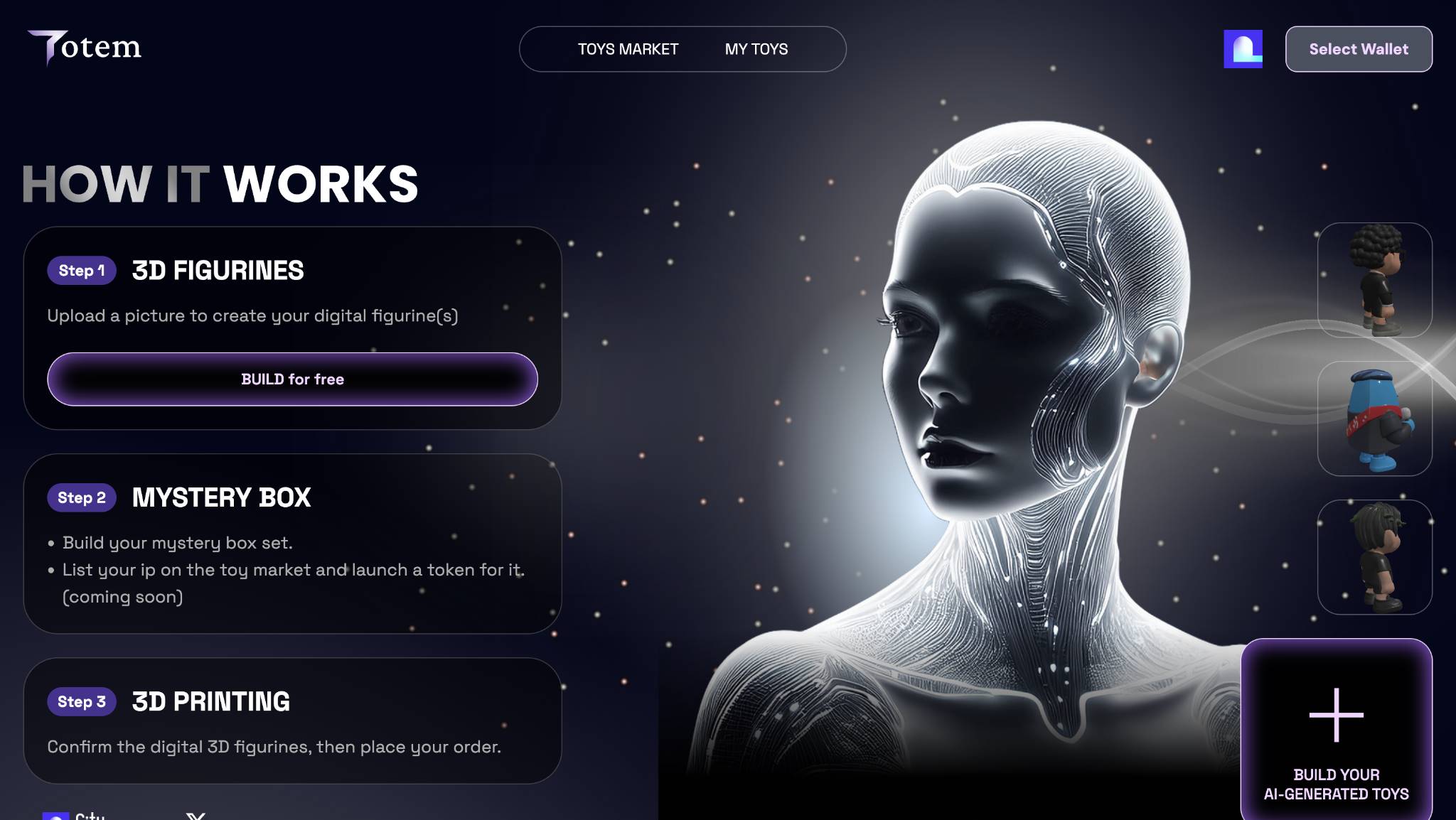
Totem City functions as the cultural manufacturing layer, transforming Mocaverse’s digital prototypes into physical merchandise. This mechanism is rooted in commodification theory—the idea that cultural symbols gain lasting value through materialization, much like Pop Mart’s rise from blind box economics, with global licensed merchandise retail reaching $369.6 billion in 2024.
The core of Totem City lies in its AI generation and rights-verification system. Users can input character descriptions (e.g., “toy version of a Moca virtual citizen”) to generate 3D models, color schemes, or craft prototypes. These prototypes are then minted as NFTs via smart contracts, binding metadata and creator identity to ensure traceable ownership. Other users can reference these prototypes for secondary designs (e.g., Moca-themed apparel or digital collectibles), with all derivative actions recorded on-chain and revenue shared proportionally with the original creator—thus building a decentralized “IP generation engine.”
Totem City is more than just a creation tool—it generates real income through derivative economies. User-generated Moca-related prototypes can enter NFT marketplaces for sale or licensing, generating revenue. Smart contracts ensure automatic royalty distribution—for example, when a Moca Totem prototype is used in commercial production, the original creator receives ongoing royalties. This directly injects revenue streams into the Mocaverse ecosystem, enhancing its cultural attributes—shifting from pure NFT collecting to accessible “guts culture,” where fans trade Moca toys or merchandise, further strengthening community stickiness.
As the first step in the flywheel, City Protocol and Mocaverse will jointly release the first batch of “The Mocas” Totem products. Based on Moca’s iconic characters, these limited-edition toy derivatives are designed using Totem City’s AI generation system. The initial batch will be distributed for free or with priority access to MOCAs NFT holders and MOCASTR token holders—not only as a community incentive but also marking Mocaverse’s official expansion from digital NFTs to physical merchandise. Through this collaboration, holders receive exclusive Totem items, increasing loyalty and engagement and kickstarting the flywheel’s initial cycle.
Understanding its significance, Totem City introduces physical liquidity premiums to Mocaverse. Traditional IPs like Disney derive 85% of revenue diversification through merchandising, whereas Web3 IPs often remain confined to digital realms. Totem’s algorithmic oversight lowers the barrier between art and commerce, opening Mocaverse’s “from screen to shelf” pathway and potentially enhancing market perception of its valuation.
For MOCASTR and Mocaverse, Totem City’s strategic value lies in ecosystem expansion: integration with Mocaverse’s AIR Shop creates an online-offline closed loop, amplifying the IP’s cultural penetration and ultimately transforming Mocaverse from a virtual identity network into a real-world lifestyle brand.
4. Synergy Among MOCASTR, Viral City, and Totem City: Empirical Validation of a Web3 IP Closed Loop
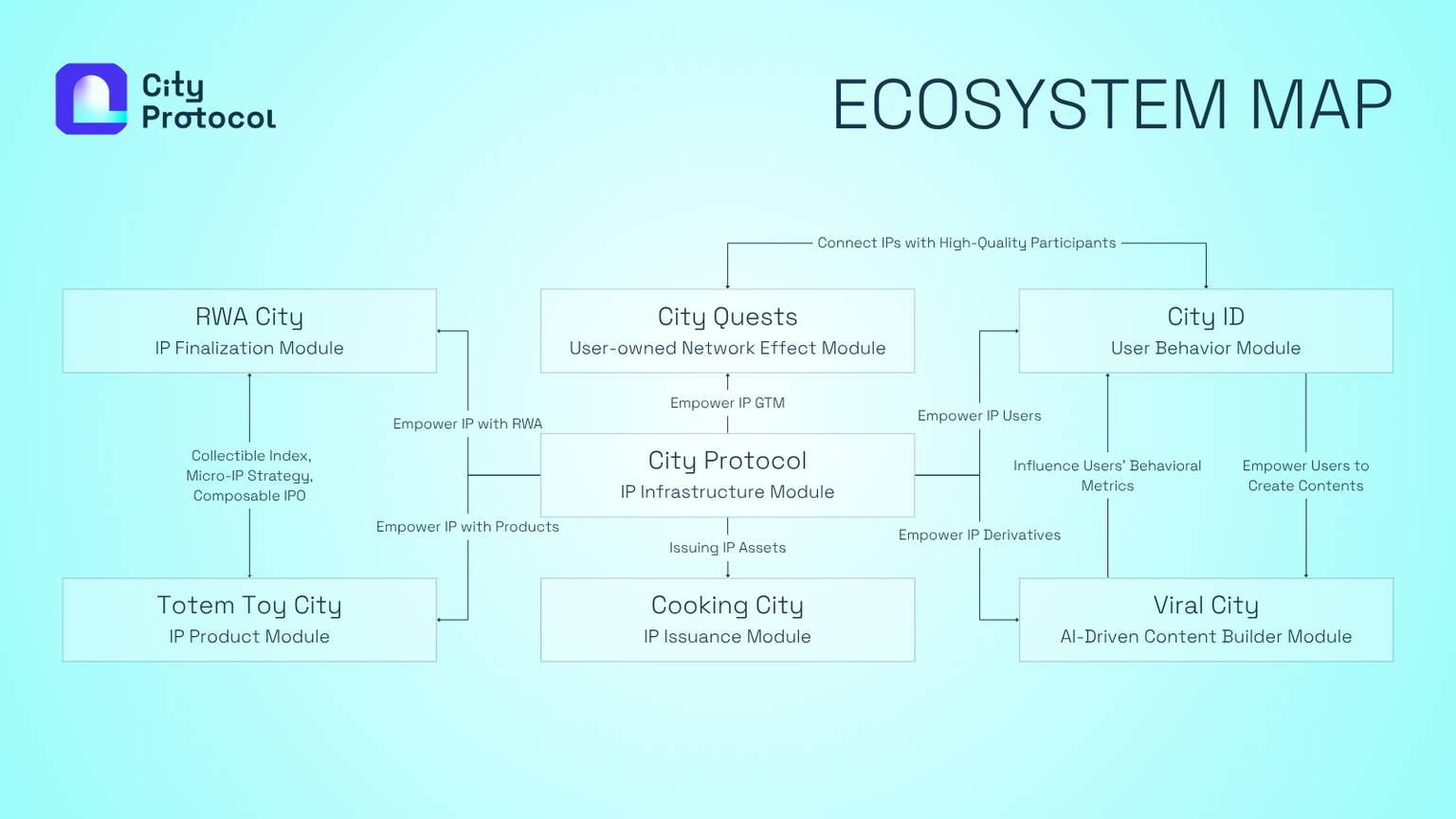
The synergy among IP Strategy, Viral City, and Totem City has preliminarily realized City Protocol’s vision of an IP closed loop as outlined in its whitepaper—a full lifecycle loop: “Generation → Co-creation → Assetization → Capital Recirculation → Re-creation.”
This is not merely technical integration, but empirical proof of Web3’s comprehensive empowerment of existing IP.
1. Generation & Rights Establishment (Totem): Moca prototypes are generated in Totem City and minted as NFTs.
2. Dissemination & Co-creation (Viral): Prototypes are imported into Viral City, where the community creates videos/memes, accumulating reputation data.
3. Assetization & Capital Return (MOCASTR): Dissemination data serves as input signals to the MOCASTR treasury, influencing fund allocation and token issuance. The threefold surge in MOCAs trading volume on issuance day is a direct outcome of this loop—cultural data transformed into financial momentum.
4. Structural Benefits: This closed loop infuses MOCASTR with narrative extensibility, data vitality, and cultural liquidity premiums, driving resonance between its market cap and cultural productivity.
The empirical validation lies in Mocaverse’s feedback effect: cultural data optimizes MOCASTR’s risk model, and community activity translates into financial signals—post-issuance, NFT floor prices rose 70%, and the treasury holds 40 Mocas. Compared to the recent decline in NFT markets (many projects declining over 50% due to lack of governance), City Protocol’s flywheel offers a paradigm shift: cultural productivity becomes a leading variable for market cap, demonstrating Web3’s full-spectrum empowerment of IP.
Reflecting on its theoretical foundation, this synergy draws from Bourdieu’s concept of capital conversion: symbolic capital (fan creations) is converted into economic capital via on-chain mechanisms. Overall, this case study not only validates the vision laid out in the City Protocol whitepaper but also enriches Mocaverse’s narrative potential, signaling a leap from speculative assets to sustainable economies.
Future Outlook: Expansion from Mocaverse to Broader Ecosystems
The recent weakness in NFTs and cultural tokens (market shrinking 40% in 2024) stems from the absence of a sustainable flywheel—short-term hype overshadows long-term co-building. City Protocol’s model offers a new path, enabling more Web3 IPs (like Pepe, Bonk) to pursue institutionalized growth through quantifiable cultural curves. For example, MOCASTR’s success demonstrates that transaction fee cycles can stabilize floor prices, further validating the feasibility of IP Strategy-driven IP assets.
City Protocol’s recent collaborations with events like Comic Con HK 2026 will explore the application of Web3 flywheels to traditional Web2 IPs. For instance, importing Comic Con’s character IPs into Totem City to generate merchandise, disseminating them via Viral City, and even issuing IP Strategy assets for financial-level empowerment. This not only bridges Web2 and Web3 but also attracts more suppliers (e.g., toy manufacturers, small-to-mid-sized IP studios) into the ecosystem.
The activation of the Web3 flywheel will draw in more Web2 IPs (such as animation and gaming brands). Previously, Web2 IPs hesitated toward blockchain due to concerns over rights management and dissemination efficiency. Now, City Protocol offers a complete solution, paving the way for mass-scale Web3 adoption. By 2025, City Protocol is expected to become the standard for a “cultural index,” with $CP token anchoring creative circulation efficiency.
This convergence enables widespread Web3 adoption: $CP, as a cultural index anchored to creative efficiency, mirrors the role of the S&P 500 in the economy, becoming a barometer of on-chain civilization. In the near future, it will expand from Mocaverse’s pilot to a global IP ecosystem.
Conclusion
Through its full-cycle framework, City Protocol not only energizes Mocaverse but also redefines the Web3 IP paradigm. At the intersection of AI and blockchain, culture shifts from consumption to compounding assets. Drawing on Bourdieu’s theory of capital conversion and implementing flywheel mechanics, this model heralds a structural transformation in the IP economy. Its closed-loop mechanism proves the potential of AI and blockchain in cultural finance, signaling the evolution of IP from “static assets” to “dynamic economies.”
With City Protocol’s TGE approaching, investors should focus on the long-term value of $CP. As more IPs join the ecosystem, this protocol may become a cornerstone of on-chain civilization. From the success of Mocaverse and MOCASTR to broader ecosystem expansion, City Protocol is defining the future of cultural finance.
Related Links:
Viral City:https://x.com/cityprotocolHQ/status/1985567981318127958
Totem City:https://x.com/cityprotocolHQ/status/1985221155418972252
Detailed Explanation of IP Strategy and Moca Strategy:https://x.com/cityprotocolHQ/status/1985229445729337499
Whitepaper:https://city-protocol.gitbook.io/docs/
Join TechFlow official community to stay tuned
Telegram:https://t.me/TechFlowDaily
X (Twitter):https://x.com/TechFlowPost
X (Twitter) EN:https://x.com/BlockFlow_News