Liquidity Staking Data Special: Jito's liquidity reaches as high as $72 million, Rocket sees daily ETH inflows of 12,000
TechFlow Selected TechFlow Selected
Liquidity Staking Data Special: Jito's liquidity reaches as high as $72 million, Rocket sees daily ETH inflows of 12,000
Solana remains the most promising in the liquid staking token ecosystem, with only about 7% of liquid staking rate.
 Navigating Web3 tides with focused insights
Author: OurNetwork
Translation: TechFlow
Liquid Staking
Jito | Rocket Pool | Dinero
Jito
Andrew Thurman | Website | Dashboard
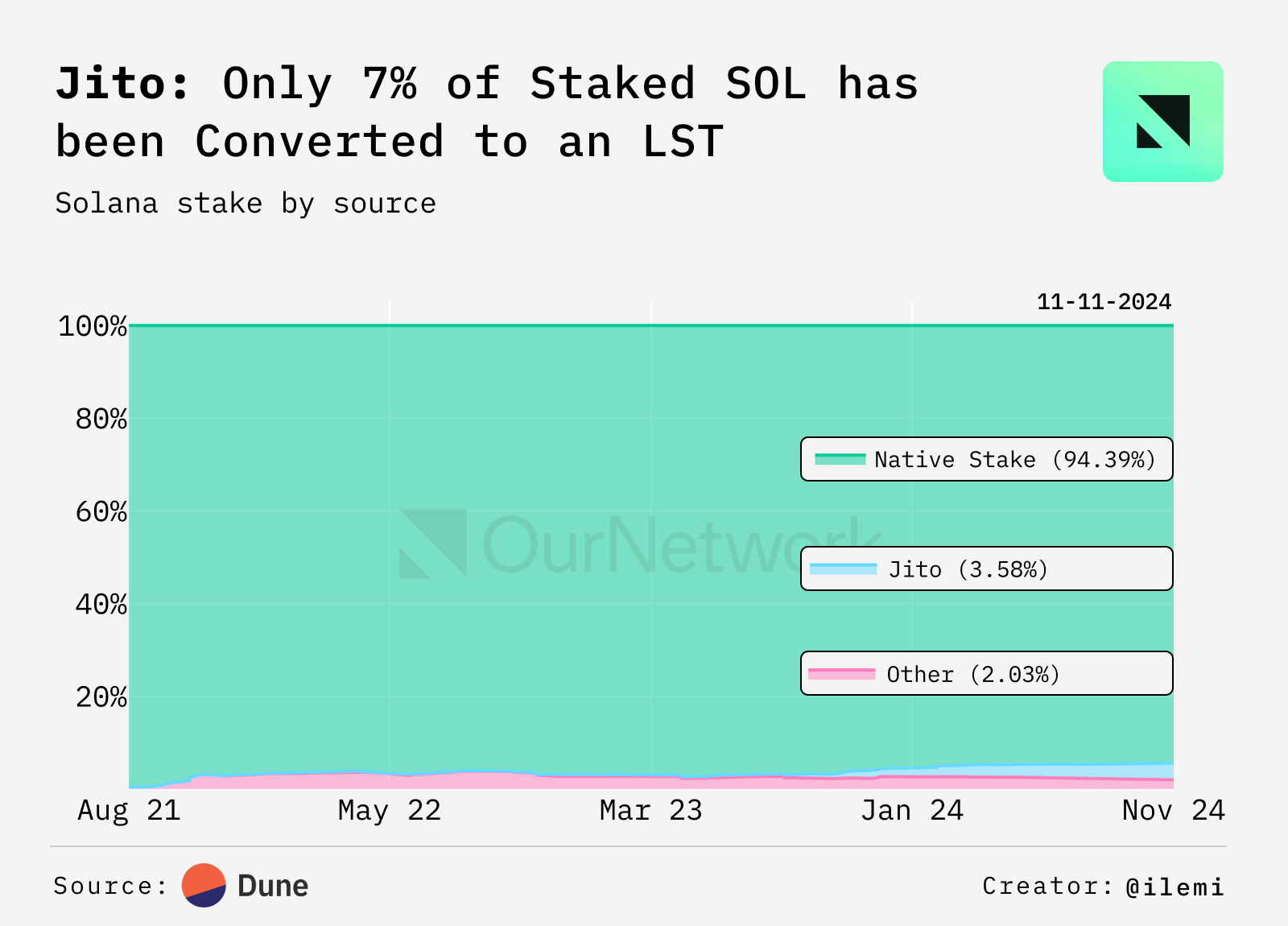
Solana remains the most promising ecosystem for liquid staking tokens, with only about 7% liquid staking penetration.
-
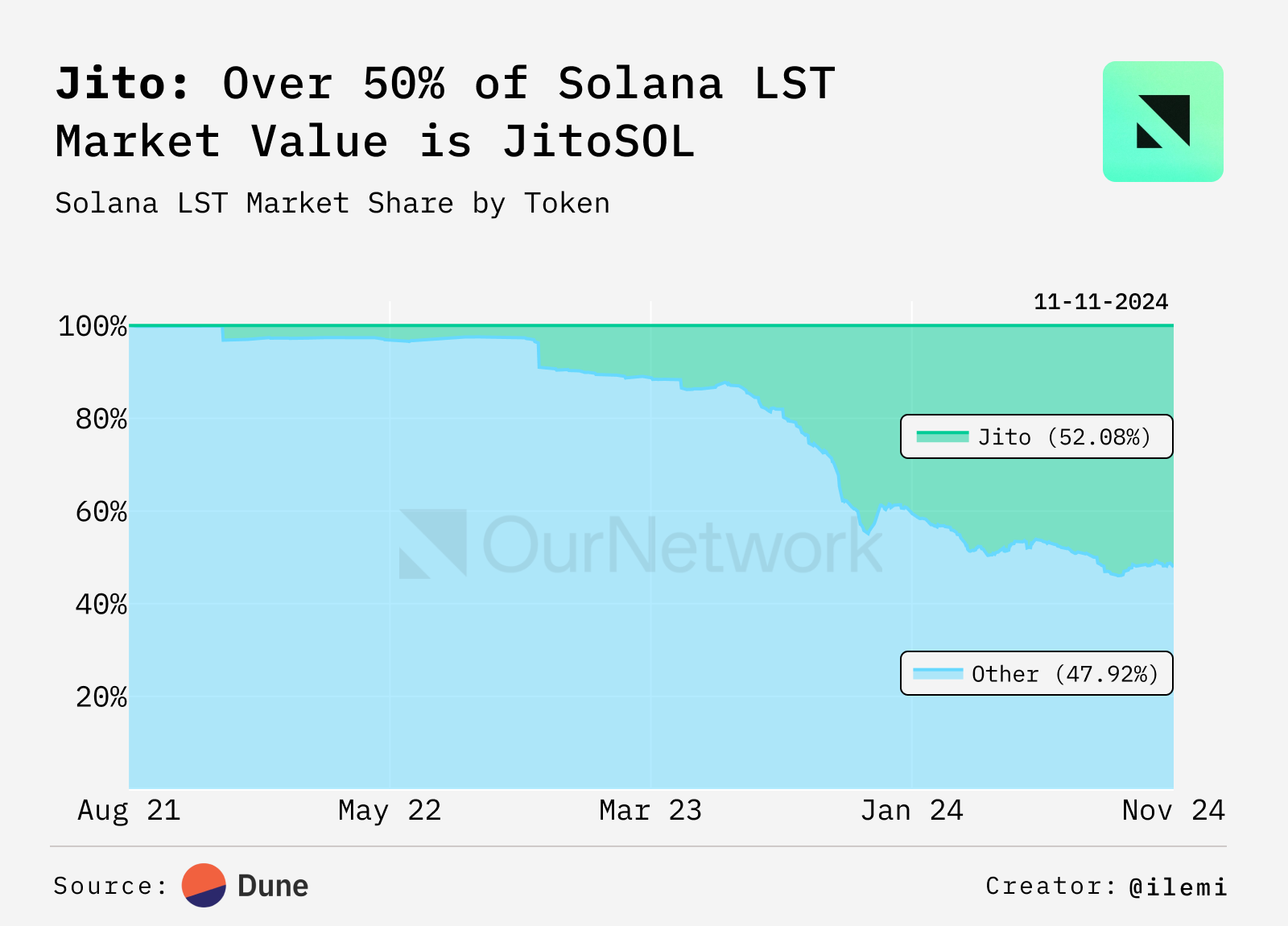
Jito Network is a set of decentralized protocols built on Solana, primarily focused on Maximal Extractable Value (MEV) and DeFi infrastructure. Jito’s liquid staking token (LST), JitoSOL, is the largest DeFi protocol on Solana, holding 14 million SOL in deposits—making it the largest LST in the network's history and capturing over 50% of Solana’s LST market. JitoSOL plays a critical role across Solana’s DeFi ecosystem, serving as collateral in various protocols representing 25% of its total value locked (TVL). The JitoSOL-SOL trading pair is the most liquid on Solana, with $72 million in liquidity.
-
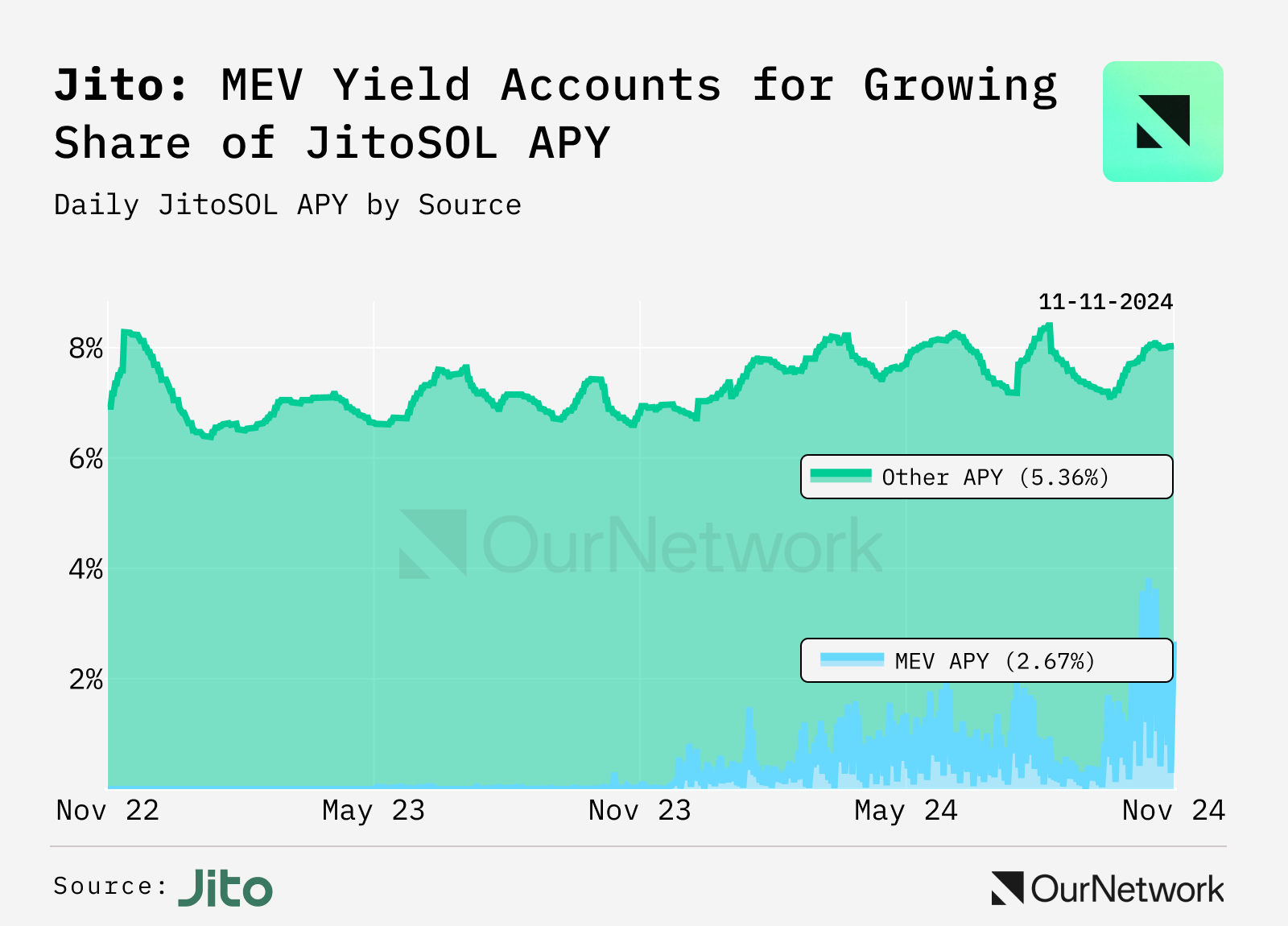
Supported by the Jito-Solana client, MEV tip revenue has grown as a share of validator income, enabling an annual percentage yield (APY) above 8% for LSTs delegated via the Jito block engine. As memecoin trading and other activities increase on Solana, MEV volume will rise further, boosting yields.
-
Ethereum currently has an LST market penetration of approximately 35%, while Solana stands at around 7%, roughly doubling year-over-year. Despite the low UI/UX barriers to native staking on Solana, there are no strong reasons why the gap in LST adoption between these two ecosystems shouldn't eventually close.
-
Trade Focus: Want to predict the future? Check out this wallet: six figures in meme coins, six figures in JitoSOL, and six figures in stablecoins. Perfect balance, just as it should be.
Rocket Pool
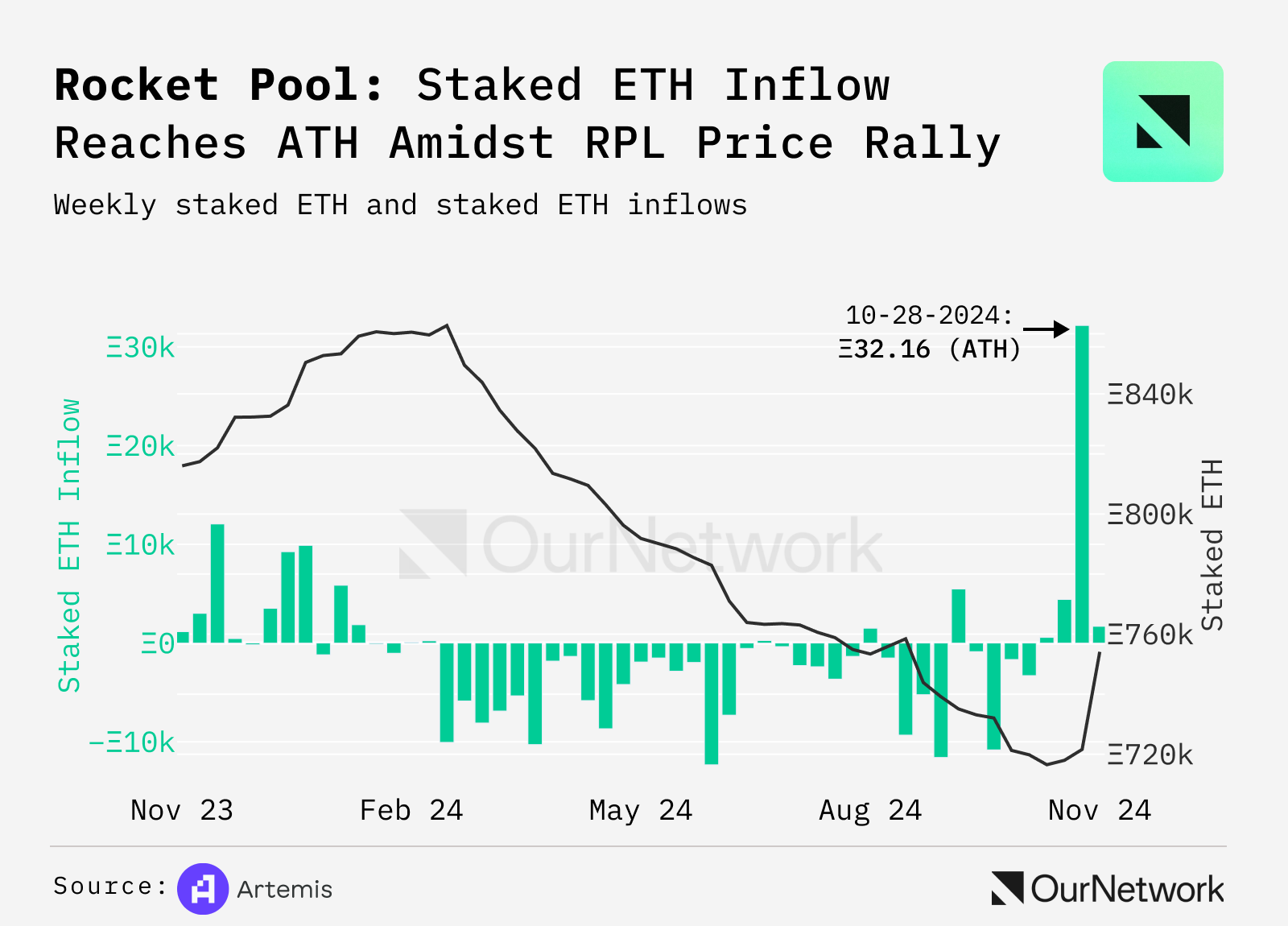
Daily ETH inflows into Rocket Pool peaked at 12,500—the highest level so far this year and double the previous peak.
-
Rocket Pool is currently the second-largest liquid staking provider, with approximately 7% market share. Over the past week, its total value locked (TVL) grew from $3.2 billion to $4 billion—a more than 30% increase. This surge aligns with a rebound in APY, which had been declining for a long period but has now recovered to 3%. The average node stake ratio is 33%, with an average of 4,400 RPL (the protocol’s native token) and 94 ETH staked per node. Among the liquid staking tokens (LSTs) composing dsETH—an ETH LST basket developed by Index Coop—rETH holds the largest allocation at 23%.
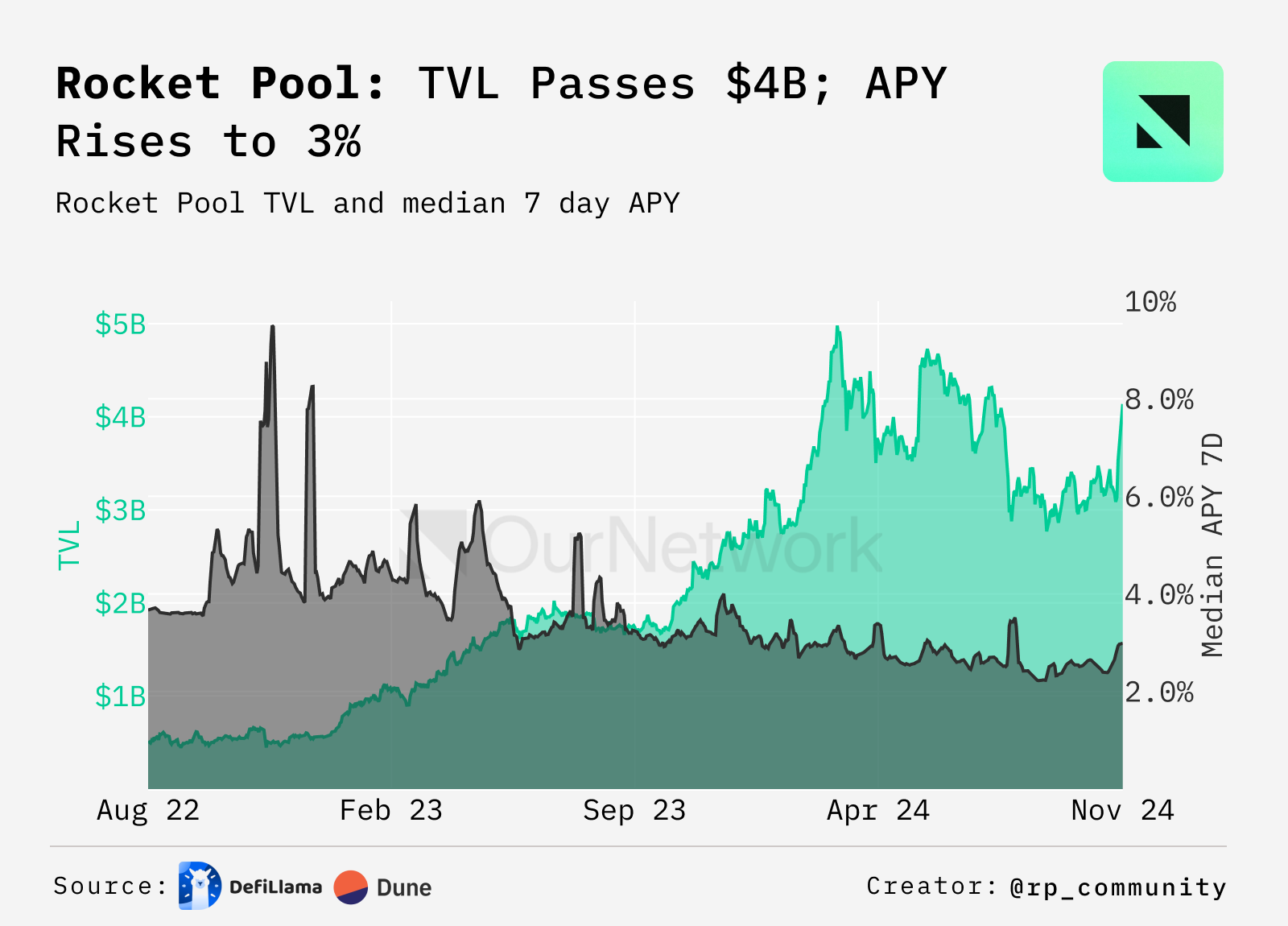
DeFiLlama & Dune - @rp_community
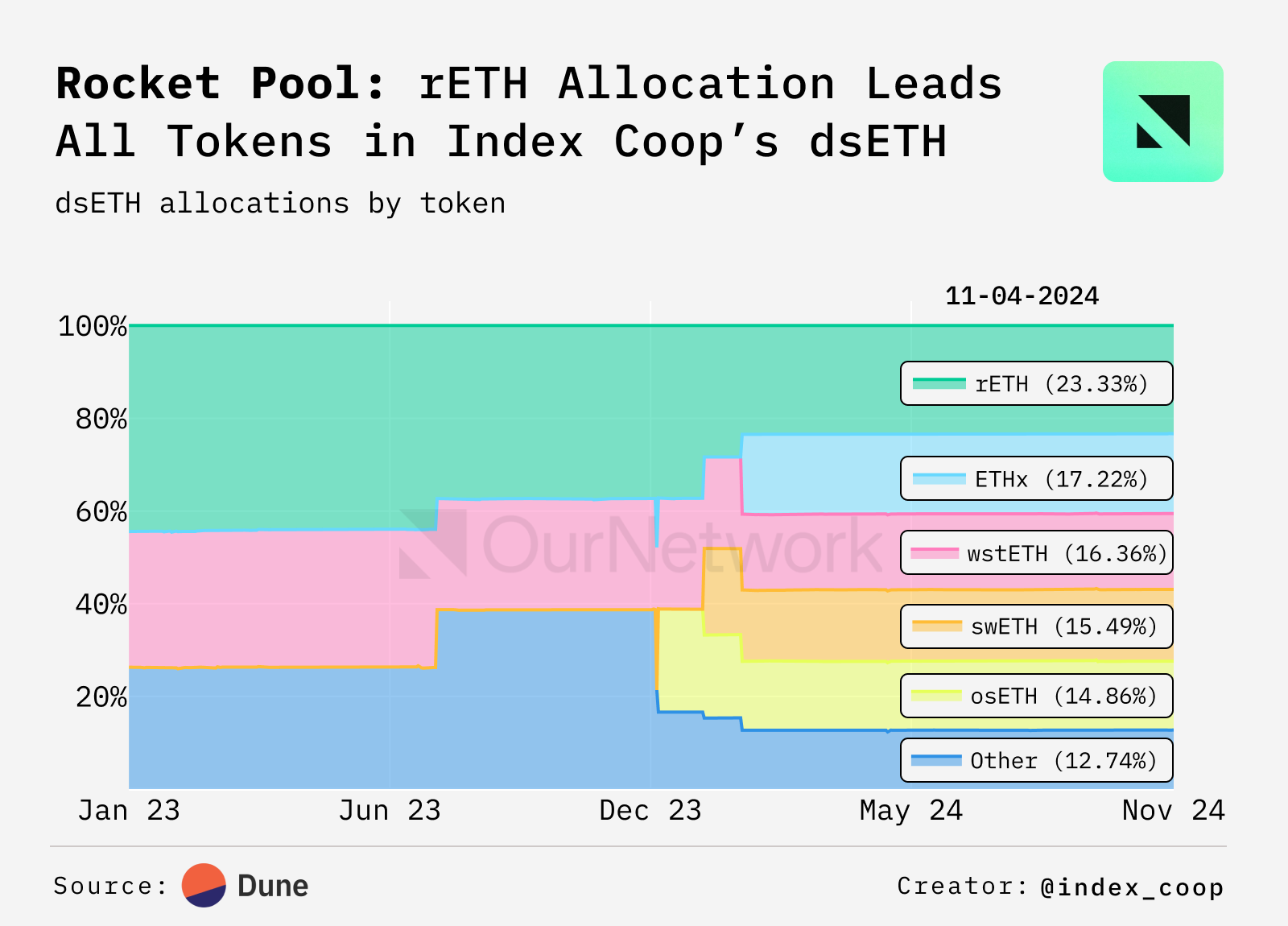
-
RPL’s price rose 20% over the past week to $11.80, coinciding with the surge in ETH staking inflows. Notably, this influx is nearly three times larger than the last spike in November 2023. Moreover, between January 24 and September 24, not a single week saw net inflows.
-
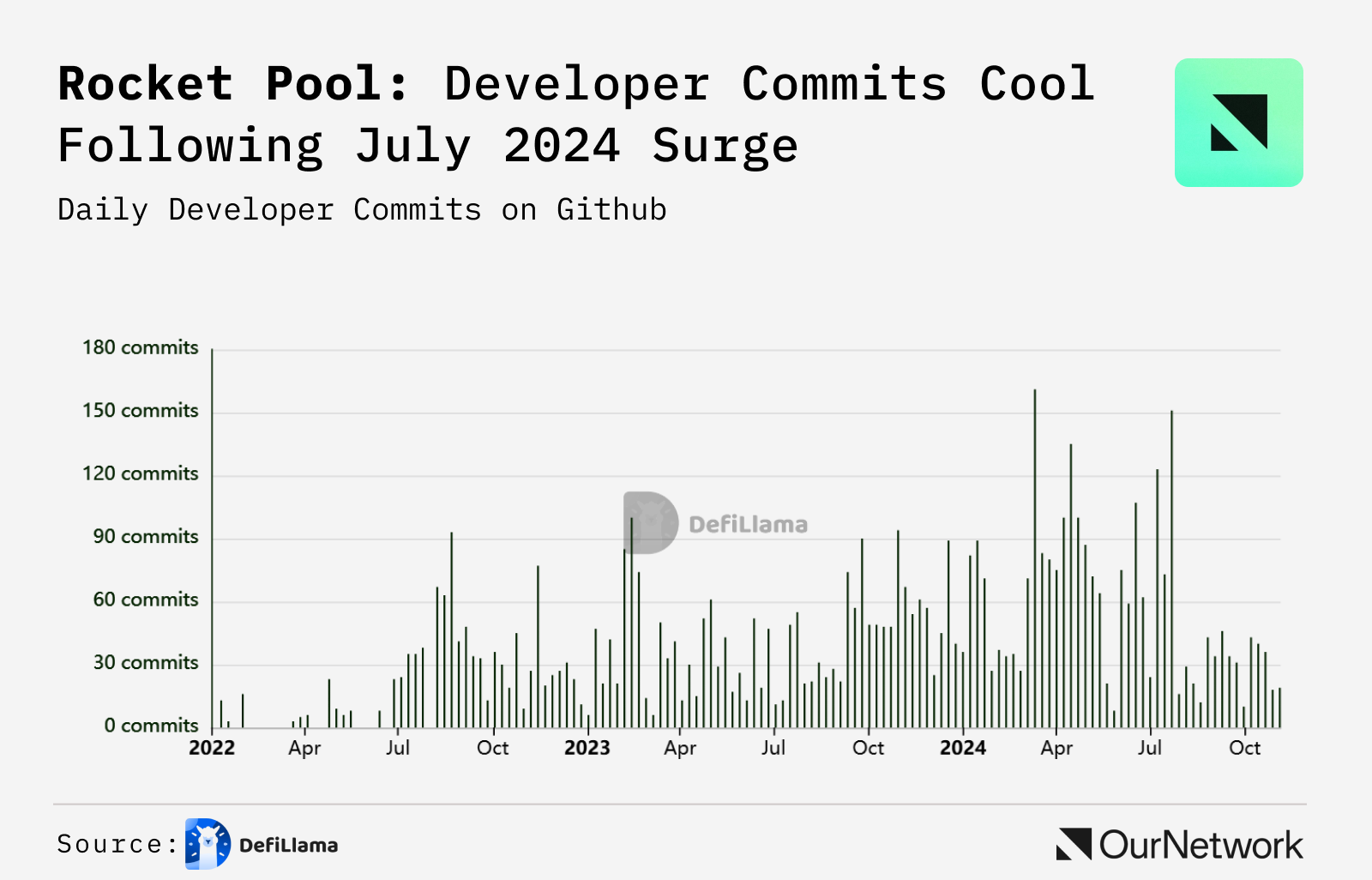
Rocket Pool’s developer activity surged significantly in 2024, peaking in July with over 150 daily commits, though it has since declined to around 30 per day.
Dinero
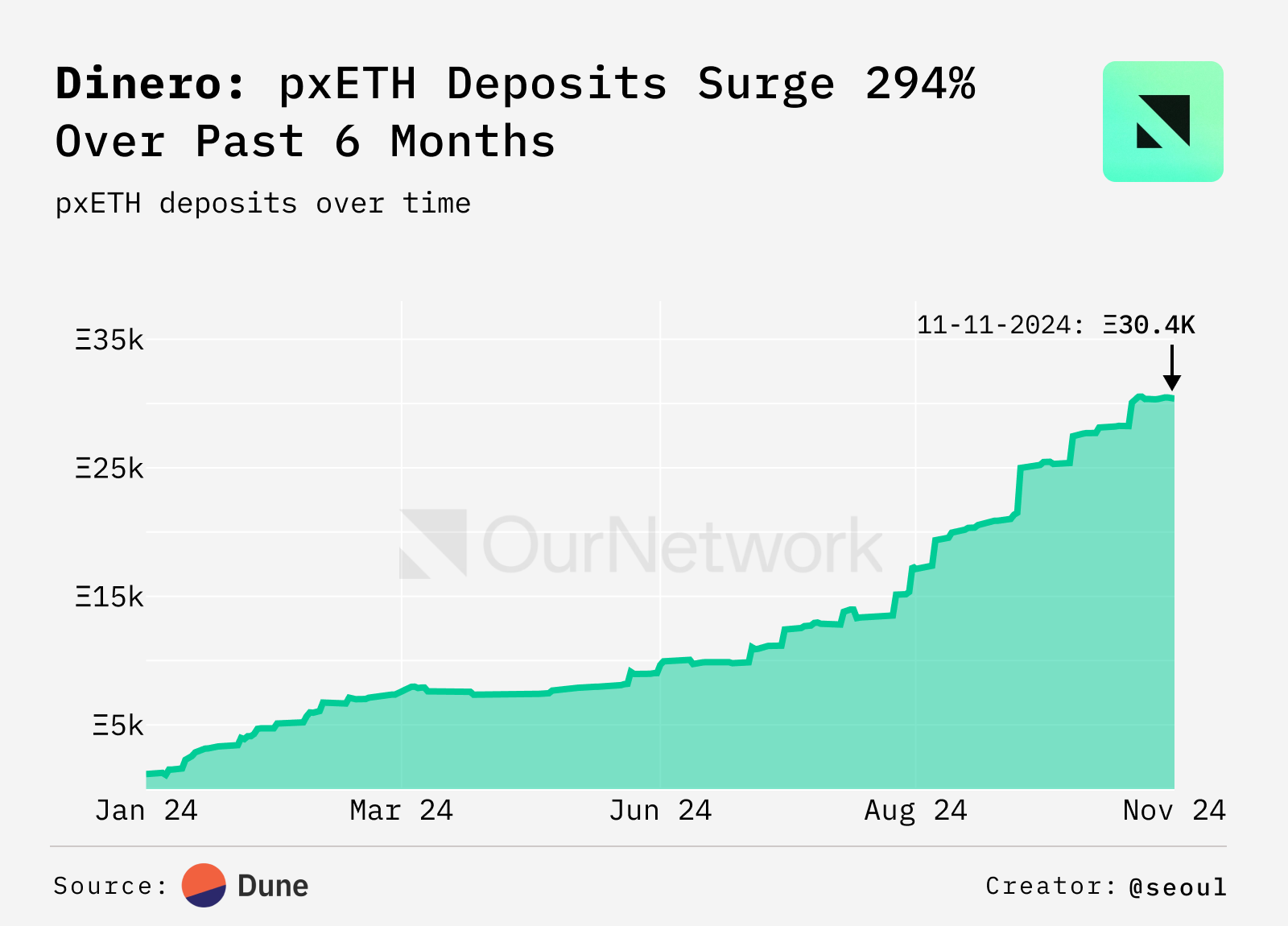
pxETH staking surpasses 30,000 ETH
-
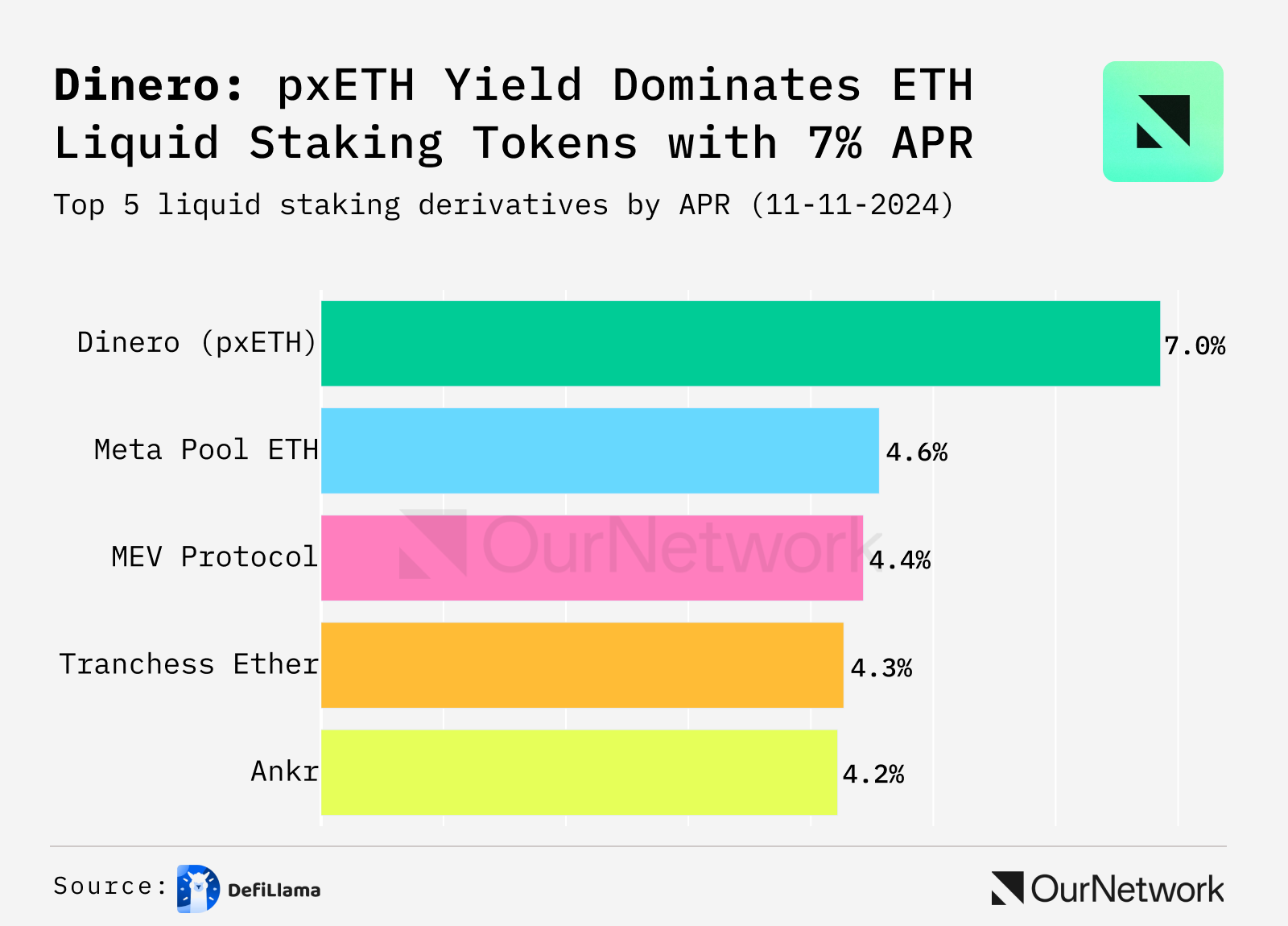
Over the past six months, deposits in Dinero’s liquid staking product pxETH have grown from 7,706 ETH to 30,393 ETH—an increase of 294%—reflecting strong market demand for higher ETH yields. Due to its design, pxETH offers an approximate 7% annual percentage rate (APR) on ETH staking, twice the industry average.
-
The system’s yield advantage stands out compared to other liquid staking options. pxETH’s dual-token design enables Dinero to expand yield opportunities at both ends of the risk curve (DeFi and staking), rather than compressing returns between user groups.
-
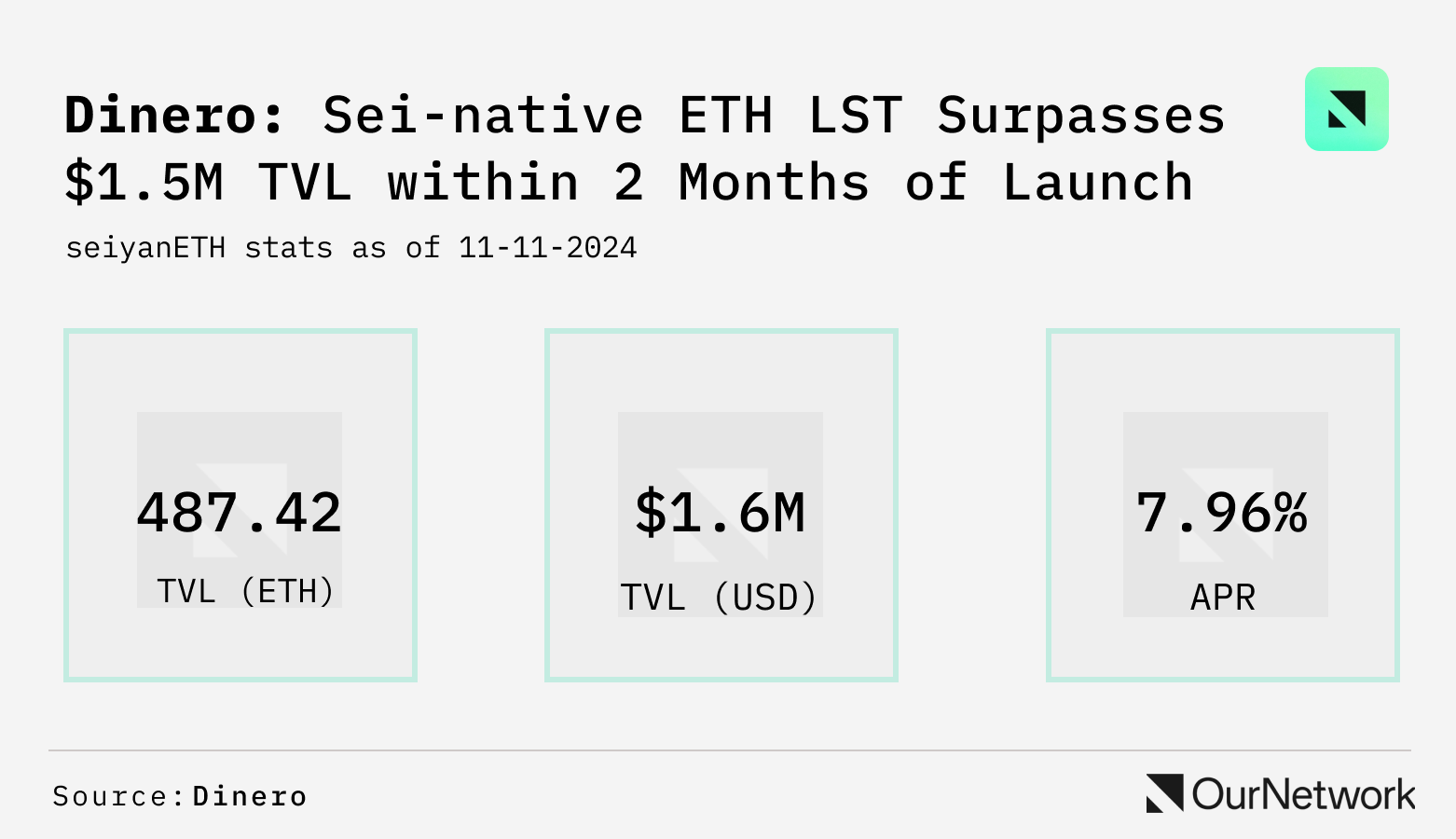
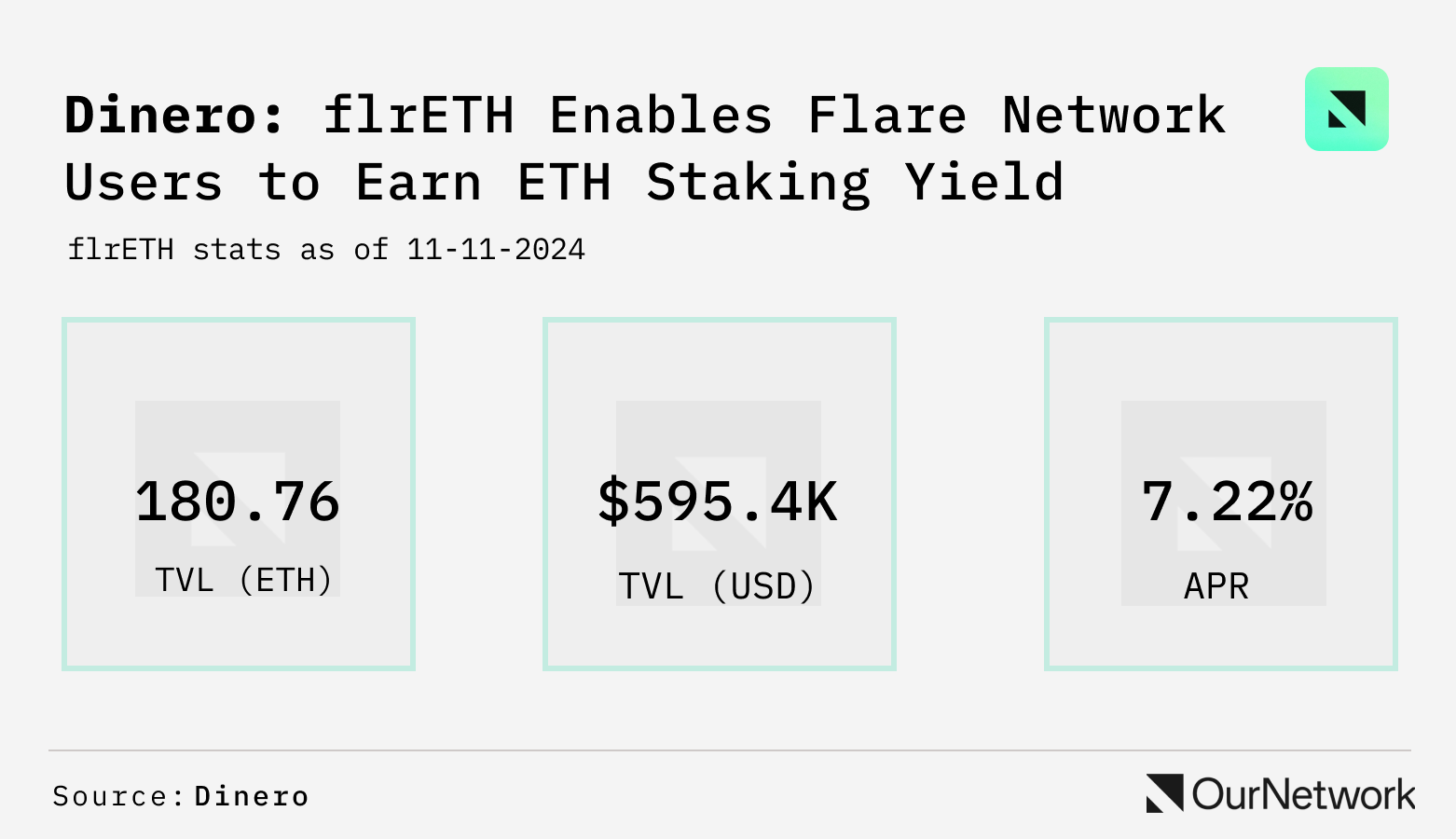
To extend Dinero’s LST yields across different blockchains, branded LSTs were launched. This is a liquid staking solution allowing L1 and L2 networks to launch native LSTs backed by staked pxETH. Early partners include Arbitrum (orbETH), Sei (seiyanETH), and Flare (flrETH), with Sei and Flare already live.
-
Trade Focus: Branded LSTs leverage LayerZero’s omnichain messaging protocol. Users can either deposit from Ethereum mainnet and use LayerZero to mint “partnerETH” on partner networks, or deposit directly on partner networks. Either way, the branded LST solution handles all cross-chain activity and staking operations, allowing users to earn staking yields with a simple deposit.
Join TechFlow official community to stay tuned
Telegram:https://t.me/TechFlowDaily
X (Twitter):https://x.com/TechFlowPost
X (Twitter) EN:https://x.com/BlockFlow_News
 @ournetwork__