Can Trump's re-election bring a real regulatory breakthrough for the crypto industry?
TechFlow Selected TechFlow Selected
Can Trump's re-election bring a real regulatory breakthrough for the crypto industry?
Both a "signal" and "noise."
 Navigating Web3 tides with focused insights
Author: Aiying Aiying
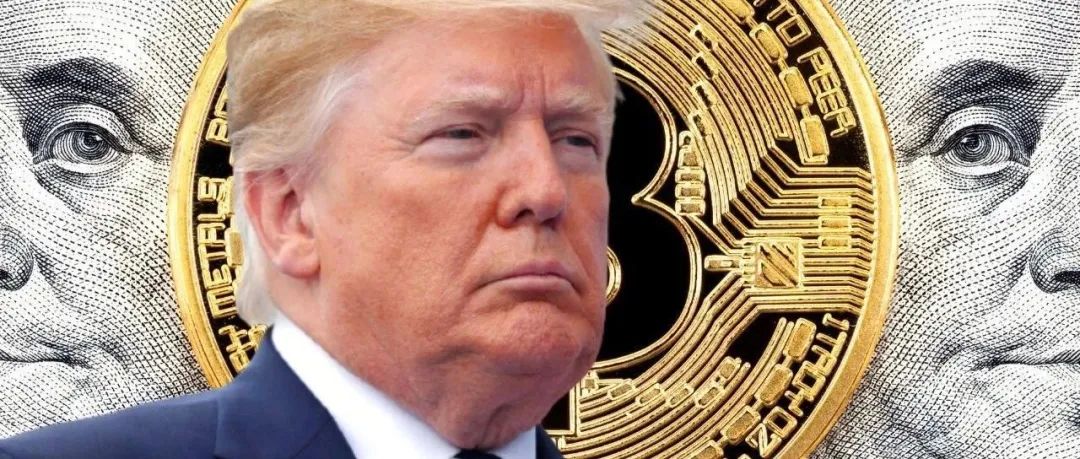
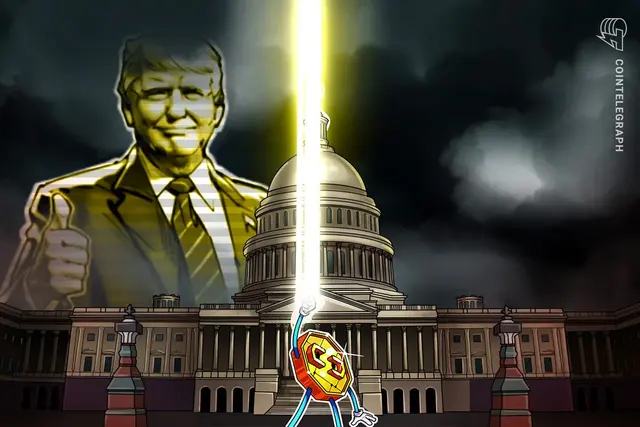
Donald Trump's re-election as U.S. President has introduced new uncertainties into the already volatile cryptocurrency industry—but also brought some favorable developments, largely due to earlier discussions around the "U.S. Bitcoin Strategic Reserve Act," which proposed purchasing 200,000 bitcoins annually, reaching one million within five years. Yet with Trump’s victory in this election, many are asking: What does this political shift really mean? Will it lead to lighter regulation, or introduce new compliance risks? In this article, we explore regulatory trends and policy expectations under the incoming U.S. administration from the perspectives of a16z and Aiying.
1. “Noise” vs. “Signal”: Regulatory Optimism in the Market
Following Trump’s re-election, many market analysts and key figures in the crypto industry have expressed optimism about the future regulatory environment. The crypto division of renowned venture capital firm a16z (Andreessen Horowitz) recently stated that founders of crypto projects can now feel more confident pursuing innovative experiments—especially in token issuance and community building. Many initiatives previously put on hold due to regulatory concerns may finally be ready for revival.
a16z emphasized that there is now an opportunity for constructive dialogue with regulators and legislators, potentially leading to greater regulatory clarity for the blockchain sector. This stance appears to affirm the possibility of more inclusive, innovation-driven policies. However, a16z also cautioned that while the regulatory landscape may become more flexible, it doesn't mean crypto companies can operate entirely outside legal boundaries—particularly those with centralized characteristics, which may still face rigorous scrutiny.
The firm further noted that the coming months will likely bring a flood of "hot takes" and speculation about regulation and legislation, most of which will amount to noise rather than reliable indicators of actual regulatory direction. While the specifics of future changes remain unclear, one thing is certain: the new administration’s policies could significantly impact the crypto industry, possibly creating a more favorable environment for its development.
Aiying believes these statements are both “signals” and “noise.” The signal lies in the potential for U.S. regulators to grant innovators more freedom within the existing framework to explore diverse blockchain applications; the noise stems from over-optimistic interpretations of short-term regulatory easing, overlooking the complexities inherent in legal implementation.
2. A “Dawn” for Token Issuance—or a New Wave of Regulatory Challenges?
After the election results were announced, a16z specifically highlighted that token issuance might be entering a new “dawn,” allowing entrepreneurs to boldly use tokens to distribute control and build communities. Tokens, among the most controversial financial instruments in the crypto ecosystem, have long existed in a regulatory gray zone—Is a token a security? How can it be prevented from becoming a tool for speculation or illegal fundraising? These questions remain central to regulatory oversight.
Trump’s re-election has raised expectations of regulatory relaxation, making token issuance seem more feasible. But in reality, compliance requirements for token issuance haven’t diminished. a16z’s previously released “Token Launch Guidelines” remain highly relevant, especially the need for founders to assess whether their token model relies on trust in a centralized entity. This implies that any project with centralized dependencies will continue to face strict regulatory scrutiny. This point is particularly crucial for Web3 development, underscoring the centrality of decentralization in achieving compliance.
Even if the regulatory environment becomes more lenient, the fundamental principle remains: “Where there is trust, there is regulation.” This means founders must continue striving to minimize reliance on centralization to reduce regulatory risk. At the same time, a16z stated it will continue advocating for clear regulatory frameworks next year, supporting innovation and decentralization.
3. Continuity and Change in U.S. Regulation: From Wyoming to Nationwide
Aiying specifically noted that a16z mentioned it will soon release new guidelines on using the “Decentralized Uncorporated Nonprofit Association (DUNA),” a legal innovation that could help projects establish entities in the U.S. while reducing liability for token holders and easing tax and compliance burdens. Such structures, especially in blockchain-friendly states like Wyoming, may offer solutions for projects seeking legal status without full liability. However, whether this legal structure will be recognized by other states or at the federal level remains uncertain.
In recent years, Wyoming has been viewed as a “testing ground” for the crypto industry, with its DAO laws providing legal recognition for many decentralized organizations. Yet whether Wyoming’s innovations can be scaled nationally or gain acceptance from federal regulators is a critical question entrepreneurs must consider in the coming year. Aiying believes the development of the U.S. crypto industry depends not only on local governments “pioneering reforms” but also on whether the federal government can embrace these experiments with an open mind.
a16z also stressed it will soon publish detailed DUNA guidelines to facilitate token holder activities in the U.S., reduce tax and compliance burdens, and enable broader economic participation. Combined with Wyoming’s unique position in DAO legislation, these efforts may open new opportunities for U.S.-based crypto projects—but their effectiveness remains to be seen over time.
4. Conclusion: Regulatory Opportunity and Responsibility
The regulatory shifts following Trump’s re-election can be seen as a new opportunity for the crypto industry, but they also demand vigilance against potential legal risks. While regulatory easing may provide innovators with more room to experiment, it doesn’t mean basic compliance obligations can be ignored. From Aiying’s perspective, the wisest course for entrepreneurs in the current climate is to actively embrace decentralization, minimizing centralized features of their projects and ensuring transparency and legality. At the same time, industry players should closely monitor upcoming legal guidelines, such as those on DUNA, to identify suitable legal structures that mitigate risk.
Referencing Aiying’s earlier article, “[Case Study] Key Strategies Behind the Bancor Lawsuit—and How Web3 Projects Can Avoid U.S. Jurisdiction,” avoiding U.S. jurisdiction requires taking deliberate steps to legally and operationally distance a project from U.S. laws and regulations. Bancor succeeded in evading U.S. court jurisdiction primarily because its operating entity and founders are based in Israel and Switzerland, and its core activities occur outside the United States. This allowed Bancor to effectively sidestep the reach of U.S. securities law through legal and territorial strategy. To emulate Bancor’s approach, consider the following measures:
1. Establish the company outside the United States
-
Like Bancor, register and operate the company in another jurisdiction—such as Switzerland, Israel, or other jurisdictions friendly to crypto projects—to avoid direct exposure to U.S. legal jurisdiction.
2. Ensure founders and team members are not based in the U.S.
-
Bancor’s founders and core team are located outside the U.S. If founders or team members reside in the U.S., they automatically fall under U.S. legal jurisdiction.
3. Avoid offering services to U.S. investors
-
Restrict U.S. investor participation: Bancor explicitly states it does not serve U.S. citizens or residents and strictly limits their access to token sales. Use user agreements, KYC (Know Your Customer) procedures, and geo-blocking technologies to ensure U.S. investors cannot participate in token offerings or use your platform.
-
Geo-blocking: Use IP filtering and technical tools to block access from U.S. users to your website or token sale, minimizing your project’s visibility in the U.S. market.
4. Avoid marketing or promoting in the U.S.
-
As Bancor did, refrain from any marketing or promotional activities in the U.S. Ensure that your outreach does not use U.S.-based social media, advertising platforms, or news outlets, to avoid attracting attention from U.S. investors.
5. Utilize Regulation S exemption
-
If you cannot completely avoid international markets, consider using Regulation S under U.S. securities law, as Bancor did. Regulation S permits securities offerings outside the U.S., provided there is no intention for those securities to be resold back into the U.S. market. This helps reduce conflicts with U.S. securities regulations.
6. Design tokens to avoid classification as securities
-
Structure your token to be treated as a “utility token” rather than an investment vehicle. This can be achieved by avoiding promises of returns or profits and emphasizing the token’s functional utility within the platform. Bancor focused on liquidity provision rather than investment appeal, helping to avoid having its token classified as a security.
7. Select non-U.S. governing law and dispute resolution mechanisms
-
In user agreements and token sale contracts, clearly specify the application of non-U.S. legal systems and designate non-U.S. dispute resolution forums.
Join TechFlow official community to stay tuned
Telegram:https://t.me/TechFlowDaily
X (Twitter):https://x.com/TechFlowPost
X (Twitter) EN:https://x.com/BlockFlow_News
 Aiying Compliance