








Decoding BIO Protocol: Binance Labs' First Foray into DeSci Investment, Building a Meaningful Research Funding Incubator
TechFlow Selected TechFlow Selected
Decoding BIO Protocol: Binance Labs' First Foray into DeSci Investment, Building a Meaningful Research Funding Incubator
The essence of BIO Protocol is a curation and liquidity protocol in the decentralized science (DeSci) field.
 Navigating Web3 tides with focused insights
By: TechFlow
Beyond the meme craze, the crypto industry continues to invest in substantive projects, and Binance Labs' investment moves are particularly watched.
Yesterday, Binance Labs announced its investment in BIO Protocol, a decentralized science (DeSci) related protocol. This marks Binance Labs’ first investment in the DeSci sector, bringing BIO Protocol into the spotlight.
Yet, this development seems to have been foreshadowed.
Although CZ has gradually stepped back from Binance, earlier this year during legal proceedings, he mentioned in a letter to the judge:
“I feel that current medical research is too profit-driven... I want to help fund small research labs. Over the past few years, I’ve spoken with many biotech startups in this field.”
Focusing on medicine and science reflects the mindset of one of Binance’s key figures—an outlook that likely influences the investment team’s perspective and decision-making patterns.
So, what exactly is BIO Protocol, and what makes it stand out enough to attract Binance Labs’ backing?
The Incubator for Decentralized Science
In Binance Labs’ official announcement about investing in BIO, they clearly defined BIO’s essence — “a Y Combinator for on-chain science.”
Y Combinator is a renowned tech startup incubator that provides funding, mentorship, and resources to early-stage companies, helping them grow rapidly.
“On-chain” here refers to scientific research and funding processes powered by blockchain technology—meaning these activities occur transparently and in a decentralized manner on the blockchain.
If we draw a parallel with Y Combinator, then BIO Protocol roughly offers the following functions:
-
Incubation Function: Just as YC supports tech startups, BIO Protocol supports scientific research projects with resources and infrastructure.
-
Funding Support: Through blockchain, BIO enables easier fundraising for research initiatives.
-
Community Participation: Enables global scientists, patients, and investors to jointly support and participate in research.
-
Acceleration: Helps research projects scale quickly, similar to how YC accelerates startups.
-
Innovative Model: Introduces new models for research funding and commercialization, breaking free from traditional constraints.
How are these functionalities actually implemented? That leads us to the core design of BIO Protocol.
From a more familiar crypto-native perspective, BIO Protocol is fundamentally a curation and liquidity protocol in the decentralized science (DeSci) space. Its design stems from the team's prior success with Molecule (a platform for tokenizing early biomedical projects) and VitaDAO (the largest decentralized community focused on longevity science).
BIO Protocol consists of several key components:
-
BioDAO: Sub-DAOs dedicated to specific scientific or medical research areas
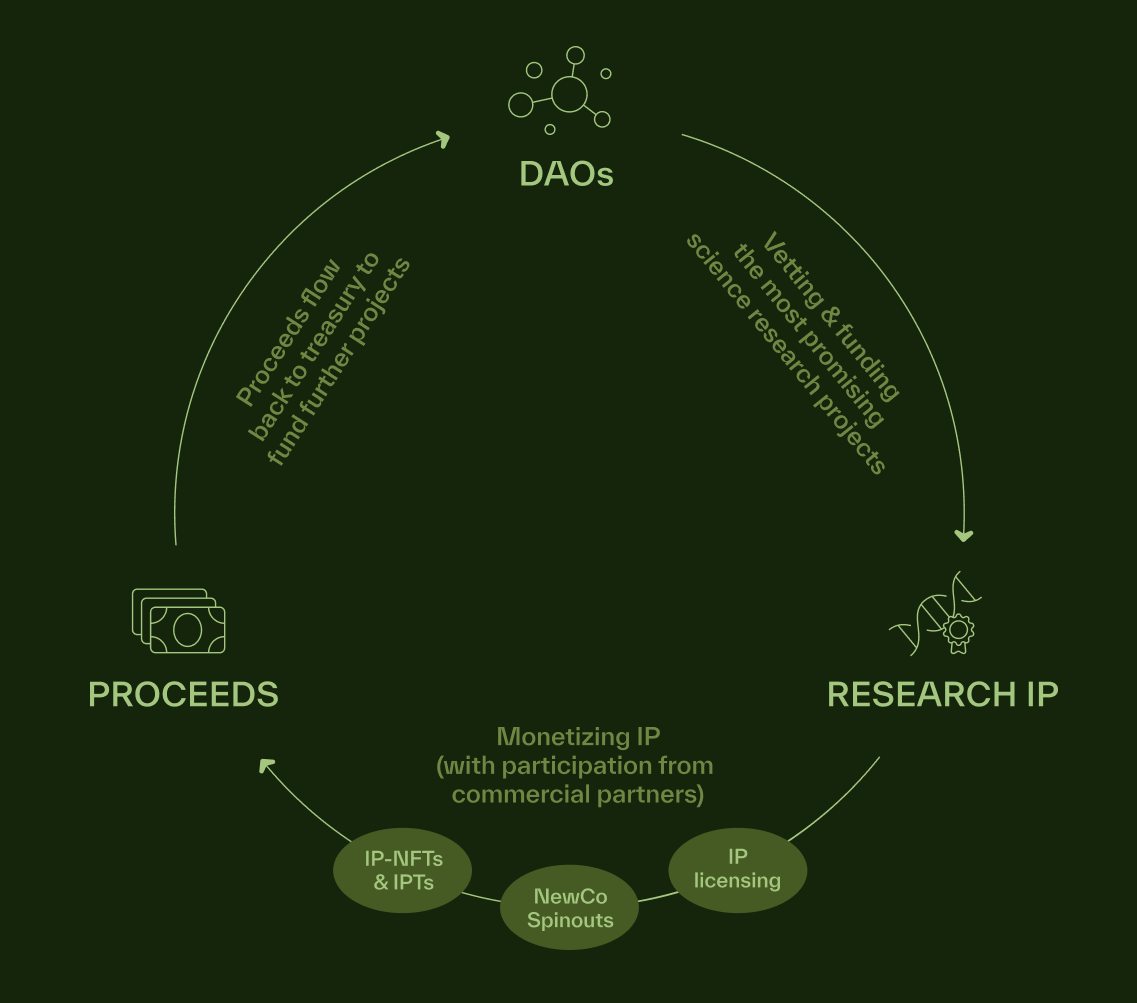
BioDAO members pool resources (data, capital, labor), leveraging the collective power of globally distributed stakeholders—such as patients, scientists, and biotech builders—to accelerate R&D and develop new intellectual property (IP).
BioDAOs raise funds through token sales and use those funds to support and develop biotech projects aligned with their mission, establishing shared IP ownership among members.
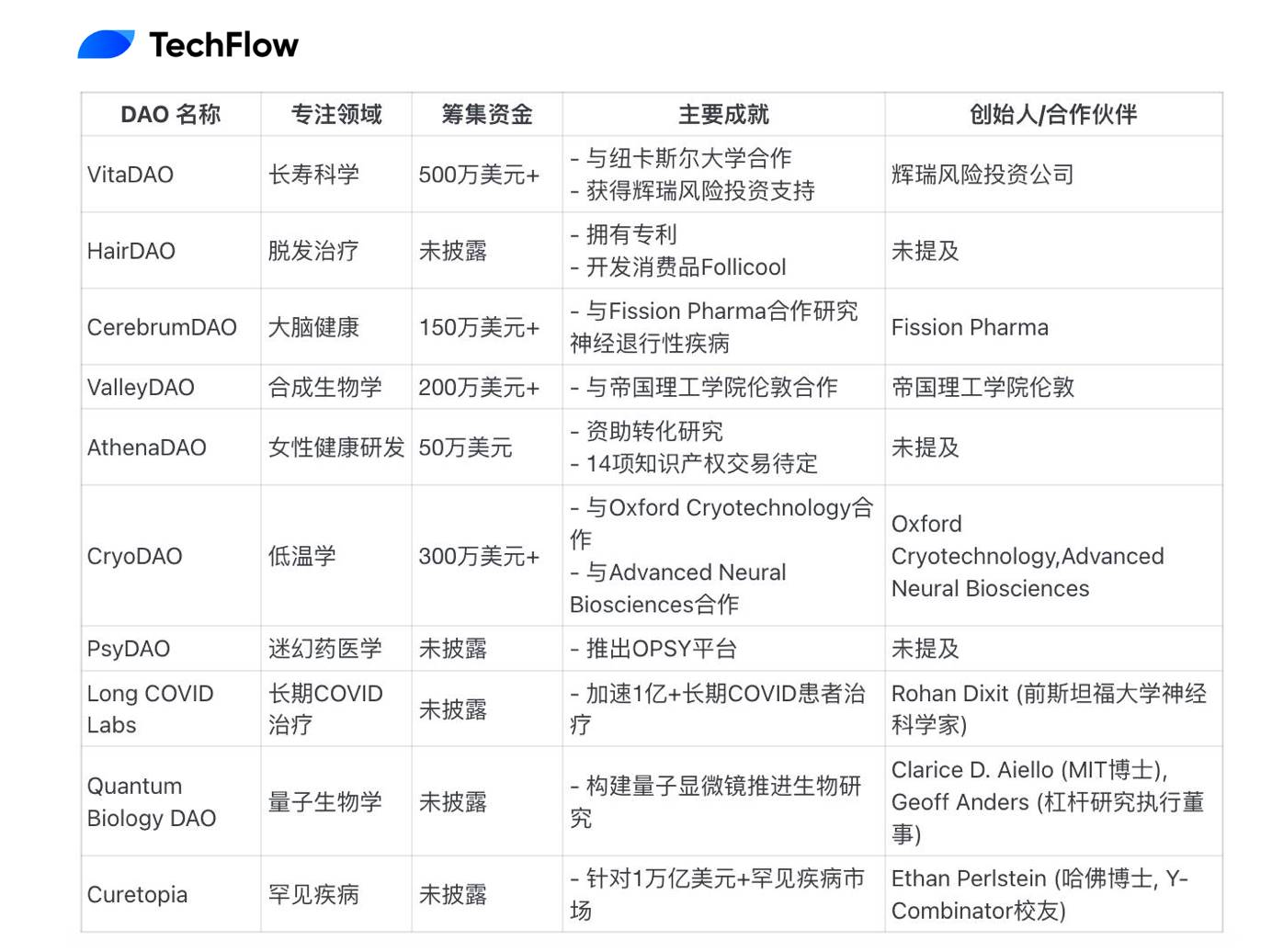
BIO has already published some successful DAO case studies, some of which have partnered with real-world universities, research institutions, and pharmaceutical companies—demonstrating the model’s viability:
-
Curation System
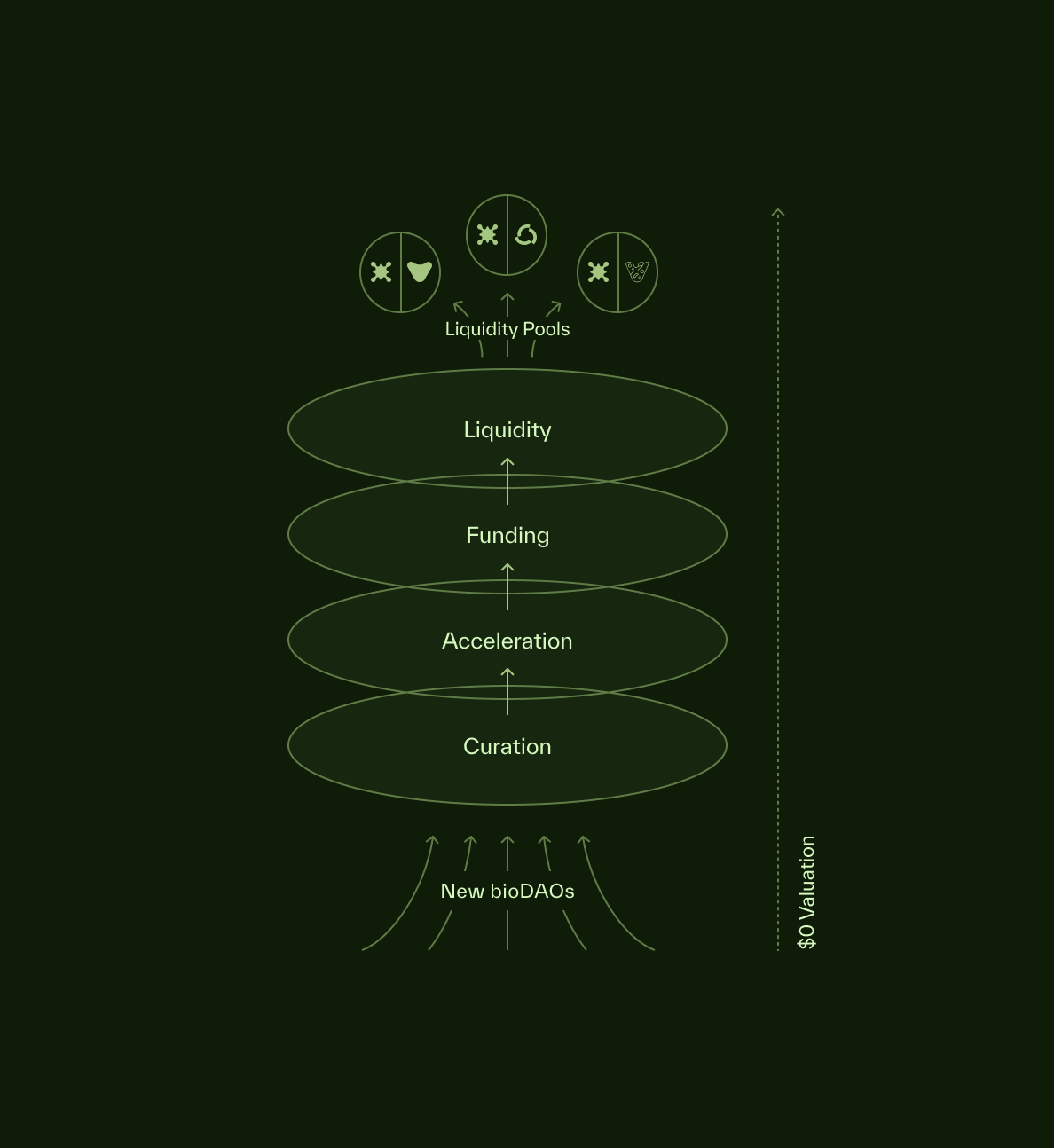
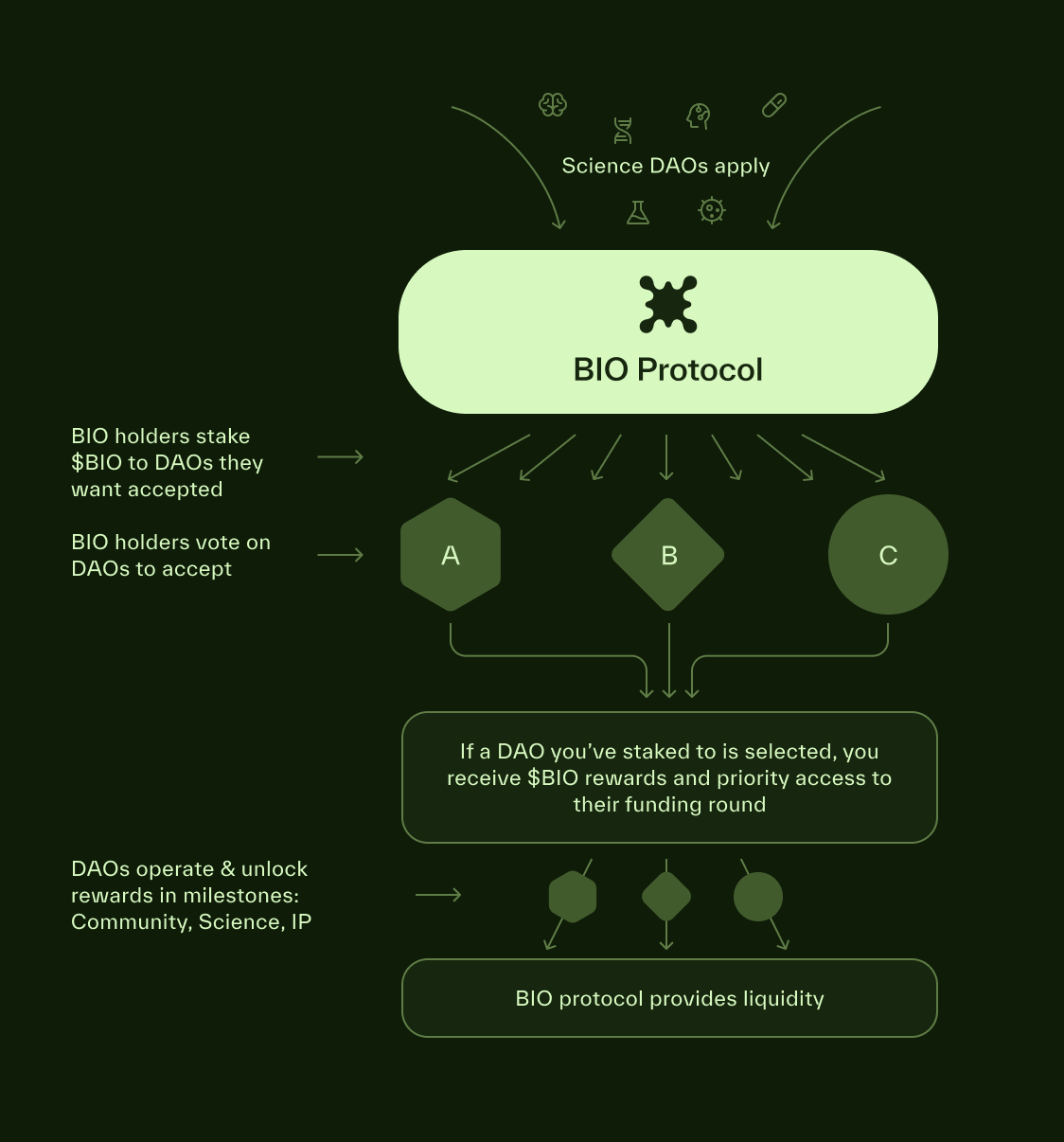
Using a token staking mechanism, high-quality biotech projects are selected and supported through a combination of community voting and expert evaluation.
Specifically, BIO token holders can stake their BIO tokens on bioDAOs they wish to see admitted into the BIO network.
BioDAOs voted into the network gain access to funding via the BIO Launchpad, along with token liquidity support, incentives, and other acceleration services from the community.
-
Liquidity & IP Tokenization
Provides tokenization solutions for biotech IP, turning such IP into tokens (in NFT and FT forms); simultaneously establishes secondary market trading mechanisms to bring liquidity to research investments.
Intellectual Property Tokens (“IP-Tokens” or “IPT”) represent partial governance rights over generated IP. These tokens allow holders to directly participate in research development, decision-making, and future direction.
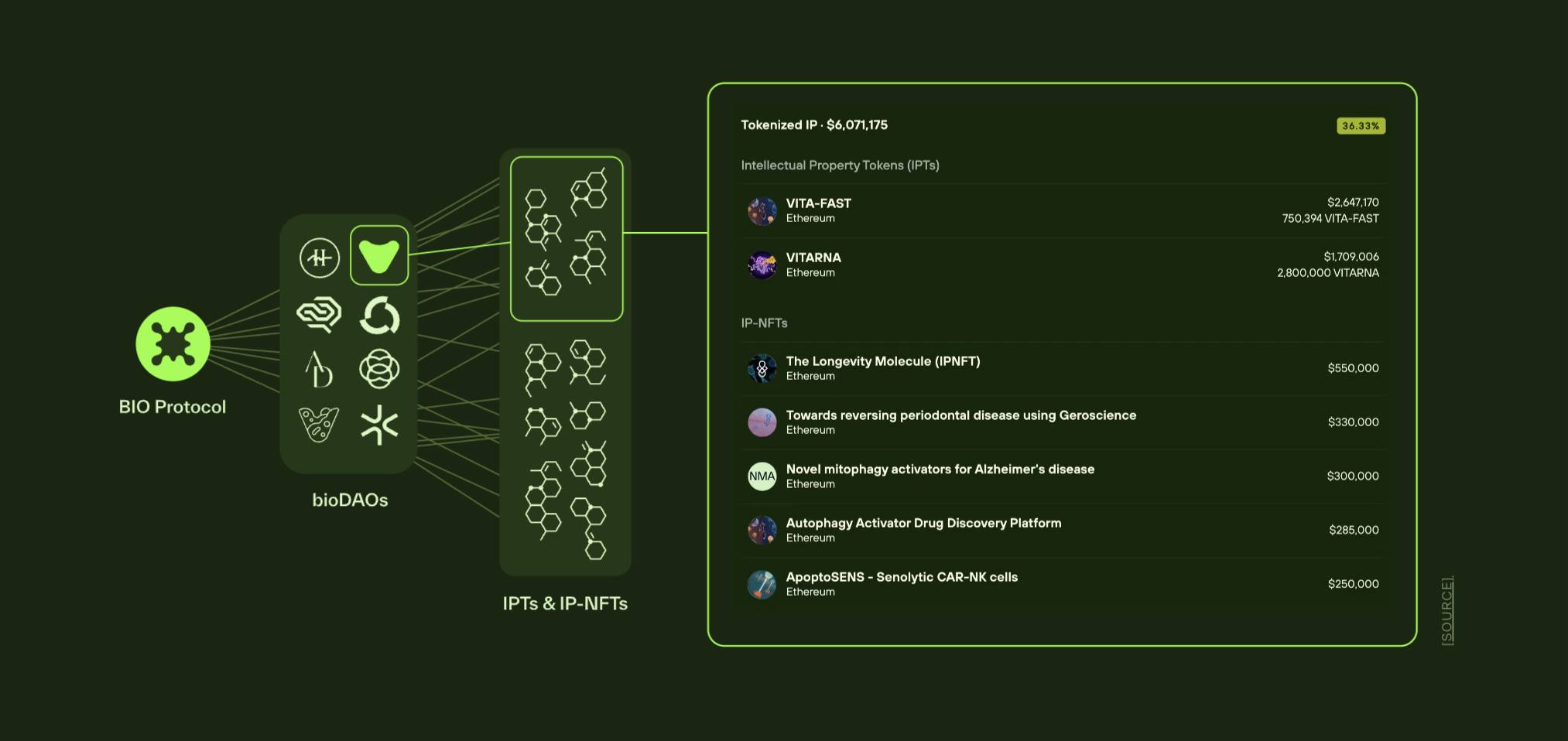
BioDAOs develop and own the IP tokens. Each BioDAO typically holds a portfolio of IP tokens representing intellectual property related to its specific research focus. For example, VitaDAO developed and owns shares in IPTs VitaRNA and VITA-FAST.
When someone acquires an IPToken, they receive a share of the IP generated by the research—including patents for new compounds, proprietary screening systems, or even potential therapies.
However, unlike typical NFT revenue-sharing models, IPTokens do not guarantee financial returns or revenue shares from commercialization. Instead, benefits come in practical scientific participation, such as:
Access to exclusive information, including updates and detailed reports on IP development progress, and early or preferential access to innovations, collaborations, or future opportunities linked to the IP.
-
Incentive Mechanism (Bio/Acc Rewards)
Features a special acceleration rewards system designed to incentivize early participants and contributors to drive rapid ecosystem growth.
Bio/Acc Rewards distribute BIO tokens to bioDAOs upon achieving key milestones. In simple terms, both B2B and B2C sides are incentivized when they complete certain actions:
For institutions and research organizations: Conducting initial token auctions via BIO Launchpad, funding science (issuing IP-Tokens), launching consumer products with significant revenue, and running decentralized clinical trials.
For general users: Contributing to clinical trials or self-reported health data, using bioDAO products (e.g., medical supplies), or purchasing bioDAO products at online/offline stores.
Tokenomics and Auction Analysis
The native token of BIO Protocol is $BIO, deployed on Ethereum.
Contract address:
0xcb1592591996765Ec0eFc1f92599A19767ee5ffA
-
Holders can participate in key protocol decisions, including:
-
Selecting and supporting which bioDAOs join the BIO network
-
Determining terms for bioDAO participation and their IP token sales
-
Providing support and discounts for bioDAO health products/services
-
Governance within member bioDAOs
-
Deciding on BIO token issuance, treasury allocation, and protocol upgrades
As bioDAOs within the BIO network grow and their IP assets appreciate, BIO token holders may benefit indirectly. The BIO treasury accumulates value through various mechanisms, including token allocations from incubated bioDAOs and protocol-owned liquidity (POL).
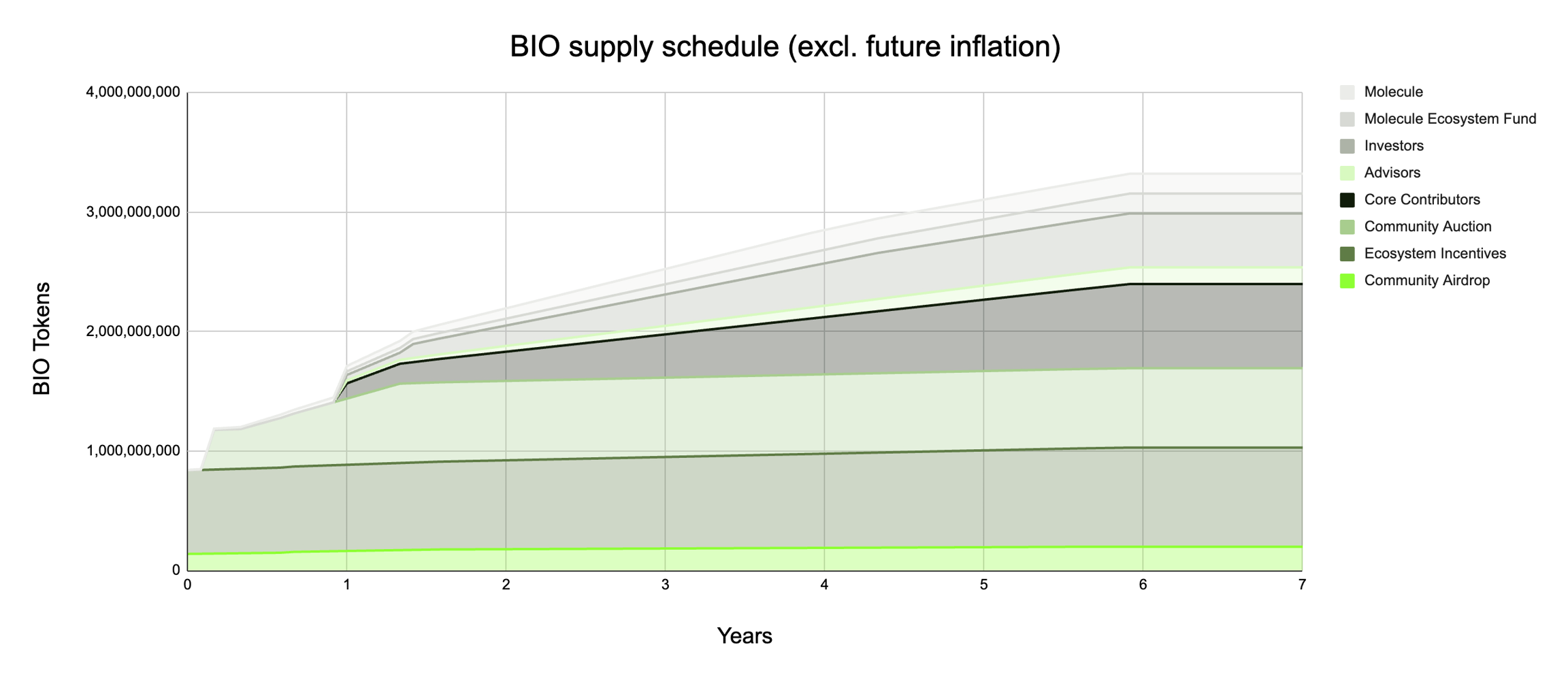
Total initial supply is 3,320,000,000 BIO, with the following characteristics:
-
Status: Non-transferable (not yet tradable on secondary markets)
-
Maximum Supply: No hard cap; future minting possible via governance vote
-
Minting Mechanism: Requires deployment of a new token contract to replace the current BIO token
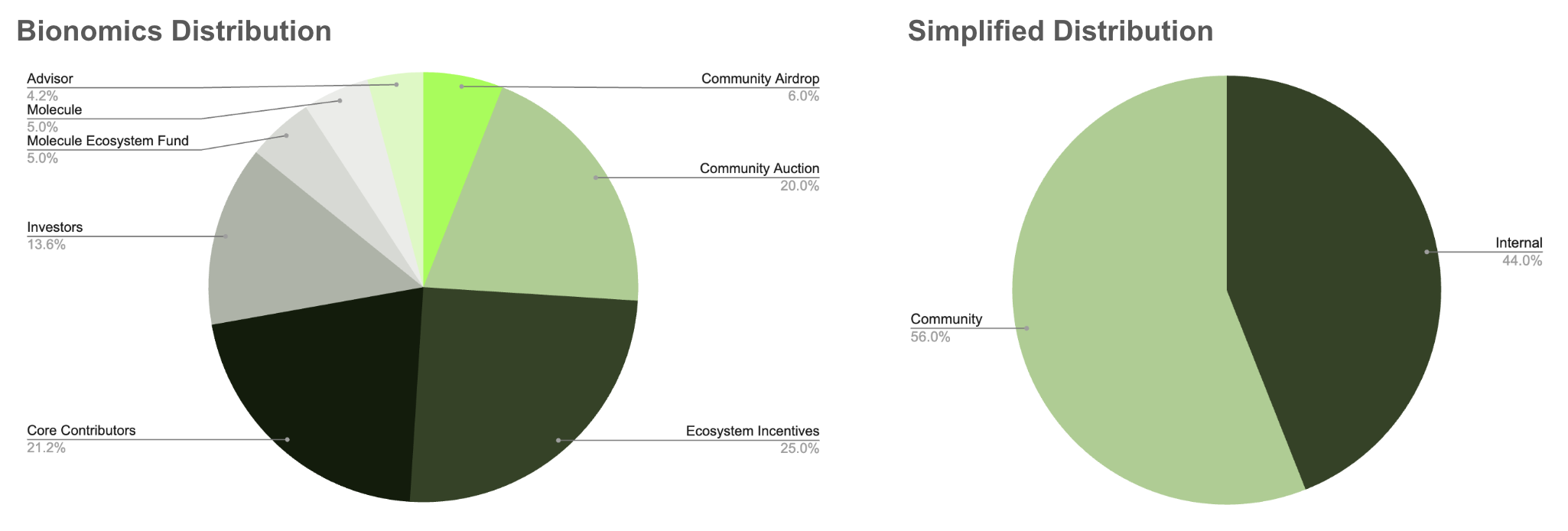
Token Distribution: Community (Total 56%):
-
Community Airdrop (6%): 199,200,000 BIO
-
Community Auction (20%): 664,000,000 BIO
-
Ecosystem Incentives (25%): 830,000,000 BIO
-
Molecule Ecosystem Fund (5%): 166,000,000 BIO
Other allocations:
-
Core Contributors (21.2%): 703,840,000 BIO
-
Investors (13.6%): 451,520,000 BIO
-
Molecule (5%): 166,000,000 BIO
-
Advisors (4.2%): 139,440,000 BIO
Each category has a specific unlock schedule:
-
Community Airdrop:
-
Public airdrop portion: No lock-up
-
BioDAO and Genesis members: 1-year cliff, followed by 6-year linear unlock
-
-
Community Auction: 50% immediately available, 50% linearly unlocked over 1 year
-
Ecosystem Incentives: No lock-up
-
Core Contributors: 1-year lock-up, followed by 6-year linear unlock
-
Molecule Ecosystem Fund: Linear unlock over 4 years
-
Molecule: Linear unlock over 4 years
-
Investors: 1-year lock-up, followed by 4-year linear unlock
-
Advisors: 1-year lock-up, followed by 6-year linear unlock
BIO Protocol also employs a two-round Genesis auction mechanism for its token launch.
Genesis is BIO Protocol’s launch program, designed to allocate initial tokens via auction and raise funds for the protocol. It consists of two rounds, each with distinct goals and mechanisms.
The first round used an English auction format, where participants bid in ETH. Its main objectives were building the initial community, discovering the market price of the BIO token, and raising initial capital.
The first round has been successfully completed. Currently, BIO is in the second phase of the Genesis plan. This round uses a Dutch auction mechanism and allocates 12.75% of the total token supply. According to recent updates, most of the second-round auctions have concluded, with only a few still ongoing.
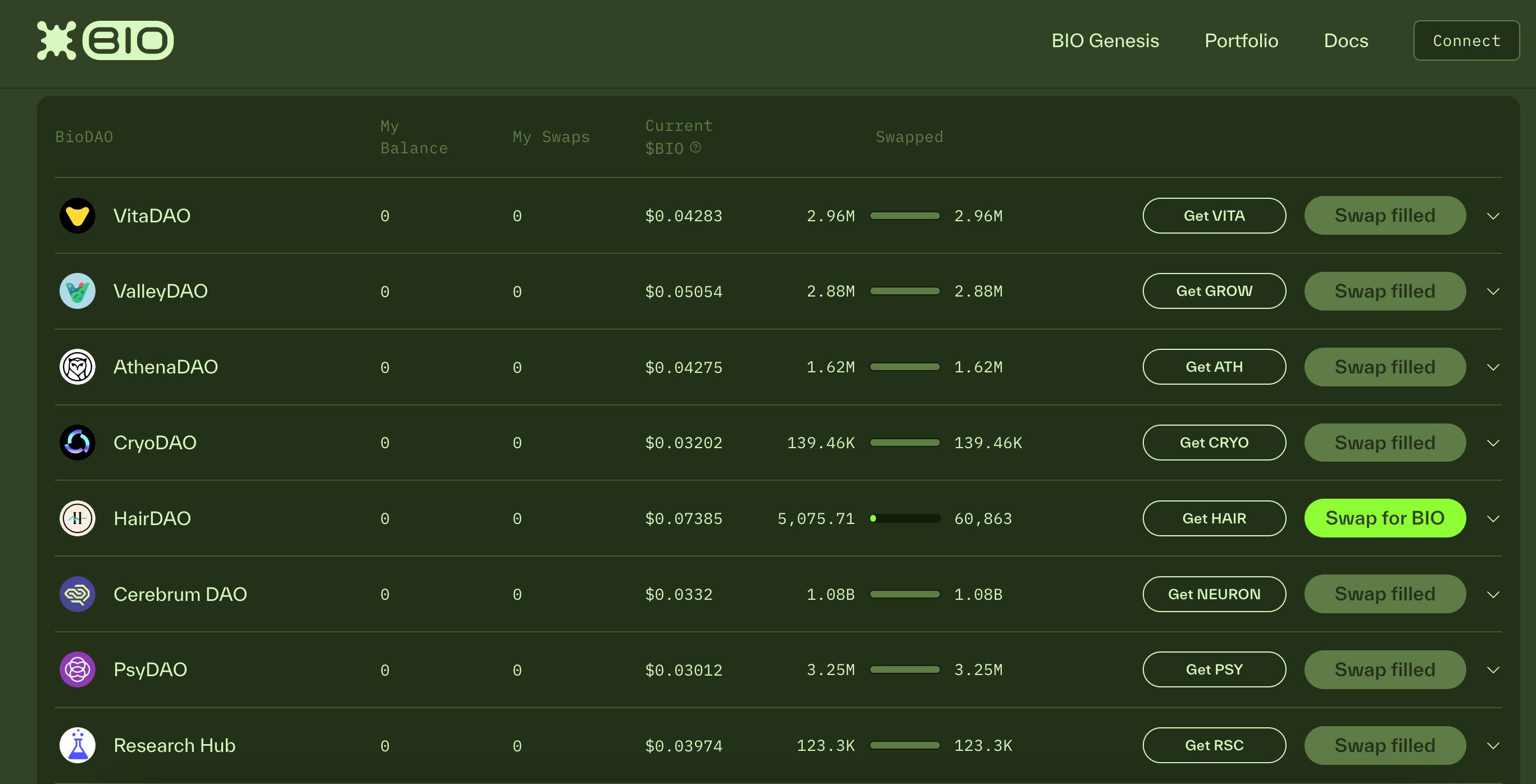
Interested investors can participate via BIO’s official platform. Participants must first connect their wallets and then choose whether to bid in the bioDAO asset pool or the ETH pool. (Note from TechFlow: This is for informational purposes only and does not constitute investment advice. Please do your own research.)
After the auction, participants receive BIO tokens, with 50% immediately available and the remaining 50% linearly unlocked over one year. This structure aims to balance immediate liquidity with long-term holding incentives.
In addition to the Genesis auction, BIO has designed a comprehensive airdrop program to reward early supporters and expand the community. Key features include:
The airdrop allocates 6% of the total supply—approximately 199,200,000 BIO tokens—a significant amount reflecting the project’s emphasis on community building.
The airdrop targets three main groups:
-
Public Airdrop: Early users of the Molecule platform, members of life-science-related DAOs, etc.
-
BioDAO Airdrop: Specifically for bioDAOs already part of the BIO network
-
Genesis Member Airdrop: Rewards for early contributors
Different airdrop types have different vesting periods. The public airdrop has no lock-up, allowing immediate use. In contrast, bioDAO and Genesis member airdrops have longer lock-ups: a 1-year cliff followed by a 6-year linear unlock.
Overall, BIO’s Genesis launch plan and airdrop strategy reflect a strong commitment to fair distribution, community engagement, and long-term sustainability. Through multi-phase auctions and tiered airdrops, BIO is actively building a diverse, highly engaged community to lay a solid foundation for its decentralized biomedical research network.
Not an Isolated Case
Besides Binance Labs entering the DeSci space through this project, other VCs are also watching closely.
Previously, in our article “Understanding AminoChain: a16z’s First Foray into DeSci with $5M Lead Investment, Enabling Patients to Earn from Biological Samples”, we noted that around 40 days ago, a16z also made its debut investment in this sector.
At a time when VCs avoid each other’s tokens and memes dominate the market, if crypto can genuinely contribute to traditional industries—and if VCs can seriously back projects beneficial to other sectors—it would represent a positive and refreshing shift.
As Paul Kohlhaas, founder of BIO Protocol, put it: “Science drives human progress, but we trap our brightest minds in an endless funding maze—they spend 80% of their time writing grants instead of solving humanity’s greatest challenges.”
Less hype, more meaningful technological projects unlocking breakthrough advances—the choices of leading industry investors deserve attention. But their actual impact and ultimate returns will inevitably require time and market validation.
Join TechFlow official community to stay tuned
Telegram:https://t.me/TechFlowDaily
X (Twitter):https://x.com/TechFlowPost
X (Twitter) EN:https://x.com/BlockFlow_News
 深潮TechFlow


