Unveiling the Dilemma of Crypto Venture Capital: $49 Billion Invested Since 2015, Yet Returns Struggle to Match Bitcoin
TechFlow Selected TechFlow Selected
Unveiling the Dilemma of Crypto Venture Capital: $49 Billion Invested Since 2015, Yet Returns Struggle to Match Bitcoin
The asset management scale of liquid cryptocurrencies will exceed that of cryptocurrency venture capital.
 Navigating Web3 tides with focused insights
Author: rennick
Translation: TechFlow
Crypto venture capital has significantly underperformed compared to Bitcoin. Is crypto venture facing a crisis? We analyzed data since 2015 to find out.
In short, the entire industry is underwater. From 2015 to 2022, $49 billion invested in token projects generated less than $40 billion in value, resulting in a -19% return (before fees and expenses).
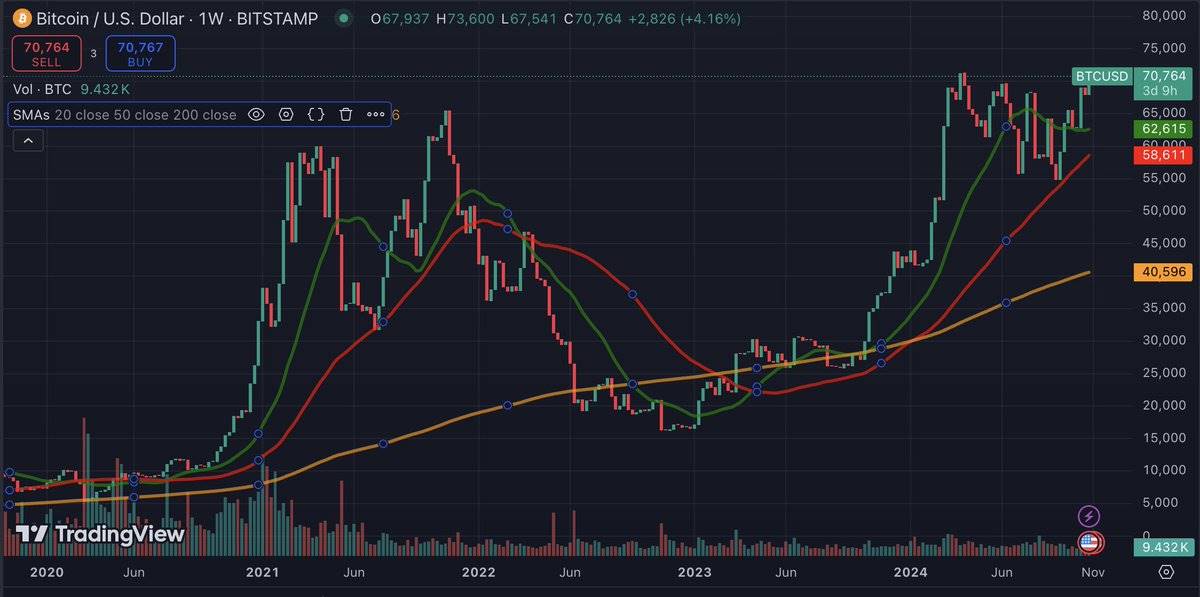
Meanwhile, Bitcoin is approaching new all-time highs, up 2.3x from its November 2021 peak on a 200-day moving average basis (see gold line). How did we arrive at these conclusions?
We analyzed all venture funding rounds prior to January 1, 2023. In crypto venture, $70 billion of the total $88 billion invested (80%) occurred before this date. Why?
Because any more recent investments are unsuitable for inclusion, as they haven't had sufficient time to realize value.
Typically, it takes about three years from seed round to token generation event (TGE), and less than one year for later stages. Therefore, excluding data within the past two years seems reasonable. There are exceptions, of course, but not enough to alter the overall analysis. Thus, approximately $70 billion was invested between 2015 and 2022, of which we assume 70% went into token projects—an empirical estimate.
Clearly, not all crypto venture capital flows into token projects. But apart from recent acquisitions like Bridge and Coinbase’s IPO, there have been few liquidity events, making accurate valuation of such investments difficult at present.
From 2015 to 2022, venture capital invested $49 billion in token projects.
The fully diluted valuation (FDV) of tokens from these venture-backed projects reached $439 billion.
Notably, $100 billion of that value comes from SOL alone.
Clearly, VC returns are driven primarily by a few outlier projects, but beyond those specific funds, the broader industry hasn’t widely participated in this value creation.
Therefore, we can consider the remaining value to be $339 billion.
So, what share of these projects does the venture capital industry collectively hold?
We assume VCs collectively own 15% of the FDV of these tokens.
Each venture round typically purchases around 7% of a network, and usually there are two rounds (sometimes fewer) before TGE.
Hence, a 15% ownership stake appears reasonable.
Based on current market caps, the venture industry theoretically holds $66 billion worth of tokens.
If we exclude SOL—the major outlier—this drops to $51 billion.
Thus, the entire industry’s pre-2022 investments (before fees and expenses) grew by 34% overall, including SOL.
Excluding SOL, returns are essentially flat.
We know there's a significant difference between liquid market cap and fully diluted valuation (FDV).
These figures assume locked tokens' FDV could be sold at current prices.
Accounting for a standard 40% illiquidity discount (DLOM)—which may vary widely in crypto—including SOL brings project value down to about $40 billion, and excluding SOL to around $30 billion.
After factoring in fees and expenses, this number shrinks further.
At current prices, the industry is actually in net loss territory.
Yet, as the saying goes, someone who is six feet tall can still drown in a river with an average depth of five feet.
These are rough averages meant to illustrate the general state of the industry.
There are indeed extreme success stories.
If you invested in SOL’s seed round, or made a large enough bet in a small fund on a project now worth over $1 billion, your performance would surpass both Bitcoin and the industry average.
It's also notable that most altcoin value stems from projects launched early in the last cycle—or even earlier.
Recent projects are still developing, so there may still be upside potential ahead.
Of the $70 billion invested between 2015 and 2022, most occurred in the latter half of that period.
These were often larger investments made by bigger firms at higher valuations.
Therefore, it remains uncertain whether recent projects will yield strong investment returns.
One final point—how does this compare to Web2 venture returns during the same years?
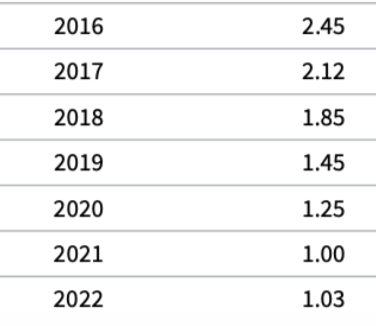
According to manager-reported TVPI (Total Value to Paid-In), net returns after fees and expenses appear roughly comparable.
So, how should I interpret all this?
When comparing venture capital to liquid assets, the vast majority of funds underperform Bitcoin, especially when measured from troughs.
Even using moving averages, performance remains weak.
This mirrors traditional VC’s experience relative to Nasdaq.
Coatue’s Thomas Laffont delivered a great presentation on this at the All In Summit:

Why is this the case, and why do Web2 and crypto show similar patterns?
Venture capital is genuinely hard! Low hit rates, poor liquidity, high fees.
But other forces are at play—economies of scale and network effects.
The “Magnificent Seven” driving Nasdaq returns benefit strongly from network effects.
Bitcoin, Ethereum, and SOL are no different.
This means as these large platforms/networks expand, their returns actually grow.
Simultaneously, product value increases with user base growth.
This makes it difficult for smaller startups to compete—at least in terms of average investment returns.
Will this change?
The crypto venture industry may need to rebalance total fundraising and fund sizes (or TOTAL3 needs to triple rapidly).
The Magnificent Seven’s growth rate won’t last forever—they can only capture so much of global GDP.
But interestingly, BTC, ETH, and SOL might slow down less quickly than the Mag7.
Arguably, money is the technology with the strongest network effects.
BTC clearly fits this. The value of ETH and SOL lies in people’s hope that they too can become forms of internet money.
In other words, today’s crypto adoption curve resembles that of the Mag7 in the early 2010s (or even earlier), meaning vast markets remain untapped.
Currently, capital deployed in crypto venture is 20 times larger than in mature institutional liquid crypto funds ($88+ billion vs ~$4 billion).
Therefore, if things unfold as I expect, AUM in liquid crypto will eventually surpass crypto venture.
After all, this aligns with trends seen elsewhere globally.
Disclaimer:
Several individuals have reached out noting some data appears missing. We used only the existing data cited in reports, without altering or interpreting it. Our goal is to present facts and offer the industry something to reflect upon.
If you believe certain data is missing or inaccurate, please contact us. We may update in the future and hope to improve through this process.
Join TechFlow official community to stay tuned
Telegram:https://t.me/TechFlowDaily
X (Twitter):https://x.com/TechFlowPost
X (Twitter) EN:https://x.com/BlockFlow_News
 @RennickPalley