Cryptocurrency marketing needs a better storytelling approach
TechFlow Selected TechFlow Selected
Cryptocurrency marketing needs a better storytelling approach
You need continuous heating (marketing) to raise the temperature, and when considering other factors like altitude (lack of company motivation), it takes even longer to reach boiling point.
 Navigating Web3 tides with focused insights
Author: Nate, Head of Growth at Eclipse
Translation: Luffy, Foresight News
As marketers, our job isn’t to master the most advanced technology; instead, we must become the best storytellers. And yet, more often than not, the stories we tell are dull, disjointed, and lack coherence.
Some of my favorite stories come from film franchises. I love how each individual movie stands on its own, while also contributing to a larger, cohesive narrative. One of my recent favorites is *Dune*—each installment works brilliantly as a standalone film, but together they form an epic, all-encompassing saga.
I’m not suggesting we need to remake a cinematic masterpiece for a crypto company. But what exactly are we saying? Right now, beyond endless product integration announcements, podcasts, and spammy posts, there’s nothing—just boredom, with no narrative thread tying it all together. We’re clearly improvising.
Telling great stories requires intentionality and purpose. Many of us adopt a “spray and pray” or “throw everything at the wall and see what sticks” approach. That might work when initially testing paid ads and placements, but it’s a terrible strategy for building a strong brand. Your marketing shouldn’t start with a blog post and end with a random meme—especially if there’s no unifying theme connecting them. We can and must do better.
Building a strong brand is like boiling a pot of water. When you place a pot on the stove, it doesn’t instantly go from room temperature (mediocre brand) to boiling (high recognition). You need consistent heat (marketing) to raise the temperature. Add in other factors like altitude (lack of internal momentum), and it takes even longer to boil.
So how do you get the water to boil faster? Adding salt helps. In branding, intentionality in marketing is that pinch of salt. If you’re thorough and deliberate in planning your marketing communications and packaging, you’ll accelerate brand awareness. Always ask yourself: “How does this announcement tie into my brand story?”
To be honest, every crypto marketer could benefit from improvement here. I believe there are two main reasons why many of us—including myself—fall short:
We change our core messaging too easily based on shifting industry trends
We’re too influenced by feedback coming from all directions (from our CEO down to colleagues)
It’s no secret that our industry suffers from acute collective ADHD. Take memecoins—they’re driven by ever-changing transactional metadata (politics, specific blockchains, etc.), which directly impacts price behavior. Yet we also have a counter-narrative that captures the attention of intellectual crypto Twitter circles. Over the past year, three major themes stand out:
-
Modular vs. monolithic blockchains
-
App-specific chains vs. app-specific sequencing
-
Solana vs. Ethereum
The problem isn’t trying to align our projects with these discussions. Leveraging trending topics to redirect attention toward your project is smart. But trouble arises when we go too far—sacrificing consistency in our core brand message just to chase narratives.
You can’t respond to every industry debate, and not every topic will stay relevant for weeks. Our colleagues—and even ourselves—are easily distracted by passing trends. These may influence your business strategy at times, but your brand should evolve consistently and deliberately. High-quality feedback is valuable, but you also need to know when to say no—for the sake of the brand.
Everyone has a right to an opinion, but not all opinions carry equal weight. Our CEO Vijay has shared his views multiple times, and I’ve deeply considered his input on our GTM strategy. When Vijay tells me he wants to see a certain type of DApp built on Eclipse, I might ask questions—but ultimately, I listen. He’s been in this space for 10 years, and I trust his business judgment. Simply put, I follow his lead because he knows more about those areas than I do.
But when it comes to marketing, that’s my domain. I’ve rejected several of Vijay’s marketing suggestions because they didn’t align with the broader narrative we’re building for Eclipse. Sometimes I decline ideas due to timing conflicts with other planned initiatives. I’ve even told Vijay, “I’ll die on this hill,” to secure more budget for specific campaigns. I do this not out of defiance, but because it’s my responsibility. I wasn’t hired to be a “yes man”—I was hired to lead marketing and make it exceptional.
Similarly, I value feedback from the Eclipse team and my colleagues. They often inspire me. For example, much of our recent ASS content was conceptualized by teammates, not me. It helped us gain visibility. But when I believe their suggestions are off-track, I still push back. I’m not aiming for a few months of attention—I’m aiming for years. It’s my duty to ensure we all move forward with intention.
This is key to maintaining a consistent brand voice. Only one person can drive the car. Only one director controls the film’s plot. Ultimately, if our brand underperforms, it’s not my colleagues’ fault—it’s mine. If Eclipse’s brand fails, I should be the first held accountable.
That said, I realize all of this sounds abstract. Easier said than done. So let me share the detailed origin and evolution of our mascot, Turbo—hopefully this will clarify what I’m trying to convey.
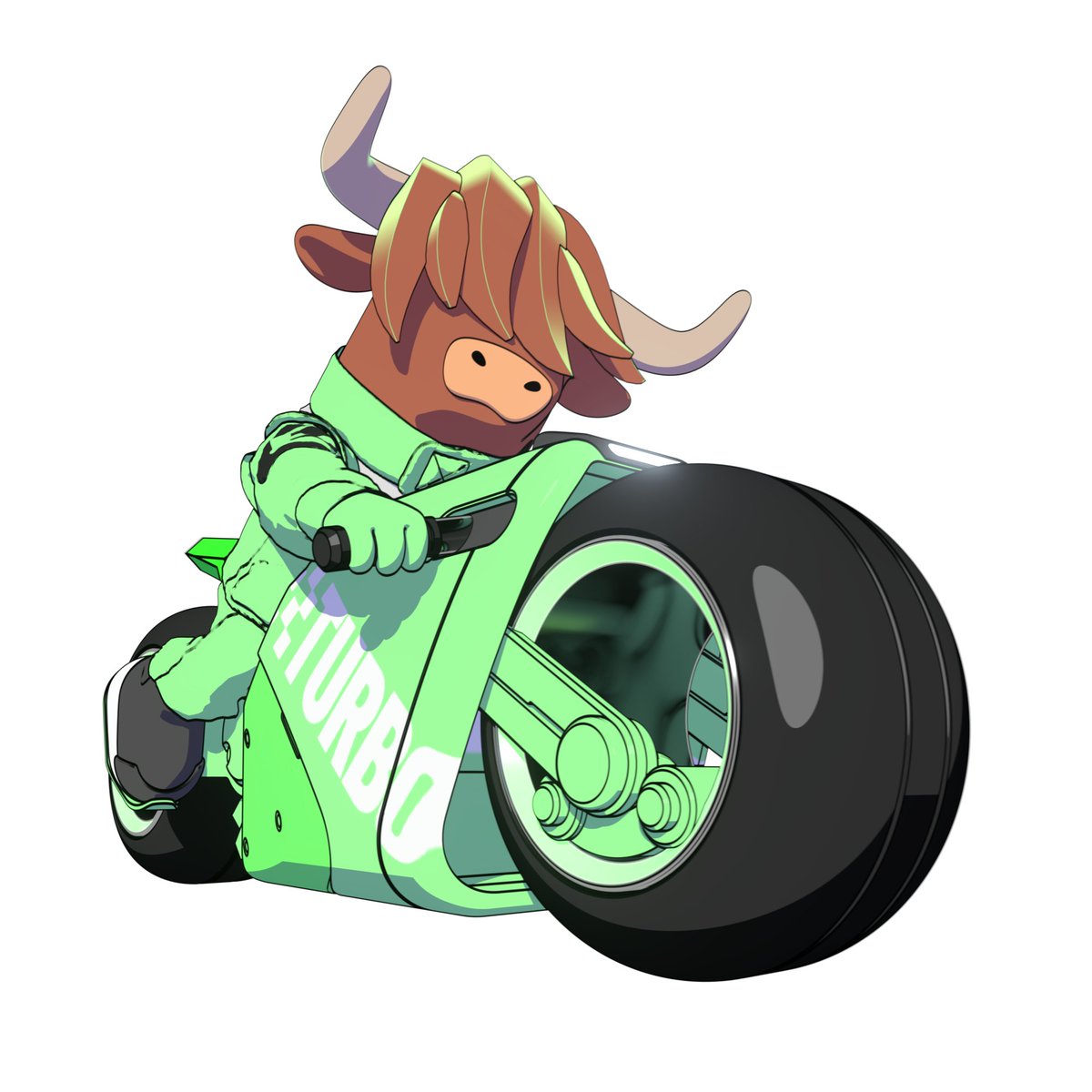
Many people have asked me about Turbo—and whether you should create a mascot too. Short answer: probably not. To explain why, let’s start with the history of how Turbo came to be.
Long before I joined, the core Eclipse team had been joking about the “thicc sequencer”—I’ll come back to that. Despite strong funding announcements, Eclipse struggled to capture sustained community attention. That’s when Vijay reached out to me, and we began discussing my potential role at the company. On the day I formally interviewed for the position, I pointed out that the “intern account” strategy wasn’t working. Too many projects were jumping on the trend—creating intern accounts to boost engagement and visibility (Eclipse was doing it too). The issue? Only a few teams executed it well, and it was increasingly clear that marketing teams were simply copying others’ success.
This is one of the biggest flaws in industry-wide marketing. Leadership teams don’t want to take risks or spend money because they lack conviction. So when they see someone else succeed, they copy it—instead of creating something fresh and original. Their logic is to allocate resources to strategies that have worked before. But the flaw in that thinking is this: those strategies succeeded precisely because they were unique and intentional. Copying rarely works. If you’re not the first to do something, you need to be significantly better to stand out.
I refused to fall into that trap—to let our brand become just another forgettable name in the graveyard of failed crypto companies. Eclipse had to be unique. So I decided to abandon our previous intern account efforts entirely and try something different: create a mascot people could rally around—even if they didn’t know what Eclipse was.
That’s when our marketer brought a Highland cow into an art gallery in New York—and it went viral. Influencers completely outside crypto Twitter started posting photos with the cow. This was our “aha” moment. Highland cow = thicc. Highland cow = viral in mainstream culture. There was a way to thoughtfully and organically connect this animal to our brand—which is why we chose the Highland cow as our mascot. Not to copy others—we were creating legend in real time.
Once we settled on the Highland cow, it was time to design and name it. Previously, Eclipse had marketed around blockchain performance, but it was clear that performance alone was no longer compelling. TPS records kept getting broken by newcomers, and nobody cared anymore if you were slightly faster than another chain. But I didn’t want to abandon performance entirely—after all, Eclipse is extremely fast. During brainstorming, I realized the best way to highlight our performance wasn’t to advertise it directly, but to imply it indirectly. Even better if it was achieved in a distinctive way, unconnected to other crypto projects. So I looked beyond crypto for inspiration.
You probably don’t know this, but my inspiration actually came from anime. I approached our website and animation designers and asked them to begin ideating with two key inspirations in mind: *Akira* and *Speed Racer*. This inspiration had nothing to do with crypto—that’s precisely why I believe our brand and Turbo became so distinct.
After several rounds of iteration, we finalized a new logo, brand colors, website design, and Turbo’s artwork. Bold yellow-green aesthetics, front-and-center hero imagery—a lovable 2D/3D hybrid Highland cow racing cars and motorcycles, evoking speed. The animation quality was noticeably superior to any other mascot I’d seen, making ours truly stand out. We decided to name it “Turbo.”
Soon after, I ran into a problem. Everyone at Eclipse was excited and eager to share their ideas. We faced a classic issue: too many cooks in the kitchen. I quickly realized that to maintain momentum, I needed to isolate Turbo from the rest of the team. Despite my appreciation for the Eclipse team, I repeatedly said no to their requests. Here are a few examples:
1. Team members wanted to heavily invest in producing more Turbo content. Before scaling, I didn’t think it was wise—so I first gathered data. Eventually, I did decide to increase investment in Turbo, based on three key data points:
Twitter content related to Turbo consistently outperformed all other types of posts;
Our community united around Turbo in an unprecedented way. The volume of fan art, memes, and organic content created by the community convinced me we’d created something truly special;
People began asking the team about Turbo—even if they’d never previously cared about Eclipse;
2. Team members suggested using Fiverr to mass-produce more Turbo content. Firmly rejected. We’re a lean team with fewer than 30 full-time employees. Our strength isn’t scale—it’s quality. Sacrificing quality for quantity would make Turbo indistinguishable from other mascots. We’d only be shooting ourselves in the foot.
3. Team members wanted to financialize Turbo—turn it into an NFT or memecoin. Absolutely not. We’re building a permissionless ecosystem, so if the developer community wants to do something with Turbo, they can. But the core Eclipse team will never launch a Turbo NFT collection or memecoin. Why? Because if it fails, we’d destroy all the goodwill and momentum we’ve built around Turbo—not to mention the massive distraction it would create for our product and engineering teams. I refuse to tie Turbo’s fate to the performance of digital assets. Turbo is a brand asset—one that resonates more strongly with general audiences than Eclipse alone ever could.
I’m sharing all this not for self-congratulation, but to show the depth of thought behind the scenes. Turbo has consistently resonated with our audience and become one of our most effective marketing levers. So when you ask me, “Should I make a mascot?”—it’s not a simple yes or no. The answer depends on whether you’re willing to invest in your brand mascot meaningfully. If you just sketch an animal and call it a day, it won’t help your brand much. Water takes time to boil—yet many of you expect it to happen instantly.
To be honest, Turbo’s story has only just begun. We haven’t done nearly enough with him—or with Eclipse’s overall brand—to justify calling it a game-changer. But we’ve been working hard behind the scenes, letting ideas mature over time. Turbo is here to stay, and I’m incredibly excited for everyone to see our plans for the next six months. We have some bold things in store. November was just the beginning.
I hope you’ll enjoy all future Turbo content, as we continue building a story around Eclipse. I hope you’ll also start viewing your own brand as a story—finding ways to connect all your announcements through a central brand identity and narrative.
Join TechFlow official community to stay tuned
Telegram:https://t.me/TechFlowDaily
X (Twitter):https://x.com/TechFlowPost
X (Twitter) EN:https://x.com/BlockFlow_News
 @EclipseFND