The OP Stack camp welcomes multiple star projects, Superchain nearing 60 members, several receive generous subsidies
TechFlow Selected TechFlow Selected
The OP Stack camp welcomes multiple star projects, Superchain nearing 60 members, several receive generous subsidies
While the OP Stack ecosystem is accelerating its expansion, the scale and activity of the Superchain ecosystem are also significantly increasing.
 Navigating Web3 tides with focused insights
By Nancy, PANews
In recent months, an increasing number of crypto projects have entered the Layer 2 (L2) race, with the OP Stack technical framework frequently taking center stage. The participation of several high-profile projects has drawn significant market attention to OP Mainnet (Optimism). While the OP Stack ecosystem continues to expand rapidly, the scale and activity of the Superchain ecosystem are also growing substantially. This growth is largely driven by generous subsidy policies from OP Mainnet, although most chains within the Superchain currently contribute relatively limited revenue, leaving the ecosystem still heavily reliant on Coinbase’s Base chain.
Nearly Half of Ethereum L2s Built on OP Stack; Superchain Accounts for Over 40% of Daily L2 Transactions
Coinbase launched Base, an Ethereum L2 network built on OP Stack; Worldcoin announced its OP Stack-based blockchain, World Chain, and joined the Superchain; Uniswap introduced Unichain, its own Layer 2 network built using OP Stack technology; Sony’s Layer 2 blockchain Soneium adopted the OP Stack codebase—over the past few months, OP Stack has attracted a growing list of high-profile participants.
In fact, OP Stack is currently one of the most popular and attractive L2 frameworks in the Ethereum ecosystem. According to L2BEAT data, as of October 31, there were 111 Ethereum Layer 2 networks. Data from Superchain Eco shows that 59 of these L2s are built on OP Stack—far surpassing competitors such as Arbitrum One (31 projects) and Polygon (only 8).
Moreover, L2 projects running on OP Stack wield considerable influence. L2BEAT data indicates that six out of the top ten Ethereum L2s by TVL use OP Stack as their underlying technology. Notably, Base ranks second with a TVL of $8.17 billion.
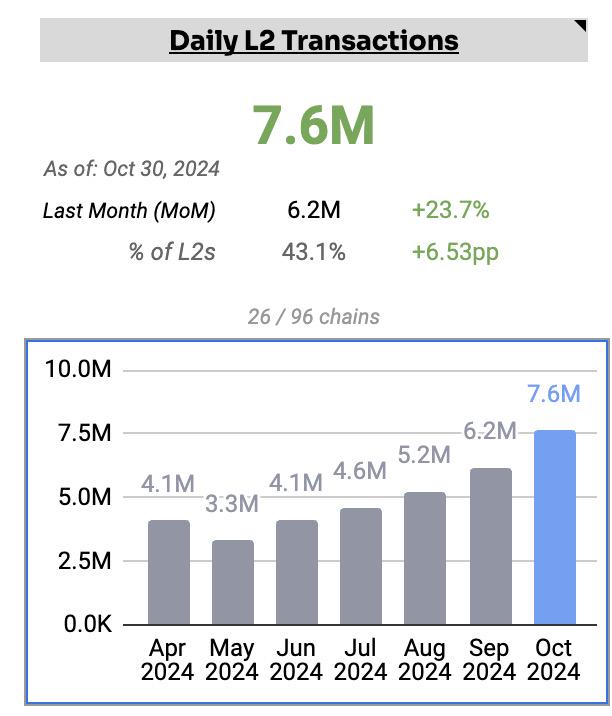
As OP Stack continues to gain momentum, the Superchain ecosystem is also expanding—a key tool used by OP Mainnet to address fragmentation in the L2 landscape. As of October 31, Superchain Eco reports that 36 OP Chains have joined the Superchain, collectively processing 7.6 million daily transactions—an increase of 23.7% month-over-month—and accounting for 43.1% of the entire L2 market.
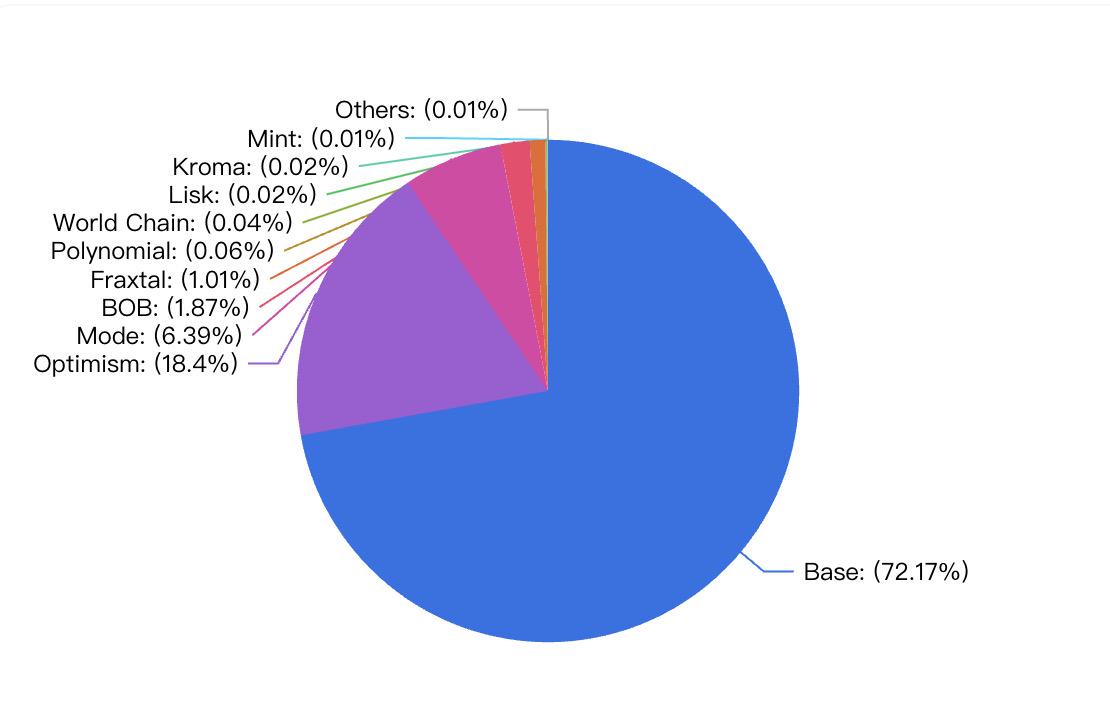
Additionally, DeFiLlama data shows that the total value locked (TVL) across Superchain's OP Chains exceeds $3.67 billion. Base leads with $2.65 billion, representing 72.1% of the total; OP Mainnet follows with $670 million (18.4%); and Mode comes third with over $230 million (approximately 6.4%). In contrast, most other projects have TVLs below $100 million, with some registering only a few thousand dollars.
Heavy Subsidies Fuel Superchain Growth; Over $42 Million in Revenue Primarily Driven by Base
The rapid development of the OP Mainnet ecosystem is largely attributable to its generous funding subsidy strategy. This "token-dropping" approach has successfully attracted numerous developers and projects while effectively incentivizing market participants, laying a solid foundation for rapid ecosystem growth and prosperity.
According to official documentation, Optimism Collective supports builders through two main types of grants: Retroactive Public Goods Funding (Retro Funding) and Mission Grants. Official data reveals that since 2022, Optimism Collective has distributed over 60.81 million OP tokens through multiple rounds of retroactive funding, with another 800 million OP tokens reserved for future rounds. Individual project grants range from several thousand to hundreds of thousands of tokens.
This strategy has also been applied to building the Superchain ecosystem, making it more attractive compared to other L2 stack solutions. For example, in April’s fourth round of retroactive public goods funding, 10 million OP tokens were specifically allocated to builders deploying contracts on the Superchain and generating block space demand. In August, Optimism announced an additional 50 million OP tokens awarded to creators and builders within the Superchain.
Several Superchain members have already received funding. For instance, the Optimism Foundation committed 118 million OP tokens to Base over six years; Mode, a modular DeFi L2 based on OP Stack, will receive 2 million OP tokens (worth approximately $5.3 million at the time); Kraken’s L2 network Ink secured 25 million OP tokens (currently valued at around $42.5 million) under an agreement reached earlier this year, with tokens released monthly; BOB, a Bitcoin L2 project and the first Bitcoin-native project integrated into the Superchain, received OP tokens worth $870,000; Mint Blockchain received a strategic investment of 750,000 OP tokens (valued at $1.35 million) from the Optimism Foundation...
Regarding token unlock rules, Shier Han, co-founder of Mint Blockchain, told PANews: “For projects receiving smaller token rewards, OP often provides direct subsidies, but these come with certain requirements aimed at promoting ecosystem development. When blockchain teams distribute community rewards, they also establish corresponding rules—for example, regular users can earn rewards directly by using dApps, while developer teams must lock up their tokens, typically for one year. According to personnel from the Optimism Foundation, of the 25 million OP tokens allocated to Ink, 5 million are designated for direct development support, while the remaining 20 million are released based on transaction volume. Therefore, for major initiatives like Ink, OP implements more complex collaboration models, including performance-based agreements tied to key metrics such as gas fees.”
Since each OP Chain operates under a standardized revenue-sharing model, all Superchain chains are required to contribute either 2.5% of their sequencer income or 15% of net profits—whichever is higher—to the Optimism Collective. However, so far, the economic returns have been limited.
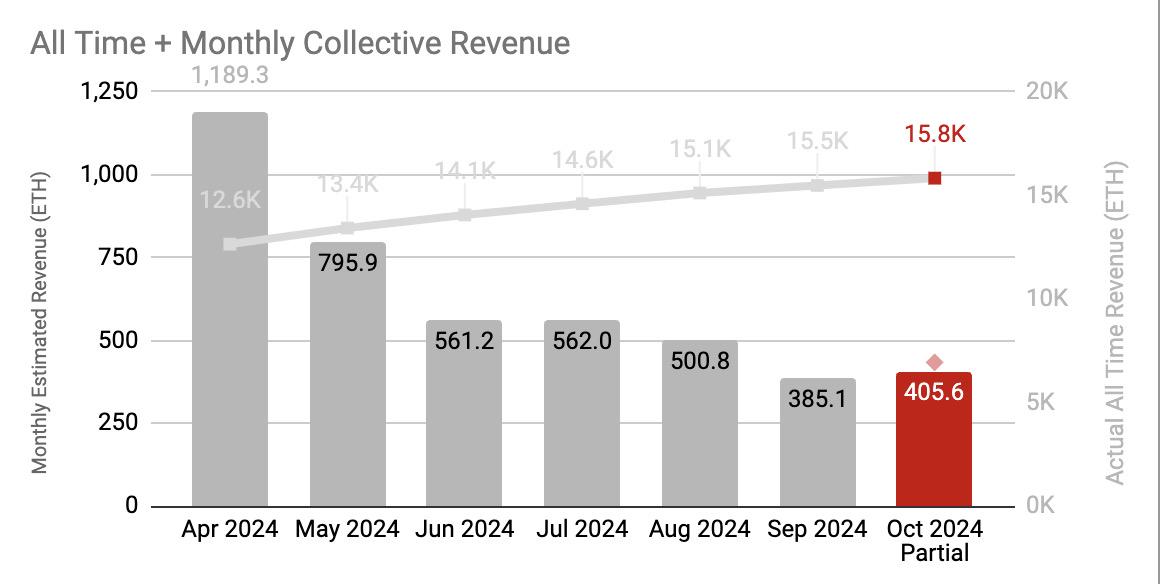
Data from Superchain Eco shows that Superchain chains have cumulatively contributed approximately 15,800 ETH in revenue (currently worth over $42 million). OP Mainnet itself contributed the largest share—over 12,800 ETH (80.2%)—followed by Base with about 2,878.7 ETH (18.6%). All other chains contribute less than 0.5% each. On a monthly basis, Optimism Collective’s income has shown a downward trend, declining nearly 65.9% since April this year. Nevertheless, with the addition of high-traffic projects like Unichain and Ink, OP Mainnet’s revenue potential is expected to grow further.
Join TechFlow official community to stay tuned
Telegram:https://t.me/TechFlowDaily
X (Twitter):https://x.com/TechFlowPost
X (Twitter) EN:https://x.com/BlockFlow_News
 PANews