








TON Ecosystem User Growth Path: From Social Viral Expansion to Traffic Monetization
TechFlow Selected TechFlow Selected
TON Ecosystem User Growth Path: From Social Viral Expansion to Traffic Monetization
With the continued growth of Telegram's user base, traffic monetization and co-marketing incubation models are demonstrating significant potential within the Telegram + TON ecosystem.
 Navigating Web3 tides with focused insights
Author: Andrea Chang, Alan Cui, Oak Grove Ventures
In the rapid development of the blockchain space, the TON ecosystem stands out with its unique growth trajectory. By drawing inspiration from WeChat's Mini Programs' success, TON’s MiniApps have not only driven user expansion within the ecosystem but also provided Web3 projects with innovative business models and effective user acquisition strategies. These MiniApps demonstrate strong user-attracting capabilities on Telegram channels, enabling Web3 projects to quickly reach a broad audience. This article explores the rapid growth of the TON ecosystem, analyzing how it leverages MiniApps to offer valuable business model insights and user acquisition strategies for future Web3 users on Telegram and other Web2 platforms, helping them succeed in an increasingly competitive market.
Significant Growth in TON On-Chain Data
Common indicators used to evaluate ecosystem growth include transaction volume, number of active addresses, smart contract development, total value locked (TVL), network fees, validator participation, token transfer volume, and MiniApp engagement. These metrics comprehensively reflect the development status and activity level of the ecosystem.
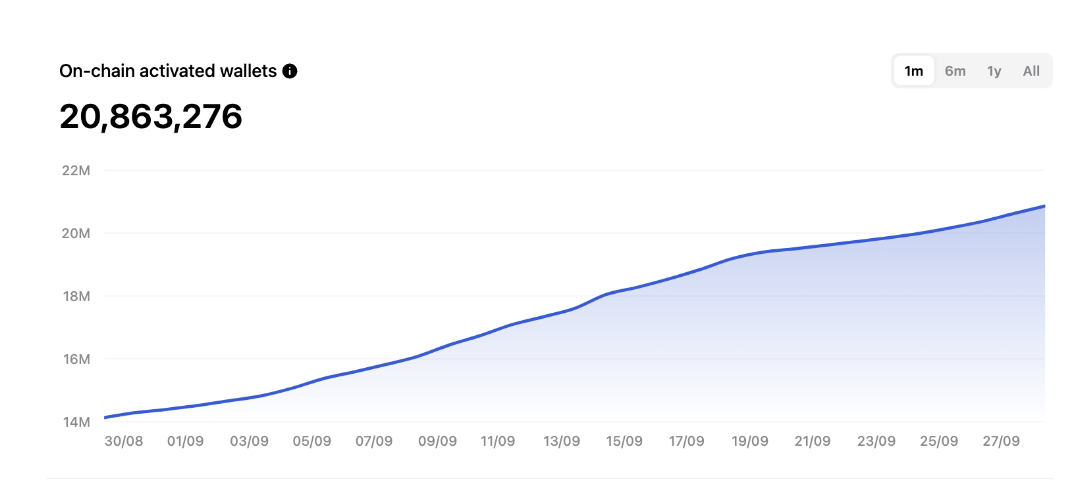
Source: https://www.tonstat.com/, as of September 30
User Acquisition Strategies on TON
Social Viral Growth: A Low-Cost, High-Efficiency User Growth Strategy
Social viral growth is a highly effective user acquisition strategy, widely adopted on social platforms. By leveraging users’ social networks, this strategy achieves rapid user growth through chain referrals. Compared to traditional advertising, social virality is lower in cost and more persuasive—users tend to trust recommendations from friends or family. Moreover, by harnessing network effects and viral mechanics, it creates exponential propagation, driving precise user growth. Users acquired through viral methods often share similar interests, needs, and behavioral traits with target audiences, making dissemination more efficient. Additionally, reliance on frequently used social apps increases user stickiness and frequency of platform interaction.
Learning from WeChat’s Viral Strategies
WeChat serves as a successful model for social virality, offering rich operational insights into MiniPrograms, external link management, and personal account usage that other platforms can learn from. Viral tactics once banned on WeChat can now be reattempted on Telegram. By studying WeChat’s experience, projects on Telegram can leverage these social viral strategies to achieve viral spread and rapid user growth.
Application Scenario: Gaming
Depending on product and business complexity, viral user acquisition can be categorized into several tiers:
Zero-effort earning models: Attract users via simple online earning mechanisms. Projects like Notcoin and Hamster Kombat have amassed hundreds of millions of users and large channel subscriber bases on Telegram.
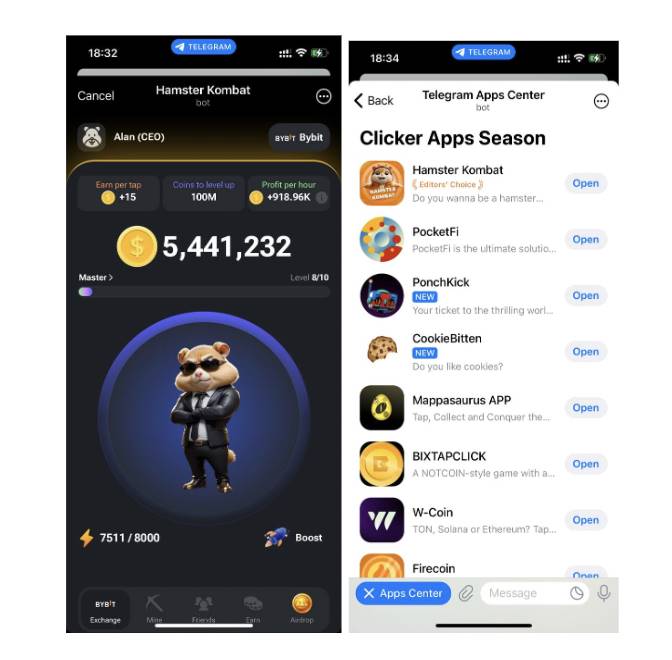
Probability-based gambling models: Incorporate lottery-style viral mechanics such as red packet opening, lucky wheels, and blind box unboxing. Typical examples include Catizen (cat-raising game) and TonGifts (red packet gifting). These projects rapidly expand their user base through social networks.
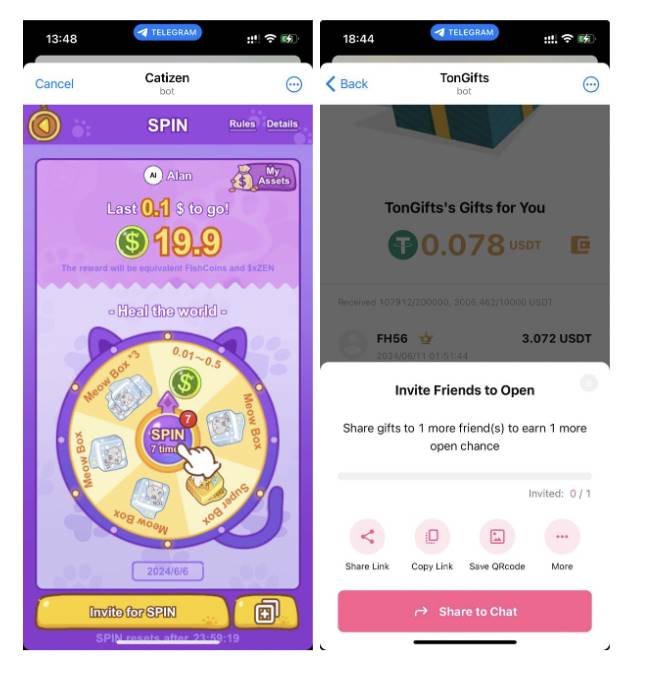
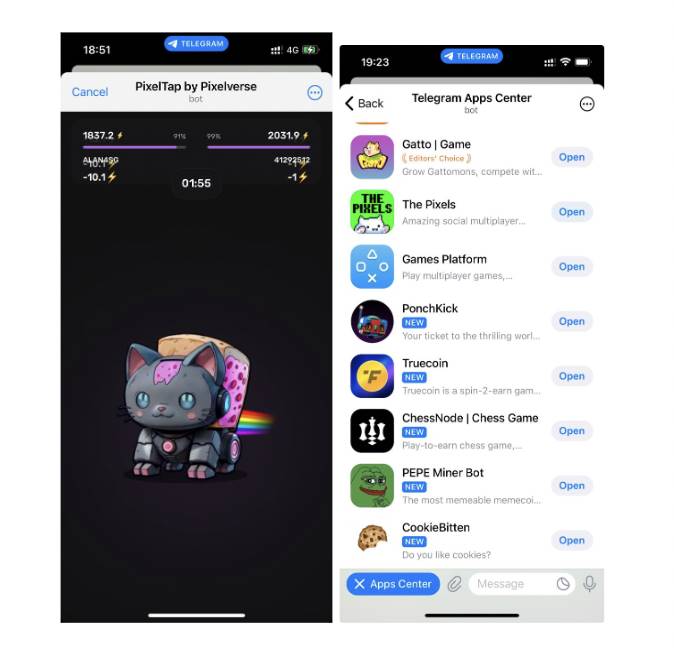
Casual gaming models: Engage users with more complex gameplay and entertainment scenarios, such as Catizen and PixelTap (robot battles). These casual games enhance user stickiness and engagement through deep interaction.
Application Scenario: Memecoins
User acquisition strategies are not limited to traditional products—they are crucial in memecoin promotion as well. The diffusion path of memecoins can be compared to natural versus lab-grown diamonds. Organic memecoins spread spontaneously through communities, typically starting from Reddit, expanding to Telegram or Discord, then reaching broader social platforms. In contrast, artificial memecoins use social viral strategies to achieve rapid, virus-like propagation within Telegram.
To create a breakout memecoin, the key lies in the “power creates miracles + encircling the cities from the countryside” strategy—leveraging low-cost, high-impact social scenarios for promotion. Developer-friendly environments and fair designs are also critical for attracting users. Additionally, generating FOMO (fear of missing out) drives greater participation, building strong consensus and user traffic.
These user acquisition strategies play a vital role not only in memecoin incubation but also in fueling robust user growth for the Telegram and TON ecosystems. Such strategies open vast opportunities for the future development of Web3 ecosystems.
Phenomenal Success Case: Notcoin
Notcoin is a social clicker game accessible via Telegram. Since its official launch on January 1, 2024, it has rapidly attracted a massive user base. Within just a few months, the game achieved astonishing figures: 40 million Telegram users, 8 million Telegram channel subscribers, and 6 million daily active users. Below are key milestones in its development:
-
January 1, 2024: Official game launch.
-
January 26, 2024: Reached 20 million cumulative users.
-
February 29, 2024: Co-branded campaign with Binance.
-
March 8, 2024: Opened pre-market trading on Getgems—10M Notcoin points exchangeable for one NFT voucher (equivalent to 10,000 $NOT).
-
March 30, 2024: Announced tokenomics, confirming 100% of NOT tokens would be distributed to players.
-
April 12, 2024: Ended game mining and revealed formal economic model.
-
May 16, 2024: Listed simultaneously on Binance, OKX, and Bybit.
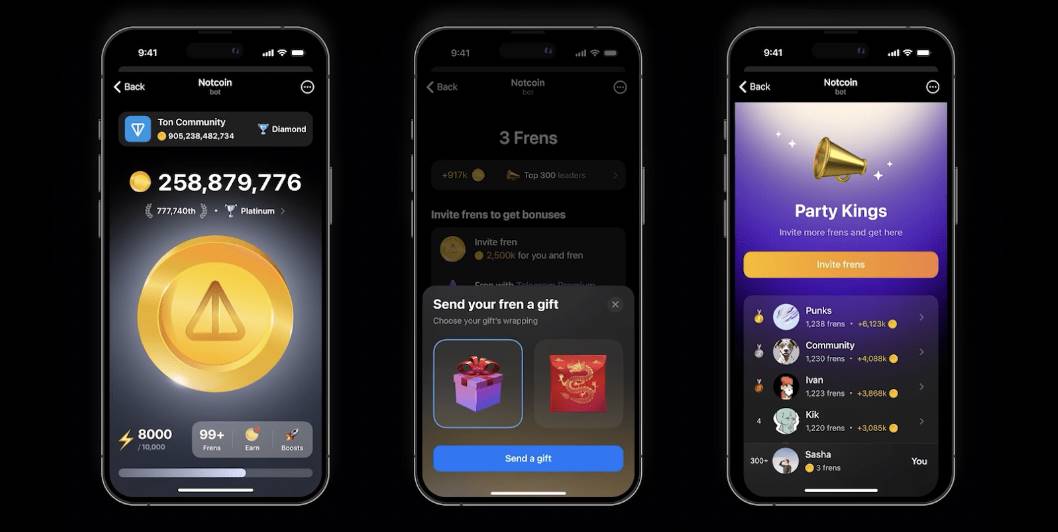
Notcoin’s success can be attributed to three key factors—"timing, opportunity, and harmony":
-
Telegram’s strategic need: Telegram seeks a thriving ecosystem filled with WeChat MiniProgram-like applications, where developers can profit. Notcoin perfectly meets this demand.
-
TON Foundation’s need: The TON Foundation aims to build utility and business models for the TON token by establishing an app ecosystem—and Notcoin serves as an ideal use case.
-
Exchanges’ need: Amid current market downturns, exchanges urgently require new Web3 users. Notcoin’s massive user base provides exactly that opportunity.
-
Web3 and Web2 users’ needs: Notcoin succeeded by addressing diverse user demands—experienced Web3 users seeking fairness, and new Web2 users drawn to low barriers and high returns.
Additionally, Notcoin’s success stemmed from satisfying different user segments—seasoned Web3 "degen" users valuing fairness, and new Web2 users craving low entry barriers and high rewards.
Main Business Models in Telegram + TON
1. In-App Purchases (Virtual Premium Services)
This model, which dominates revenue in WeChat’s mini-game ecosystem, has produced multiple hit paid products, such as the 2021 sensation "Sheep Game."

As of Q2 2024, monthly active users of WeChat mini-games surpassed 500 million, with projected annual revenue reaching 40 billion RMB. Below is the top-grossing mini-game chart for June 2024:

Source: DataEye Research Institute
Similar to WeChat mini-games, in-app purchases have become a successful business model in the Telegram + TON ecosystem, especially in gaming. Catizen is a prime example. Since launching in March 2024, Catizen attracted over 50 million users in under four months and generated over $20 million in revenue from in-game purchases. Notably, Catizen’s success isn’t just in user scale—it also boasts high ARPU (average revenue per user). Furthermore, 40% of Telegram Premium users are Catizen players, highlighting the strong integration between virtual premium services and the social platform, creating significant monetization opportunities for developers.
2. Token Launch & Exchange Listing
Token launch and exchange listing represent another major business model in the Telegram + TON ecosystem, with Notcoin being a prime example. Since its official launch in January 2024, Notcoin rapidly accumulated 40 million users and successfully brought the NOT token to market through a series of campaigns and strategic partnerships—including the Binance co-branded event and pre-market trading on Getgems. This model helped Notcoin quickly expand its user base and enabled a seamless transition from gaming to financial markets through its tokenomics. Ultimately, the NOT token was listed on major exchanges including Binance, OKX, and Bybit, further solidifying its market position. In late September, Catizen and Hamster also successfully launched on exchanges.
3. Traffic Monetization – Selling, Joint Operations, and Incubation
Traffic Sales: An Efficient Monetization Strategy
In the Telegram + TON ecosystem, traffic sales have emerged as an efficient and direct monetization method. Platforms like Holdcoin, Tomarket, and Banana exemplify this model, generating substantial income by selling user traffic from their Telegram channels. They operate multiple projects daily. Depending on the quantity, quality, and geographic distribution of users, mainstream platforms sell individual users at prices ranging from $0.03 to $0.10. This model enables quick cash flow generation and offers small-to-medium projects an accessible path to user acquisition.
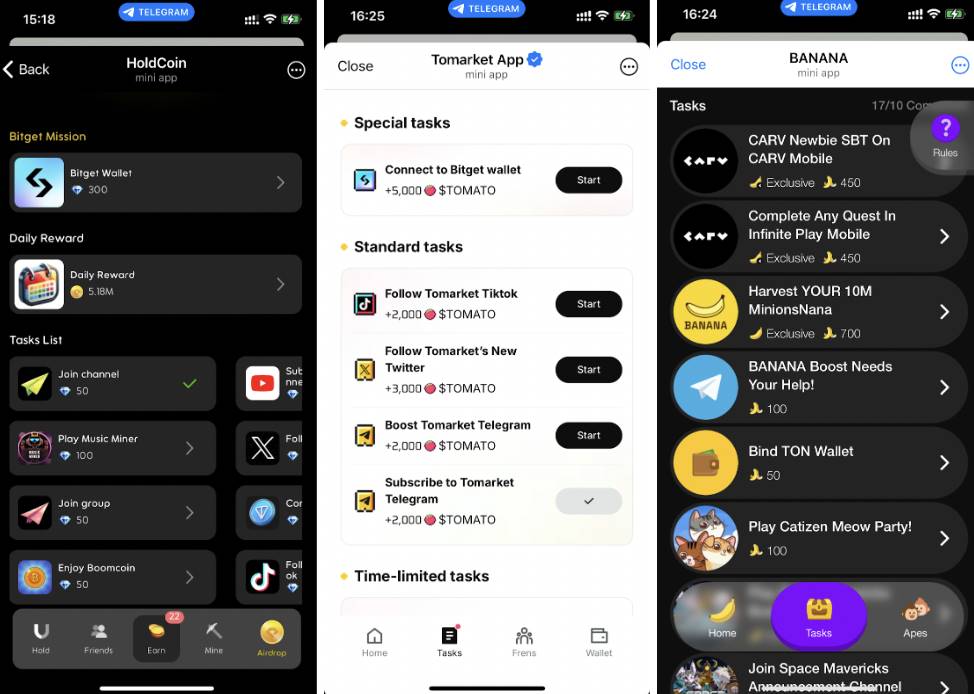
Traffic Co-Operation: Leveraging Mature Ecosystems to Incubate New Projects
The traffic co-operation model, known as the "Cheetah Model," is widely applied in the Telegram + TON ecosystem. It features in Catizen’s long-term plan to incubate 200 games that were once popular in the WeChat ecosystem. By leveraging existing user bases and traffic advantages, this model helps games rapidly gain traction on Telegram and regain popularity. This approach reduces market promotion costs for new projects and significantly improves success rates, allowing past hit games to be revived in a new ecosystem.
Meme Incubation: Full-Scale Community-to-Market Promotion
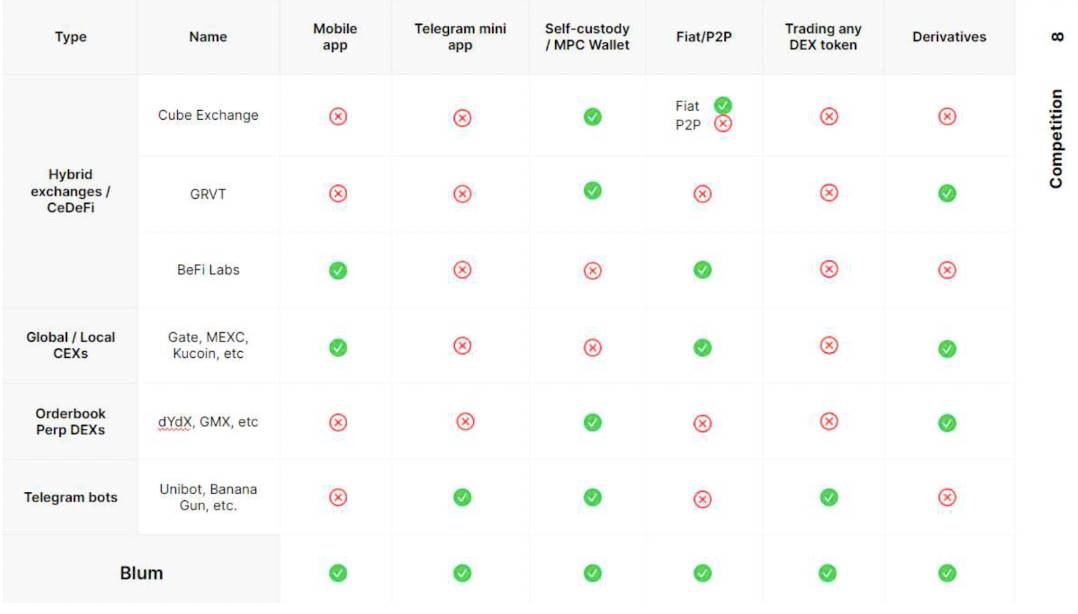
Meme incubation extends traffic sales and co-operation models, combining launchpad and DEX functionalities to provide end-to-end solutions—from project incubation to market promotion—for memecoin initiatives. Blum is a successful case, boasting 20 million Telegram channel users. Through Binance Labs’ MVP program, Blum has successfully promoted multiple memecoin projects across social and crypto markets. The meme incubation model leverages Telegram’s powerful social network and TON’s blockchain technology, enabling emerging meme projects to quickly attract community attention, secure early traffic, and eventually trade on DEXs. This model not only promotes meme culture but also offers investors and community members opportunities to participate in innovative projects.
4. Advertising Revenue
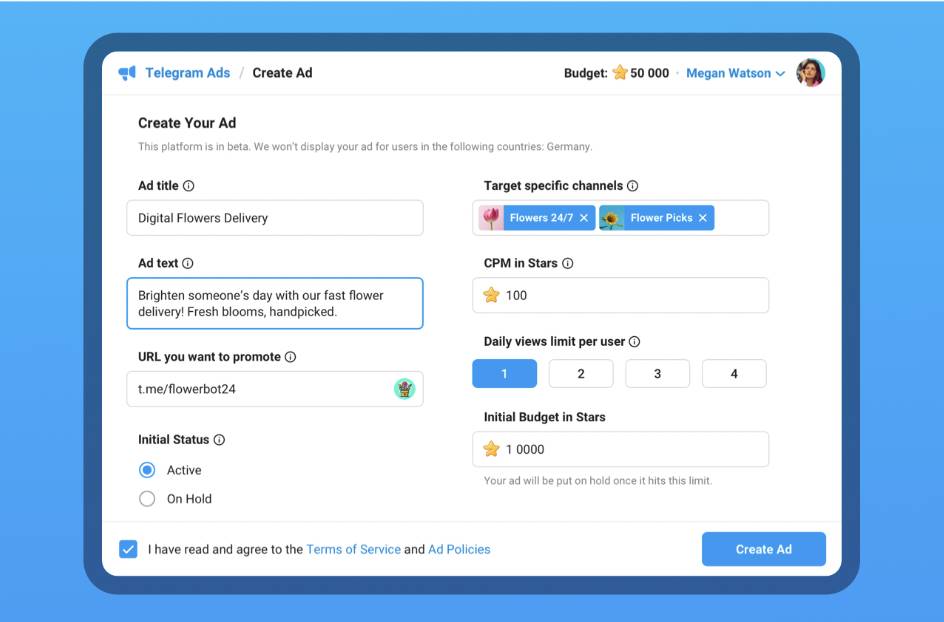
Telegram’s newly launched ad revenue model based on TON opens new monetization opportunities for public channel owners. Channel operators receive 50% of ad revenue, paid in Toncoin (TON), the native cryptocurrency of the TON blockchain. For channels that struggle to monetize directly—especially educational and entertainment channels—this model provides greater room to develop high-quality content. Additionally, Telegram offers the Telegram Star program, allowing channel or bot owners to run ads via the Telegram Ads platform and pay using Stars from their account balance, enjoying up to a 30% discount. This gives channel owners a more cost-effective way to attract new users, enhancing visibility and growth potential for their channels or bots.
Conclusion – Reflections on Telegram Traffic and Web3 Growth
As Telegram’s user base continues to grow, traffic sales and co-operation incubation models in the Telegram + TON ecosystem show immense potential. In the future, these models may integrate AI and big data analytics to improve traffic targeting accuracy and marketing effectiveness. Meanwhile, as the TON ecosystem evolves, the fusion of traffic monetization with blockchain technology will unlock even more innovative business models, helping projects stand out in a fiercely competitive market.
Within the Web3 ecosystem, the most pressing challenge today is acquiring new users and traffic—not merely relying on narratives. As long as sufficient users are attracted, strong traffic itself can generate narratives. Meme culture is among the largest sources of both traffic and narrative. Just as with natural and lab-grown diamonds, while Pepe holds unique value as an organic symbol of meme culture, carefully designed and marketed artificial memes can also create equally valuable assets.
These trends indicate that Telegram, as a traffic monetization platform, offers tremendous flexibility and diversity, providing abundant business opportunities for project developers and investors. By effectively leveraging these monetization models, projects can achieve rapid growth and meet their commercial objectives in a short timeframe.
Join TechFlow official community to stay tuned
Telegram:https://t.me/TechFlowDaily
X (Twitter):https://x.com/TechFlowPost
X (Twitter) EN:https://x.com/BlockFlow_News
 @OakGroveVC


