Memecoin Super Cycle: A Revolution Upending Traditional Crypto Narratives
TechFlow Selected TechFlow Selected
Memecoin Super Cycle: A Revolution Upending Traditional Crypto Narratives
Memecoin is not a vampire attack on cryptography, but a counterattack against traditional Crypto Tokens.
 Navigating Web3 tides with focused insights
Author: MiX
TL;DR
1. The era of synchronized gains across all crypto assets has ended;
2. The memecoin supercycle has already begun—right now;
3. Any crypto asset that does not distribute cash flows to your wallet or serve as a store of value is a memecoin;
4. The cryptocurrency industry is not technology-driven, but asset-driven;
5. Memecoins are not a vampire attack on crypto technology, but a counterattack against traditional crypto tokens.
I only began seriously exploring memecoins in April 2024, when Casey @rodarmor, the creator of Runes, defined them as: "Runes were built for degens and memecoins"—meaning runes were born for memecoins.
Later, I gave a talk in Hong Kong titled "Runes | Bringing Memes Back to Bitcoin". On one hand, I believe the Runes protocol will become the number one standard for memecoin issuance across the entire crypto world. On the other hand, I’ve observed that the meaning of “meme” is expanding, evolving—from mere speculation into a growth strategy, and even becoming a vehicle for social movements.
In the future, projects may start with a memecoin first—to attract mass consensus and enable financial pricing—then allow strong communities to emerge through natural selection before building meaningful, valuable applications on top. These applications can then feed back into and empower the original memecoin. This proves the saying: “A memecoin is an ecosystem’s business card.” The implication? Without a breakout memecoin, an ecosystem likely lacks even basic community consensus.
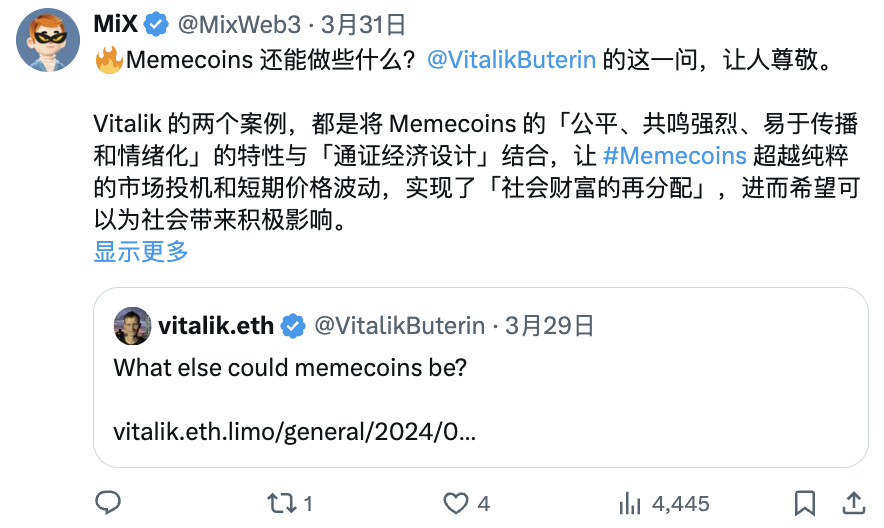
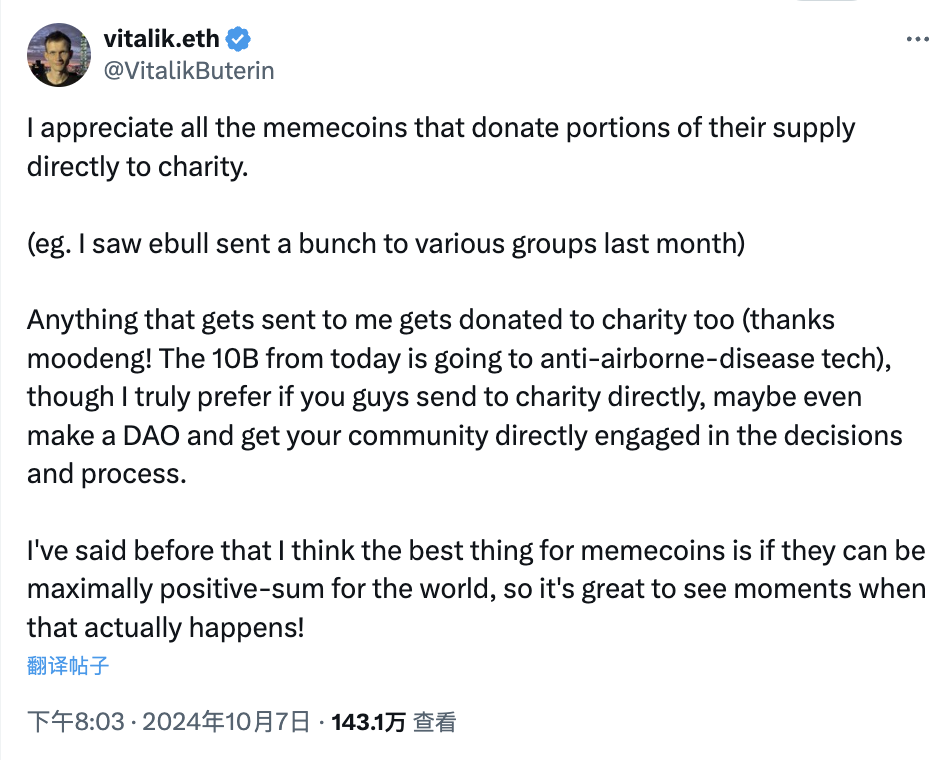
Vitalik has also extended his thoughts on the value of memecoins⬇️, and at a very high level.
The main article today, "The Memecoin Supercycle", is based on Murad's speech at the recent TOKEN 2049 conference in Singapore⬇️
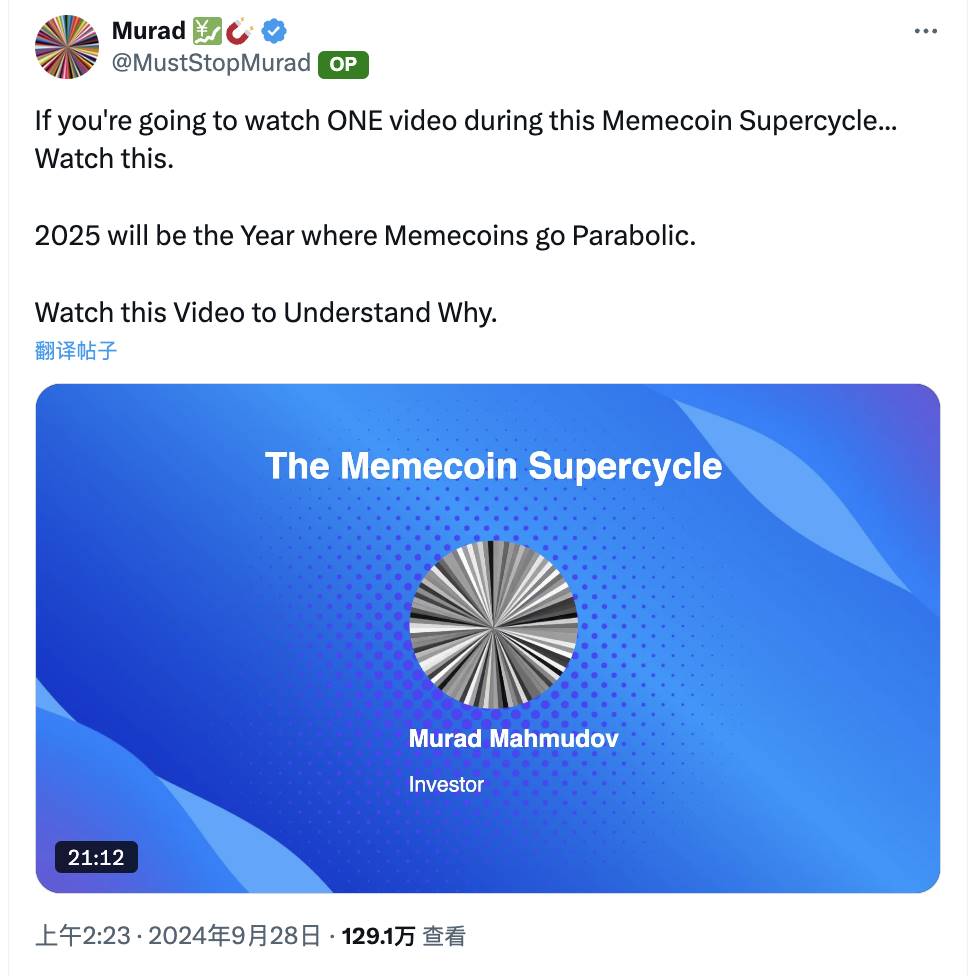
Within just 10 days since its release, the video has garnered 260,000 views on YouTube and over 1.2 million impressions on X. With such momentum, memecoins truly have the potential to become important experiments in new economic models and drivers of social progress.
Below is the full transcript. Enjoy~

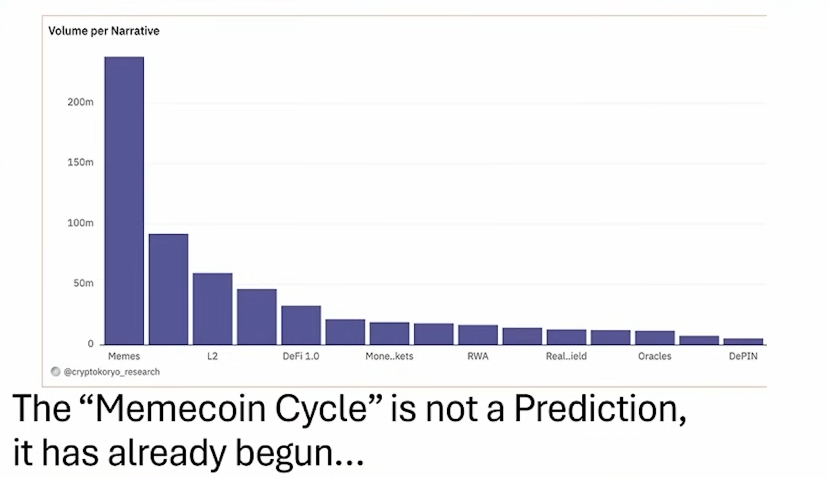
Meme coins have unleashed a storm across the cryptocurrency market. Therefore, the memecoin supercycle isn't merely a prediction about the future—it's already happening.
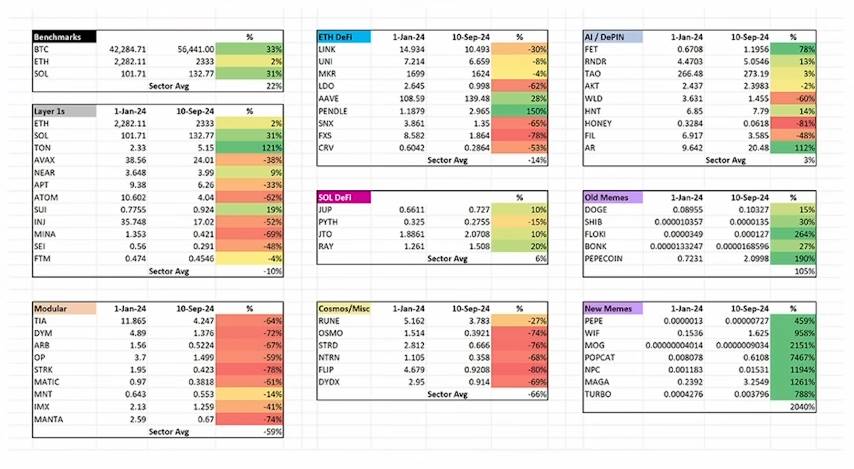
When reviewing the performance of all major cryptocurrency categories so far this year, you'll find mixed results—with many disappointing tokens. But as shown in the chart above, meme coins stand out dramatically.
Currently, older meme coins are performing well, while new ones are performing exceptionally. The era of all crypto assets rising together is over. The mindset of "we're going to make it" is outdated—a natural step in the maturation of this space.
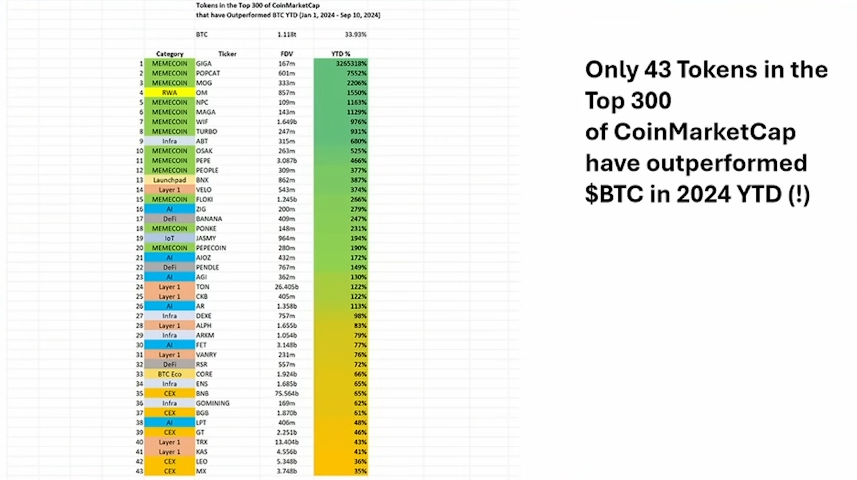
As illustrated above, only 43 tokens have outperformed Bitcoin year-to-date, and among the top 20 performers, 13 are meme coins.
# Why Is There a Meme Coin Cycle?
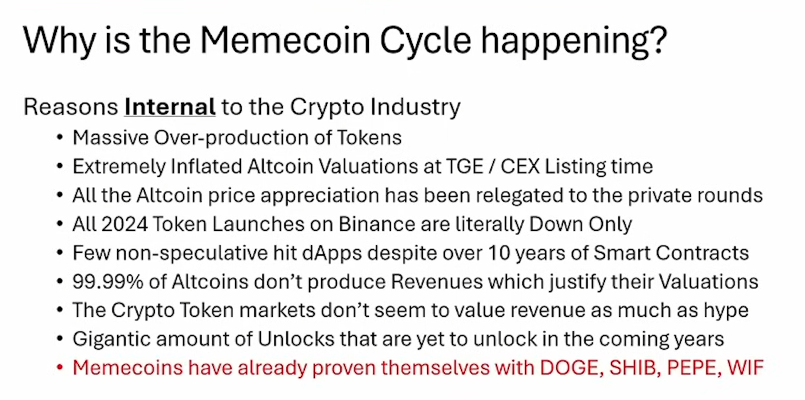
There are two driving forces behind the meme coin cycle—one internal to the crypto space, and one external. Let’s first examine the internal factors.
1. Token Overproduction: By April 2024 alone, 600,000 new tokens had already entered the market, averaging over 5,500 new tokens per day. This oversupply floods the market with countless new tokens, severely diluting the value of most projects.
2. Inflated Altcoin Valuations: These tokens are listed on centralized exchanges with artificially inflated valuations. Founders receive tokens at nearly zero cost; VCs and angel investors buy large allocations at extremely low prices. Then CEXs, market makers, Twitter influencers, Telegram signal groups, YouTubers—all promote these projects in exchange for tokens or payment. Ultimately, retail investors become the liquidity source when insiders exit. When you launch a project with a $10 billion valuation, retail gets dumped on.
3. Price Surge During Private Sale Stage: Most altcoins see their biggest price increases during private sales. By the time tokens go public, valuations often reach $500 million, $1 billion, or even $1.5 billion—leaving retail with almost no profit opportunity. They’re lured in only at peak bubble prices.
I firmly believe these tokens are intentionally launched at extremely high initial valuations. That way, even if the price inevitably drops 90% shortly after launch, early investors still secure hundreds-of-x returns—while retail is misled into thinking they’re buying at a “discount.”
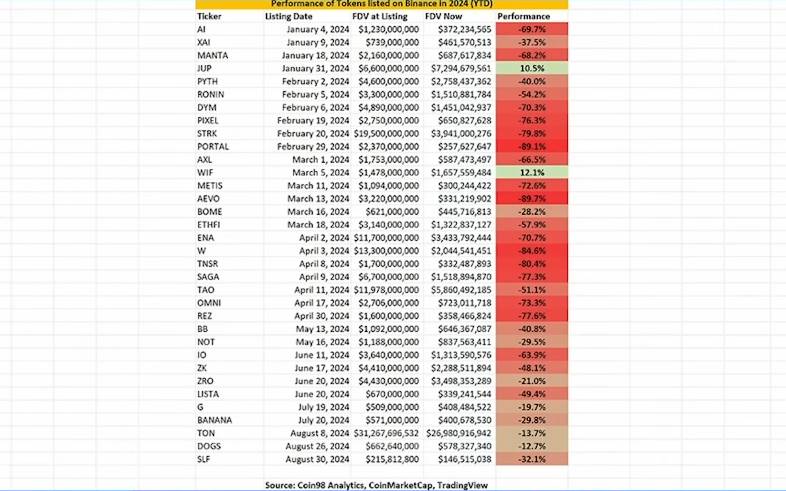
All new tokens launched on Binance in 2024 have declined—except for two. One is Whiff, which has seen almost no growth since listing; the other is Jupiter, closely tied to meme coin trading infrastructure. This sends a clear signal: most newly issued altcoin projects simply don’t perform well.
# Problems Within the Industry
Without retail capital inflows, the entire token market would collapse—and yet, the vast majority of retail investors don’t care about technology.
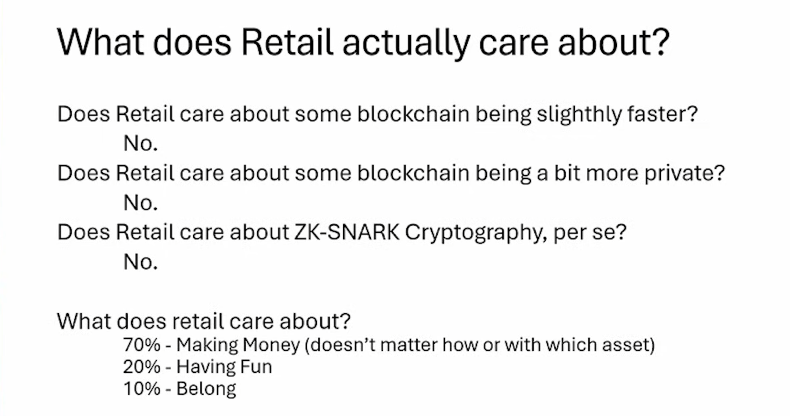
Despite over a decade of smart contract technology, there remain very few non-speculative decentralized applications (dApps) that have achieved real success. Look at Uniswap, dYdX, GMX, and Solana—some of the best product-market-fit projects in crypto history—and nearly all depend heavily on speculative activity. 99% of altcoins are overvalued, and many don’t pay dividends—often claiming regulatory reasons, but in reality, it’s simply not in their interest.
Some projects generate only $500 in daily fees yet carry multi-billion-dollar valuations. This is common. Clearly, these infrastructure tokens cannot function as stores of value.
Their value relies instead on narratives, imitation effects, and market hype—not actual revenue. Markets show little inclination to evaluate these tokens based on real income.
# Unique Advantages of Memecoins
In contrast, memecoins possess unique strengths. They don’t need complex valuation models or real-world income to support their market cap like traditional tech-based tokens. Their advantage lies in simplicity and directness—the token itself *is* the product. Memecoins aren’t an attack on crypto technology; they are a counterattack against crypto *tokens*. Both memecoins and altcoins are essentially selling the same thing: the token itself, not the underlying technology.
Memecoins are the spiritual successors of the 2017 ICO wave—but in a newer, purer form. They represent a more direct community economy, unburdened by complex technical narratives, using simple, accessible methods to capture market attention.
Many VC-backed tech projects are overvalued and lack genuine community support. Memecoins, by contrast, build powerful brands and loyalty through community, enabling sustainable operations. While VC projects rely on private sales and high valuations to drive markets, memecoins harness collective community power, allowing participants to profit and become loyal advocates.
# External Forces Driving Growth
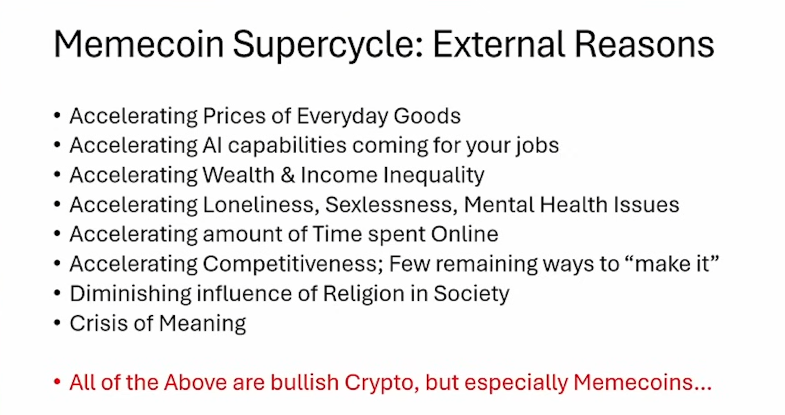
Beyond internal dynamics, external conditions are also fueling the rise of memecoins. Today’s global economy is vastly different from four years ago. Inflation is soaring, everyday goods keep getting more expensive, rapid AI development threatens traditional STEM jobs, and wealth inequality has reached record highs—especially dire outside developed nations.
Increasing loneliness, sexual frustration, and mental health struggles push more people toward virtual worlds in search of belonging and meaning. In this context, memecoins become a natural choice. People seek not just wealth in memecoins, but also fun, identity, and community.
# The Power of Narrative and Culture

At their core, memecoins are like Swiss Army knives—they offer identity, culture, escapism, reduced loneliness, community, hope, and much more. I believe religion’s influence is waning globally, and brands, experiences, and communities are filling that void. You can already see this in video games, music festivals, yoga, DMT retreats, CrossFit, SoulCycle, keto diets, and of course, financial assets.
Trends require compelling narratives. Behind every successful memecoin is a story of ordinary people achieving extraordinary gains through simple means—stories that spread rapidly across industries and social media. For example, Pepe, Bonk, and Whiff have emerged as standout success stories in this cycle. These narratives breathe new life into memecoins and propel further market growth.
History shows that assets performing strongly in the first half of a crypto cycle tend to continue excelling in the second half. Ethereum surged in 2016 and doubled again in 2017; Verge spiked in 2016 and rose again in 2017; Solana soared in 2020 and rebounded powerfully in 2021. Thus, I believe the memecoin frenzy we experienced in March 2024 was only the first wave of three. Two larger surges will follow—in 2025.
# Market Positioning of Memecoins
The success of memecoins goes beyond mere speculation. They represent a more organic market model, enabling average investors to accumulate wealth simply by holding tokens. Memecoins turn otherwise disenfranchised market participants into passionate evangelists who drive project adoption.
The future of memecoins lies not just in being speculative tools, but in forming a new economic paradigm: tokenized communities. The best memecoins will evolve into enduring brands and cultural symbols—representing not just wealth, but identity.
# The Future of Memecoins
The memecoin supercycle has already begun, and it will continue evolving. I predict the total market cap of memecoins will reach $1 trillion, with a quarter of the top 20 tokens on CoinMarketCap being memecoins. Over time, utility tokens and VC-backed altcoins will continue underperforming, while memecoins dominate the market.
Memecoins are not just a market phenomenon—they represent a new model of community economics. Their simplicity, accessibility, and high engagement make them the most dynamic and fastest-growing category in crypto. If you want to catch the next big opportunity, memecoins are undoubtedly where you should be looking.
In summary, memecoins are simpler than tech altcoins, more liquid than NFTs, safer than DeFi, inflation-free, with no token unlocks, no VCs dumping on you. Your odds of winning are better than sports betting or casinos. They’re more volatile (i.e., more exciting), offer fresher narratives, give retail a real chance to win, and foster communities more passionate than any other crypto asset class. The best crypto products don’t need tokens; the best crypto tokens don’t need products. Again: the memecoin cycle isn’t a forecast—it’s already here. Memecoins dominate across every metric. Every single one.
So here’s my prediction: memecoin market cap will hit $1 trillion; you’ll see 2 memecoins exceed $100 billion in market cap; 10 will surpass $10 billion; a quarter of the tokens on CoinMarketCap’s front page will be memecoins; memecoins will claim 10% market dominance; utility and VC-backed altcoins will keep underperforming; the “fat protocol” thesis will slowly die, as building value stores and casinos (ranked fourth and fifth) becomes increasingly difficult; VCs will buy blue-chip memecoins—smart ones already are; traditional finance will buy memecoins—smart institutions already have; you’ll witness super-memecoinization before super-bitcoinization; many will talk about the economics of belief, tokenized faith, and the financialization of new religions.
Join TechFlow official community to stay tuned
Telegram:https://t.me/TechFlowDaily
X (Twitter):https://x.com/TechFlowPost
X (Twitter) EN:https://x.com/BlockFlow_News
 @MixWeb3