








Beyond short-term token hype, which projects should we focus on that can generate sustainable profits?
TechFlow Selected TechFlow Selected
Beyond short-term token hype, which projects should we focus on that can generate sustainable profits?
To achieve lasting success, one must move beyond token speculation.
 Navigating Web3 tides with focused insights
Author: Darshan Gandhi
Translation: TechFlow
Introduction
For years, many Web3 startups have struggled to scale and maintain a stable user base. Despite initial enthusiasm around decentralization, the core challenge remains building sustainable, long-term business models in competitive fields such as gaming, entertainment, social media, and decentralized finance (DeFi).
Understanding fundamental economics—such as the relationship between low market cap and high fully diluted valuation (FDV)—will become increasingly important.
Unfortunately, many projects still prioritize short-term token speculation over sustainable growth. After the peak of the 2021 cycle, most startups have failed to even approach their previous all-time highs (ATH), let alone surpass them (only $BTC and $BNB among top tokens have achieved this). Only a few projects have survived from the 2017–2018 cycle.
A major issue in past Web3 cycles has been the lack of robust business models. While software development typically takes 5–7 years to mature, even Ethereum has only gone through eight years, and projects like Solana haven't yet reached five. The process is extremely difficult. As a result, many projects fall into the trap of relying on token hype—generating short-term excitement but failing to deliver strong long-term value beyond governance.
The imbalance between token speculation and actual value accrual and utility remains a key gap in today’s ecosystem.
I believe Web3’s true potential lies in its integration with real-world industries such as energy, artificial intelligence (AI), Internet of Things (IoT), and supply chains. By focusing on building applications in these areas, Web3 can finally fulfill its promises of ownership, transparency, and broader societal impact—going beyond speculation to create lasting value.
What’s Changing Now?
There is now a clear trend toward creating tokens tied to real business models and actual revenue. Projects should no longer rely on hype and narrative positioning to boost token prices; instead, the focus should shift to delivering real value—through voting rights, service access, or other utility mechanisms that encourage long-term user engagement, returning value to token holders via mechanisms like burning and staking.
Investors and users alike now prioritize projects that offer sustainable benefits. Concepts like staking, token burning, and user rewards are helping strengthen these projects and ensure their growth. For example, Uniswap recently decided to reward users for trading and providing liquidity.
This shift signals a future where tokens are not just instruments for secondary market trading, but integral components of the project itself.
Which Areas Are Performing Well?
Now, let’s take a closer look at which sectors or ecosystems are performing well—those generating consistent cash flow and seeing real user adoption.
Although many projects are still in development or early launch phases, most are beginning to identify and report meaningful business metrics such as revenue, profit, and user base—not just volume and transaction count.
Below are some high-performing, cash-generative industries that face fewer issues with speculation but more challenges in initial bootstrapping and distribution. Once these hurdles are overcome, they transform into cash cow businesses.
DePIN
-
This is one of the hottest spaces recently, gaining attention from AI and gaming sectors. Several projects have demonstrated strong real-world usage and solid metrics, with Helium leading the pack.
-
Projects like Helium—a decentralized wireless network—showcase the power of real-world utility. Helium's HNT token is earned by users who set up hotspots to provide wireless coverage, and its value stems from IoT device usage, not speculation.
-
Other projects like GEOD and Hivemapper crowdsource physical data such as location and dashcam footage, turning it into monetizable assets.
-
All these projects perform well financially, generating solid cash flow that translates into token value appreciation.
Social Platforms
-
Web3 social is exciting and full of promise. Consumer apps represent one of the primary ways technology reaches millions of global users. However, consumer crypto has historically struggled to gain traction.
-
Recently, coalitions and companies have strongly pushed this idea, with blockchains like Solana and Base becoming increasingly consumer-friendly and encouraging developers to build on them.
-
Applications like Farcaster, Lens Protocol, and Fantasy Top are actively reshaping perceptions of consumer crypto. Some have already generated meaningful revenue and user engagement data.
-
However, given the still-small user base compared to the broader Web2 world, it’s early days—but a promising start.
Launch Platforms
-
New projects face their biggest hurdle during initial stages—they lack what matters most: relevance and distribution channels.
-
Launch platforms can be game-changers here, offering these projects a platform and an ecosystem of users, investors, and supporters.
-
Launch platforms like Pump Fun and Multiplier have generated millions in revenue in short periods, fueled by the popularity and acceptance of memecoins as a category.
-
While I personally believe this isn’t a sustainable model in the long run—as it harms the space more than it creates value—it’s still essential to understand which verticals are thriving and draw inspiration from them to build longer-term solutions elsewhere.
DeFi Products
-
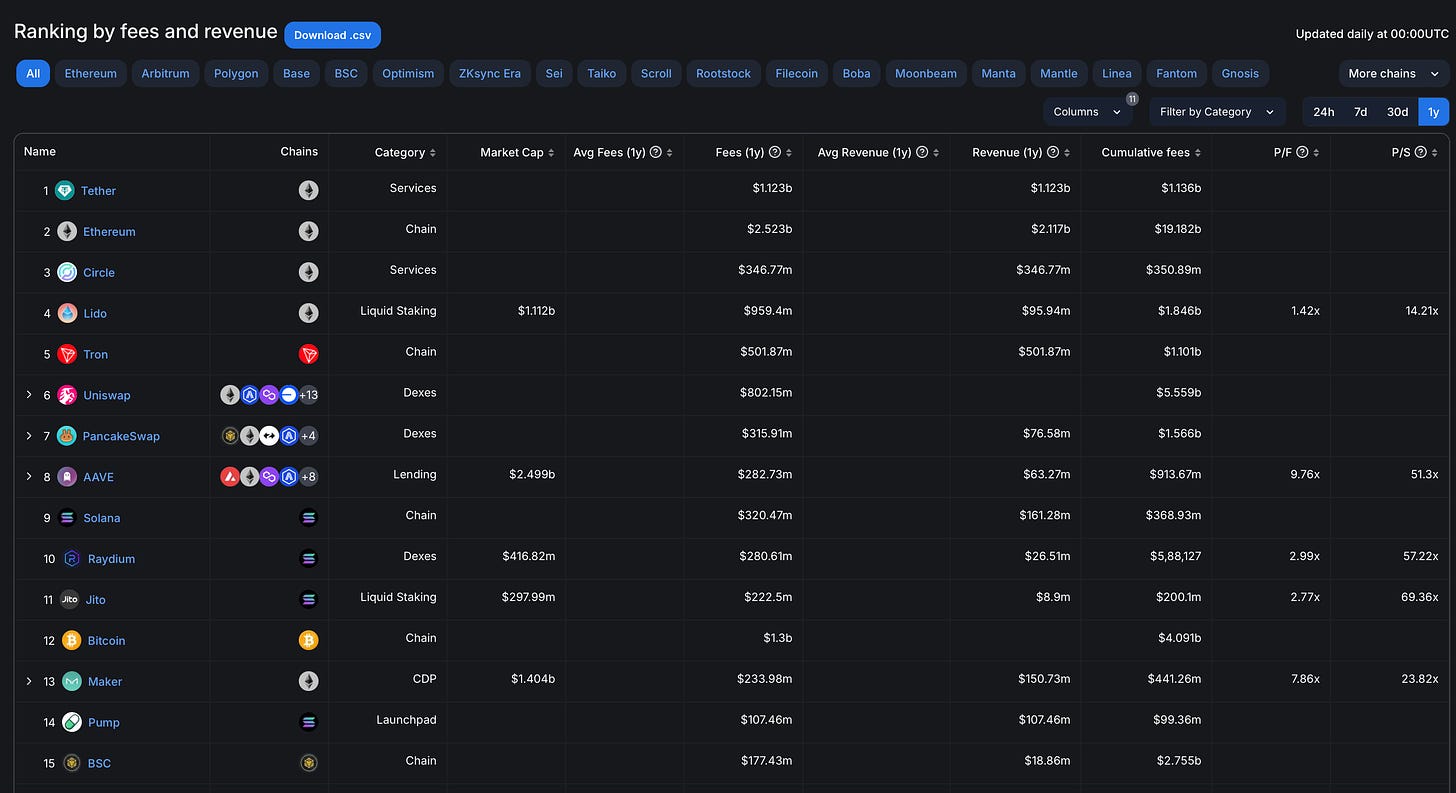
DeFi remains a durable sector—and one of the only categories consistently generating significant revenue in Web3. Leaders like Uniswap, Aave, Maker, and Curve contribute massive income.
-
I believe these are “boring” but sustainable businesses that will endure. It will be interesting to see whether applications built on DeFi principles can be combined with other domains—like prediction markets or gaming—to open new markets or perspectives.
Web3 vs. Web2 Models
The core difference between Web3 and Web2 companies lies in how they generate revenue and operate. Web2 relies on centralized models such as subscriptions, advertising, and enterprise sales, while Web3 leverages decentralized models—including tokenomics, transaction fees, staking, and DeFi yields—to create value for both the platform and its users.
Web2 captures value through:
-
Control over user data
-
Monetizing premium content
-
Providing platform services
Web3 returns control to the community through:
-
Token ownership
-
Decentralized autonomous organizations (DAOs) and governance
-
Voting and participation incentives
While this decentralization opens new opportunities, it also introduces complex user experiences, regulatory challenges, and scalability issues—such as blockchain congestion and high transaction fees.
Web3 startups can rapidly launch products using smart contracts, but face several challenges:
-
Lack of smooth onboarding
-
Limited user retention mechanisms
-
Product utility beyond speculative value
To achieve long-term success, the focus must shift toward building sustainable revenue models that translate into genuine token utility—not reliance on hype.
Here are several different types of models and their applications across sectors:
-
Token-based models
-
Tokens drive platform operations and often serve governance roles.
-
As the platform grows, token value increases through mechanisms like burning.
-
Example: MakerDAO burns MKR tokens when debt is repaid, reducing supply and increasing value over time.
-
-
Subscription models
-
Web3 platforms like Audius offer premium features or content via recurring fees, cutting out intermediaries.
-
Artists and creators earn directly from their audience, similar to traditional Web2 subscriptions.
-
-
Platform fees
-
Platforms like Zora earn revenue by taking a small cut of every transaction.
-
User activity directly drives revenue growth.
-
-
Markets
-
Platforms like Blur, OpenSea, and Rarible generate income by charging a percentage on each NFT/asset sale.
-
As trading activity increases, so does platform revenue—directly linking profitability to user engagement.
-
-
DePIN networks
-
Projects in this space reward users for contributing real-world resources such as bandwidth, wireless coverage, or location data.
-
Helium allows users to earn tokens by providing wireless hotspots that support IoT devices.
-
-
Decentralized Exchanges (DEXs)
-
DeFi platforms earn revenue by charging fees for services like token swaps or lending.
-
For example, Uniswap shares swap fees with liquidity providers, ensuring ongoing income for both parties.
-
-
Social tokens
-
Creators mint their own tokens for fans to buy or trade.
-
Revenue primarily comes from token sales and fan engagement.
-
Rally enables creators to build tighter community ties through token ownership.
-
-
Web3 Gaming/Entertainment – Freemium Model
-
Web3 games earn revenue from in-game purchases, marketplace fees, or play-to-earn mechanics.
-
-
Decentralized AI
-
Decentralized cloud providers like Akash Network rent out computing power.
-
Users pay for these resources with tokens, directly competing with traditional cloud providers.
-
Other projects focus on solving decentralized training, workflows, and data scraping/collection.
-
-
Launch platforms
-
Launch platforms like DAO Maker help projects raise funds through token sales, earning a cut or charging fees.
-
Revenue-Generating Projects
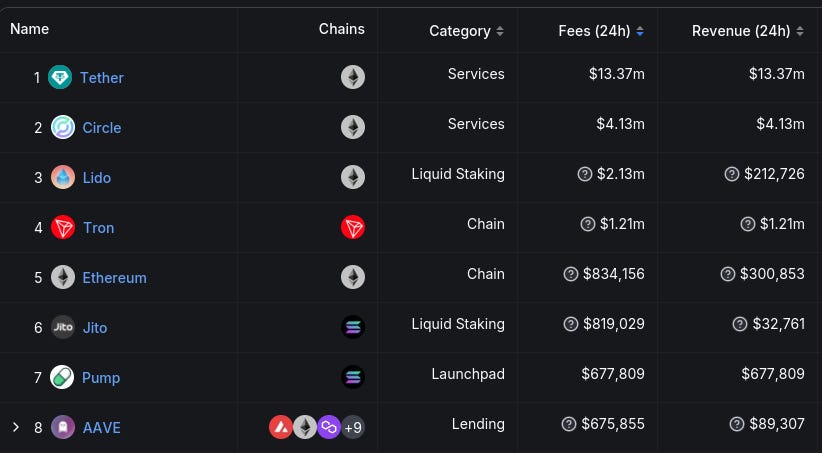
Projects with real-world utility consistently outperform those relying on speculative tokenomics over the long term. Revenue-driven models are increasingly forming the foundation of the most successful Web3 ventures, proving their value to users and investors through sustainable business practices. This chart provides a comprehensive view of the top revenue-generating crypto projects.
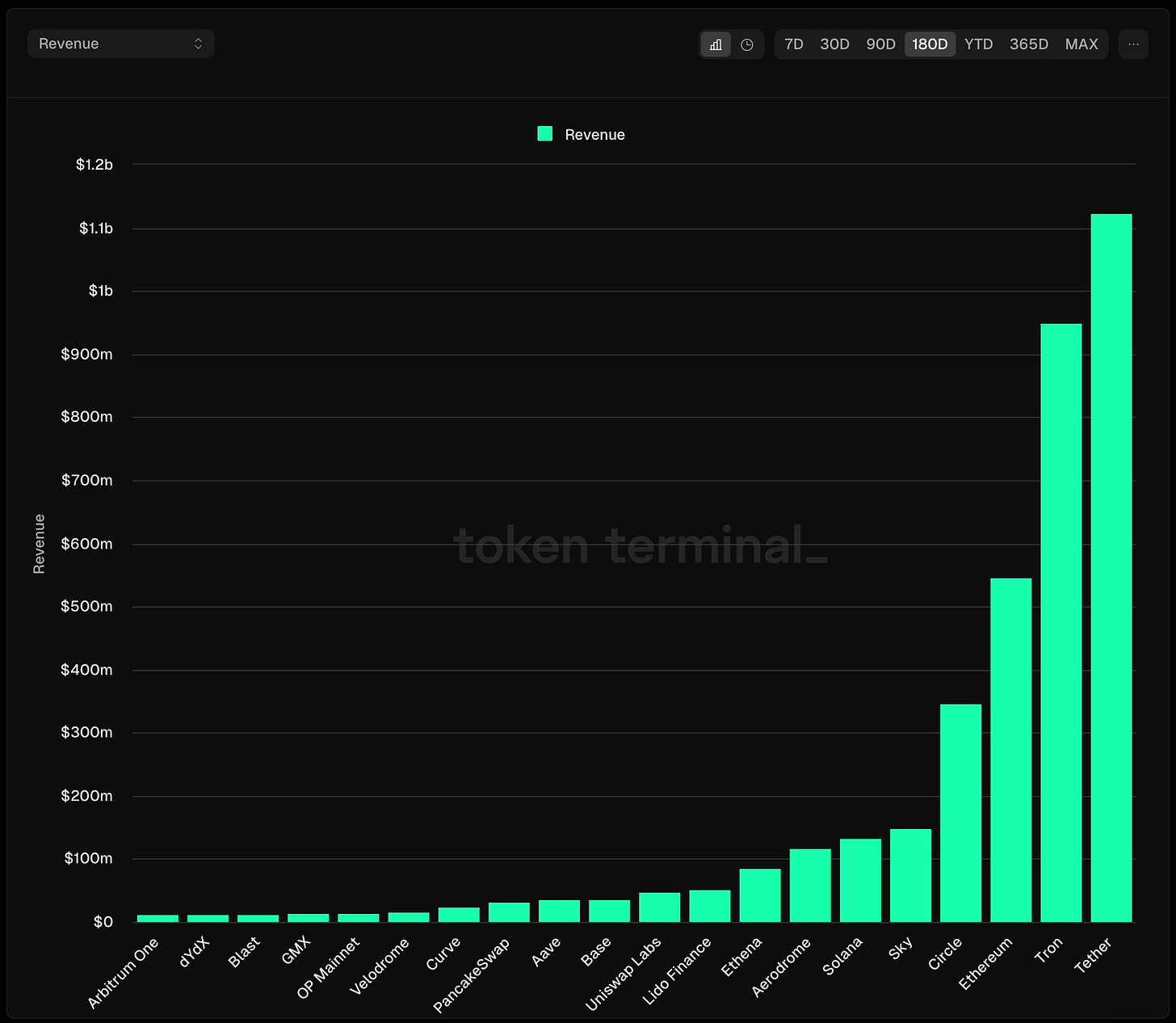
It’s encouraging to see projects like Tether, Tron, and ETH dominate this space—standalone blockchains/tokens that form the foundational layer of Web3.
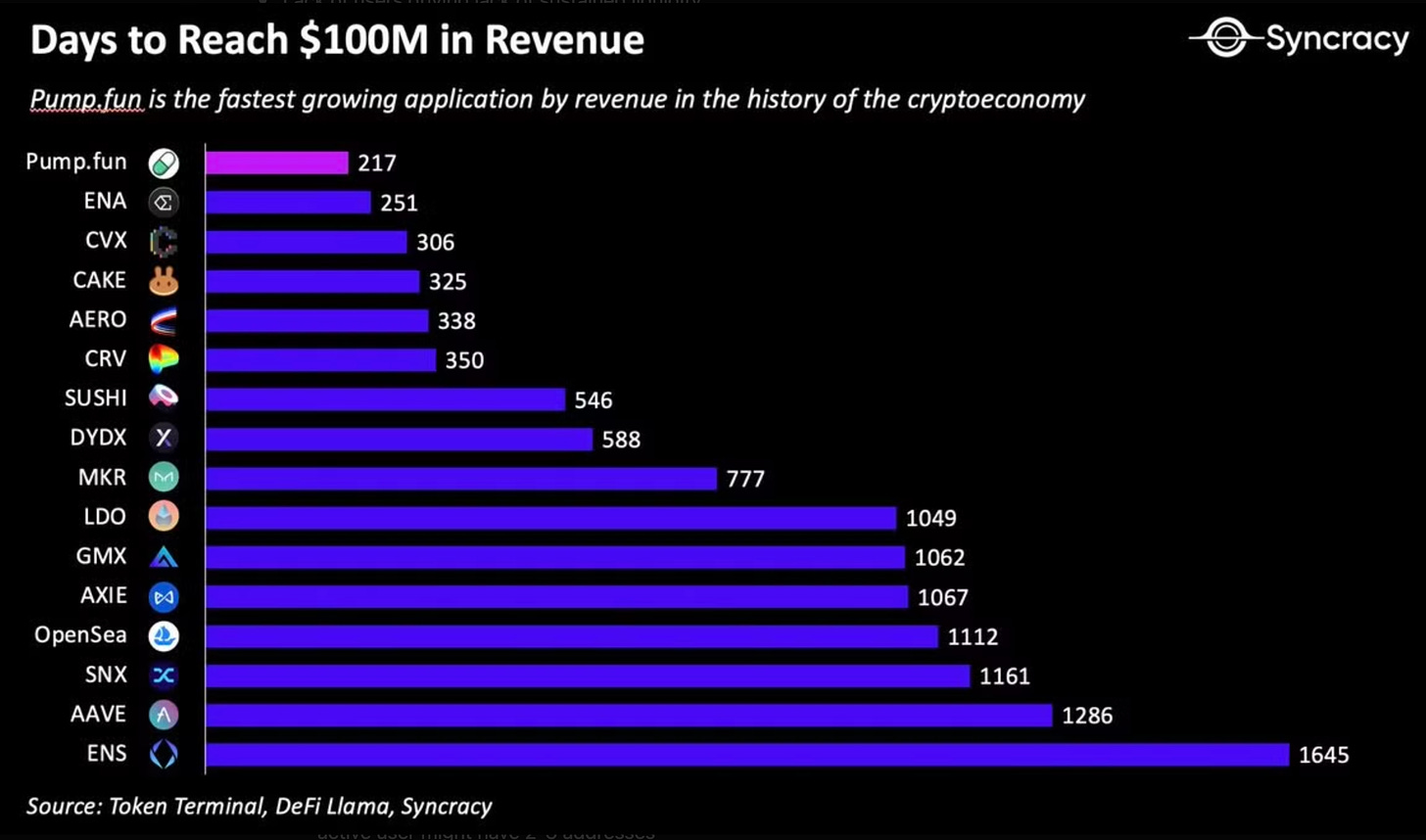
When we examine the fastest applications to reach $100 million in revenue, a strong correlation emerges between real-world utility and financial performance.
-
Projects focused on real-world use cases—such as decentralized exchanges and DeFi platforms—tend to grow faster.
-
Their ability to generate steady income through transaction fees, staking rewards, or a share of yield pools are some of the reasons they’ve scaled so quickly toward $100 million in revenue.
Let’s take a closer look at some of the most interesting projects today.
1. Helium
Helium is one of the best-performing projects in 2024, focusing on mobile carrier services as an alternative to traditional providers. It emphasizes consumer-scale adoption and user onboarding, leveraging Solana for settlement. Its token value correlates with network usage, not speculation.
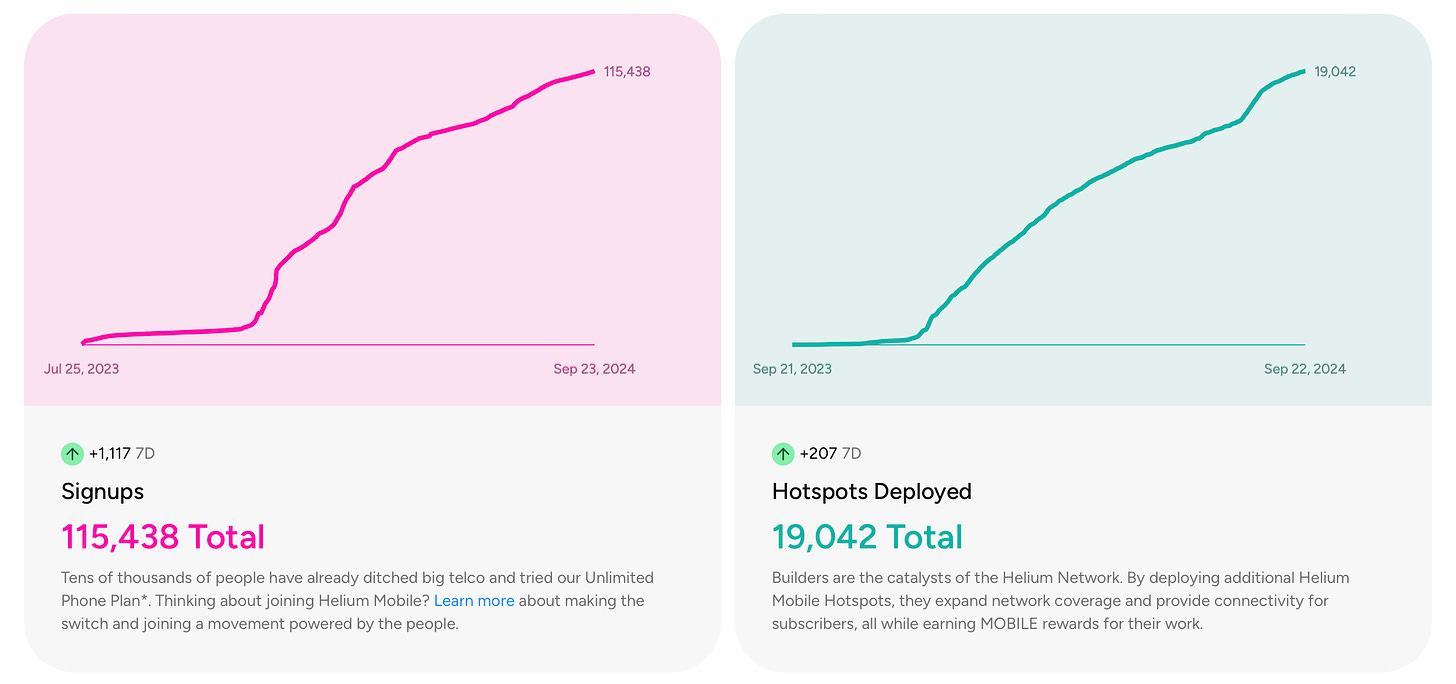
Since June, the network has attracted 756,000 users and transmitted over 19.1 TB of data. Best of all, most users aren’t even aware they’re interacting with blockchain. Registration numbers surged over the past year, reflecting Helium’s solid push toward wider adoption and accessibility.
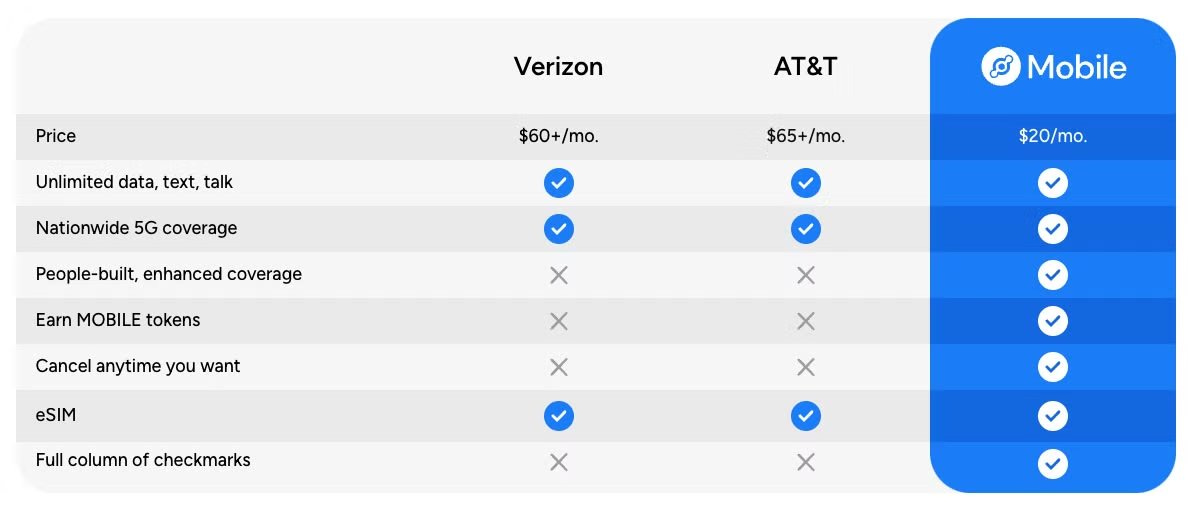
According to depin.ninja, Helium ranks first in recent revenue generation. They’ve done remarkable work, and it will be fascinating to observe how revenue evolves as the 2025 halving approaches.
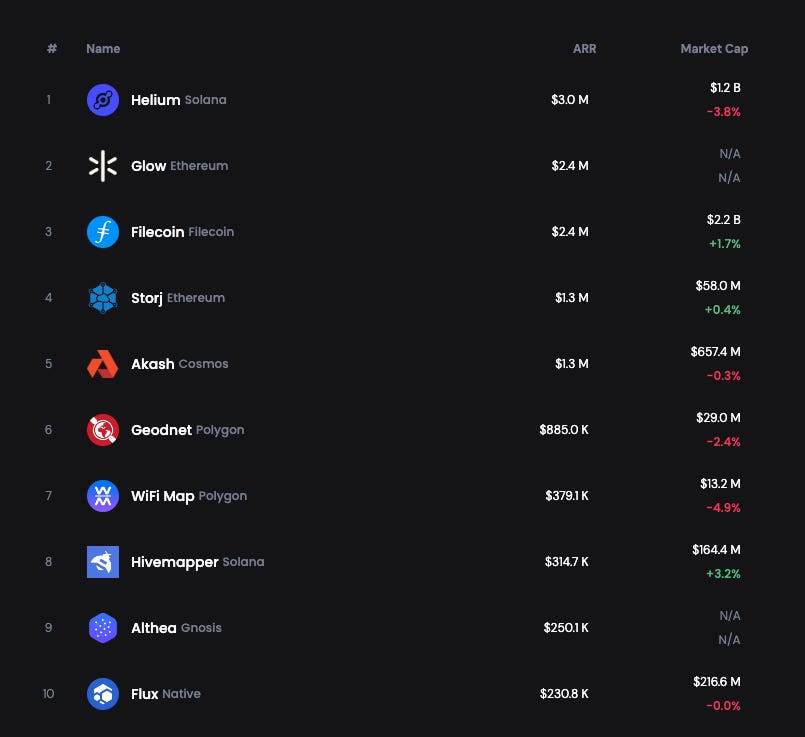
2. Decentralized Exchanges (DEXs) (e.g., Uniswap and Jupiter)
Uniswap remains the largest DEX, consistently generating strong trading volume. However, with Solana’s recent surge in popularity, native Solana DEXs like Jupiter are starting to capture significant market share from Uniswap.
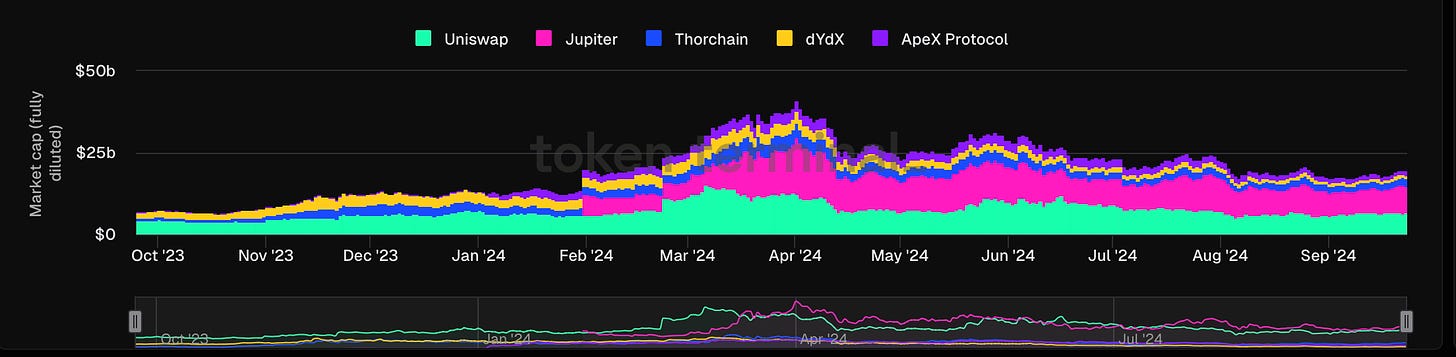
Overall, the DEX landscape looks optimistic—platforms earn transaction fees on every trade and handle massive volumes. Among just the top five DEXs, trading volume approaches $45 billion, a number impressive compared to nearly any other industry.
3. Farcaster
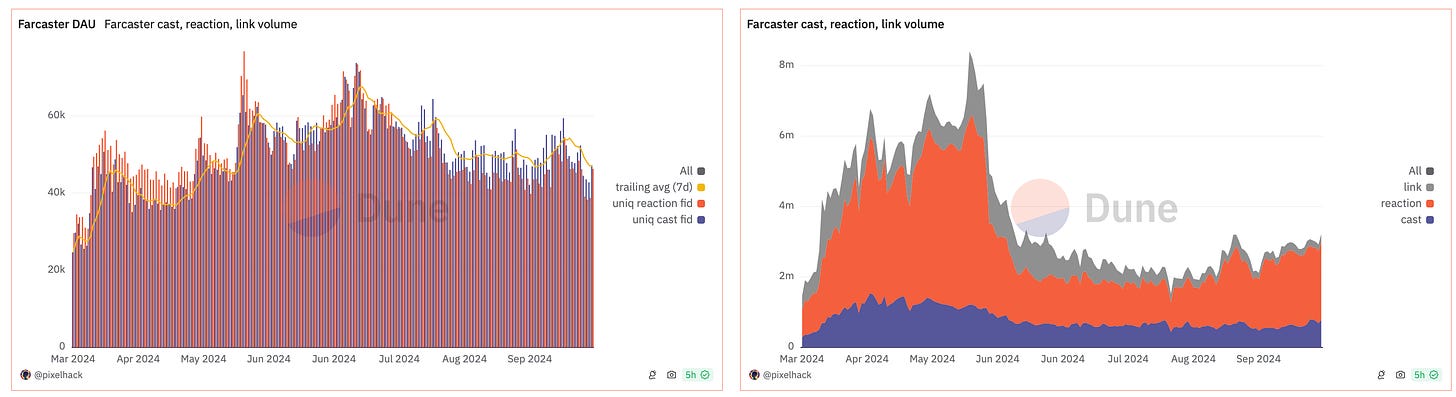
Farcaster may be the largest crypto-native social media platform, emphasizing user-owned content and interactive experience. Users don’t rely on token speculation but instead pay permanent storage fees for accounts, helping the platform generate notable revenue.
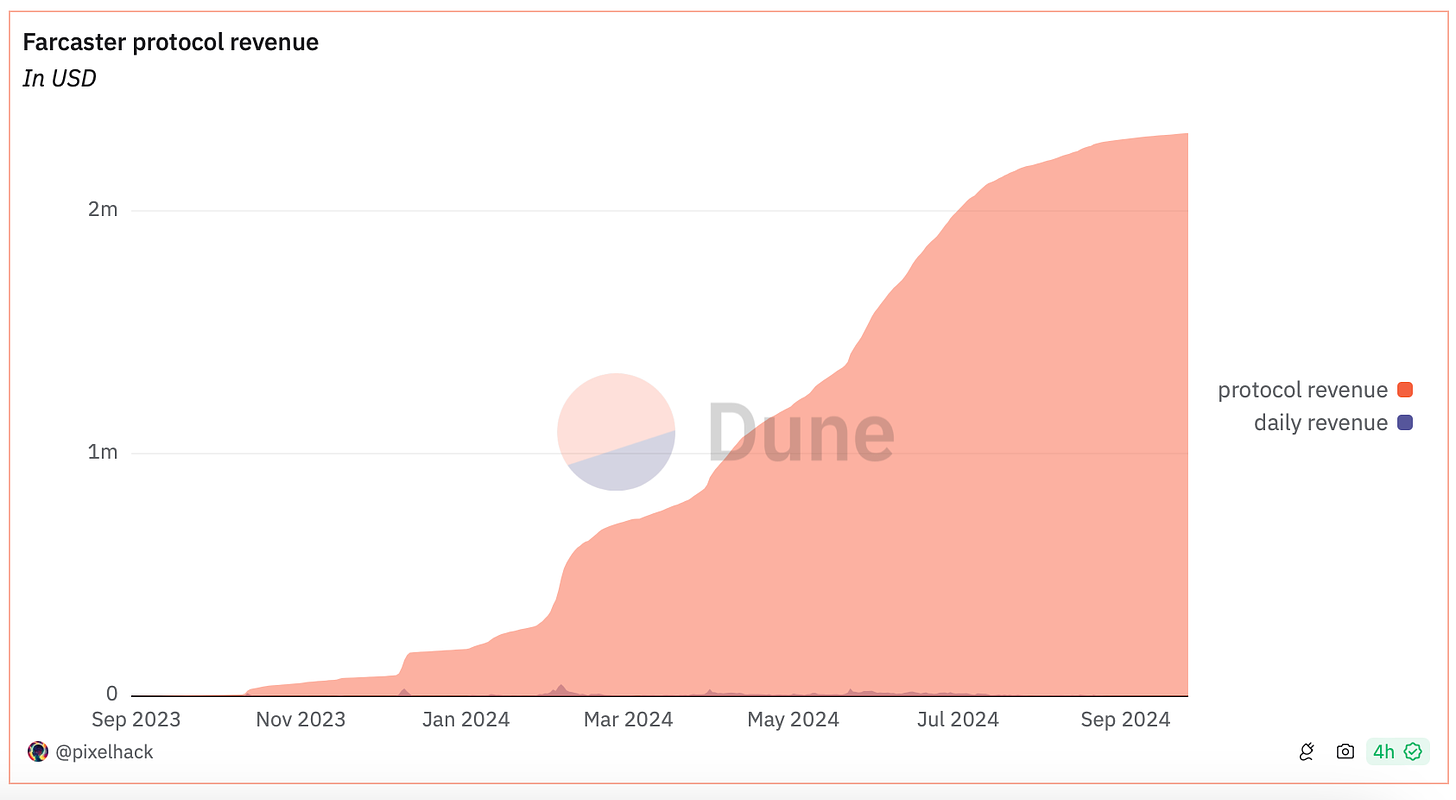
It has also benefited from support within the memecoin community and adoption by high-risk investors (“degens”), gaining visibility and backing. Though its revenue is relatively low compared to other sectors, Farcaster remains the leading protocol in crypto social. It will be interesting to see how they scale toward their goal of 10 million users in the coming years.
4. GEOD
GEODNET is the world’s largest Web3-based Real-Time Kinematic (RTK) network, delivering high-precision positioning services for AI, IoT, and autonomous systems. Using RTK technology, GEODNET aims to improve location accuracy by 100x compared to traditional GPS. This enhanced precision is critical for applications relying on device sensors like cameras, LiDAR, and IMUs, making it a key player in enabling AI-powered autonomous systems.
-
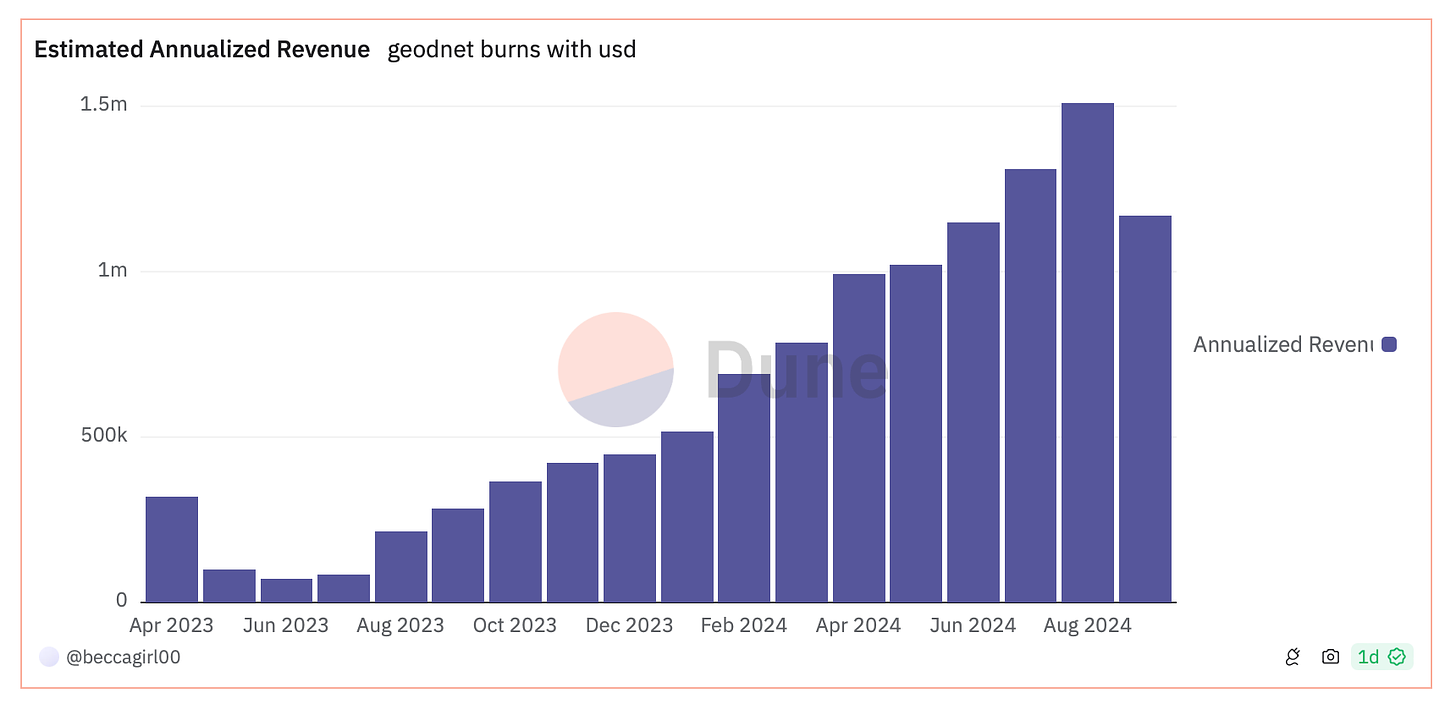
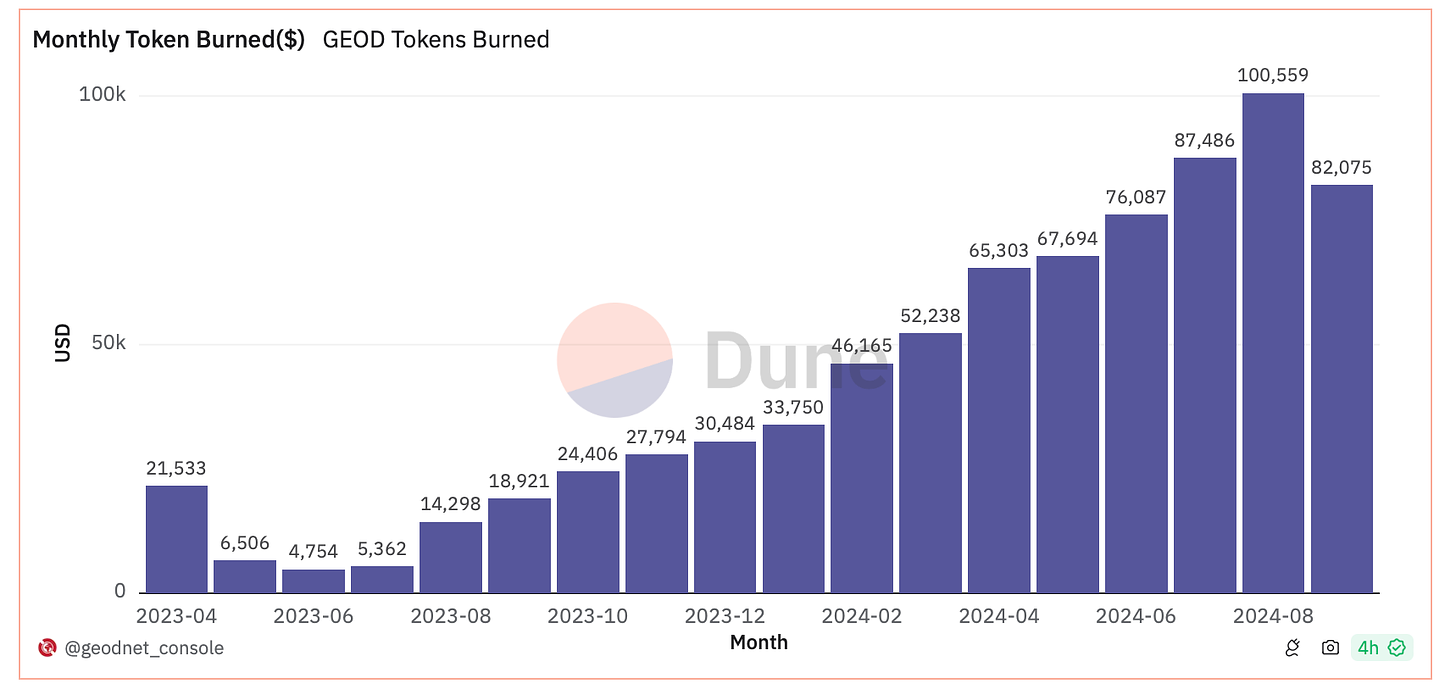
The network is growing rapidly, currently deploying over 9,000 miners globally, with monthly revenue increasing steadily by 10–15% since the beginning of the year.
-
GEODNET is on track to achieve $2–3 million in annual recurring revenue (ARR) by year-end, making it one of the highest-margin DePIN projects with strong upside potential.
-
Their technology is not only more accurate but also 90% cheaper than competitors, offering broader global coverage.
-
Through partnerships with entities like the U.S. Department of Agriculture, GEODNET is demonstrating how sustained, steady growth leads to significant outcomes—already showing a 20x revenue increase from $5,000 per month to over $100,000.
5. Across Protocol
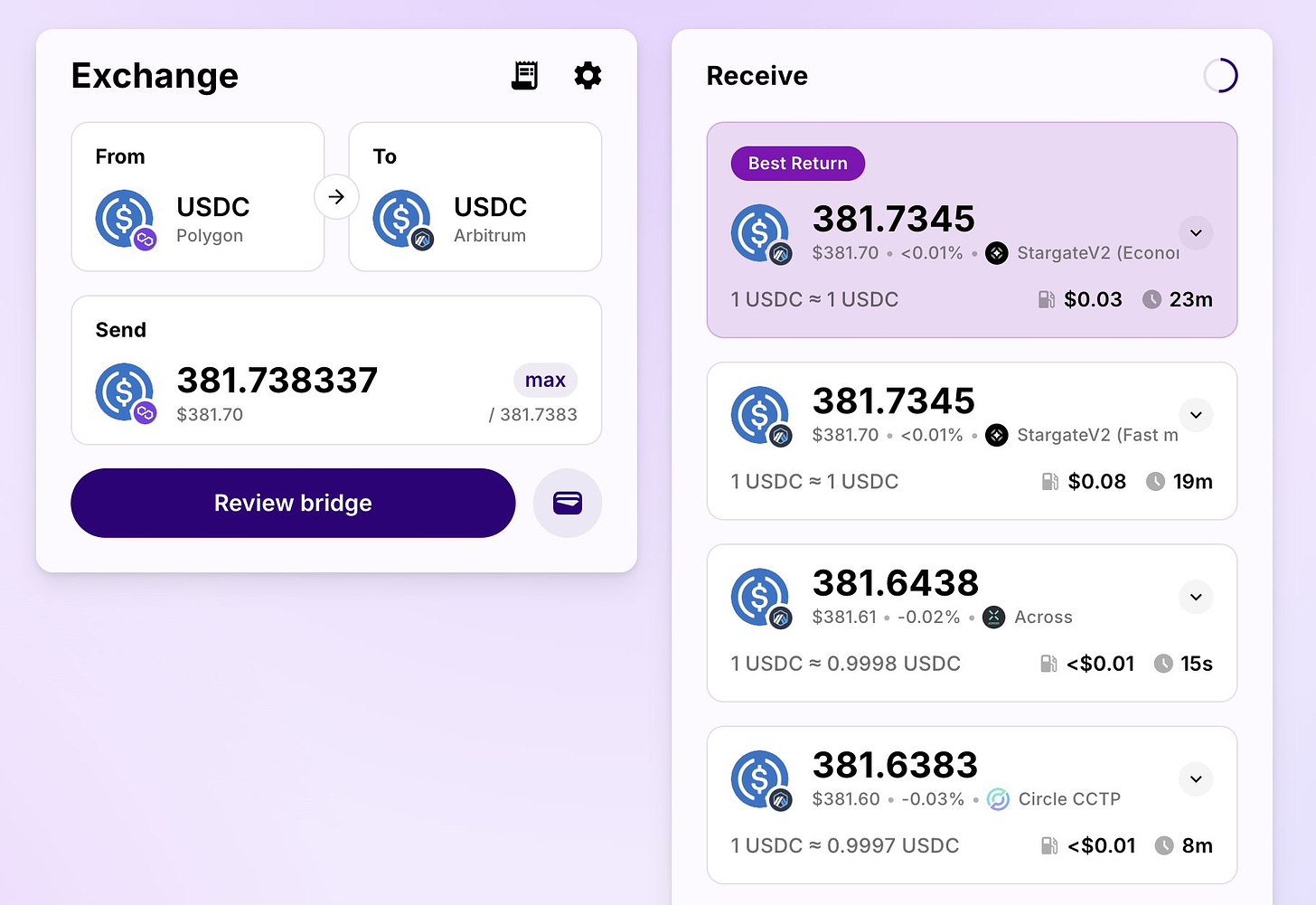
Across Protocol is a cross-chain bridge enabling seamless asset transfers across different blockchains. It earns revenue by charging fees on these transfers, tying its success directly to demand for fast, secure cross-chain liquidity. As more assets move across chains—especially with the rise of multi-chain ecosystems—Across has secured a key position in this space.
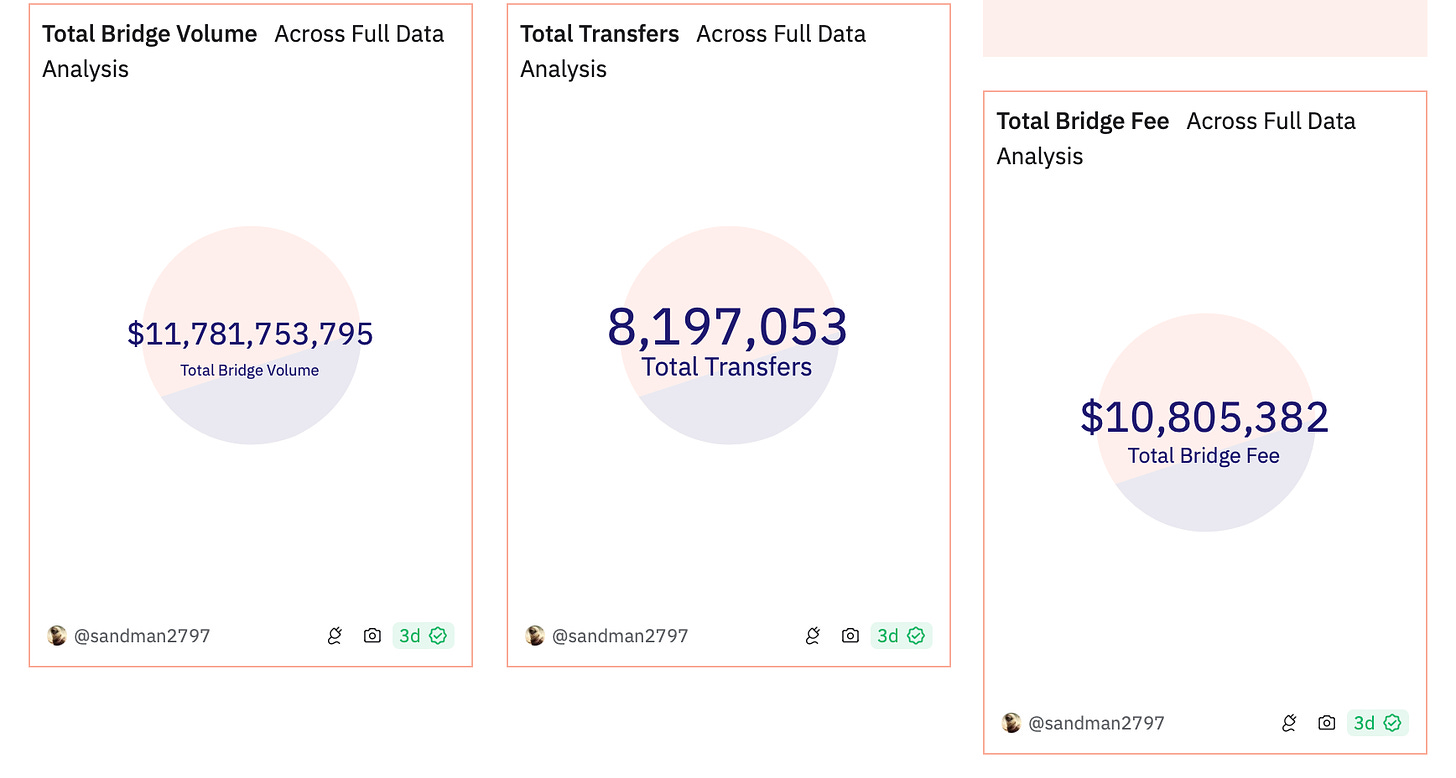
In the past month, Across Protocol dominated Ethereum chain transactions, handling over 60% of all Ethereum bridging via JumperExchange. This strong performance highlights its growing influence in cross-chain operations. Thanks to “intents”—a new approach to cross-chain interoperability—Across is setting standards for smooth, efficient user experiences when transferring assets across blockchains. Compared to other bridges, it typically offers latency in seconds rather than minutes.
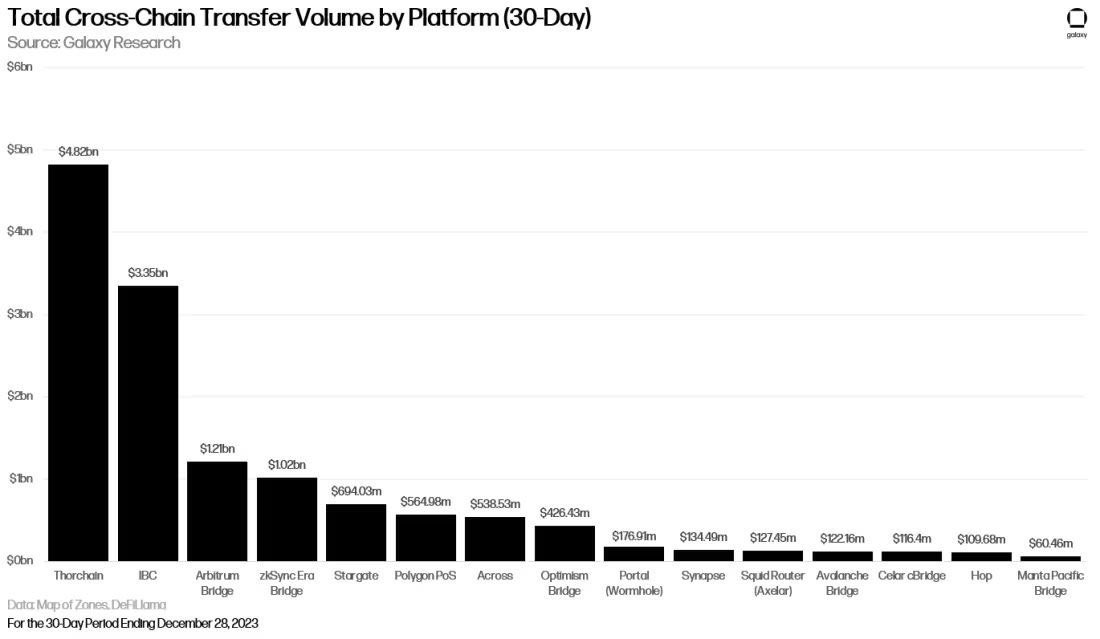
It is gradually rising in the competitive network of cross-chain transfer service providers.
6. Kamino
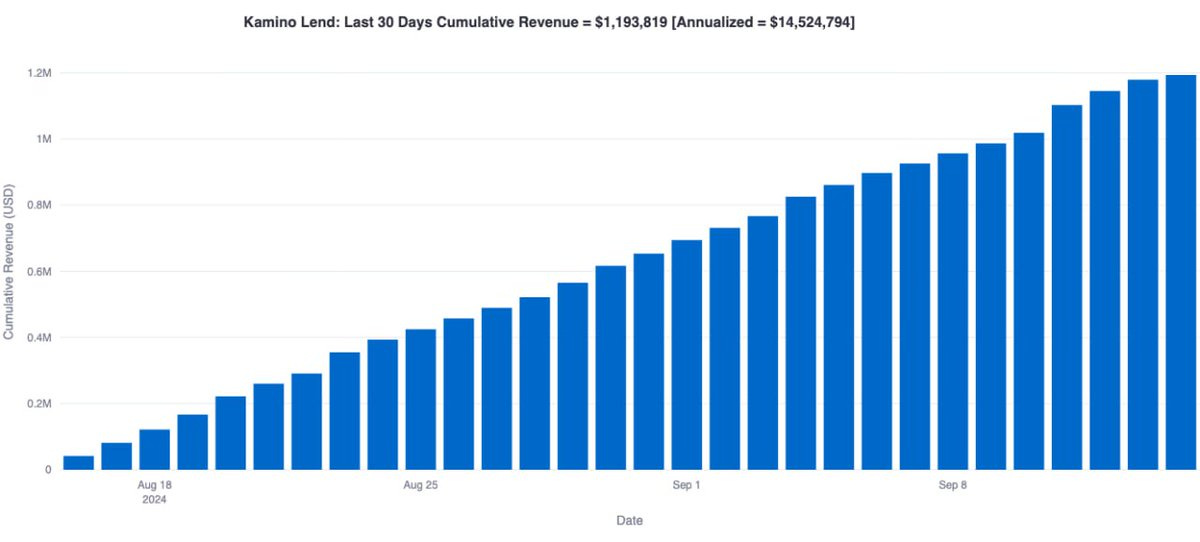
Kamino focuses on optimizing liquidity management and offers users a suite of tools including lending and leveraged strategies. The platform has seen significant growth, with annual recurring revenue (ARR) nearing $14 million.
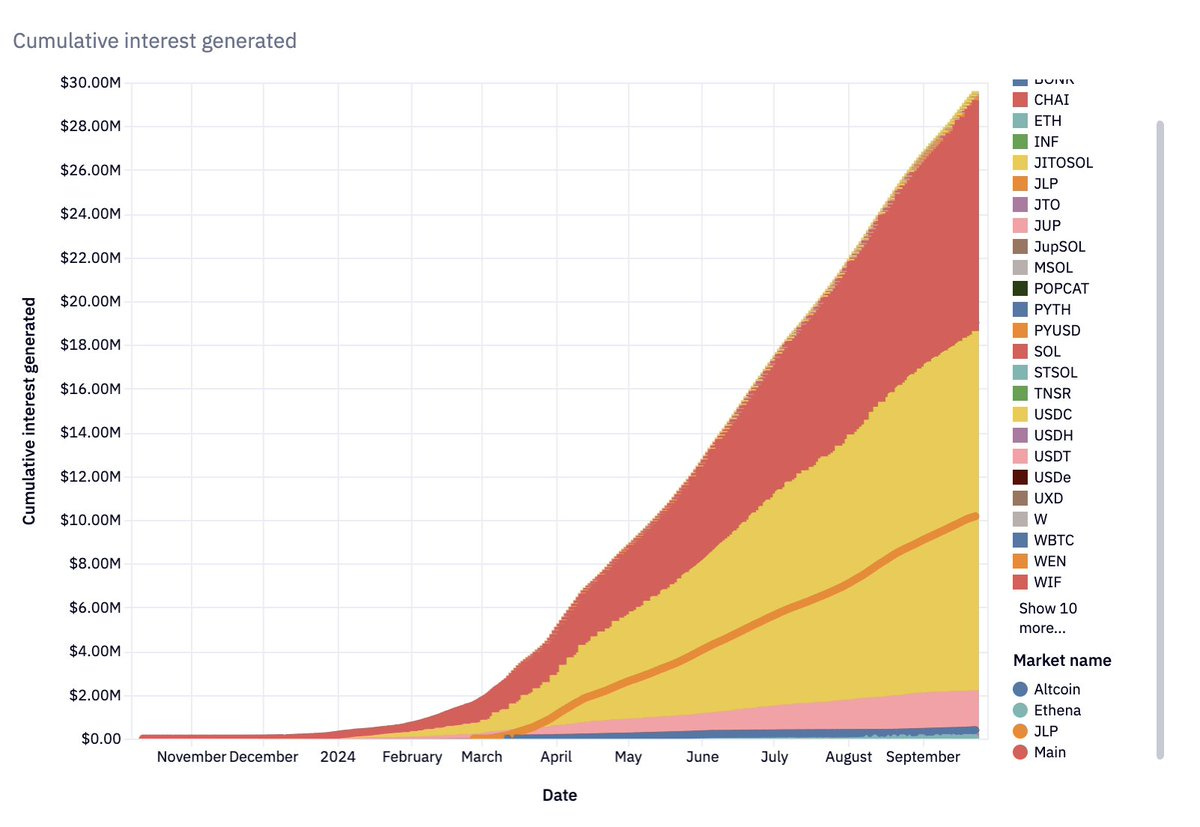
Over the past year, Kamino has generated approximately $30 million in cumulative interest for users, highlighting its ability to deliver consistent returns through decentralized finance (DeFi) products.
7. Stablecoins (Tether & Circle)
Stablecoins have become indispensable in Web3, with Tether (USDT) and Circle (USDC) leading the way. These two giants dominate the market, serving as the go-to stablecoins for traders, developers, and users. Their widespread adoption and liquidity make them foundational pillars for many decentralized finance (DeFi) platforms.
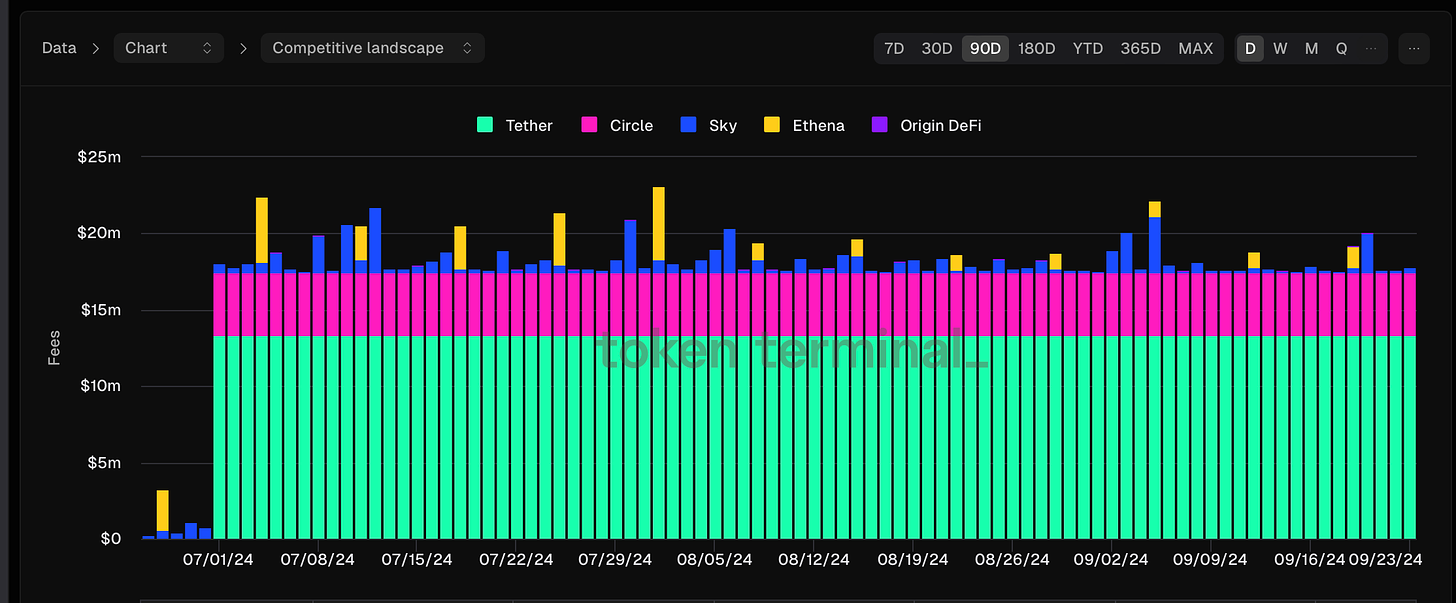
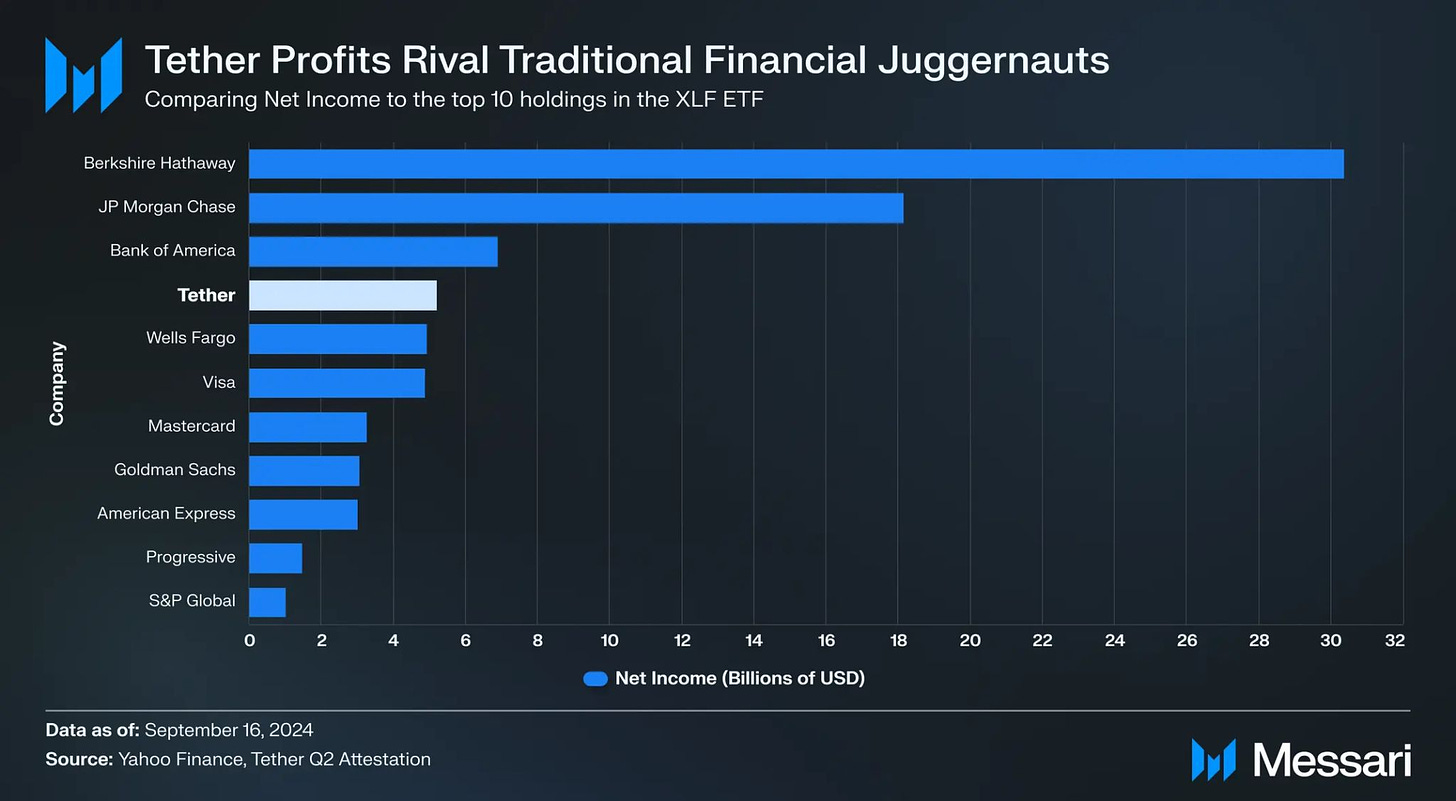
Tether, in particular, is often compared to major Web2 financial players like JPMorgan, Visa, and Mastercard due to its rapid rise and dominant position in the financial ecosystem. In a short time, it has surpassed many traditional giants in terms of market reach and integration with the crypto economy.
Tether and Circle consistently outperform other stablecoin issuers and blockchain protocols, commanding the largest market share in Web3. Their stability, liquidity, and integration across multiple chains and decentralized applications (dApps) set them apart, making them essential components of the ecosystem.
Summary:
-
These projects demonstrate that real-world utility is becoming increasingly crucial in driving crypto revenue.
-
Whether through infrastructure, social, gaming, or DeFi, the future of Web3 will be shaped by projects that successfully align their tokenomics with real-world utility and sustainable revenue models.
What Hasn’t Worked?
Friend.tech serves as a great case study of how a project can quickly generate buzz and revenue but fail to establish long-term sustainability. It’s a prime example of the question: “Why don’t all profitable startups succeed?”
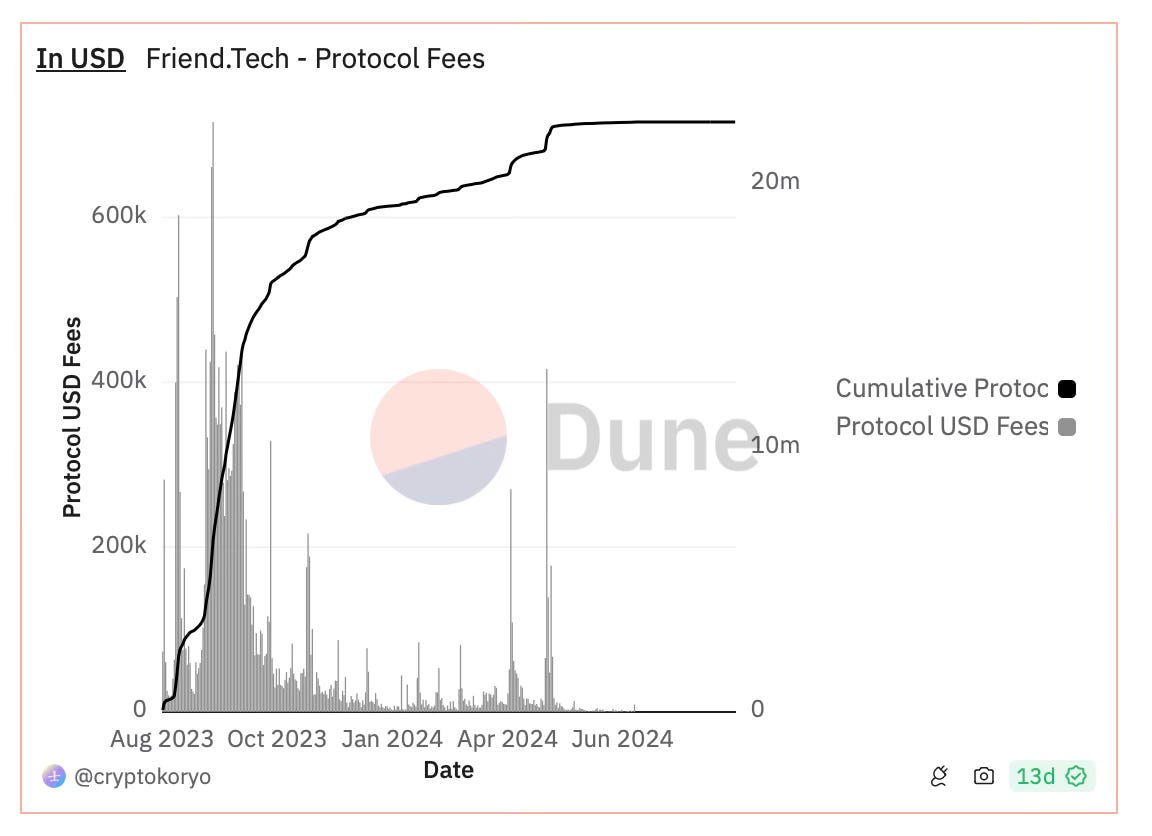
The app rose to fame as users bought “keys” (shares) of others, hoping these keys would appreciate as the person gained popularity and more users joined over time. However, without real utility beyond speculative trading, users quickly lost interest once the initial excitement faded. Additionally, the initial surge was partly driven by rumors of an airdrop for early participants—but after the airdrop, the platform offered almost no utility or user engagement.
Speculation-driven economies are inherently fragile—users seek quick gains but leave when no real value is provided. In contrast, platforms like Uniswap and Helium sustain long-term engagement by offering real-world utility, proving that sustainable success comes from creating lasting value, not hype. Friend.tech lacked this foundation, leaving little reason for users to stay once speculation died down.
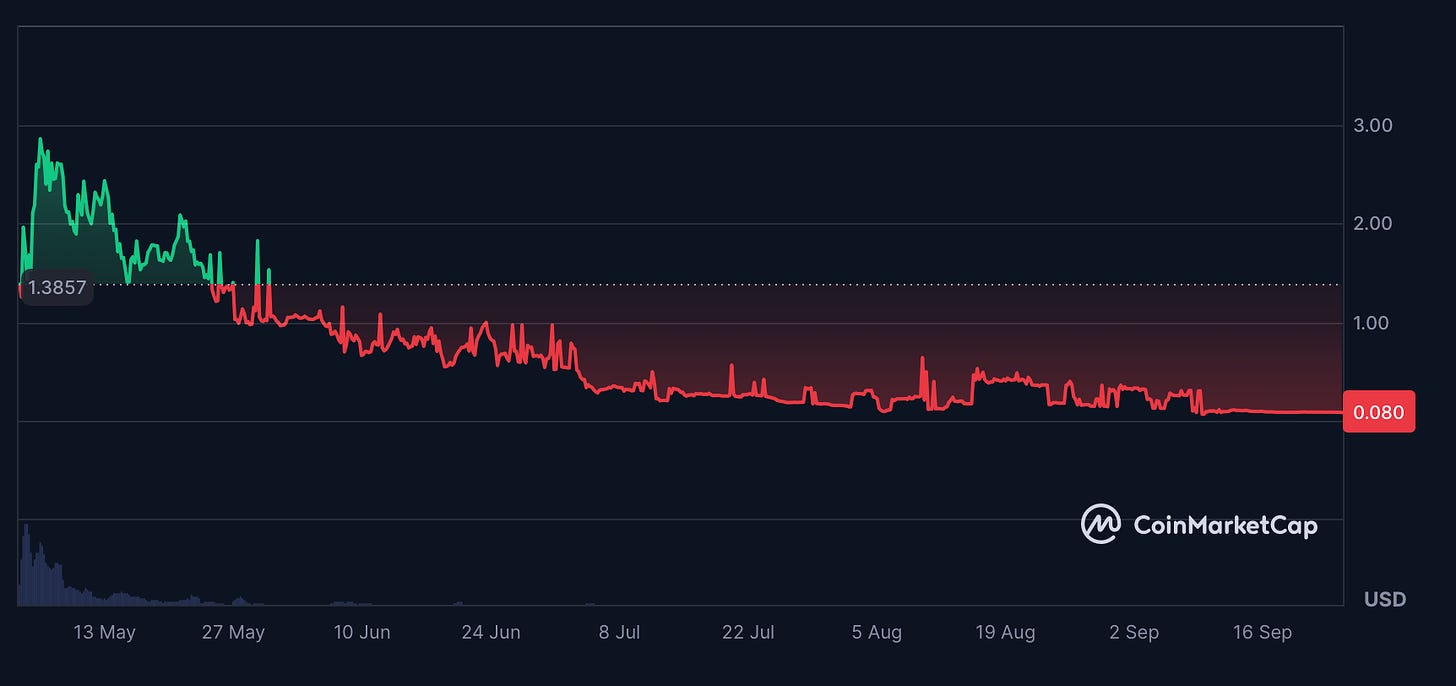
The conclusion is clear: for Web3 platforms to thrive, they must offer substance beyond speculation.
Why Do Projects Over-Reliant on Tokens Struggle Long-Term?
Projects overly dependent on token hype may achieve rapid success but struggle to sustain momentum. Token prices in these ecosystems are often driven by hype and speculation, but without a solid utility foundation, users quickly lose interest. Once the excitement fades and users realize there’s no deeper value, token prices collapse, prompting user exits and creating a vicious cycle.
This was evident in Axie Infinity, which relied on a dual-token system to support its growing player base. As user numbers climbed, the economy became hyperinflated, and token rewards could no longer sustain user growth. Eventually, the entire system collapsed because the tokenomics couldn’t keep up with the pace of player expansion.
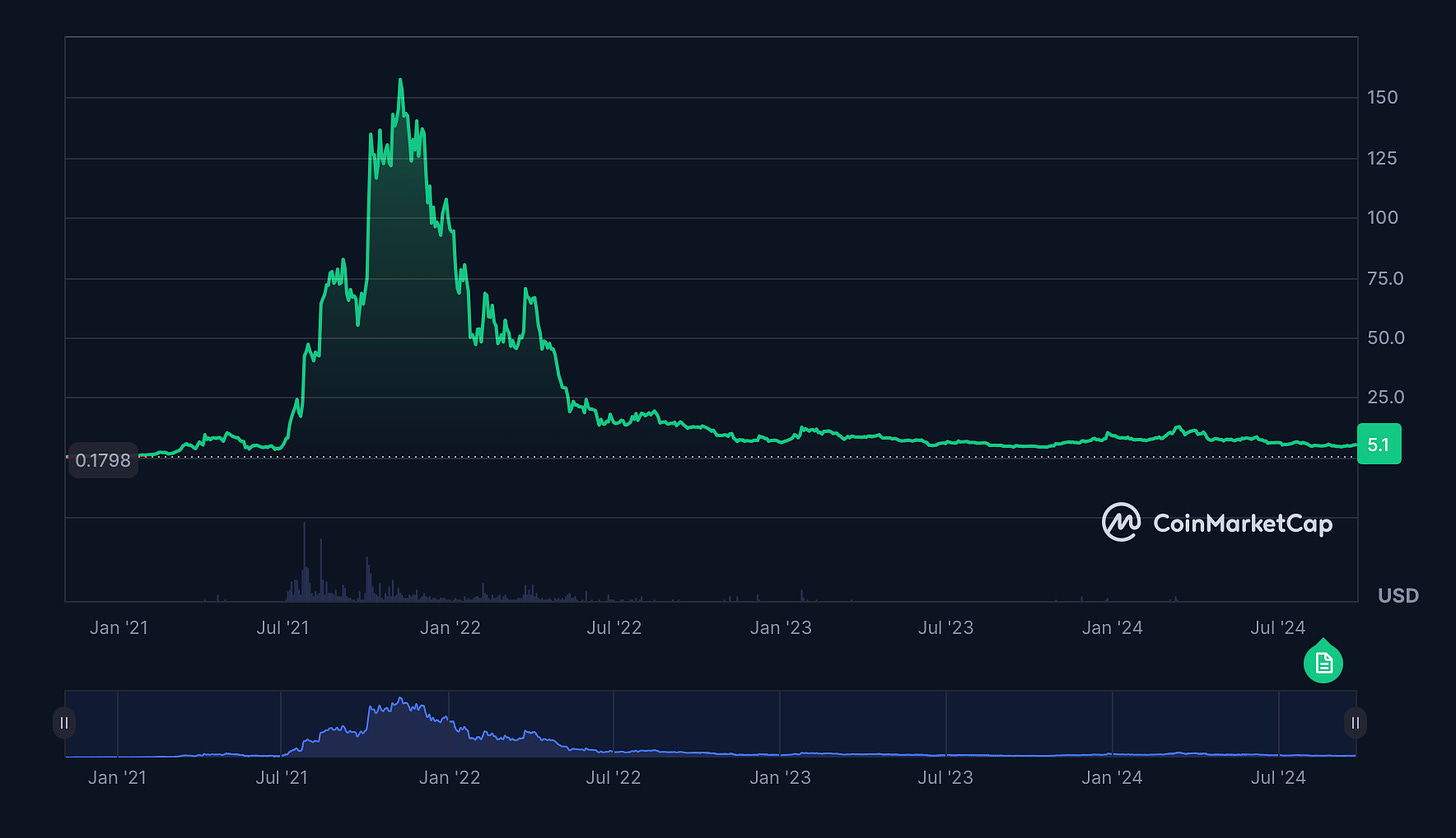
Chart of Axie Infinity
Similar issues arose with STEPN, a fitness app that initially attracted users by rewarding physical activity with tokens. But as token supply increased and prices dropped, user engagement declined, exposing the fundamental flaw of relying solely on token incentives for long-term participation. Although Axie generated revenue through marketplace fees and in-game purchases, its dependence on token growth and user expansion ultimately led to failure when growth slowed.
Likewise, STEPN, the fitness app that initially drew users with token rewards, failed to retain engagement after token prices fell due to oversupply. While Axie earned revenue through purchases and marketplace fees, its business model was too reliant on user growth and token rewards, leading to collapse when growth slowed.
Web3 Gaming vs. Web2 Gaming
The challenges faced by projects like Friend.tech and Axie Infinity highlight a larger issue within the Web3 gaming space. Compared to traditional Web2 games, Web3 games struggle with revenue generation. For instance, a recently released Web2 game earned $600 million in its first week—numbers Web3 games have yet to approach. This isn’t because Web3 gaming is a flawed concept, but because the technology hasn’t been fully leveraged, resulting in missed opportunities.
A key problem is that many Web3 games remain overly focused on token-based systems where players are incentivized financially rather than by actual gameplay. This overreliance on tokenomics creates unrealistic expectations, leading to disappointment when the game fails to meet the promised experience. To truly compete with Web2 games, Web3 projects need to shift focus to what makes games fun and engaging. Technology should enhance gameplay, not become the centerpiece.
To succeed, Web3 gaming must adopt gameplay-first models. Blockchain has the potential to deliver innovative experiences, but it should serve as a tool to deepen immersion—not the engine driving the entire economy. Only when the focus shifts from tokenomics to creating genuinely fun and compelling player experiences can Web3 gaming realize its potential.
So, What Needs to Change?
Successful Financial Metrics
-
Web3 projects must move beyond simply tracking token price. Traditional tech companies monitor key metrics like revenue, margins, and active users—Web3 projects should do the same by measuring real user activity and value creation.
-
The focus should be on identifying and defining a set of key metrics tailored to specific industries and business models—achieved through more precise benchmarking against Web2 counterparts and active customer communication.
User-Centric Design
-
Another crucial shift is focusing on user experience (UX)—easy-to-use interfaces and interactions with technology.
-
Web3 platforms need intuitive, user-friendly designs to ensure long-term growth. Currently, most experiences are complex, involving cumbersome wallet management and steep learning curves, making it easy for new users to drop off.
-
Simplifying onboarding and improving wallet usability are critical steps. Promising projects like Privy, Dynamic, and Turnkey are working to solve these issues.
-
Long-term user engagement is equally vital. Platforms must offer real value to ensure users keep coming back—not just speculative rewards. For example, Audius enables artists to meaningfully connect with fans, adding value beyond token incentives. Combined with the right technical solutions, this is exactly what’s needed.
Challenges in Implementing Utility
-
One of the biggest challenges is scalability. Blockchains often struggle to process large volumes of transactions at low cost. For example, Ethereum’s high gas fees have hindered broader adoption, pushing developers toward other chains like Sui and Solana.
-
Interoperability remains an ongoing issue, as many platforms operate in silos. Cross-chain solutions like Polkadot and Cosmos are making progress, but they haven’t yet emerged as market leaders.
-
Finally, regulation remains a major hurdle. While ETF approvals have eased the situation somewhat, concerns and unclear legal boundaries persist.
Conclusion
Web3 holds immense potential, but achieving lasting success requires moving beyond token speculation. Projects like Friend.tech and Axie Infinity show that while hype can generate quick gains, it doesn’t equate to sustained, long-term growth.
To thrive, Web3 platforms must focus on creating real value—starting with:
-
Building products with genuine utility
-
Tracking meaningful metrics like active users and transaction volume—not just token price
-
Designing for users
-
Creating seamless, engaging experiences
-
Prioritizing product utility over speculative hype.
Simplifying user experience and addressing real needs will foster long-term engagement. Overcoming technical challenges like scalability, interoperability, and regulations is critical for broader adoption. The future of Web3 belongs to projects that combine innovative technology with practical, user-centric solutions—creating lasting impact far beyond tokenomics.
Disclaimer
The editor of this post holds investments in HNT (Helium) and GEOD (GEODNET), but is not the author of this post.
Blockcrunch Podcast (“Blockcrunch”) is an educational resource intended to provide information for general reference. Blockcrunch produces weekly podcasts and newsletters, often covering Web3 projects, and may discuss investments in which the hosts or guests have financial interests.
Some Blockcrunch VIP posts are written by contractors hired by Blockcrunch. These posts reflect the independent views of the contractors, not the official stance of Blockcrunch. Blockcrunch requires contractors to disclose any financial interests in the projects they write about, though it cannot fully guarantee the absence of conflicts of interest. Blockcrunch itself does not buy or sell any covered assets within 72 hours before or after publishing content; however, its directors, employees, contractors, and affiliates may buy or sell assets before or after publication and will aim to disclose such information accordingly.
The views expressed by Blockcrunch guests are their own personal opinions. Neither Blockcrunch, its registered entity, nor any affiliated individuals are licensed to provide any form of financial advice. Content published on Blockcrunch’s podcasts, newsletters, website, and social media should not be interpreted as financial advice. Blockcrunch also receives compensation from sponsors; such sponsorship information should not be considered financial advice or endorsement.
Join TechFlow official community to stay tuned
Telegram:https://t.me/TechFlowDaily
X (Twitter):https://x.com/TechFlowPost
X (Twitter) EN:https://x.com/BlockFlow_News
 @DarshanG_






