"Infinite Garden": Ethereum's Vision
TechFlow Selected TechFlow Selected
"Infinite Garden": Ethereum's Vision
What is the connection between the Ethereum Foundation and "Infinite Garden"?
 Navigating Web3 tides with focused insights
Compiled by: Elsa
On September 18, 2024, the documentary "Vitalik: A Story of Ethereum" premiered. Originally titled "Ethereum: The Infinite Garden," this name was inspired by the ethos of the Ethereum Foundation. However, since the film is an independent production (not created by the Ethereum Foundation), the team reluctantly abandoned this title to avoid confusion within the community [1]. So, what exactly is the connection between the Ethereum Foundation and the concept of the "Infinite Garden"?
Main Content
"Finite games are played for the purpose of winning, while infinite games are played for the purpose of continuing the game." — James P. Carse, *Finite and Infinite Games*
Competition and the desire to win are deeply rooted in human nature. We obsess over success and failure. In zero-sum games, there are always winners and losers—gains for one come at the expense of another, and the losses of others make our own victories feel more valuable.
However, zero-sum games represent a one-dimensional form of growth. People often think: "I must work harder, move faster, surpass X, win X." In this model, progress is driven by the desire to outperform others.
But imagine if there were no next game? That would mean no definitive endpoint, and thus no traditional winners or losers. We would simply be participants in the game. Under such circumstances, the logic of zero-sum competition collapses—we no longer need others' failures to validate our own success.
In the end, we arrive at a cooperative, open environment for learning and working[3].
As Aya Miyaguchi, Executive Director of the Ethereum Foundation, explained in her 2021 EthCC talk titled "Growing the Infinite Garden – Ethereum"[4], Ethereum's vision aligns precisely with this idea, which she calls the "Infinite Garden."
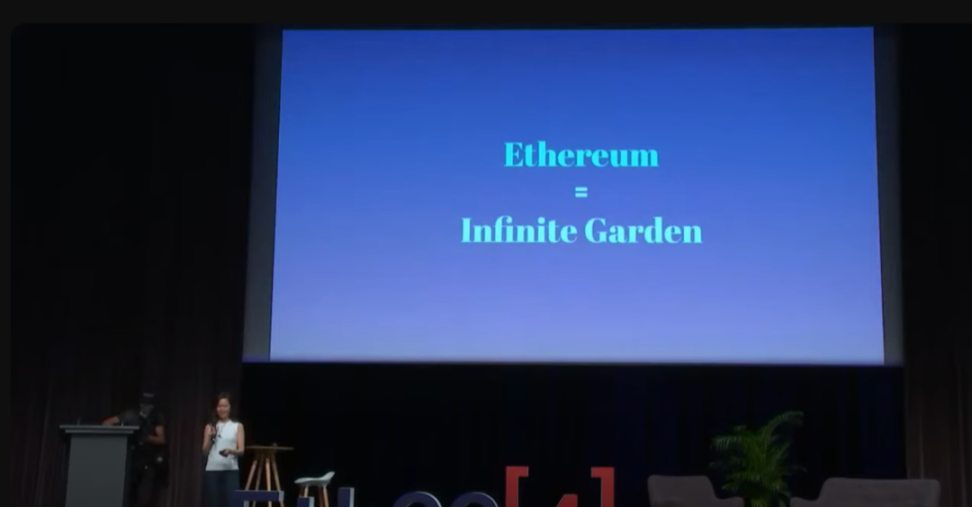
Screenshot from Aya Miyaguchi’s “Growing the Infinite Garden - Ethereum” talk
This concept was inspired by American scholar James P. Carse’s book *Finite and Infinite Games*. One particularly thought-provoking quote from the book states: "Finite games are played for the purpose of winning, while infinite games are played for the purpose of continuing the game."
In this book, Carse presents two distinct types of games in the world: finite games and infinite games. Finite games have clear rules, strict time limits, and well-defined criteria for victory—they aim to produce a winner. Within these games, players’ relationships tend to be adversarial.
In contrast, infinite games have no fixed rules or definite time limits. Their goal is not to win, but to bring more people into play and keep the game going. The mindset in infinite games centers on cooperation, innovation, and adaptation to change.
In her talk, Aya Miyaguchi uses the example of children playing football on the street: they aren't forced by parents but participate because they genuinely enjoy it. Some play barefoot, some join spontaneously, others leave temporarily—but none of this disrupts their enjoyment. When newcomers arrive, the game pauses so they can be taught how to play. After all, the better the new players become, the more exciting the game gets—for everyone involved, that's a good thing.
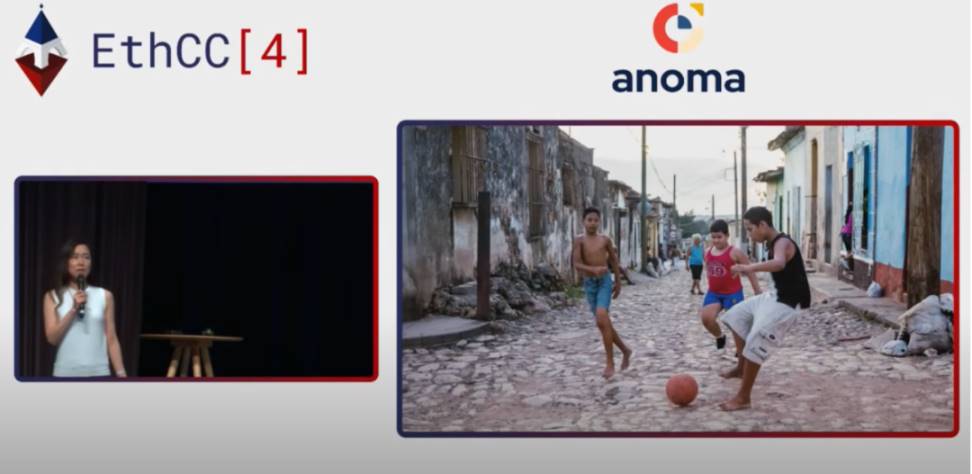
Screenshot from Aya Miyaguchi’s “Growing the Infinite Garden - Ethereum” talk
But things change dramatically when the goal becomes winning. Focusing on victory disrupts your plans and strategies, clouds your mind, and prevents you from fully engaging in the experience. If you ultimately don’t win, you may feel frustrated and disappointed.
Aya Miyaguchi believes that keeping Ethereum fun lies in remembering the excitement of playing together—this is what keeps the game going. Within the process of an infinite game, finite games may emerge, but an infinite game cannot exist within a finite one. For instance, debates and competitions within Ethereum aren't about making any single participant win; rather, they serve to continuously improve Ethereum and make it stronger.
The Ethereum ecosystem resembles a vibrant garden existing in a natural environment. Here, we can freely engage in various forms of play. The original gardeners planted the first seeds. Over time, trees and diverse plants grew, bringing vitality and variety to the space. This ecosystem evolved organically—not designed by any single individual or organization, but cultivated collectively by curious, passionate people eager to enhance the garden.
What role does the Ethereum Foundation play in this infinite game?
The mission of the Ethereum Foundation is to "grow the infinite garden." It sees itself as a "gardener"—focused on nurturing and supporting the growth of the Ethereum ecosystem, not controlling it.
At Devcon 6, the Ethereum developer conference held in October 2022, Aya Miyaguchi delivered another talk on Ethereum’s "Infinite Garden," titled "Executing with Subtraction in the Infinite Garden"[5], where she elaborated on the role and function of the Ethereum Foundation (EF) within this framework.
In the early days, the Ethereum Foundation wasn't a formal organization—it was merely a group of developers and researchers. There was no finance team, no grants team, and internal collaboration systems were underdeveloped. When Aya Miyaguchi first joined, she faced two choices: one was to pursue addition—building a powerful EF empire. This was entirely feasible at the time; technically easy to achieve, especially given that Ether's price had already risen significantly. The other path was subtraction—reducing power. Ultimately, the foundation chose "subtraction," transforming its role into that of a supporter for the entire ecosystem, tending to the "infinite garden." At that point, Ethereum was already a large open-source community with many areas needing improvement. The Ethereum Foundation needed to focus only on tasks that only it could do—tasks no one else would take on. This led to the creation of the Ethereum Ecosystem Support Program (ESP) and other grant initiatives. Additionally, the Ethereum Foundation prioritized supporting numerous third-party funding programs such as Gitcoin, Clr.fund, Protocol Guild, and MolochDAO. Its support extends beyond any single team, focusing instead on the long-term health and prosperity of the entire ecosystem.
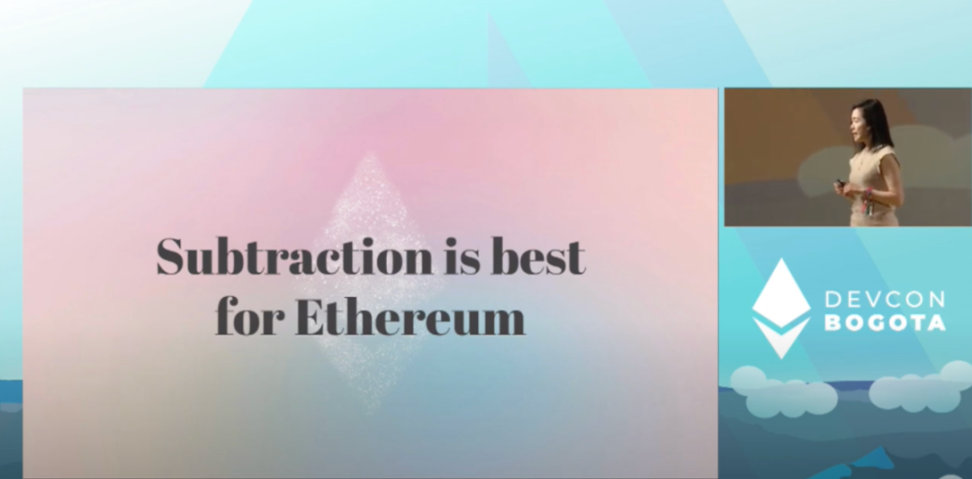
Screenshot from Aya Miyaguchi’s “Executing with Subtraction in the Infinite Garden” talk
The Ethereum Foundation understands clearly that sustained prosperity and growth of the ecosystem depend on fostering innovation through diversity and collaboration. Remember the Ethereum.org website? Its maintenance and translation are carried out collaboratively by volunteers and developers from the Ethereum community. Notably, around 5,000 volunteers from across the globe contributed to translating the site into as many as 48 languages.
While collaboration is encouraged in Ethereum’s system, it doesn't exclude competition. On the contrary, the Ethereum community encourages open participation and healthy competition—all aimed at improving Ethereum. In this context, zero-sum dynamics do not apply; one person's success doesn't imply another's loss, but contributes to the flourishing of the whole community.
In June 2024, Juan David, co-founder of Ethkipu.org, offered a deep interpretation of the "Infinite Garden" concept from the perspective of plant growth. In his article "Why Ethereum Evolves Like a Garden?"[6], he quoted Italian botanist Stefano Mancuso from *The World of Plants*: "The plant kingdom does not recognize the animal hierarchies built upon command centers and centralized authority, but instead fosters decentralized, distributed plant democracy." This means that unlike the animal world, the plant kingdom does not rely on rigid hierarchies or centralization. In nature, plants share and exchange resources via the "Wood Wide Web," supporting each other.
Ethereum, like the plant world, relies on decentralization to drive innovation and cooperation. Thanks to the garden's diversity, Ethereum can embrace different projects—for example, both Optimistic Rollups and ZK-Rollups as valid solutions. This diversity of approaches ensures Ethereum's adaptability and sustainable growth.

Image source: https://typeshare.co/juandaveth/posts/why-ethereum-evolves-like-a-garden
Whether it’s Aya Miyaguchi’s emphasis on the philosophy of infinite games, or Juan David’s explanation of decentralization drawn from the wisdom of plant growth, both reveal Ethereum’s unique appeal. As time passes and Ethereum continues to evolve, our understanding of these concepts will deepen—and each of us can become an active participant and witness in this ongoing journey.
The "garden" of Ethereum welcomes everyone—to play and explore freely within it. This "garden" is open and infinite. Within the possibility-filled Ethereum ecosystem, everyone can be both a participant and a steward. Precisely because of this openness, collaboration, and decentralization, Ethereum’s "garden" achieves the quality of being truly "infinite."
References
[1] The crypto documentary "Vitalik: The Story of Ethereum" is coming—trailer released on July 23. https://www.chaincatcher.com/article/2134211
[2] James P. Carse, *Finite and Infinite Games*. Translated by Ma Xiaowu and Yu Qian, China Communications & Information Publishing House (Publishing House of Electronics Industry), 2019.
[3] Team Gitcoin, August 29, 2022, *The Infinite Garden Relies on the Infinite Game*. https://www.gitcoin.co/blog/infinite-gardens
[4] Aya Miyaguchi: Growing the Infinite Garden - Ethereum. https://www.youtube.com/watch?v=ny83XarlecE&t=404s
[5] Executing with Subtraction in the Infinite Garden. https://www.youtube.com/watch?v=noXPewi5qOk
[6] Why Ethereum Evolves Like a Garden?. https://typeshare.co/juandaveth/posts/why-ethereum-evolves-like-a-garden
Join TechFlow official community to stay tuned
Telegram:https://t.me/TechFlowDaily
X (Twitter):https://x.com/TechFlowPost
X (Twitter) EN:https://x.com/BlockFlow_News
 @LXDAO_Official