Breaking the Impossible Triangle: The Ideal and Reality of Web3 Gaming
TechFlow Selected TechFlow Selected
Breaking the Impossible Triangle: The Ideal and Reality of Web3 Gaming
Despite various short-term challenges, these explorations demonstrate that we are moving forward toward the future.
 Navigating Web3 tides with focused insights
Author: Luke, Investment Manager at Waterdrip Capital
Preface
After the explosive success of *Black Myth: Wukong*, as both a gamer and a Web3 practitioner, I couldn't help but reflect on the current state and future direction of the Web3 gaming sector. If any of my views are flawed or biased, I sincerely welcome criticism and feedback. At the same time, I encourage entrepreneurs in the industry to reach out for deeper discussions about the potential of this space.
Revisiting the Original Vision of Web3 Gaming
"Focus on the team, don’t be misled by flashy new trends. I would never invest in game founders who jumped into Web3 just because it was hot. Most of them don’t even love games—how could they possibly make a great one?"
This is a quote from Daniel Wu, the first investor in *Black Myth: Wukong*, during an interview with ZhenFund, sparking widespread discussion across and beyond the industry. Is Web3 gaming merely a hype, or does it represent a revolutionary path forward?
Currently, the primary appeal of Web3 gaming seems to lie in its earning potential rather than genuine innovation in game design. Many enter this space chasing short-term profits or aiming to farm token airdrops. In the last market cycle, most Web3 games were of low quality—quickly built to attract traffic before conducting one-time "rug pulls." These patterns reveal developers’ excessive focus on short-term financial gains. As Daniel noted, many developers care little about games themselves and are instead drawn to Web3’s speculative markets. This “make money and exit” mentality is especially evident in Play-to-Earn (P2E) models, which often leave behind broken economies. Despite massive marketing, “2Earn”-style projects have increasingly been seen not as core gameplay innovations, but as mere gimmicks.
Returning to rationality, let's reconsider the true significance of Web3 for the gaming industry. Just as blockchain’s original goal was to create a fair monetary system, what was the foundational vision behind Web3 gaming?
Vitalik’s World of Warcraft story has been told too many times. Let me share a recent real-life incident from a game I play.
"On November 27, 2023, the Xuanwu District People's Procuratorate in Nanjing released a public prosecution notice stating that since August 2022, defendant Tang exploited a vulnerability in the personal backpack and warehouse system of the online game DNF. Using scripts provided by co-defendant Cai, he illegally duplicated eight in-game items—including 'Crystallized Contradiction,' 'Distorted Dimensional Crystal,' and others—and sold them, generating over 91.63 million RMB in illicit profits."

In short, two players exploited a bug to duplicate eight of the most liquid in-game materials—such as Contradiction, Distorted Dimensional Crystals, and Flawless Chrysoberyl—and flooded the in-game market, ultimately profiting over 91.63 million RMB.
This triggered massive player backlash, as their hard-earned gear and items rapidly devalued. However, due to the centralized nature of traditional games, all in-game assets legally belong to the publisher, leaving players without legal ownership. Although the company offered some compensation afterward, players’ rights remained fundamentally unprotected. This incident highlights a core flaw in centralized gaming: the system failed to prevent asset duplication and struggled to mitigate long-term economic damage. In such systems, in-game assets are fully controlled by the game company. When issues like duplication or economic imbalance arise, players have no means to protect or manage their virtual possessions.
Back to our original question: What is the true purpose of Web3 gaming? To me, it’s a world where gameplay and visuals rival traditional titles, but where players have full control over their assets; a community where players have a say in the game’s future, never again forced to accept sudden official updates like “class rebalancing notices”; and a more open, robust cross-platform trading ecosystem within the metaverse—where assets can transcend boundaries between virtual and real economies, even crossing different games and platforms.
Web3 Gaming Amplifies Traditional Virtual Economy Problems
Ideals are beautiful—until reality hits hard. The vision described above has largely revolved around “ownership,” and the pioneer that first brought this idea mainstream—P2E—has now crashed into the abyss.
Why? Terms like “payback period,” “earnings,” “gold farming,” and “grinding for profit” aren’t new. In traditional MMORPGs, “gold farmers” have always been part of the ecosystem, trading playtime for in-game currency to upgrade characters or engage in real-money trading (RMT). So why is Web3’s “play-to-earn” looked down upon by traditional gamers? Aren’t both about gaining returns on investment? Is income from Web3 games somehow “dirty money”?
We believe a key reason lies in Web3’s decentralization, which indirectly magnifies existing problems in Web2 games. In Web2, developers use centralized control to flexibly manage in-game economies—adjusting item drop rates, tweaking currency supply, launching events—to maintain balance. If inflation occurs, operators can “add flour when there’s too much water, add water when there’s too much flour,” dynamically adjusting resource supply and demand. But in Web3 games, due to their decentralized nature, developers cannot easily intervene, making economic imbalances far more likely.
If players only engage with a game for profit, it will collapse quickly. Virtual worlds evolve every second, constantly creating new goods, tokens, markets, supply-demand dynamics, and pricing models to meet human desires. Sure, maintaining economic stability is difficult. After playing DNF for 14 years, I’ve seen gold prices fall from 1 RMB = 200k gold to 1 RMB = 890k gold. But these crashes weren’t solely due to poor economic design—they were also caused by developers ignoring player concerns, failing to protect user rights, inadequate marketplace infrastructure, and malicious bugs or changes that drove players away.
Currency is crucial in both real and virtual systems. From single-player NPC trades to multiplayer peer-to-peer circulation, countless factors must be considered. In MMOs, high in-game gold prices signal strong willingness among players to spend money enhancing their avatars, while incentivizing farmers to grind for profit. There’s a classic saying in multiplayer games: “Graduate, then go work in the brick factory”—meaning once you’ve completed your character build, you start farming gold to recoup your investment.
In traditional games, the “sink mechanism” is vital for economic balance. Players continuously earn currency through activities, but without sufficient spending mechanisms, oversupply leads to inflation and disrupted pricing. To counter this, developers implement various sinks—limited item durability, obsolescence, storage fees, buybacks, trade-ins, conversion to real-world benefits, etc. Well-designed sinks are not only accepted by players but can enhance gameplay enjoyment. In Web3 games, the lack of effective sink mechanisms often results in token oversupply and severe inflation. Designing robust sink systems is thus a critical challenge for sustainable Web3 game economies.
While a few Web3 games with strong content occasionally emerge, they’re drowned out by the flood of short-term profit-driven projects. Game economies matter deeply. By combining blockchain technology for asset ownership and liquidity support, we could theoretically offer players more authentic experiences and resilient systems—preventing assets from feeling like “air” and protecting against hacking or cheating that could devastate the ecosystem.
Is Adding Tokens to Web2 Games a Viable Path Forward?
Games like *MIR4*, already established in Web2, achieved surprising user growth and revenue after integrating P2E mechanics. However, these models don’t fully depend on tokens. Even without Web3 elements, such games succeed via fiat-based “currency exchange” features. As Sinjin | MAYG (https://x.com/SinjinDavidJung) pointed out, simply adding tokens to a successful Web2 game doesn’t guarantee success. Web3 gaming isn’t just about tacking on new features—it requires a complete redesign of game mechanics and monetization. Traditional game design experience may hinder this shift, as it relies on existing distribution channels, stable fiat-based economies, and account-bound assets. Web3 introduces new variables—tokenomics, peer-to-peer asset trading, token circulation—that demand entirely new design thinking. Every game mechanic must be rethought, especially how tokens are generated and circulated.
Can AAA Games Spark a New Wave?
Following the breakout success of *Black Myth: Wukong* in China, media outlets have widely dubbed it “China’s first AAA title.” But what exactly is a “AAA game”? In the industry, 3A refers to high-budget, high-quality titles developed by major studios with extensive marketing campaigns. These games are known for stunning graphics, expansive open worlds, and complex mechanics—representing the pinnacle of scale, quality, and technical achievement.
During Web3 gaming’s development phase, numerous projects have begun branding themselves as “AAA” to attract investors and players. Yet personally, I’m unimpressed by this label. As an investor, “AAA” implies large, experienced teams and massive investments in development and marketing. Considering the immaturity of Web3 infrastructure, the risk of building such projects is extremely high. Very few teams meet my expectations. As a gamer, I see games in only two categories: fun ones and unfun ones. The “AAA” tag means nothing to me—it doesn’t determine actual quality. If I don’t enjoy playing it, I won’t. Many so-called AAA games boast impressive visuals but fail in gameplay and user experience.
Indie Games
Many indie games created by small teams win player affection through creativity and engaging gameplay. Though lacking blockbuster budgets, they deliver unique experiences and fresh joy. Similar to the constant emergence of new protocols in DeFi, Web3 gaming faces a trend: more projects rely on flashy labels and grand concepts while neglecting the most important element—core gameplay fun. We don’t need hollow “AAA masterpieces,” but rather innovative indie developers who break free from traditional frameworks. Leveraging new paradigms like “fully on-chain games” and “ServerFi,” they can deliver truly distinctive experiences without sacrificing creativity or playability. Like DeFi’s continuous innovation, small teams can play a pivotal role in Web3 gaming. Rather than chasing lavish production and marketing, this space needs daring, experimental indie teams. Without big-studio resources, they can still disrupt the status quo through creative design, deep storytelling, and novel mechanics—delivering richer, more diverse gaming experiences.
Bridging the Impossible Triangle in Web3 Gaming Ecosystems
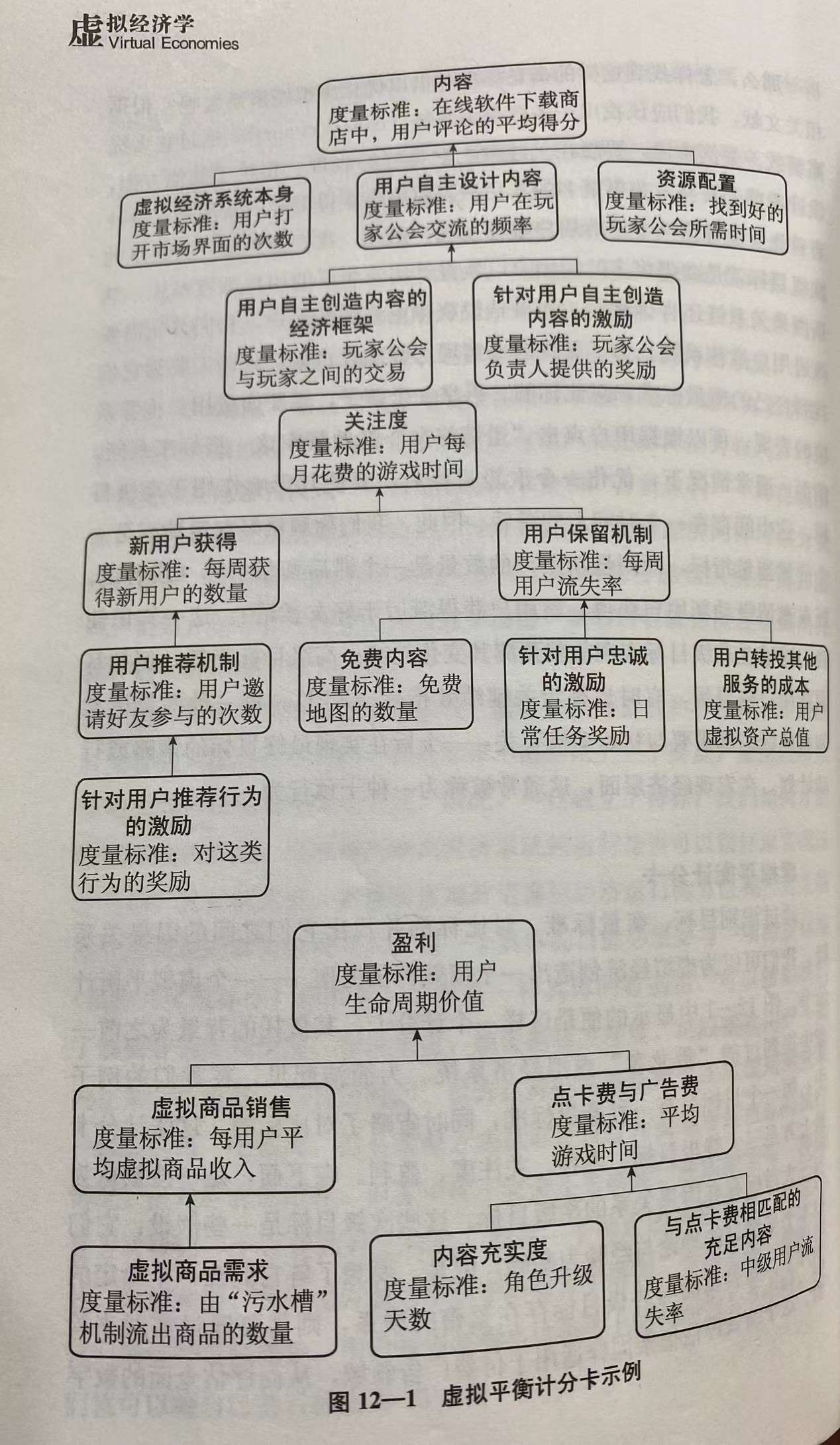
In *Virtual Economies* by Vili Lehdonvirta and Edward Castronova, the authors propose a “Virtual Balanced Scorecard” for game economy design, identifying three ultimate goals: Content, Attention, and Profit.
-
Content Creation: A virtual economy should enable engaging solo-player experiences or provide a framework for user-generated content. With clearly defined virtual property rights and markets, it can directly incentivize players and third-party developers to create new content. These economic attributes ensure scarce resources—like game content and player attention—are optimally utilized.
-
Attention: Attracting and retaining users. Virtual economies can offer free content to draw interest while reserving premium content for paying players. Rewarding referrals or continued play with virtual goods or currency helps retain users—players hesitate to leave when their time and money investment would otherwise vanish.
-
Profit: Generating real-world revenue by selling virtual goods and currencies. Virtual economies can convert content and attention into income. For services using other models (e.g., subscription fees or ads), adjusting the cost of accessing new content allows designers to profit. But if updates are too slow, players get bored; if too fast, content gets consumed too quickly—both harming retention.
In Web3 gaming, these three goals—content, attention, and profit—have formed an “impossible triangle,” making it difficult to achieve perfect balance across all three. Traditional games have long faced similar challenges, but Web3’s decentralized economics and asset ownership amplify these tensions.
1. Depth and Diversity of Content
Sustaining content scarcity and longevity is challenging. If players are primarily motivated by short-term token or NFT gains, their behavior shifts toward maximizing economic return rather than exploring content. This leads to shallow gameplay designed solely for “quick profits.” Creating games that are both creative and capable of sustaining long-term engagement remains a major hurdle.
2. User Acquisition and Retention
Players face more than just gameplay issues in Web3 games. Overly complex economies, volatile token/NFT values, and rampant speculation can confuse or disengage casual players. As more Web3 games flood the market, standing out and retaining users becomes harder. Given the typically short lifespans of Web3 games, early adopters often churn quickly. Developers must craft games that are both fun and easy to learn, avoiding overreliance on token and NFT mechanics.
3. Profitability and Sustainability
Web3 game monetization is tightly tied to tokenomics. Games overly dependent on tokenized economies tend to prioritize short-term profits over long-term planning. Players join to earn, but once token prices drop or the economy collapses, they leave en masse, causing rapid ecosystem decay. Traditional games sustain profitability through consistent content updates and balanced economies. Web3’s volatility makes this far more difficult. Heavy reliance on external market swings leaves developers unable to stabilize the economy through content alone. To achieve lasting profitability, creators must design more resilient economic systems—reducing dependence on external fluctuations and ensuring ecological sustainability.
Conclusion
Daniel’s view on Web3 gaming may be one-sided, but he highlights a critical truth: games that chase short-term gains and exploit the Web3 buzzword are poisoning the entire industry. These projects not only disappoint players but also make it harder than ever for Web3 gaming to achieve mainstream breakthroughs. Players don’t just want games labeled “Web3”—they want transformative experiences that redefine what games can be. Just as *Black Myth: Wukong* lets players live the legend of the Monkey King, Web3 games should empower players with unprecedented immersion and creative freedom.
Developers exploring new frontiers and breaking old rules will inevitably face setbacks and confusion. But this is precisely the journey Web3 gaming must undergo—breaking outdated frameworks and forging new paths. Despite short-term challenges, these efforts prove we are moving toward the future.
Every developer and player persevering in this revolution is a hero of change. Struggles and failures aren’t signs of defeat—they’re marks of progress. Just as *Black Myth: Wukong* reignited long-lost excitement and anticipation, Web3 gaming needs truly impactful innovation and unforgettable experiences. Only those brave enough to walk new roads will leave lasting legacies in this evolving landscape.
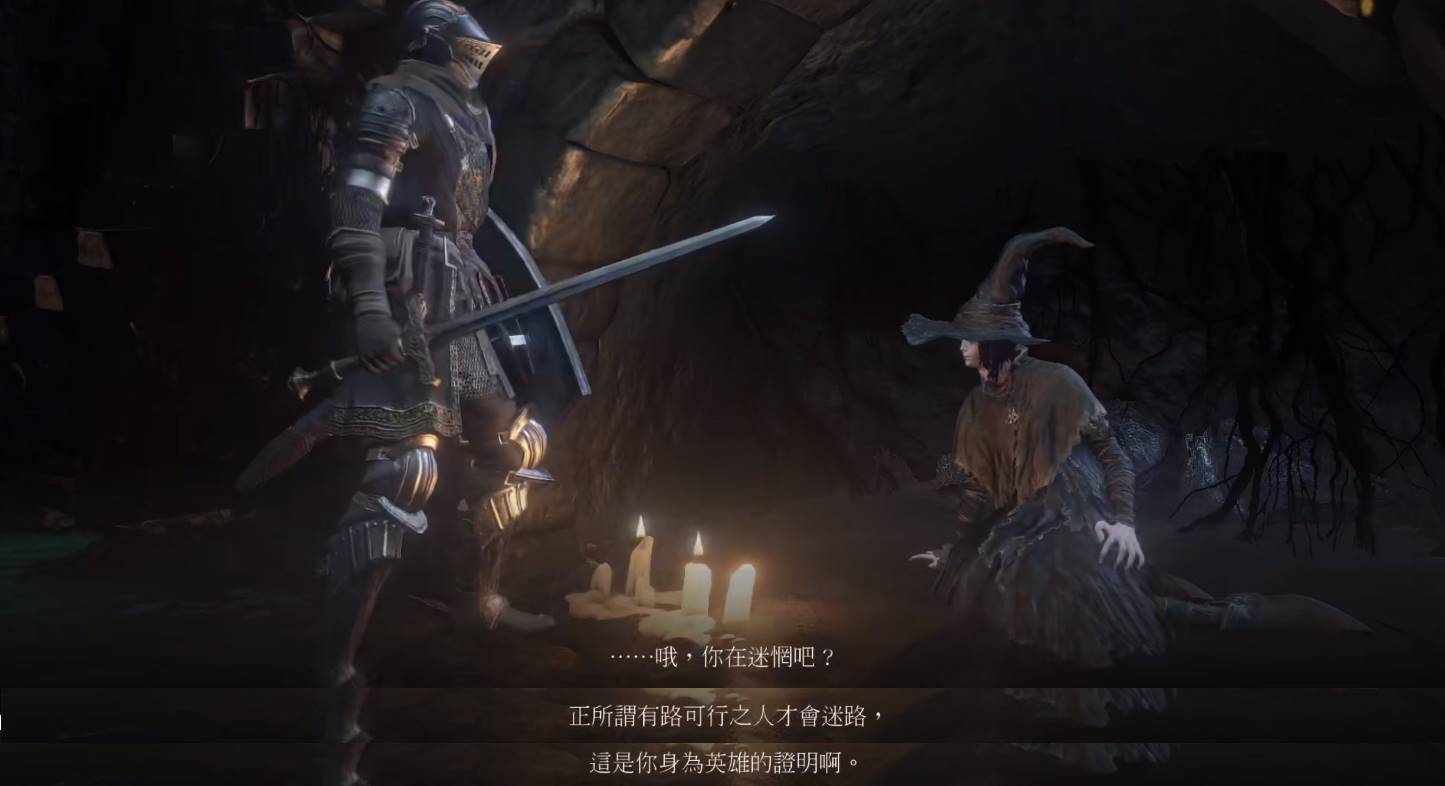
“Ah, you're feeling lost? Remember—only those who have a path can get lost. That is proof you are a hero.”
Looking forward to meeting again in future game worlds. See you in-game.
Join TechFlow official community to stay tuned
Telegram:https://t.me/TechFlowDaily
X (Twitter):https://x.com/TechFlowPost
X (Twitter) EN:https://x.com/BlockFlow_News
 Waterdrip Capital