Conversation with Multicoin Co-founder: Why Has Ethereum Underperformed?
TechFlow Selected TechFlow Selected
Conversation with Multicoin Co-founder: Why Has Ethereum Underperformed?
Platforms such as Ethereum and Solana will become the infrastructure of mainstream financial systems, while Bitcoin may be regarded as a useless digital asset.
 Navigating Web3 tides with focused insights
Curated & Translated by: TechFlow
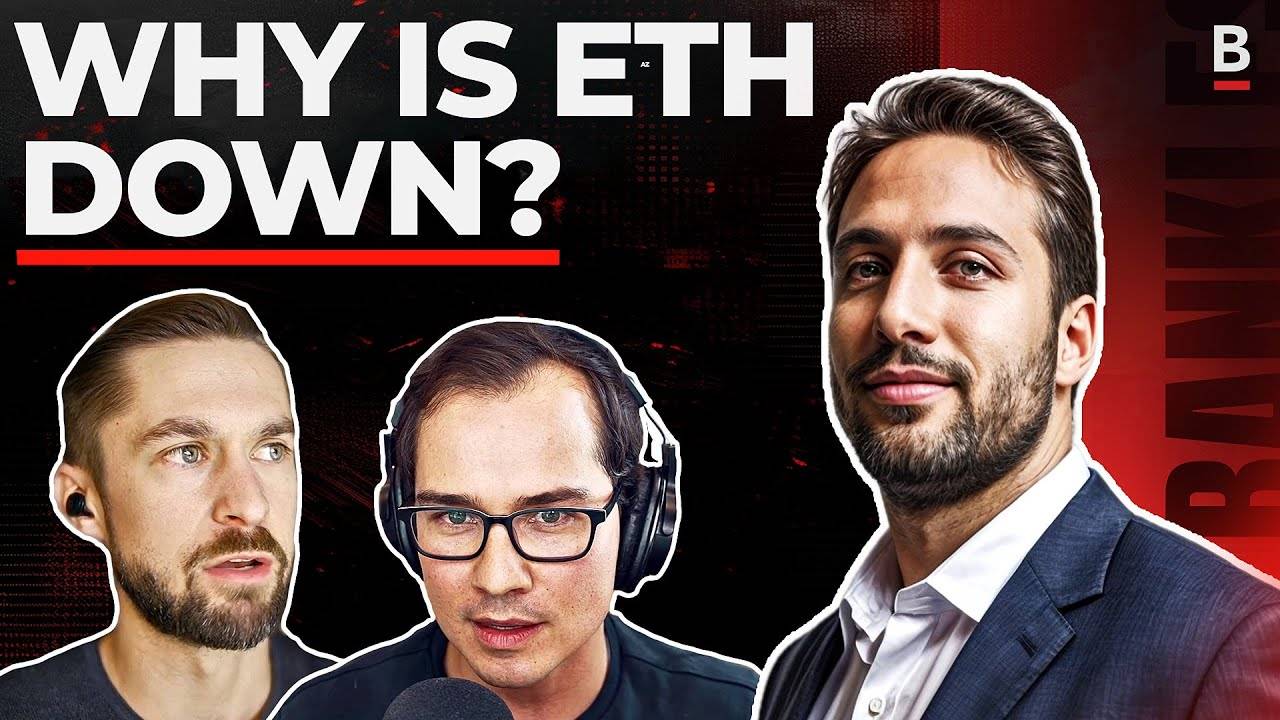
Guest: Kyle Samani, Managing Partner and Co-Founder of Multicoin Capital
Hosts: Ryan Sean Adams, Co-Founder of Bankless; David Hoffman, Co-Founder of Bankless
Podcast Source: Bankless
Original Title: Why is ETH Down so bad?
Release Date: August 26, 2024
Introduction
SOL/ETH has risen 300% over the past year, while ETH/BTC has declined 50% over the past two years. Why? Why has ETH performed so poorly?
Kyle Samani is the managing partner and co-founder of Multicoin Capital. Kyle and Multicoin have long been among Solana’s largest investors and advocates. Well before Solana’s success redefined the crypto landscape, they were promoting the investment thesis of “integrated blockchains.”
This episode isn’t meant to stage a debate like Anatoly versus Justin Drake. Instead, Ryan and David primarily listen to Kyle’s perspective and his analysis of why ETH has underperformed in this current crypto cycle.
Independent Analysis of Ethereum
The Impact of Market Gravity
-
Kyle attributes Ethereum's price decline to its market size. He explains that as assets grow larger, sustaining growth becomes increasingly difficult. Ethereum currently has a market cap of approximately $300 billion, making it the 34th largest asset globally. In comparison, Bitcoin ranks 10th.
-
Kyle notes that larger assets face higher market expectations, placing greater pressure on Ethereum to deliver growth. Additionally, Kyle mentions that market expectations about Ethereum’s future performance negatively influence its current price action.
Uncertainty in Value Capture Mechanisms
-
Kyle further elaborates on the uncertainty surrounding Ethereum’s value capture mechanisms. He argues that for a $300 billion asset without a clearly defined value capture model, this ambiguity exerts downward pressure on its price.
-
He points out that market skepticism regarding Ethereum’s core mechanisms has weighed on its performance over the past year.
-
David adds that this "gravity" phenomenon is not unique to Ethereum—it’s a challenge all large assets face once they reach a certain scale.
Bitcoin’s Exceptional Status
-
Kyle also notes that Bitcoin is a special exception in this regard due to its value proposition as a store of value and medium of exchange. Although personally critical of Bitcoin, he acknowledges that Bitcoin enjoys a degree of immunity within the market gravity theory. This suggests that despite Ethereum’s challenges, Bitcoin’s unique status results in different market dynamics.
ETH vs. BTC Comparison
Bitcoin’s Uniqueness vs. Ethereum’s Functionality
Ryan highlights the differences between Bitcoin and Ethereum, emphasizing that Bitcoin is seen as a “special snowflake,” with itsvalue propositioncentered on being “sound money.”
-
Kyle agrees, noting that Bitcoin’s simplicity and low risk give it a unique position in the cryptocurrency space. While he personally doesn’t view Bitcoin as special, he recognizes that society broadly accepts this narrative, leading to widespread market validation of Bitcoin’s performance.
-
Kyle further analyzes the functionality of Ethereum and Solana, suggesting they resemble technology stocks or growth assets rather than pure stores of value. He emphasizes that Ethereum and Solana provide practical utility, meet user needs, and generate cash flow, positioning them differently in the market.
Distinguishing Asset Classes
Ryan discusses different asset classes, distinguishing capital assets, commodities, and stores of value. He argues that capital assets generate cash flows, whereas commodities are consumable inputs used to produce other goods.
-
Kyle disagrees with treating stores of value as a separate category, advocating instead for focusing on income-generating assets. He notes that companies like Walmart and Amazon maintain their value even in inflationary environments.
-
Kyle suggests that while Bitcoin and gold are viewed as inflation hedges, many productive assets can also preserve value over time. He questions Bitcoin’s intrinsic value, arguing that its market performance may not reflect fundamental worth.
Future Trends and Expectations
-
Kyle predicts that over the next 10 to 20 years, as financial systems evolve, cryptocurrencies will play an increasingly significant role in global finance. He believes platforms like Ethereum and Solana will become foundational infrastructure for mainstream finance, while Bitcoin may be perceived as a useless digital asset. Ultimately, he expects people to realize that compared to assets like Ethereum, Bitcoin lacks functional utility and real-world applications.
-
Kyle says he would short Bitcoin opportunistically in the near term but currently has no clear timeframe for doing so.
Layer 2 Interoperability Issues
Ethereum’s Interoperability Challenges
David raises several issues facing Ethereum, particularly around Layer 2 interoperability.
-
Kyle emphasizes this point, stating that interoperability problems directly impact Ethereum’s price performance. He notes that many Ethereum users are frustrated with cross-chain operations—especially high fees and long confirmation times when transferring assets. This experience drives users toward alternative platforms like Solana, where operations are smoother.
The Importance of User Experience
-
Kyle points out that actual user experience is a primary driver behind capital flows between Ethereum and other platforms like Solana. As users become aware of Ethereum’s interoperability limitations, they begin moving funds to Solana for better usability. Issues such as bridging friction, slippage, and high fees significantly affect user sentiment and decision-making.
Ethereum’s Proposed Solutions and Outlook
-
Ryan mentions that Ethereum has plans to address interoperability through various technical roadmaps, including Layer 2 integration and shared sequencing. Kyle expresses skepticism, arguing that even if standards are proposed, implementation is unlikely due to lack of alignment and cooperation among protocols. He notes that after nine years, Ethereum has made slow progress on interoperability, leaving many users disappointed.
Impact of Market Sentiment
-
Kyle further explains how user sentiment manifests in market behavior. The capital shift from Ethereum to Solana reflects users comparing experiences and choosing the superior option. This change in sentiment translates into price movements reflected in the relative valuation between Ethereum and other platforms.
Different Rules for Bitcoin
-
Finally, Kyle notes that Bitcoin operates under different rules. Despite poor user experience, Bitcoin is purchased for different reasons than Ethereum or Solana. It is perceived as a unique asset—users continue to hold it despite usability shortcomings because it holds a privileged status in the market.
Value Capture
Layer 2 Value Capture Challenges
-
Kyle raises concerns about value capture for Ethereum’s Layer 2s. He describes Layer 2s as parasitic on Ethereum Layer 1—extracting value from L1 rather than enhancing it.
-
Kyle explains that software has near-zero marginal cost, while blockchains are designed to create scarcity. The existence of Layer 2s complicates Ethereum’s ability to capture value effectively.
Transaction Costs and Market Mechanics
-
Kyle further explains that technological advances are driving transaction costs toward zero, diminishing the importance of execution and value capture on Ethereum. He argues that the core market driver is MEV (Maximal Extractable Value), and Ethereum’s current design shifts MEV capture to Layer 2, negatively impacting value accrual at Layer 1.
Competitive Landscape for Ethereum
-
Kyle points out that Ethereum faces competition from other blockchains like Solana and Aptos, which may offer superior user experience and efficiency. While acknowledging Ethereum’s significance as an ecosystem, he argues its privileged status is being challenged, especially as users and developers seek more efficient solutions.
The Debate Over Ethereum as Money
-
Kyle emphasizes that Ethereum will never become everyday money due to its high volatility compared to fiat currencies like the dollar. He notes that ordinary people understand money as a stable asset used for daily transactions—Ethereum fails to meet this standard.
-
Kyle believes that even if Ethereum gains prominence on Layer 2, its lack of price stability prevents it from functioning as real money.
Investor Sentiment and User Experience
-
David notes that user experience and investor sentiment are deeply intertwined and may account for 80% to 90% of Ethereum’s price lag. Poor UX undermines investor confidence, and vice versa.
Outlook and Potential Solutions
-
Despite ongoing development of Layer 2 solutions, Kyle remains cautious about their effectiveness. He warns that as more Layer 2 projects launch, ecosystem complexity may increase, further weakening Ethereum’s core value capture mechanisms.
Areas Needing Change
Communication and Collaboration in the Ethereum Ecosystem
-
In the discussion, Kyle highlights the lack of communication between Ethereum’s development teams and its core users. He finds it astonishing that top application developers like Mark Zeller from Aave have never interacted with core members of the Ethereum Foundation.
-
Kyle believes Ethereum’s future requires deeper dialogue with key app developers to understand their needs and feedback.
Establishing Interoperability Standards
-
Kyle proposes a clear goal: he hopes Ethereum co-founder Vitalik will resume his role as a “benevolent dictator” and drive the creation of an interoperability standard that all Layer 2 projects can adopt. Such a standard would resolve current fragmentation, improve user experience, and enhance overall ecosystem efficiency.
Focusing on User Needs
-
Kyle stresses that development teams must prioritize user needs. He suggests that had Ethereum started engaging users back in 2020, understanding their perspectives and requirements, many of today’s ecosystem complexities could have been avoided. Early user involvement could help identify and resolve potential issues proactively.
Integrating Technology and User Focus
-
Kyle also notes that although he lacks deep technical expertise, he believes Ethereum’s developers should find technical solutions to Layer 1 scalability. He argues that the responsibility lies with the tech team to explore these challenges rather than relying solely on external suggestions.
-
Kyle's views underscore the importance of communication and collaboration within the Ethereum ecosystem. He calls for more engagement between the Ethereum Foundation, core users, and developers to better understand needs and advance Ethereum’s future. A user-centric approach could help Ethereum maintain leadership in the competitive blockchain market.
Decentralization
Ryan introduces a critical topic: decentralization. He observes that the term often sparks controversy in crypto discussions, sometimes triggering ideological “purity tests.” Nonetheless, decentralization remains a valuable concept, closely tied to censorship resistance, inflation resistance, and corruption resilience.
-
Ryan notes that Ethereum’s development decisions often align with decentralization goals, especially in advancing the rollup-centric roadmap.
Open Finance vs. Decentralized Finance
-
Ryan further explores the distinction between open finance and decentralized finance (DeFi). He suggests Kyle might favor open finance over DeFi. Ryan observes that the future financial world Kyle describes resembles a decentralized NASDAQ rather than a fully decentralized financial system.
Divergent Values: Bitcoin vs. Ethereum
-
Kyle agrees with Ryan, noting fundamental value differences between Bitcoin and Ethereum. Bitcoin’s core value lies in its fixed supply of 21 million coins, offering strong assurances about future monetary policy and inflation resistance. Kyle sees this 99% certainty about future supply as Bitcoin’s main advantage.
Ethereum’s Supply Guarantees
-
In contrast, Kyle argues that Ethereum and Solana offer supply guarantees in the range of two to four nines. He acknowledges Ethereum may provide stronger inflation assurances due to its fee-burning mechanism but believes optimizing beyond this level is unnecessary.
Decentralized Validator Sets
-
Kyle believes Ethereum’s core value lies in its decentralized validator set. He mentions that maximizing node count—including home staking—is a key Ethereum objective. However, he also questions whether this optimization is truly optimal, given that these systems are fundamentally financial in nature.
Building Financial Markets
-
Kyle emphasizes that Ethereum and Solana aim to build the world’s largest permissionless financial markets. While decentralized validators are important, in practice, centralized entities—such as stablecoin issuers and centralized exchanges—play crucial roles in enabling system functionality. These actors serve as bridges connecting traditional finance with crypto.
Solana
Solana Builders’ Commercial Orientation
-
David observes at Solana conferences that Solana builders tend to be commercially oriented, focused on understanding customers and communicating with them. This contrasts sharply with Ethereum builders, who often emphasize cypherpunk ideals, prioritizing decentralization and censorship resistance.
-
David believes Solana builders likely wouldn’t create projects like RAI, as they focus on building sustainable businesses and may sacrifice decentralization for faster growth.
Value Differences
-
Kyle finds David’s observation accurate. He notes fundamental value differences among Bitcoin, Ethereum, and Solana. Bitcoin values fixed supply and censorship resistance; Ethereum emphasizes decentralized validators. Solana builders, by contrast, prioritize building efficient financial markets over extreme decentralization.
Performance During Crises
-
Kyle mentions that after FTX collapsed, Solana saw a reduction in validator count, market cap, and total value locked (TVL). However, he notes that Solana’s consensus remained intact during the crisis, indicating that decentralized validators aren’t the sole factor ensuring network security. He highlights that Cefi (Centralized Finance) bridges played a vital role in linking traditional and crypto finance.
The Value of Optimizing Decentralization
-
Kyle further questions whether pursuing extreme decentralization is necessary. He argues that excessive focus on decentralization may compromise system functionality and flexibility. He challenges whether the marginal gain in security justifies sacrificing agility and value capture. He stresses that most economic activity still occurs in traditional finance, and effective bridges are key to the success of new financial systems.
-
Kyle and David's discussion reveals fundamental value differences between Solana and Ethereum. Solana prioritizes commerce and functionality; Ethereum emphasizes decentralization and censorship resistance.
-
Kyle emphasizes that while decentralization is an important goal, understanding the role and function of centralized entities in practice is equally critical. Ultimately, value optimization should consider overall system functionality and flexibility—not just chasing “extra nines” of decentralization.
Strengthening Ethereum’s Case
Ethereum’s Regulatory Advantage
-
Kyle notes that Ethereum enjoys a privileged regulatory status compared to Solana—an important advantage. This favorable regulatory standing grants Ethereum higher legitimacy and recognition in many countries, which is crucial for attracting developers and users. In contrast, Solana’s weaker regulatory position may constrain its growth potential.
Concentration of Human Capital
-
Kyle further emphasizes that Ethereum’s ecosystem attracts more high-IQ talent. He believes innovation thrives on having a group of smart, motivated individuals. Ethereum’s developer community draws exceptional talent, giving it an edge in technological innovation and ecosystem development. While acknowledging Solana has capable contributors, overall, Ethereum holds the advantage here.
Drivers of Innovation
-
Kyle stresses that innovation is typically driven by a small number of highly skilled individuals—and Ethereum excels at concentrating such talent. Although Solana actively recruits developers, Ethereum maintains a clear lead in both depth and breadth of innovation. This accumulation of human capital not only fuels technical advancement but also strongly supports ecosystem expansion.
Social and Political Influence of Ethereum
-
Kyle also notes that the Ethereum Foundation plays a vital role in creating and maintaining a fair, transparent, decentralized system. He believes Ethereum leads in setting norms and standards that positively influence other blockchain projects. Ethereum’s governance model and values serve as an industry benchmark, promoting healthier development across the sector.
-
Overall, Kyle highlights Ethereum’s strengths in regulation, human capital, and innovation. While Solana offers advantages in usability and commercial orientation, Ethereum maintains leadership in technical depth and overall ecosystem strength. Ethereum’s success stems not only from technological innovation but also from its strong reputation and established norms—key drivers for its future growth.
Join TechFlow official community to stay tuned
Telegram:https://t.me/TechFlowDaily
X (Twitter):https://x.com/TechFlowPost
X (Twitter) EN:https://x.com/BlockFlow_News
 深潮TechFlow