From 'Black Myth: Wukong' to GameFi: When Will GameFi Obtain the True Scriptures?
TechFlow Selected TechFlow Selected
From 'Black Myth: Wukong' to GameFi: When Will GameFi Obtain the True Scriptures?
Smooth the rough paths into a grand road, overcome dangers and set off once again.
 Navigating Web3 tides with focused insights
Author: Zeke, Researcher at YBB Capital
Preface
This article is a casual reflection during a dull market period and assumes some familiarity with the traditional gaming industry. You can treat this piece as a diary or stream of consciousness—it captures my initial thoughts on GameFi after playing Black Myth: Wukong, along with my outlook on the future of this sector.
I. Game Science’s Eighty-One Trials
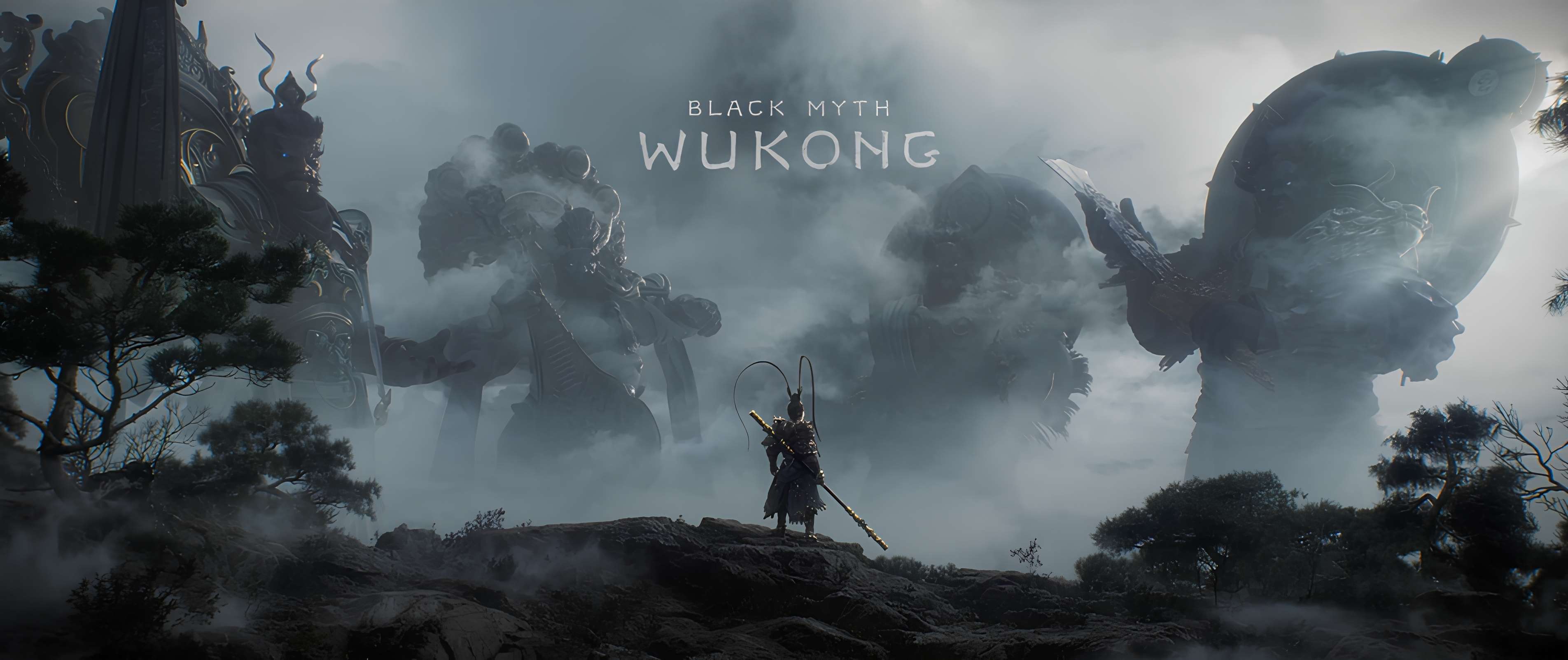
Sales exceeding ten million across all platforms in three days, a Steam concurrent player peak surpassing 2.35 million, co-branded merchandise selling out rapidly, multiple national media interviews, real-world scenic locations offering lifetime free admission to players who complete the game, and the 1986 TV series Journey to the West surpassing four million views on YouTube—these are just some of the headlines surrounding Black Myth: Wukong since its release. If you don’t play single-player games, it might be hard to grasp the significance of these numbers. Let me put it simply: based on sales and player concurrency within the first week alone, this game's success is akin to China’s national football team reaching the semifinals of the World Cup—with room to grow.
Of course, this success was also fueled by various external factors. But ultimately, it comes down to the game’s exceptional quality. While Black Myth: Wukong isn’t absolutely perfect, within the context of AAA-grade domestic productions, it is undoubtedly unprecedented. Its quality stands shoulder-to-shoulder with top-tier ARPG titles from leading global studios. After finishing the game, what remained were feelings of awe and introspection. The hardships endured by Game Science far exceed those faced by most game developers in our circle. So why, after the end of the P2E era, has there still been no breakthrough project in GameFi?
To understand this, perhaps I should start with my own memories of Game Science. It was summer 2013, when the hottest games in internet cafes were League of Legends and Counter-Strike Online. As a regular at a local underground internet cafe near school, the sounds I heard every day were “Welcome to the Summoner’s Rift” and “Fire in the hole!” Then one day, amidst these familiar noises, I began to hear faint echoes of ancient-style BGM mixed with clashing staffs and swords. Curious, I asked what they were playing. They replied, “You don’t know? Dou Zhan Shen (The Legend of Mir 2)!”
For an MMORPG at that time, Dou Zhan Shen was truly outstanding. I still remember vividly how, during the short two-hour lunch break when business peaked, nearly a quarter of the patrons were playing this story-rich RPG—an extremely rare sight. But like many trends, it faded quickly. A few months later, I rarely heard those combat sounds anymore. When I asked former players why they’d stopped, their answers were consistent: “It’s not fun anymore,” and “We can’t afford to keep paying.” Eventually, no one mentioned it again.
Years later—six or seven to be exact—a monkey emerged into the world, transformed from a golden cicada flying into Black Wind Mountain guided by an elder’s voice, signaling a shift in China’s single-player gaming landscape. I became curious about which major studio had taken on such a challenging endeavor. To my shock, it was Game Science—a studio with only around 30 people. Consider that comparable AAA titles require teams of over 3,000 (Red Dead Redemption 2), while even Japan’s most efficient single-player studios, like FromSoftware behind Elden Ring, have 200–300 members with decades of experience. Digging deeper, I came across a name both unfamiliar and yet strangely familiar: Feng Ji, lead designer of Dou Zhan Shen. Learning more about his journey, I finally understood the deep sense of unresolved ambition behind the phrase at the end of Black Myth: Wukong’s first trailer: “After Bai Gu, walk west again.” (Dou Zhan Shen declined sharply after its third chapter, titled “White Bone.”)
In 2009, online games were dominated by RPGs—World of Warcraft, Zheng Tu, Legend, Dream of Mirror Online, Bloodlust Kung Fu. These were staples in internet cafes, shaping the childhoods of generations born in the 80s and 90s. As the most profitable genre, Tencent desperately wanted a slice of the pie but hadn’t cracked the code yet. Thus, the AGE engine was rushed into development. Who would lead the project? A man under 30—Feng Ji—was entrusted as the lead designer. Dou Zhan Shen started strong: Tencent invested heavily in cinematic production and level design, making the game an instant hit. However, Feng Ji and his team made what I consider a fatal mistake—they aimed less for an MMO and more for a single-player experience, prioritizing quality above all. With only three chapters released and excessive time spent polishing, content dried up fast, and monetization fell short. Feng Ji understood games—but not capital. Dou Zhan Shen earned critical acclaim but failed commercially. Once all planned content was exhausted, pressure mounted to maintain daily active users and meet Tencent’s KPIs. The solution? Inject repetitive gameplay mechanics typical of Korean MMOs: endless map-running, clan grinding, and repetitive dungeons. This backfired spectacularly, destroying the game’s reputation overnight. Tencent eventually replaced the operations team, flooded the game with pay-to-win systems that ruined balance, and killed it amid waves of player backlash. At the time, a famous saying circulated among players—one that perfectly echoed the earlier line: “After White Bone, there is no longer any Journey to the West.”
Afterward, Feng Ji made a self-deprecating short film, then left Tencent with a small group of core team members—including artist Yang Qi—and vanished. In short, the story of Dou Zhan Shen was that of a group of passionate young dreamers being crushed by reality. But the ending is satisfying—we all know how it turned out. Fourteen years after Dou Zhan Shen's launch, these “young men” finally obtained the true scriptures (just as Tang Seng took fourteen years to retrieve them in Journey to the West).
II. Is Extreme Pursuit Not Also a Golden Band?
"Knowing shame leads to courage"—this is a spirit sorely missing in our space. We insist GameFi hasn't succeeded because economics aren't refined enough, game formats aren't right, or chains are too complex and inaccessible. We obsess over everything outside the game, rarely focusing on the game itself.
2.1 Financialization Only Works If Players Are Willing to Pay
I consider myself somewhat knowledgeable about games. I’ve played since age seven, starting with Game Boy, through 2D classics like Pokémon, Kirby, and Zelda, through the rise of esports, to today’s so-called "last days" of console gaming. I’ve tried almost every trending title and generally performed decently. Yet despite this, I rarely speak up about GameFi—I feel my understanding of GameFi lags behind every other Web3 sector. GameFi feels oddly unnatural to me. As someone on the investment side, I receive at least three or four GameFi pitch decks monthly. Eighty to ninety percent of each deck focuses on economics, token distribution, the massive scale of the gaming industry, and how blockchain provides security. There’s barely anything about the actual game—some don’t even have a demo.
They seem to understand finance, but not games. The essence of game success is simple: fun. Over-financialization harms both players and developers (assuming genuine intent to make great games). You might remind me of the glory days of P2E, but in my view, that was a Ponzi triumph—not a GameFi victory. Insiders once celebrated NFT entry costs for games like Stepn or Farmers World reaching five or even six digits in RMB. But this excludes real gamers. Over 95% of online games—even subscription-based ones—are free to start. Traditional players aren’t unwilling to pay; they pay for emotion, passion, and achievement. The Dragon Scope in CS:GO, the Dragon Triumphant skin in LoL, the early PUBG cloak, the Spectral Tiger in WoW—all expensive, yet none alter character stats, and some aren’t even tradable. Top-tier games follow a simple business logic: make players feel good, trigger dopamine, and they’ll spend wildly. Most don’t rely on complex economics. Introducing tokens and balance-affecting NFTs complicates things. Let’s start simple. A sincere large-scale blockchain game developer must manage both tokens and NFTs, forcing constant updates. Token value fluctuates—too high, new players are priced out; collapse, and the community collapses. Meanwhile, development burns cash. After exhausting early funding, tokens and NFTs become the sole economic lifeline. Selling tokens risks spiraling into death or abandoning ideals for a quick exit. Alternatively, mint new NFTs—more exclusive, more profitable, stronger stats—to attract buyers. But doesn’t this devalue early NFTs and betray the Web2.5 promise? Even if the game survives version updates, how do you fill the economic holes left by inflated NFTs? Collapse becomes inevitable. The late stage of Dou Zhan Shen mirrors this perfectly.
Thus, GameFi often feels like different types of mining pits—each with rules, but fundamentally requiring you to buy a shovel, go to work daily, and mine until the pit collapses. This remains common today. Recently, discussions focus on ServerFi, as if it offers a magical “mining rule” to keep pits eternally balanced. While GameFi has evolved into richer, more playable 3A-style experiences, and large-scale chain games now feature complex economies, I tried grasping “game economics” in 2023. But any economy needs player volume (no volume, no revenue; economics only govern roles). Without it, the dynamic devolves into player vs. project博弈. Complex economics don’t guarantee fun—they often mark the beginning of decay. If you know traditional MMORPGs, you know balancing faucets and sinks is incredibly hard. Designing intricate game economies isn’t easier than governing a small nation. After reviewing countless MMORPG economic designs, I found only one long-term success: Dream of Mirror Online. But it has over 100 million registered users (close to Japan’s population), with complexity beyond GameFi’s reach—and few successful Web2 clones. Crypto is utilitarian: every rule, design, and loophole will be exploited. Collapse can happen in an instant. Maintaining balance requires constant rule changes—undermining decentralization. “Mining rules” aren’t the point. Blockchain’s value in gaming is simple: fairer, more transparent ownership of digital assets and economic systems, empowering grassroots developers. But blockchain can’t change fundamentals—it shouldn’t invert priorities.
2.2 3A Games
After P2E faded, GameFi split into two paths: 3A-level blockchain games focused on playability, and on-chain games emphasizing fairness and autonomy. Let’s discuss the former. While I hope for a breakout 3A hit in GameFi, 3A may not suit this space. I’m not dismissing such efforts—I believe successful 3A GameFi titles will emerge—but currently, they’re unlikely to break out. Commercially, 3A games are already niche in Web2; in Web3, even more so.
We must define 3A: huge money, massive resources, extensive time. How much is “huge”? No clear standard. By my definition, these projects represent the industry’s highest bar—failure could destroy even top-tier studios. Blockchain is bottom-up; these concepts clash. Yet current GameFi development shows strange obsession with 3A. 3A means grand scale and beautiful visuals—not automatically fun. In blockchain, 3A games typically raise funds via NFT pre-sales, often before having anything close to a playable build. Success depends on speculation and imagination. If it fails, the cost isn’t borne by the team but by thousands of retail investors and VCs. A game costing over $100 million needs hundreds of thousands of players to sustain itself, given typical conversion rates (low: <1%, medium: 1–3%, high: 3–5%). Can current 3A chain games achieve this? Probably not—consider that Web3 players dropped sixfold from 2023 to 2024, now under one million. Most will fall into the trap described earlier—becoming mining pits that eventually collapse. Under current conditions, the entire business model cannot form a closed loop within the ecosystem. Making 3A chain games feels more like raising money from both VCs and retail. If someone insists on this path and wants to be the disruptor, I hope profit doesn’t erase初心. Games are concrete entertainment products—they can’t fool real players. May Game Science’s story inspire you all to stay true and obtain your own scriptures amid this restless scene.
2.3 On-Chain Games
On-chain games—also called full-chain games, autonomous worlds, pure Web3 games, or “halal” games—are a concept that existed early but gained popularity last year. Today, however, it’s rarely discussed. From a decentralization standpoint, this path is sound—we’ve seen how Web2.5 games struggle to achieve true decentralization. Ultimate fairness means putting everything in code. But from other angles, flaws abound: Is fairness and permanence really more important than playability? If rules are fully on-chain and a bug appears, how do you prevent token collapse? If every action requires gas and signatures, is it even a game? Currently, such games only serve niche audiences. Like early SocialFi, would you use a social platform without content? Though solutions exist today, most remain imperfect. This concept may need to wait for the next cycle.
III. Winds Begin at the Tip of a Still Leaf, Waves Form from Gentle Ripples

Blockchain isn’t limited to running games, nor must game financialization mean online chain games. Beyond Web3, countless grassroots game creators exist—university students, self-taught enthusiasts, mid-career devs laid off from big studios. They may never create miracles like Black Myth: Wukong, but game genres, platforms, and mechanics are infinite. Many turn to indie development. Their funding gaps are often small. Blockchain is inherently a powerful crowdfunding tool. Building an economic model around indie games has long been a personal vision. The crypto space is too greedy; outside, there are still those driven by passion. If interested, watch documentaries like Modian’s Lone Journey or Sena Pictures’ More Than Games—a positive cause with profit potential.
The implementation wouldn’t be rigid—I’ll outline loosely. While many Web3 game launchpads exist, most focus on online games and crowdfund via NFT sales, offering minimal returns to players even if the game succeeds. Indie single-player games offer fast development and low costs. Developers could release demo levels for crowdfunding, building a dedicated community pre-launch. Fans and stakeholders could contribute to refining details. Crowdfunding NFTs could have tiers: entry-level grants lifetime access; mid-tier adds skins; high-tier entitles holders to a share of future revenue. Fund releases could be voted on by NFT holders—e.g., when additional funds are needed, show progress reports, demos, and videos, and let the community approve disbursement after quality review. If a demo performs well, higher-tier NFT values could rise accordingly. Once mature, the platform could support larger-scale game crowdfunding. One final note: the seed funding for Black Myth: Wukong actually came from Feng Ji’s earlier mobile indie game. Wasn’t blockchain’s greatest innovation also born in obscurity? So too can indie games thrive.
IV. Smooth Out Life’s Bumps, Conquer Hardships and Move On
Finally, here’s a quote from Feng Ji, shared two months before Black Myth: Wukong launched:
“During the development of Black Myth: Wukong, most of my decisions could be summed up in three words: ‘Let’s try.’
Try features others perfected a decade ago, but we’ve never quite mastered.
Try ideas we passionately debate, only to find the actual implementation painfully awkward.
Try gameplay mechanics we boldly showcased in trailers, only to discover they either crash performance or turn out boring.
Try everything that looks beautiful—driven by overconfidence or sudden inspiration—only to repeatedly hit walls, bleeding and broken.
Maybe Black Monkey was just lucky. From day one, it’s been full of challenges, naturally accompanied by regrets where effort fell short.
When I finished writing the script for the first trailer, I had no idea how to turn that video into a playable level.
When we completed the first internally testable level, I didn’t know what it would cost to turn the entire story into such levels.
Even with a seemingly complete narrative, I still didn’t understand what it meant to make it stable, smooth, compatible across platforms and fifteen languages, and then ship physical editions.
Not knowing—that’s good.
If you choose to dance in uncharted territory, you must embrace the fear and anxiety uncertainty brings. Behind that fear and anxiety lie the joy of satisfying curiosity, the thrill of self-discovery.
In this fog of the unknown, our only guide is asking ourselves, and everyone on the team: Is what we’re doing something we, as users, genuinely understand, accept, and love?
Are the challenges we face ones others have solved? If not, can we solve them?
If the answer to both is yes, then of course—let’s try.
Just like in Game Science’s tenth year, when we decided—for the first time—to self-publish, set our own price, launch on consoles, produce physical copies, and market globally… all based on such questions.
Try it. It’s not like you’ll die.”
Join TechFlow official community to stay tuned
Telegram:https://t.me/TechFlowDaily
X (Twitter):https://x.com/TechFlowPost
X (Twitter) EN:https://x.com/BlockFlow_News
 @YBBCapital