








ServerFi: The Future Evolution of GameFi or a New Round of False Premise?
TechFlow Selected TechFlow Selected
ServerFi: The Future Evolution of GameFi or a New Round of False Premise?
The focus of GameFi is on playability rather than speculation, not about gaming the Earn system.
 Navigating Web3 tides with focused insights
Author: YBB Capital Researcher Ac-Core
TL;DR
● The two dominant design directions in GameFi today are: 3A-level blockchain games focused on playability, and fully on-chain games (On-Chain Games) emphasizing fairness and alignment with the spirit of Autonomous Worlds.
● Current pain points in GameFi development include: 1. Lack of playability and excessive speculation; 2. Insufficient industry regulation, with coin-trading speculators as the primary user base; 3. Complex on-chain operations creating high barriers to entry, preventing mass adoption.
● The core of GameFi lies in playability, not speculation—GameFi should not revolve around earning mechanics.
● ServerFi concept includes: ServerFi—players can combine in-game assets to eventually gain sovereignty over future game servers; continuous rewards for high-retention players—to incentivize long-term engagement and maintain token vitality and ecosystem health.
1. Current State and Pain Points of GameFi
Image source: MPOST
During the 2021–2022 bull market, concepts like GameFi and Play-to-Earn (P2E) rapidly gained popularity following the rise of Axie Infinity, The Sandbox, and Stepn. A wave of similar breeding or movement-based games (e.g., Farmer World) quickly emerged. However, due to flawed dual-token economic models (governance and reward tokens) and NFT designs (pets, farming tools, running shoes, etc.—items that continuously generate tokens), these projects were ultimately exposed as pure Ponzi schemes. The supply side soon vastly outpaced demand, leading to a rapid death spiral.
After several years of consolidation, the two main design directions in GameFi today are: 3A-level blockchain games focusing on playability, and fully on-chain games emphasizing fairness and alignment with the Autonomous World ethos. If blockchain is seen as the foundation of a world, it unambiguously preserves the complete set of all entities within its state. Furthermore, it formally defines rules through computer code. A world built on blockchain allows its residents to participate in consensus, operating a network that reaches agreement whenever new entities are introduced.
— "Analysis of the Core of Fully On-Chain Games: MUD Engine and World Engine"
1.1 3A-Level Blockchain Games
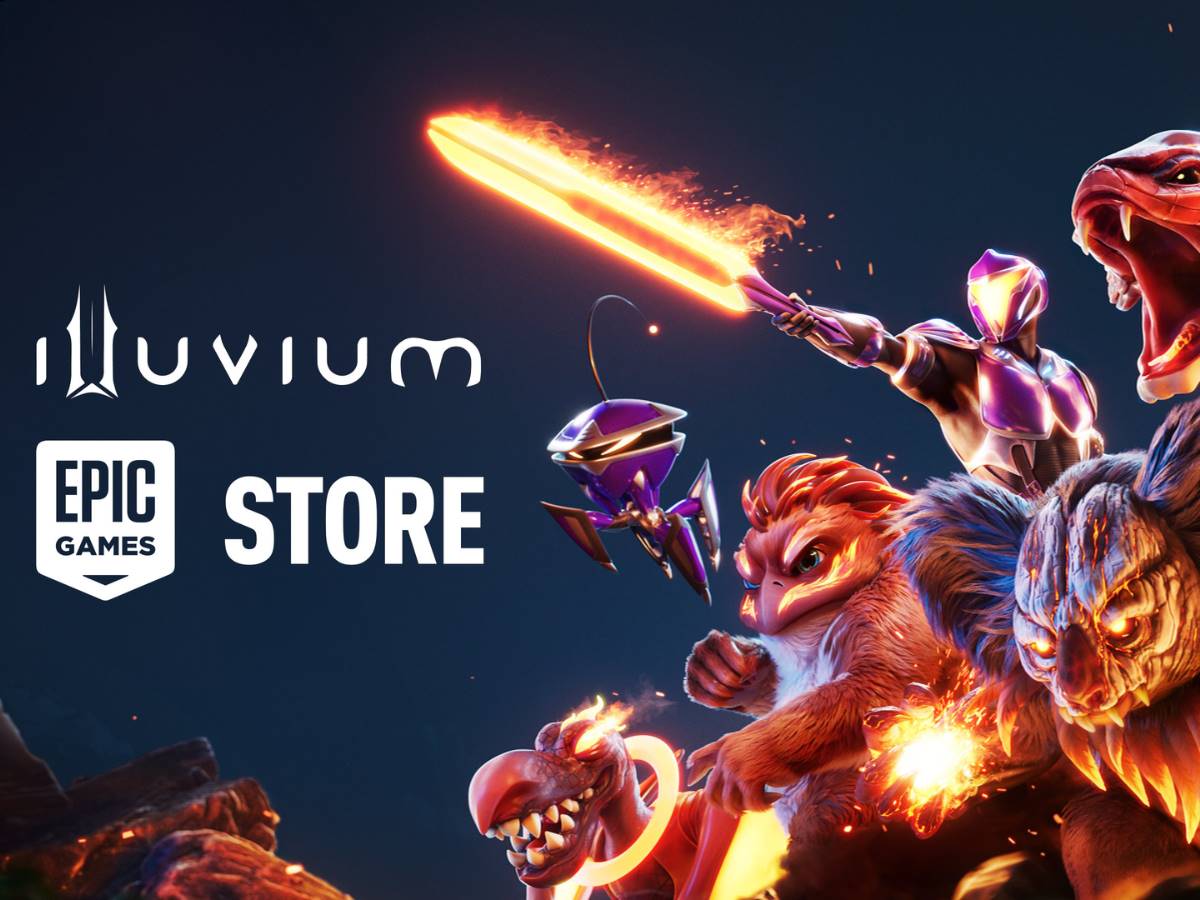
Image source: abmedia - Illuvium
Integration of Traditional Gaming and Blockchain Technology: Web2.5 games represent an innovative hybrid between traditional games (Web2.0) and fully blockchain-based games (Web3.0). These games retain core gameplay and user experience from traditional gaming while incorporating certain blockchain elements such as digital asset ownership and decentralized peer-to-peer trading.
Partial Decentralization: Decentralized features are typically limited to specific functions or modules. For example, in-game virtual items, characters, or currencies may be managed and traded via blockchain, ensuring true player ownership of digital assets. However, the core game logic, runtime environment, and most content remain hosted on centralized servers. This hybrid model ensures smooth gameplay performance while leveraging blockchain benefits.
Higher Performance and Broader Accessibility: Since Web2.5 games do not fully rely on blockchain infrastructure, they generally offer superior performance and accessibility compared to fully on-chain games. Support from traditional servers enables large-scale concurrent play and delivery of rich, complex content, avoiding limitations imposed by current blockchain throughput and latency. This design balances high performance with innovative blockchain features.
Balancing Traditional Experience with Blockchain Advantages: Web2.5 games aim to strike the optimal balance between immersive traditional gameplay and the novel capabilities brought by blockchain. By integrating decentralized asset management, transparent transaction records, and cross-platform asset interoperability, these games preserve deep storytelling and engaging mechanics while offering players new avenues for value creation and enhanced participation.
Combining 3A Standards with Blockchain Gaming: Traditional 3A games are typically developed by large teams with high budgets, premium graphics, intricate storylines, and deep player interaction. 3A-level blockchain games build upon this foundation by integrating blockchain advantages, enabling players to truly own and freely trade their in-game virtual assets—creating a more tangible and valuable gaming experience.
Support for Diverse Game Genres: Because Web2.5 games adopt an asset-on-chain model, virtually any game genre can theoretically apply this approach—from adventure and strategy games to shooters. Currently, the most prevalent Web2.5 game type is the Massively Multiplayer Online Role-Playing Game (MMORPG).
1.2 Fully On-Chain Games
Based on the 0xPARC crypto gaming anthology "Autonomous Worlds," fully on-chain games must meet five key criteria:
1. All Data Originates from the Blockchain:
The blockchain serves not merely as auxiliary storage or mirroring, but as the sole source for all critical data. All meaningful data—including, but not limited to, asset ownership—must be stored and accessed on-chain. This enables full utilization of programmable blockchain advantages such as transparent data storage and permissionless interoperability.
2. Game Logic and Rules Enforced via Smart Contracts:
Core game activities—such as combat mechanics—are executed entirely on-chain through smart contracts, going beyond simple ownership transfers. This ensures transparency and trustworthiness of game logic.
3. Open Ecosystem Development Principles:
Game smart contracts and client code should be fully open-source, allowing third-party developers to redeploy, customize, or even fork their own versions via plugins, alternative clients, or interoperable smart contracts. This openness fosters community creativity and enhances scalability and innovation.
4. Perpetual Existence on the Blockchain:
The game must continue operating independently of core developers or official clients. If data is permissionlessly stored, logic is permissionlessly executable, and the community can directly interact with core smart contracts, the game persists even if original developers exit. This is a key test of whether a game is truly crypto-native.
5. Interoperability Between Game and Real World:
The blockchain provides an interface enabling digital assets within the game to interoperate with real-world value. In-game virtual assets can interact with other significant assets, deepening the game's meaning and tightly linking the virtual and real worlds.
Fully on-chain games built under these standards can be viewed as "Autonomous Worlds" with blockchain as their foundational architecture.
1.3 Addressing Core Challenges in Blockchain Gaming

Image source: Discovermagazine
GameFi’s innovation lies in the financialization of games, where the gameplay centers on Pay-to-Earn—a model unfortunately wrapped in a thick Ponzi-like exterior. Looking back at video game history, commercial entertainment media began emerging in the 1970s, forming the foundation of a major entertainment industry in Japan, the U.S., and Europe by the late 1970s. After the 1983 video game crash and its subsequent recovery, the industry experienced decades of growth, becoming a $10 billion market and rivaling film and television as the most profitable visual entertainment sector globally. Despite decades of evolution in gaming, moving games onto the blockchain still faces significant challenges:
1. Unclear User Demand
● It is undeniable that current GameFi lags far behind traditional games in terms of playability and user experience, although 3A-level blockchain games are gradually closing the gap. For users, the combination of Pay-to-Earn mechanics and poor gameplay forces a choice between fun and profit—both sources of dopamine. If neither is satisfied, players will leave faster.
● Many current GameFi projects rely heavily on token price volatility, further constrained by broader "crypto market cycles." A sharp drop in token prices damages player incentives, drastically reducing retention and accelerating the end of the game’s lifecycle.
2. Regulatory Gaps Leading to Loss of Mainstream Traffic
● Behind GameFi’s financialization lies an immature global regulatory framework. This uncertainty exposes players to legal risks and hinders mainstream adoption. As a result, the remaining player base largely consists of speculative coin traders.
3. High Barrier to Entry Due to On-Chain Complexity
● For non-crypto users, entering GameFi involves a relatively high barrier. Players must understand crypto wallets, token swaps, and other blockchain operations—unfriendly to average gamers. This technical hurdle limits GameFi’s expansion, especially among traditional gaming audiences.
2. What Does the Yale Paper on ServerFi Say?
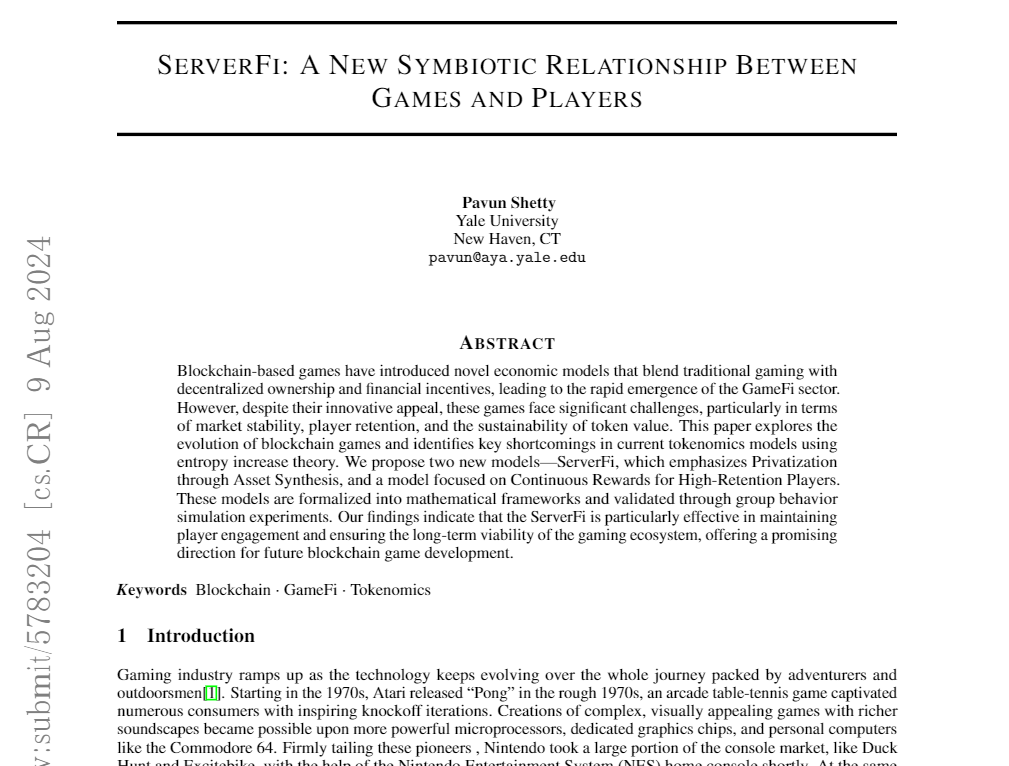
Image source: ServerFi: A New Symbiotic Relationship Between Games and Players
2.1 Concise Summary
Note: This section does not verify the authenticity or origin of the cited paper but aims to distill and discuss its key arguments. See extended link (1) for the original text.
GameFi has reshaped economic production relationships by merging “games” and “finance,” using blockchain to enable the new “play-to-earn” model. These games create cryptographic assets via NFTs and fungible tokens, introducing decentralized ownership, transparency, and economic incentives for players. However, challenges remain regarding market stability, player retention, and sustainable token value. Compared to traditional online games, blockchain games leverage unique digital asset storage and evolving incentive models to redefine player-developer relationships and drive transformation in digital societies. Yet, in the Web3 era, traditional light-hearted gaming experiences have been relegated to secondary status.
Like most games, CryptoKitties had a lifecycle. Its breeding mechanism increased the supply of "cats," gradually reducing rarity and value. As more players joined, the market quickly saturated, making it difficult to sustain token prices. Without sufficient active participants, supply-demand imbalance worsened depreciation. Players who invested heavily in breeding found diminishing returns, as initial scarcity was replaced by oversupply, leading to declining interest and engagement.
The paper briefly outlines the evolution of blockchain gaming (summarized above), with its core contribution being the application of entropy theory to identify flaws in token economic models. It proposes two new models: ServerFi and Continuous Rewards for High-Retention Players.
By combining entropy theory with tokenomics, the paper offers deep insights into token circulation and value fluctuations in blockchain projects. Entropy theory states that disorder (entropy) increases over time in closed systems. In tokenomics, this manifests as orderly initial token distribution, followed by growing disorder as more tokens enter circulation and trading increases—leading to price volatility and inflation risks. Without effective regulatory mechanisms, the system may reach a high-entropy state, resulting in token devaluation and reduced player engagement. Therefore, incentive structures and governance measures are needed to slow entropy increase and maintain market stability and participation.
For example, Axie Infinity’s token economy suffers from several flaws: 1. Over-reliance on continuous generation of new tokens (e.g., SLP), causing oversupply and devaluation; 2. Speculative behavior during TGE leads to price instability; after early speculators exit, token prices may collapse, harming regular players; 3. Lack of sustained incentives makes it hard to maintain player enthusiasm; 4. High initial investment costs create barriers for new players, limiting accessibility.
Based on these observations, the paper proposes two improvements to GameFi token economics:
● ServerFi:
Aligned with Web3 principles, ServerFi allows players to synthesize in-game assets to gain sovereignty over game servers. This mechanism lets players accumulate and merge digital assets like NFTs to control servers, encouraging deeper investment and enhancing engagement and loyalty.
● Continuous Rewards for High-Retention Players:
Project teams can monitor player behavior and provide targeted rewards to highly retained players, maintaining token vitality and ecosystem health. This encourages sustained participation and supports stable economic growth. For instance, distributing a portion of server revenue as airdrops to top users creates a dynamic “play-and-earn” loop, motivating ongoing contributions.
Model Validation:
Yale University conducted agent-based simulation experiments to evaluate the effectiveness of these token economic models, incorporating real-world randomness (introducing stochastic noise from various angles, including individual behavior and population growth).
Results show that in the asset-combination privatization model (left), player contribution steadily increases with iterations, indicating the model effectively sustains engagement and drives long-term value growth. In contrast, the continuous reward model (right) shows a sharp initial rise in contributions followed by a rapid decline, highlighting challenges in sustaining long-term participation.
The paper argues that while rewarding high-retention players boosts short-term engagement, it exacerbates player stratification over time, marginalizing casual players and raising entry barriers for newcomers—ultimately leading to a vicious cycle. In comparison, the ServerFi mechanism introduces randomness through fragment combination and lotteries, enhancing social mobility among players. Top players must keep contributing, while new players retain opportunities to earn rewards, thus maintaining system activity and sustainability.
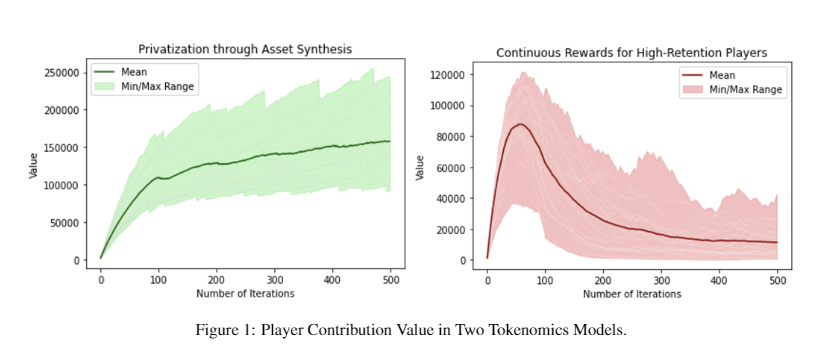
Image source: ServerFi: A New Symbiotic Relationship Between Games and Players
2.2 Beyond the Complexity: What Is ServerFi Really About?
Breaking down ServerFi literally, "Server" refers to game servers, and ServerFi resembles a server network. In simple terms, its main goal is decentralizing rights and deepening Web3’s decentralization ethos—breaking up the “server” so players can collect in-game assets and eventually gain sovereignty over future servers.
However, ServerFi alone is insufficient. Hence, it is paired with a continuous reward system for long-term players. Simply put, the longer you play, the more “server fragments” you collect. But the paper does not clarify whether prolonged engagement requires continuous monetary spending or simply time investment. If players still need to constantly purchase and burn tokens to earn, the essence remains Play-to-Earn. Nevertheless, this innovation represents a step toward reducing pure P2E Ponzi dynamics and minimizing speculation.
In one sentence: The ServerFi + continuous reward model is essentially an improvement and innovation in GameFi’s financial parameter design.
3. Final Reflection: Are GameFi and ServerFi Fundamentally Flawed?
Are They Both Wrong Directions?

Image source: 588ku
3.1 Is Playability More Important Than Earning Mechanics?
Undoubtedly, playability is more important. The essence of a game is to immerse the player. Earning should only be a bonus. A game with only earning and no playability is not a game—it’s an electronic slot machine. Maintaining enjoyable gameplay is key to attracting and retaining players, not relying on short-term Ponzi-driven traffic surges. If there’s only earning without fun, GameFi becomes a mere illusion.
Economic incentives should serve as supplementary value to retain players and encourage participation, helping attract new users. The earning mechanic drives in-game economics and token circulation—not to bind players, but to empower them. In GameFi, both elements should complement each other: playability ensures long-term appeal and a stable player base, while earning mechanics attract initial users and fuel economic cycles. Ultimately, there is only one purpose for a game to succeed long-term: it must be fun.
3.2 What Narratives Do GameFi and ServerFi Tell?
GameFi tells the story of on-chain Pay-to-Earn gaming, peaking during the 2021–2022 bull run. The Ponzi-fueled boom brought rise to Axie Infinity, The Sandbox, and Stepn. When the tide receded, only wreckage remained—yet it left memories of explosive growth and awakened innovation in bringing games on-chain.
ServerFi reframes the Pay-to-Earn model, aiming to reduce or improve the purely speculative nature of Play-to-Earn and further decentralize the economic and governance system. Compared to winning ownership in *Ready Player One* by completing the game, ServerFi grants ownership based on long-term loyalty with strong financial attributes.
Most innovations on blockchain today are本质上evolutions of financial decentralization (or essentially derivatives of DeFi), and GameFi is no exception. While imbuing games with strong financial properties may not be inherently wrong, the challenge lies in wielding this double-edged sword wisely. Both GameFi and ServerFi narratives remain confined to innovations in economic model design. If games continue to promote "earn money while playing" as their main slogan, players will inevitably lose money when token prices eventually crash—accelerating irreversible decline. To break this cycle, GameFi must return to being about games, and games must return to being fun. We need “well-designed engaging content,” not “well-designed economic parameters.” That may be the true path forward for GameFi.
Extended Links
Join TechFlow official community to stay tuned
Telegram:https://t.me/TechFlowDaily
X (Twitter):https://x.com/TechFlowPost
X (Twitter) EN:https://x.com/BlockFlow_News
 @YBBCapital






