Generating Alpha Like a Crypto Hedge Fund: Actively Managing Risk, Dollar-Cost Averaging into BTC Is the Best Choice
TechFlow Selected TechFlow Selected
Generating Alpha Like a Crypto Hedge Fund: Actively Managing Risk, Dollar-Cost Averaging into BTC Is the Best Choice
If you can't outperform $BTC within a year or longer, consider adopting a passive strategy.
 Navigating Web3 tides with focused insights
Author: Crypto, Distilled
Compilation: TechFlow
Coinbase has just released a report on how crypto hedge funds generate alpha.
Below are the most valuable insights.

Report Overview
This report reveals the primary strategies employed by active crypto hedge funds.
It provides valuable insights for any investor looking to:
-
Better manage risk
-
Capture alpha
-
Deepen their understanding of crypto
Offers valuable insights.
Passive or Active Strategy?
Regardless of your experience level, always compare your performance against $BTC.
If you can't outperform $BTC over one year or longer, consider adopting a passive strategy.
For most investors, dollar-cost averaging (DCA) into $BTC during bear markets is often the best choice.
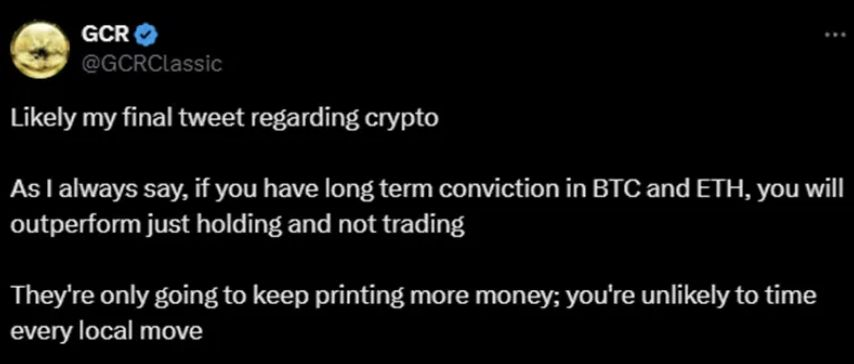
Bitcoin – The Benchmark
$BTC is the preferred benchmark for beta in the crypto market.
Since 2013, $BTC has delivered an annualized return of 124%.
Over the past 11 years, it was the top-performing asset class in 8 of them.
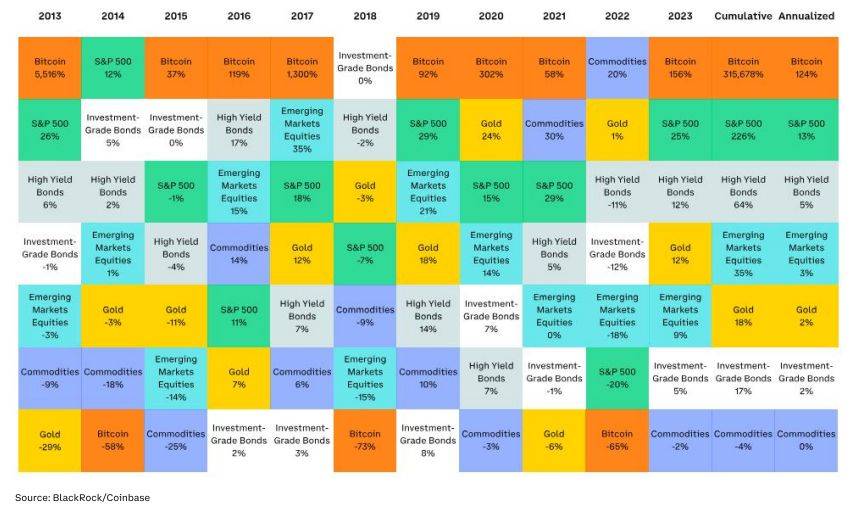
(Source: @coinbase)
Do Hedge Funds Outperform $BTC?
In crypto, active management can outperform passive spot $BTC exposure.
The key lies in risk management and hedging.
On average, actively managed crypto hedge funds outperformed passive spot $BTC positions in 2017, 2018, 2021, and 2022.
Custom Hedge Fund Index
Coinbase created a custom index using data from over 50 hedge funds trading on Coinbase Prime.
The median fund outperformed $BTC with lower volatility.
However, the dataset includes a limited number of funds and may be subject to survivorship bias.
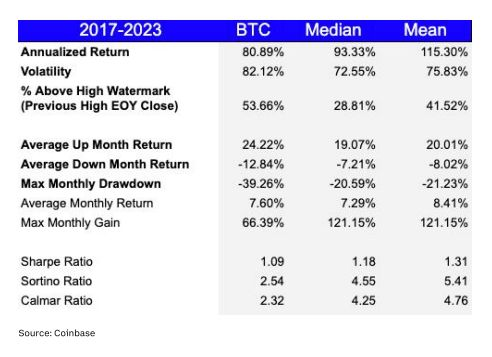
(Credit: @coinbase)
Top Active Management Strategies
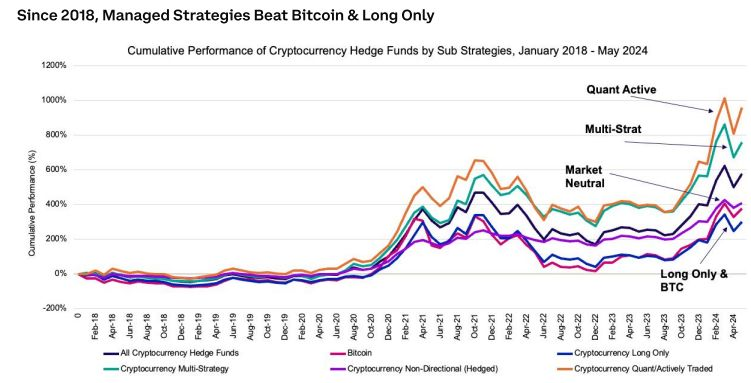
Quantitative active and multi-strategy funds offer the best long-term performance potential.
They use advanced data models and diversified approaches.
Due to less flexibility, single-long fundamental strategies typically underperform.
(Credit: @Preqin)
Performance from Cycle Lows
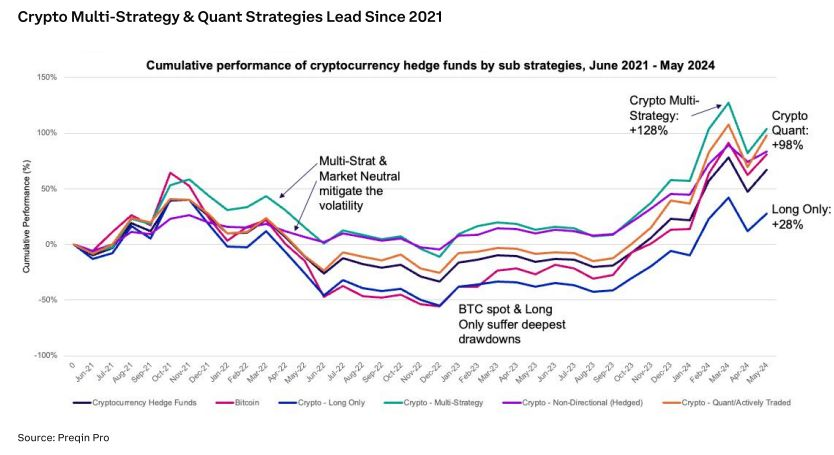
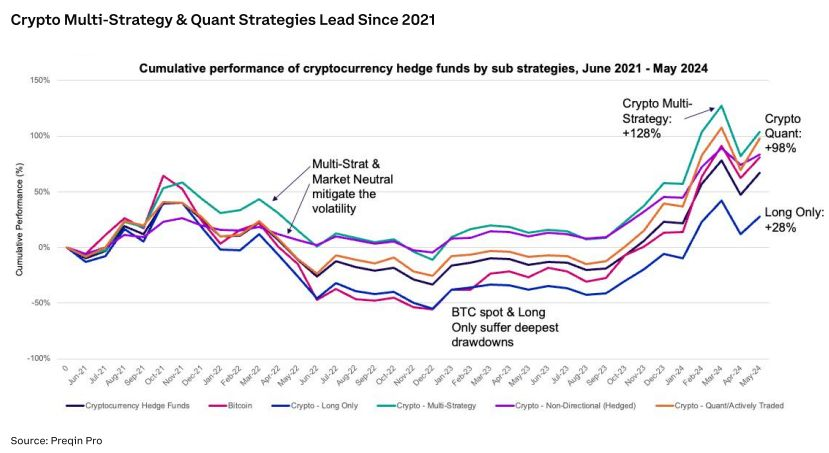
Since the June 2021 low, multi-strategy funds led with +128% returns.
Quantitative/active strategies followed closely with +98% returns.
Meanwhile, $BTC and market-neutral strategies also performed well.
Single-long strategies lagged (+28%).
(Credit: @Preqin)
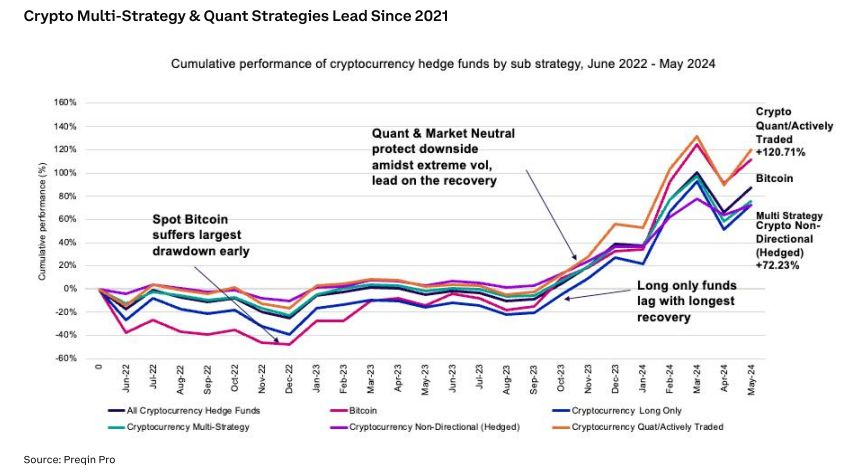
Bear Market Resilience (June 2022)
During bear markets, only quantitative active strategies outperformed $BTC.
Other strategies underperformed, highlighting the importance of adaptability.
(Credit: @Preqin)
Why Do Single-Long Strategies Underperform?
Single-long strategies typically underperform spot BTC due to:
-
Limited drawdown risk management
-
Investing in underperforming altcoins
-
Poor timing on rebounds
Controlling Volatility Is Key:
Crypto hedge funds that control volatility can deliver greater upside potential.
The top quartile of long-term performers in crypto primarily achieve success by:
-
Managing downside risk.
-
Capturing substantial upside potential.
Volatility vs. Performance
Non-directional funds provide crypto exposure with annualized volatility below 30%.
Quantitative systematic and multi-strategy funds exhibit volatility below 50%.
These strategies significantly outperform single-long and spot $BTC exposure.
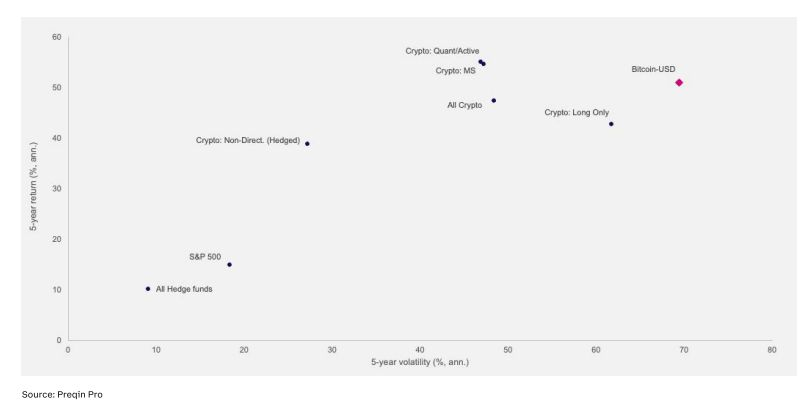
(Credit: @Preqin)
Cross-Asset Diversification
"Structural diversification" is key. Why?
Because crypto markets trade 24/7/365 and are influenced by unique factors at different times.
Maintaining diversification beyond crypto offers strong risk/reward advantages.
Managing Downside Volatility
Managing downside volatility is critical to achieving long-term outperformance.
Market-neutral strategies have the lowest volatility and shallowest drawdowns.
Followed by multi-strategy, quantitative active, and single-long strategies.
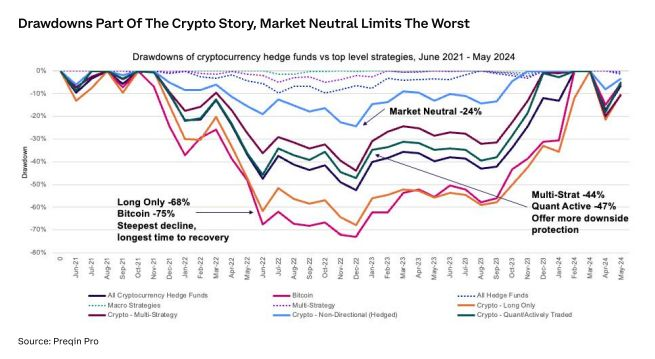
(Credit: @Preqin)
How to Reduce Downside Exposure
-
Avoid major losses: Use stop-loss orders and clear invalidation of investment thesis.
-
Stay in the game: Diversify risks and survive through diversification.
-
Grow over time: Adjust positions based on target volatility according to market conditions.
Personalized Strategies
While certain strategies may not be optimal, they might still be the best fit for you.
Let’s dive deeper into each strategy.
Directional Strategy: Single-Long
Single-long strategies target tomorrow's market leaders (very easy to follow).
Key metrics to consider: active users, strong fundamentals, large total addressable market (TAM), value accrual?
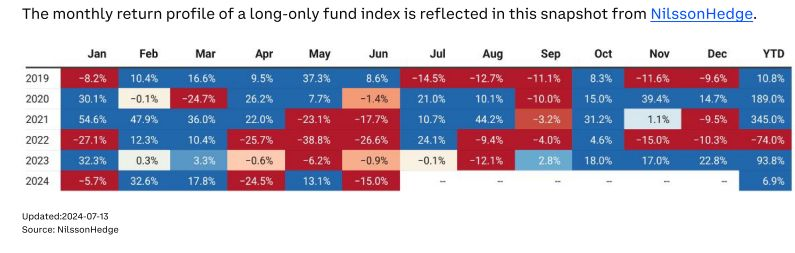
Return summary (credit: @nilssonhedge)
Quantitative Systematic: Directional
Systematic (long or short) strategies combine fundamental analysis with automation.
They use structured data and machine learning to manage risk and reduce volatility.
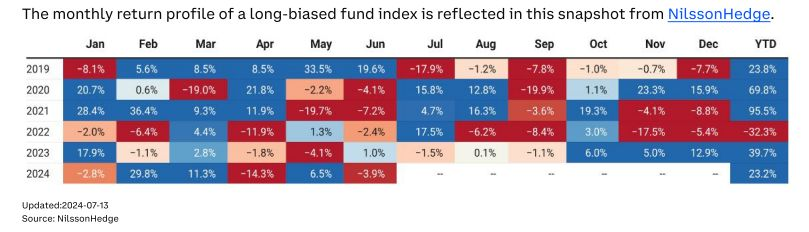
Return summary (credit: @nilssonhedge)
Hedging Strategy: Market Neutral
Aims to capture yield within the crypto economy while maintaining low/no directional risk.
Seeks positive returns relative to cash, avoiding losses across all market environments.
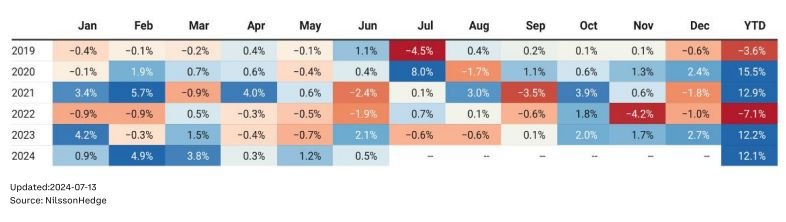
Return summary (credit: @nilssonhedge)
Diversified Strategy: Multi-Strategy
These strategies combine specific exposures to achieve diversification, manage risk, and access varied sources of return.
Example: A fund of funds combining 10–15 managers’ crypto hedge strategies within one fund.
21/ Portfolio breakdown:
Below is a typical portfolio split based on your specific time horizon:
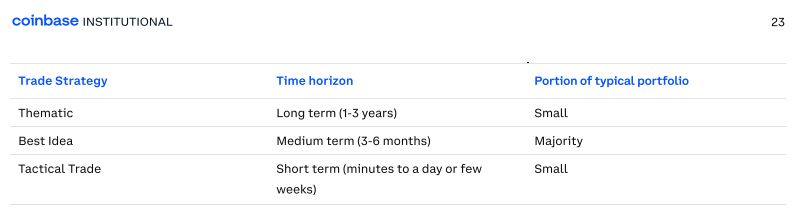
(Credit: @coinbase)
Due Diligence:
Once your strategy and portfolio are set, the final step is due diligence.
Consider the following key questions:
Below is an overview of areas where a due diligence questionnaire can help capital allocators, along with suggested questions for the due diligence process.
-
Trading Strategy: Does the fund invest in token warrants, add-on agreements, use liquidity pools, or participate in staking? How does the fund allocate returns across these different instruments for the same investment?
-
Trading Infrastructure: How many centralized and decentralized exchanges does the fund use for liquidity? What contingency plans exist if an exchange fails?
-
Trade Execution: Given that crypto trading is 24/7/365 with no closing price, how does the fund measure price volatility without a closing price?
-
Counterparty Risk: How does the fund assess counterparty risk from exchanges, liquidity pools, and lending protocols?
-
Risk Management: How does the fund manage risk overnight and on weekends? How are targets set to trigger risk-off or hedging actions?
-
Team, Research Process, Trade Evaluation: How does the fund and its team evaluate new investment opportunities?
-
Performance Measurement: Does the fund regularly provide daily or monthly performance data? Which benchmarks are used, and why are they suitable for its investment style?
-
Leverage Usage: Crypto itself is highly volatile. If the fund uses leverage, how is excessive volatility controlled?
-
Fund Service Providers: Does the fund allow limited partners (LPs) to directly communicate with all service providers during due diligence?
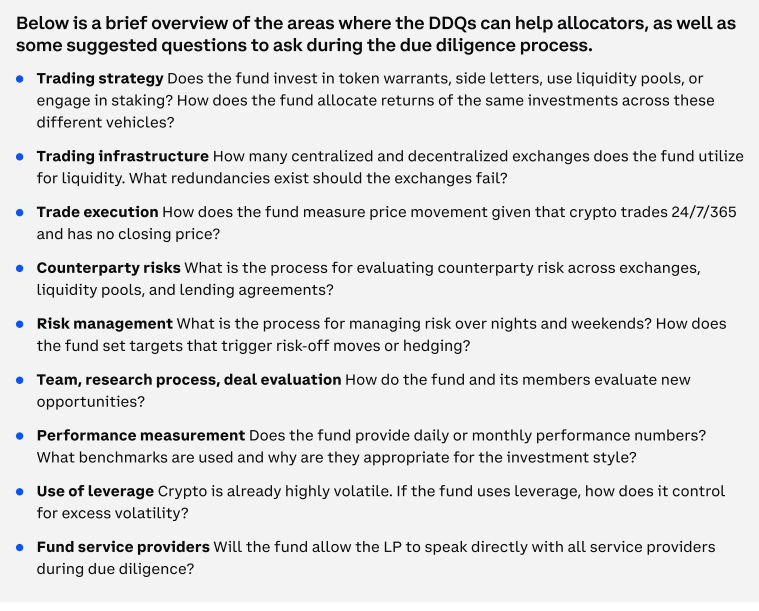
(Credit: @coinbase)
Join TechFlow official community to stay tuned
Telegram:https://t.me/TechFlowDaily
X (Twitter):https://x.com/TechFlowPost
X (Twitter) EN:https://x.com/BlockFlow_News
 @DistilledCrypto