The Rise of Consumer-Grade Crypto Applications: 4 Projects Worth Watching Across Different Ecosystems
TechFlow Selected TechFlow Selected
The Rise of Consumer-Grade Crypto Applications: 4 Projects Worth Watching Across Different Ecosystems
To achieve successful consumer adoption of encryption, it is essential to leverage familiar user behaviors and provide stronger incentives.
 Navigating Web3 tides with focused insights
Author: Parker Jay-Pachirat
Translation: TechFlow
Introduction
The evolution of consumer crypto applications, fueled by advancements in L2s, alternative L1s, infrastructure, and user experience/user interface (UX/UI), marks a transformative era for blockchain technology. In recent months, it has become increasingly clear that for consumer crypto to succeed, it must leverage familiar user behaviors and offer superior incentives—rather than simply porting existing Web2 apps onto blockchains or reinventing the wheel.
Most users are unwilling to abandon platforms like Instagram or TikTok for decentralized alternatives, prioritizing convenience and familiarity over novelty. However, cryptographic and blockchain technologies can enhance existing user behaviors, making them more engaging, rewarding, and participatory.
In this article, I will explore how projects such as PuffPaw, BlackBird, TYB, and SkyTrade exemplify this potential by integrating real-world activities with decentralized technologies across various ecosystems. As these applications mature, they may seamlessly integrate crypto into daily life, bridging digital and physical experiences.
The Rise of Consumer Crypto
Consumer crypto is emerging. L2 solutions like Base and alternative L1s like Solana have enabled faster and cheaper transactions. Additionally, UX/UI innovations such as account abstraction, chain abstraction, embedded wallets, and intents have made accessing and using crypto simpler than ever before. These design and infrastructure advances lay the foundation for a new era of consumer crypto applications.
Over the past year, social finance applications such as Friend.Tech, Farcaster, and Fantasy.Top have emerged as prominent consumer applications. These platforms brought the topic of "consumer crypto" to the forefront of the industry, with Fantasy.Top, Friend.Tech, and Pump.Fun briefly ranking among the top 15 protocols by 24-hour fee generation (DeFiLlama) in late May. These applications offered unique innovations in on-chain interaction, gamification, or value creation.
However, Breakthrough Apps Face Challenges
Despite their initial traction, these breakthrough applications face challenges in achieving long-term user stickiness, retention, and growth. In July, I discussed the rise and fall of Friend.Tech. Data showed that most users driving platform activity and trading were primarily motivated by short-term gains and farming opportunities. This indicates that Friend.Tech's core product and value proposition did not resonate with a broad audience, as evidenced by high churn rates.
“Friend.Tech achieved breakout success in 2023. Within one week of launch, the protocol surpassed Uniswap and Bitcoin in 24-hour fee generation, entering the top five fee-generating protocols within a month. Since then, activity has sharply declined. Daily fees dropped from $345,000 in May 2024 to $3,000 in June 2024, a 99% month-over-month decline. During the same period, platform volume and daily active traders fell by 99% and 98%, respectively.” — Parker Jay-Pachirat, ON–242: Onchain Social.
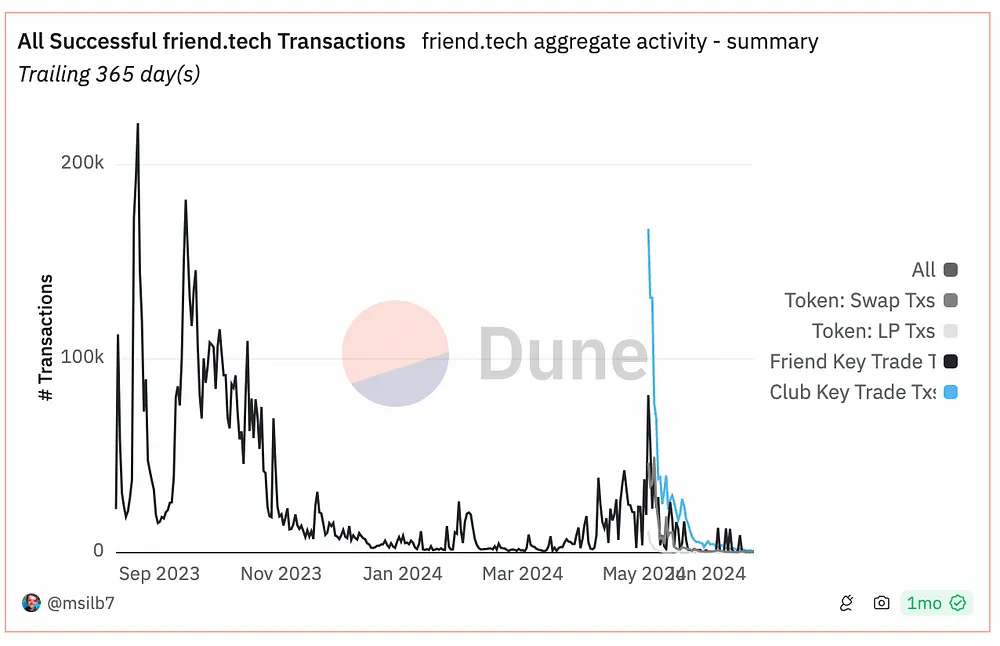
@msilb7/ friend.tech on Base Activity, Dune Analytics (August 7, 2024)
Similarly, after significant bot attrition in July 2024, Farcaster’s daily broadcasts declined by 50% from its all-time high:
“[Farcaster] activity decline is largely attributable to bots and airdrop farmers [leaving the platform]… $DEGEN tip distribution and changes to the Warpcast algorithm are potential explanations.” — Gaby Goldberg, ON–242: Onchain Social.
Net trading volume on Fantasy.Top has also declined. Despite strong activity between April and May 2024, only minimal activity remains today.
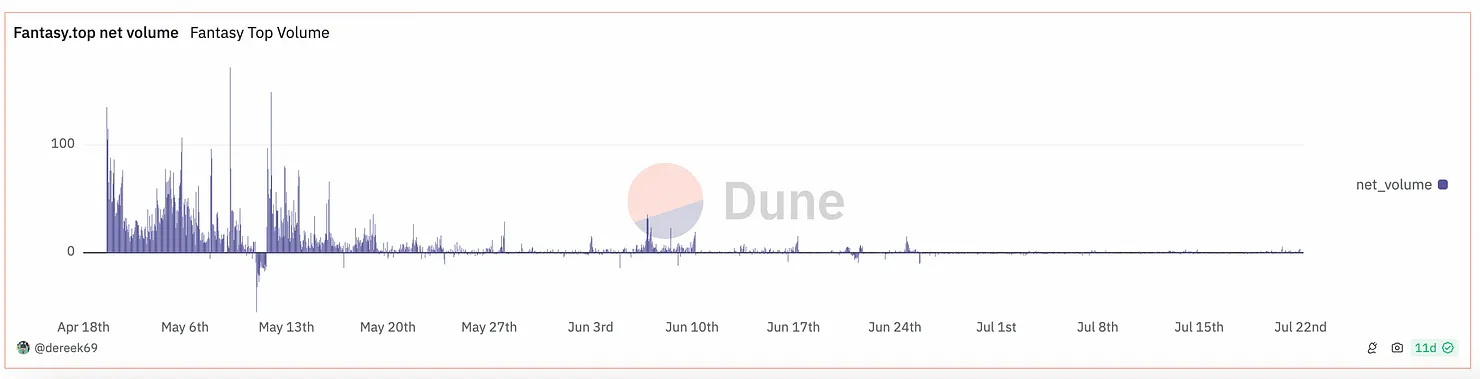
L: @pixelhack/ farcaster, Dune Analytics (August 7, 2024), R: @dereek69/ Fantasy Top Volume, Dune Analytics (August 5, 2024)
What's Missing?
Why have these applications failed to sustain momentum after early success?
In recent months, we've come to realize that for consumer crypto to succeed, it must leverage familiar user behaviors and offer better incentives—not simply port existing Web2 apps to blockchains or reinvent the wheel.
Most users are unwilling to leave platforms like Instagram or TikTok for decentralized alternatives. Users prioritize convenience and familiarity over novelty. They are also unlikely to adopt new technology solely due to its novelty or experimental appeal. However, crypto and blockchain can enhance existing, familiar user behaviors, making them more engaging, rewarding, and participatory. This is where consumer crypto holds its advantage.
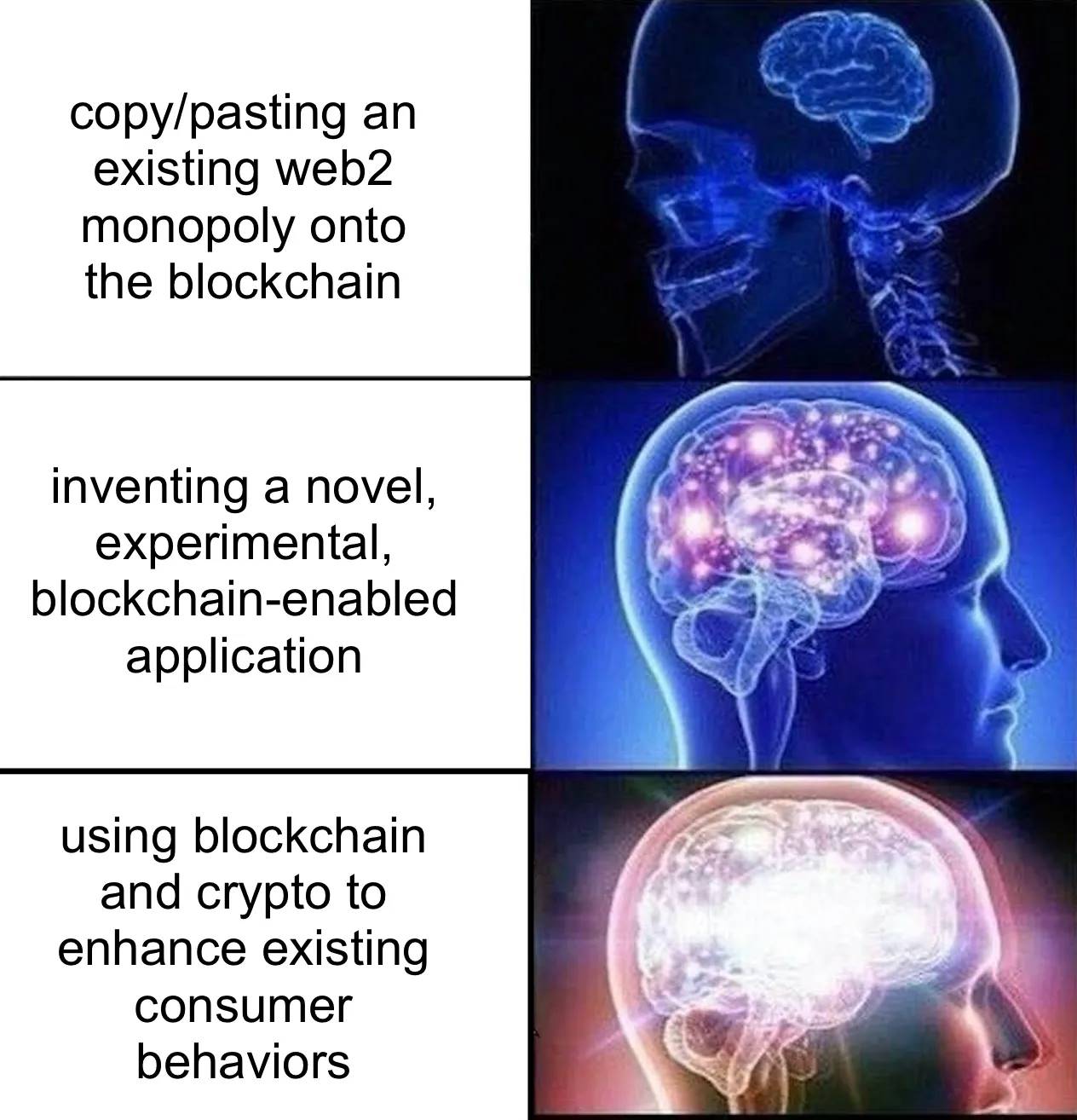
Top Consumer Apps Will Leverage Real-Life User Behaviors
In the next five years, successful consumer crypto apps won’t require drastic shifts in user habits. Instead, they will enhance familiar behaviors through gamification, incentives, and utility powered by crypto and blockchain technology.
A particularly promising subset of applications will focus on real-life (IRL) user behaviors and experiences. These apps will connect with real-world activities rather than exist as isolated online experiences. I refer to this category as “consumer x DePin” (decentralized physical infrastructure) or “consumer x IRL.”
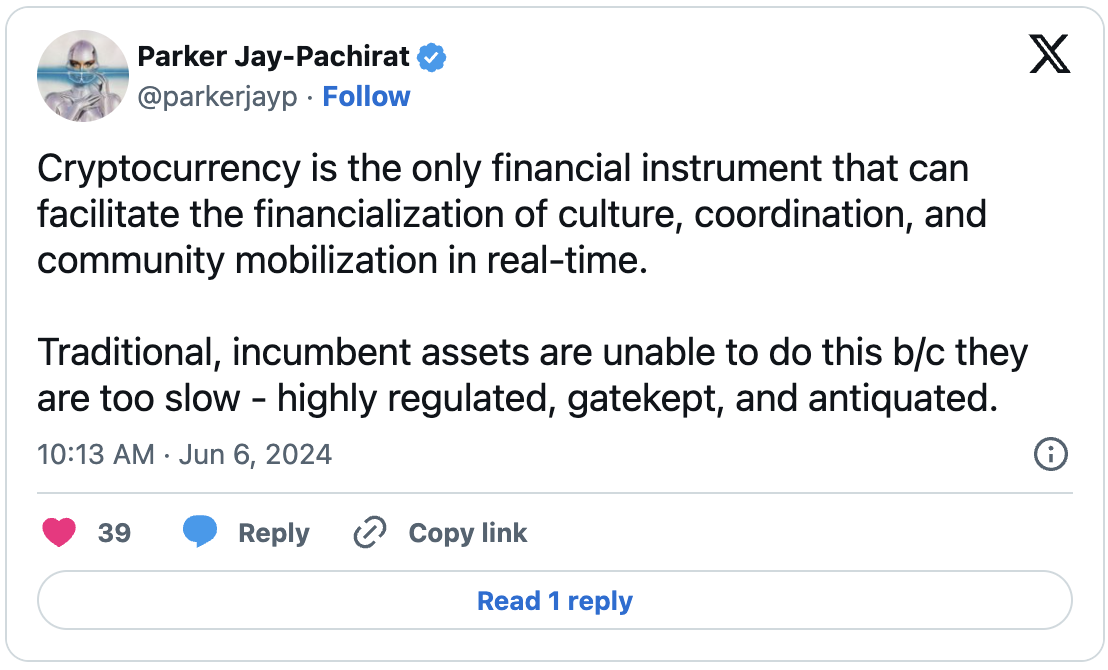
Parker Jay-Pachirat: “Crypto is the only financial tool capable of enabling real-time cultural monetization, coordination, and community mobilization.
Traditional incumbent assets cannot do this—they’re too slow, highly regulated, gated, and outdated.”
Why Is Real Life (IRL) So Important?
(1) Many consumer behaviors still involve an in-person component, even if initiated online—for example, shopping, apartment hunting, job applications, and booking flights.
(2) Millennials and Gen Z increasingly seek authentic, direct experiences, evident in the rise of running clubs, singles mixers, and in-person speed dating events—especially in major international cities like New York.
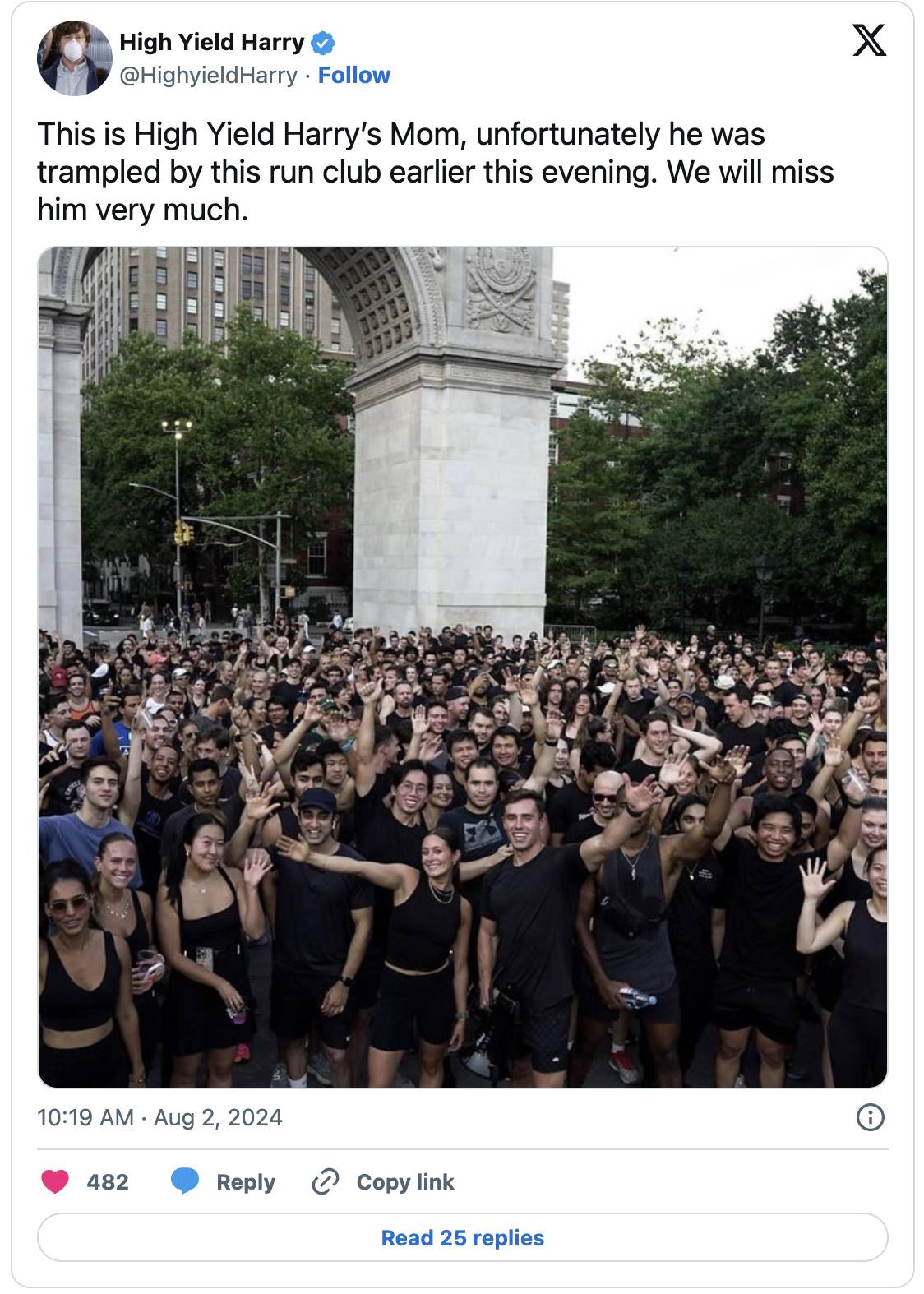
High Yield Harry: “I’m High Yield Harry’s mom. It’s with great sadness that there was a stampede at his running club earlier tonight. We’ll miss him dearly; his loss breaks our hearts.”
Emerging Cohort: Four Projects to Watch
A new wave of consumer crypto projects is entering the market, embodying these best practices. These projects innovatively use blockchain and crypto to introduce new financial incentives, gamification elements, and engagement methods tailored to mass-market consumer behaviors. Below, I highlight four early-stage projects.
(1) PuffPaw: Vape-to-Earn (V2E) on Berachain
PuffPaw is pioneering the first decentralized physical infrastructure network (DePIN) on Berachain, bringing vaping on-chain. Their primary mission is to incentivize smoking cessation. Initially, they will offer vape pods with varying nicotine concentrations to cater to diverse user preferences.
The global e-cigarette market was valued at $28.17 billion in 2023 and is projected to grow to $183 billion by 2030, at a CAGR of 30.6%. The number of e-cigarette users surged by 280% between 2012 and 2022. However, the industry faces significant challenges and inefficiencies for distributors and consumers, including high costs and elevated retail prices due to lengthy supply chains.
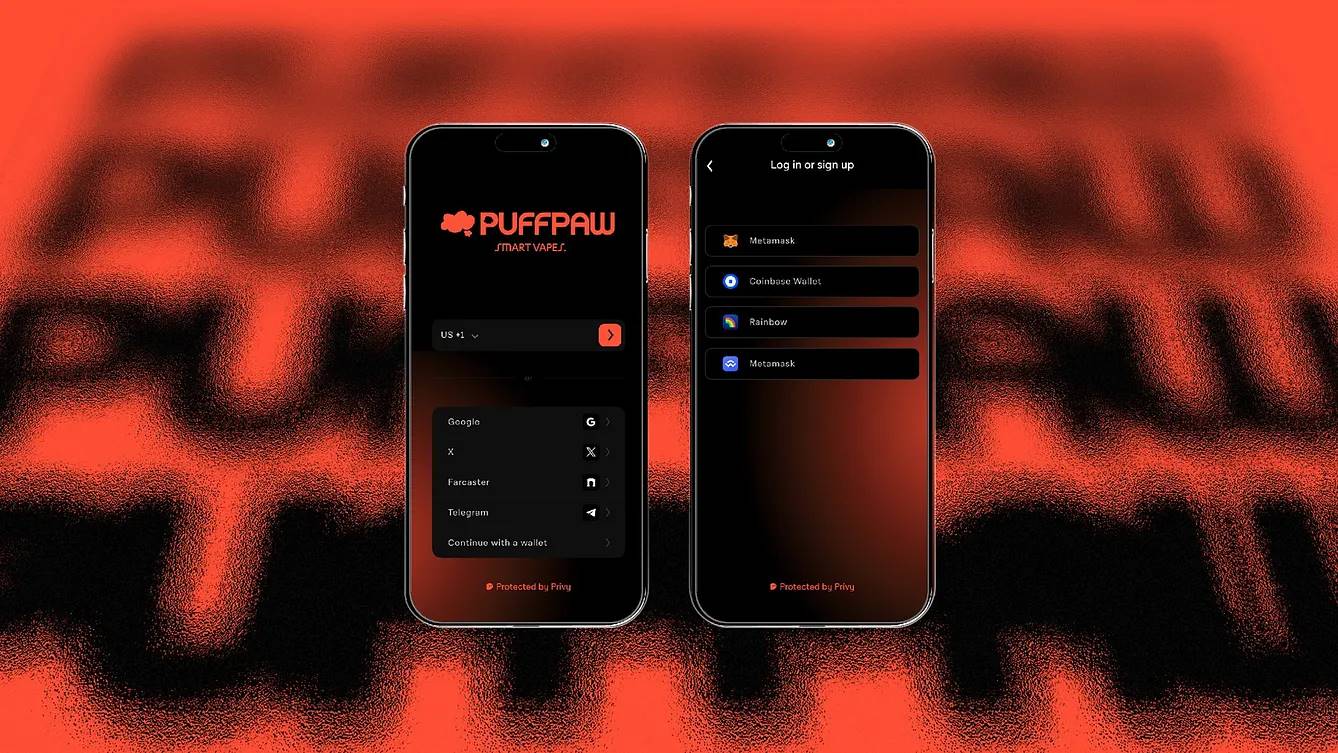
PuffPaw: Vape-to-Earn on Berachain — puffpaw.xyz
PuffPaw aims to address industry inefficiencies by leveraging its deep expertise and resources. The founding team brings over a decade of experience in the e-cigarette and pharmaceutical industries, giving them a strong competitive edge. Their jointly owned company Pegasus supplied over 76 million vapes last year to one of the world’s largest tobacco companies. They also own multiple e-cigarette brands and operate manufacturing and distribution warehouses in North America and Europe, covering all five major e-cigarette markets.
How It Works: In the PuffPaw ecosystem, each physical vape device is treated as a node. To participate in the PuffPaw game, users need a node license, embodied by the vape itself. Each node’s mining efficiency is determined by a rarity system with different tiers. Users can choose from various flavors and nicotine levels, and each user has a unique daily puff limit that affects gameplay outcomes. Rewards are verifiable on-chain, with each pod acting as a token miner.
PuffPaw draws inspiration from GameFi, SocialFi, and DePin. They will soon launch a node pre-sale—follow their website and Twitter for updates.
(2) BlackBird: Dine-to-Earn on Base
Blackbird is a loyalty and rewards platform on Base that enables direct connections between restaurants and customers.
The U.S. restaurant and food service industry generated over $1 trillion in sales in 2023, growing 11% year-over-year—surpassing both 2019 levels and S&P 500 growth. Restaurants represent 5% of U.S. GDP and 45% of household food spending. Yet, 80% of independent restaurants close within their first year, and 80% fail within five years. By 2023, 43% of U.S. restaurants still carried pandemic-related debt, while profit margins dropped from 20% two decades ago to just 4%. Technology's impact is growing rapidly—digital sales rose from 9% of total sales in 2019 to 21% in 2024.
Traditional models of operational excellence are no longer sufficient for sustainable economic growth. Restaurants must now adapt to new business models focused on customer segmentation, engagement, and retention.
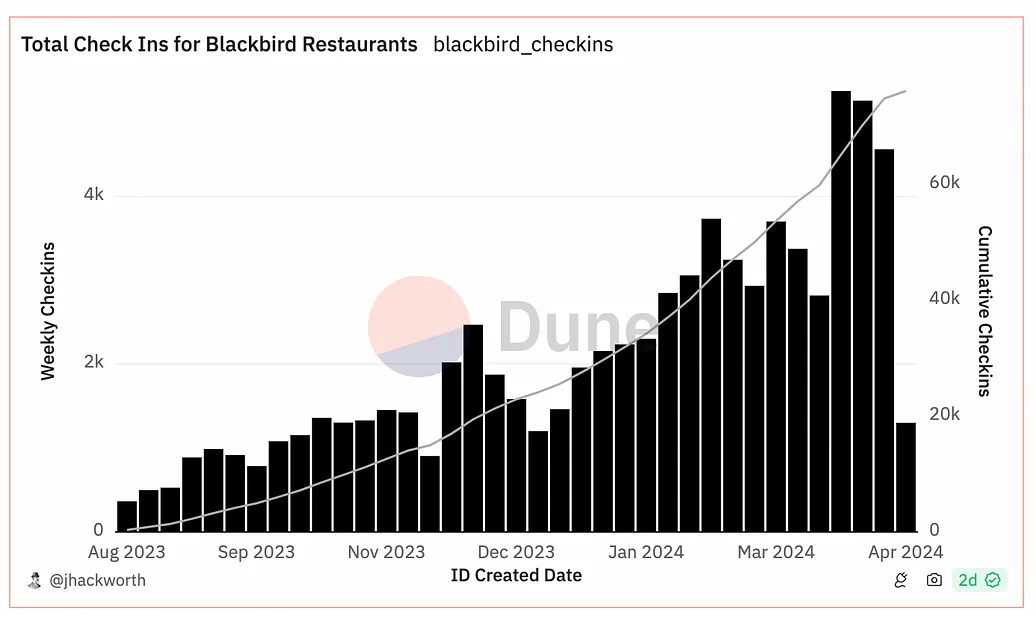
Blackbird: Dine-to-Earn on Base — blackbird.xyz / @jhackworth/ blackbird, Dune Analytics
How It Works: Blackbird revolutionizes the hospitality industry via its decentralized platform, fostering direct relationships between restaurants and diners to boost engagement, loyalty, and payment experiences. Users check in at partnered restaurants and earn rewards while dining. Powered by the $FLY token, Blackbird gives restaurants comprehensive insights into customer behavior while offering diners discounts, rewards, and exclusive perks. Recent innovations include Flynet, an L3 on Base, and Blackbird Pay, enabling seamless bill settlement.
A key advantage for Blackbird is its founder Ben Leventhal, co-founder of Eater and Resy (acquired by American Express in 2019 for $200 million). Leventhal’s deep industry experience and network provide Blackbird with a solid foundation in its target market—restaurants and their patrons. Blackbird has already partnered with numerous top-tier and popular dining venues in New York City, including Nami Nori, Rule of Thirds, Upside, Canal Street Market, and Sweet Rose Creamery.
(3) TYB (Try Your Best): Engage-to-Earn on an Avalanche Subnet
TYB is an engage-to-earn platform enabling D2C e-commerce brands to directly interact with consumers and reward them for performing valuable actions.
Direct-to-consumer (D2C) brands are often not as “direct” as they appear. Customer acquisition costs (CAC) for these brands have risen sharply in recent years. Growth channels they’ve relied on over the past 5–10 years—such as Facebook and Instagram—are now saturated and expensive, with CPMs increasing annually by 20–25%. This inflation means acquiring new customers can cost 5–25 times more than retaining existing ones, leading to CAC exceeding customer lifetime value (LTV) and declining loyal customer bases.
Currently, customer relationships are intermediated by ad-centric discovery platforms, with brands heavily dependent on third-party platforms like Instagram and TikTok for marketing, communication, and engagement. This reliance is not only economically inefficient but also hampers brands’ ability to effectively target and connect with key customer segments.
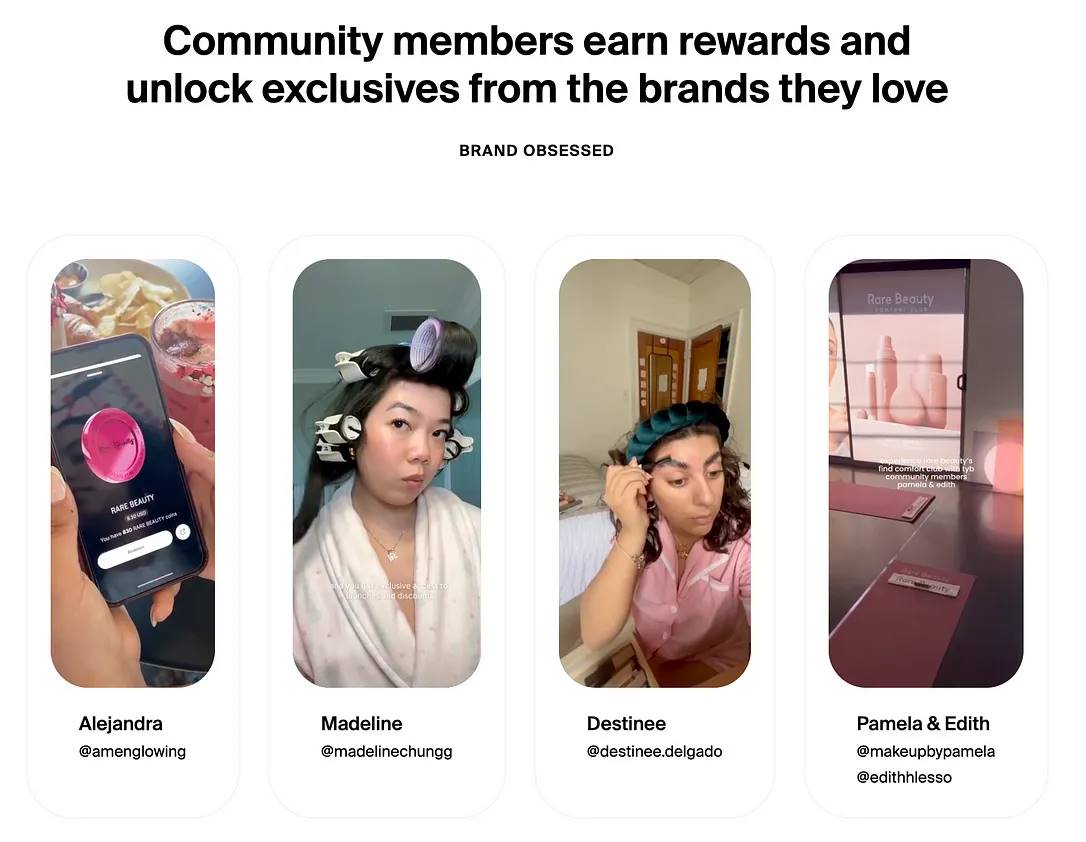
TYB: Engage-to-Earn on an Avalanche Subnet — tyb.xyz
How It Works: TYB is an engage-to-earn platform designed to give D2C skincare, fashion, and lifestyle brands direct sales and marketing channels, solving key industry pain points. TYB reduces reliance on ad platforms—customers earn rewards from their favorite brands by completing challenges like product testing and content creation. This model provides brands with valuable insights into user behavior and segmentation, improving LTV, retention, sales, and engagement. At the same time, TYB allows brands to manage all aspects of communication, interaction, marketing, and social channels, tracking user data on-chain. For consumers, TYB offers a more engaging and rewarding brand experience, with tangible rewards such as discounts, special offers, and exclusive products in exchange for feedback and content creation. This model is especially effective in beauty and skincare, where customer loyalty tends to be high and repeat purchases common.
TYB has attracted many high-caliber partners. It is one of the few blockchain loyalty platforms offering “no-code” integration, simplifying technical onboarding and reducing costs. TYB focuses on a specific niche, targeting D2C e-commerce brands in skincare, wellness, lifestyle, fashion, and food & beverage. This targeted positioning differentiates TYB from competitors who often pursue broader market strategies. Founded and led by former Outdoor Voices CEO Ty Haney, her deep understanding of the D2C space gives the platform a strategic advantage. Her extensive network and experience have drawn premium brands like Topicals, one of Sephora’s fastest-growing skincare brands.
Last week, TYB launched a community with Glossier, marking the platform’s largest single-day release to date.
(4) SkyTrade: Airspace Rights Platform on Solana
SkyTrade is a tokenized airspace rights platform and marketplace for property owners, real estate firms, and traders—an on-chain market for low-altitude airspace.
Airspace rights refer to the purchase and sale of development rights above properties under zoning laws. Traditionally, the airspace rights market has been opaque and inaccessible, limiting economic efficiency. Under common law jurisdictions, landowners hold rights to the airspace above their property. The total addressable market (TAM) for this sector reaches up to $30 trillion—Manhattan’s locked airspace alone is valued at over $500 billion, and central London’s at £52 billion. Moreover, the drone industry, which requires airspace access for delivery operations, is expected to reach $450 billion.
Airspace rights are also critical for scaling commercial drone delivery. Without permission to use private airspace, drones cannot legally operate. Drone delivery could reduce traditional delivery costs by approximately 90% over time. Major retailers like Walmart and Amazon are rapidly expanding drone delivery services. For instance, Walmart currently serves over 2 million households and plans to cover 90% of the U.S. population via drone delivery, leveraging its vast real estate portfolio. Achieving this will require securing low-altitude airspace usage rights from airspace owners.

SkyTrade: Airspace Rights Platform on Solana — sky.trade
SkyTrade aims to revolutionize this process by putting airspace rights on-chain.
How It Works: Through the SkyTrade platform, users can register their property, claim airspace rights, and participate in buying and selling tokenized airspace rights. Drone operators can rent airspace for specific time periods, creating a dynamic and accessible marketplace for airspace utilization. Although still in early stages, SkyTrade has already demonstrated strong potential, with over $30 million in airspace rights transactions completed on its platform to date.
Conclusion
In summary, the evolution of consumer crypto applications—driven by L2 solutions, alternative L1s, and innovative UX/UI features—marks a transformative era for blockchain technology. While early SocialFi applications have struggled with long-term user retention, the future lies in creating unique, blockchain-powered experiences that enhance everyday user behaviors.
Notably, we are beginning to see this trend emerge across various ecosystems and platforms, highlighting the cross-chain potential of these applications. Projects like PuffPaw, BlackBird, TYB, and SkyTrade demonstrate the potential of integrating real-life activities with decentralized technologies, offering novel incentives and engagement opportunities. As these applications mature, they are poised to play a pivotal role in embedding crypto into daily life, creating a seamless fusion between the digital world and real-world experiences across multiple blockchain ecosystems.
Join TechFlow official community to stay tuned
Telegram:https://t.me/TechFlowDaily
X (Twitter):https://x.com/TechFlowPost
X (Twitter) EN:https://x.com/BlockFlow_News
 @parkerjayp