








After analyzing 581 projects and 160,000 proposals, I discovered four major challenges facing DAOs
TechFlow Selected TechFlow Selected
After analyzing 581 projects and 160,000 proposals, I discovered four major challenges facing DAOs
The promise of decentralized governance is immense, but the obstacles are equally significant.
 Navigating Web3 tides with focused insights
Author: arndxt
Translated by: TechFlow
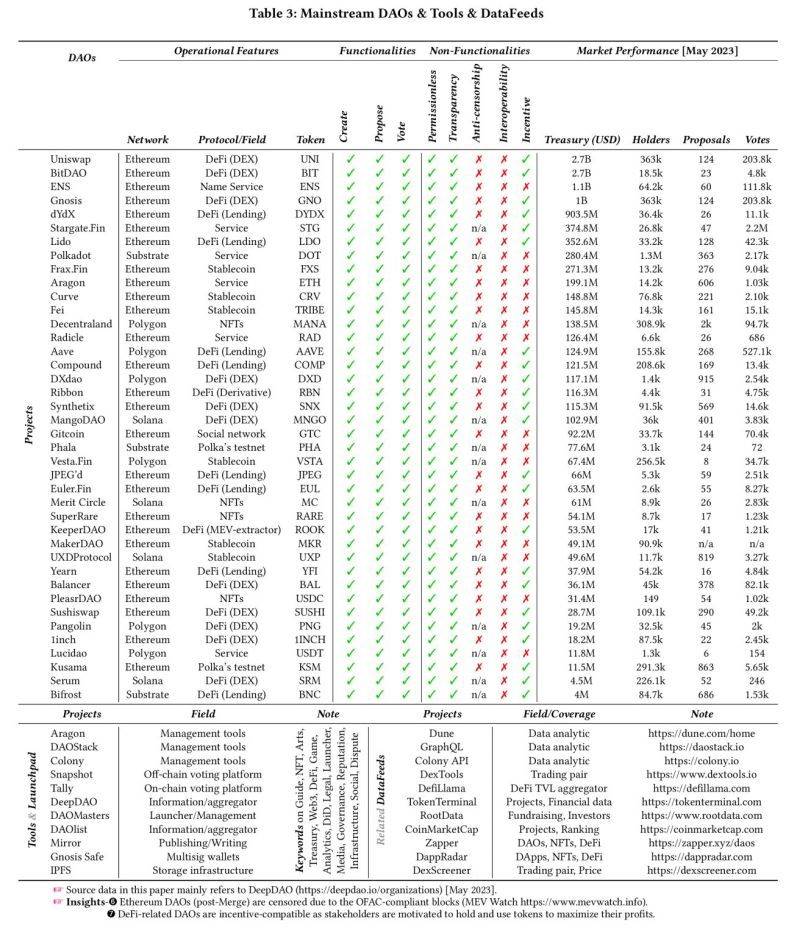
Over 581 DAO projects, analyzing 16,246 proposals across five years.
This paper on DAOs covers all projects using Snapshot, a DAO/governance platform, representing over 95% of active DAOs (more than 11,000 spaces).
In this DAO Dilemma, I’ve identified four key insights.
The Centralization Paradox
The data reveals an impressive growth trend—581 DAOs, over 16,000 proposals in five years. Membership distribution follows the Pareto principle.
A small number of members hold most of the power.
I wonder: are we merely recreating traditional power structures on the blockchain? The Gini coefficient of token distribution within DAOs would be a crucial metric to examine.
The Technical Time Bomb
The lack of IPFS upgrades worries me. This is a classic technical debt that could collapse as DAOs scale. We’re talking about potential data loss, soaring storage costs, and reduced efficiency.
Here’s a thought experiment: what happens when critical proposal data becomes inaccessible due to outdated IPFS links? The consequences could be severe.
The Tug-of-War Between Democracy and Efficiency
The research shows diverse voting scenarios—from budget allocations to hiring decisions. This is democracy in action. Yet, I see two major red flags:
a) Voter apathy: Turnout for many decisions remains low.
b) Token-based voting: A small number of large holders can manipulate entire ecosystems.
This creates a governance contradiction. On one hand, we have the vision of decentralized decision-making. On the other, we face the harsh reality of centralized control and community disengagement.
The Token Dilemma
This is where things get truly interesting. Most DAOs use self-issued tokens instead of mainstream cryptocurrencies like USDT or ETH. This raises deep questions about incentive structures and long-term viability.
Are we witnessing the emergence of robust governance systems—or merely complex token manipulation schemes? My inner pessimist leans toward the latter, but I’m open to being proven wrong.
The Way Forward
Despite these challenges, I remain cautiously optimistic about DAOs.
I believe the following steps are necessary:
-
Implement quadratic voting or similar mechanisms to balance power.
-
Prioritize technological infrastructure upgrades, especially in data storage.
-
Develop more effective incentives to encourage sustained participation in governance.
-
Encourage the use of more stable-value tokens for governance purposes.
This study reinforces my belief that DAOs are at a pivotal moment. The promise of decentralized governance is immense, but so are the obstacles.
What do you think?
Are DAOs the future of organizations, or are we witnessing a grand experiment destined to recreate the very system it seeks to replace?
Join TechFlow official community to stay tuned
Telegram:https://t.me/TechFlowDaily
X (Twitter):https://x.com/TechFlowPost
X (Twitter) EN:https://x.com/BlockFlow_News
 @arndxt_xo


