Interview with Multicoin Co-founder: Crypto VC Is Not Dead — We Need to Rethink Fund Investment Strategies
TechFlow Selected TechFlow Selected
Interview with Multicoin Co-founder: Crypto VC Is Not Dead — We Need to Rethink Fund Investment Strategies
Current state of the funding ecosystem: overall fundraising is difficult, with smaller funds facing greater challenges.
 Navigating Web3 tides with focused insights
Compilation & Translation: TechFlow
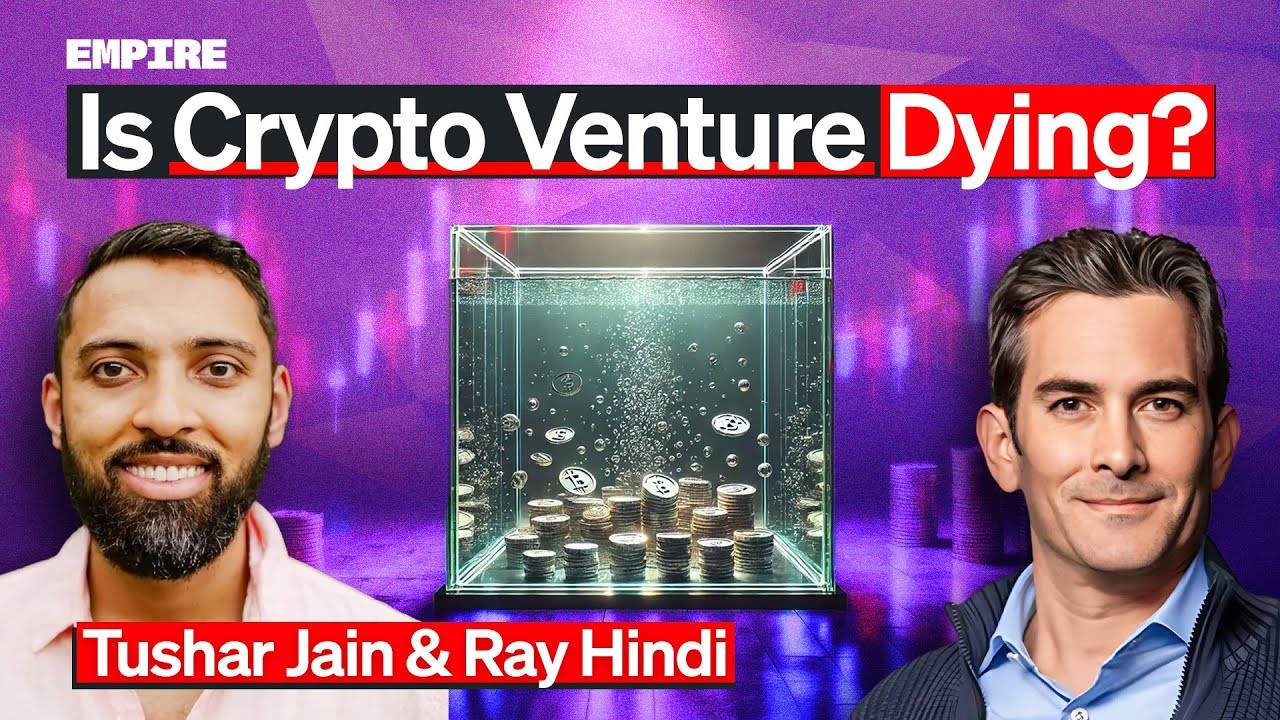
Guests: Ray Hindi, CEO/CIO of L1 Digital; Tushar Jain, Co-Founder and Managing Partner at Multicoin Capital;
Host: Jason Yanowitz, Founder of Blockworks
Podcast Source: Empire
Original Title: Death of Crypto Venture? Rethinking Crypto Fund Strategies | Tushar Jain & Ray Hindi
Air Date: July 23, 2024
Background Information
-
In this episode, Ray Hindi from L1D and Tushar Jain from Multicoin Capital share their views on the evolving landscape of crypto fund management.
-
They discuss the current state of the fundraising ecosystem, noting that investor interest is lower than expected, making it difficult for many funds to raise capital. They highlight a shift from venture capital to liquidity investing, suggesting future opportunities may lie more in liquid assets.
-
The conversation also delves into changing dynamics in token launches, pointing out flaws in current processes that prevent effective marketing and price discovery similar to IPOs.
-
Although market cycles are hard to predict, proper timing can significantly impact investment returns. Macro funds often perform well because they have the freedom to choose optimal opportunities.
-
Political outcomes could also affect the crypto industry. The crypto community needs to actively engage in politics by donating and voting to demonstrate its influence.
Current State of Fundraising: Widespread Difficulty Raising Capital, Smaller Funds Face Greater Challenges
-
Yano points out that we are currently in a phase where funds should be starting or announcing new fundraising rounds. However, despite high social media buzz around crypto, actual capital allocation shows less investor enthusiasm than expected. This has made fundraising difficult for many funds.
Ray Hindi's Perspective
-
Ray notes that although pension funds in places like Switzerland show growing interest in crypto, this hasn’t translated into real capital inflows. Globally, VC funds are quietly raising money but struggle to meet targets due to intense competition.
-
Ray believes large funds can still raise capital, but smaller, emerging funds face much greater challenges.
Tushar Jain's Perspective
-
Tushar observes that market conditions now make fund managers hesitant to publicly announce small raises, as it might signal weakness. In 2021, many funds capitalized on favorable markets to raise substantial capital, but today’s environment is different.
-
Tushar emphasizes that a manager’s duty is to match capital demand with supply—not simply grow AUM (assets under management).
Balancing Supply and Demand of Capital
-
In venture capital, Tushar sees an oversupply of capital and insufficient demand, creating fierce competition. In contrast, public markets now show wider performance gaps between high- and low-quality assets, offering more room for active management strategies.
Evolution of Crypto Funds
-
Ray回顾了加密基金的发展历程,指出在2018年之前,市场上主要是 BTC 等少数资产,投资选择有限。然而,随着市场的成熟和去中心化金融(DeFi)的崛起,投资选择大大增加。
-
Ray believes that while VC funds dominated over the past few years, future opportunities may increasingly lie in liquid asset markets.
The Evolution of Crypto Venture Capital: From Bitcoin to Liquidity Funds
Phase One: Bitcoin Funds
-
Yano mentions that early-stage crypto venture investing focused primarily on Bitcoin funds—such as Pantera’s Bitcoin fund—which essentially just invested in BTC and charged 2% management fees and 20% performance fees.
Phase Two: Infrastructure Companies
-
After the ICO era, investor interest in tokens declined, and many companies were no longer seen as credible investments. Investment shifted toward firms serving the crypto ecosystem—like Anchorage, Bitgo, Circle, and Coinbase—drawing significant capital into crypto VC.
Phase Three: Protocol Investing
-
As the market matured, smart crypto VCs such as Multicoin realized that real returns would come from investing in protocols rather than infrastructure firms. They began allocating capital to these protocols and achieved significant returns.
Phase Four: Liquidity Funds
-
Currently, too much capital floods into crypto venture investing, intensifying competition. Yano believes the next wave of opportunity lies in the liquid token market, expecting more liquidity-focused fund managers to enter this space.
Ray Hindi's View
-
Ray agrees with Yano’s framework and adds that when too much capital flows into a single strategy, performance tends to converge toward average—with only rare exceptions outperforming. He believes once traditional investors recognize alpha potential in liquid crypto markets, attention will shift dramatically.
Tushar Jain's View
-
Tushar points out that allocator structures shape investment preferences. Many large allocators’ VC teams are interested in crypto, but their public market teams aren't. This channels capital toward closed-end VC funds instead of liquidity funds. He argues this distortion leads to VC capital saturation, while liquidity funds—facing less competition—have greater opportunity.
The Importance of IPO Windows
-
Tushar stresses that crypto companies need open IPO windows so investors and employees can achieve liquidity via public markets. Without IPOs, VC funds struggle to show real returns to LPs, undermining future fundraising.
-
Ray adds that in recent years, VC funds investing in decentralized networks performed exceptionally well, whereas those focused on traditional crypto companies faced challenges.
Advantages of the Liquidity Market
Skill Requirements
-
Ray notes that in 2018, traditional finance (TradFi) investors generally believed liquid markets required active traders to suppress volatility. But this mindset was flawed—many tried launching market-neutral funds to reduce volatility, yet failed to attract significant AUM.
Problems with Market-Neutral Funds
-
Ray explains that a major issue with market-neutral crypto funds is lack of investor interest—they want high returns from crypto, not just volatility suppression. Additionally, these funds face counterparty and smart contract risks, especially during volatile periods like November 2022.
Evolution of Investment Strategy
-
Ray mentions that initial strategies relied on active trading to suppress volatility, but proved ineffective during market turmoil in March 2020. Humans tend to make poor decisions amid high crypto volatility—using leverage to chase momentum often ends in liquidation. Thus, Ray and his team shifted to long-term fundamental investing, embracing volatility and delivering strong results over 5–10 year horizons.
Advantages of Fundamental Investing
-
Tushar adds that his investment philosophy centers on playing to strengths, not avoiding weaknesses. Trying to find a manager who excels in every area is a flawed approach. Instead, investors should focus on a manager’s core strengths—such as fundamental analysis and forecasting future trends—rather than attempting to trade away market volatility.
Challenges of Market Psychology
-
Tushar points out that trying to control market exposure through trading is a flawed strategy, as markets are chaotic and unpredictable. Attempting to forecast movements using technical analysis or behavioral cues often leads investors to sell at peaks and buy back higher—resulting in larger losses. Therefore, investors should focus on fundamentals, not pattern-finding in markets.
Differences Between Liquidity and Venture Capital
Blurred Lines Between Liquidity and Venture Investing
-
Yano notes that in traditional finance, there's a clear boundary between private and public markets—the IPO window. Investors typically exit positions upon a company going public, regardless of conviction. But in crypto, this line is blurred.
-
Example Analysis: In crypto, investors can directly buy tokens on exchanges or purchase discounted tokens from project treasuries—sometimes with lock-up periods. It becomes difficult to distinguish whether this is venture or liquidity investing.
-
Different Mindsets: Venture vs. Liquidity Investing
-
Tushar stresses that making investment decisions based solely on price discounts is fundamentally flawed. Investors should assess intrinsic token value first, then determine the best entry method—not just chase discounts. Historically, firms like Three Arrows Capital (3AC) failed due to such arbitrage-driven strategies.
-
Ray adds that liquidity funds should help set token valuations, rather than leaving pricing to market makers or founders. Different investors possess varying risk tolerances and skills across market stages, so liquidity funds should play a stronger role at token launch.
GP vs. LP Differences
-
The discussion touches on differences between GPs (general partners) and LPs (limited partners). Large allocators sometimes request GP shares, which creates serious conflicts of interest. Ray says they usually avoid this to prevent conflicts—especially when working with pension funds.
Current State of Token Launches
-
Tushar points out that current token launch processes are flawed—mainly due to regulations, they lack proper marketing and price discovery mechanisms like IPOs. Most token launches feature low float and high fully diluted valuations (FDV), which harms price discovery.
Impact of Airdrops
-
Current token distribution models often involve users earning points through protocol activity, followed by airdrops. But these models are easily exploited by “airdrop farmers” who dump tokens immediately after receipt, distorting price discovery. Tushar believes the market is beginning to recognize these negative effects, and projects like LayerZero are already taking steps against farming behavior.
Token Launches: The Meta Shift in Crypto Markets
Outlook for the Next Six to Twelve Months
-
Tushar predicts that within the next six to twelve months, the market will stop accepting simple, easily gamed airdrop mechanisms. Once the market recognizes their artificiality, these methods will lose effectiveness.
Improving Price Discovery Mechanisms
-
Tushar hopes to see better pre-trading price discovery—such as using bonding curves or other mechanisms before tokens become transferable or tradable. He expects such experiments to originate from offshore founders, but if regulatory environments shift, innovation could spread to the U.S. and globally.
Evolution of New Capital-Raising Models
-
Tushar notes that each bull cycle has been driven by new token distribution methods that attract new users and activity. For example: Proof-of-Work forks in 2013, ICOs in 2017, DeFi yield farming in 2020, NFTs in 2021. He believes the current cycle may be fueled by meme coins, which are attracting new user groups.
Impact of Meme Coins
-
Tushar believes meme coins attract new user demographics who want on-chain activity. Though meme coins generate no cash flow, their fun nature and low knowledge barrier draw retail investors. However, he acknowledges they lack practical utility despite being entertaining.
Next Expected Evolution: DePIN
-
Tushar believes the next major token distribution mechanism will be DePIN (Decentralized Physical Infrastructure Networks). He sees DePIN incentivizing real, useful work and enabling new forms of capital formation for previously impossible endeavors. While DePIN hasn’t yet entered mainstream crypto consciousness, he is optimistic about its future development.
Fund Specialization
Specialization in Ecosystem Funds
-
Ray mentions that specialization in ecosystem funds could be very interesting, especially when certain domains are highly compelling. However, he cautions against assuming specialized managers are always necessary. While funds like EV3 Escape Velocity excel in DePIN, that’s an exception. Investment decisions should be based on domain attractiveness and asymmetric opportunity.
Risks of Specialization
-
Tushar adds that in both liquidity and venture investing—or any investment—investors shouldn’t be forced into trades. Specialization may pressure managers to buy certain assets because the fund focuses on a niche. Missing deals creates pressure, potentially leading to subpar investment decisions.
Challenges During Fundraising
-
During fundraising, managers must often differentiate themselves to LPs, pushing them toward niche focus. But markets evolve quickly—specializing may force participation in undesirable trades. Tushar believes top-tier managers shouldn’t make investment decisions based on LP demands, but on market conditions and opportunity.
Unconstrained Investment Strategy
-
Ray further notes that beyond crypto, the most sustainable investment returns come from unconstrained strategies. Macro funds often outperform because they freely select the best opportunities. This flexibility is key to achieving long-term, sustainable returns.
Risks of Focusing on Specific Areas
-
Discussing a fund focused exclusively on Monad, Tushar reiterates the risk of forced trading. Niche focus may require participation in every deal, including low-quality ones. Such a strategy might succeed due to one big win, but overall, it’s not ideal.
Timing in Liquidity Investing
Investment Timing and Cycles
-
In crypto markets, timing is crucial. Traditional capital markets lack fixed cycles, but crypto is often seen as following a four-year cycle. This periodicity may evolve, but remains a defining market trait.
Relationship Between Cycle and Returns
-
Tushar and Ray discuss how the biggest driver of returns in crypto isn’t picking the right token—but correctly timing the market cycle.
-
Ray notes that even choosing the wrong token (e.g., privacy coins) may not hurt if you're in the right market phase. Conversely, selecting the right L1 token at the right time—like Solana in 2021—can yield massive returns. Proper timing significantly impacts outcomes.
Challenges for Fund Managers
-
Fund managers face pressure from LPs during market cycles. For instance, when a manager decides to go to cash, LPs may question why they’re paying 2% fees just to hold cash. Ray notes this pressure may force managers to re-enter markets at inopportune times, hurting performance.
Historical Performance and Strategy
-
Ray mentions that since 2018, they’ve invested in 25 liquidity funds—only two performed exceptionally well. The performance gap stemmed largely from project selection and risk management. Top-performing funds stayed invested rather than going to cash, generating outsized returns through strategic picks.
Importance of Liquidity
-
Ray emphasizes the importance of liquidity. He cites an expansion fund that made two investments in 2019 and 2020 and reduced exposure at the end of 2021. This liquidity allowed the fund to de-risk at highs and redeploy at lows. Liquid funds can adapt more flexibly to market shifts.
Psychological and Behavioral Advantages
-
Tushar highlights the importance of psychological and behavioral edges. Market volatility affects emotions, causing poor decisions—selling at peaks may miss further upside, while buying at bottoms requires immense mental strength. Even legendary investors like Stanley Druckenmiller made similar mistakes during the tech bubble.
Structural Advantages
-
Tushar also notes structural advantages matter. Flexible funds can adjust across market phases for better returns. Unconstrained funds can freely rebalance portfolios as markets change, avoiding forced, suboptimal trades.
The Rise of Applications
Fatigue with Infrastructure and Renewed Interest in Applications
-
A new trend discussed is fatigue with infrastructure and renewed excitement around applications. While infrastructure (e.g., L1s and L2s) was once hot, investors are now tired of its complexity. Compared to the elegant simplicity of integrated stacks, modular stacks are too complex to follow.
Investor Interest in Applications
-
Tushar says Multicoin and other major investors are very interested in consumer-facing products or apps. The issue isn’t lack of willingness to invest—it’s the absence of a solid thesis on which consumer products will succeed in this space.
Future of DeFi and Payments
-
Tushar believes DeFi is a “second-step” application—ordinary people won’t start with DeFi. They first need wallets and assets, ideally through a consumer app that gives free tokens. Payments are similar—while blockchain is clearly the future of payments, adoption won’t happen overnight.
Pathways to Acquiring Tokens
-
Tushar suggests pathways like DePIN and gaming—apps that let consumers earn tokens without entering credit card details, easing entry into the on-chain economy. This lowers barriers, letting users gradually adopt other features.
Gaming as a Non-Consensus Opportunity
-
Ray adds that gaming is currently a non-consensus area, despite heavy attention a year or two ago. Given intense competition in infrastructure, gaming—as an overlooked space—could be attractive for portfolio construction.
Where Are We in This Cycle?
Difficulty Predicting Market Cycles
-
When discussing market cycles, Ray and Tushar both stress their unpredictability. Despite numerous variables and market expectations, accurately forecasting direction is nearly impossible.
Current Market Conditions
-
Ray says current market conditions are highly attractive, especially in liquidity. Since the FTX collapse, they’ve significantly increased allocations to liquidity funds, reflecting confidence in this market. They believe structural imbalances exist that may take years to resolve, warranting active liquidity management.
Market Expectations and Pricing
-
Tushar notes that market expectations are already priced in. For example, anticipated rate changes and election outcomes are reflected in current prices. While these expectations may not be perfect, the market has incorporated them—making cycle prediction even harder.
Market Efficiency and Investment Opportunities
-
Tushar adds that while markets aren’t perfectly efficient, they’re relatively efficient regarding beta. However, when selecting specific projects, markets are inefficient—offering investors chances to gain alpha through informational, analytical, behavioral, or structural edges.
Ideal Investment Strategy
-
Tushar emphasizes that investors should focus on areas where they have an edge, not compete in the hardest arenas. Predicting market beta is extremely difficult, so focusing on individual project selection aligns better with investor strengths.
Importance of Market Liquidity
-
Ray adds that market liquidity is the biggest driver of beta. However, predicting short-term liquidity shifts is extremely difficult—not just in crypto, but in traditional finance as well.
Impact of Trump or Biden Winning
Importance of Political Engagement
-
Tushar mentions that Multicoin recently launched a special donation campaign supporting a conservative Super PAC, showing their commitment to political engagement. He quotes an old saying: “You may not be interested in politics, but politics is certainly interested in you.” Therefore, active participation—not hoping for good outcomes—is essential.
Strategy for Political Engagement
-
Tushar stresses that political engagement means showing political parties and leaders that the crypto community is a powerful voting bloc capable of influencing key elections. Politicians care about power, not moral correctness. So, the crypto community must use donations and votes to demonstrate influence—and ensure politicians know support comes from crypto.
Worst-Case Political Scenario
-
Tushar believes the worst political scenario for crypto in the U.S. is progressive dominance—particularly Elizabeth Warren’s faction within the Democratic Party—gaining significant power. These progressives oppose crypto, don’t believe in property rights it enables, and favor state control.
Best-Case Political Scenario
-
Conversely, Tushar believes conservative leadership is most favorable for crypto, as they currently appear more supportive. But the key is ensuring conservatives know the crypto community played a vital role in their victory—otherwise, crypto won’t be a priority in future governance.
Critical Role of the Senate
-
Tushar points out that the Senate plays a critical role in confirming all regulatory appointments, so their political efforts focus heavily on Senate races. They believe donating to key swing-state Senate elections is the most effective way for the crypto community to participate politically.
Investor Perspectives
-
Ray notes that when speaking with LPs or allocators, U.S. regulatory issues are highly important—even to Swiss institutional investors. These institutions closely watch U.S. developments because they drive markets. However, they don’t alter investment strategies based on short-term election results, preferring to focus on long-term progress.
Advice for Fund Managers
Transparency and Investor Relations
-
Ray emphasizes the importance of transparency. He notes that despite tough situations, managers who maintain long-term partnerships with high transparency tend to perform better. Transparency builds trust and sustains relationships during crises. He advises emerging managers to always remain transparent with investors.
Identify and Stick to Your Edge
-
Tushar advises emerging fund managers to rigorously assess their competitive advantages and focus on them. Markets are adept at taking money from those without edges. Managers must identify their true strengths and avoid operating outside them. He identifies four sources of advantage:
-
Analytical edge: derived from deep research and analysis.
-
Informational/access edge: gained through unique information or market access.
-
Behavioral/psychological edge: understanding participant behavior and psychology.
-
Structural edge: derived from unique market or investment structures.
-
-
Tushar stresses that managers must evaluate these advantages and double down on genuine strengths, avoiding strategy drift.
Launching a Liquidity Fund
-
Ray suggests that if capable and advantaged, emerging managers should consider launching a liquidity fund. From a supply-demand perspective, it’s a strong business opportunity—provided they find their edge and build the right team.
Join TechFlow official community to stay tuned
Telegram:https://t.me/TechFlowDaily
X (Twitter):https://x.com/TechFlowPost
X (Twitter) EN:https://x.com/BlockFlow_News
 深潮TechFlow