Navigating Market Volatility Through Bull and Bear Cycles: Bitget's Dual Exploration of Stability and Growth
TechFlow Selected TechFlow Selected
Navigating Market Volatility Through Bull and Bear Cycles: Bitget's Dual Exploration of Stability and Growth
Without accumulating small steps, one cannot reach a thousand miles; without gathering tiny streams, one cannot form a river or sea.
 Navigating Web3 tides with focused insights
Author: Peng Yong
On September 12, 2018, Bitget was founded during a bear market. Unfortunately, at that time the entire industry was in despair, with the crypto market continuing to decline until January 2019, when Bitcoin dropped to $3,200.
Rather than collapsing under the bear market, Bitget pushed forward against all odds—building through adversity and maintaining unwavering confidence in the industry while continuously innovating and optimizing its services. By consistently launching new features and improving user experience, Bitget successfully attracted a large number of users.
In 2022, the collapse of FTX once again shook market confidence, plunging the crypto sector into winter. That year saw not only widespread bankruptcies across the crypto industry but also the beginning of U.S. interest rate hikes. Subsequently, U.S. regulators including the SEC filed or prepared lawsuits against major crypto exchanges such as Coinbase, Binance.US, and Bittrex. Increasing regulatory scrutiny intensified the bearish trend in the crypto market, undermining investor confidence and causing most centralized exchanges (CEXs) to face declining trading volumes.
Surprisingly, Bitget did not continue to decline under the impact of the 2022 crypto winter and rising U.S. interest rates; instead, it accelerated its growth, becoming the fastest-growing cryptocurrency exchange in 2022. According to a July 2022 report by Boston Consulting Group, Bitget’s total trading volume surged by 300% that year, making it the world's third-largest crypto derivatives exchange.
Bitget's Rapid Ascent
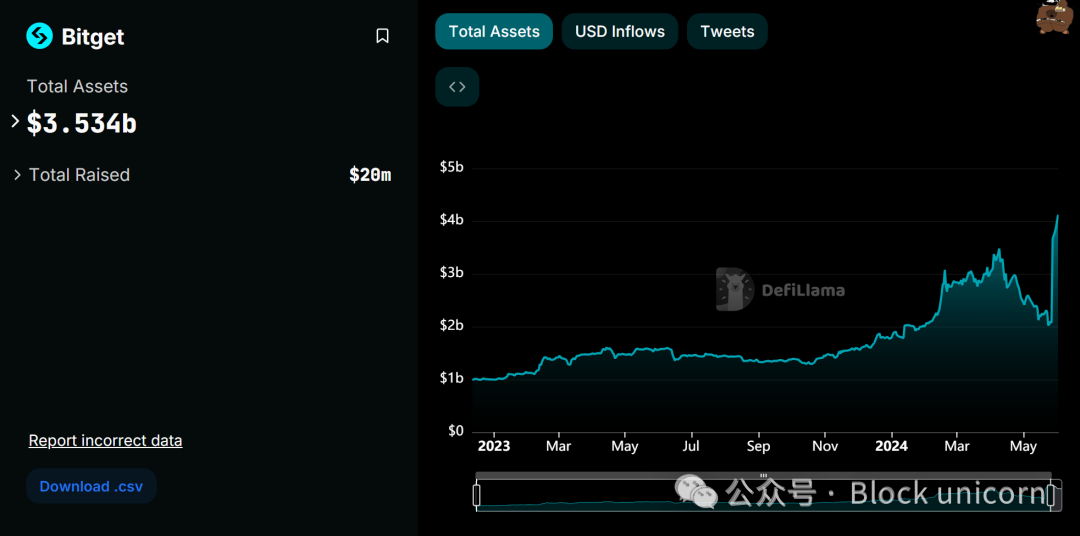
Bitget has been racing ahead in macro-level data growth. From April to May this year, data from DefiLlama.com shows that asset scales of top CEXs have generally declined or stagnated. However, Bitget achieved a rapid rebound by the end of May and early June, turning to positive growth with monthly capital inflows reaching $1.25 billion—far exceeding the growth elasticity of other CEXs in terms of asset scale.
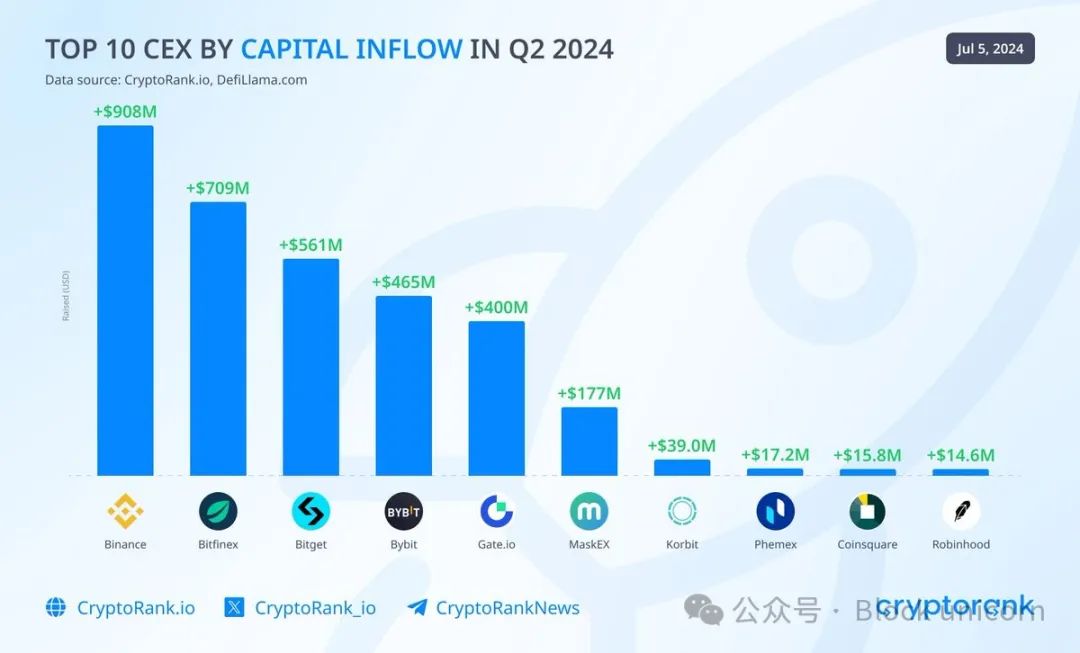
According to Q2 2024 data released by CryptoRank.io, Binance led with $908 million in capital inflow. Bitfinex and Bitget ranked second and third with $709 million and $561 million respectively. In Coingecko’s monthly traffic rankings, Binance remained first with 65.5 million visits, while Bitget ranked third—demonstrating growth in both user engagement and capital inflow.
Derivatives Market
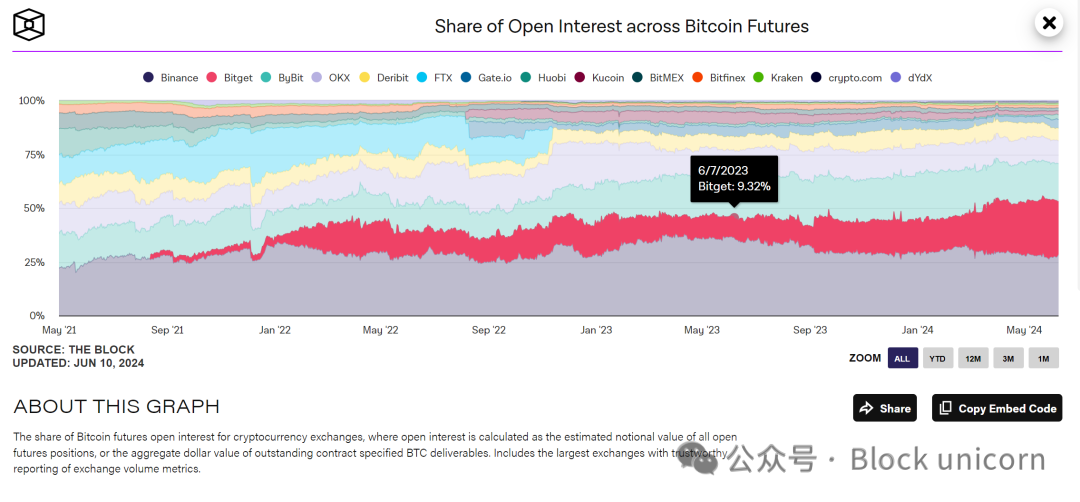
Significant changes are emerging in the derivatives market competition. Since last year, Bitget has maintained rapid growth, while Binance, OKX, and Bybit have shown relatively stable performance in the derivatives space. Data from The Block shows that since 2022, Bitget has continuously increased its share of the derivatives market.
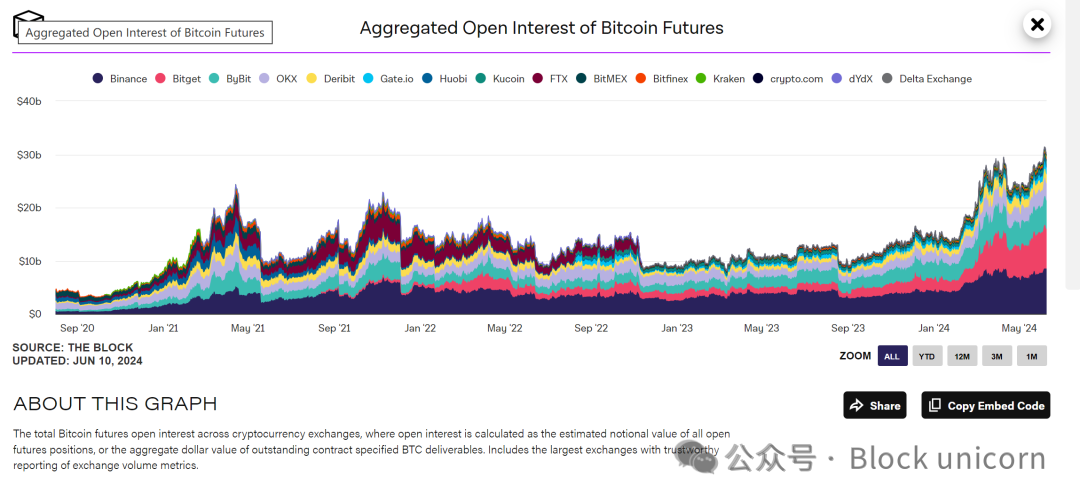
On June 7, The Block recently published a chart showing Bitcoin open interest across major exchanges. According to the data, Binance holds $8.5 billion in Bitcoin open interest, capturing 27% of the market. Second is Bitget, with Bitcoin open interest surpassing $8.16 billion, representing 26% of the market. Following closely is Bybit, with $5.48 billion in Bitcoin open interest and a 17.51% market share. OKX ranks fourth with $3.03 billion in open interest and a 10.77% share. Currently, these platforms dominate the derivatives market.
Since last year, Bitget has maintained explosive growth. In the Bitcoin futures open interest market, Bitget’s market share surged from 9.7% one year ago to 26% on June 7 this year—an increase of 168%.
Meanwhile, Binance’s derivatives market share declined from 36% on June 7, 2023, to 27% this year—a drop of 9 percentage points, equivalent to a 25% decline ((36 - 27)/36 * 100% = 25%). As one of the core businesses for exchanges, Binance faces intense competition and ongoing market share erosion in derivatives trading, though it still maintains its leading position.
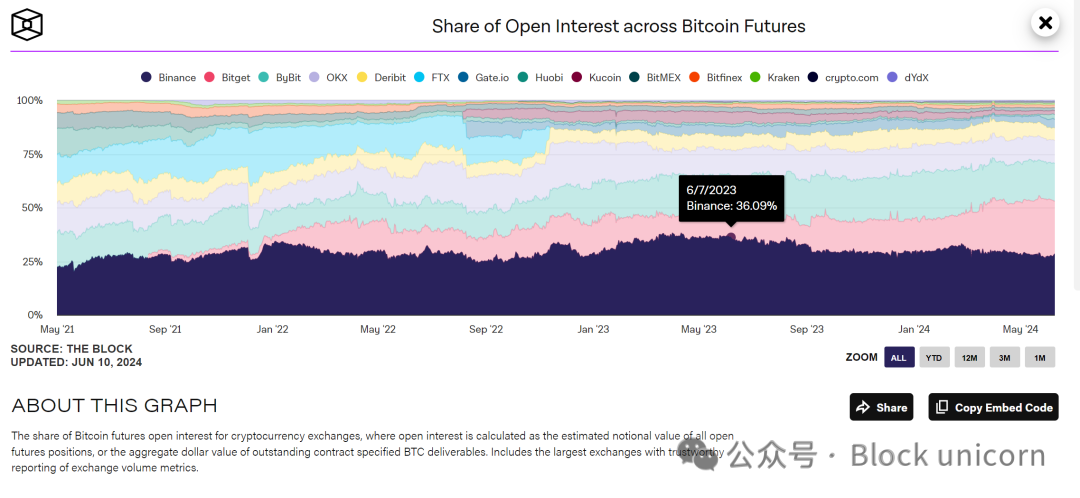
Bybit and OKX experienced minimal changes in market share. On June 7 last year, their shares were 19.13% and 12.03%, respectively. Compared to last year, Bybit decreased by 1.5%, and OKX dropped by 1.26%. Bitget’s growth stands out most dramatically, increasing its market share from 9.7% to 26% over the same period.
Spot Market
Bitget’s growth extends beyond derivatives trading. It has also excelled in the spot trading arena. After relaunching its spot market in 2023, Bitget achieved a 94% increase in trading volume despite adverse market conditions. Additionally, in terms of new listings, Bitget launched 355 new tokens in 2023—a 46% increase compared to 2022. Bitget’s success can be attributed to innovative trading products, effective marketing strategies, and keen responsiveness to user needs.
Although founded six years ago, Bitget previously focused solely on expanding its derivatives business and entered the spot market relatively late—only relaunching it in 2023. Yet within just one year, its 24-hour spot trading volume reached $1,400,610,407 (as of July 2, 2024, per CoinMarketCap), quickly climbing to fifth place and becoming one of the fastest-growing exchanges. This performance notably surpasses long-established players like Kraken (founded in 2011) and Bitfinex (founded in 2012), highlighting Bitget’s strong market adaptability and competitiveness. While other leading exchanges such as Binance, Bybit, HTX (Huobi), Coinbase, and Gate.io also perform well, Bitget’s rapid growth is particularly striking.
Bitget’s strong performance in the spot market stems from offering innovative trading strategies for both retail and professional traders: 1) **Copy Spot Trading**, which allows users to select trusted professional traders in the copy trading marketplace and follow their strategies to earn returns; 2) **Copy Futures Trading**, similar to spot copy trading, enabling users to mirror trades of selected experts; 3) **AI Strategy Copy Trading**, where artificial intelligence analyzes market data and trading patterns to automatically generate and execute optimal trading strategies, helping users achieve intelligent and efficient trading.
Bitget’s success demonstrates that even a late entrant to the spot market can rapidly rise in the fiercely competitive crypto exchange landscape through innovative trading strategies and strong execution, establishing itself as a key industry player.
Bitget's Security Measures
As a top-tier platform serving 25 million users, Bitget places security above all else. Since its inception, Bitget has operated securely for six years without any incidents of user data breaches or platform asset theft. Its outstanding security record is backed by robust measures including secure storage, internal control systems, risk management frameworks, asset transparency, and a protection fund.
1. Secure Storage: Bitget uses segregated cold/hot wallets and multi-signature wallet technology to ensure user assets remain accessible even if individual administrators become unreachable.
2. Internal Control System: Sensitive permissions are minimized and separated, with mechanisms for detecting abnormal behavior, enhanced manual review processes, and comprehensive personnel records to prevent insider misconduct.
3. Risk Management System: Bitget continuously enhances its KYC (Know Your Customer) and AML (Anti-Money Laundering) systems and collaborates with specialized institutions like Sumsub to improve detection capabilities against AI-powered deepfake fraud, ensuring transaction security and compliance.
4. Asset Transparency: Bitget publishes reserve reports quarterly, maintaining more than a 1:1 reserve ratio, with reserve rates consistently between 150–200%, far exceeding industry averages—demonstrating its strong commitment to user asset safety.
5. Protection Fund: Bitget maintains the second-largest user protection fund among CEXs, exceeding $400 million. This fund ensures users suffer no losses if the platform encounters security challenges, providing powerful financial backing.
Bitget’s success is reflected not only in its flawless security record but also in its market performance and the remarkable growth of its native token, BGB.
Maintaining robust security is critical for crypto exchanges, directly impacting user trust and platform survival. First, strong security prevents hacking, data leaks, and asset theft, safeguarding users’ funds and personal privacy. Bitget excels in this area, having never experienced an incident of asset loss or data breach since its founding.
Second, strong security helps build and sustain user trust, which is vital for long-term development. Thanks to its impeccable track record, Bitget continues to gain greater user confidence. Incidents involving asset loss or data exposure could gradually erode brand trust, trigger legal disputes, attract regulatory scrutiny, and damage reputation.
Furthermore, platform security strengthens competitiveness, allowing Bitget to stand out even amid fierce rivalry. Over the years, by delivering secure asset protection, safeguarding personal information, and continuously optimizing its products, Bitget has built a solid reputation, attracting 25 million users and consolidating its market position.
Another Remarkable Performance
Despite two months of weak market performance, Bitget continues to maintain positive growth. Just as strong corporate earnings reflect company health, a platform’s native token acts like shareholders’ golden stock—its value rises steadily underpinned by solid fundamentals, delivering substantial returns.
First, consider the performance of Bitget’s native token BGB. According to Coingecko, BGB debuted in 2020, hitting a low of $0.0149 before embarking on a dramatic rise. By June this year, it reached a high of $1.44—representing a 90x increase from its lowest point, averaging 22.5x annual growth over four years. From 2023 to 2024 alone, BGB appreciated over 10x, averaging 0.8x monthly gains.
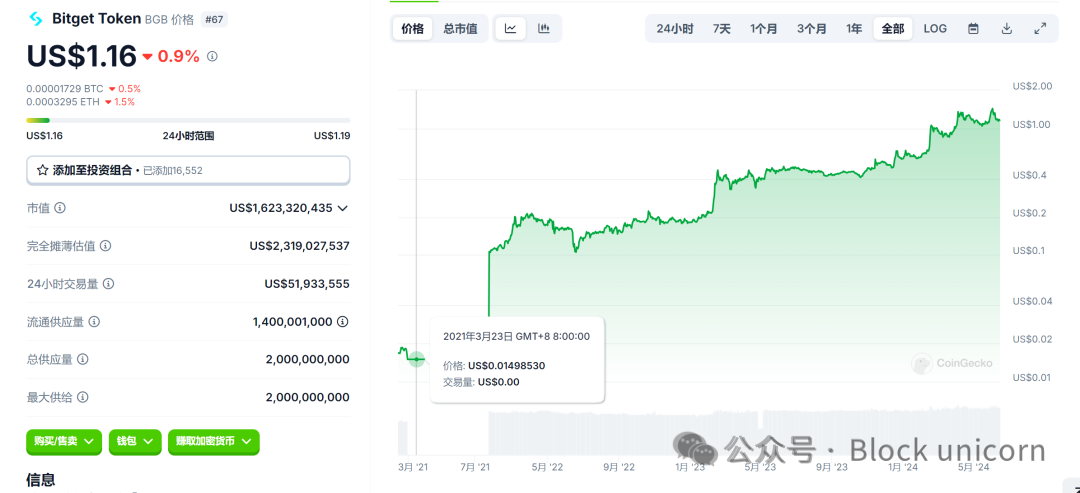
As of June 10, analyzing BGB’s price trend reveals that after each market-wide correction, BGB easily surpassed its previous peak. During the two major market pullbacks this year, nearly all altcoins fell by 30–50%. However, since July 2021, BGB has never seen a monthly decline exceeding 18%—even surviving events like the LUNA and FTX collapses without dropping more than 18% in any single month. This suggests Bitget has continued growing rapidly and sustainably regardless of broader market crashes, with BGB reflecting this strength through resilient price action.
Now consider Binance’s native token BNB. Looking at BNB’s performance since 2021, it has undergone several sharp fluctuations. While performing well at times, BNB showed significant drawdowns during market corrections. For instance, during this year’s market retreat, BNB dropped over 30% from its peak. This high volatility and deep retracement indicate weaker resilience under stress compared to BGB (K-line data source: Coingecko).
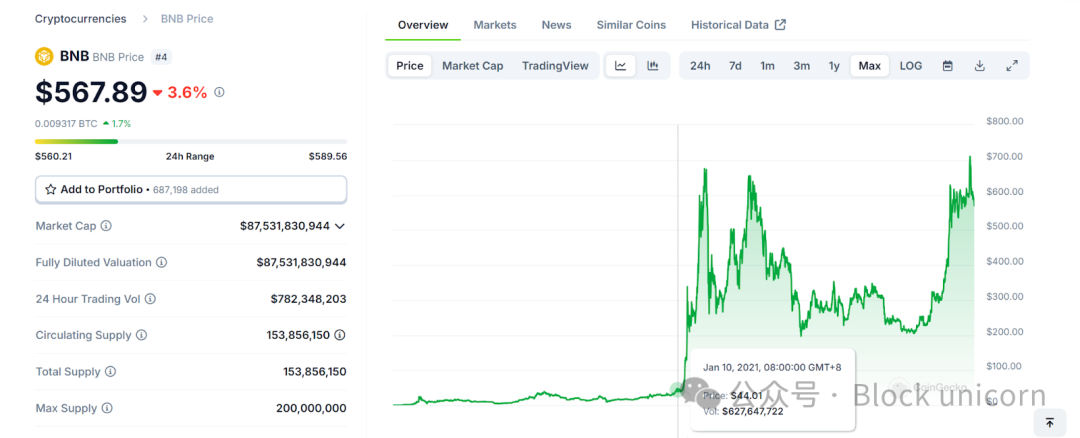
Next, examine OKX’s native token OKB. Similarly reviewing data since 2021, OKB performed slightly better than BNB under extreme volatility. OKB peaked at $33.87 in the last bull run, falling to a low of $9.98—a 69.8% drop. BNB peaked at $675 and bottomed at $197—a 70% decline. During volatile cycles, both tokens experienced monthly drops exceeding 20%.
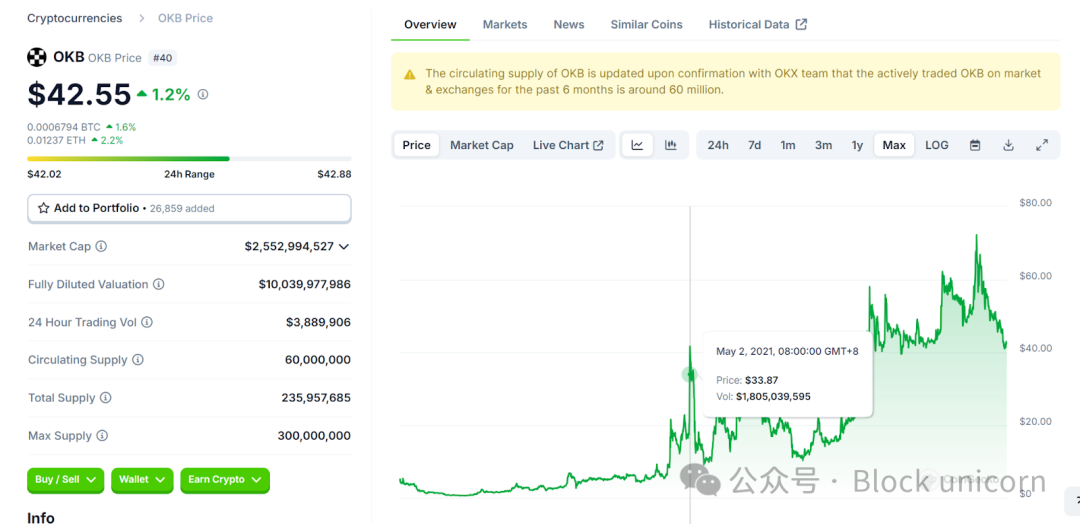
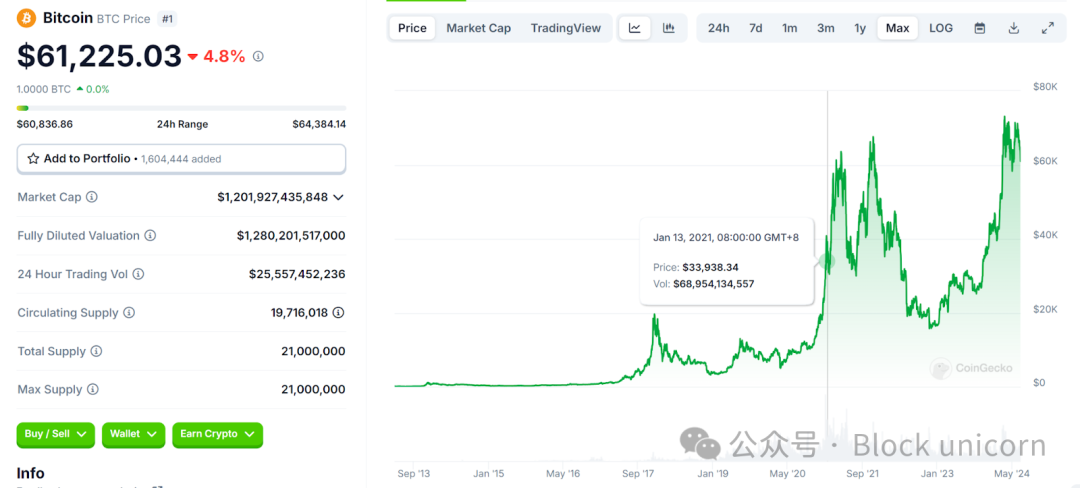
Besides BNB and OKB, Bitcoin rose to $61,000 in November 2021 before crashing to $16,800—a decline exceeding 70% (K-line data source: Coingecko). Even after multiple rebounds, its overall drop remains over 30%.
Since 2021, BGB has demonstrated relative stability—even amid severe market turbulence, its monthly drawdowns never exceeded 18%. This highlights BGB’s strong risk resistance and swift recovery capability. Whether facing cascading effects from the FTX or LUNA collapses or other major downturns, BGB consistently bounced back quickly, showcasing exceptional market resilience and stability. “There will be a time when strong winds break the waves; I’ll set my cloud-like sails and cross the sea.” Amid storms, BGB has proven itself rock-solid, offering investors peace of mind and trust. In a turbulent and unpredictable market, BGB stands out as a powerful and steady force.
The Role and Wealth Effect of BGB
Additionally, BGB holders can participate in Bitget’s flagship programs such as Launchpool, Launchpad, and PoolX:
1. Launchpad: For Initial Exchange Offerings (IEOs), users stake BGB to participate in token sales of new projects launching on the exchange. The more BGB staked, the higher the chance of allocation.
According to ChainCatcher’s 2023 data comparing top-10 platforms’ Launchpad returns, Bitget users achieved a 41.9x return—the highest among peers—with an average annualized yield of 146% (not including BGB’s own price appreciation)—solidly ranking first in returns.
On June 11, Bitget launched a new project BWB (Bitget Wallet) via its Launchpad. Users could stake BGB to purchase BWB at an initial price of $0.15. As of June 21, BWB reached $0.57—generating a 3.8x profit (0.57 / 0.15 ≈ 3.8)—showcasing the wealth effect for BGB holders. Let’s look further.
2. Launchpool: Users stake BGB (more staked = higher rewards) to mine newly listed tokens—also known as staking mining. Compared to Launchpad, Launchpool is simpler: just stake BGB to earn upcoming project tokens.
Over the past five months of Launchpool campaigns—highlighting returns from various tokens on Bitget—the following table shows ROI and annualized returns (Return(Y)) across different timeframes. Tokens ALEX, GRAPE, ZKF, RABBIT, and SAROS delivered annualized returns of 178%, 174%, 329%, 179%, and 47% respectively. Cumulatively, the total annualized return over five months reached 907%. These extraordinary returns prove that holding BGB and participating in Bitget’s activities (Launchpool, Launchpad, PoolX) delivers exceptional investment yields.
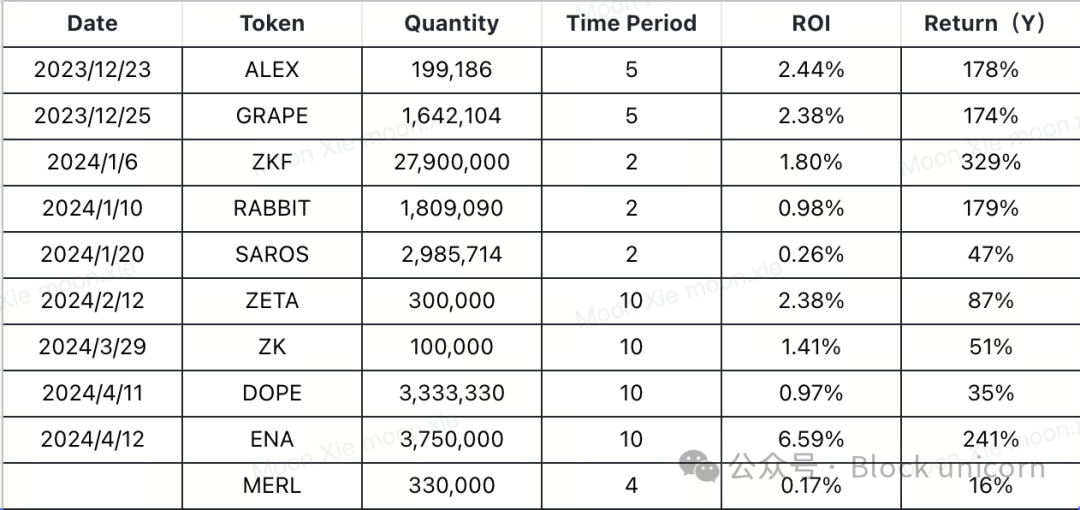
Data compiled from public sources
3. PoolX: Returns depend on the number and frequency of new projects. The more projects launched on PoolX, the greater the earning potential for stakers. Since launching its first project CHATAI on April 8, Bitget has introduced nine projects—almost one per day—with average returns ranging between 16%–22%. This means users can engage in daily staking on PoolX. With consistent participation—for example, staking 10,000 BGB—the cumulative returns become substantial. Users can stake popular tokens like BGB, ETH, BTC, USDT, and ZK to earn rewards, with additional airdrops and boosted yields for new participants.
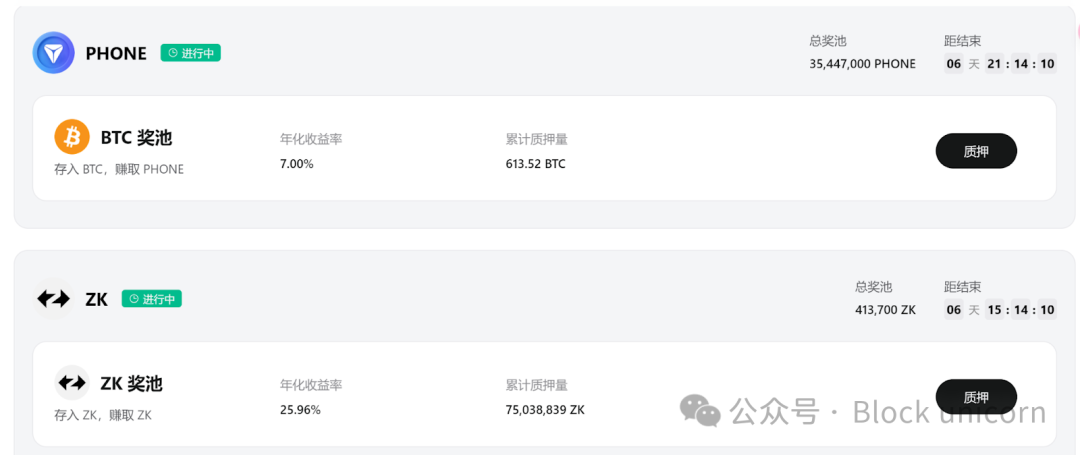
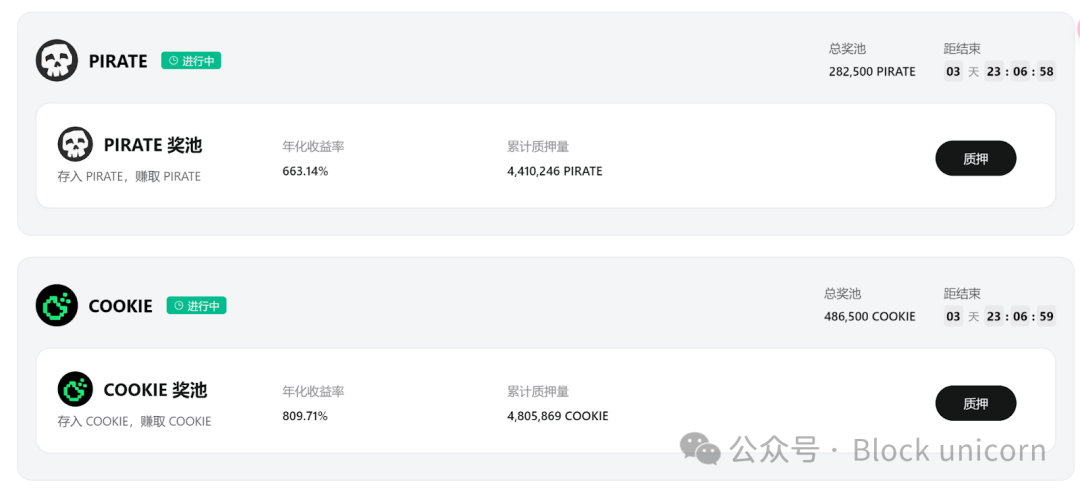
These three methods represent Bitget’s most popular current earning avenues, each with unique advantages. Going forward, BGB is expected to unlock even more income opportunities. Holding BGB offers not only immediate high returns but also long-term appreciation potential. As Bitget continues to grow and innovate, the value and earning prospects of BGB are poised to rise further. In short, holding BGB provides both instant financial rewards and a solid foundation for future gains.
Conclusion
Whether in bull or bear markets, Bitget maintains strong vitality—particularly in the derivatives market, where it has reached a level comparable to Binance. Throughout its operational history, Bitget has experienced zero security incidents, demonstrating its team’s strong commitment to user fund security and earning increasing trust from users worldwide.
Join TechFlow official community to stay tuned
Telegram:https://t.me/TechFlowDaily
X (Twitter):https://x.com/TechFlowPost
X (Twitter) EN:https://x.com/BlockFlow_News
 @BlockUnicorn