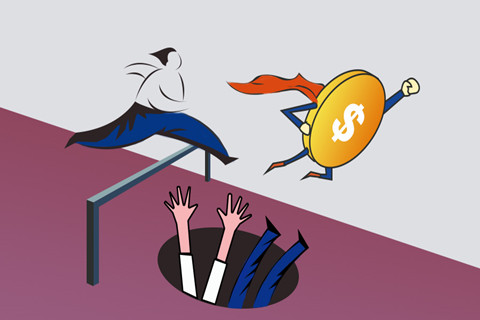
It's easy to go all-in, but hard to cash out—how can you become a seasoned pro at knowing when to sell?
TechFlow Selected TechFlow Selected
It's easy to go all-in, but hard to cash out—how can you become a seasoned pro at knowing when to sell?
Increase your "surface area for luck" through multiple channels.
 Navigating Web3 tides with focused insights
Author: Crypto, Distilled
Translation: TechFlow
How to Sell at the Top (Without Relying on Luck):
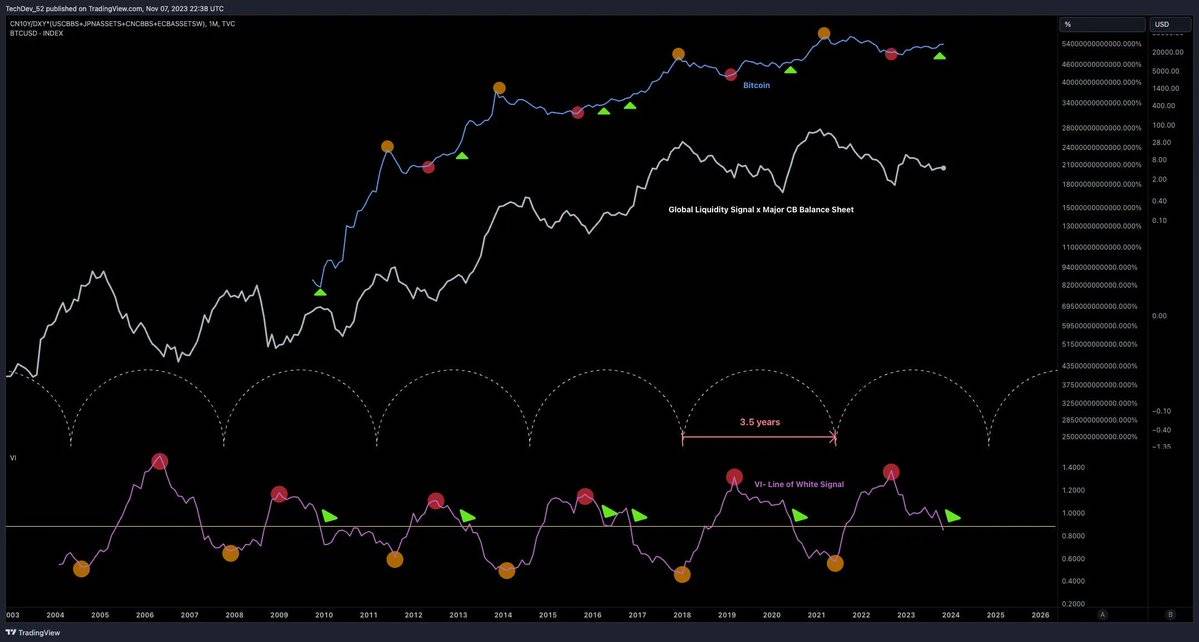
1.Understand the Market Cycle
Cryptocurrency cycles are driven by three key factors:
(A) Global liquidity cycle (since 2008)
(B) Bitcoin halving (since 2012)
(C) U.S. elections/regulation
Notice the 4-year pattern? (Credit: @TechDev_52)
Recognize Patterns
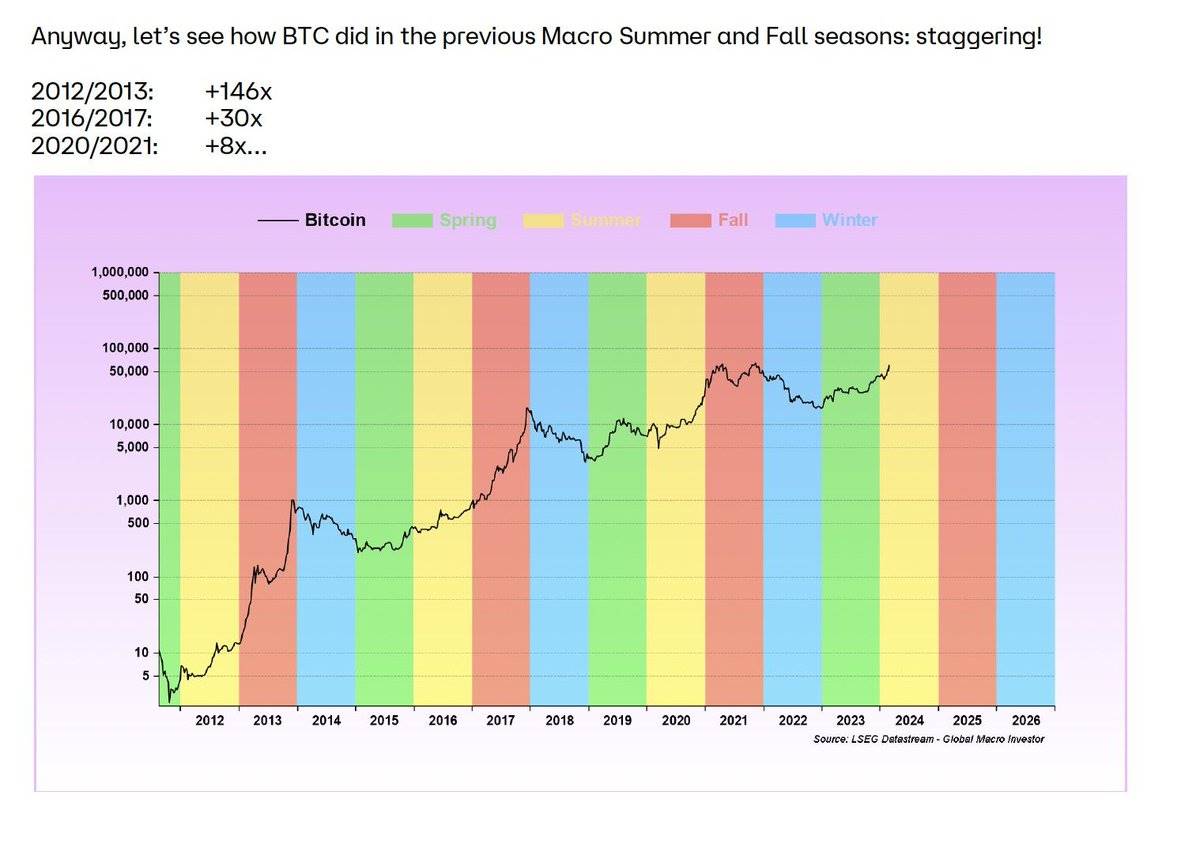
Within the 4-year cycle, crypto markets resemble traditional seasons:
Winter = Bear market (e.g., 2022)
Summer = Bull market (e.g., 2023)
Spring and Autumn = Transition periods
(Credit: @RaoulGMI)
2.Determine the Current Season
Assuming the bull run started at the end of 2022, we may now be in summer.
Prices have surged, but there might still be room to rise.
Summers typically cool down after a strong spring (as seen in 2021 and 2024).
Identify the “Sweet Spot” Season
Autumn is usually when market mania peaks and the cycle reaches its top.
Aim to sell during this period (then buy back in winter).
Timing the “Mania Moment”
This is the hardest part—market noise is high and greed runs rampant.
You may be reluctant to sell.
3.To Counter Greed, Look for Indicators That a Top May Be Near
Above all, watch global liquidity.
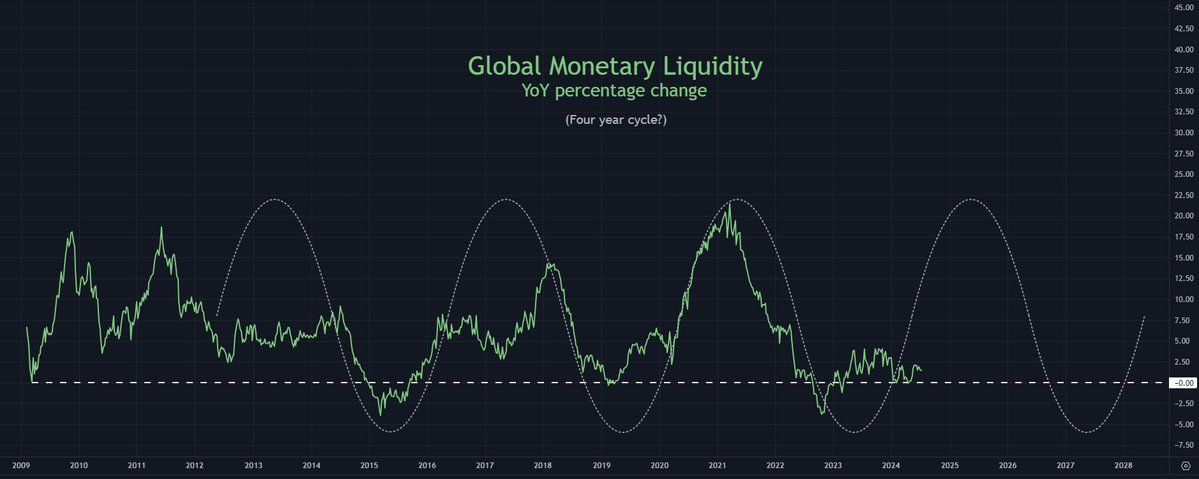
Specifically, year-over-year (YoY) percentage change in global liquidity.
Riding liquidity is like surfing.
If YoY global liquidity is trending upward, keep riding the wave; if it's turning downward, exit promptly.
Make sure to get off before the wave crashes.
The “Joy Zone”
The “Joy Zone” is when the market is easiest to trade (everything turns green).
During the “Joy Zone,” YoY global liquidity change typically reaches 4.5%.
Currently, we’re at 1.5%. History doesn’t repeat exactly, so set flexible targets.
(Credit: @TomasOnMarkets)
Liquidity as a Leading Indicator
Liquidity changes can signal price moves 6–12 months in advance.
Crypto is a high-risk asset class—the transmission effect of capital may take time.
Warning: This also applies when liquidity dries up.
Monitor Stablecoin Supply
For a clearer view of crypto-specific liquidity, track stablecoin supply.
Ideally, stablecoin supply should accelerate to sustain a market rebound.
Think of global liquidity as the world map and stablecoin liquidity as the local map.
(Credit: @glassnode)
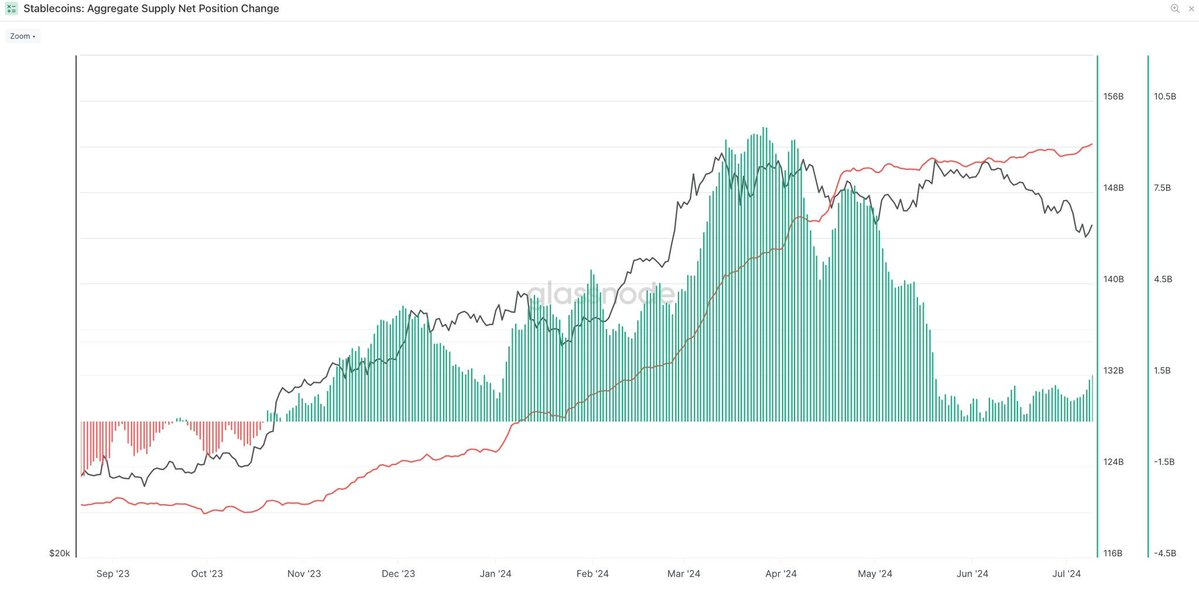
Why Stablecoin Liquidity Matters
It represents potential buying pressure for altcoins. Fresh capital drives market rallies.
Bitcoin matters, but with ETFs, the transmission effect through centralized exchanges (CEXs) may no longer be as significant.
4.Narrow Your Time Window
Based solely on liquidity, assume we can predict the top within a 2–3 month window.
How to narrow it further? Try identifying convergence of multiple topping signals.
The Lollapalooza Effect
The more signals, the clearer the big picture.
This strategy centers on the Lollapalooza Effect (Charlie Munger)—when multiple forces converge, they create an outsized impact.
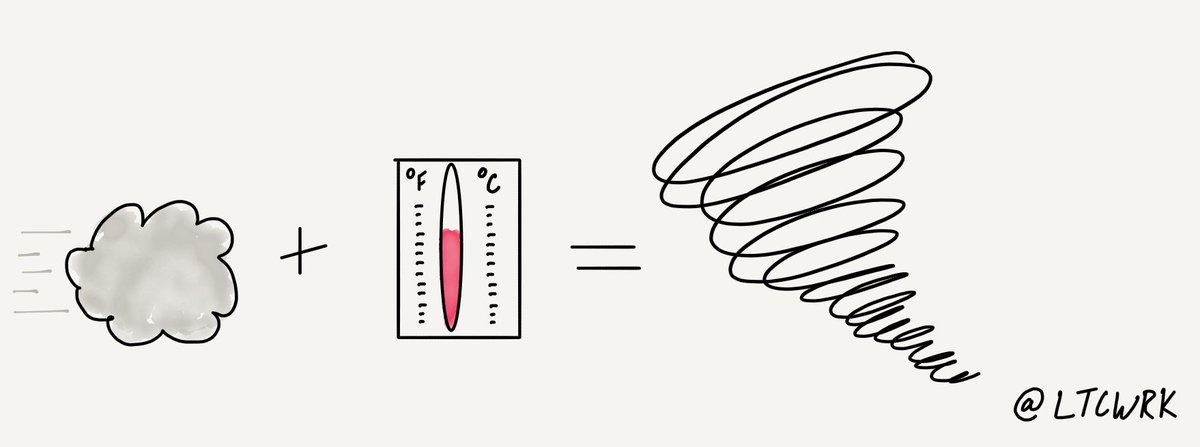
Example Forces (you can create your own):
-
Bitcoin approaching $100K (peak hype)
-
Sovereign wealth funds piling into Bitcoin
-
Liquidity peaking with overheating rumors
-
Crypto search trends hitting all-time highs
-
Sports teams adopting NFT tickets
5.What If the Signals Don’t Appear?
This is where a backup plan comes in.
A backup plan is a fallback measure that supports your main strategy.
Backup Plan for Timing-Based Signals:
If your top signal is time-based, a good backup is event-based.
Suppose you expect the top in the first half of 2025.
Before then, prepare 5–10 event-based signals to hedge your risk.
Backup Plan for Event-Based Signals:
For event-based signals, use a fixed time frame as a backup.
For example, regardless of signals, exit a portion of holdings by the end of 2024.
This protects against unforeseen black swan or systemic risks.
Reality Check:
Selling everything perfectly at the top requires immense luck—stay realistic.
Instead, aim to maximize your average exit price near the top.
Realistic Goal:
Operate around the top (sell some before, some at, and some after).
If you're not full-time in crypto, exiting the first 1/3 of your position is a solid target.
Altcoin Dynamics:
If heavily invested in altcoins, you should outperform Bitcoin throughout the process.
This hedges against the fact that altcoins tend to fall much faster than Bitcoin.
Identifying altcoin tops is difficult due to echo bubbles and other risk factors.
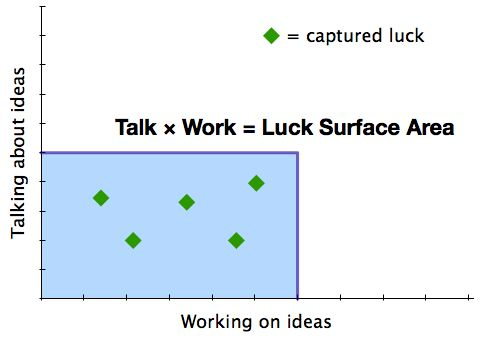
6.Increase Your “Surface Area for Luck” Through Multiple Channels
The more backup plans, signals, and research you have, the better your exit strategy will be.
Build relationships, stay active on Twitter, and keep learning and growing.
(Credit: Network Capital)
Strategy Recap
-
Study the nature of cycles
-
Identify the current season
-
Predict and follow liquidity
-
Narrow your exit window using signals
-
Hedge your strategy with backup plans
-
Increase your “surface area for luck” through networking
(Post inspired by: @Naval)
Join TechFlow official community to stay tuned
Telegram:https://t.me/TechFlowDaily
X (Twitter):https://x.com/TechFlowPost
X (Twitter) EN:https://x.com/BlockFlow_News
 @DistilledCrypto