Did Layer2 get better after the Cancun upgrade?
TechFlow Selected TechFlow Selected
Did Layer2 get better after the Cancun upgrade?
Over 60% of L2 transactions occur on Base and Arbitrum chains.
 Navigating Web3 tides with focused insights
Author: Jason Jiang, OKG Research
This article is jointly produced by OKG Research, the research institute of OKLink, and PANews: data-driven insights into the real on-chain world.
After the Cancun upgrade, Ethereum L2 transaction fees have significantly decreased and throughput has improved, but the overall ecosystem has not seen the anticipated boom. The narrative momentum for L2 remains weak post-upgrade. Apart from a few exceptions like Base and Arbitrum, most L2 projects have shown relatively lackluster performance in data metrics after the upgrade due to real-world issues such as fragmented liquidity across Ethereum and the broader crypto ecosystem, and a lack of application innovation.
1. Over 60% of L2 transactions occur on Base and Arbitrum
The most direct impact of the Cancun upgrade was lowering transaction costs on L2 networks. The market had generally expected a 90% reduction in L2 fees post-upgrade, which has largely been achieved. According to OKLink data, average daily fees across L2s dropped sharply after the upgrade, with projects like Arbitrum, Optimism, and StarkNet all seeing fee reductions exceeding 90%. Arbitrum saw the largest decline, dropping from $0.62 pre-upgrade to around $0.01 today—a 97.01% decrease. However, ZK Rollup-based chains still maintain relatively higher average costs compared to Optimistic Rollup-based ones. For example, Linea, Scroll, and Polygon zkEVM continue to have transaction costs above $0.50, with fee reductions below 50%.
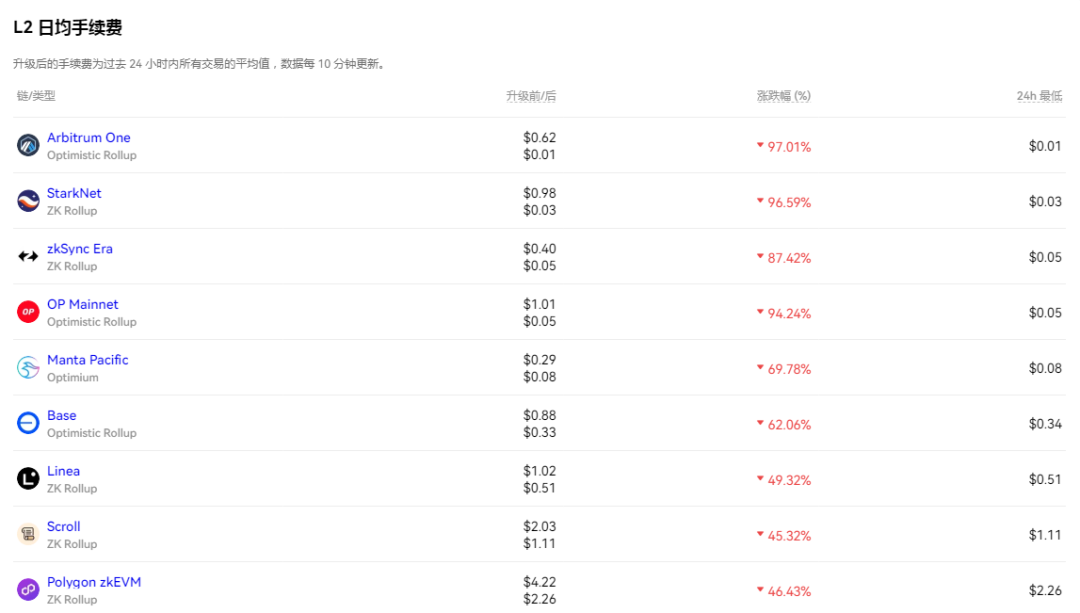
Data source: OKLink
Alongside lower fees, transaction throughput has also increased across multiple L2 projects, with Arbitrum and Base showing the most significant gains. Base’s network TPS surged from single digits pre-upgrade to an average of over 35 transactions per second recently—an increase of more than 6.3 times—and hit its all-time highest daily TPS on June 28.
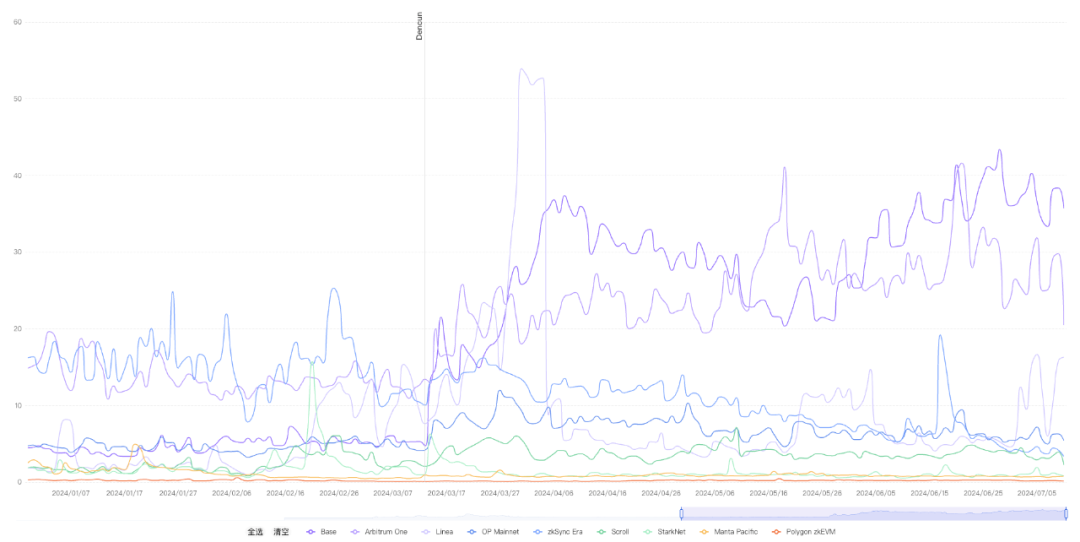
Data source: OKLink
Behind the actual TPS growth, transaction activity on L2s has become more active than before the upgrade. OKLink data shows that total L2 transaction counts noticeably increased after the Cancun upgrade, recently processing over 7 million transactions per day—an improvement of over 40%. According to L2Beat, L2s are now handling more than 20 times the number of transactions processed by the Ethereum mainnet.
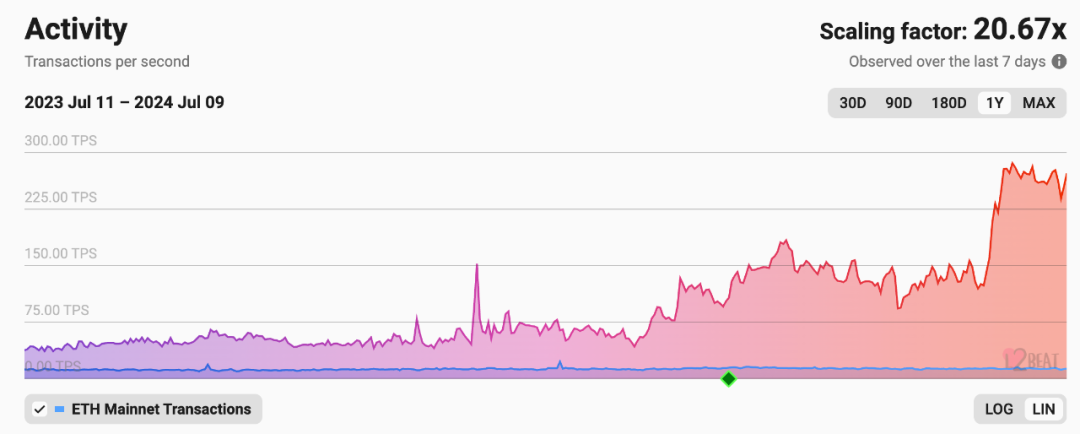
Data source: L2Beat
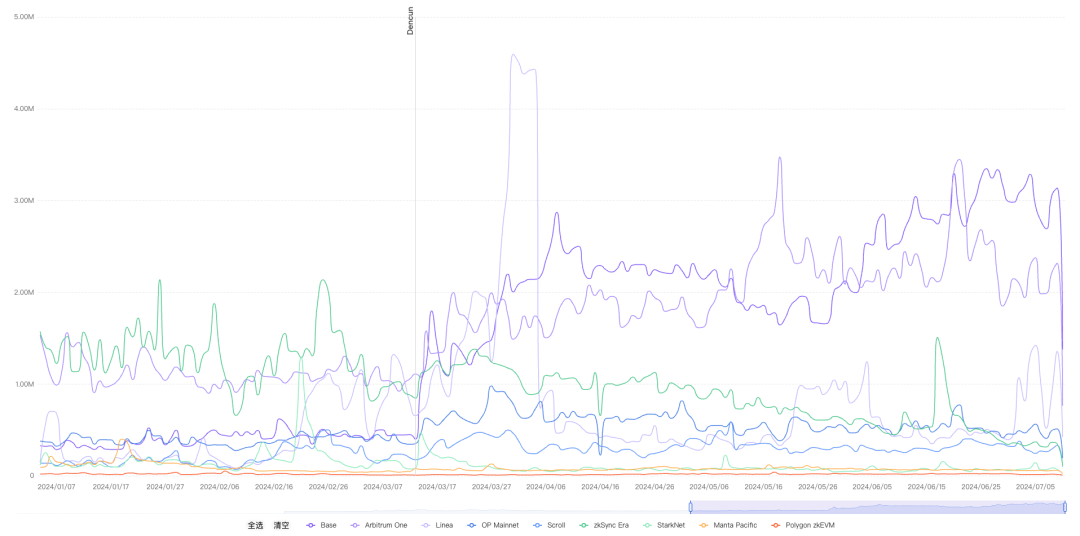
Prior to the upgrade, only Linea and zkSync had daily transaction volumes surpassing one million; other L2s remained below this threshold. However, the L2 transaction landscape shifted after the upgrade: Base and Arbitrum have emerged as the primary hubs for L2 activity, hosting over 60% of all L2 transactions. Base now processes over 3 million transactions daily, while Arbitrum averages over 2 million.
Data source: OKLink
2. Has L2 improved after the Cancun upgrade?
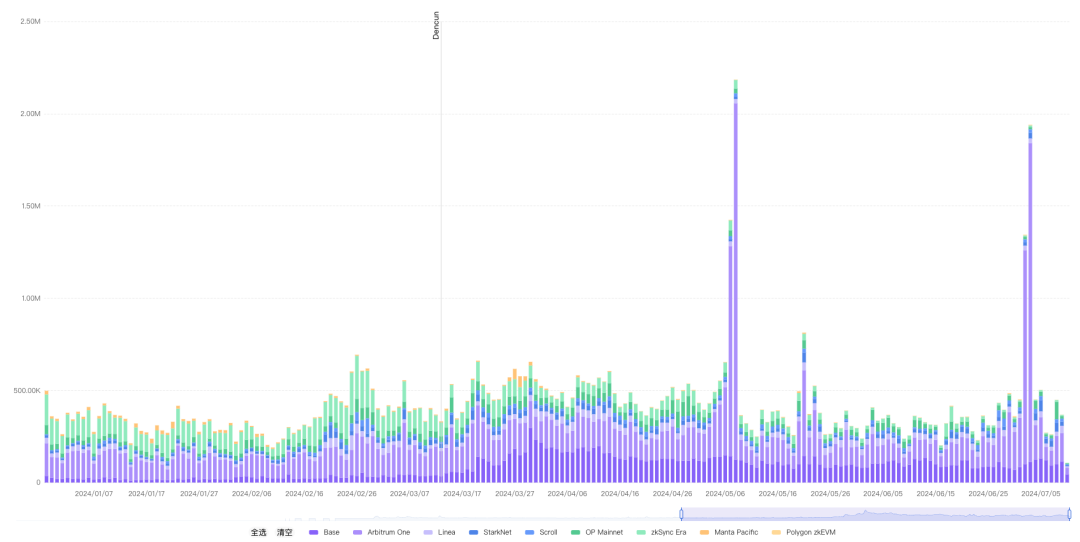
Notably, while L2 transactions have become more active, transaction volume has not shown a clear upward trend. OKLink data indicates that although L2 transaction volume initially rose after the upgrade, it began weakening after May 9 and has since reverted to levels seen before the upgrade.
Data source: OKLink
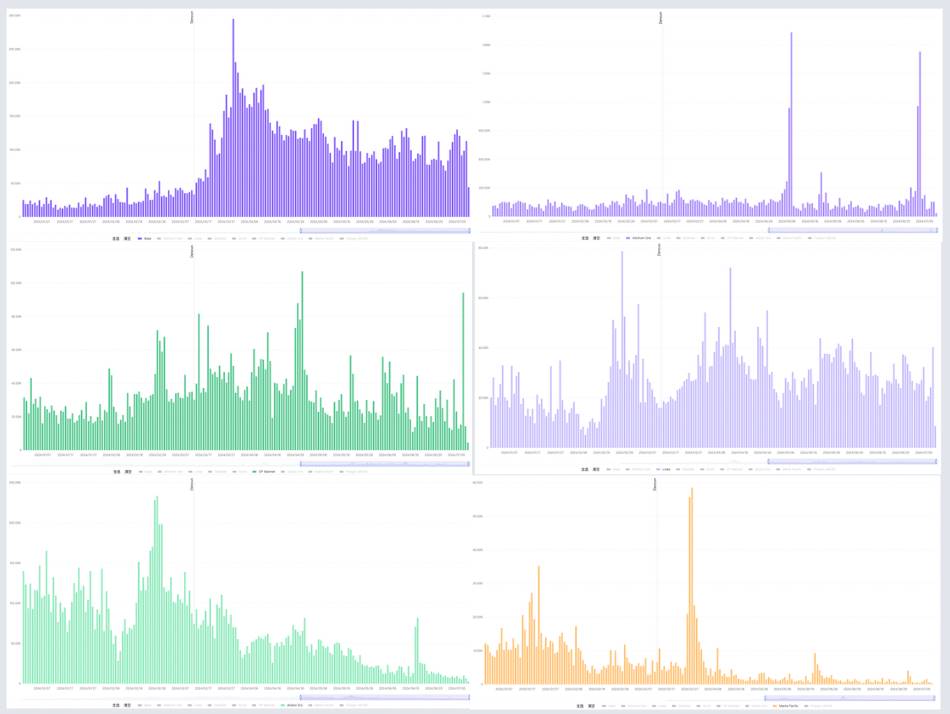
Looking at individual projects provides a clearer picture. As shown in the chart below, Base is clearly the biggest gainer post-upgrade. Although its current daily volume has dropped significantly from its peak in March–April, it remains over three times higher than pre-upgrade levels. However, apart from Base, projects such as Arbitrum, Optimism, and Linea have not seen notable increases in transaction volume after the upgrade, while zkSync and Manta have even experienced declining volumes.
Data source: OKLink
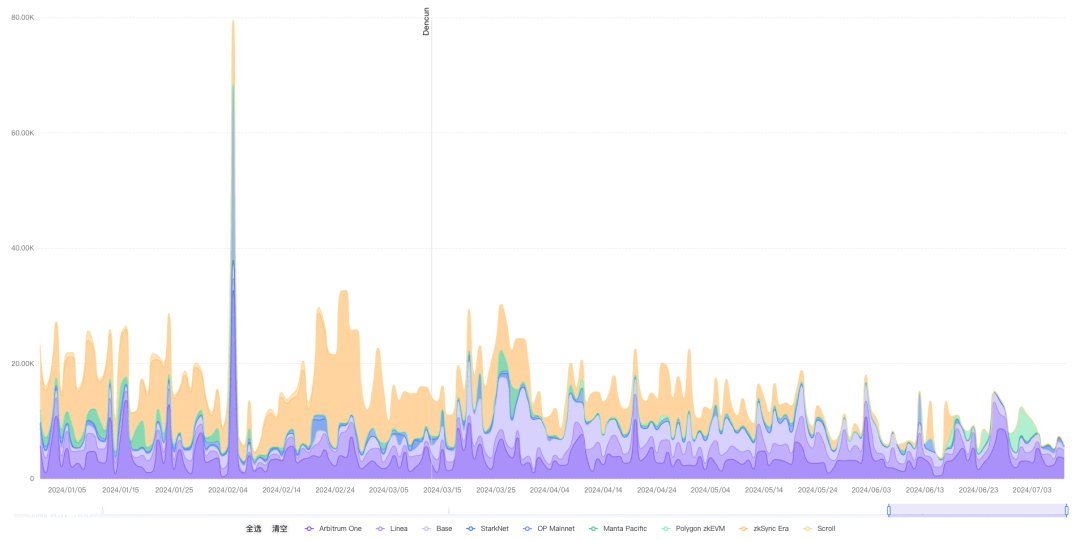
Changes in TVB (Total Value Bridged) data further suggest that the Cancun upgrade has not significantly boosted overall L2 attractiveness. The daily amount of ETH bridged from Ethereum to various L2s has actually declined compared to pre-upgrade levels. Even Base, which previously showed strong momentum, has seen its TVB gradually decrease to near pre-upgrade levels. In contrast, Polygon has recently shown standout performance.
Data source: OKLink
Based on these data trends, we can conclude:
1) The Cancun upgrade has had clear technical success—significantly reducing L2 transaction costs and moderately improving throughput—but it has not altered the existing competitive dynamics among L2s. Instead, it has intensified competition and accelerated shifts in the L2 transaction landscape;
2) From changes in transaction count and volume, it's evident that lower transaction costs have indeed attracted more types of users, especially small-scale investors who can now transact quickly via L2s—helping solidify L2s' role as foundational infrastructure for the industry.
Although the L2 ecosystem did not experience explosive growth after the Cancun upgrade, with many projects showing lackluster data and disappointing price movements, the author believes that L2 technology still holds long-term value. Two main factors currently weaken the L2 narrative: First, Ethereum itself—the underlying L1—has underperformed in this cycle, with low on-chain activity and limited innovation, failing to provide sufficient liquidity to L2s. Second, the L2 application ecosystem has yet to take off, resulting in weak transaction demand. Meanwhile, the growing number of L2 projects further fragments liquidity amid intense competition, depriving the L2 narrative of sustained momentum.
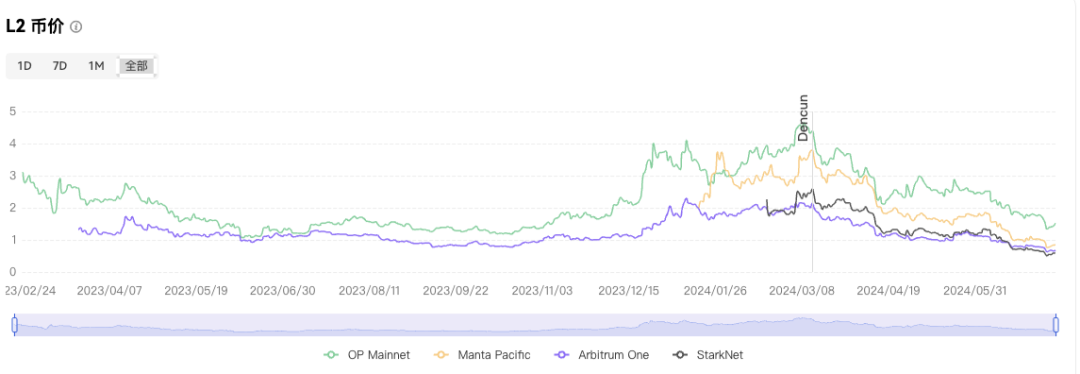
Data source: OKLink
To improve the current unfavorable state of L2s, the simplest approach would be waiting for a recovery in the Ethereum ecosystem. But a more direct and proactive solution lies in accelerating the development of L2-native applications. Yet neither path is easy. After years of "infrastructure building," the crypto industry now has not just adequate but arguably excessive infrastructure. This oversupply stems partly from past overinvestment and partly from the failure of the application layer to keep pace. For the foreseeable future, the key to transforming not just L2s but the entire crypto market will lie in exploring and building compelling applications.
Join TechFlow official community to stay tuned
Telegram:https://t.me/TechFlowDaily
X (Twitter):https://x.com/TechFlowPost
X (Twitter) EN:https://x.com/BlockFlow_News
 @OKGResearch