Did Bitcoin’s 10 a.m. crash result from Jane Street’s market manipulation? Data points elsewhere.
TechFlow Selected TechFlow Selected
Did Bitcoin’s 10 a.m. crash result from Jane Street’s market manipulation? Data points elsewhere.
The real issue isn’t Jane Street—it’s the “black box” of price discovery in the ETF era.
 Navigating Web3 tides with focused insights
Author: CryptoSlate / Oluwapelumi Adejumo
Compiled by: TechFlow
TechFlow Intro: Bitcoin recently rebounded to $70,000, reigniting a conspiracy theory in the crypto community linking Jane Street to “U.S. equity market open suppression.” This article dissects that claim across three dimensions—on-chain data, ETF structure, and options positioning—and concludes that the real issue isn’t Jane Street—it’s the black box of price discovery in the ETF era. Institutional hedging opacity is making it increasingly difficult for retail investors to read the market.
Full Text Below:
Bitcoin rebounded near $70,000 over the past 24 hours, reigniting a familiar debate across crypto markets: Have Wall Street institutions operating within the spot ETF ecosystem gained excessive influence over price discovery?
This time, the focus has fallen on Jane Street—a quantitative trading firm that serves as a key ETF authorized participant and is also a defendant in a new lawsuit tied to the 2022 Terraform Labs collapse.
On social media, traders have linked Bitcoin’s recent rebound to a claim about an intraday selloff pattern near the U.S. equity market open—an alleged pattern that reportedly vanished following the public disclosure of the lawsuit.
The theory spread rapidly because it merges two preexisting, resonant narratives: distrust of large trading firms and unease about Bitcoin’s increasing operation through traditional financial channels.
Yet evidence supporting a coordinated “Bitcoin suppression” scheme remains weak.
What this episode reveals more clearly is how the spot Bitcoin ETF structure has made it increasingly difficult for many investors to distinguish genuine spot demand from market-making, hedging, and arbitrage activity.
In this sense, the Jane Street controversy transcends accusations against any single institution. At its core lies a broader question: How does Bitcoin’s new institutional infrastructure shape price discovery—is the market becoming more efficient, or increasingly opaque?
Origins of the Jane Street Bitcoin Rumor
The rumor took shape after Bitcoin posted sharp rebounds over two consecutive trading days. Users on X began asserting that the so-called “10 a.m. dump program” had disappeared.
Notably, the X account Negentropic—run by Glassnode co-founders Jan Happel and Yann Allemann—played a pivotal role in amplifying this theory. They claimed: “The Jane Street lawsuit went public—and Bitcoin’s 10 a.m. crash miraculously vanished.”
The claim quickly gained traction because Jane Street is no obscure entity. It ranks among the world’s largest trading firms and is a well-known participant in the Bitcoin ETF market, serving as an authorized participant for IBIT (BlackRock’s spot Bitcoin ETF).
In practice, this embeds Jane Street deeply into the core mechanism that keeps ETF share prices aligned with the value of their underlying holdings.
Meanwhile, the legal dispute further fueled the controversy.
A liquidation manager for Terraform Labs filed suit in Manhattan, accusing Jane Street and other institutions of profiting during the May 2022 TerraUSD collapse by leveraging material nonpublic information related to Terraform’s liquidity operations.
The complaint alleges that Terraform withdrew $150 million in TerraUSD liquidity from Curve’s 3pool, while wallets linked to Jane Street withdrew approximately $85 million minutes before that move became public.
Jane Street denies any wrongdoing and characterizes the suit as a desperate attempt to shift blame for losses caused by Terraform’s own actions.
This litigation proves nothing about current Bitcoin trading activity.
But it explains why traders swiftly connected Jane Street to an observable market pattern. In crypto, trust is often fragile; an institution accused in one market event frequently becomes the suspect in the next.
Industry Experts Refute the Rumor
Against this backdrop, some Bitcoin traders argue that this top cryptocurrency has suffered mechanical sell-offs around the U.S. equity market open for months—liquidating long positions and creating liquidity vacuums in thin order books.
If such selling disappeared after Jane Street faced new legal pressure, perhaps the firm had been exerting downward pressure on the market.
Additionally, Jane Street’s early association with FTX founder Sam Bankman-Fried casts further shadow on its reputation. Bankman-Fried previously worked at the trading firm before launching FTX.
This narrative is emotionally compelling—but far easier to assert than to prove.
James Check, on-chain analyst at Checkonchain, directly refuted the argument, writing that Jane Street is not suppressing Bitcoin; instead, long-term holders selling spot Bitcoin better explains price action.
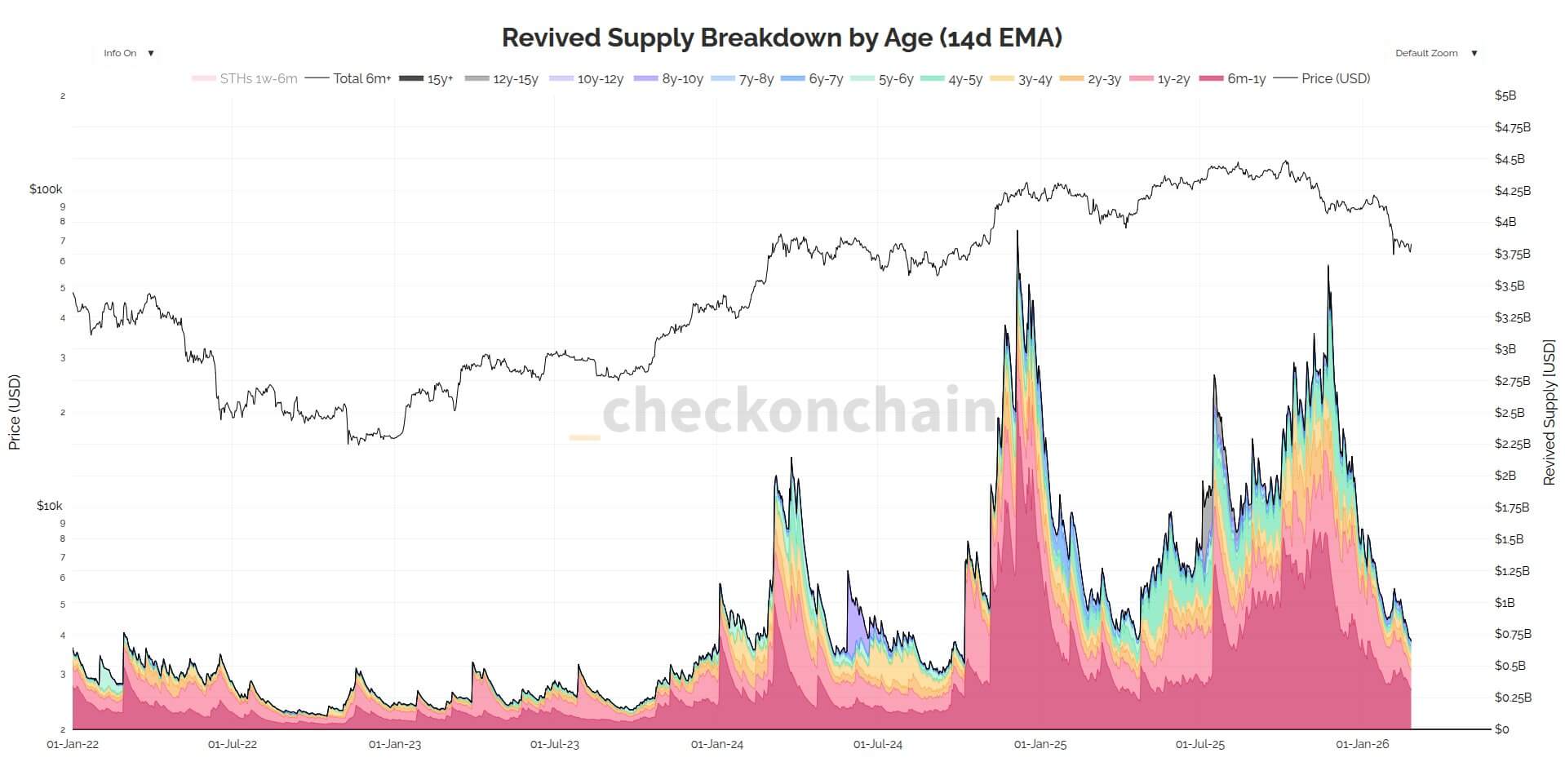
Julio Moreno, Head of Research at CryptoQuant, echoed this view, arguing the theory overlooks a more obvious driver: a sharp contraction in spot Bitcoin demand since early October 2025.
He added that the mechanisms blamed on Jane Street closely resemble delta-neutral position management widely adopted across trading firms.
The value of these rebuttals lies in targeting the rumor’s central weakness: Bitcoin was already under broad macro-driven repricing pressure before entering 2026.
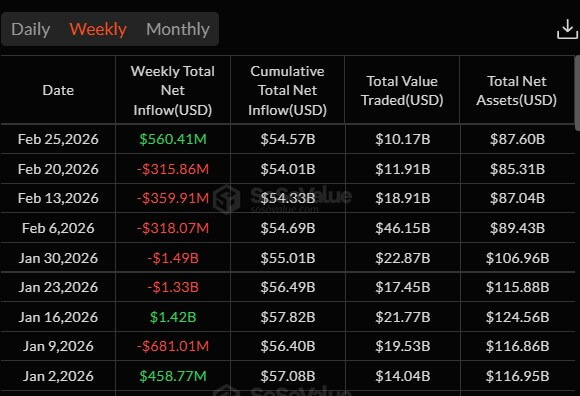
Data from SoSo Value shows institutional investors have reduced Bitcoin ETF exposure for five consecutive weeks, with total outflows from spot Bitcoin ETFs reaching roughly $4.5 billion.
Meanwhile, Glassnode data indicates that repeated market stress early this month has triggered a structural shift in the Bitcoin options market—toward greater instability.
The firm notes that the all-time gamma exposure (GEX) heatmap shows negative gamma expanding below current price levels, while the positive gamma “resistance wall” above spot price is fading.
In plain terms: The options positions that typically act as shock absorbers are receding, leaving the market increasingly in a zone where hedging flows no longer cushion declines—but instead amplify them.
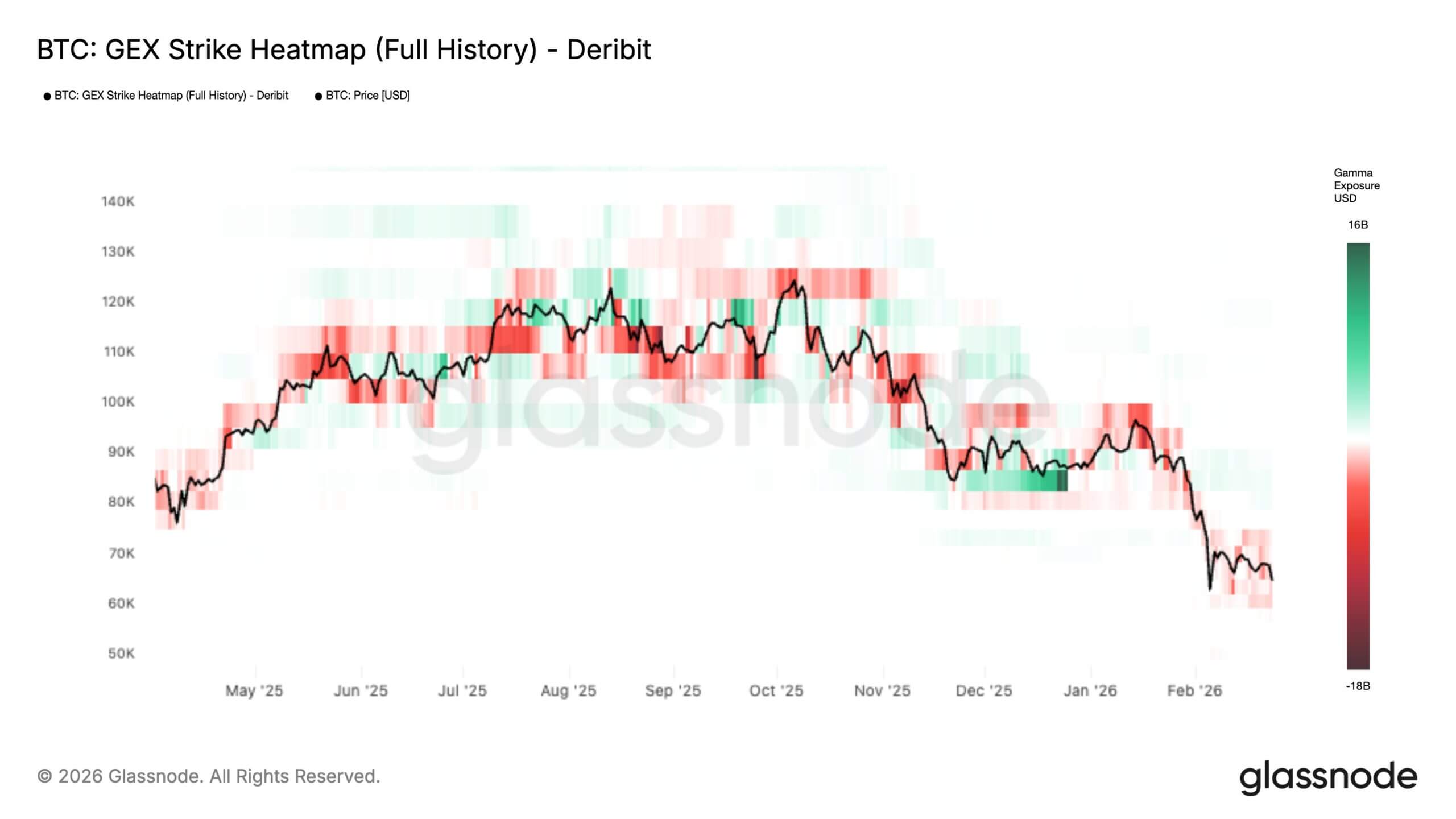
This dynamic matters: When price resides in a short-gamma zone, market makers’ delta hedging tends to follow price movement—not sell into declines or buy into rallies.
The result: Markets can move faster and farther on relatively minor catalysts—larger intraday volatility and higher risk of cascading moves crossing key levels—until Bitcoin hits the next robust “gamma wall,” at which point hedging reverts to buffering mode.
In other words, traders already operate in an environment where “intent” appears everywhere. With thin liquidity and high leverage, nearly any sharp move can look like coordinated action.
The ETF Pipeline Is Harder to Read Than It Appears
The deeper issue raised by the Jane Street controversy is structural—not institutional.
As Jeff Park, Chief Investment Officer at ProCap Financial, argues, the real question isn’t whether any single firm is “exclusively suppressing” Bitcoin—but whether the ETF market structure grants authorized participants discretionary latitude that remains opaque to the public.
This matters because investors commonly interpret ETF disclosure data as clean directional signals—yet that assumption is flawed. Form 13F filings may reveal large long ETF positions, but SEC guidance explicitly excludes short positions and does not net short options against long ones.
In practice, markets may see inventory—but not the futures, options, or other hedging instruments wrapped around it.
This opacity is further exacerbated by how trust is constructed. BlackRock’s IBIT prospectus states the trust may rely on authorized participants for share creation and redemption, and may transact with designated Bitcoin counterparties.
At the time of that filing, those counterparties included JSCT, LLC (an affiliate of Jane Street Capital) and Virtu Financial Singapore (an affiliate of Virtu Americas).
The document also notes the list of authorized participants has expanded to include JPMorgan, Citadel Securities, Citigroup, Goldman Sachs, UBS, and Macquarie—increasing the number of firms with access to the ETF creation/redemption mechanism.
Park’s point is that this structure distorts outsiders’ interpretation of ETF fund flows.
In the old cash model, creating ETF shares required the fund to purchase spot Bitcoin. But after the SEC approved physical creation and redemption for crypto ETPs in July 2025, authorized participants gained greater flexibility in acquiring and delivering underlying assets.
The SEC stated this change would lower product costs and improve efficiency. Yet it also means authorized participants’ exposures can be managed via a broader toolkit and wider counterparty network—making it harder to discern when ETF activity reflects genuine spot demand versus inventory management, basis trading, or hedge construction.
None of this constitutes evidence of abuse. Nor does Park’s argument depend on proving misconduct by Jane Street or any other firm. His sharper point is this: Bitcoin’s ETF era inserts a black box between publicly disclosed positions and the underlying price discovery process.
The start and end of a trade may look like ordinary market-making. What’s hard to observe is the middle: whether hedging occurs via spot, futures, swaps—or some combination thereof—and whether natural arbitrage mechanisms truly transmit genuine spot demand to Bitcoin’s price.
This is precisely why the Jane Street rumor resonated. It functions less as an accusation against a specific participant and more as a signal—revealing just how little the market understands its own plumbing.
Why the U.S. Equity Market Open Feels Like a Selling Zone
The “10 a.m. theory” sounds plausible because—even absent deliberate manipulation—the U.S. equity market open is inherently a volatile window.
This period concentrates cross-asset rebalancing, equity-linked risk adjustments, and derivatives hedging.
In markets where ETF intermediaries hedge inventory using futures or other instruments, futures can pull spot prices—not merely follow them.
When order books are thin, these moves can appear larger—and more conspiratorial—than they actually are. Bloomberg reported earlier this month that Bitcoin market depth remains over 35% lower than October levels—highlighting just how fragile liquidity has become.
Meanwhile, macro analyst Alex Kruger says existing data does not support the notion of a “systematic daily 10 a.m. selloff.”
He notes that since January 1, IBIT’s cumulative return between 10:00–10:30 a.m. ET was +0.9%, while the 10:00–10:15 a.m. ET window saw a -1% decline.
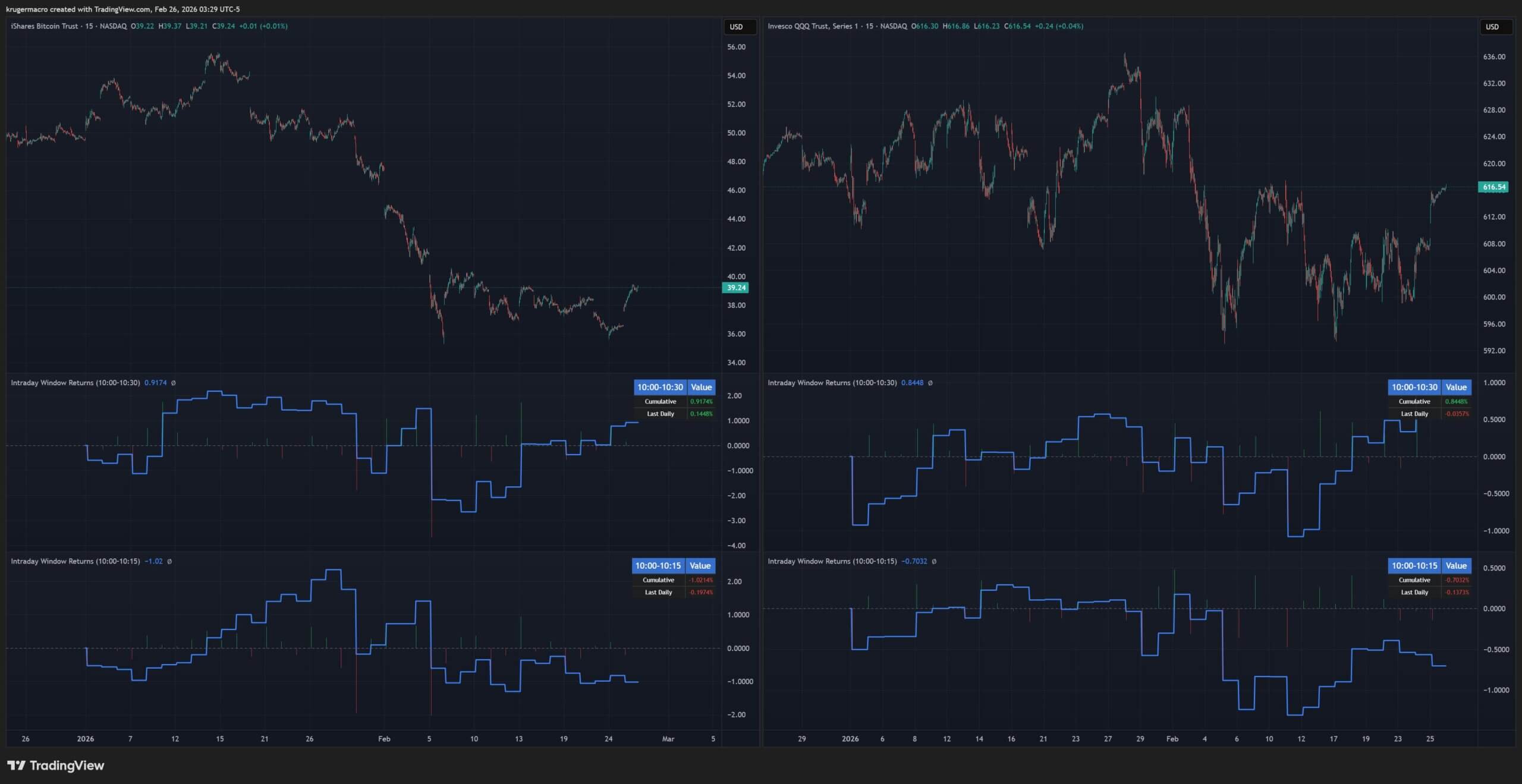
In his view, this is noise—not evidence of a repeatable suppression program.
More importantly, he adds, the performance patterns across both windows closely mirror those of the Nasdaq—indicating broad risk-asset repricing, not Bitcoin-specific activity.
This interpretation aligns more closely with the broader market context than the viral story.
If Bitcoin is increasingly traded via ETFs as a macro risk asset, then recurring Bitcoin weakness during the same intraday window—especially in a thin-liquidity environment—should come as no surprise amid U.S. equity market open pressure.
On-Chain Scarcity Is Clear—Price Discovery Isn’t
Bitcoin’s supply is fixed by protocol. No change in ETF market structure can alter that. What changes is the growing share of demand—and scrutiny—that now flows through these channels.
The Jane Street controversy exposes the rift between these two realities. On-chain scarcity is transparent; the institutional layer built atop it is not.
Investors can see ETF circulating shares and partially disclosed holdings—but cannot see every hedge, every internal net exposure, or every cross-market position behind market makers’ books.
This gap creates room for misinterpretation—and mistrust.
Jane Street has faced scrutiny in other markets, too—offering no relief. In July 2025, India’s securities regulator issued an interim order in a case involving a Jane Street entity related to index manipulation; Reuters later reported SEBI barred the firm from India’s securities markets during its investigation. Jane Street denied wrongdoing in that matter as well.
The Indian case has no connection to Bitcoin—but it explains why, when Jane Street’s name reappears in headlines, crypto traders are primed to imagine the worst.
Still, existing facts do not prove Jane Street executed a deliberate Bitcoin suppression scheme.
They do demonstrate something else: the post-ETF Bitcoin market has become more accessible, more deeply integrated with institutions—and harder for retail investors to interpret.
Join TechFlow official community to stay tuned
Telegram:https://t.me/TechFlowDaily
X (Twitter):https://x.com/TechFlowPost
X (Twitter) EN:https://x.com/BlockFlow_News
 @CryptoSlate