








ZK on Solana? Check out the new primitive ZK Compression introduced by Light Protocol
TechFlow Selected TechFlow Selected
ZK on Solana? Check out the new primitive ZK Compression introduced by Light Protocol
The goal of ZK Compression is to enable native ZK computation on Solana, reducing token and account management fees on Solana by several orders of magnitude.
 Navigating Web3 tides with focused insights
Written by: TechFlow
With limited market liquidity, different projects are seeking ways to survive and thrive.
New projects attract attention with more impressive funding announcements, while established ones pursue narrative and brand upgrades to rejuvenate themselves.
For example, just a few days ago, Light Protocol—an existing privacy protocol on Solana—proposed a new primitive for Solana: ZK Compression.
According to its official Twitter account, ZK Compression aims to enable native ZK computation on Solana, reducing fees for tokens and account management on the network by several orders of magnitude.
The slogan "Scale Anything" is particularly eye-catching. Given that Solana is already known for speed and performance, does it really need ZK-based scaling? And what opportunities could this new concept bring to the project itself?
ZK Compression, Cheaper
ZK Compression can be通俗ly understood as using ZK technology to compress state costs on Solana.
What is state cost?
On Solana, "state" refers to data stored on the blockchain, such as account balances and smart contract storage. Every time new data is added or existing data modified, it occupies storage space and consumes computational resources.
Therefore, "state cost" refers to the fees required to store and maintain this data on the blockchain. In short, it’s about making on-chain data storage and maintenance cheaper.
Wait—Solana is already cheap, isn’t it? Why further reduce these costs?
As shown in comparisons provided by Light Protocol, the cost reduction is significant. After applying ZK Compression, creating contracts and accounts becomes 160x and 5000x cheaper respectively.
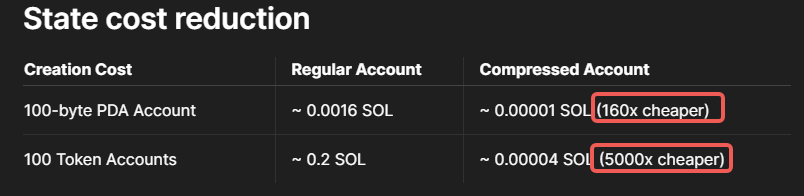
No blockchain dislikes lower usage costs. In the race where “there’s no cheapest, only cheaper,” various L1s and L2s compete fiercely to offer lower costs and faster speeds—and now this competitive trend appears to be spreading within Solana itself.
Storing Only Key Info in On-Chain Accounts—the Key to Lower Costs
But how exactly does Light Protocol achieve this compression? The answer lies in the “State Root.”
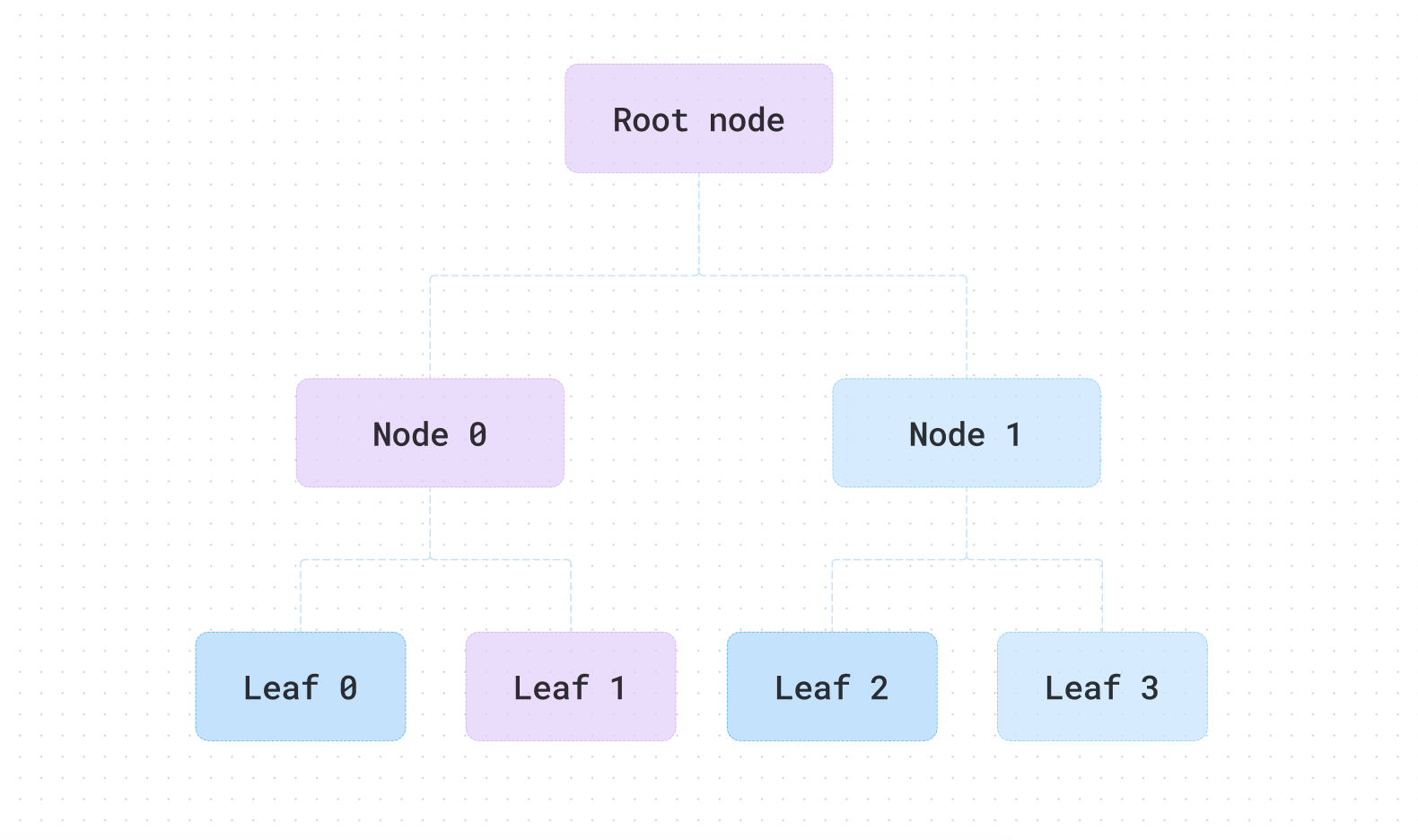
ZK Compression uses a technique called a “State Tree.” Think of the State Tree as a super-compressed folder that bundles all account information and data together, storing only the most critical parts on-chain.
This might sound familiar—it’s similar to the foundational blockchain concept of Merkle Trees, where each node is the hash of its child nodes. Eventually, all data aggregates into one unique top-level hash: the “State Root.”
With this design in mind, understanding how ZK Compression works becomes straightforward:
-
Compress Account Hashes:
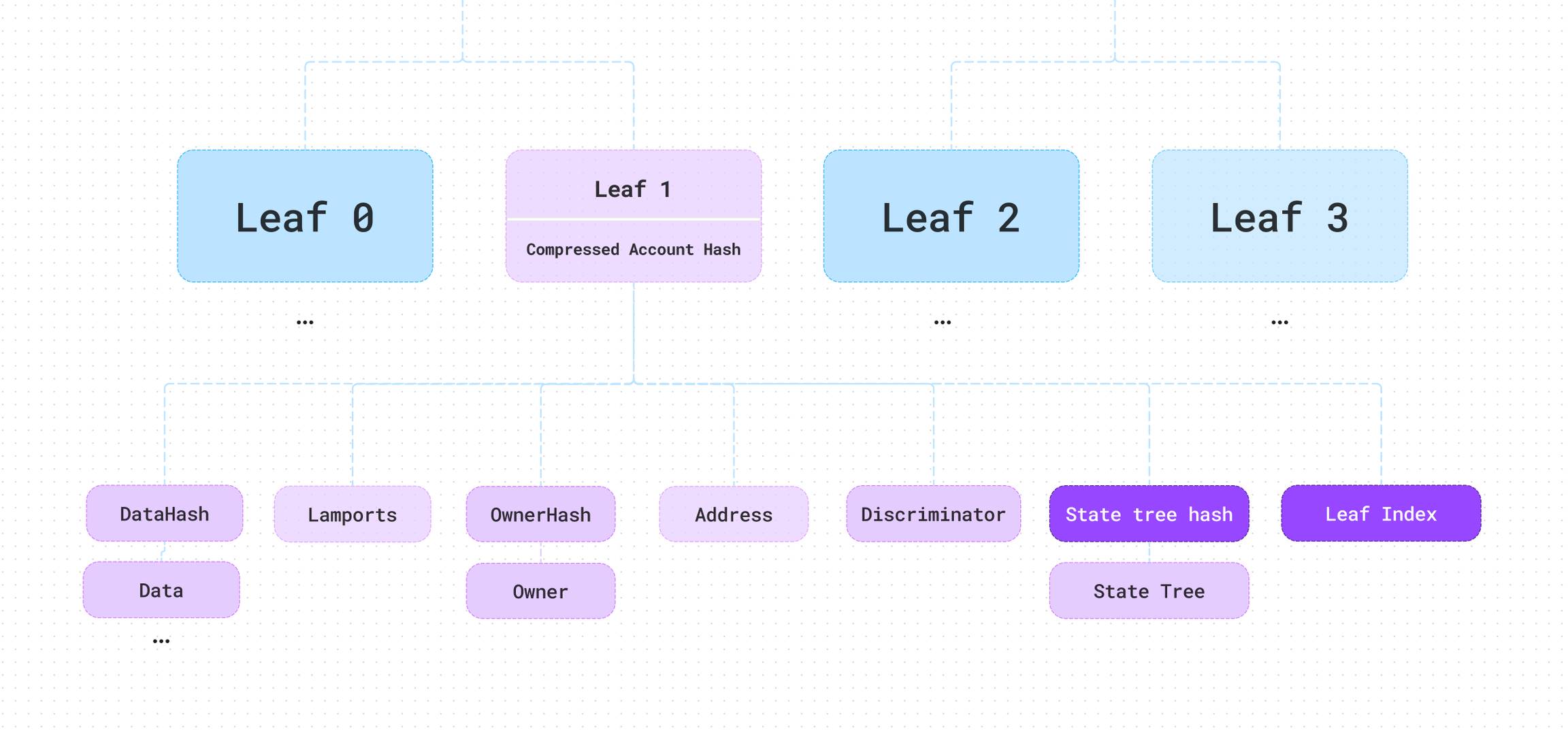
Each account's data is compressed into a hash value, which is stored in the leaf nodes of the state tree. Each account hash contains not only the account’s own information but also its position within the state tree, ensuring uniqueness.
-
On-Chain State Root:
The top-level hash of the state tree—the State Root—is stored on the blockchain. This root acts like a fingerprint of the entire tree; verifying this single value confirms the integrity and authenticity of all data within the tree.
-
Data Storage:
In reality, detailed account data isn't stored directly on the blockchain. Instead, it's kept as call data in Solana’s cheaper ledger space. The blockchain stores only the State Root and some basic metadata, saving storage costs while maintaining data security.
To ensure the integrity of this compressed data, ZK Compression also employs zero-knowledge proofs (ZKPs). This technology allows verification of data authenticity and completeness without revealing the actual content. In other words, even though the data is compressed, we can still be confident it’s accurate and secure.
More importantly, developers don’t need deep expertise in zero-knowledge proof (ZK) technology to use these new features—they simply follow the documentation provided by Light Protocol for integration.
TL;DR: Solana on-chain accounts store only key information, drastically reducing storage costs.
It resembles L2 design principles, but at its core, it’s an optimization of L1 internal storage architecture.
Creating Demand?
Let’s revisit the question: Solana is already fast—does it really need further scalability improvements?
The answer is clearly yes.
Data shows significant growth in Solana’s on-chain wallets, daily transaction volume, and dApp activity. Competition for on-chain space is intensifying, and demands for higher performance and lower costs continue to rise.
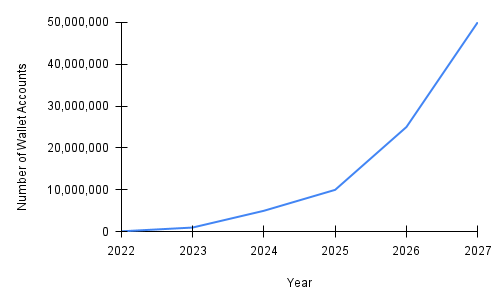
Thus, becoming “cheaper” is a politically correct trend. From a macro perspective, Light Protocol’s proposal of ZK-based state compression comes at a relatively opportune time.
However, given current market conditions, once short-term hype fades and on-chain activity declines, building advanced infrastructure may not yield immediately visible benefits.
Still, when it comes to narratives and primitives, we always look from today toward tomorrow—only forward-looking ideas gain attention and generate excitement.
For Light Protocol itself, developing ZK Compression seems like a natural fit.
According to Rootdata, the project was founded in 2021 with a mission to build fast private payments, encrypted order books, and public-chain games with private states on Solana.
Notably, in 2022, the project announced a $4.5 million seed round led by Polychain—now, working on ZK state compression aligns well with its technical strengths.
For retail investors and alpha hunters, since such projects tend to be B2B-focused, waiting for official testnet participation (if available) is a solid strategy.
Moreover, in the crypto industry, debating whether real demand exists is often a low-ROI exercise. Sometimes, creating demand and leading the narrative is the speculative high ground.
A form of strategic speculation done right.
Join TechFlow official community to stay tuned
Telegram:https://t.me/TechFlowDaily
X (Twitter):https://x.com/TechFlowPost
X (Twitter) EN:https://x.com/BlockFlow_News
 深潮TechFlow






