DJT Fades Away: A Clear Look at the Brief Meme Fiasco
TechFlow Selected TechFlow Selected
DJT Fades Away: A Clear Look at the Brief Meme Fiasco
No funds are held in escrow, no formal bets are placed, and thus there are no final winners or losers.
 Navigating Web3 tides with focused insights
Author: Protos
Translation: TechFlow
Over the past few days, a chaotic saga involving Barron Trump, the Trump family, a media outlet linked to Peter Thiel, Martin Shkreli, Arkham, and numerous other players has taken over Crypto Twitter.
Here’s a breakdown of what happened.
The Spark
It began when Pirate Wires—a “new media” platform associated with Peter Thiel—tweeted that “per some conversations,” Donald Trump’s son, Barron Trump, would be launching an official Donald Trump token. Skepticism and speculation quickly followed, as the only evidence at the time was a contract address casually shared by Pirate Wires’ head, Michael Solana.
With the token having minimal liquidity at launch, the release of the contract address only intensified doubts about the project's legitimacy.
Then Martin Shkreli joined the fray, tweeting that a certain Twitter account “looks like the official one,” again offering no real proof.
Shkreli then created a Space titled “$DJT is real,” reiterating claims that the token was the official Trump-branded meme coin launched by Barron Trump, still without providing any evidence.
The Truth Begins to Emerge
Soon after, many KOL accounts began circulating messages confirming that the official Trump token $DJT was indeed real.
Then Martin Shkreli and Bo Loudon—one of Barron Trump’s closest friends—joined another Space, where Bo Loudon claimed “Barron is indeed partially involved in this project,” but quickly backtracked, saying, “It’s just a rumor—I heard it from another friend.”
Shortly after, Bo Loudon deleted his tweet stating “$DJT is the only real Trump token.”
As public sentiment around $DJT began to sour, Martin Shkreli became increasingly active on Twitter, claiming in a tweet that the Polymarket prediction market bet on whether Donald Trump himself was involved with DJT was “by definition” 100% going to resolve as “yes.”
Soon, Martin Shkreli's tweets and discussions were almost entirely focused on the DJT token.
Feeling Lucky?
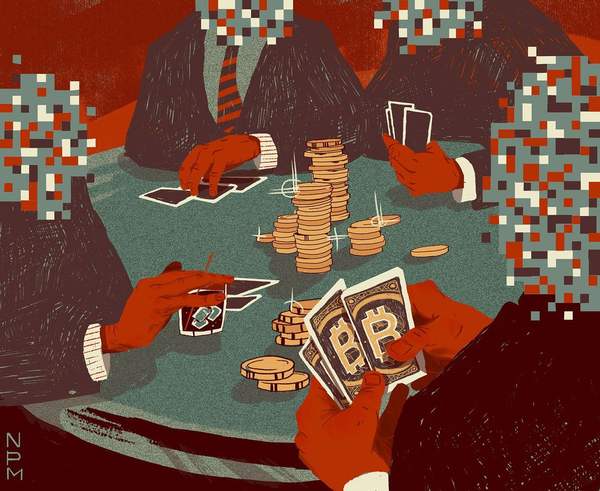
After publicly asserting Trump family involvement in the DJT token, Martin Shkreli issued a challenge, offering to bet any serious player on whether the $DJT meme coin was real. Cryptocurrency investor Alex Wice responded, saying he’d place a $1 million bet that $DJT was fake—if Martin Shkreli could escrow the funds. Shkreli replied: “I accept—how high can you go?”
But before the bet could materialize, a much bigger whale stepped in: legendary trader GCR offered to bet $100 million that Donald Trump had no connection to the token. Eventually, Martin Shkreli accepted, replying, “Your terms.”
Yet despite drawing in well-known crypto figures like Jordan Fish (@cobie), GCR and Martin Shkreli failed to finalize the bet—no funds were escrowed, no formal agreement reached, and thus no winner declared.
All Talk, No Proof
The failed bet didn’t stop Martin Shkreli from declaring victory, celebrating his “win” while claiming GCR had backed out. But as he celebrated this fabricated triumph, on-chain intelligence firm Arkham tweeted they were offering a $150,000 bounty for the first person to definitively identify the creator of the $DJT token.
Within two hours, on-chain investigator ZachXBT filed a claim for the reward—seemingly rattling Martin Shkreli.
According to ZachXBT’s published timeline, shortly after filing the claim, Martin Shkreli panicked and privately messaged ZachXBT admitting he was involved in creating $DJT.
Shkreli then hosted another Space, where he publicly admitted for the first time that he had helped create the $DJT token.
Origin of the Farce
Having failed to secure $100 million, been embarrassingly exposed as the token’s creator, and lost the “Trump family backing” narrative, Martin Shkreli took to Twitter again, spending nearly half a day across multiple Spaces desperately trying to convince anyone who would listen that he really did co-create the token with Barron Trump.
If we take Martin Shkreli's story at face value, here’s how it allegedly unfolded:
Martin Shkreli collaborated with a 17-year-old named Cameron, who has connections to both Bo Loudon and Barron Trump. Allegedly, Cameron reached out to Barron and learned that Barron was interested in launching a meme coin ahead of his older brother, Donald Trump Jr. They then sought help from Martin Shkreli.
Martin Shkreli used Chat-GPT and consulted various influential figures in crypto to design sound financial incentives and mechanisms. He wrote the token’s code, which was ultimately deployed by Barron Trump.
The token remained dormant for a while as the three individuals attempted to pitch the project to major funds and investors. Martin Shkreli said it was difficult to get anyone to commit funding, but claimed Barron told him that Donald Trump Sr. supported the idea.
Martin Shkreli insists he had little personal motive, bought almost no tokens himself, would never exploit teenage boys, and never wanted his involvement revealed.
While parts of this story might be true, it’s hard to believe that Martin Shkreli truly never intended for his role to come to light—especially since he had been vocally defending the token’s legitimacy from the start and repeatedly implying he had insider knowledge.
Martin Shkreli also claimed that Barron Trump himself leaked the project details to Pirate Wires—but acknowledged the leak happened earlier than expected, before the project was ready to launch.
By the end of yesterday, Martin Shkreli was no longer certain whether Barron Trump would publicly confirm his involvement, and was “very hesitant” to claim that Donald Trump Sr. would ever speak about the token.
Join TechFlow official community to stay tuned
Telegram:https://t.me/TechFlowDaily
X (Twitter):https://x.com/TechFlowPost
X (Twitter) EN:https://x.com/BlockFlow_News
 @Protos