Stablecoins: The Trojan Horse of the Crypto Industry
TechFlow Selected TechFlow Selected
Stablecoins: The Trojan Horse of the Crypto Industry
Stablecoins are the first step toward a fully tokenized economy.
 Navigating Web3 tides with focused insights
Author: ZACH RYNES
Translation: TechFlow

The tokenization of every financial asset in the world is inevitable.
While this view may have been controversial in the past, today the crypto industry is no longer standing alone. Larry Fink, co-founder and CEO of BlackRock, now frequently speaks about the inevitability of tokenization and its benefits for the global financial system. As the world’s largest asset manager, BlackRock oversees $10.5 trillion in assets—more than four times the entire cryptocurrency market capitalization ($2.5 trillion).
In other words, an institution managing more capital than the entire crypto market combined is telling the world that the global financial system—and all its assets—will exist on-chain in tokenized form. This signal cannot be ignored.
This tokenized reality is arriving faster than most expect. BlackRock’s BUIDL fund, a tokenized basket of U.S. government securities on the Ethereum mainnet, has already surpassed $460 million, rapidly becoming the largest tokenized fund issued on a public blockchain.

(See 21.co Dune Analytics)
Ironically, just as more of the world's largest financial institutions recognize the value of tokenizing real-world assets (RWAs) and launch tokenized financial products, the general public still largely views crypto as a “speculative casino” with little tangible social value.
Much like a hangover after a night of heavy drinking, the 2021 crypto boom ultimately collapsed with the implosion of a $40 billion Ponzi scheme, the bankruptcy of nearly every retail-facing lending platform, and the widely reported collapse of the FTX fraud case. Tens of billions in capital vanished overnight, never to return.
In 2024, spot Bitcoin ETFs were mandated by U.S. courts, followed by approval of spot Ether ETFs, and crypto became a bipartisan topic during the election cycle—bringing a breath of fresh air. Yet even so, negative perceptions of crypto persist.
So, what can bridge the information asymmetry between institutions and retail investors regarding asset tokenization?
Stablecoins might be the answer.
Digital Dollars: The Intuitive Pitch for Crypto
Crypto is an extremely difficult concept to simply explain to the average person. The industry spans cryptography, distributed systems, game theory, economics, and political science. Most people don’t truly understand how the financial system works (nor do they need to), so the problems crypto aims to solve are mostly foreign to them.
Imagine trying to explain the internet to someone who has never used a computer.
As such, there’s no universal explanation for crypto. Instead, curious newcomers are often bombarded with monologues about the historical failures of central banks and fiat devaluation, along with a near-lethal dose of jargon—understandable only to those already captivated by crypto.
But stablecoins are different—people can actually understand them.
Stablecoins are powerful because they take a concept people already know and interact with daily—the U.S. dollar—and layer on something unfamiliar: blockchain. This creates a curiosity gap while making the core differences and advantages of crypto far more apparent, since people have a mental benchmark to compare against.

The existence of stablecoins sidesteps the existential “what is money?” debate that inevitably arises when explaining crypto-native assets like Bitcoin and its derivatives, instead delivering a clear message: Crypto is the best way to represent assets.
In practice, stablecoins allow anyone with internet access to send U.S. dollars to anyone else in the world instantly—with transactions settling in seconds and fees under a penny. No rent-seeking intermediaries, no bank account required, no oppressive capital controls, no multi-day settlement delays, no nonsense.
For those living in countries with hyperinflated local currencies, who’ve tried cross-border remittances, or simply want to conduct financial transactions on weekends or holidays, the benefits of stablecoins are immediately obvious.
Once you regularly transact in dollars via stablecoin format (digital dollars), returning to traditional banking feels absurdly outdated—like going from gigabit fiber back to a 56K dial-up connection.

Money shouldn’t have business hours—stablecoins are online 24/7/365.
In terms of market demand, the data speaks for itself. Stablecoins have objectively achieved product-market fit, consistently breaking historical highs across key metrics—monthly active users, transaction volume, and circulating supply.

(See Visa Onchain Analytics Dashboard)
By comparison, stablecoins are now the 16th-largest holder of U.S. Treasuries, with ~$145 billion in holdings—surpassing Norway, Saudi Arabia, and South Korea. As one of the largest and fastest-growing buyers of U.S. government debt, stablecoins reinforce the global dominance of the U.S. dollar—a fact that strengthens the long-term case for increasing regulatory support for stablecoins in the United States.

Fintech Meets Stablecoins
Some may assume stablecoins aim to replace existing fintech payment apps, but the opposite is true. By issuing their own stablecoins, existing fintech companies can benefit from the cost and speed advantages of blockchain settlement while eliminating fragmentation across the payments landscape.
For example, you can't send funds from a Venmo wallet to a Cash App wallet—a clearly absurd limitation. Stablecoins, however, can be transferred between any two parties regardless of wallet software. The improvement in user experience is obvious and will soon become consumer expectation.
Moreover, due to their openness and programmability, stablecoins issued by fintech firms can seamlessly integrate into existing DeFi protocols and on-chain financial applications. This positions established fintech companies as ideal interface layers for consumers who want to interact with on-chain apps—such as earning yield—while still receiving dedicated customer support.
Like tokenized assets, this future is approaching faster than most realize.
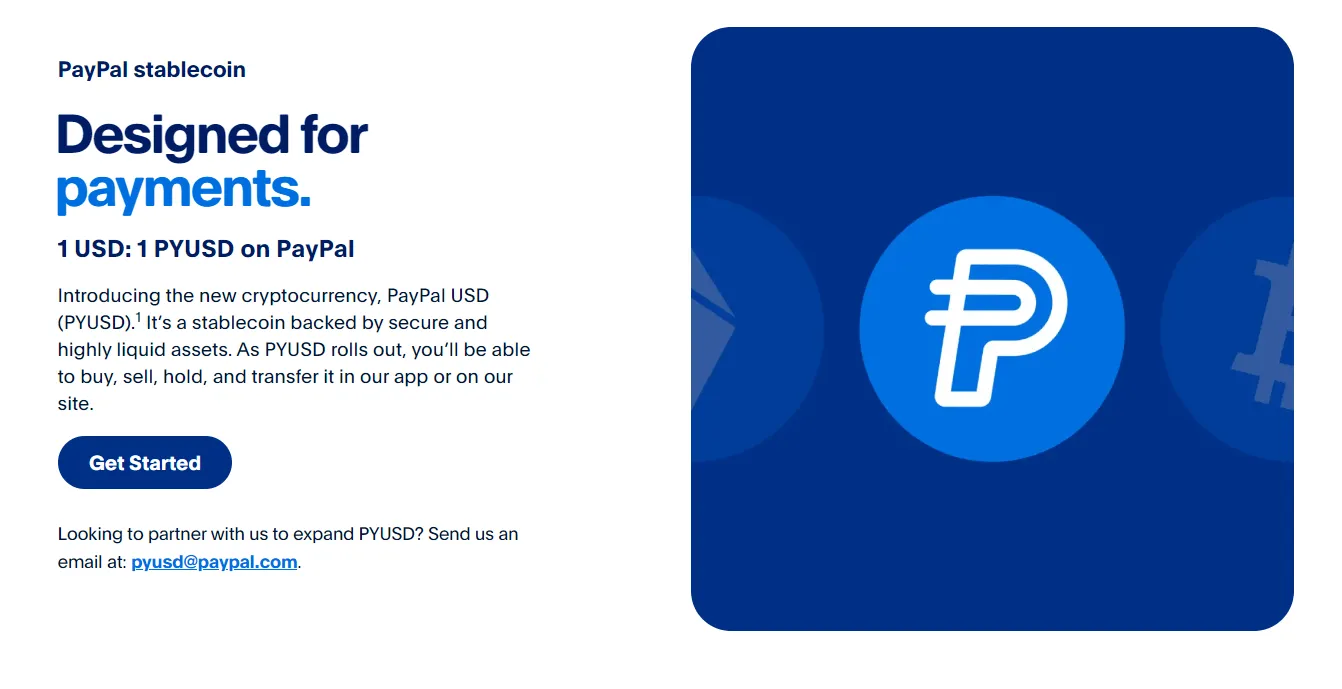
Consider PayPal USD (PYUSD)—a $400+ million stablecoin launched by one of the world’s largest payment processors, now available across multiple public blockchains. PYUSD is already integrated into the broader DeFi economy, including decentralized exchanges and lending platforms.
According to PayPal, “PayPal USD is designed to reduce friction in payments experienced in virtual environments, enable fast transfers of value to support friends and family, send remittances or make international payments, direct payments to developers and creators, and facilitate the continued expansion of the world’s largest brands into digital assets.”
Beyond fintech firms directly issuing stablecoins, we’re also seeing established payment networks like Visa publish comprehensive research on improving stablecoin payments, including using credit cards to pay gas fees, and actively running live pilots enabling Visa card transactions to settle in Circle’s USDC.
Cuy Sheffield, Visa’s Head of Crypto, stated: “By leveraging stablecoins like USDC and global blockchain networks such as Solana and Ethereum, we’re helping increase the speed of cross-border settlements and offering our clients a modern option to easily send or receive funds from Visa’s vault.”
In short, stablecoins are here to stay. They are becoming increasingly embedded within the existing payments ecosystem, amplifying their utility by making it easier for consumers to spend them and merchants to accept them.
Toward On-Chain Finance
With this context in mind, my recommendation for introducing someone to crypto is simple: help them download a crypto mobile wallet (e.g., Coinbase Wallet), generate a private key, and give them some stablecoins to transact with.
Although today’s crypto user experience is far from perfect, even in its current state, stablecoin transactions are worlds apart from traditional international wire transfers. Technical complexity will continue to be abstracted away, making the core advantages of crypto even more apparent. This is where the Trojan horse effect kicks in. Once someone personally experiences the tangible benefits of crypto, they’ll begin demanding that every aspect of finance work like stablecoins—globally accessible, fully transparent, minimally extractive, always online, and resistant to manipulation.
It starts with better ways to move dollars—and leads toward transforming the global financial system into an on-chain, smart-contract-driven, tokenized-asset-based reality.

The possibilities of a fully on-chain financial system are endless.
-
Payment processing solutions allowing merchants to accept any fungible or non-fungible asset as payment while receiving only their preferred currency (e.g., paying for groceries with stocks, Bitcoin, or tokenized digital art, with the merchant receiving USD stablecoins).
-
The ability to support online creators, independent publishers, or social causes through micropayments and real-time payment streams that can be transparently tracked end-to-end (e.g., funding cancer research via a payment stream of $0.000004 per second—roughly $10 per month—to an organization with an auditable on-chain budget).
-
Autonomous robotaxi networks that collect their own revenue and automatically pay for electricity, tolls, mechanical repairs, and upgrades (any service fully automated via AI will require an on-chain economic system).
-
Truly global capital markets where anyone with internet access can gain the same investment opportunities and returns as the world’s largest and wealthiest institutions.
These are just high-level concepts. Just as it was nearly impossible in the early 1990s to accurately predict which internet applications would scale globally, the same holds true for building an on-chain financial system.
Ultimately, stablecoins are the first step toward a fully tokenized economy. They are not only the first crypto application to achieve genuine product-market fit but also serve as an essential tool for clearly and concisely conveying the core value proposition of crypto and tokenization to newcomers.
So next time someone asks you what crypto is, skip the long-winded explanation—just point them to digital dollars.
Join TechFlow official community to stay tuned
Telegram:https://t.me/TechFlowDaily
X (Twitter):https://x.com/TechFlowPost
X (Twitter) EN:https://x.com/BlockFlow_News
 @chainlink