With LayerZero's token launch approaching, can Holograph emerge as the leading narrative for "omnichain"?
TechFlow Selected TechFlow Selected
With LayerZero's token launch approaching, can Holograph emerge as the leading narrative for "omnichain"?
Based on LayerZero and targeting the broader EVM ecosystem, Holograph is one of the highest certainties in this year's "multi-chain EVM" convergence narrative.
 Navigating Web3 tides with focused insights
"Fragmentation" and "disconnectedness" are likely the first impressions many people have of Ethereum's L2 ecosystem today.
As the number of L2 ecosystems and other EVM-compatible projects in the market grows rapidly, the Ethereum ecosystem is becoming increasingly fragmented—especially for users. When performing actual cross-chain operations, choosing among various bridges with different advantages to achieve the lowest cost and optimal experience has become a significant headache.
From this perspective, Holograph’s omnichain token architecture—which enables identical contract addresses and token IDs across all EVM environments, supporting all forms of tokens (FTs and NFTs) within the broader EVM ecosystem—is worth highlighting and may represent one of the most certain directions for the future of the omnichain EVM landscape.
This article aims to focus on the rising "appchain"赛道, combining new exploratory approaches from players like Bifrost, to uncover the deeper signals about how the next phase of appchains might unfold.
Holograph: An Omnichain Tokenization Protocol for the Broader EVM Ecosystem
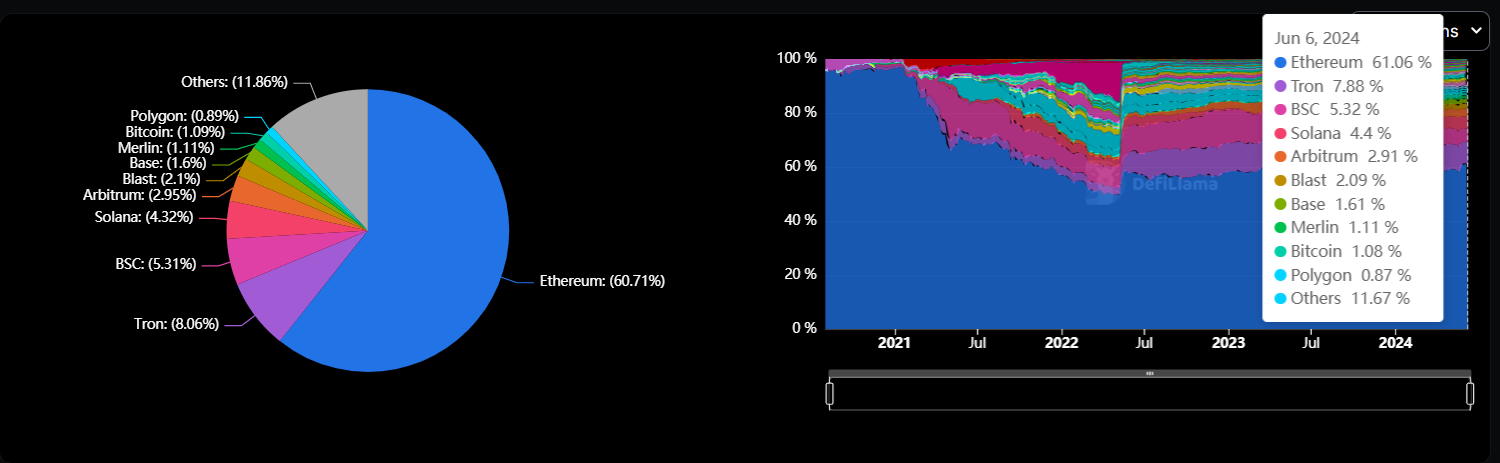
According to DeFiLlama data, as of June 8, 2024, the total value locked (TVL) in the global DeFi ecosystem exceeded $106 billion, with Ethereum, BNB Chain, Arbitrum, and other EVM-compatible networks attracting over 70% of capital inflows, claiming the largest share.
At the same time, within the broader EVM ecosystem, traffic originally concentrated on Ethereum is being gradually divided, forming isolated value silos. As the number of EVM-compatible public chains and L2s continues to grow, cross-chain functionality will remain a critical need, and liquidity fragmentation will further intensify.
Holograph, an omnichain tokenization protocol built on LayerZero, has a simple core vision: to enable asset issuers to mint native, composable omnichain tokens across the entire EVM ecosystem.
Unlike traditional wrapped token solutions, Holograph’s key feature is that it allows asset issuers to use a single, consistent contract address and token ID across all EVM blockchains, making them definitive identifiers for the token while ensuring unified liquidity for the corresponding omnichain token across different EVM-compatible blockchains.
This is primarily enabled by Holograph’s genesis contract deployment architecture—all subsequent contracts are derived from it, maintaining consistency regardless of where they are deployed, thus allowing the protocol to support all existing and future EVM chains.
For example, if you are an asset issuer wanting to launch an omnichain asset called LIZI, you can directly use Holograph’s universal token framework to issue a single LIZI token across all EVM-compatible chains including Ethereum, BNB Chain, Arbitrum, Optimism, and Base.
LIZI would have a uniform contract address and ID name across all chains—not only on current EVM chains but also on any new L2 or EVM-compatible chain launched in the future, enabling immediate deployment with consistent naming and contract addresses.
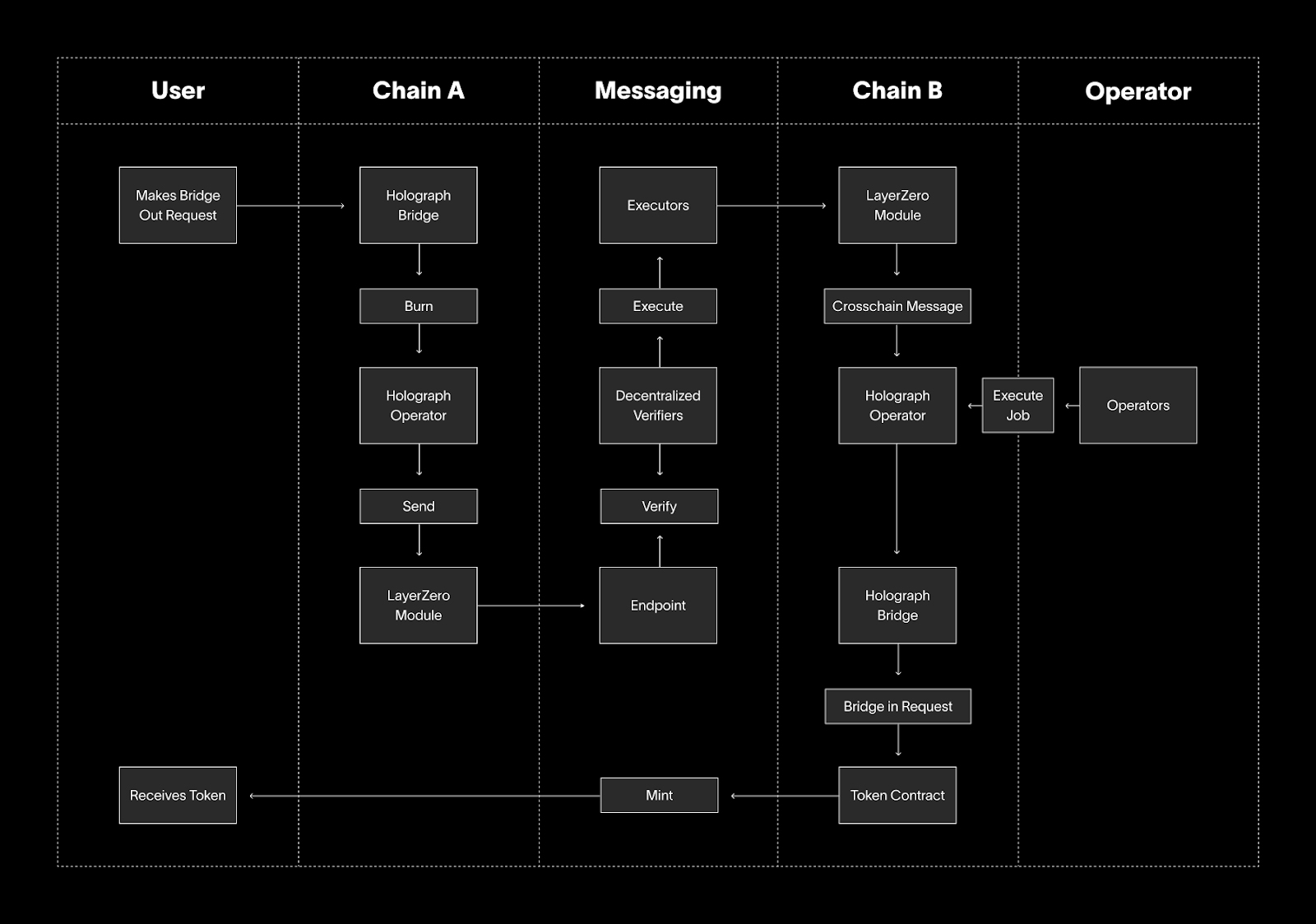
Meanwhile, tokens on different chains can be flexibly transferred at any time, with the total supply remaining constant across the network and balances updating instantly. The underlying mechanism is straightforward:
During cross-chain transfers, LIZI tokens are first burned on the source chain; then, a message is sent via the messaging protocol to the destination chain, followed by minting the same amount of tokens back to the identical contract address. This unifies liquidity, eliminates slippage, and maintains interchangeability between blockchains.
In short, these tokens maintain the same contract address and token ID across all EVM environments, enabling seamless transfers across different blockchains.
Omnichain Token Architecture for the Broader EVM Ecosystem
Holograph’s omnichain token architecture for the broader EVM ecosystem is a comprehensive asset issuance solution. At its foundation, the consensus layer includes all existing EVM-compatible networks such as Ethereum, Polygon, Avalanche, Optimism, and Base, and can instantly integrate any newly launched EVM networks in the future.
On top of this, cross-chain messaging is enabled via LayerZero, forming the basis for Holograph’s tokenized liquidity layer, which further provides asset issuers and users with a full suite of development tools including the Holograph SDK and Holograph CLI.
This means that any asset issuer can deploy their main protocol on Ethereum and then derive identical token contracts across other EVM chains, achieving seamless omnichain expansion.
Omnichain tokens minted via Holograph also benefit from unified liquidity—when users perform cross-chain operations, remote messaging through LayerZero synchronizes burn-and-mint actions between the main protocol and other networks, avoiding fragmented liquidity and eliminating the sense of disconnection caused by liquidity being trapped on specific chains.
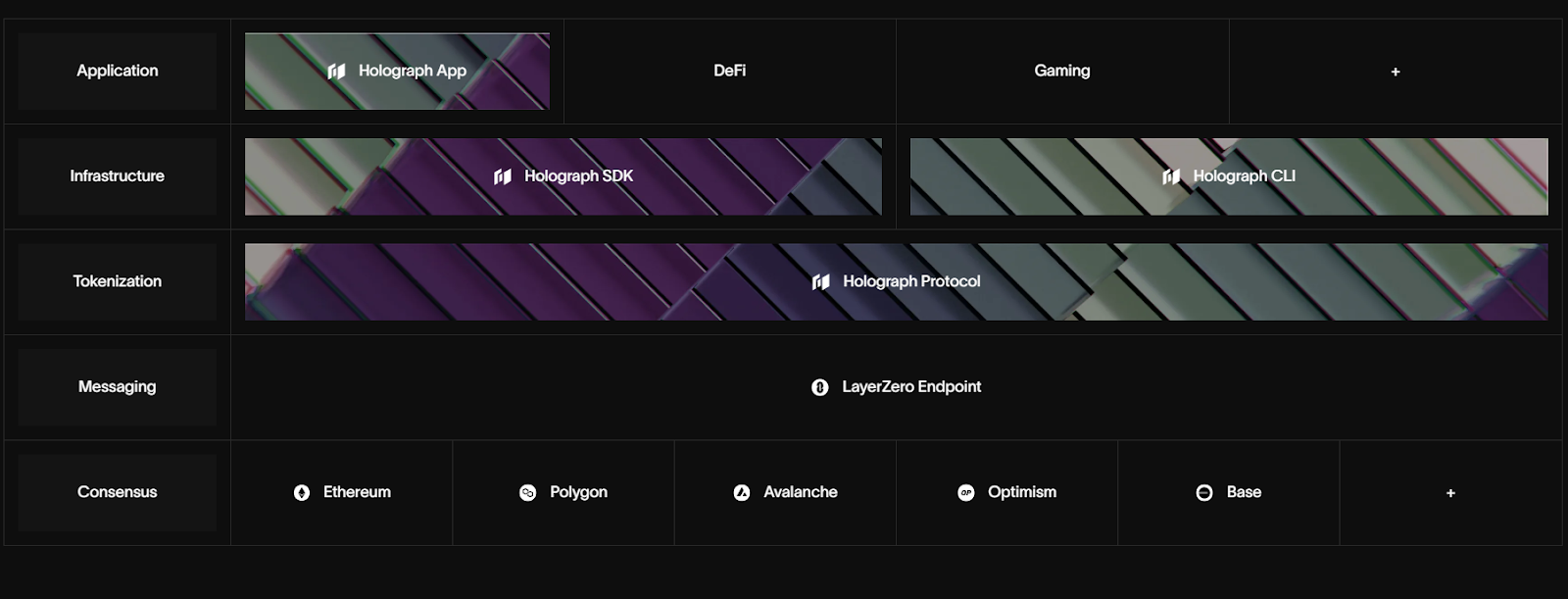
Additionally, whether for projects that have already issued single-chain tokens or for those planning to launch omnichain tokens in the future, Holograph offers customizable infrastructure for creating, deploying, and transferring omnichain tokens:
- Create standard omnichain tokens. Deploy natively composable fungible tokens (FTs) and non-fungible tokens (NFTs), which are instantly burned on the source chain and simultaneously minted on the target chain;
- Create custom omnichain tokens. Deploy entirely new, customizable omnichain tokens capable of unique interoperability across multiple EVM execution environments;
- Convert existing tokens into omnichain tokens. Lock existing tokens on the source chain and mint omnichain versions on the target chain, effectively upgrading them to omnichain status;
Moreover, as mentioned earlier, Holograph supports not only standard FTs but also allows issuers to deploy NFTs in omnichain form, expanding use cases into gaming, RWA, and meme sectors, enabling creators to build any type of programmable asset.
- Traditional financial institutions could directly use Holograph to issue tokenized products such as stablecoins, government bonds, and real estate tokens across major chains like Ethereum and Polygon, enabling unified liquidity management;
- Game projects can issue in-game assets using omnichain architecture across multiple chains, allowing users to freely switch between blockchain networks;
- Digital creators can choose optimal networks to publish NFT artworks, boosting sales;
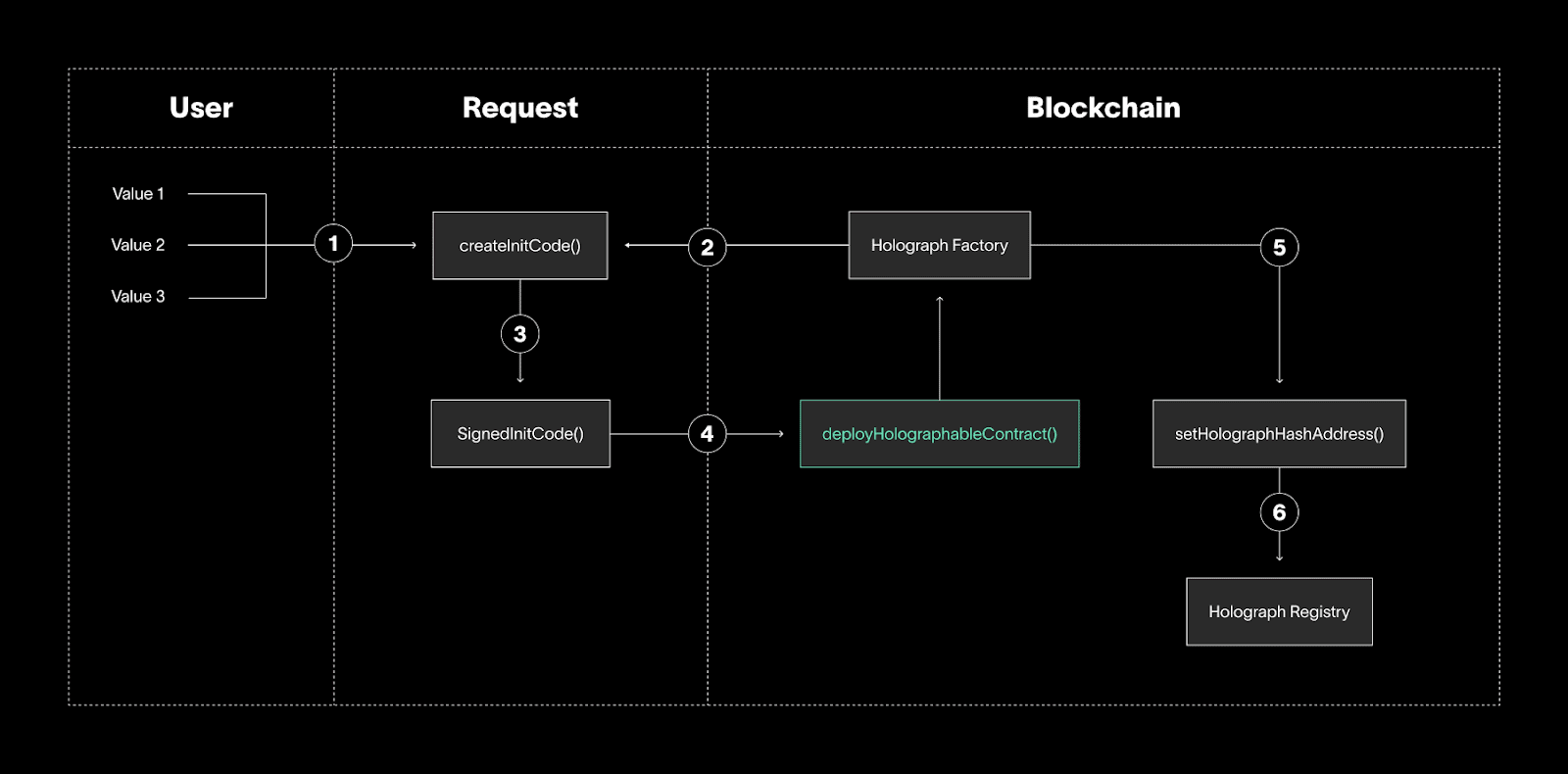
From a user standpoint, the “cross-chain” process becomes nearly imperceptible—you can seamlessly and instantly transfer assets across different chains without awareness of the underlying complexity.
And this process isn’t limited to one-in-one-out transfers—it supports multi-chain input and single-chain output, enabling aggregation of funds from multiple chains before cross-chain transfer, mimicking the experience of centralized exchanges.
Funding and Metrics
In April, Holograph completed a new strategic funding round of $3 million, led by Mechanism Capital and Selini Capital, with participation from Hal Press’s Northrock Capital, Arca, Courtside Ventures, and Hartmann Capital, bringing Holograph’s total funding to $11 million.
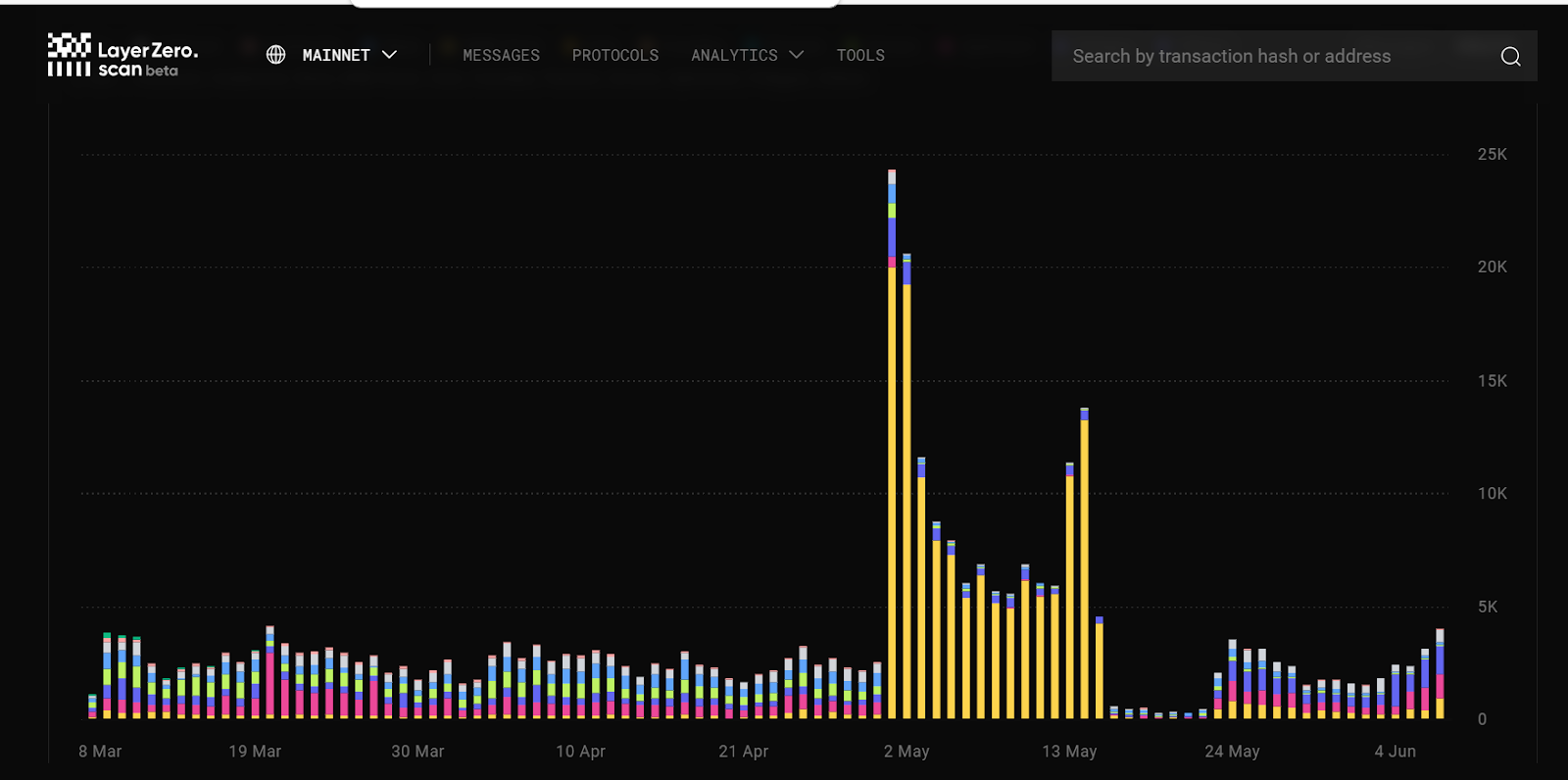
Since its launch in early 2023, Holograph has generated over 14 million transactions, minted more than 10 million tokens via LayerZero, and sent over 2.6 million messages. At the time of writing, Holograph has become one of the leading omnichain applications in the LayerZero ecosystem.
Tokenomics
On May 10, Holograph launched its native token HLG and revealed its tokenomics, with a total supply of 10 billion and an initial circulating supply of 1.525 billion (15.25%).
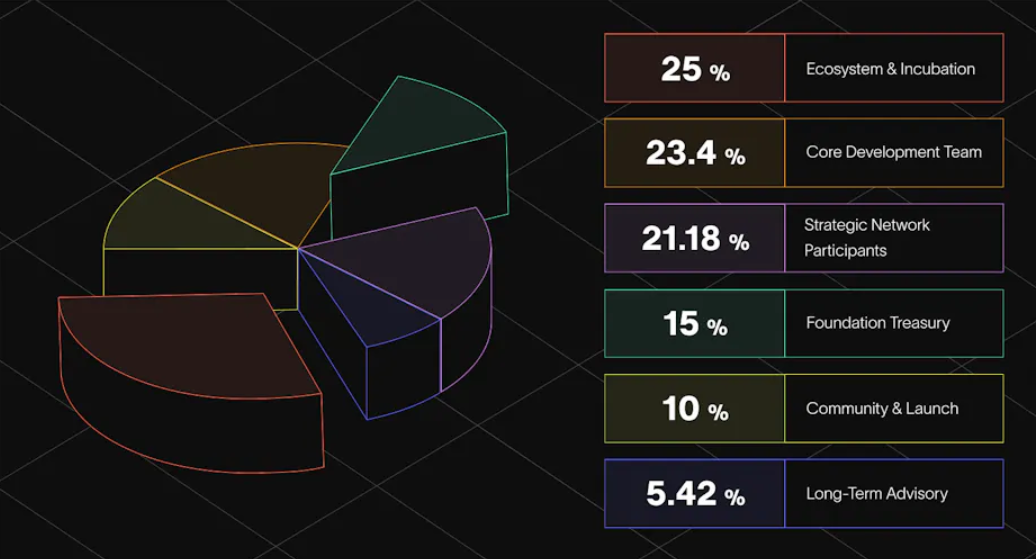
The token distribution is divided into six parts: 25% allocated to the ecosystem and incubator, 23.4% to the core development team, 21.18% to strategic network participants, 15% to the foundation treasury, 10% to community and Launch, and 5.42% to long-term advisors.
Meanwhile, the overall HLG distribution period spans 48 months, lasting until May 2028. Notably, the circulating supply of HLG will not exceed 50% before 2026, meaning new sell-side pressure on HLG will remain relatively stable over the next year and a half.
According to CoinGecko, as of June 8, HLG’s circulating market cap was only $28 million—approximately 25% of Stargate (STG), a top cross-chain protocol in the LayerZero ecosystem. From this angle, Holograph—as a sub-project within the ecosystem—may capture direct spillover benefits once LayerZero launches its own token.
Summary
For the Web3 world, the broader EVM ecosystem not only dominates the current landscape but will likely remain the central axis of innovation in the foreseeable future.
Therefore, enabling seamless and secure asset transfers for products and users within the broader EVM ecosystem—particularly ensuring fast cross-chain speeds, sufficient liquidity, one-click interoperability across chains, and high security—is key to differentiating from the vast array of competing cross-chain solutions.
This is precisely Holograph’s vision: striving to become the preferred trust-minimized technology provider for the broader EVM ecosystem, simplifying the development of omnichain applications and building essential interoperability infrastructure for the future multichain world.
From this perspective, Holograph represents one of the most direct implementations of the omnichain model compared to other omnichain/cross-chain products, potentially serving as a pivotal step toward breaking liquidity fragmentation and truly delivering a user-centric experience in the broader EVM ecosystem.
The narrative is compelling, and the future promising. Whether the “broader EVM omnichain narrative” will finally come into its own this year remains to be seen.
Join TechFlow official community to stay tuned
Telegram:https://t.me/TechFlowDaily
X (Twitter):https://x.com/TechFlowPost
X (Twitter) EN:https://x.com/BlockFlow_News