









"New Luna": How Berachain Is Driving the Next Wave of DeFi?
TechFlow Selected TechFlow Selected
"New Luna": How Berachain Is Driving the Next Wave of DeFi?
The entire flywheel围绕 Berachain will continue to spin.
 Navigating Web3 tides with focused insights
Author: hitesh.eth
Translation: Luccy, BlockBeats
Editor's Note:
Berachain is an EVM-compatible Layer 1 blockchain built on the Cosmos SDK and secured by a Proof of Liquidity consensus mechanism. Its tokenomics introduce a three-token system for the Bera network, consisting of BERA (the network gas token), HONEY (an algorithmic stablecoin pegged to USDC), and BGT (a non-transferable governance token).
Currently, Berachain’s Discord community has over 50,000 members, with more than 100 teams building new and existing protocols on its recently launched development network (Devnet).
Crypto researcher @hmalviya9 analyzes Berachain’s mechanisms and token economics through the lens of DeFi liquidity.
Berachain is a mysterious project—most crypto Twitter users have no idea what they're actually trying to build. This article expresses my genuine thoughts about Berachain.
DeFi faces an endless liquidity problem. New protocols often struggle to attract liquidity, causing many promising infrastructure projects to fail and eventually become ghost towns.
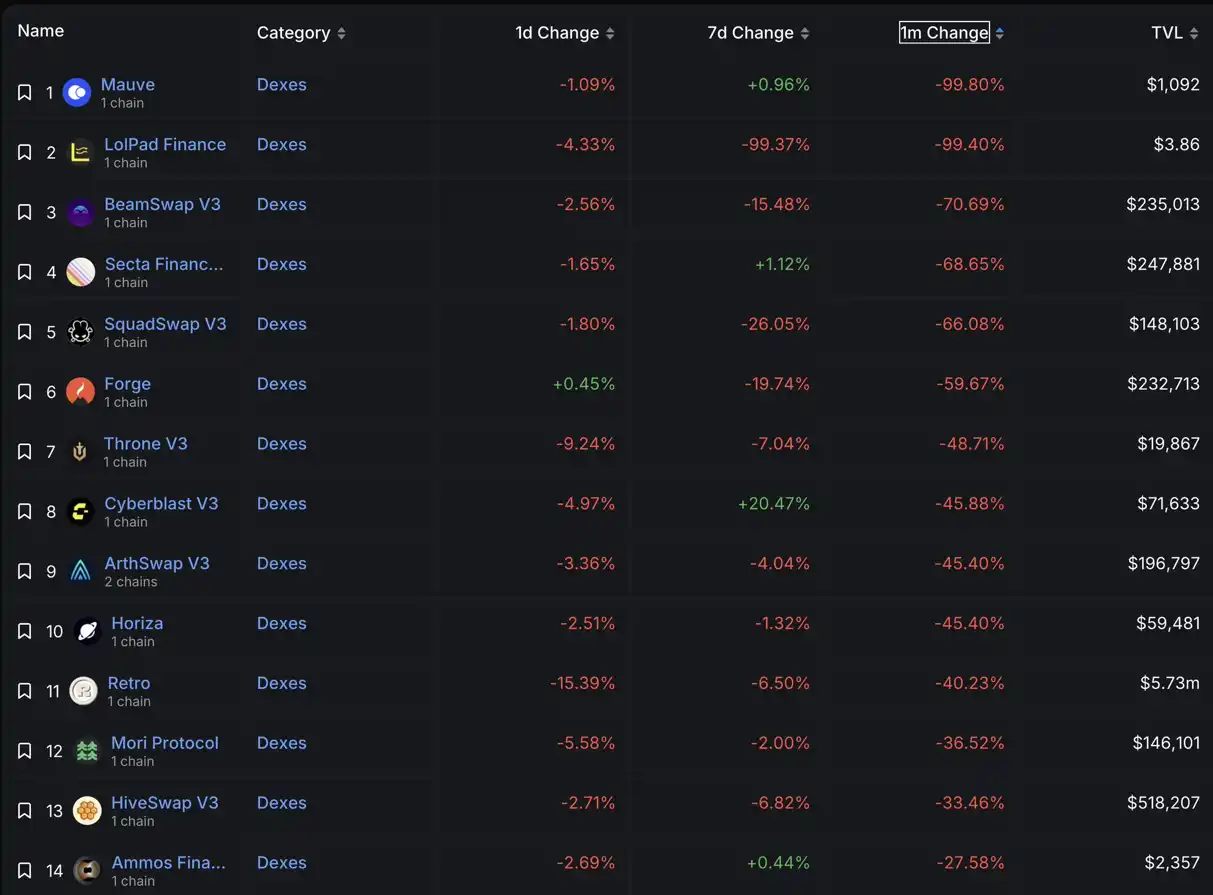
The liquidity issue in DeFi closely resembles the economic security problem. Before EigenLayer, it was extremely difficult for new Web3 service protocols to obtain economic security. Now it's easier because EigenLayer created a coordination layer that connects ETH validators with Web3 service protocols.

Now, ETH validators can directly provide economic security for new Web3 services via EigenLayer, allowing projects to focus solely on innovation and product design—the security aspect is largely solved.
Regarding DeFi liquidity, imagine if we could find a way for new DeFi apps to receive liquidity directly from a staked token pool managed by validators—and as a staker, you’d earn rewards from token inflation, trading fees, swap fees, and block revenue. Simply put, this would be like getting a 4x boost in rewards.
That would be insane, right?
As a staker, I wouldn’t say no to such a reward multiplier. And as a DeFi project owner, I’d gladly integrate my application into a blockchain infrastructure that can directly source liquidity through validators. Berachain is the missing infrastructure needed to solve DeFi’s liquidity problem.
They’ve built a consensus mechanism called Proof of Liquidity, where stakers delegate their staked tokens to validators and earn rewards—but can only retrieve their staked tokens after providing liquidity in supported asset pools.
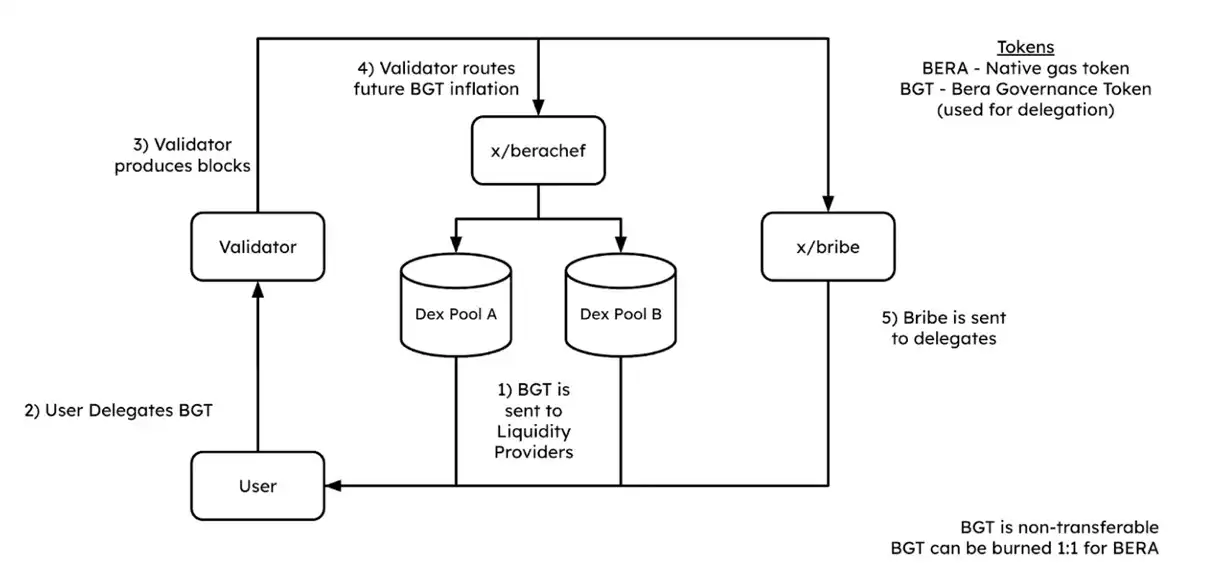
Berachain has three tokens:
· BGT (staking and governance token)
· BERA (gas fee token)
· HONEY (stablecoin pegged to USDC)
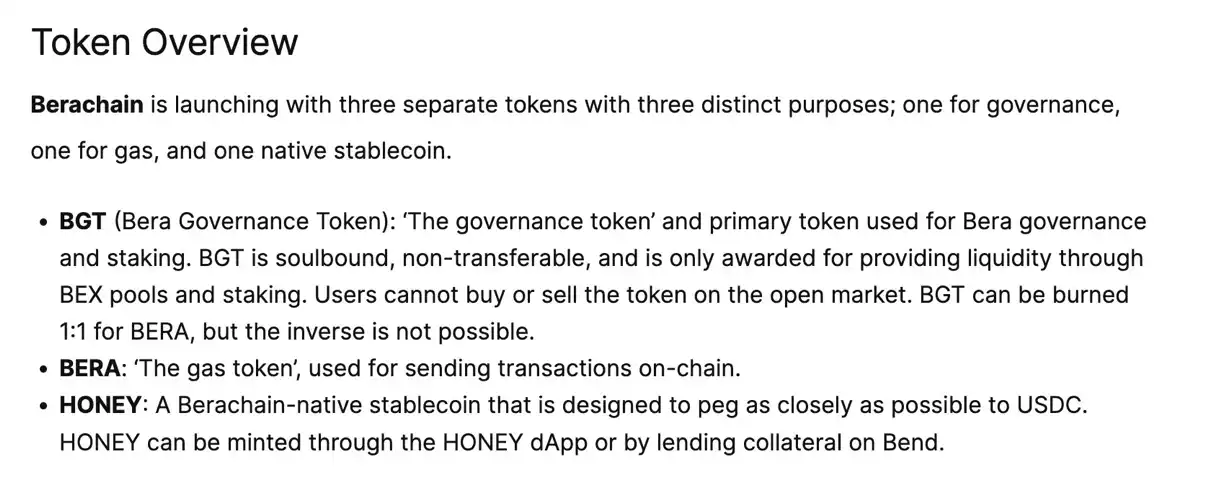
BGT serves as both a staking and governance token within the Berachain ecosystem. You cannot mint BGT, but you can use BGT to redeem BERA.
BGT is a non-transferable token, similar to a Soulbound Token (SBT). The only way to earn BGT is by providing liquidity in native DeFi applications within the Berachain ecosystem. So far, they have three native DeFi apps:
· BEX – An AMM-based decentralized exchange similar to Uniswap
· BEND – A lending protocol similar to Aave
· BERPS – A perpetuals exchange similar to GMX
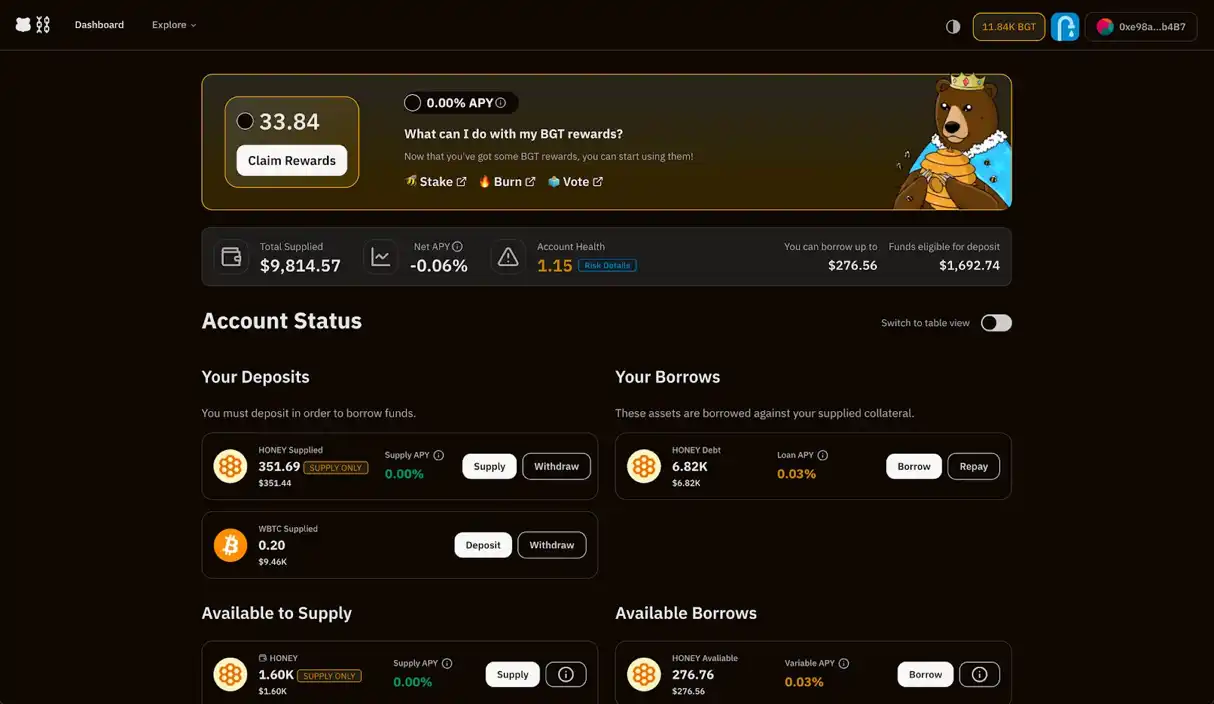
To qualify for BGT emissions, you must provide liquidity in any supported assets within these dApps. Governance will determine how much BGT is distributed to which liquidity pools, meaning DAO members play a crucial role in shaping these decisions.
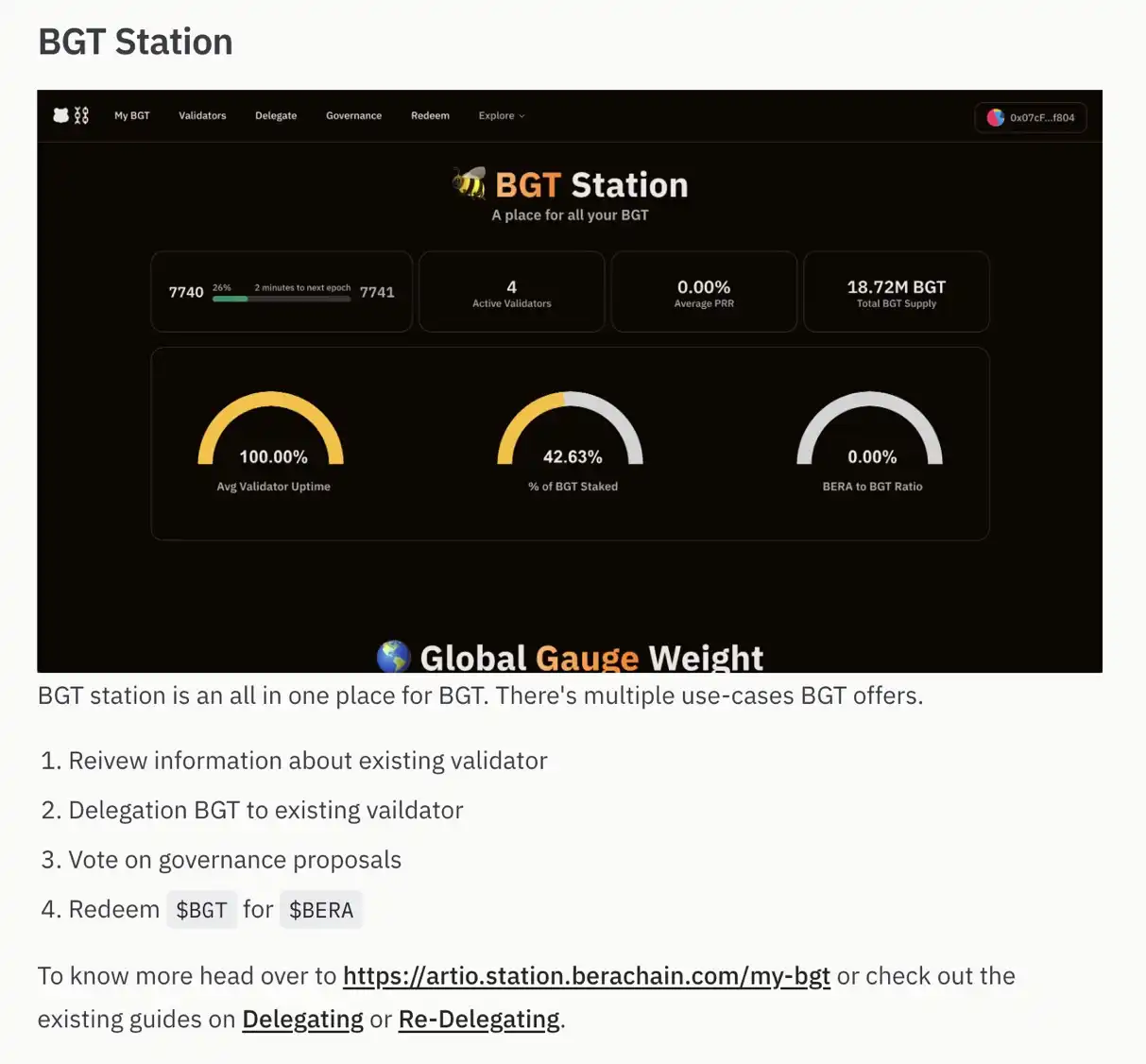
Validators can also bribe you to approve their desired token inflation allocations for specific liquidity pools. Once you stake your BGT, you become part of governance, earning bribes while also receiving token inflation rewards and capturing fees.
As a staker, you may earn fee rewards from BEX, BPerps, BEND, and block revenue. Your base token inflation reward receives a 4x multiplier, and you also get a say in determining what proportion of token inflation goes to each liquidity pool.
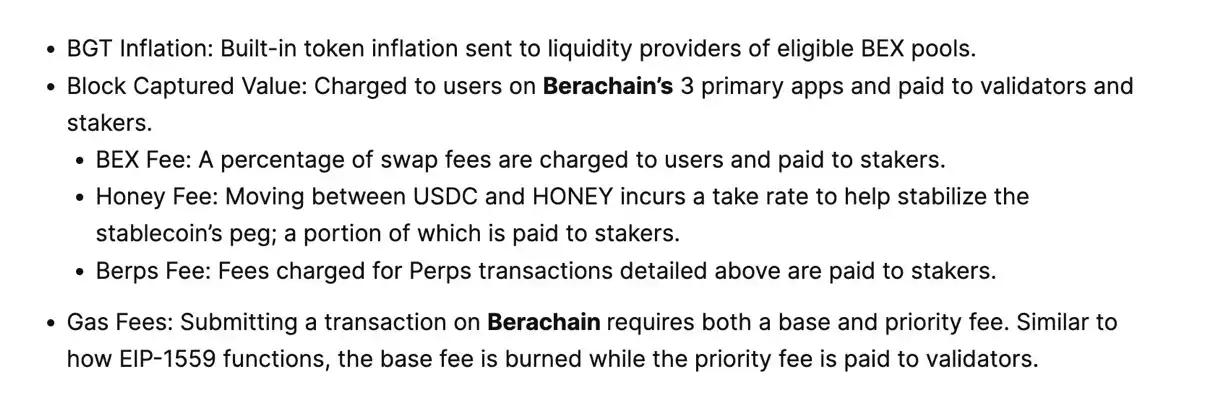
Transaction fees on Berachain are paid in BERA. Berachain burns 100% of transaction fees and passes priority fees to validators, similar to Ethereum and Polygon.
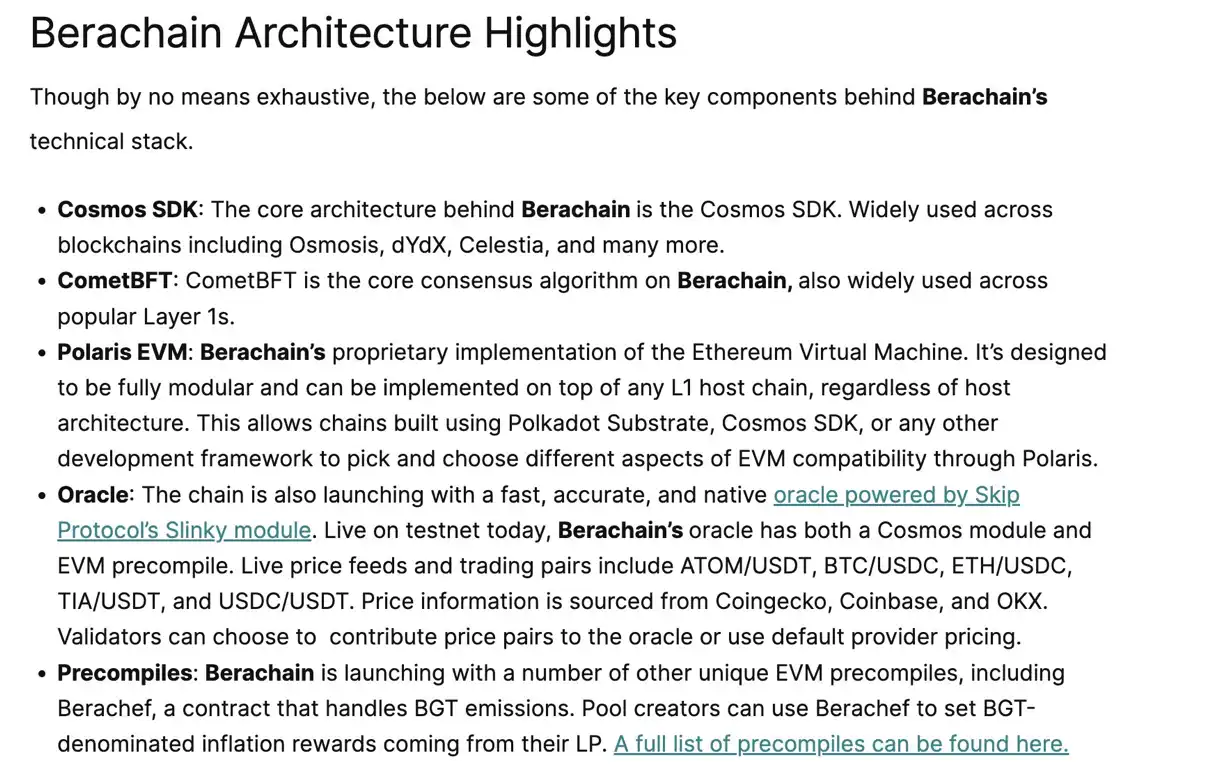
Berachain is developing its own parallel EVM called Polaris, which will serve as a bridge connecting the ETH DeFi ecosystem to Berachain.
The entire flywheel around Berachain functions effectively as long as participants remain sufficiently incentivized to provide liquidity. As long as they continue earning attractive annualized yields, motivation remains strong.
It will be fascinating to see how everything unfolds once the mainnet launches. I really like this concept and am eager to explore the ecosystem further.
Join TechFlow official community to stay tuned
Telegram:https://t.me/TechFlowDaily
X (Twitter):https://x.com/TechFlowPost
X (Twitter) EN:https://x.com/BlockFlow_News
 hitesh.eth






