Stablecoin bill regains momentum, potentially triggering major industry transformation
TechFlow Selected TechFlow Selected
Stablecoin bill regains momentum, potentially triggering major industry transformation
The stablecoin bill is actually a move by the U.S. to descend from the stratosphere like a general, directly seizing control of the blockchain industry's lifeline.
 Navigating Web3 tides with focused insights
Author: Liu Ye Jinghong
The stablecoin bill is actually an old topic. It passed in draft form as early as the first half of last year but hasn't been substantively approved or implemented. I'm revisiting it today because I've noticed a signal:
Representatives Patrick McHenry and Maxine Waters told Bloomberg this week they are "getting approval for the stablecoin bill in the near term."
Bloomberg
To briefly summarize the content of the stablecoin bill—this follows the version introduced last year, which likely hasn't undergone major changes since:
Key Point One: The Federal Reserve oversees non-bank-issued stablecoins, while banks and other insured depository institutions issuing stablecoins fall under federal banking supervision. All stablecoin-related operations must register with regulatory authorities—even overseas companies must register before conducting stablecoin business in the U.S.
Key Point Two: Creating new stablecoins without fiat backing is prohibited. The draft includes a two-year ban on issuing, establishing, or creating stablecoins not backed by tangible assets. This directly targets algorithmic stablecoins and crypto-collateralized stablecoins.
Key Point Three: Allows the government to set interoperability standards.
Key Point Four: Directs the Federal Reserve to study a digital dollar.
This renewed attention on the stablecoin bill must be viewed within the broader context. Looking back at key events of 2024 helps connect the dots.
First, Bitcoin ETFs were approved and gained unprecedented momentum in capital markets, pushing prices past previous highs. Second, ongoing geopolitical conflicts have driven gold prices to record levels. Then there's the U.S. presidential election at year-end, expectations of Fed rate cuts, and more.
These events collectively suggest that although the U.S. isn't directly involved in military conflict, it has already launched a financial war centered on the dollar. This financial campaign differs from past ones—the U.S. has thoroughly studied blockchain and Web3 industries. While others use blockchain for cross-border fund transfers, the U.S. is now setting rules at a higher level.
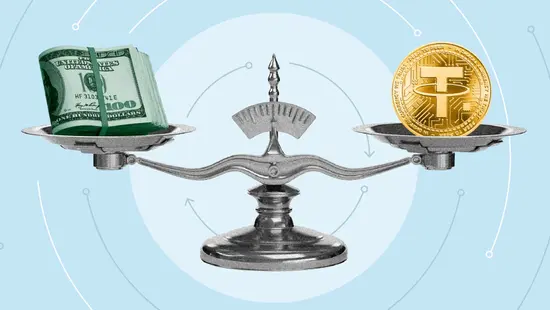
For the blockchain industry, no matter how compelling the technology or narratives may seem, the ultimate goal remains transaction execution—especially trades denominated in USDT pairs. Therefore, the core function of the stablecoin bill is to redefine the entire industry’s trading pairs.
Longtime market participants might remember that before 2017, USDT wasn’t the dominant trading pair. Back then, most exchanges issued their own stable credit points. These weren’t blockchain-based but were fully pegged 1:1 to RMB within platform C2C systems.
Therefore, over the next three to five years, the industry’s primary trading pairs will gradually shift from USDT to stablecoins compliant with U.S. regulations. Take Binance, for example: historically relying on USDT as its core trading pair, it attempted to launch BUSD to replace USDT. But in 2022, due to U.S. regulatory pressure, BUSD was suspended. Later, Binance tried TUSD, which also faced U.S. regulation and ultimately failed.
Currently, Binance is promoting FDUSD, which no longer seeks compliance with U.S. regulations but instead aligns with Hong Kong regulations. However, since Hong Kong’s stablecoin regulatory framework remains unclear, FDUSD only ensures its issuing entity complies with Hong Kong rules—the FDUSD token itself remains in legal limbo.
Thus, Binance’s path in launching stablecoins reveals a deliberate strategy to find a USDT alternative while avoiding U.S. stablecoin oversight—an impressively foresighted move.
Thought experiment:
Let’s conduct a mental exercise: suppose the stablecoin bill has just been approved and enacted. What changes would ripple through the blockchain industry?
First, USDT clearly wouldn’t meet U.S. legal requirements, so exchanges would need to phase out USDT trading pairs. Exchanges could choose to exit the U.S. market entirely—blocking U.S. users and IPs. But don’t forget: one key provision in the stablecoin bill mandates that stablecoins comply with interoperability standards set by the U.S. government. So if an exchange completely severs ties with the U.S., it will lag behind competitors in stablecoin support.
What if an exchange unilaterally supports compliant stablecoins but refuses to operate in the U.S. or accept oversight? Sorry, that won’t work either. Another key point in the bill requires even foreign companies to register and submit to U.S. oversight; otherwise, they’re considered non-compliant.
And what if someone continues operating despite being non-compliant? Recall the requirement that stablecoins follow U.S.-defined interoperability standards. Regulators would likely have the authority to freeze associated addresses or, under OFAC rules, directly sanction related assets.
See? This creates a classic American closed loop.
Under this hypothetical scenario, the industry would split into two categories: compliant exchanges embracing U.S. regulation, and gray-zone exchanges forced to continue using USDT.
But sticking with USDT isn’t necessarily better. Remember, Tether, USDT’s parent company, is a Hong Kong-regulated entity. Hong Kong is also preparing its own stablecoin legislation—and given Hong Kong operates under national security laws, the situation could end up even worse?
From blocks to trading pairs:
As early as last year, Bitcoin mining pool F2Pool admitted to filtering transactions from Bitcoin addresses flagged by the Office of Foreign Assets Control (OFAC). As for Coinbase—the custodian behind Bitcoin ETFs—it goes without saying they’ll fully cooperate.
Regarding the upcoming hype around Ethereum ETFs, PoS validators based in the U.S. will undoubtedly follow OFAC rules.
The stablecoin bill is like a general descending from the stratosphere—it strikes directly at the blockchain industry’s lifeline. In the coming years, both the foundational layer (blocks) and the most widely used layer (trading pairs) of the blockchain ecosystem will fall under U.S. influence, subject to its long-arm jurisdiction.
Additionally, the recently booming RWA sector is heavily driven by BlackRock. Consequently, all assets derived from RWA will inevitably fall under U.S. jurisdiction.
Finally, although China launched its digital yuan early on, technically and functionally it's fundamentally different from a digital dollar or regulated stablecoins. They merely share the "digital" label—that's it.
Join TechFlow official community to stay tuned
Telegram:https://t.me/TechFlowDaily
X (Twitter):https://x.com/TechFlowPost
X (Twitter) EN:https://x.com/BlockFlow_News