








With BlackRock entering the arena, how is Neopin's RWA product riding the wave?
TechFlow Selected TechFlow Selected
With BlackRock entering the arena, how is Neopin's RWA product riding the wave?
Neopin plans to launch its RWA product NEOPIN BDLP on March 28.
 Navigating Web3 tides with focused insights
After the approval of spot Bitcoin ETFs, barriers for traditional financial institutions to enter the crypto market have further decreased, pushing the entire market into a bull run with enhanced liquidity. RWA represents the next trend with similar effects—and even greater capital participation potential.
Current State of the RWA Sector
On March 21, BlackRock launched its first tokenized fund on a public blockchain—the BlackRock USD Institutional Digital Liquidity Fund (ticker: BUIDL). Following this announcement, the entire RWA sector experienced a concentrated surge, with leading token Ondo hitting an all-time high and major RWA concept tokens such as POLYX, TOKEN, GFI, and RIO rising over 30%.
The overall market cap of the RWA sector is now close to $8 billion. The top five projects have all entered the top 200 rankings by market cap, with Ondo reaching a $1.27 billion valuation—placing it within the top 100. MANTRA, a long-standing project that recently entered the RWA space, has doubled in market value over the past month and risen to rank #156. Given this clear growth trajectory, investors seeking RWA exposure should now focus on low-market-cap, high-potential projects. Neopin, a South Korean DeFi infrastructure platform, stands out as a particularly promising candidate.
Neopin’s Integration of RWA
Neopin recently updated its roadmap, announcing the launch of its RWA product NEOPIN BDLP on March 28. Running on the Ethereum network, the protocol integrates smart contracts from various DeFi platforms including Spark.fi,Ethena.fi,Curve.fi. By leveraging MakerDAO's short-term U.S. government bonds, Ethena Labs’ synthetic dollar USDe, and Curve’s staked DAI (sDAI), users can deposit DAI, USDT, or USDC to earn up to 30.2% APY.
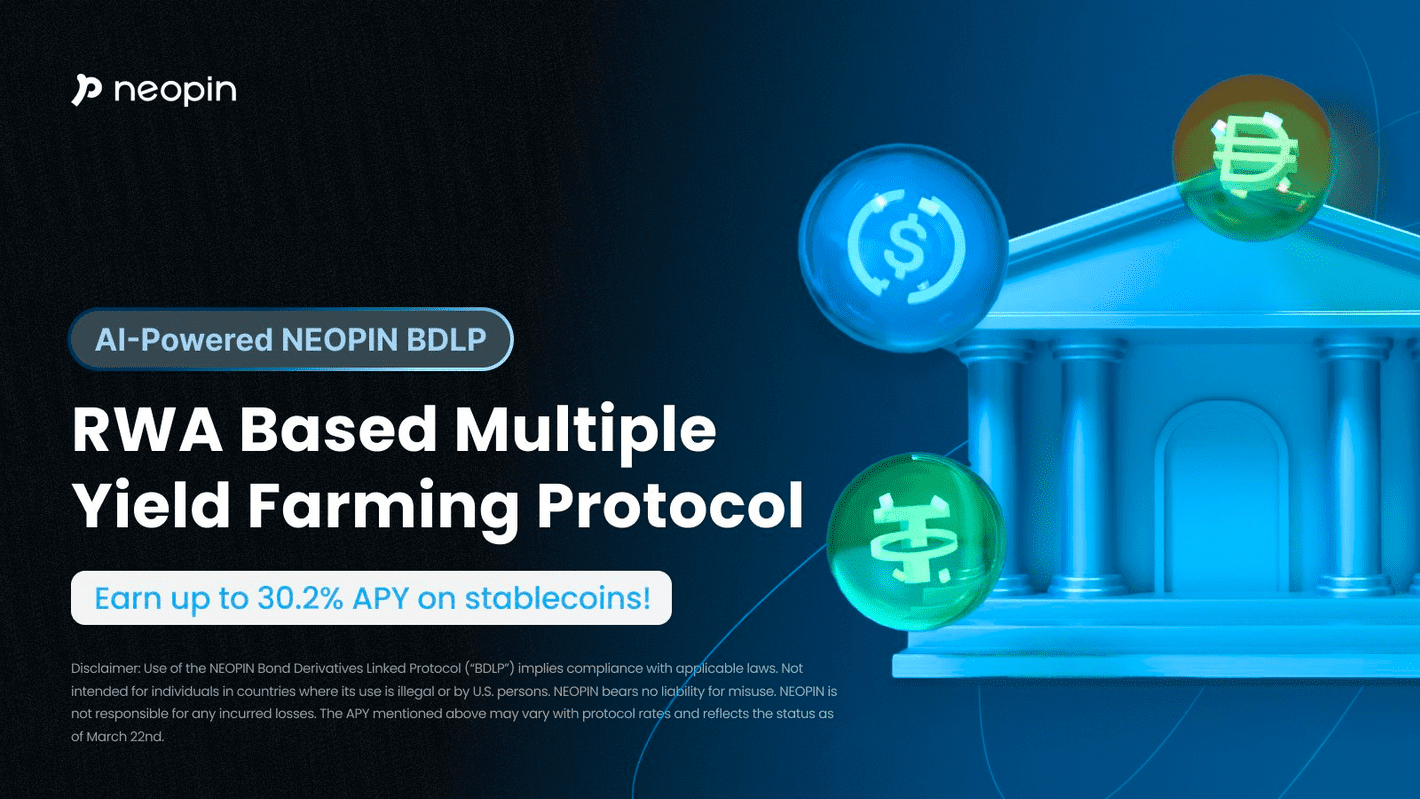
Additionally, Neopin employs specialized AI algorithms to analyze and recommend optimal asset allocation strategies for each user, enabling efficient utilization of complex DeFi derivatives based on individual preferences and on-chain data.
According to official documentation, Neopin offers two yield-generation models:
-
RWA: Utilizes the Spark protocol, currently offering 15% APY, with no withdrawal waiting period and allowing partial withdrawals;
-
Boost: Utilizes the Ethena protocol, currently offering approximately 30.2% APY, with a 14-day withdrawal lock-up period and only full withdrawals permitted.
While the Boost option provides a higher APY, its 14-day withdrawal delay reduces liquidity. In contrast, the RWA option allows immediate access to funds but offers a lower interest rate. Users can choose flexibly based on their needs.
Additional Advantages of Neopin
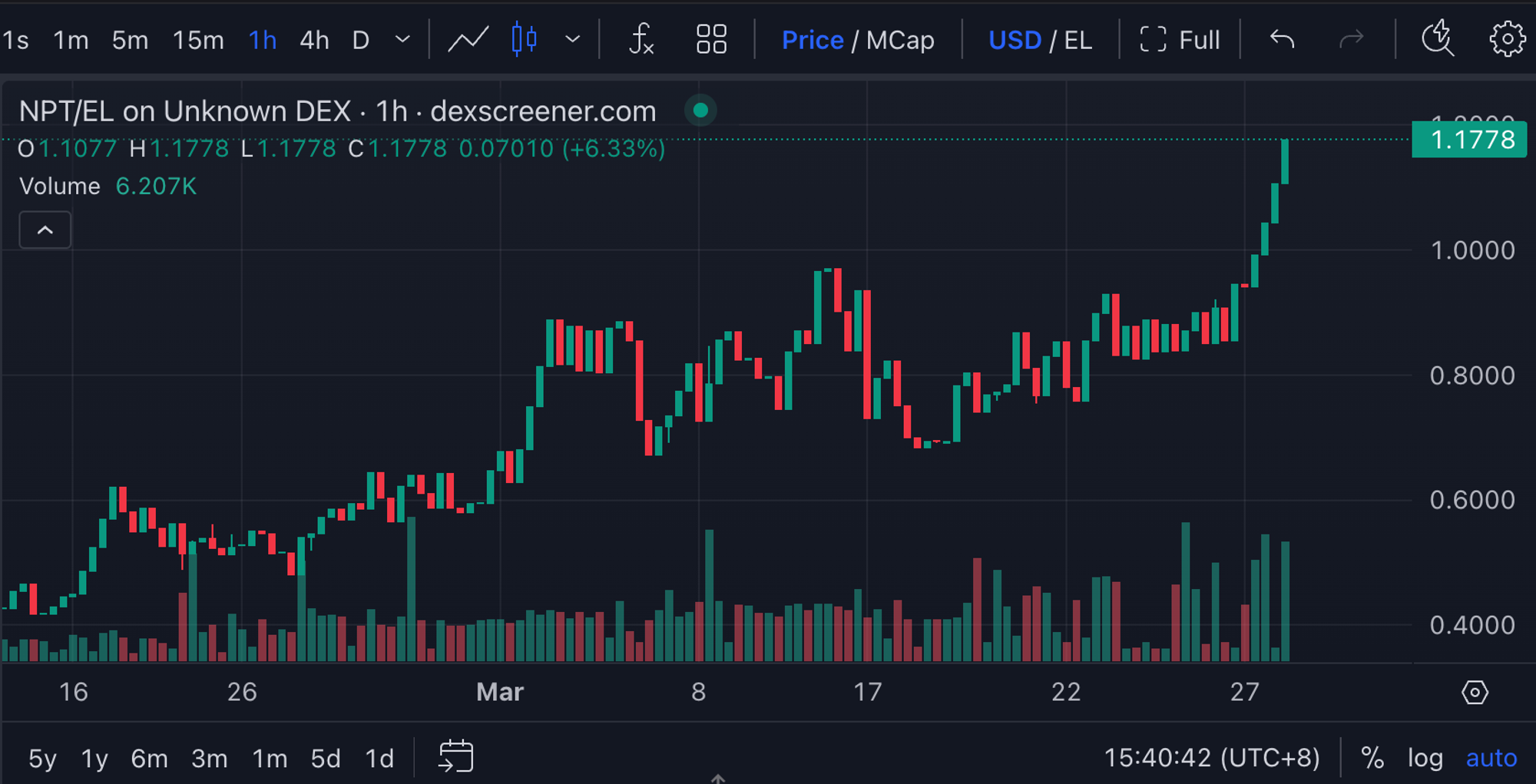
Currently, Neopin’s native token NPT trades at $1.17, with a 7-day increase of 54%. With the official launch of Neopin’s RWA product, NPT’s price performance is expected to climb further. From a market cap perspective, the entire RWA sector has yet to breach the $10 billion mark, indicating substantial room for growth. As a rising player in the RWA space, Neopin is still at an early stage alongside other emerging projects, giving it immense potential.
South Korea is rapidly becoming a hotspot in the cryptocurrency market. Neopin is already a well-known DeFi project domestically and will serve as a sponsor for ETH Seoul at the end of the month, hosting a three-day hackathon. Its market reach is therefore not a concern. More importantly, Neopin has bold ambitions: CEO Ethan Kim stated, “NEOPIN aims to become the number one DeFi protocol in the Asian market this year and rank among the top ten global DeFi protocols within the next three years.”
To achieve this vision, entering the RWA market marks a crucial step for Neopin. Before Neopin, leading DeFi protocols such as MakerDAO, Pendle, and Maple Finance had already entered RWA, gaining more stable yields and sustained liquidity. By integrating RWA, Neopin will similarly benefit—unlocking greater composability, introducing new asset classes, and capturing value from larger, more stable traditional financial markets.
Moreover, Neopin stands out due to its regulatory compatibility. As a non-custodial, permissioned DeFi protocol, Neopin adheres to strict KYC/AML oracle security standards—an essential feature for RWA integration that enhances legal clarity and investor confidence.
Looking Ahead
According to a Galaxy report, the private credit market was valued at approximately $1.4 trillion in 2023, with $350 billion in managed capital, and is projected to grow to $2.3 trillion by 2027. Conservatively, the RWA asset market could reach $3.5 trillion and expand to $10 trillion by 2030. As one of the core narratives of the future, the sector has so far only scratched the surface.
To gauge Neopin’s potential, we can look at Pendle, another DeFi protocol that capitalized on the RWA narrative. In August last year, Pendle announced integrations with two RWA protocols—MakerDAO’s sDAI and Flux Finance’s fUSDC. Fueled by this multi-layered narrative, its token price surged steadily, eventually reaching a new all-time high this month.
As a homegrown South Korean DeFi protocol, Neopin is poised to follow a similar path—especially upon listing on major exchanges like Upbit and expanding across Asia—leveraging the power of the RWA narrative to achieve exponential returns.
Join TechFlow official community to stay tuned
Telegram:https://t.me/TechFlowDaily
X (Twitter):https://x.com/TechFlowPost
X (Twitter) EN:https://x.com/BlockFlow_News






