








Understanding APX Finance ALP: Where Does the High Yield Come From?
TechFlow Selected TechFlow Selected
Understanding APX Finance ALP: Where Does the High Yield Come From?
Overall, the price performance and fee revenue of APX and $ALP are driven by APX Finance's products and data.
 Navigating Web3 tides with focused insights
Author: Sleeping Heavily in the Rain
I previously discussed APX Finance—since October 15, 2023, $APX has nearly tripled. Today, let's take a different angle and talk about ApolloX (now renamed APX Finance) and its ALP token.

Today, the staking yield for $ALP has reached 55%. In comparison, its competitor $GLP offers a yield of 13%, while $VRTX—the recently launched token (not an LP token, but the protocol’s governance token)—offers a staking yield of 47%.
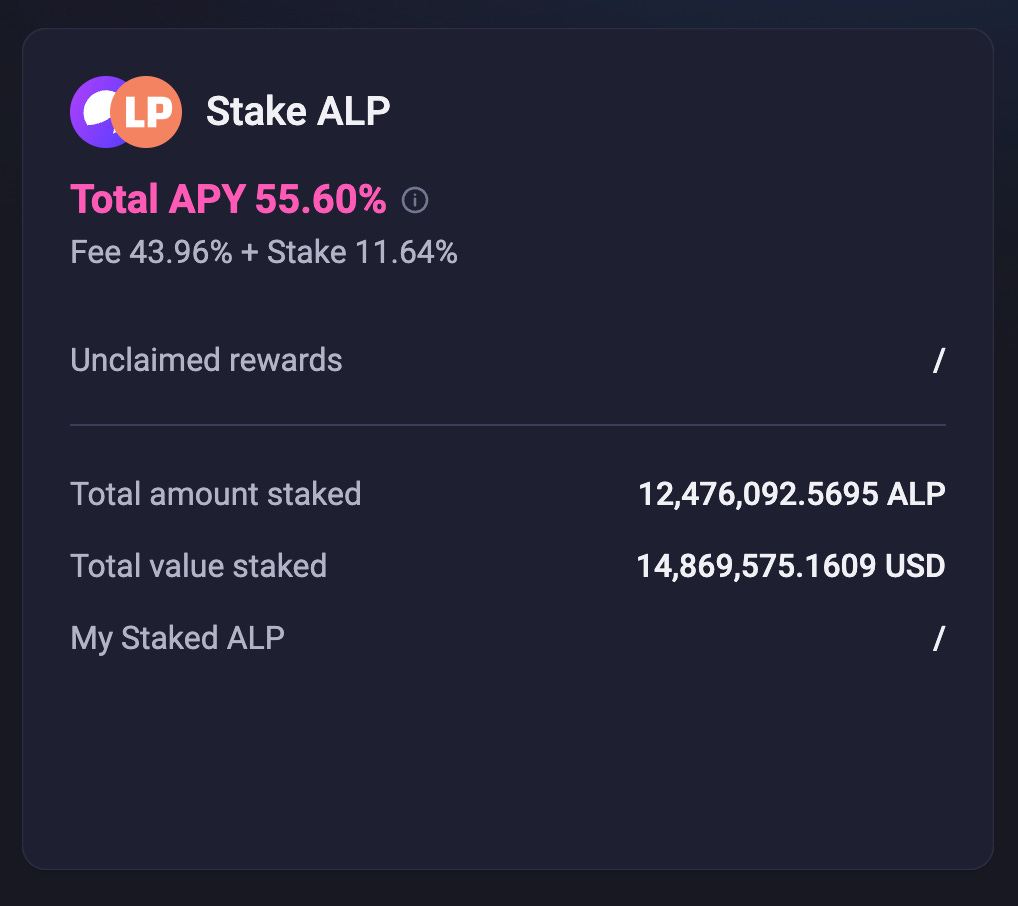
The yields from such LP token staking or native governance token staking typically come from derivative protocol fee revenues and token inflation rewards. ALP is no exception. The direct reason ALP surpasses both GLP and Vertex token staking APYs is that its returns consist of fee income (real yield) plus token inflation incentives. However, it's worth noting that the real yield generated by the protocol for ALP stakers far exceeds the inflation-based rewards.
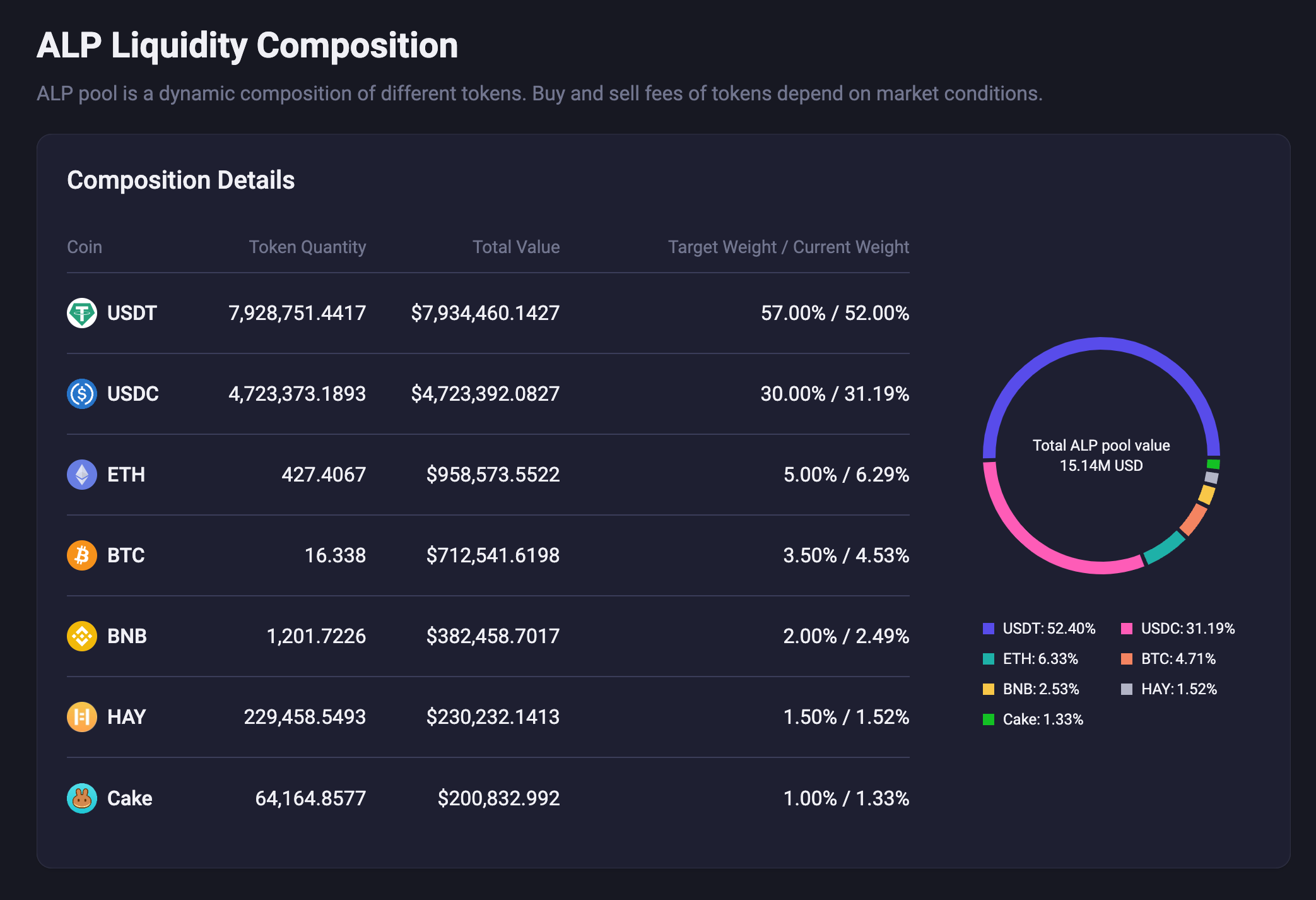
Compared to GMX v1’s GLP, ALP also has a more stable composition—stablecoins now account for over 80%, making it less vulnerable to crypto market volatility.
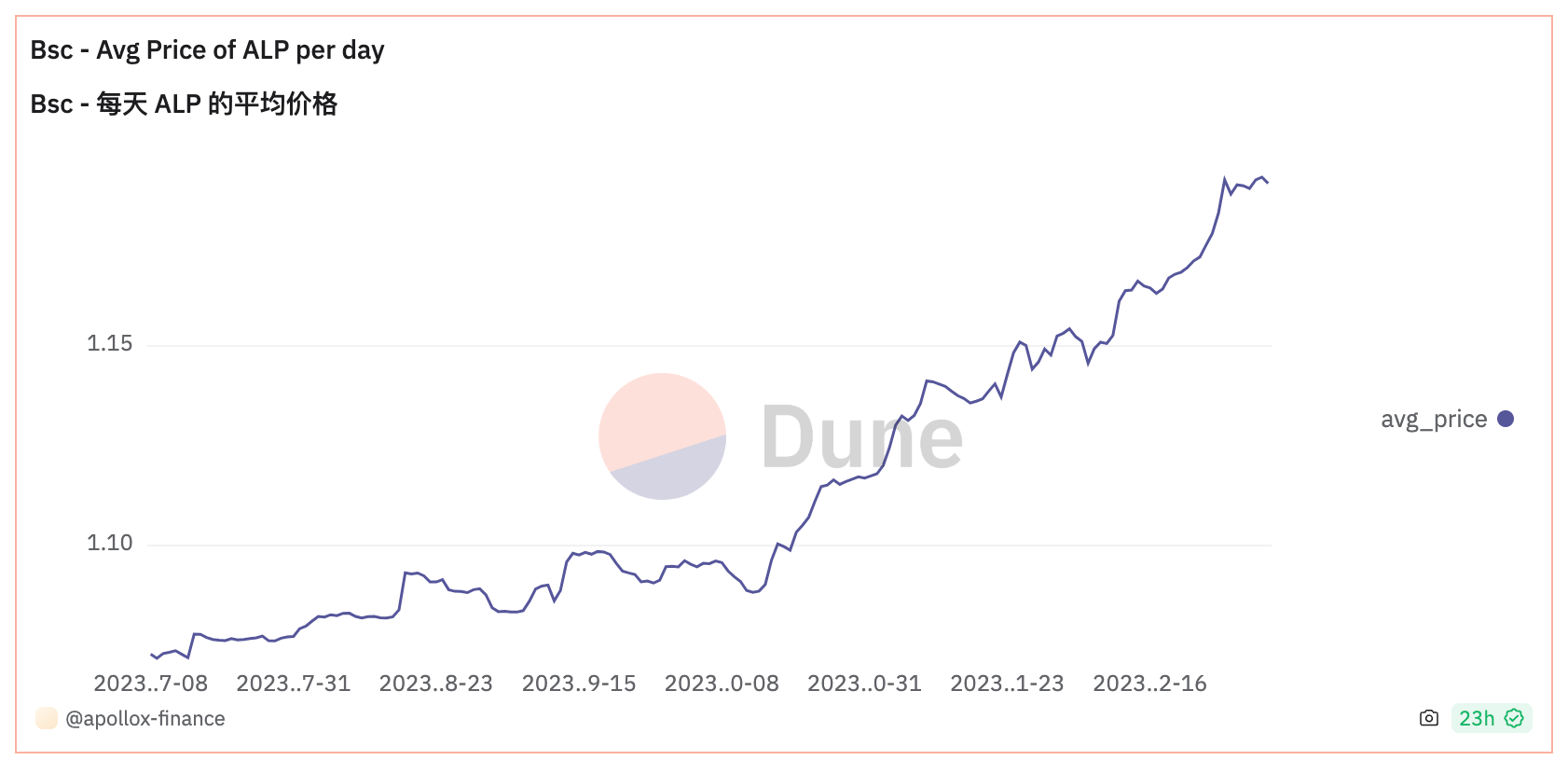
At the same time, ALP’s price has been steadily rising. This upward momentum stems from trader losses. According to Dune data, traders have so far incurred losses totaling 1.48M USD—this amount ultimately flows into ALP’s returns.
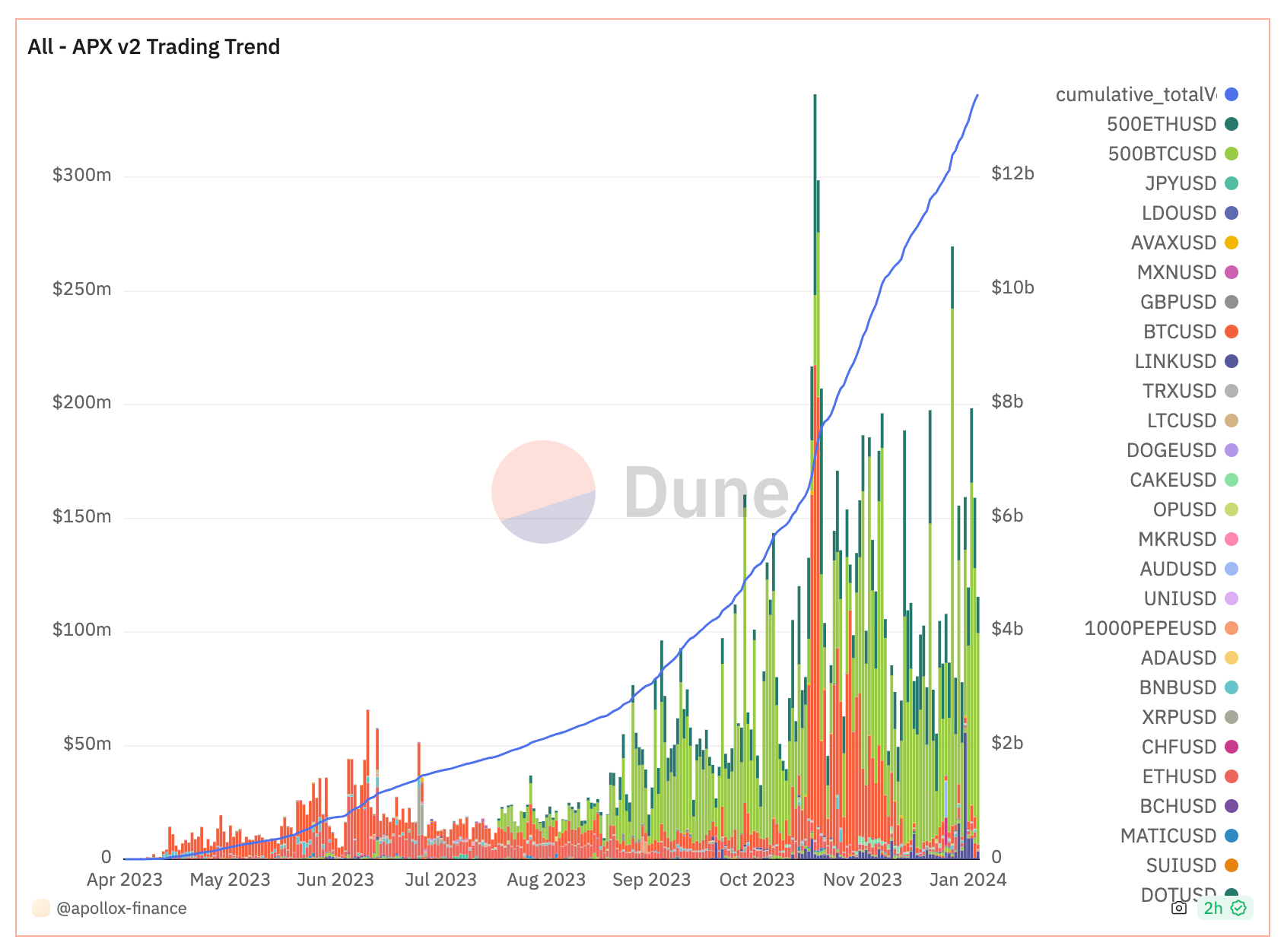
Trader losses may stem from two main factors:
-
Bullish market conditions, rising risk appetite, and increased user activity and trading frequency.
-
APX Finance introduced the Degen mode, catering to higher-risk traders. The high leverage in Degen mode resembles gambling more than actual trading. As shown in the chart, 500x leveraged trades on ETHUSD and BTCUSD represent significant portions within the overall trend.
Additionally, APX Finance recently launched the "Dumb" mode. In this mode, users predict whether the price of various assets will rise within a fixed timeframe (60 seconds, 5 minutes, or 10 minutes). If the price at expiry is higher than the entry price, they earn returns of 70%, 85%, or 88% respectively. However, if the price drops below the entry level, users lose 100% of their principal.
The introduction of Degen and Dumb modes essentially provides users with newer products featuring higher risks and potentially higher rewards, indirectly driving up trading frequency and volume.
Therefore, driven by these two new products and fundamental growth drivers (such as expansion onto Arbitrum, opBNB, and Base chains), protocol revenue increases, leading to both rising ALP prices and higher fee income. As ALP price rises, more people buy ALP, deepening liquidity and improving user trading experience.
The protocol uses part of its revenue to repurchase $APX tokens. These repurchased $APX tokens are then partially distributed to $APX stakers and partially burned, which in turn supports the price of $APX.
Overall, the price performance of both $APX and $ALP, along with fee income trends, are fundamentally driven by APX Finance’s product developments and on-chain metrics. It’s worth closely monitoring Perp DEX and APX’s Dune analytics dashboards.
Join TechFlow official community to stay tuned
Telegram:https://t.me/TechFlowDaily
X (Twitter):https://x.com/TechFlowPost
X (Twitter) EN:https://x.com/BlockFlow_News
 雨中狂睡Sleeping in the Rain







