A New Narrative for OTC Trading: How OT SEA Facilitates Trading of Low-Liquidity Tokens?
TechFlow Selected TechFlow Selected
A New Narrative for OTC Trading: How OT SEA Facilitates Trading of Low-Liquidity Tokens?
Through the OT SEA protocol, traders can bypass liquidity pools, slippage, and price volatility by simply conducting P2P transactions.
 Navigating Web3 tides with focused insights
Author: FRANCESCO
Translated by: TechFlow
There's a new narrative emerging in the crypto space, one related to over-the-counter (OTC) trading.
While OTC trading has long been widely practiced in traditional finance, in the world of crypto it is only just beginning to gain traction.
Why Do We Need OTC Trading?
One of the first innovations in DeFi was Uniswap, which pioneered the use of liquidity pools for decentralized cryptocurrency trading.
However, liquidity pools come with their own limitations, especially for low-market-cap tokens with limited liquidity.
As a result, such trades can have significant impacts in terms of price slippage and volatility. In fact, trading low-market-cap tokens may involve:
-
High volatility
-
High slippage
-
Low liquidity
-
Token taxes
-
MEV
We've all had this experience: trying to exit quickly due to a price drop, only to lose all profits to fees and slippage.
You thought you made a smart trade, but that 50% slippage wiped out your gains.
Solving Market Efficiency Issues
Protocols like OT Sea offer traders an alternative channel for buying and selling tokens (currently limited to ERC20 tokens).
They enable peer-to-peer (P2P), trustless OTC trading.
This way, traders can bypass liquidity pools, slippage, and price volatility by simply conducting direct P2P trades.
What Are the Main Use Cases of OT Sea?
-
Avoiding Token Taxes
Many ERC20 tokens impose buy/sell taxes to discourage frequent trading.
On OT Sea, since there are no liquidity pools and token transfers (rather than buy/sell functions) are used whenever someone buys or sells, users can exchange tokens peer-to-peer without paying any tax.
-
Protecting Whales
OT Sea also benefits whales—those holding large amounts of tokens.
Today, whales often struggle to sell their holdings because they are frequently tracked and front-run, and their large positions can depress prices.
A potential solution is P2P trading.
But how can you trust your counterparty to honestly send the correct amount of tokens instead of scamming you?
On OT Sea, whales can simply use the platform’s smart contract as a P2P intermediary to signal their intent to sell tokens.
Additionally, OT Sea’s "Crowd fill" feature allows whales to sell their tokens to multiple smaller holders.
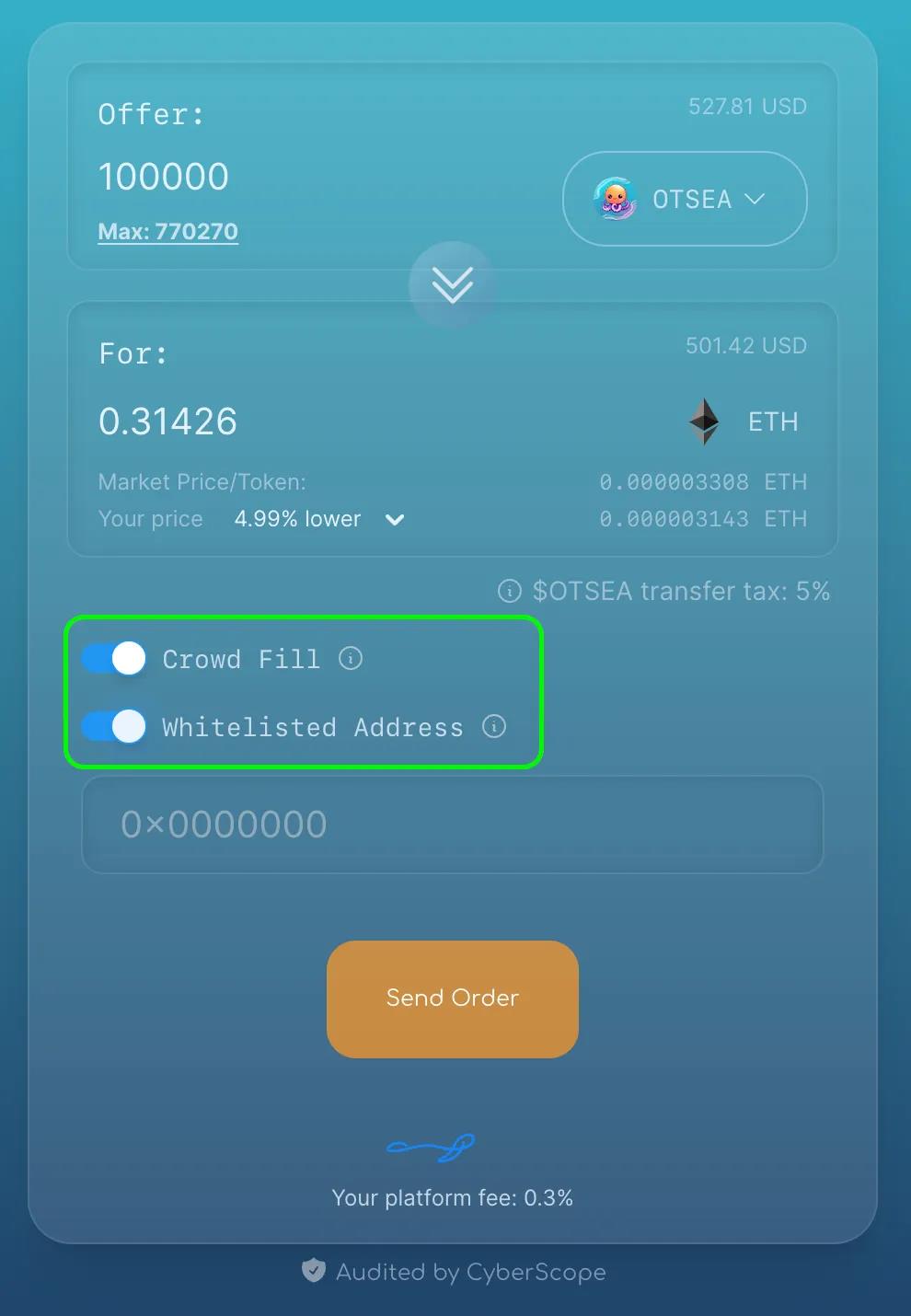
Any user can fill the order according to their desired amount.
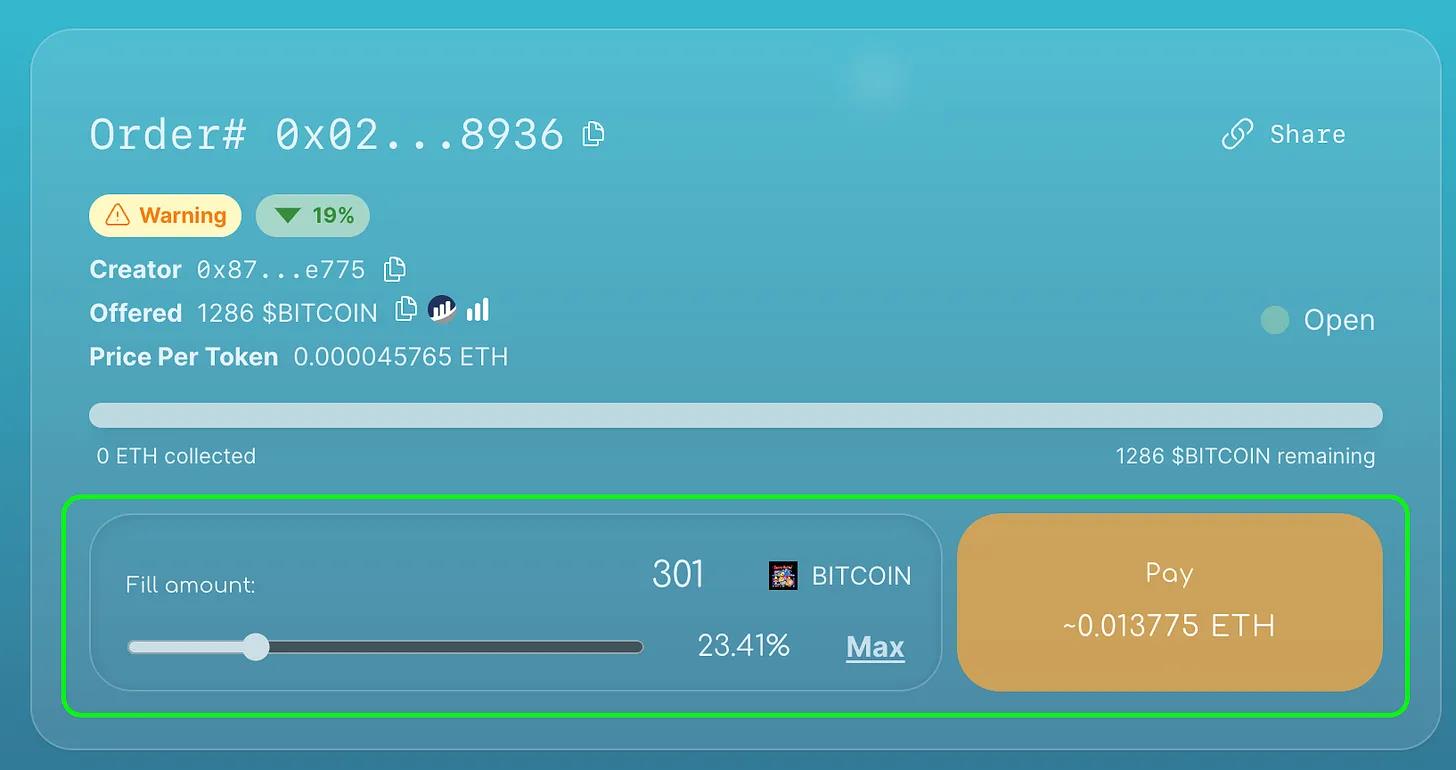
In this way, they can exit their positions without significantly impacting the token’s price chart.
-
Low-Liquidity Tokens
If you’ve ever traded low-market-cap tokens, you’re likely familiar with their small liquidity pool sizes. Large sell orders in these pools cause sharp price drops, as the pool lacks the depth to absorb the impact.
Thus, any holder reasonably expects to lose part of their funds due to high price impact from their order.
But on OT Sea, they can easily find buyers, create orders, and receive their full proceeds—without price slippage or token taxes.
In short, OT Sea enables users to maximize returns when selling tokens. In a sense, it functions like a barter system where users match their needs directly.
How does it achieve this?
Features of OT Sea

-
Mini Markets
OT Sea recently launched its Mini Markets.
Mini Markets are designed for projects that want OTC trading capabilities. They will play a key role in boosting platform trading volume and allow the creation of decentralized OTC pools for any ERC20 token.
This will help:
-
Allow large holders to sell tokens without affecting the price chart
-
Enable holders to sell at discounted prices below market rate
-
Avoid token taxes
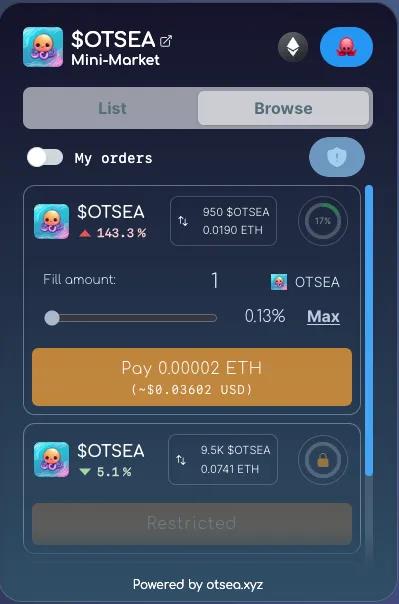
Mini Markets come in the form of embeddable widgets, making integration extremely easy. Just copy and paste a few lines of code to create your own OTC market.
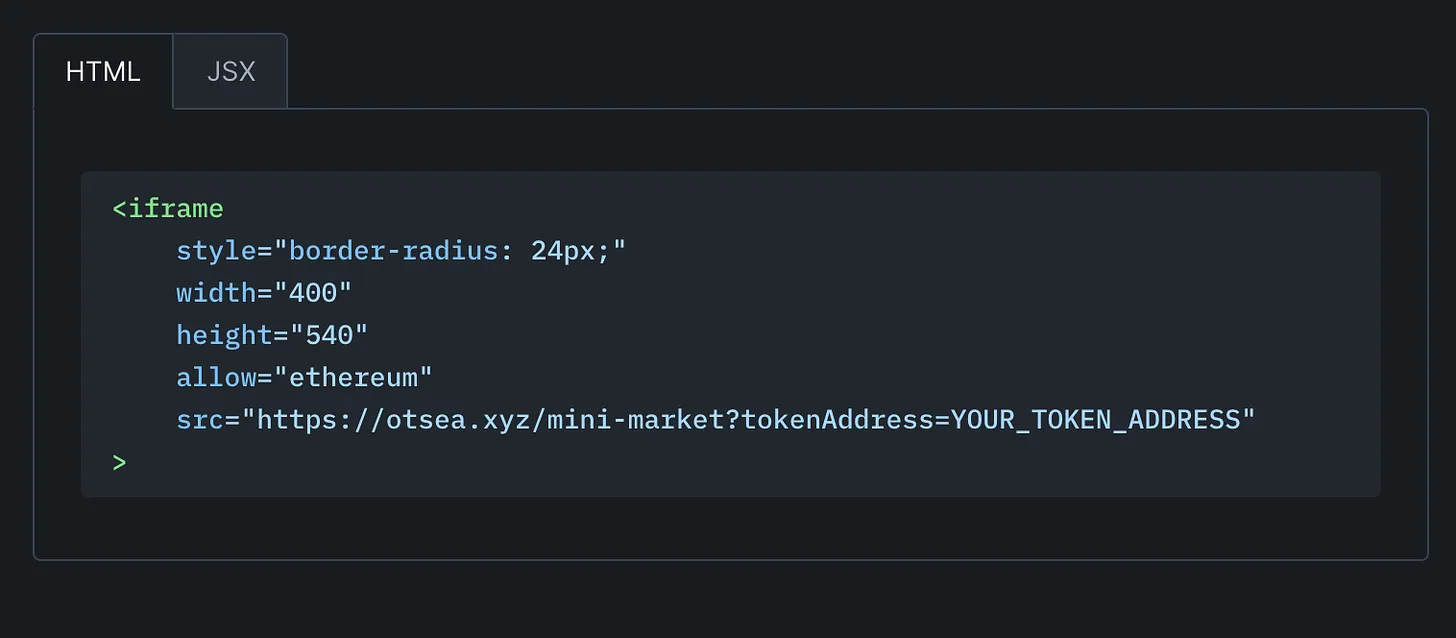
From here, you’ll be able to create OTC orders for your token.
-
MEV Protection

By bypassing traditional order books and liquidity pools, OT Sea transactions are immune to MEV.
Indeed, P2P trades are private and conducted via the “transfer” function, avoiding the mempool entirely and protecting against MEV bots.
Nevertheless, the protocol advises users to take responsibility for using MEV protection when interacting with OT Sea.
Some recommended methods include: Mev Blocker, Flash Bots RPC.
A New Primitive
OT Sea is pioneering the creation of a new primitive.
For low-market-cap tokens, OTC trading can improve market efficiency and price action.
Moreover, it encourages better practices among large holders, enabling them to trade without moving prices or being targeted by bots.
The value capture mechanism for the $OTSEA token is well established, incentivizing holders through redistribution of a significant portion of fees.
However, as a new primitive, OT Sea must ensure sufficient demand and supply to sustain trading volume. Can it generate sustainable volume?
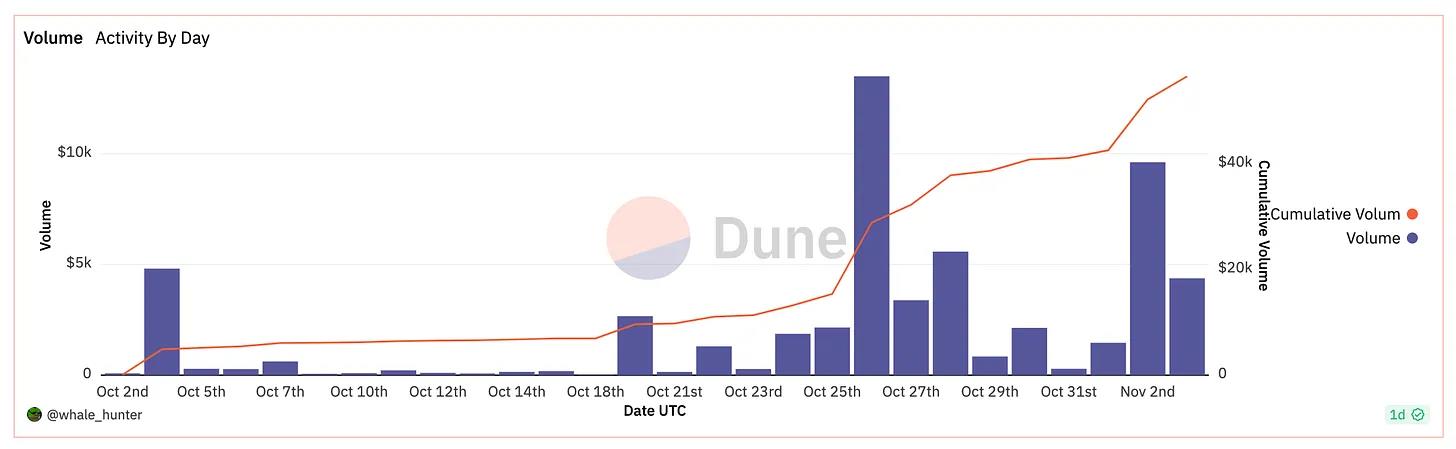
Currently, trading volume appears to be growing, with over $56,000 in volume since launch and more than 185 orders filled.
Join TechFlow official community to stay tuned
Telegram:https://t.me/TechFlowDaily
X (Twitter):https://x.com/TechFlowPost
X (Twitter) EN:https://x.com/BlockFlow_News
 @francescoweb3