The Rise of Japanese DAOs: Community and Innovation in the Digital Revolution
TechFlow Selected TechFlow Selected
The Rise of Japanese DAOs: Community and Innovation in the Digital Revolution
In embracing the wave of Web3, various social DAO explorations in Japan demonstrate how the concept of community-building is inspiring broader groups.
 Navigating Web3 tides with focused insights
By Wang Chao
A few days ago I wrote a piece about attending the Tokyo Game Show. This time, I’ll dive deeper into my observations of Japanese DAOs. The title might sound slightly sensational, but it’s not entirely clickbait.
On the day I arrived in Tokyo, I visited a shared workspace catering to crypto professionals. It gathered many Japanese DAOists, Web3 entrepreneurs, and even an investment firm claiming to be Tokyo’s most active crypto VC.
The location is excellent—right next to Shibuya Station, yet tucked quietly at an inconspicuous corner. The shared space occupies floors 3 to 6 of a building, with two floors fully leased by the VC and several larger affiliated teams, while the other two floors are rented by individuals or small startups of two or three people.
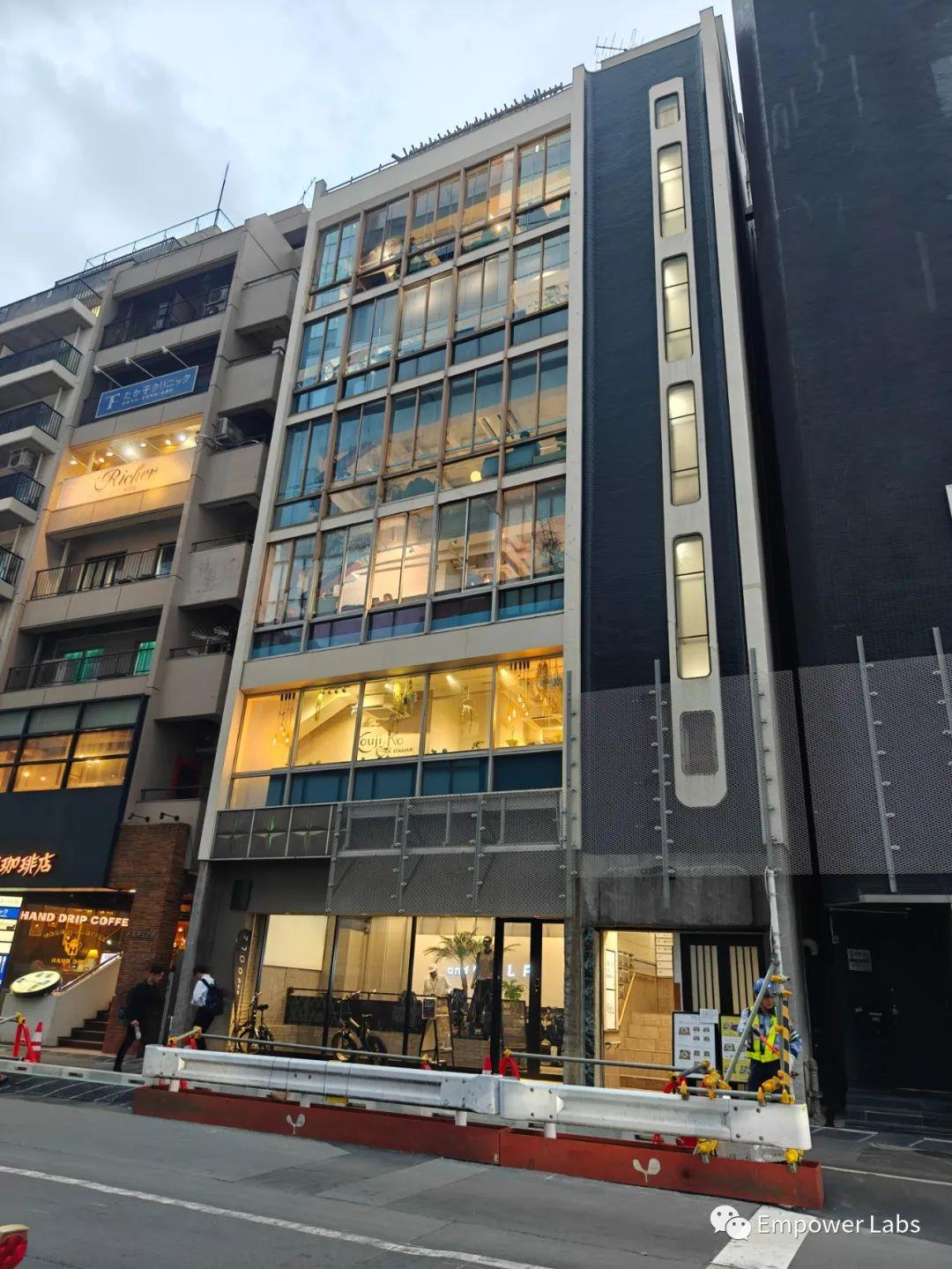
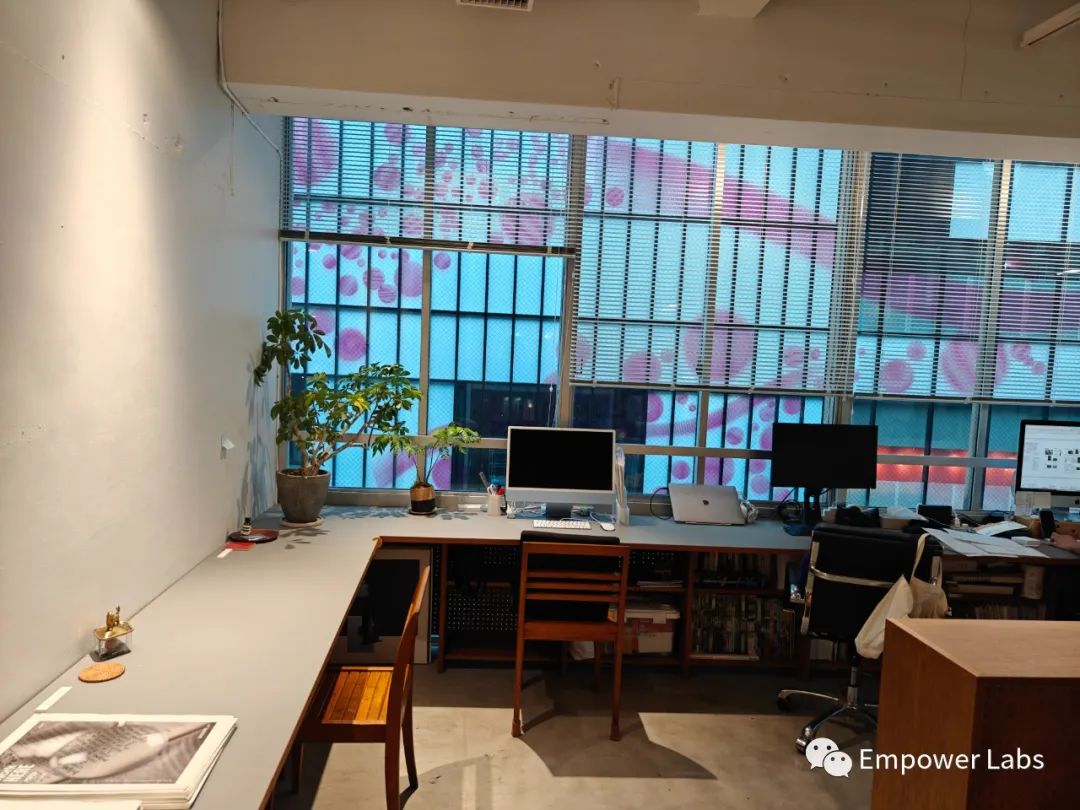
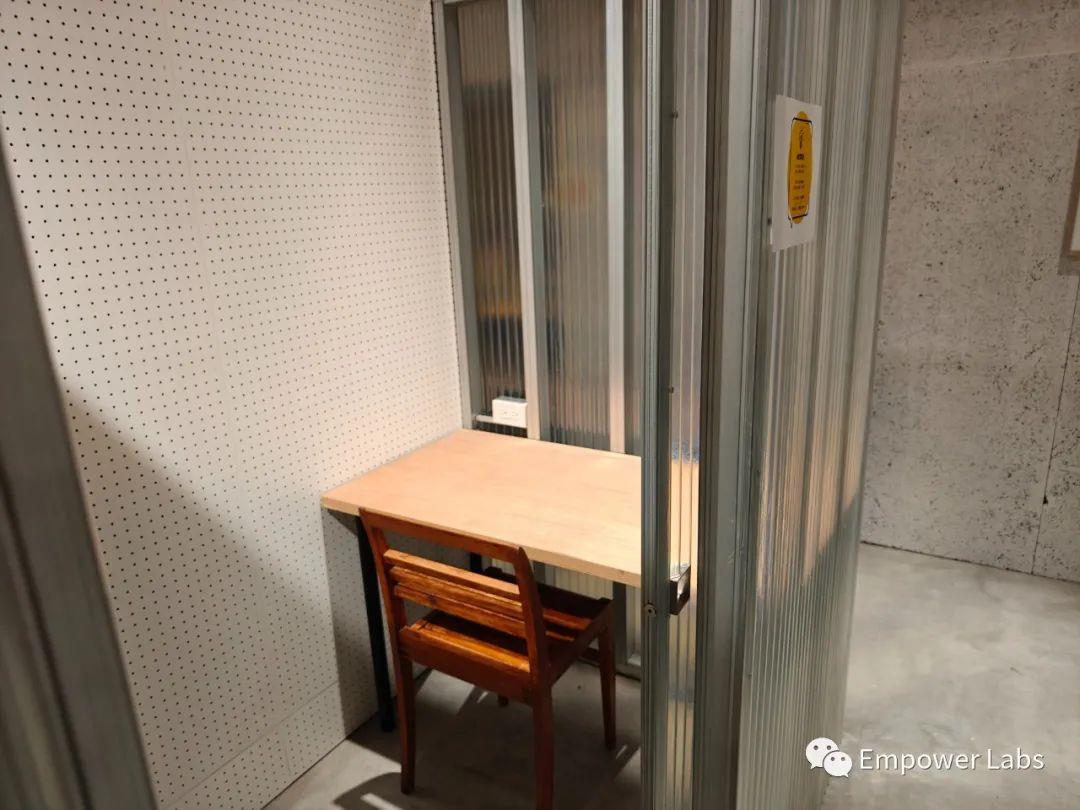
The office setup is simple, even somewhat basic. But prices are very affordable: 2,200 RMB per desk, 3,500 RMB for a private room monthly. There's also an evening-only plan for just 550 RMB/month, accessible only after 5 PM—perfect for those working on side projects after work, ideal for people participating in DAOs part-time. You can also use it temporarily for just 100 RMB/day, though access ends at 5 PM.
I had scheduled a meeting with the operations lead at 5 PM. By then, the office wasn’t crowded, and everyone was quietly focused on their own tasks. A young woman greeted me—neat, pleasant, and reasonably fluent in English. She showed me around two floors, explaining facilities and support services for members. Overall impression: modest hardware, but comfortable and free-flowing. However, sound insulation is nearly nonexistent—any phone call or meeting becomes de facto public broadcasting. Quite fitting for DAO spirit—feel free to listen in.
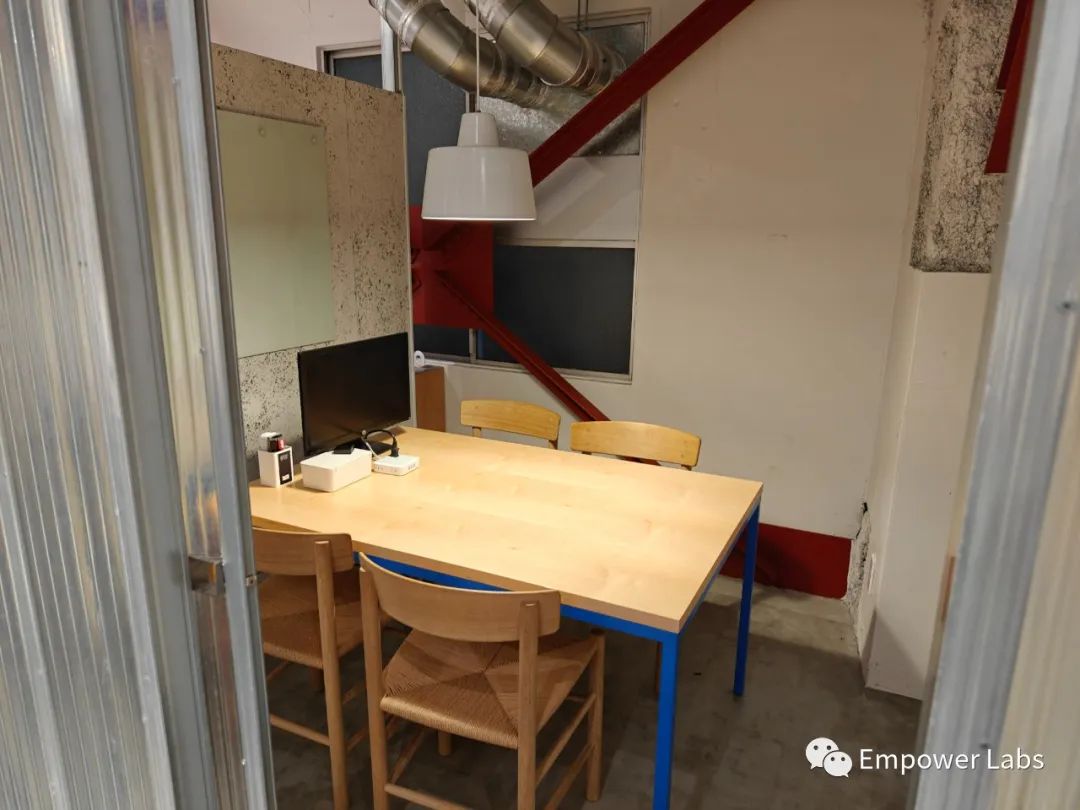
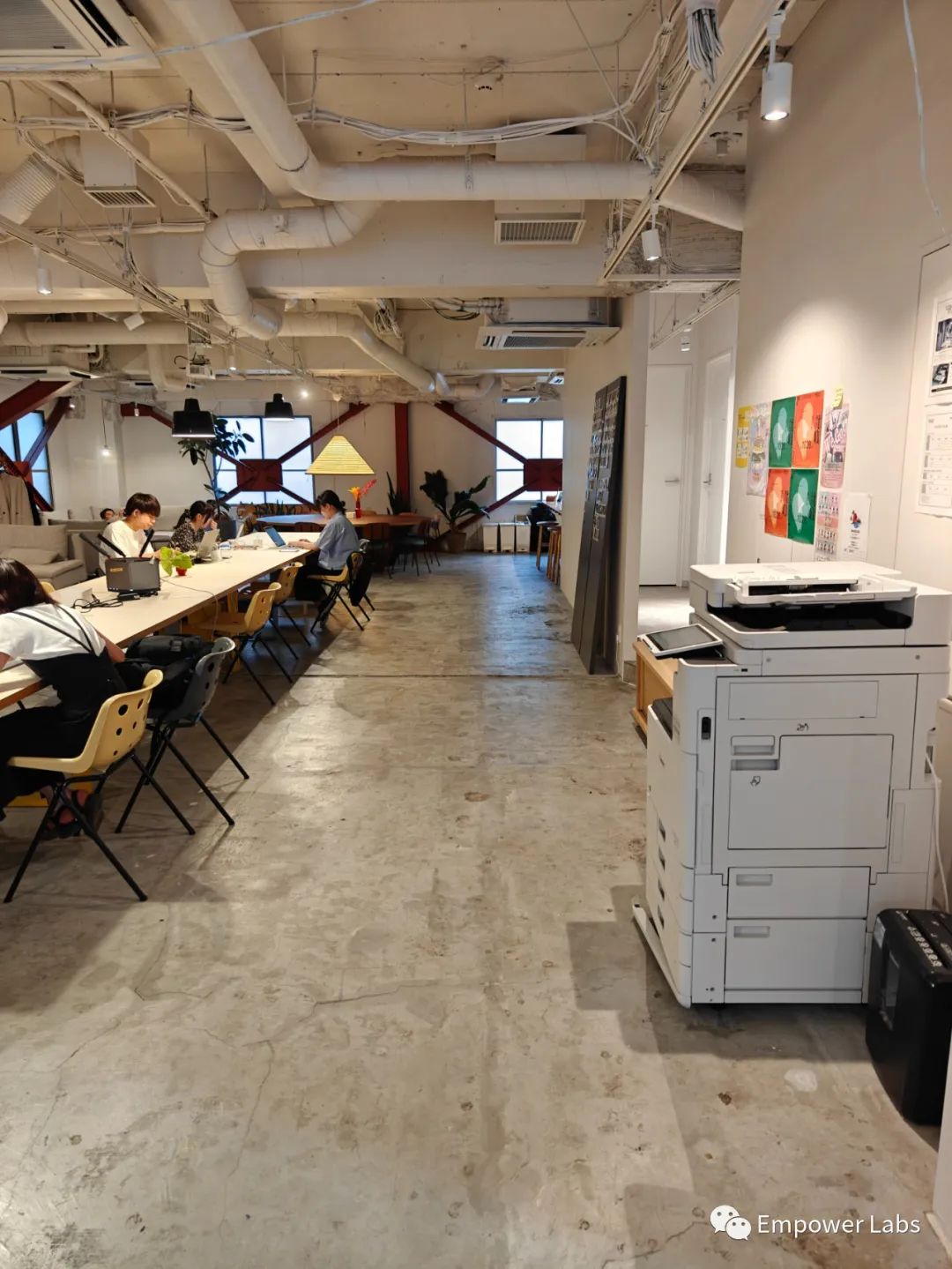
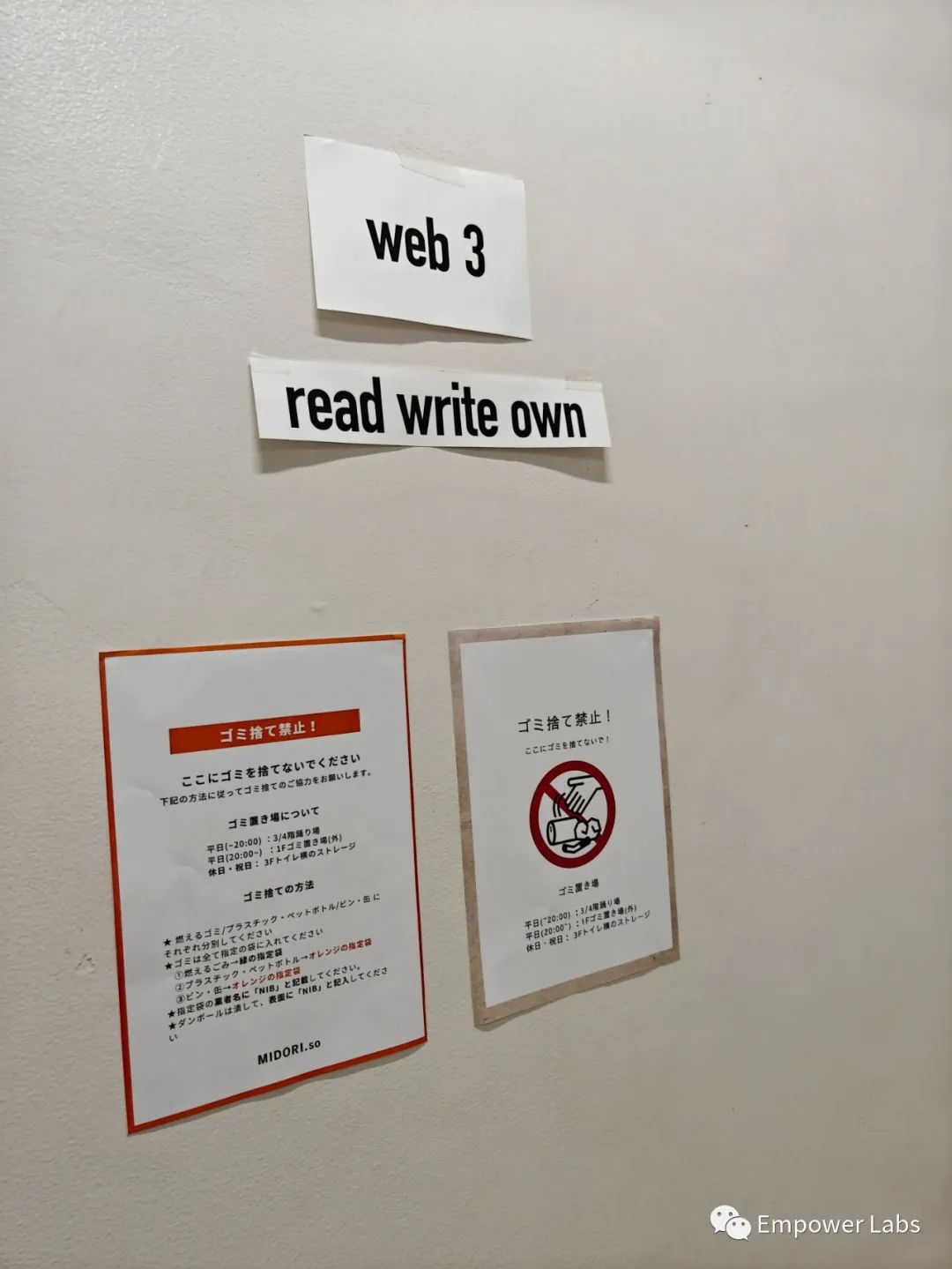
One thing that stood out was a photo wall where many members left Polaroid-style headshots, adding a strong sense of community. The staff member pointed at photos, naming founders and their projects—people who seemed well-known locally, though I hadn’t heard of any. In terms of member support, even if you rent just one desk, they help provide official addresses and documents needed for company registration. I’m not sure if all shared spaces in Japan do this, but it feels particularly entrepreneur-friendly.
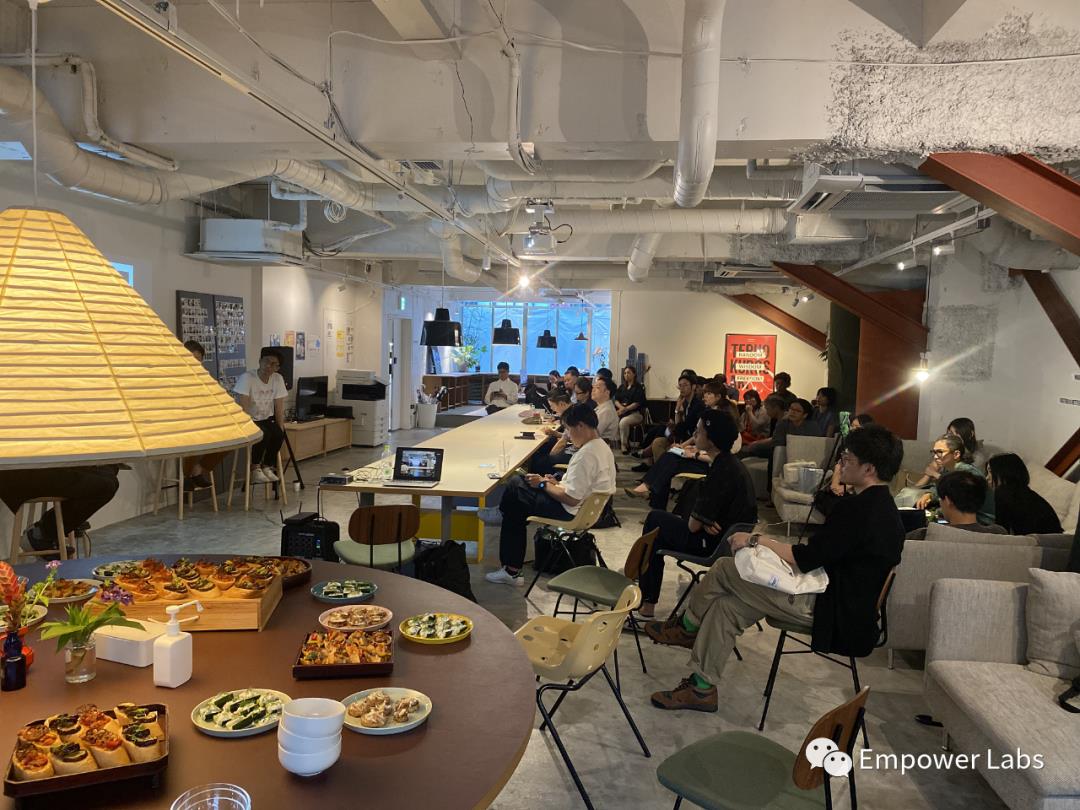
The space hosts events every Monday, often featuring guests from various DAOs. While Tokyo has several crypto-themed coworking spaces, this one stands out for its deep integration with the DAO ecosystem. Its operational model also reflects DAO principles: each member receives an NFT linked to the door-lock system, enabling access via a dedicated app. Communication among members and with operators is highly active—members can self-organize events, propose ideas, and even vote on certain decisions. Though fundamentally still a corporate-run leasing project, these community-driven elements give it unique charm.
My exposure to Japanese DAOs predates this trip. Over the past few years, I’ve met several Japanese entrepreneurs and formed close friendships with some. Like anywhere else, social circles define the landscape—and Japan is no exception. Knowing my interests, friends occasionally introduce me to others: game developers, investors, founders, and also activists deeply involved in DAOs.
I use the term “activist” because that’s exactly how local Japanese DAOs feel to me.
Several global DAOs have strong Japanese participation, such as BanklessJP and PNouns. Bright Moments DAO, known for operating physical generative art galleries and exhibitions, even voted to launch its Asian chapter in Tokyo, holding a successful opening event in May. As a long-time Bright Moments member, I discussed future plans for their Tokyo operations with regional coordinators before my visit.
But beyond these globally oriented DAOs, I’m more intrigued by those emerging organically from Japan itself. Most of these本土 DAOs strike me as activist-driven, almost universally aiming toward a shared overarching goal—social impact.
Perhaps due to Japan’s relatively insular environment, there's a strong desire for international engagement—several DAOs aim specifically to bridge Japan with the rest of the world. Others focus inward, hoping to drive progress and transformation through community collaboration—from villages to industries, even national change.
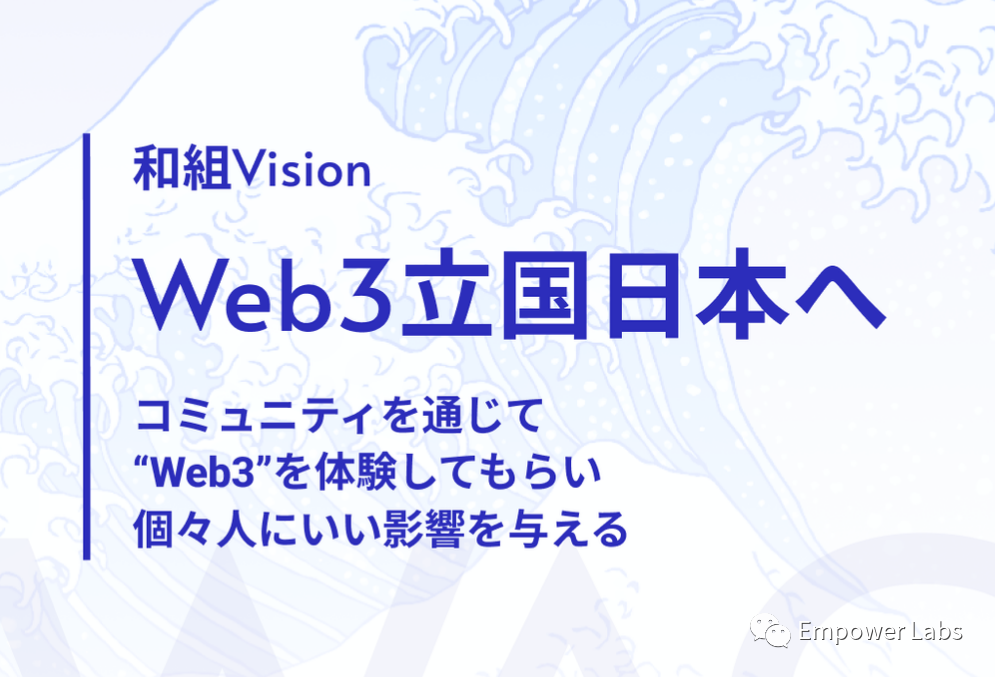
A DAO advocating for a Web3-powered nation
Among all Japanese DAOs, Yamagoshi DAO is perhaps the most prominent. Yamagoshi is a small village nestled in northern Japan’s mountains, once home to 2,200 residents. After a devastating earthquake 19 years ago, the entire village was evacuated. Even after recovery efforts ended over a decade later, only about 800 villagers remained.
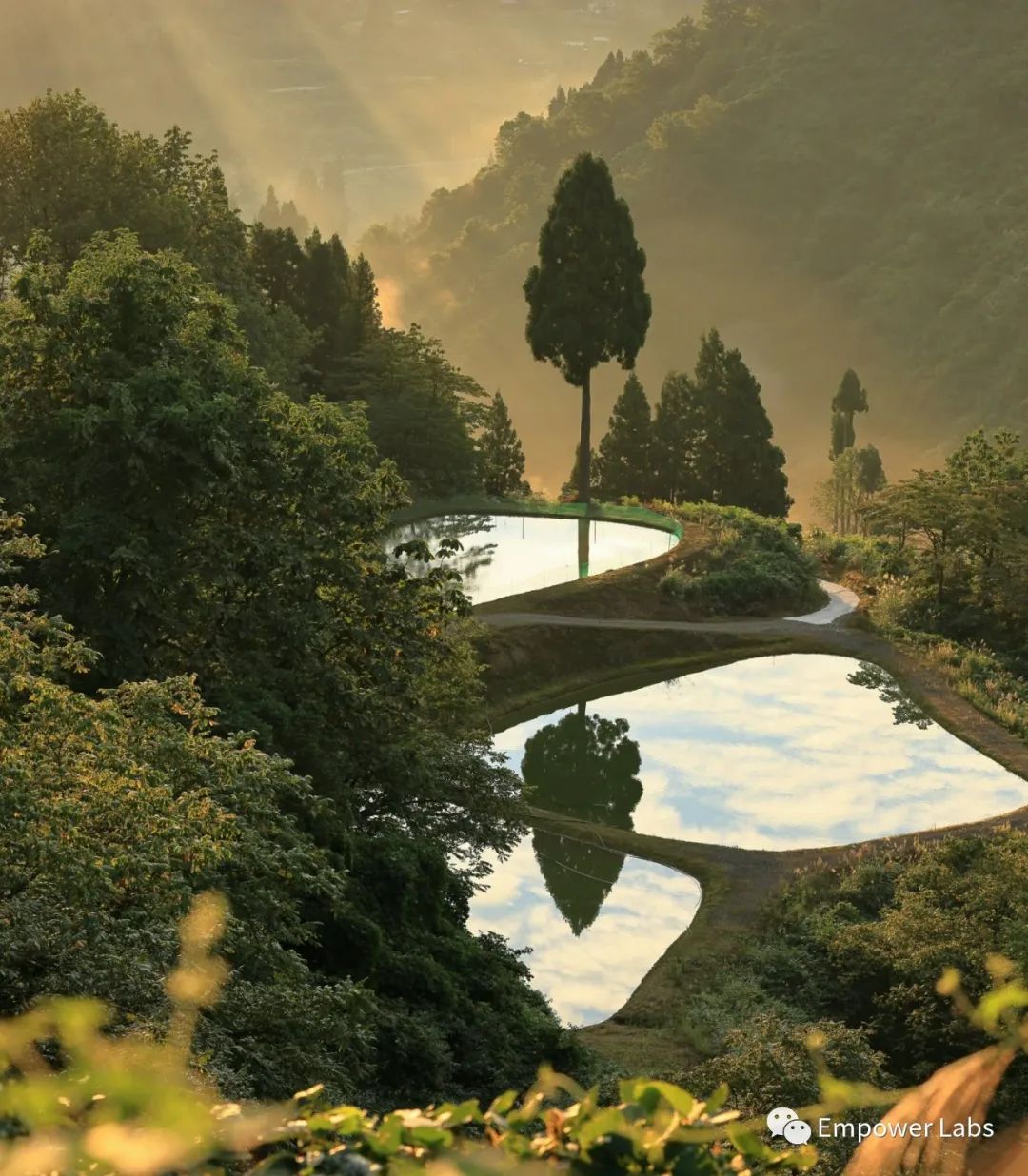
Facing depopulation and economic stagnation, in December 2021 Yamagoshi launched a digital resident NFT project, inviting global participants to co-rebuild the village. Riding the NFT bull market, the initiative gained massive attention—the NFTs sold out instantly, and the team was even invited to speak at Japan’s Diet (parliament).
However, ongoing operations proved challenging. Managed primarily by a local volunteer group, the Yamagoshi Residents Council, the team admitted difficulties during a 2022 year-end review. Their vision of “rural survival” and “regional revitalization” was too context-heavy for global audiences. Drawing lessons from that year, they reimagined their strategy—expanding the concept of digital residents across multiple regions to create network effects, while refining their DAO governance structure.
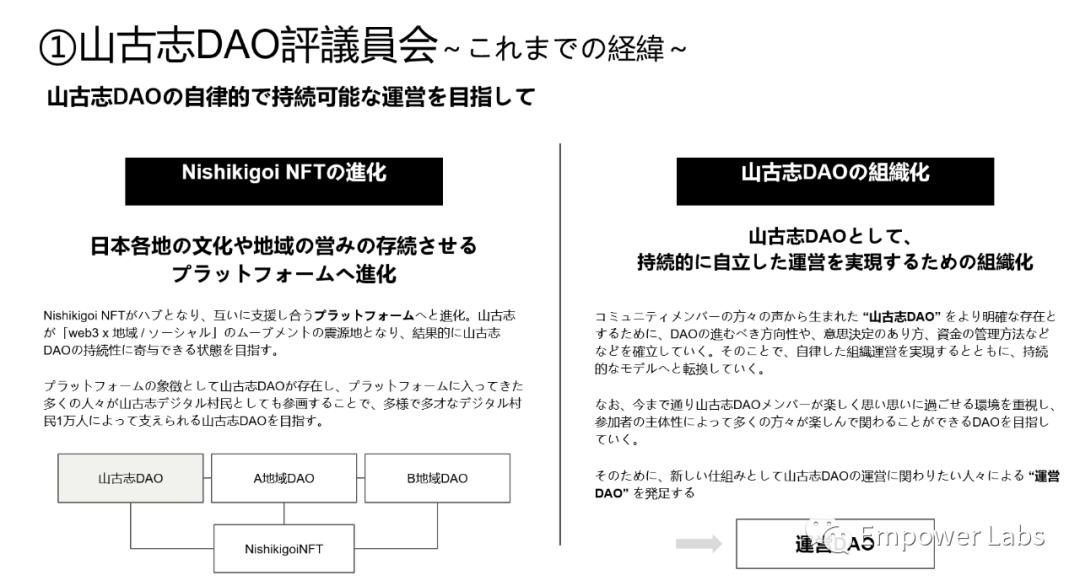
Yamagoshi DAO’s new roadmap
Coincidentally, a Japanese nonprofit founded in 2005, the “Beautiful Village Alliance,” launched the “Beautiful Village DAO,” positioning itself as a collaborative platform connecting picturesque rural communities with digital residents. To date, 71 villages have joined the DAO alliance.
Driving industry-level change is another visible trait in Japan’s DAO ecosystem. Unlike some radical “burn-it-all-down” industry DAOs, Japanese counterparts tend to be more gradual and pragmatic—rooted in specific sectors, fostering mutual support, and potentially evolving into professional service providers.
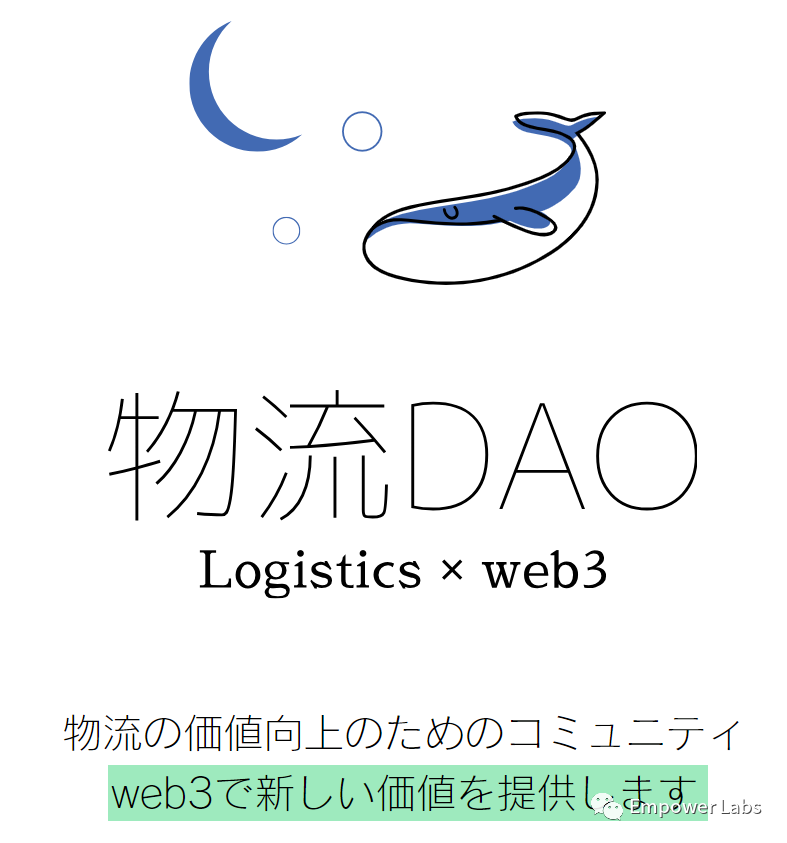
A logistics DAO aims to raise B2B awareness of logistics, maximize its value, and is developing consulting services with members experienced in shipping, freight forwarding, customs brokerage, and aerospace logistics. They’re also launching a nonprofit with former customs officials.
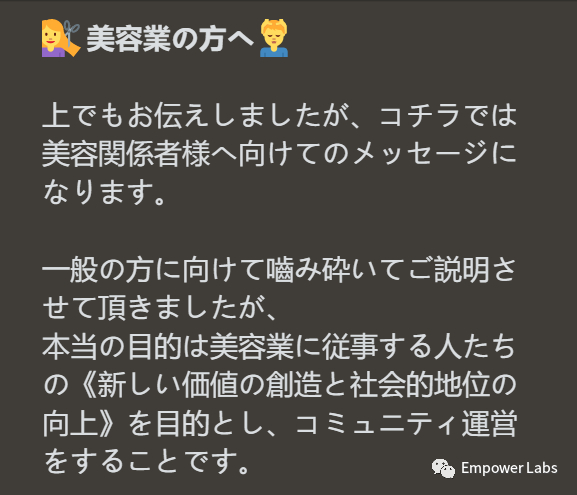
A beauty DAO focused on “creating new value” and “elevating the social status of beauty professionals.”
Even bolder DAOs aim to influence national policy—the standout being RulemakerDAO. True to its name, this DAO seeks to leverage community power to shape regional and national policies.
Japan is currently planning to introduce a digital nomad visa to attract global remote workers for short-term stays, and RulemakerDAO is one of the key driving forces behind this policy.
March 21: RulemakerDAO launches the Digital Nomad Visa Promotion Project.
April 19: RulemakerDAO members submit their proposal on the digital nomad visa to Junosuke Takei, then Vice Minister of Foreign Affairs.
May 8: RulemakerDAO hosts a public discussion attended by Vice Minister Takei and experts related to digital nomadism.
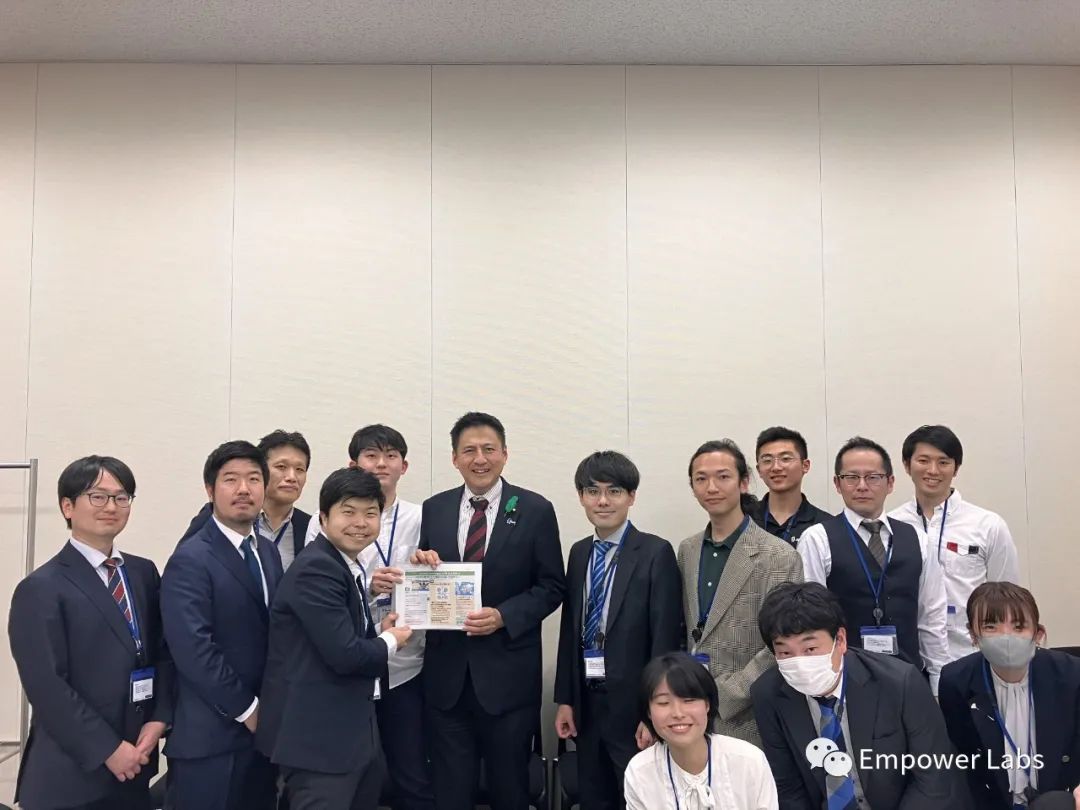
Image source: Rulemaker community public materials
May 19: They submit another proposal to Shuichiro Imayoshi, a ruling party LDP lawmaker, head of the LDP Youth Division and Executive Director of the Startup Promotion Committee—a Web3-friendly politician recently appointed as Parliamentary Vice-Minister of Education, Culture, Sports, Science and Technology in the September 17 cabinet reshuffle.
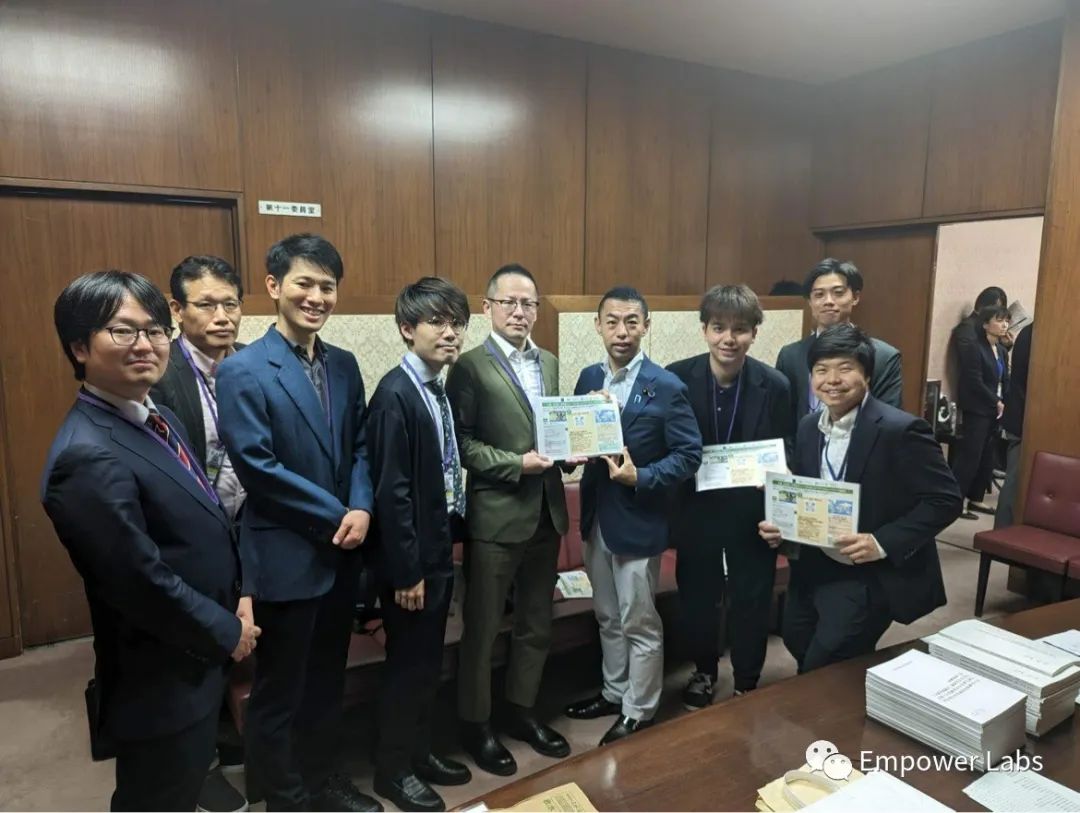
Image source: Rulemaker community public materials
June 8: The LDP Labor Revitalization Committee holds a full meeting to discuss the digital nomad visa, with RulemakerDAO members invited to participate.
August 31: RulemakerDAO hosts another digital nomad visa discussion, inviting lawmaker Imayoshi to attend.
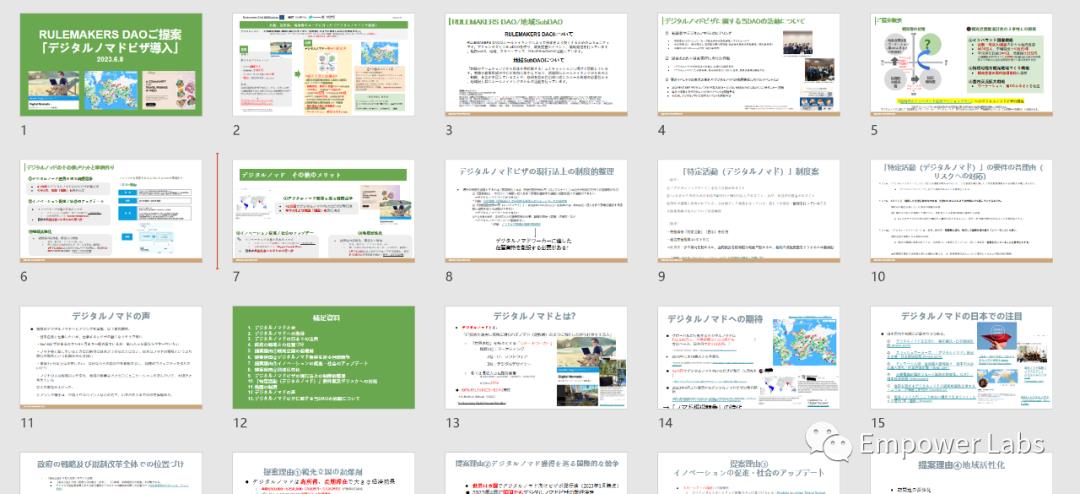
Digital Nomad Visa Proposal Document
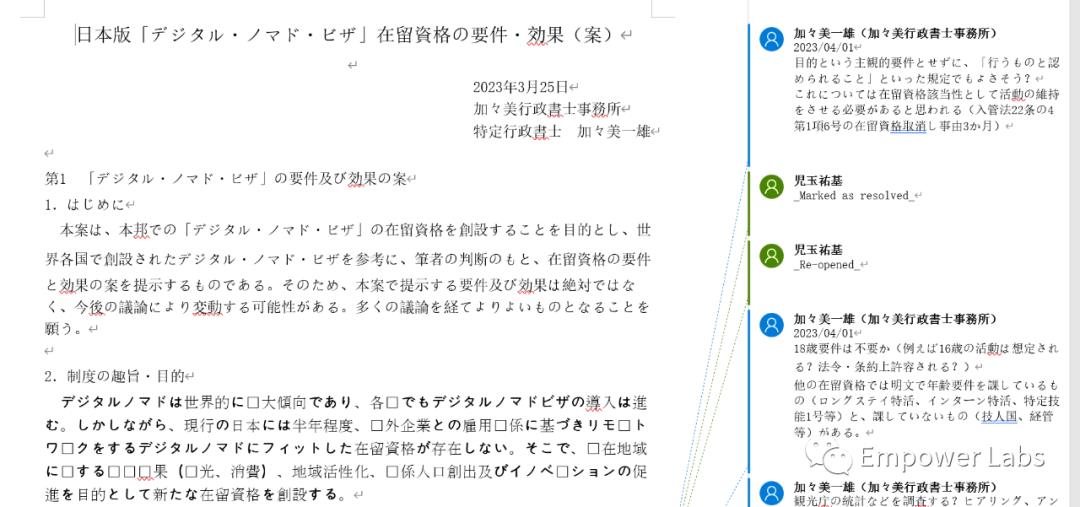
One member even drafted the actual policy proposal
The digital nomad visa policy is still under development and hasn’t been implemented yet. Regardless of whether it ultimately passes, the DAO has already demonstrated its capacity to influence national affairs.
This isn’t the only initiative RulemakerDAO is pursuing. They also plan to hold discussions and issue policy recommendations on topics like local government x Web3 and tourism.
The Japanese government isn’t idle either. In April, the LDP’s Social Affairs Promotion Committee released a Web3 white paper covering proposals such as a new tax framework for LLC-type DAOs and legislation for investment-focused DAOs.
Amid the wave of embracing Web3, Japan’s experimental social DAOs reflect how community-driven ideals are inspiring broader groups. These efforts go beyond redefining collaboration and governance—they reveal an emerging trend: communities will play an increasingly vital role in shaping future society.
Japan’s journey with DAOs is still in its infancy. Perhaps most current Japanese DAOs will eventually fade away. Yet whether they endure or dissolve, they’ve already planted seeds in Japan’s business circles, political arena, and among ordinary citizens. As these transformative seeds take root and grow in people’s minds, they may become pioneering forces bridging innovation and tradition within Japan’s conservative society.
My observations of Japanese DAOs remain superficial and don’t represent the full picture. Language barriers may have led to misinterpretations of certain materials—please consider this when referencing the article.
Join TechFlow official community to stay tuned
Telegram:https://t.me/TechFlowDaily
X (Twitter):https://x.com/TechFlowPost
X (Twitter) EN:https://x.com/BlockFlow_News