Uncovering the Operations and Narrative Behind Ethscriptions: How Did It Nearly Double Overnight?
TechFlow Selected TechFlow Selected
Uncovering the Operations and Narrative Behind Ethscriptions: How Did It Nearly Double Overnight?
The operational tactics behind ETHS have demonstrated how sophisticated marketing and promotion strategies in the crypto asset space can become.
 Navigating Web3 tides with focused insights
By Jaleel, Researcher at BlockBeats
While the ordinals ecosystem remains quiet, Ethscriptions—a BRC-20-inspired protocol—has suddenly surged. After stagnating between 270 and 300 for three to four months, its value nearly doubled overnight to reach 800U.
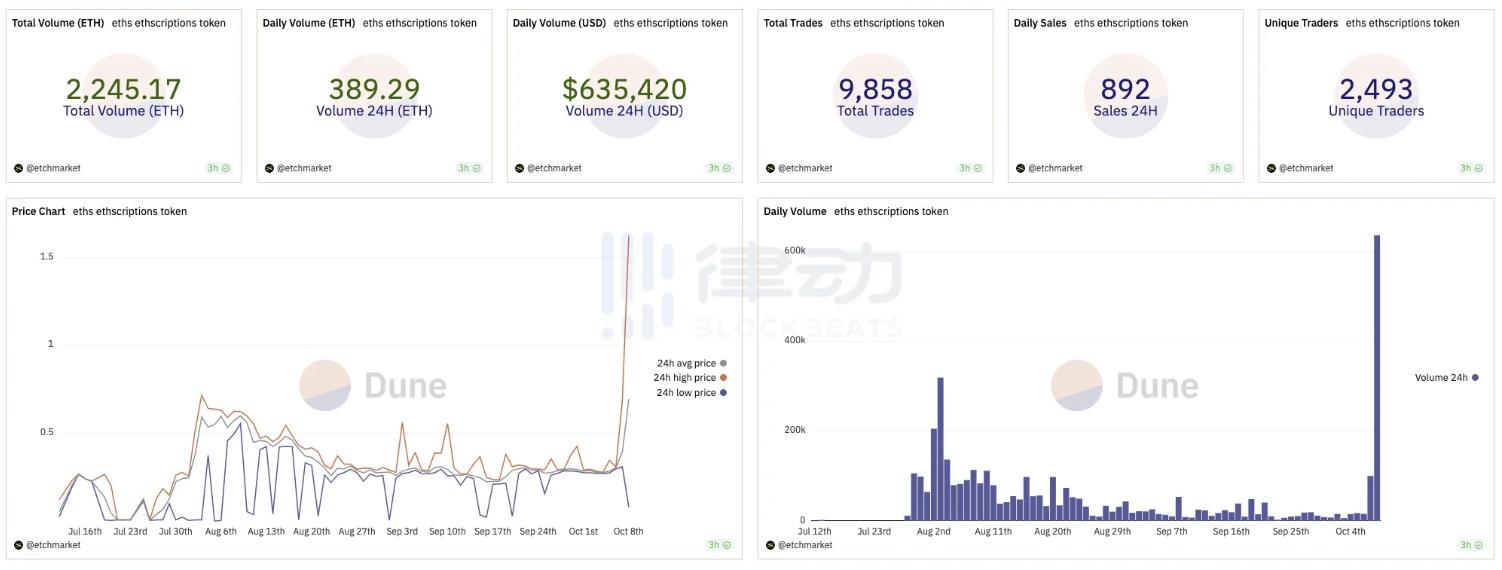
This caught many by surprise, especially since Ethscriptions initially launched without indexing, trading markets, or even a technical whitepaper like BRC-20 had.
Backers bullish on ETHS, move in aggressively
Ethscriptions enables non-financial and arbitrary data to be written directly onto the Ethereum blockchain. As long as file sizes do not exceed 96 kilobytes, users can inscribe any type of file. According to its creator, while currently limited to images, this may change in the future.
These inscriptions leverage Ethereum's so-called "calldata," which refers to the data provided during smart contract calls. Lehman stated that this method is cheaper and more decentralized than using contract storage. The protocol “guarantees uniqueness of all valid Ethscription content,” the creator wrote on Twitter.
BlockBeats previously covered Ethscriptions at launch. Read more: The 'NFT Atavism' Triggered by Ordinals Is Not an Idealistic Return.
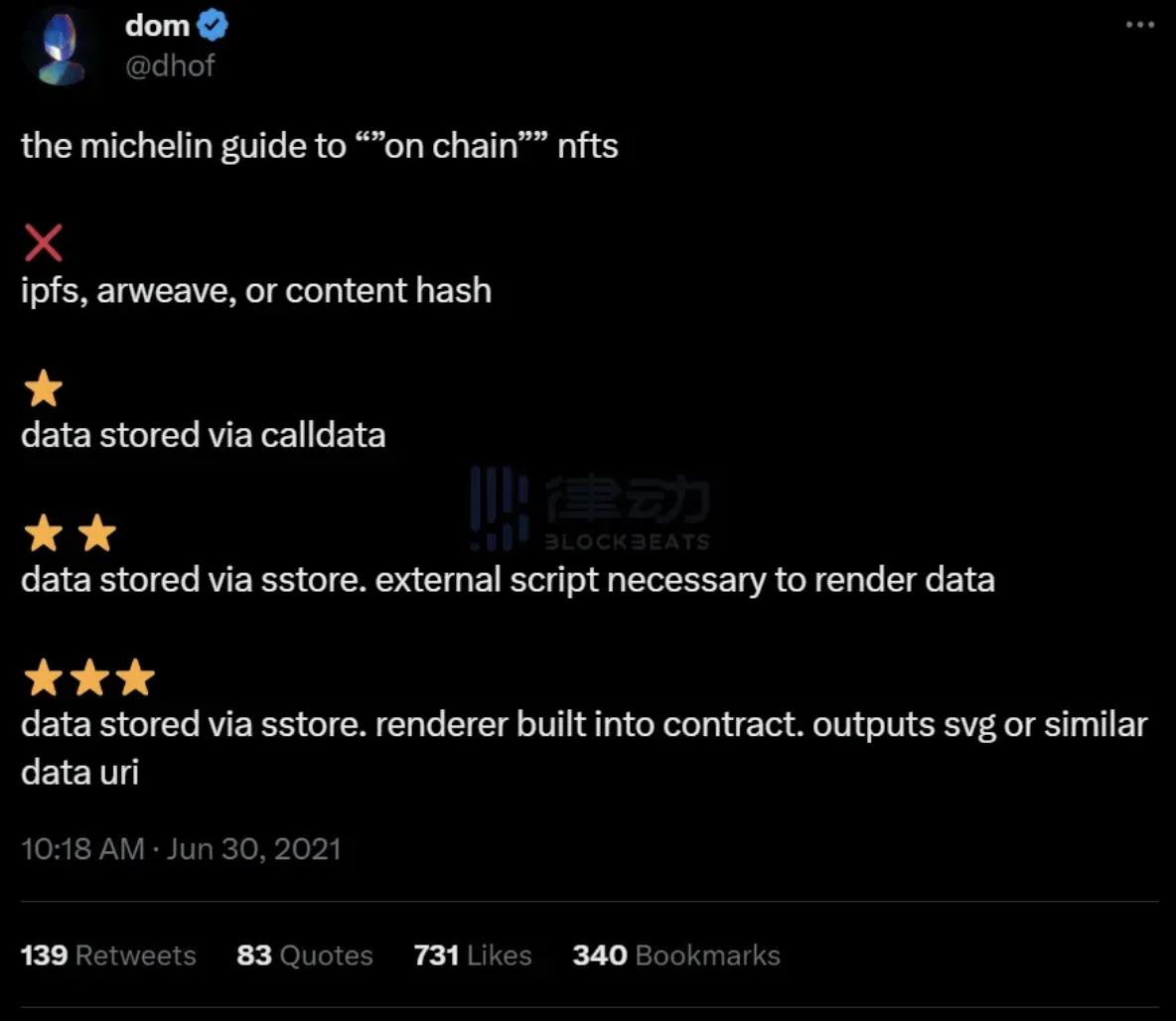
In a tweet posted two years ago, @dhof proposed a tiered classification system for fully on-chain NFTs based on implementation methods. One-star implementations store data within the calldata field of Ethereum transactions; two-star ones use the EVM sstore opcode to store data and rely on external scripts for rendering; the highest tier—three stars—uses sstore for storage but renders SVG images or other data URIs via built-in renderers inside smart contracts.
By this standard, Ethscriptions would only receive a one-star rating. As clearly stated on its official website, Ethscriptions operates by storing data in the calldata field of Ethereum transactions. Image rendering depends on off-chain indexing. By open-sourcing the indexer, off-chain operations are also made decentralized.
So what has brought about this springtime surge for Ethscriptions? Who are the driving forces behind it, and what sophisticated operational strategies have been employed?
"Dude, you really know the traffic playbook"
Throughout Ethscriptions’ rise, KOLs (key opinion leaders) have discovered powerful traffic-driving tactics, amplifying momentum. Posts containing the hashtag #ETHS simply need time to “silently bloom,” and once the ETHS wave arrives, they gain massive likes, retweets, and replies with just one click.
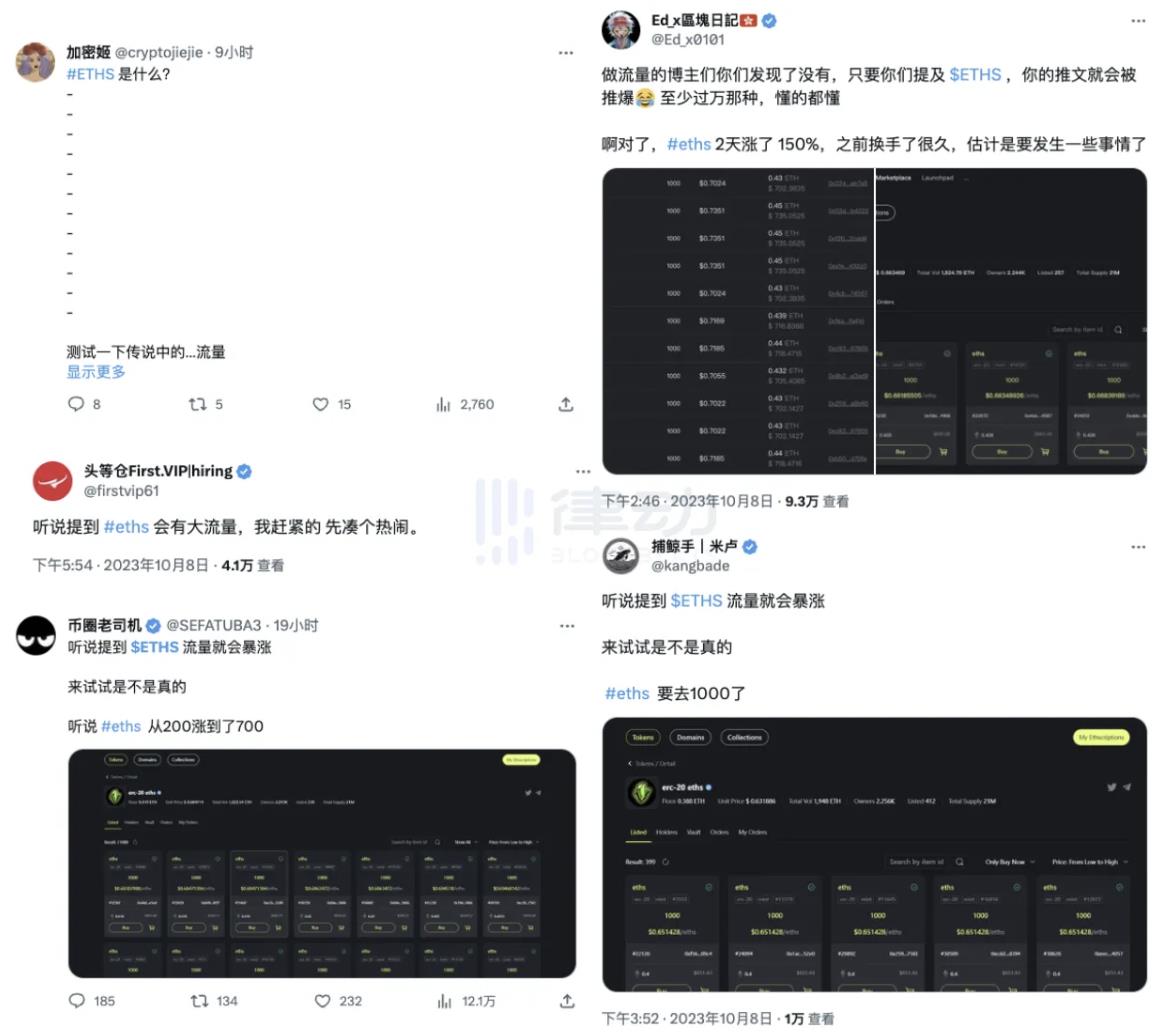
Within the Ethscriptions Telegram group, community members stand ready at all times, coordinating mass surges to boost visibility for related tweets. Higher traffic leads to more commentary from influencers, pushing prices higher. Under their influence, smaller participants follow suit, flooding feeds with promotional content and creating a powerful viral loop.
"We’re pushing a new L2 narrative"
Another key operational tactic used by the Ethscriptions movement is comparing ETHS to Layer 2 solutions—a new narrative gaining strong traction within the community.
“ETHS represents another approach to Ethereum Layer 2. Traditional L2s are separate chains and can introduce backdoors. ETHS transacts directly on the Ethereum mainnet, with gas fees as low as those on L2s. Swaps, DeFi, and GameFi applications can all run on ETHS. Most importantly, it runs on the mainnet—making it impossible to introduce backdoors—thus safer and more decentralized than conventional L2s. Now, various L2 projects have market caps in the billions, while ETHS is still only in the millions.” This message has become a widely copied and pasted talking point.
The origin of this new L2 narrative appears to stem from upcoming development proposals ESIP-5 and ESIP-6.
ESIP-5 refers to Bulk Ethscription Transfers from EOAs. Currently, non-contract addresses support transferring only one inscription per transaction. Once ESIP-5 launches, batch transfers of inscriptions within a single transaction will be enabled. According to @0xHirsch, up to 4,000 inscriptions could be transferred per transaction, costing just 0.11 ETH under current gas rates. ESIP-6 refers to Opt-in Ethscription Non-uniqueness. Currently, only the first inscription with identical content (characters) is considered valid. This indexing rule ensures uniqueness but creates limitations for use cases requiring repeated data transmission—such as interactions between smart contracts and Dumb Contracts needed for running the Ethscriptions Virtual Machine.
With ESIP-5 and ESIP-6 set to roll out, members of the Ethscriptions community argue: “Compared to other L2 solutions (like ZK, ARB), ETHS achieves lower-than-L2 gas costs without requiring network switching. After upgrading to ESIP-5, transfer fees dropped to around $0.05, making transaction costs cheaper than many existing L2s.”
In today’s crypto environment, project narratives, messaging, and marketing tactics have inevitably become increasingly elaborate. Through clever community-driven operations, Ethscriptions has achieved significant visibility and attention. Regardless of the project’s actual technical progress, the marketing strategies behind ETHS have demonstrated how sophisticated information propagation in the crypto space can become. However, whether its technological foundation can sustain its current high valuation remains to be seen over time.
Join TechFlow official community to stay tuned
Telegram:https://t.me/TechFlowDaily
X (Twitter):https://x.com/TechFlowPost
X (Twitter) EN:https://x.com/BlockFlow_News
 BlockBeats