









How Layer 2 Remains Hot: Its Operational Mechanisms and Current State
TechFlow Selected TechFlow Selected
How Layer 2 Remains Hot: Its Operational Mechanisms and Current State
An L2 is essentially a fully independent blockchain built on top of Ethereum, thereby inheriting Ethereum's own security guarantees.
 Navigating Web3 tides with focused insights
Written by: ROUTE 2 FI
Compiled by: TechFlow

Over the past few months, I've observed certain Layer 2 (L2) solutions attracting significant transaction volume and noticed various projects building on these L2s. But what exactly are these L2 solutions?
Before diving into Layer 2 solutions, it's important to understand the current state of the Ethereum mainnet. Ethereum currently processes around 12 transactions per second, and during periods of peak network activity, transaction costs on the mainnet have reached levels unaffordable for average crypto users. This has led to Ethereum’s scalability problem. The root of this issue lies in the fact that every node in the network must store and validate all transactions occurring on the network.
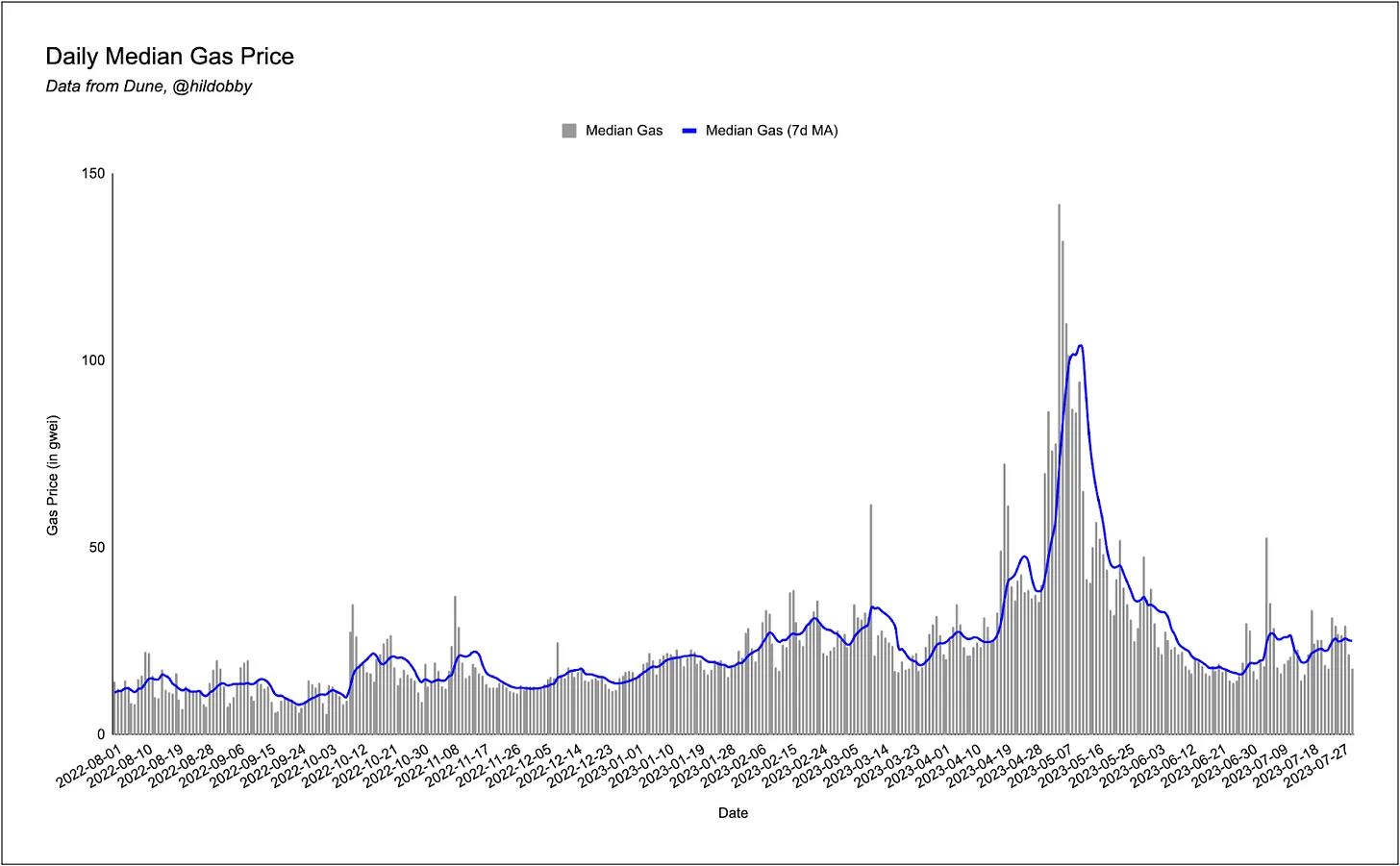
Layer 2 solutions were introduced to address Ethereum's scalability issues. L2s are essentially completely independent blockchains built on top of Ethereum, inheriting the security guarantees of Ethereum itself. Each L2 solution comes with its own set of security assumptions and trade-offs. The most popular form of scaling on Ethereum today is rollups, such as Arbitrum, Optimism, and Base.
Rollups are L2 solutions capable of processing transactions for Layer 1 (L1). General Ethereum transactions are typically 156 bytes—quite data-intensive. Therefore, rollups can process many transactions on their L2 execution layer and then bundle them into a single, concise transaction posted to the L1 state validation layer. By aggregating multiple transactions into one on the L2 execution layer, they significantly reduce the gas cost per transaction. There are many types of rollups, and not all rollups are the same. However, the most popular ones today are smart contract rollups: Optimistic rollups and zero-knowledge (ZK) rollups.
Smart contract rollups allow users to send funds to a rollup smart contract on L1 (Ethereum), which then manages transaction and state changes. A key component of rollups—and blockchains more broadly—is the Merkle tree. Essentially, a Merkle tree is a data structure that stores the state of everyone's funds and recorded transactions, enabling L1 to directly verify the state on L2 without downloading the entire state. Simply put, users interact and transact on L2 (changing the state), use their funds, and the L2 sends the Merkle root of these state changes back to L1 so that L1 can verify the chain’s state.
However, L1 needs some kind of proof to ensure that the Merkle root sent by L2 is valid. This is where the two types of smart contract rollups differ. The two primary forms of proof are fraud proofs and zero-knowledge proofs.
Optimistic rollups like Arbitrum and Optimism use fraud proofs to finalize state.
Here’s how fraud proofs work:
-
An L2 node posts a Merkle root along with a small bond to an L1 smart contract;
-
The L1 smart contract trusts the L2 node by default—this is where the term “Optimistic” comes from. L1 optimistically assumes the L2 update is correct;
-
However, this state change does not become final for 7 days;
-
During this 7-day period, anyone can submit a proof claiming the posted Merkle root is fraudulent. If proven, the update is reverted and the L2 node is penalized—their bond is given to the challenger;
-
The challenger can prove fraud by re-executing all transactions in the state root update and verifying the validity of each signature on those transactions;
-
If no challenge is raised within 7 days, the update becomes finalized and immutable.
In contrast, zero-knowledge (ZK) rollups use zero-knowledge proofs. Here’s how ZK proofs work:
-
An L2 node submits the Merkle root along with a ZK proof to the L1 smart contract, proving that the L2 correctly processed transactions and generated a new Merkle root;
-
If the L2 node attempts to post a fraudulent update, they cannot generate a valid ZK proof, so the L1 smart contract will reject the new Merkle root;
-
Once the ZK proof is verified, the state update is immediately finalized.
As mentioned earlier, the purpose of L2s is to address Ethereum’s scalability challenges due to high transaction/gas fees on the mainnet. Let’s now examine how the two major smart contract rollups calculate the gas fees paid by users.
Both Arbitrum and Optimism require users to pay two costs when transacting: L2 Gas (execution fee) and L1 calldata (security fee). L2 Gas (execution fee) functions similarly to gas fees on the mainnet. Every transaction on L2 must pay a gas/execution fee equal to the amount of gas used multiplied by the current gas price attached to the transaction: (L2 Gas Price) × (L2 Gas Usage).
As for the L1 calldata/security fee, this cost covers posting transactions back to Ethereum. This fee exists because the sequencer (the mechanism that aggregates L2 transactions and posts them back to L1) must pay L1 gas fees to publish data on Ethereum. It is calculated as follows: (Estimated L1 Gas Price) × (L1 Calldata Size + L1 Buffer).
Arbitrum and Optimism differ in how they price L2 fees. The most important distinction between the two lies in how they account for L1 computation costs. Arbitrum uses an oracle to price L1 computation, while Optimism includes a dynamic overhead (scalar) variable that the Optimism team can adjust to tune L1 computation costs.
It’s important to note that the cost of transacting on L2 is significantly lower than doing so directly on the Ethereum mainnet—this is a key reason why L2s are so popular. Currently, rollups offer cheap execution and storage on the L2 layer, but the cost of publishing data to L1—necessary for data availability—remains relatively high for users.
Earlier this year, an Ethereum proposal called EIP-4844 was introduced, expected to launch by year-end. EIP-4844 proposes adding a new type of transaction that allows for the acceptance of data blobs. These blobs are designed to be small enough to reduce storage overhead on the main chain. As previously noted, high transaction costs on the Ethereum mainnet are one of the primary expenses for L2 rollups when publishing batches and proofs to validate state changes. This proposal aims to significantly reduce L1 cost overhead. EIP-4844 is expected to reduce L1 batch publishing costs by 10 to 50 times.
Some Popular L2s
Arbitrum

Arbitrum is a Layer 2 solution designed to enhance the capabilities of Ethereum smart contracts—increasing their speed and scalability while adding extra privacy features.
It was built to address some of the shortcomings of current Ethereum-based smart contracts—such as inefficiency and high execution costs—which have degraded the Ethereum user experience and often made transactions prohibitively expensive.
Arbitrum uses a technology called Optimistic Rollup. Transactions are executed off-chain and then submitted to the Ethereum mainnet in large batches as calldata. This process helps offload much of the computational and storage burden currently borne by Ethereum onto off-chain systems.
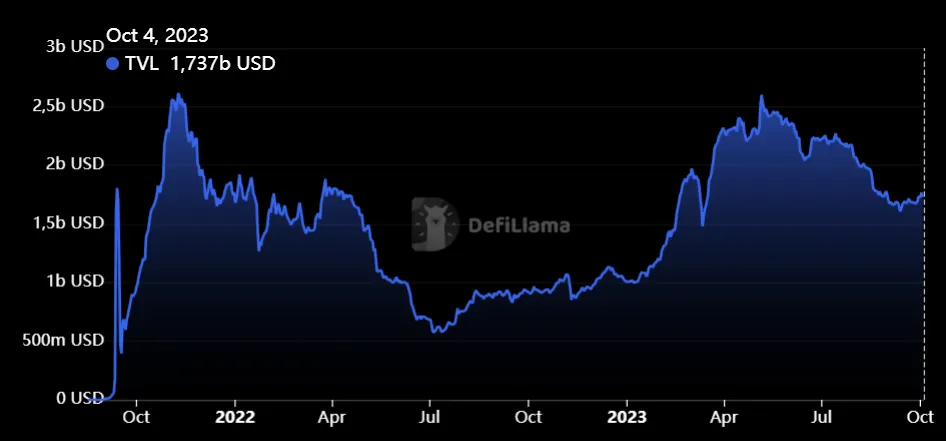
The most popular protocol on Arbitrum is GMX, a perpetual trading platform.
Optimism

Optimism (OP) is a Layer 2 blockchain built on top of Ethereum. Optimism benefits from Ethereum mainnet security and helps scale the Ethereum ecosystem using Optimistic Rollup. This means transactions are trustlessly recorded on Optimism but ultimately secured on Ethereum.
Optimism is one of the largest scaling solutions on Ethereum, with over $600 million in total value locked (TVL). It hosts 97 protocols, with the largest being Synthetix (SNX), a derivatives exchange; Uniswap (UNI), a DEX; and Velodrome (VELO), an AMM.

Polygon
Polygon (formerly Matic Network) is a Layer 2 scaling solution backed by Binance and Coinbase. The project aims to incentivize mass cryptocurrency adoption by solving scalability issues across many blockchains.
Polygon supports up to 65,000 transactions per second on a single sidechain, with block confirmation times under 2 seconds.
MATIC is Polygon’s native token, an ERC-20 token running on the Ethereum blockchain. The token is used for payment services on Polygon and serves as a settlement currency between users within the Polygon ecosystem.
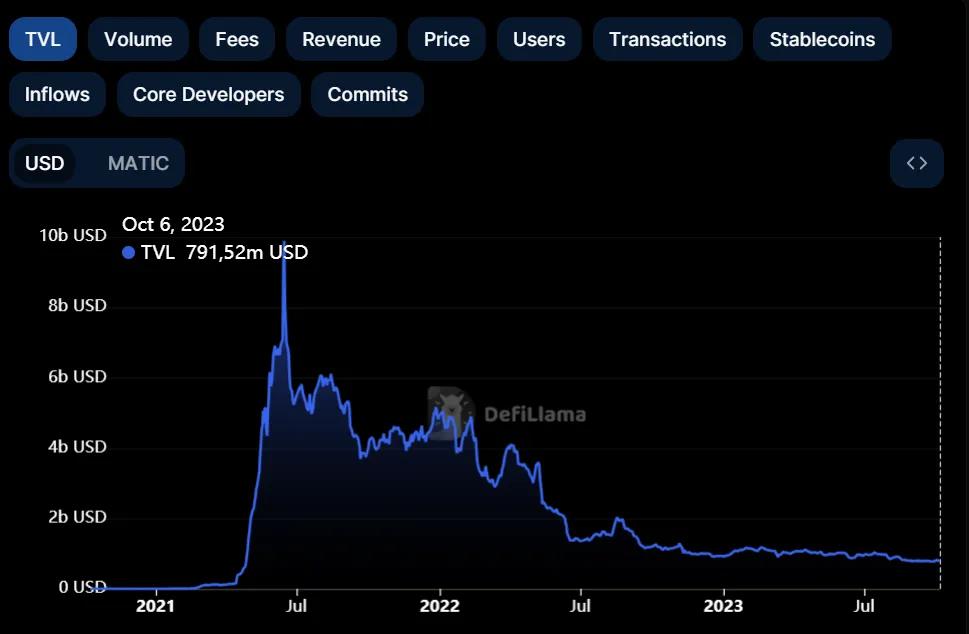
Currently, it holds approximately $800 million in total value locked, with Quickswap and PearlFi being the largest native protocols.
Base
Base is built as an Ethereum L2, offering the security, stability, and scalability required to support dapps. Developers can confidently deploy any EVM codebase and onboard users and assets from Ethereum L1, Coinbase, and other interoperable chains. Built atop the MIT-licensed OP Stack in collaboration with Optimism.
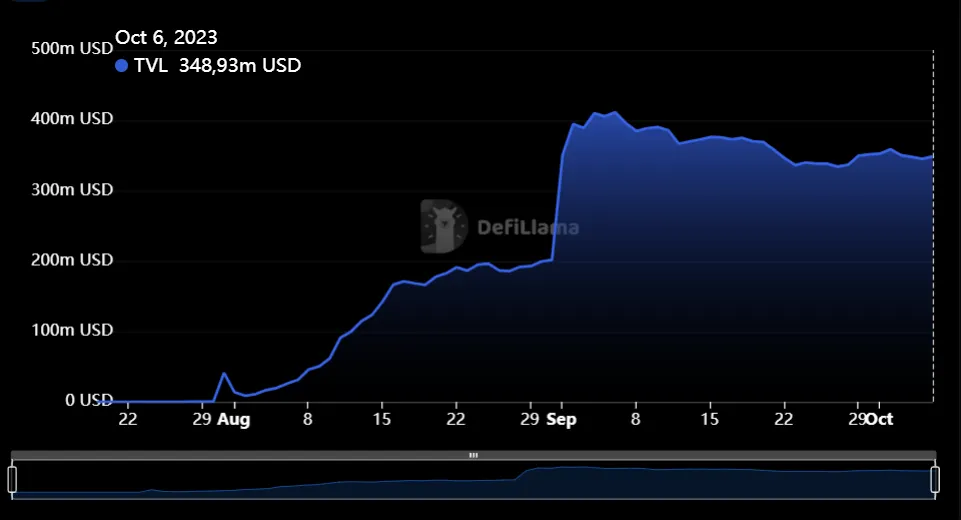
Base has $350 million in total value locked, with Aerodrome and Friend.tech being its largest DeFi protocols.
I wouldn’t be surprised to see L2 governance token prices rise ahead of EIP-4844, as this change could attract more traffic to these chains. My assumption is that with reduced gas costs for users, transaction volumes on these L2s will increase.
Join TechFlow official community to stay tuned
Telegram:https://t.me/TechFlowDaily
X (Twitter):https://x.com/TechFlowPost
X (Twitter) EN:https://x.com/BlockFlow_News
 @Route2FI






