








2023 Q3 Global Web3 Crypto Industry Regulatory Policies and Events Overview
TechFlow Selected TechFlow Selected
2023 Q3 Global Web3 Crypto Industry Regulatory Policies and Events Overview
This article covers regulatory developments and key events in the cryptocurrency industry during the third quarter of 2023.
 Navigating Web3 tides with focused insights
1. FSB and IMF Jointly Release Global Cryptocurrency Regulation Report
2. Whether Ripple’s XRP Is a “Security” Still Requires Further Clarification by the Court
On July 13, 2023, the long-running, three-year, $200 million lawsuit between the SEC and Ripple reached a "temporary" conclusion. In the 34-page ruling, the judge determined that Ripple’s fundraising from institutional investors constituted the sale of investment contracts—i.e., the issuance of “securities”—while token sales conducted via algorithmic exchange trading did not constitute investment contracts and therefore were not considered “security” offerings. On December 22, 2020, the SEC sued Ripple and its founders, alleging that since 2013, Ripple and its executives had repeatedly issued and sold (Offered to Sell or Sold) its XRP tokens in various ways, raising over several billion dollars. However, Ripple neither registered these token offerings with the SEC nor obtained any registration exemptions, thereby violating Section 5 of the U.S. Securities Act regarding securities offerings.
Web3 Lawyer Comments:
This case reflects a judicial tendency to downplay the intrinsic nature of tokens themselves (as many investment contract assets are simply “commodities”) and instead emphasize the method of token issuance and sale (for example, solo staking itself may not be a “security,” but a staking financial product might). This may point to a future regulatory direction. The court’s determination that programmatic sales do not constitute securities offerings could benefit exchange listing practices. Additionally, the judge’s treatment of “other distributions” contrasts sharply with the SEC’s March 8, 2023 revised *Framework for “Investment Contract” Analysis of Digital Assets*. The SEC maintains that “money” can include: (1) cryptocurrency rewards earned by completing bounties; (2) cryptocurrency distributed through airdrops. It is expected that this conflict will receive further debate during the appeal process. Related Article: Understanding the SEC v. Ripple Case: Clearing the Regulatory Fog3. Grayscale Wins Lawsuit Against SEC: How Far Is a Spot Bitcoin ETF?
On August 29, 2023, a U.S. federal court ruled in favor of Grayscale Investments LLC in its lawsuit challenging the SEC’s rejection of its spot Bitcoin ETF application. This decision could accelerate the approval process for similar applications from traditional financial giants like BlackRock and Fidelity. In October 2021, Grayscale first applied to convert its closed-end Bitcoin trust fund GBTC into a spot Bitcoin ETF. The SEC rejected the application, citing concerns about fraud and market manipulation prevention. Last year, Grayscale sued the SEC to compel judicial review of its administrative decision. To date, the SEC has not approved any spot Bitcoin ETFs, consistently citing concerns about market fraud and manipulation. All rejected applications have been denied on the grounds that the proposed products were not “designed to prevent fraudulent and manipulative acts and practices.” Previously, in 2021, the SEC allowed Bitcoin futures ETFs to trade, arguing that futures markets are harder to manipulate because prices are based on the Chicago Mercantile Exchange (CME), which is regulated by the CFTC. In the lawsuit, the judge emphasized that equal treatment in administrative decisions is a fundamental principle of administrative law. The SEC had recently approved two Bitcoin futures ETFs and permitted their trading, yet denied Grayscale’s spot Bitcoin ETF. Grayscale argued that its product was materially similar to the approved futures ETFs and therefore deserved equal treatment. Grayscale contended: (1) Its underlying asset—BTC—is highly consistent with those of the approved Bitcoin futures ETFs; (2) Its surveillance sharing agreements with market regulators are identical to those of the approved futures ETFs, meaning the potential to detect fraud or manipulation is equivalent in both spot and futures markets. Therefore, the logic used to approve Bitcoin futures ETFs should equally apply to spot Bitcoin ETFs; otherwise, all previously approved futures ETFs should be revoked. The court agreed, ruling that the SEC’s denial was arbitrary and capricious because the agency failed to justify its differential treatment of similar products. Consequently, the court found the SEC’s decision violated administrative law and vacated its denial of Grayscale’s application.
Web3 Lawyer Comments:
The court did not order the SEC to approve Grayscale’s ETF application. It only ruled that the SEC’s reasoning regarding fraud and manipulation was flawed. So what will the SEC do next? One possibility: The SEC may invent a new justification to reject Grayscale’s application, forcing a longer, costlier legal battle. This is possible—but depends on whether the SEC can accept this defeat and how determined Chair Gary Gensler is to continue resisting spot Bitcoin ETFs. Alternatively, the SEC could use this ruling as a graceful exit from its opposition. In a press release, it might say: “While we disagree with the court’s decision, we must respect the rule of law and judicial independence.” This would be a convenient way to cut losses and retreat from a losing battle. After all, traditional financial giants are actively preparing ETF applications—BlackRock CEO Larry Fink, for instance, has been exerting political influence in Washington, D.C. Moreover, the SEC has faced criticism for its opaque “regulation by enforcement” approach. Approving a spot Bitcoin ETF now could help reshape public perception of the SEC as overly rigid. Related Article: Grayscale Wins a Victory for the Future: How Close Is the SEC to Approving a Spot Bitcoin ETF?4. U.S. Crypto Regulatory Enforcement Actions
The United States still lacks a unified crypto regulatory framework. With legislative gridlock and the upcoming election year, regulatory agencies continue to clarify and expand their jurisdiction through “regulation by enforcement.” In this process, overreach by regulators may face judicial challenges, helping to clarify the boundaries of regulatory authority and enforcement limits.4.1 SEC Turns Attention to NFTs, Potentially Impacting the Entire Industry
On September 13, 2023, the SEC charged Stoner Cats 2 LLC (SC2) with selling unregistered securities, alleging SC2 raised approximately $8 million by selling NFTs tied to an animated web series. This marks the SEC’s second major enforcement action against the NFT sector since its August move against Impact Theory NFTs. This enforcement action could affect the entire NFT industry, as 99% of NFT projects follow operational models similar to Stoner Cats. The key factor in the “security” determination was SC2’s promotional activities and promises made to investors through public channels. An SEC official stated: “Whether packaged as beavers, chinchillas, or other animals, if an NFT constitutes an ‘investment contract’ based on its economic substance under securities law, it falls within the definition of a ‘security.’ In this case, Stoner Cats NFTs led investors to expect profits from future resale through marketing campaigns.” Because the “security” classification of Stoner Cats NFTs is broader than that of Impact Theory NFTs, this enforcement may ripple across the entire NFT industry. Alarmingly, 99% of NFT projects resemble Stoner Cats—they typically feature roadmaps outlining future development, rely on team reputation and resources, conduct extensive social media marketing post-launch, and often charge royalties far exceeding 2.5%. Ultimately, SC2 settled with the SEC by agreeing to: (1) Pay a $1 million civil penalty; (2) Establish a Fair Fund to compensate harmed investors; (3) Destroy all NFTs under its control; (4) Publish the enforcement order on its website and social media.Web3 Lawyer Comments:
When Azuki launched its Elementals collection, Azuki NFTs faced potential “security” risks due to: (1) Monetary investment (2 ETH); (2) A common enterprise where investors’ wealth was closely tied to the Azuki team (though not necessarily—the team could have cashed out immediately); (3) Expectation of profit from resale driven by the Azuki team’s efforts. More importantly, the project team’s influence on NFT pricing was so significant that the Elementals launch alone crashed the entire Azuki NFT market. Now the question remains: Which NFT project will be the SEC’s next target? Related Articles: SEC Penalties Against Stoner Cats NFT: This Time Could Truly Impact the Entire NFT Industry, SEC Issues First-Ever NFT Industry Penalty: What Makes an NFT a Security?4.2 U.S. DOJ Files Criminal Charges Against Tornado Cash Founders
On August 23, 2023, the U.S. Department of Justice (DOJ) filed criminal charges against Tornado Cash developers Roman Storm and Roman Semenov, accusing them of conspiracy to launder money, violate sanctions, and operate an unlicensed money transmitting business. Tornado Cash was a well-known Ethereum-based coin mixing service designed to enhance transaction privacy by obscuring the source, destination, and counterparties of cryptocurrency transfers. On August 8, 2022, the U.S. Office of Foreign Assets Control (OFAC) sanctioned Tornado Cash, adding certain associated blockchain addresses to the SDN list. Any interaction with these addresses became illegal for individuals or entities. OFAC stated that since 2019, over $7 billion in illicit funds had been laundered using Tornado Cash, providing substantial assistance, sponsorship, or financial and technical support to illegal online activities both inside and outside the U.S., posing serious threats to national security, foreign policy, economic health, and financial stability. In its August 23 press release, the DOJ alleged that the defendants created core functionalities of Tornado Cash, paid for critical infrastructure to promote the service, and personally profited millions of dollars—all while knowingly failing to implement required KYC and AML compliance measures. However, the DOJ’s approach leaves unresolved critical questions about the future of decentralized protocols: Should individual actors be held accountable for actions taken by third parties or decisions made by loosely affiliated community votes? U.S.-based defendant Roman Storm is expected to appear in court soon for arraignment, potentially giving the judiciary an opportunity to address these open issues. Related Article: The Dilemma of DeFi Regulation: Uniswap in Heaven, Tornado Cash in Hell
4.3 Uniswap Wins Lawsuit Against Investors — First Ruling in Context of Decentralized Smart Contracts
In April 2022, a group of investors sued Uniswap Labs, its founder Hayden Adams, and its investors, alleging they violated federal securities laws by listing “scam tokens” without registration, causing investor losses and demanding damages. Judge Katherine Polk Failla stated that the true defendants should be the issuers of the scam tokens, not the developers or investors behind the Uniswap protocol. Due to the protocol’s decentralized nature, the identities of the actual perpetrators were unknown to plaintiffs (and equally unknown to the defendants). Plaintiffs targeted Uniswap hoping the court would extend liability to them, arguing that Uniswap provided a platform facilitating the issuance and trading of scam tokens in exchange for fee revenue. Ultimately, the judge concluded that existing crypto regulations do not support the plaintiffs’ claims, and under current U.S. securities law, Uniswap developers and investors cannot be held liable for harms caused by third-party use of the protocol. The lawsuit was dismissed.Web3 Lawyer Comments:
This case marks the first judicial ruling in the context of decentralized smart contracts. The judge acknowledged the lack of precedent involving DeFi protocols—no prior court has ruled on smart contracts in decentralized environments, nor established a legal basis for holding defendants liable under securities law. The judge recognized that the Uniswap smart contracts operated lawfully, just as they facilitate exchanges of crypto commodities like ETH and BTC. Section 12(a)(1) of the Securities Act grants investors the right to sue sellers who violate Section 5 (registration/exemption). Because this hinges on the unresolved question of whether certain crypto assets are “securities,” the judge stated: “This is not a matter for the courts—it is for Congress to decide.” The court declined to extend the Securities Act to cover the conduct alleged by plaintiffs, concluding that “investor concerns are better directed to Congress than to this court.” Although SEC Chair Gary Gensler has avoided labeling ETH as a security, Judge Katherine Polk Failla explicitly referred to ETH as a “crypto commodity” in this case and refused to expand the Securities Act’s scope to cover the plaintiffs’ claims. Given that Judge Failla is also presiding over the SEC v. Coinbase case, will her views—that “this is not for the court to decide” and that “ETH is a crypto commodity”—carry over into that proceeding? Regardless, although laws governing DeFi are still evolving, this Uniswap ruling sets a crucial precedent: decentralized exchanges (DEXs) cannot be held liable for user losses resulting from third-party-issued tokens. This outcome may have even broader implications than the Ripple case and is a significant win for DeFi. Related Article: The Dilemma of DeFi Regulation: Uniswap in Heaven, Tornado Cash in Hell4.4 CFTC Turns Its Focus to DeFi—Potentially a More Threatening Regulator Than the SEC
On September 7, 2023, the CFTC again targeted DeFi, penalizing three U.S.-based blockchain firms—Opyn, Inc., ZeroEx, Inc., and Deridex, Inc.—which ultimately accepted settlements. Opyn and Deridex developed and deployed DeFi protocols and websites offering token derivatives and perpetual contracts, respectively. ZeroEx developed and deployed the 0x Protocol and a DEX application where leveraged or margin-based tokens—deployed by unrelated third parties—were available for trading. Such services may only be offered to retail customers through registered exchanges compliant with the Commodity Exchange Act (CEA) and CFTC rules, none of which these firms had done. They also failed to comply with KYC requirements under the Bank Secrecy Act. The CFTC ordered Opyn, ZeroEx, and Deridex to pay civil penalties of $250,000, $200,000, and $100,000, respectively, and cease their unlawful activities. Under settlement agreements, the companies agreed to pay fines to avoid further legal action. CFTC Enforcement Director Ian McGinley said: “There was once a belief among DeFi developers that on-chain activity was beyond the law. That is not the case. The DeFi industry may be innovative, complex, and rapidly evolving, but so too is our enforcement arm—we will actively pursue unregistered platforms allowing U.S. users to trade derivatives.”Web3 Lawyer Comments:
CFTC commissioners dissented, asking: If a DeFi protocol is developed for legitimate purposes but later used by unrelated third parties to violate CEA and CFTC rules, who bears responsibility? Should developers bear perpetual liability? These questions were effectively answered in the Uniswap case, where the court ruled that developers and investors should not be liable for harms caused by third-party use of the protocol, as the underlying smart contracts and third-party token contracts are entirely separate. There is ample room for discussion here. Most legal experts share the Uniswap judge’s view: liability should rest with malicious third parties, not developers who merely publish code and cannot control misuse. However, considering the DOJ’s criminal charges against Tornado Cash founders, the CFTC v. Ooki DAO case, and this latest enforcement, regulators clearly disagree. The CFTC continues to hold developers accountable for third-party misconduct—even when developers lack control. For example, in the ZeroEx enforcement, regulators did not assess whether the protocol developers were connected to the derivative tokens or capable of controlling their listing. Previously, the CFTC used the Ooki DAO case to establish liability for DeFi violations and accountability for DAOs and their voting members. Once a DAO becomes a viable defendant, on-chain activity is no longer beyond reach—regulators can use this as an entry point to supervise DAOs, DeFi, and DEX projects. This latest action represents further expansion of CFTC enforcement in the DeFi space. Related Article: CFTC Enforces Against Three DeFi Protocols, Sending a Warning to All Derivatives Platforms
5. Stirrings and Preparations in the Stablecoin Market
5.1 PayPal’s Stablecoin Could Drive Crypto Into the Mainstream
On August 7, 2023, U.S. payment giant PayPal announced the launch of its stablecoin, PayPal USD (PYUSD). Fully backed 1:1 by U.S. dollar deposits, short-term U.S. Treasuries, and similar cash equivalents, eligible U.S. users can exchange PYUSD for USD at par via PayPal. With this move, PayPal became the first tech giant to issue a stablecoin. As the only stablecoin supported within the PayPal ecosystem, PYUSD leverages PayPal’s two decades of experience in global payments, combining blockchain’s efficiency, low cost, and programmability to connect PayPal’s 431 million users, bridging fiat and digital currencies seamlessly for Web2 consumers, merchants, and developers. PayPal CEO Dan Schulman stated: “The shift to digital currency requires a stable instrument—digital, yet easily pegged to fiat currencies like the dollar. PYUSD provides the foundational infrastructure needed for the growth of digital payments.” Eligible U.S. customers can use PayPal to: (1) Transfer: Move PYUSD between PayPal and compatible external wallets; (2) Send: Make peer-to-peer payments using PYUSD; (3) Fund Purchases: Choose PYUSD at checkout; (4) Convert: Exchange PYUSD for any other cryptocurrency supported by PayPal. Paxos Trust Company, which issues PYUSD, was founded in 2013 and offers services including cash custody, cryptocurrency services, digital asset issuance, and securities and commodity settlements. It holds a BitLicense from the New York State Department of Financial Services (NYDFS). Although Paxos delisted Binance-Peg BUSD in February 2023 due to NYDFS directives and received a Wells Notice from the SEC suggesting BUSD might be classified as a security, its collaboration with PayPal—given the scale and scrutiny involved—suggests both parties have approached regulatory compliance with extreme caution.Web3 Lawyer Comments:
In today’s $120 billion stablecoin market, USDT and USDC hold approximately 68% and 21% market shares, respectively. Initially available only to eligible U.S. PayPal users, PYUSD faces direct competition from USDC and BUSD, as American users tend to prefer onshore, regulated stablecoins. On August 21, reports emerged that Coinbase is acquiring a stake in Circle Internet Financial, signaling stronger strategic and economic alignment between the two firms to counter competitors like USDT and PYUSD. This partnership could expand USDC’s utility beyond trading into areas like Web3 payments, foreign exchange, and cross-border transfers. Related Article: Payment Giant PayPal’s Stablecoin Could Drive Crypto Into the Mainstream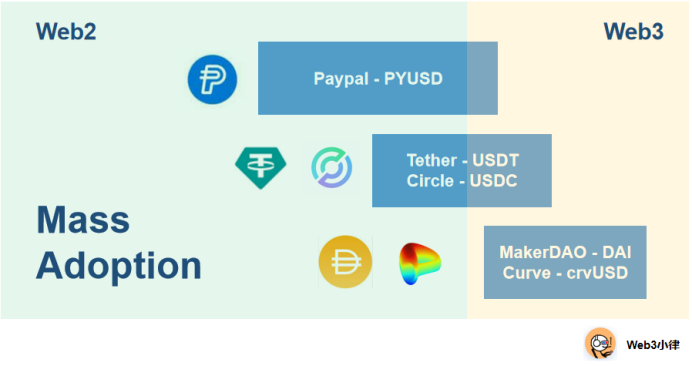
5.2 Singapore Launches World’s First Stablecoin Regulatory Framework
On August 15, 2023, the Monetary Authority of Singapore (MAS) announced the final version of its stablecoin regulatory framework, making Singapore one of the first jurisdictions globally to formally regulate stablecoins. MAS had initiated a public consultation on stablecoins in October of the previous year. Stablecoins are digital payment tokens designed to maintain a stable value by being pegged to one or more specified fiat currencies. With proper regulation ensuring value stability, stablecoins can serve as trusted mediums of exchange supporting innovation—including on-chain purchases and sales of digital assets. MAS’s framework applies to single-currency stablecoins (SCS) issued in Singapore and pegged to the Singapore dollar or any G10 currency. Issuers (banks and non-banks alike) must meet key requirements in the following areas:-
Value Stability: SCS reserve assets are subject to strict rules on composition, valuation, custody, and auditing to ensure high confidence in value stability.
-
Capital: Issuers must maintain minimum base capital and liquid assets to reduce insolvency risk and enable orderly wind-down if necessary.
-
Redemption at Par: Issuers must return the face value of SCS to holders within five business days of a redemption request.
-
Disclosure: Issuers must provide appropriate disclosures, including information on the value stabilization mechanism, holder rights, and audit results of reserve assets.
5.3 Hong Kong Calls for Launch of HKD-Backed Stablecoin
On August 22, Wei Yang, Vice President of the Hong Kong University of Science and Technology and Chief Scientific Advisor of the Hong Kong Web3.0 Association, recommended in a policy proposal that Hong Kong seize the opportunity to issue HKDG—a stablecoin backed by foreign exchange reserves. As the digital asset sector rapidly evolves, Hong Kong has a unique advantage to lead—but only if it acts swiftly. Falling behind major U.S. entities preparing to issue large-scale dollar stablecoins could cause Hong Kong to miss a historic chance. Although the Hong Kong dollar is freely convertible, its peg to the U.S. dollar limits its use in international trade or as a global reserve currency. By leveraging the rise of RWA tokenization to launch HKDG, Hong Kong could significantly elevate the international standing of the HKD—and even challenge dollar dominance in some domains. Timely issuance of HKDG could enhance the international status of the Hong Kong dollar, especially in digital assets. Combined with the emergence of RWA tokenization, it could lay the foundation for HKD internationalization and offer a path to challenge dollar hegemony. Though the stablecoin market is small relative to the global economy, strong momentum from RWA tokenization suggests explosive growth. If HKDG secures a favorable position before major U.S. financial players enter, it could maintain leadership even after market expansion. If the RWA tokenization market reaches trillions in value and HKDG captures 10% of the stablecoin market, it would represent a major victory for HKD internationalization and a real challenge to dollar dominance. Regarding stablecoins, the Hong Kong Securities and Futures Commission (SFC) previously stated in its consultation summary that the Hong Kong Monetary Authority (HKMA) released a consultation summary on crypto assets and stablecoins in January 2023, indicating plans to implement stablecoin regulations in 2023–2024, including licensing regimes for stablecoin-related activities. Until stablecoins are regulated, the SFC believes they should not be available for retail trading.Web3 Lawyer Comments:
As the most critical medium of exchange linking the real world and the crypto world, stablecoins play a vital role in the digital asset ecosystem. Governments worldwide are increasingly recognizing their transformative potential. Major jurisdictions are advancing consultations and legislative efforts on stablecoins: the EU’s MiCA includes issuer requirements, the U.S. Congress is drafting stablecoin legislation, the UK has passed laws covering stablecoins, Singapore has unveiled its regulatory framework, and Hong Kong is actively debating its regulatory approach. In today’s $120+ billion stablecoin market, 99% are backed by dollar-denominated assets. Tether, which holds over 65% market share, already owns $72.5 billion in U.S. Treasuries—ranking as the 22nd-largest holder globally. Thus, issuing stablecoins backed by non-dollar fiat assets to counter dollar-dominated stablecoins has become a strategic priority for many jurisdictions.6. Hong Kong’s First Regulatory Enforcement Action Post-Crypto Policy Reform
On September 13, 2023, the Hong Kong Securities and Futures Commission (SFC) publicly named JPEX, a self-proclaimed virtual asset trading platform—marking Hong Kong’s first regulatory enforcement action since launching its new crypto regulations. The SFC stated that JPEX aggressively promoted its services to the Hong Kong public through social media influencers and OTC desks. However, none of the JPEX entities hold an SFC license or have applied for one to operate a virtual asset trading platform in Hong Kong. JPEX responded on its website, claiming it was “unfairly targeted” and that the SFC should bear full responsibility for damaging Hong Kong’s crypto development prospects. Within days, users reported withdrawal restrictions, JPEX’s Token2049 booth was abandoned, and unusual on-chain fund movements involving 190 million USDT were detected. The SFC referred the case to police, who received numerous reports and arrested several individuals, including KOLs and influencers, on suspicion of conspiracy to defraud. On September 20, 2023, the SFC issued a statement confirming that JPEX was operating without a license in Hong Kong and may have engaged in investor fraud. By September 23, police had received 2,305 reports totaling HK$1.43 billion ($183 million), sparking widespread public concern.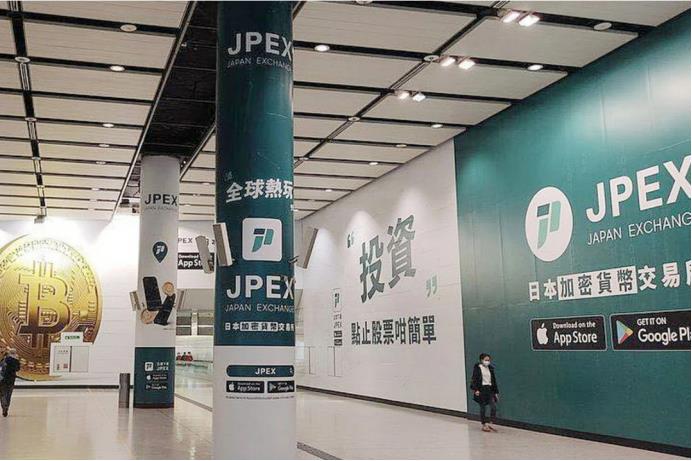
Web3 Lawyer Comments:
Looking back, JPEX’s tactics were amateurish to seasoned crypto users: celebrity endorsements, name association with JPX and Visa, multi-level referral schemes, and high-yield deposit offers—common features of past P2P Ponzi schemes, not even comparable to FTX. So why were so many people deceived? The SFC’s call for enhanced investor education answers this: newcomers need proper education—and sometimes hard lessons. This aligns with Gary Gensler’s oft-repeated SEC mission: “protect investors.” SEC enforcement primarily protects traditional market participants, not experienced crypto natives. This first enforcement action under Hong Kong’s new crypto policy reveals how far the city’s regulatory journey still is. While thousands suffered financial losses, the deeper casualty may be Hong Kong’s nascent crypto ecosystem itself.Join TechFlow official community to stay tuned
Telegram:https://t.me/TechFlowDaily
X (Twitter):https://x.com/TechFlowPost
X (Twitter) EN:https://x.com/BlockFlow_News
 0xWillmfer






