SEC Promotes Tokenized Stocks—Are Traditional Financial Institutions Getting Nervous?
TechFlow Selected TechFlow Selected
SEC Promotes Tokenized Stocks—Are Traditional Financial Institutions Getting Nervous?
The U.S. SEC is set to launch an “Innovation Exemption” framework—tokenized stocks could erode traditional exchanges’ liquidity and revenue monopolies.
 Navigating Web3 tides with focused insights
By: Tiger Research
Translated by: AididiaoJP, Foresight News
The U.S. Securities and Exchange Commission (SEC) is preparing to formally unveil its “Innovation Exemption” framework this week—a regulatory mechanism that would allow third parties to tokenize U.S. equities such as Apple and Tesla without requiring approval from the underlying listed companies. This move could accelerate the migration of traditional equity markets onto blockchain infrastructure, while simultaneously triggering deep concerns among exchanges over liquidity fragmentation and revenue erosion.
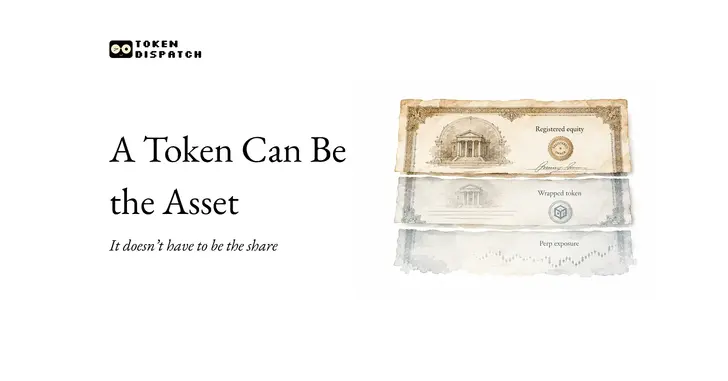
According to a Bloomberg report dated May 18, the framework stems from a deregulatory vision articulated in February by pro-crypto commissioners Paul Atkins and Hester Peirce. Coinbase and the Blockchain Association have previously submitted formal letters of support, strongly advocating for granting third parties the right to tokenize securities. However, Peirce’s guidance released on May 22 has a narrower scope than market expectations—applying only to on-chain equity instruments that fully preserve shareholder rights, and explicitly excluding synthetic stock tokens lacking voting or dividend rights.
Two Core Threats: Liquidity Fragmentation and Revenue Fragmentation
The central impact of tokenized equities lies in “fragmentation.” While the crypto industry frequently discusses liquidity aggregation, traditional finance views it as a structural threat.
- Liquidity Fragmentation: When the same stock is tokenized across multiple blockchains and decentralized platforms, trading volume and order flow—previously concentrated on NYSE or Nasdaq—will disperse across numerous venues. This leads to price discrepancies between platforms, increased slippage on large orders, and reduced overall market efficiency.
- Revenue Fragmentation: As trading activity disperses, transaction fees and intermediary revenues formerly captured by domestic exchanges will shift overseas or to competing platforms—directly undermining national financial competitiveness.
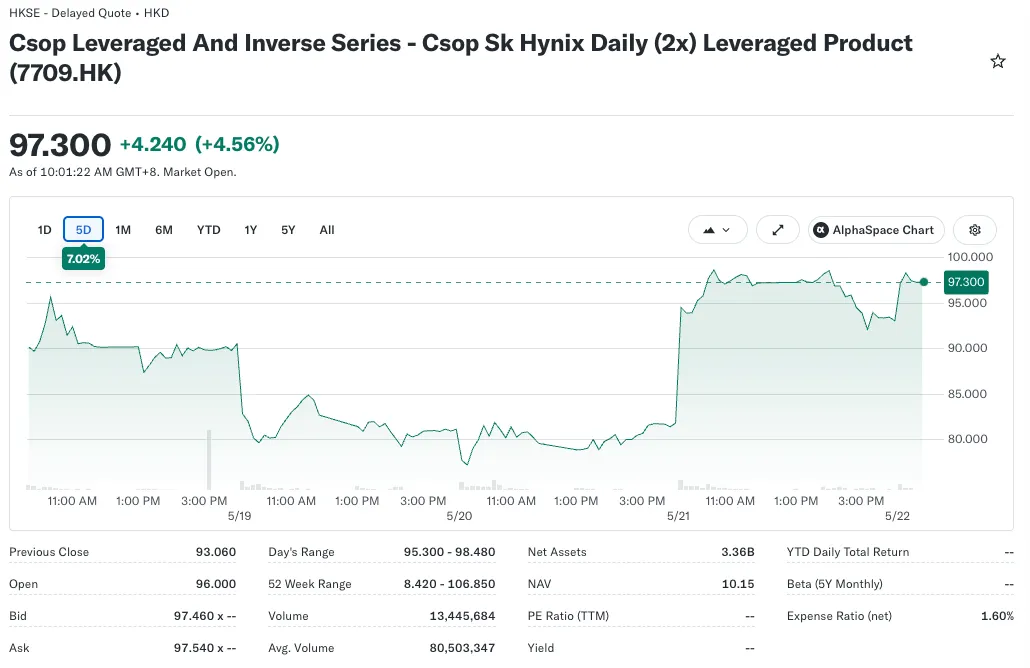
A Tiger Research report cites South Korea as an illustrative case: Hong Kong-based asset manager CSOP’s 2x leveraged ETF on SK Hynix has grown into the world’s largest single-stock leveraged ETF, with assets under management exceeding ₩11 trillion (approximately $8 billion). Had South Korea been first to launch a similar product via a regulatory sandbox, these management fees and financial revenues could have remained domestic.
The “Supermarket” Monopoly of Traditional Exchanges Is Ending
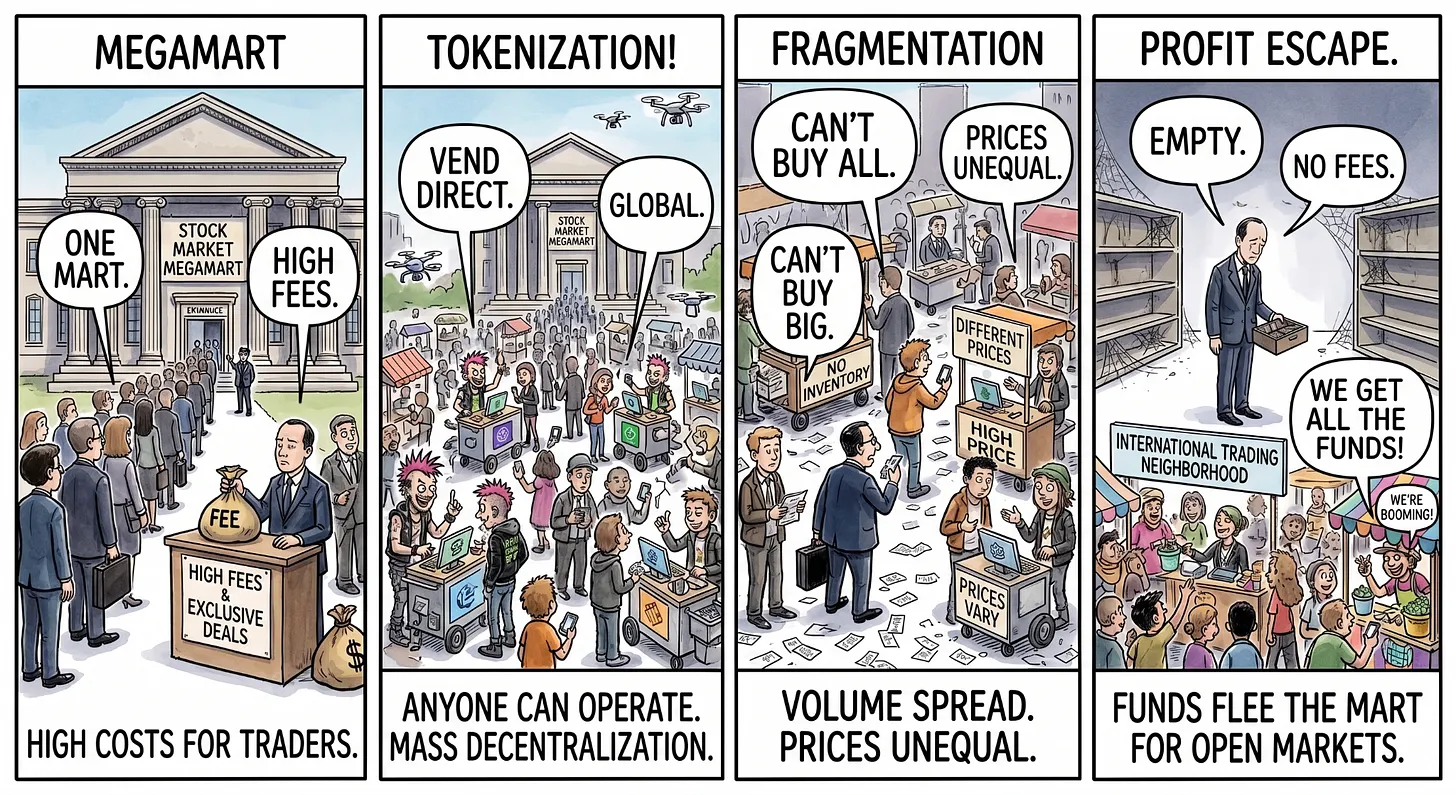
The report uses a vivid analogy to describe this shift: traditional equity markets resemble a dominant supermarket where all buyers and sellers converge, enabling exchanges to monopolize trading and collect fees. Tokenized equities, by contrast, are akin to permitting anyone—without permission—to open thousands of street-side stalls, executing trades directly outside the supermarket gates.
Such decentralization risks buyer attrition, thinner inventory per stall, difficulty executing large trades, and fragmented revenue streams. If domestic exchanges hesitate due to regulatory constraints, competing platforms in other jurisdictions will seize global capital flows and intermediary revenues first.
Capital Fragmentation Is Already Underway
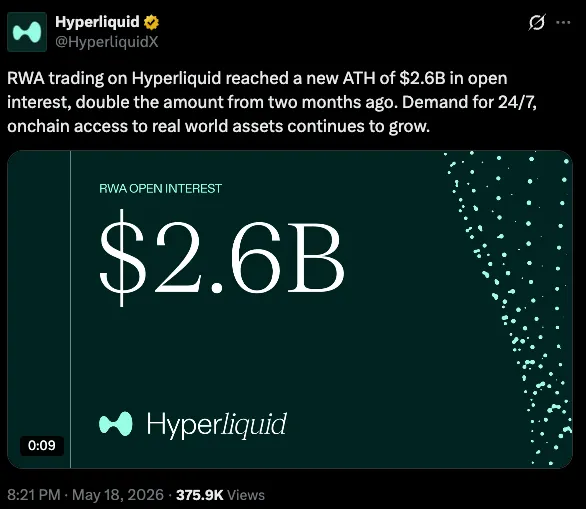
On the very same day the SEC signaled its framework (May 18), decentralized platform Hyperliquid’s RWA (real-world asset) open interest surpassed $2.6 billion—a new all-time high. Driven by round-the-clock demand for on-chain trading of traditional assets, RWA trading volumes on perpetual DEXs are expected to surge further.
Traditional financial institutions and regulators now face a dilemma: either proactively collaborate—as NYSE has done—to build tokenization infrastructure, or lobby regulators to stifle innovation in order to protect incumbent revenue streams. Regulators themselves remain torn—needing both to control the pace of innovation and to prevent domestic revenues from being eroded by offshore platforms.
Even if the framework is formally published, potential conflicts are only just beginning. Two key issues will dominate the horizon:
- A second “clarity battle” centered on shareholder rights;
- How to bring platforms like Hyperliquid—having grown within regulatory gray zones—into the formal regulatory framework. If classified as unlicensed exchanges, they could trigger renewed liquidity shocks and uncertainty.
In the digital asset era, financial institutions and jurisdictions that fail to act swiftly risk permanently forfeiting long-held fee-collection rights and financial leadership. Capital will continue dispersing in all directions.
Join TechFlow official community to stay tuned
Telegram:https://t.me/TechFlowDaily
X (Twitter):https://x.com/TechFlowPost
X (Twitter) EN:https://x.com/BlockFlow_News
 @tiger_research