








How can Arbitrum reverse its token's downward trend?
TechFlow Selected TechFlow Selected
How can Arbitrum reverse its token's downward trend?
Is Arbitrum still a contender for the L2 crown?
 Navigating Web3 tides with focused insights
By BEN LILLY
Compiled by TechFlow

Back in March, I said that Arbitrum’s airdrop on March 23 would be the final nail in its coffin.
Arbitrum is a Layer 2 protocol designed to help scale Ethereum. The “final nail” referred to the upcoming airdrop of its native token, ARB.
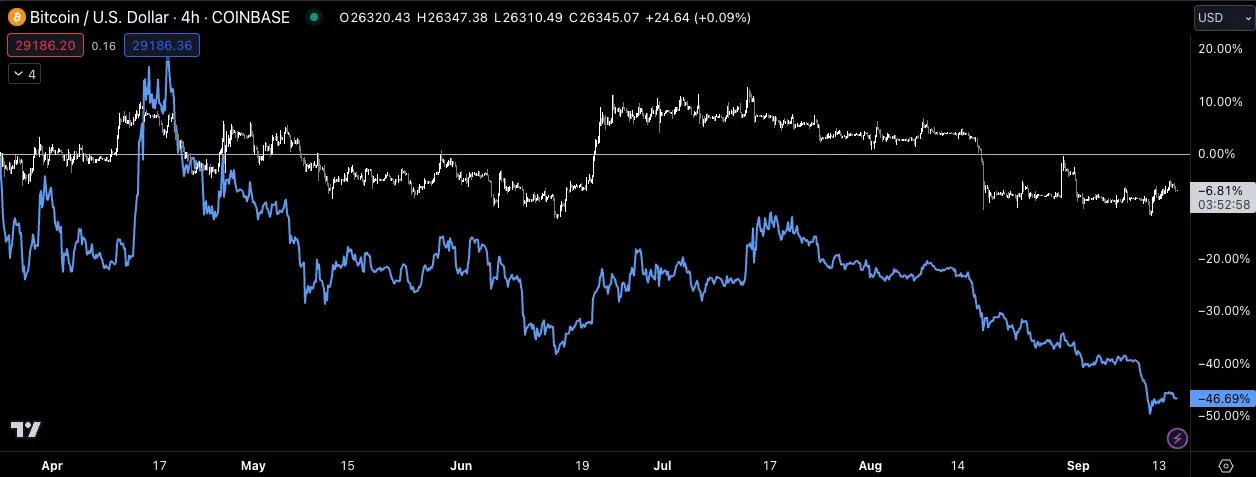
Since then, ARB’s price performance has been far from impressive. While the broader market has struggled this year, ARB has performed especially poorly. On Monday last week, ARB hit a historic low of around $0.74. Whales and market makers have been dumping tokens at a loss. Some market makers recently sold 21 million ARB at an $8.15 million loss. Last week, ARB’s main competitor Optimism (OP) even surpassed it in market cap for the first time.
To be clear, I’m not blaming the airdrop for ARB’s decline. When launching a new token during a bear market, you shouldn’t expect miraculous price gains.
Price isn’t everything. The health of the entire network matters just as much. But this airdrop did place stress on the ecosystem. If Arbitrum wants to survive when the bull market returns, it needs to innovate and attract demand. And so far, ARB is struggling in that regard.
But I have some ideas. First, let’s explain why Arbitrum still has a shot at becoming the Layer 2 king in this bull-bear cycle.
Is Arbitrum Still in the Running for the L2 Crown?
Arbitrum has come a long way since its initial launch in August 2021.
For the first few months, it barely gained traction. Most DeFi projects from Ethereum chose to launch on Optimism instead of Arbitrum.
But over time, developers began shifting toward Arbitrum. While there may be several reasons, one stands out clearly.
You see, most protocols on Ethereum, including Optimism, require developers to write smart contracts using a language called Solidity.
But Arbitrum is different—it uses something called WebAssembly. Commonly used in web browsers, WebAssembly allows compilation of multiple programming languages like Rust and C++.
As a result, developers aren’t limited to Solidity alone. They can deploy smart contracts using alternative programming languages—possibly one reason they started flocking to Arbitrum.
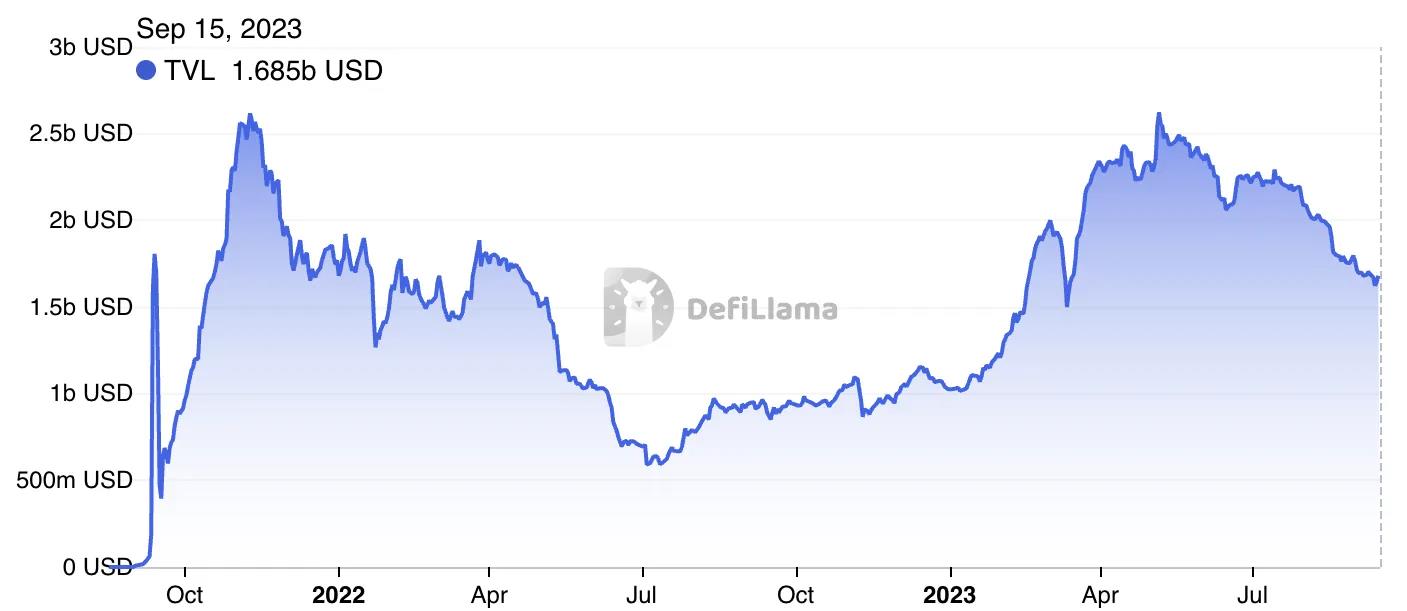
Thus, Arbitrum’s total value locked (TVL) grew from $0 at launch in August 2021 to $2.5 billion by November 2021—an astonishing rise in just three months.
Currently, Arbitrum’s TVL stands at $1.7 billion, compared to Optimism’s $650 million.
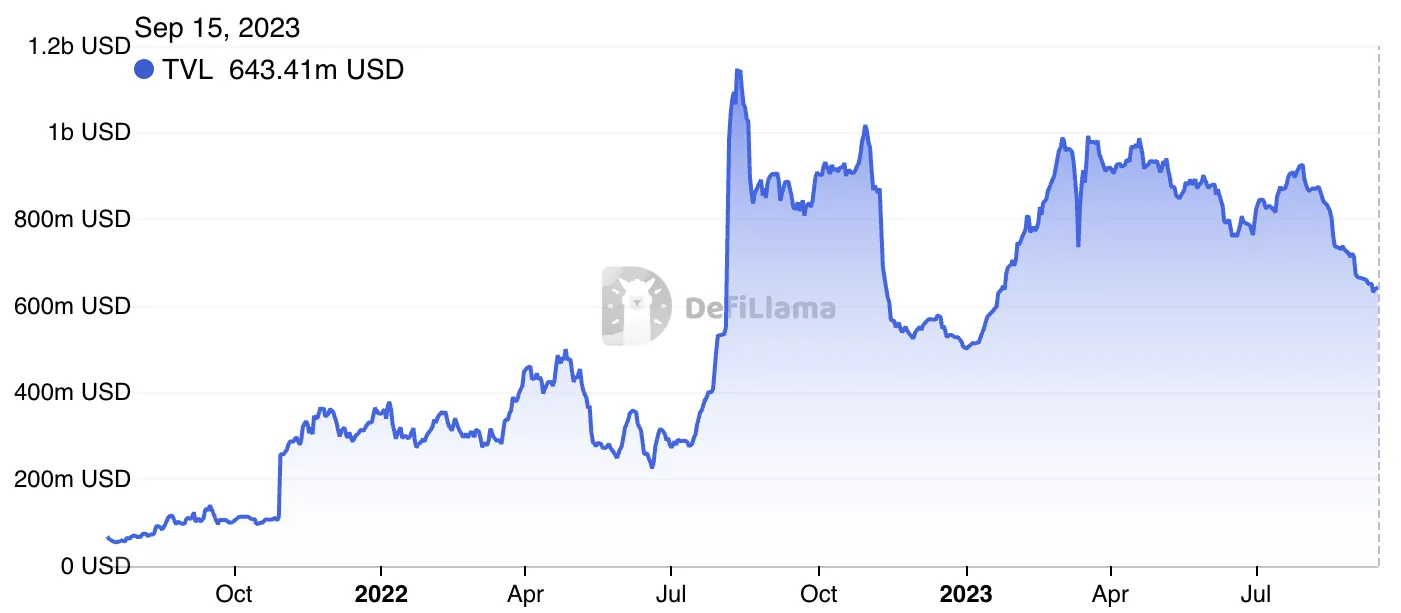
Arbitrum also hosts 450 protocols, more than double Optimism’s 190.
The key point to remember, however, isn’t just the amount of TVL on Arbitrum—but its diversity. Diverse TVL is crucial for ecosystem health, preventing overreliance on individual projects whose failure could threaten the entire network.
Arbitrum has 27 projects with over $10 million in TVL. While somewhat concentrated in the decentralized perpetual exchange GMX, which accounts for 25% of total TVL, it remains a highly diversified ecosystem.
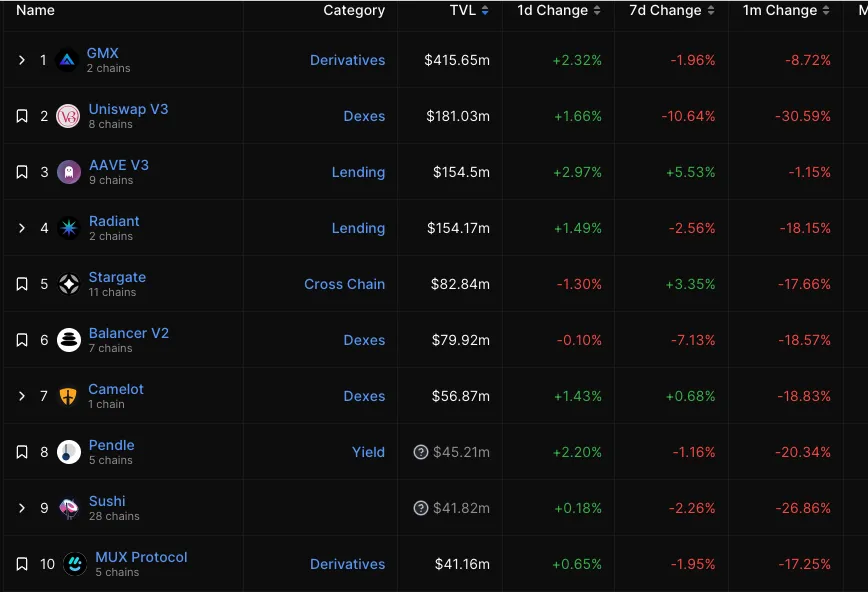
Moreover, across all these protocols, about $1.5 billion in stablecoins are held on Arbitrum—far exceeding Optimism’s $500 million, and comparable to Solana, one of the most popular Layer 1s for stablecoin payments.
Additionally, Arbitrum has slightly more users than Optimism: just over 107,000 versus around 85,000.
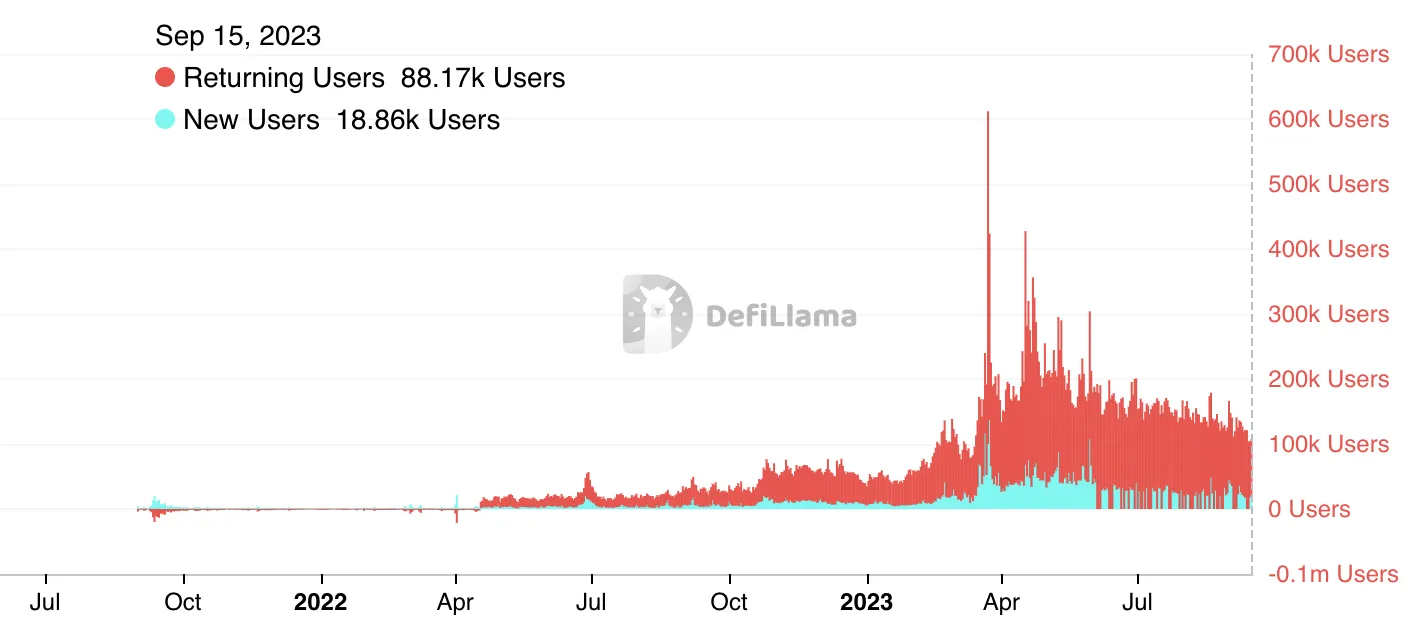
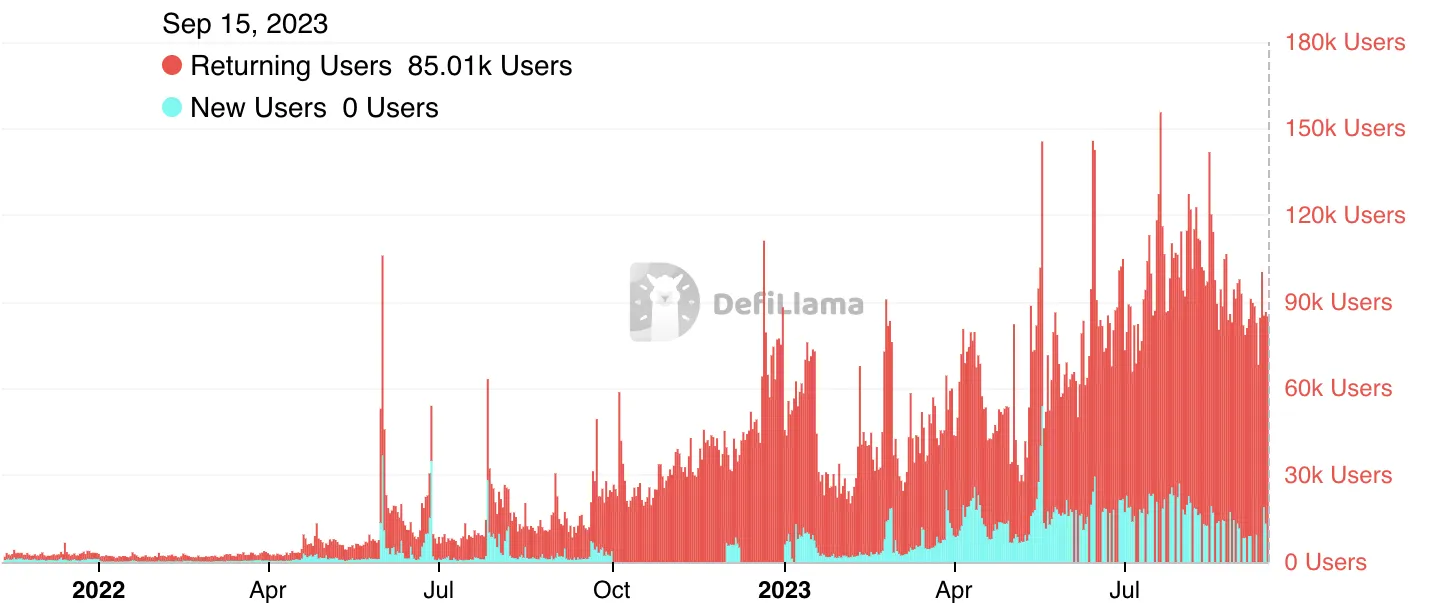
Given this level of activity even during a bear market, what else can Arbitrum do to become an unavoidable force in the next cycle?
It All Comes Down to Adoption
To explain the next part, we need to look at ETH’s own functionality.
ETH has many use cases. You can use it to pay for creating smart contracts or transaction fees. You can also use it as collateral for loans or to earn staking rewards.
These use cases don’t just make the token more versatile for holders—they also give it higher “stickiness.”
Thus, ETH has high stickiness because its utility extends beyond simple payments. It includes creating smart contracts and paying computation fees, as well as higher-level uses such as store of value, collateral, or yield generation.
Now, what can you actually do with the ARB token?
...Anything come to mind?
That’s the problem. You don’t even need ARB to pay for transactions on the network.
Tokens need at least basic levels of utility. Once they achieve that, they can begin unlocking the more advanced use cases we see with ETH.
The benefit is that it makes TVL extremely sticky. Then, all liquidity can act as a buffer to absorb supply shocks. Right now, ARB plays no such role. If a large unlock is coming or if a protocol on the network wants to sell tokens received from the airdrop, the ecosystem won’t be able to absorb it.
My point is that I’d like to see ARB used for more than just selling. If I were grading ARB’s tokenomics today, it would get an F.
Fortunately, Arbitrum can improve this.
Remember, Arbitrum is a rollup. It computes transactions off the Ethereum mainnet, and once verified, batches and sends them back to the main chain. This is faster and cheaper than validating every transaction directly on Ethereum.
To do this, the chain uses sequencer nodes to order transactions and send them back to the mainnet after validation.
The good news is that plans are underway to decentralize this process by requiring sequencer nodes to stake ARB tokens. These nodes could earn fees for validating transactions and helping run the network—similar to PoS networks. This would create a potential use case for ARB.
Looking Ahead
If ARB wants to remain competitive, it needs to start thinking about how to align incentives around its token.
The chart below shows over 1 million ETH (around $1.6 billion) locked on Arbitrum. Despite recent declines, it remains higher than at any point in 2022.
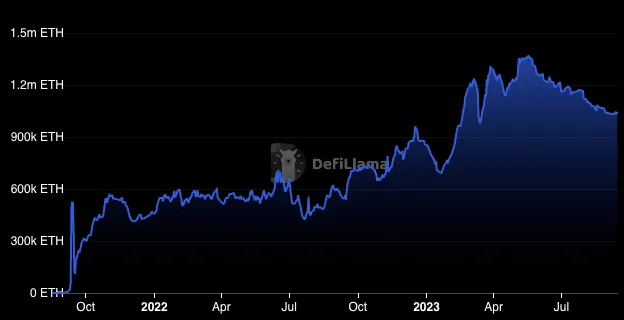
This demonstrates Arbitrum’s potential to play a pivotal role within the Ethereum ecosystem. But only if the team designs better utility for its token will the price chart reflect that potential—and make it a compelling asset when people begin de-risking from Ethereum.
Join TechFlow official community to stay tuned
Telegram:https://t.me/TechFlowDaily
X (Twitter):https://x.com/TechFlowPost
X (Twitter) EN:https://x.com/BlockFlow_News
 JarvisLabs






