








Why Cosmos Is the Right Choice for Building New Blockchains?
TechFlow Selected TechFlow Selected
Why Cosmos Is the Right Choice for Building New Blockchains?
This article will discuss four reasons why Cosmos is an ideal platform for developing new blockchains.
 Navigating Web3 tides with focused insights
Author: Beehive Validator
Translation: TechFlow

Cosmos is a Layer 1 blockchain technology dedicated to the vision of an "internet of blockchains," successfully creating a network of independent yet interconnected blockchains. Four years have passed since its mainnet launch in March 2019, and despite recent market downturns, the Cosmos ecosystem has continued rapid development, achieving impressive statistics. In this article, we will discuss four reasons why Cosmos has become the ideal platform for developing new blockchains.
The Cosmos Ecosystem Survives the Downturn
Built on the Tendermint consensus algorithm, Cosmos ensures a secure network with minimal latency. This enables Cosmos to process thousands of transactions per second, making it suitable for various applications including decentralized exchanges, gaming, and DeFi.
One of Cosmos’ key features is its ability to connect numerous independent blockchains into an integrated ecosystem, enabling seamless transfer of value and data across chains. This is achieved through the Inter-Blockchain Communication (IBC) protocol, which allows blockchains to exchange tokens and data and communicate with each other.
In particular, Cosmos and other "internet of blockchains" platforms such as Polkadot or Avalanche drove the application-specific chain trend during the previous cycle. At that time, Ethereum scalability support was considered essential for any new L1 launch. However, in Q2 2022, the collapse of Terra Luna within the Cosmos ecosystem plunged the cryptocurrency market into winter, followed by crises at 3AC, FTX, and Genesis. Like other simultaneously launched L1 projects, Cosmos slowed down, but the Cosmos ecosystem continues to expand both in quantity and quality.

Although Cosmos receives less media attention than newly launched L1 projects and isn’t as popular in the market as L2 solutions, it has been working behind the scenes to improve infrastructure and attract more blockchain participants to its community. As of early Q3 2023, Cosmos already hosts over 60 mainnet blockchains—an increase of 50% from Q2 2022—while Polkadot, developed under similar principles, has 45 parachains. Additionally, there are over 258 projects currently running on testnets within Cosmos, preparing for imminent launches.
Similar to blockchains themselves, assessing an ecosystem’s value solely by the number of active dApps is impractical. Therefore, let’s take a closer look at some outstanding blockchains being developed within the Cosmos ecosystem.
dYdX

Since its launch, dYdX has become the dominant perpetual contracts exchange on Ethereum using StarkNet’s StarkEx technology. In late 2022, the development team announced the migration of dYdX V4 to a private network built on the Cosmos SDK platform and Tendermint Core consensus. This decision was influenced by several factors:
-
Performance: Aligned with dYdX’s order book (CLOB) structure, a Cosmos-based private blockchain can significantly enhance processing performance.
-
Customization: dYdX desired greater technical control. For example, the team decided to implement an independent validation system for off-chain transaction handling to reduce network congestion.
-
Interoperability: Interaction via StarkEx on Ethereum is quite complex, whereas the new dYdX Chain can easily interact with over 60 other IBC-supported projects/blockchains.
-
Gas Fees: On Ethereum, fees are paid in ETH. On Cosmos, the team chose to eliminate gas fees and instead use their native token to collect transaction fees, thereby accruing value for the $DYDX token and fostering their own community.
As the first major Ethereum project to undergo such a transformation, dYdX serves as a pioneer for other non-native Cosmos projects considering a similar shift from decentralized applications to independent blockchains. This is highly exciting—not only does it demonstrate dYdX’s confidence in Cosmos, but it may also inspire future projects.
Noble
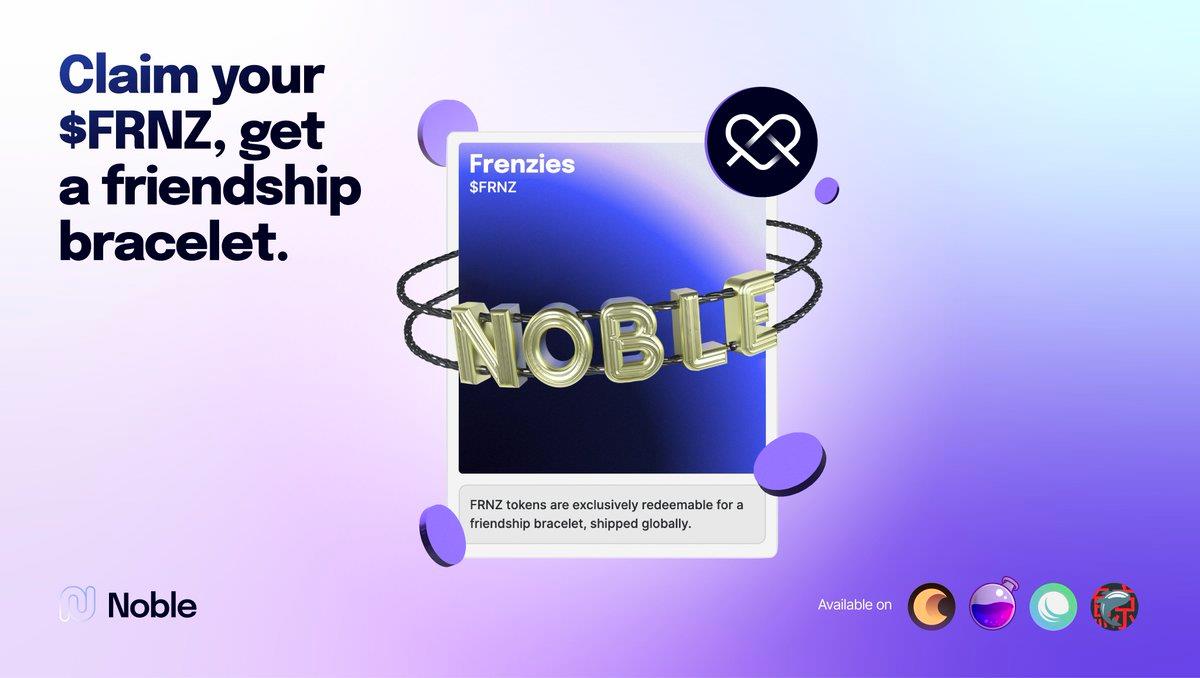
Cosmos will support Circle’s native USDC through Noble—a significant milestone, as Cosmos has never previously hosted an influential native stablecoin. Currently available stablecoins on Cosmos are wrapped versions, such as axlUSDC and gravUSDC. Despite improvements, these still face inherent challenges like liquidity fragmentation and bridge risks that are unfriendly to DeFi and users.
Native USDC will be deployed using Circle’s Cross-Chain Transfer Protocol (CCTP), which burns USDC on the source chain and mints it on the destination chain. This mechanism is more efficient and secure than standard key-and-mint bridge designs used for wrapped tokens.
Currently, native USDC is issued on only eight chains, so Circle’s decision to launch USDC on Cosmos reflects strong confidence and commitment to the ecosystem. It also indicates Circle’s expectation of growing liquidity and user base within Cosmos in the near future.
Aura Network
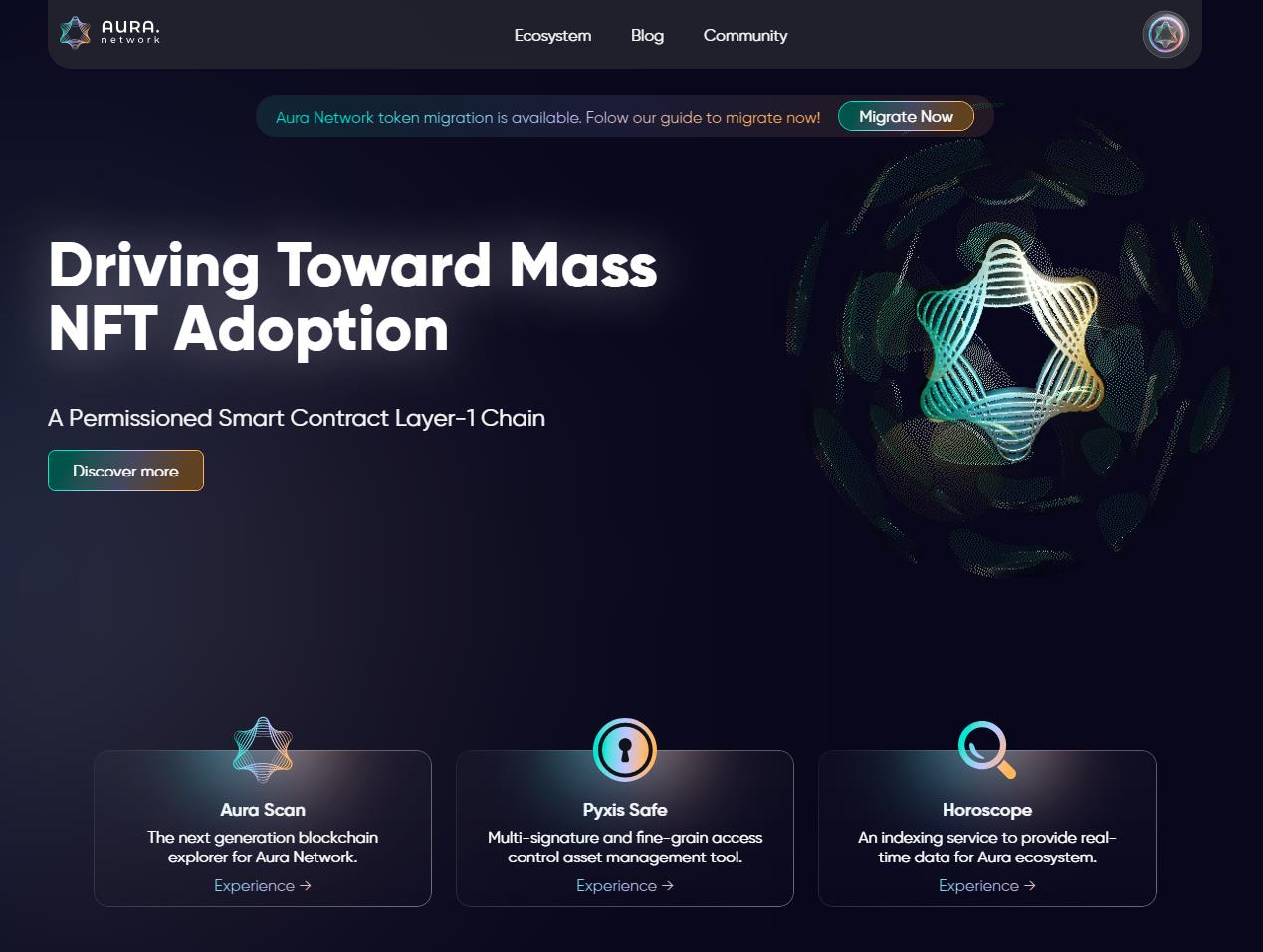
Aura Network is a first-layer blockchain centered on NFTs. Aura streamlines and enhances user-friendliness for all NFT-related applications—such as creation, trading, and data collection—making them easily accessible for both developers and users.
Aura is included here to illustrate Cosmos’ vision: every blockchain can be optimized for a specific purpose.
Since its founding in March 2022, Aura has demonstrated impressive activity on GitHub, averaging 617 commits per month. Notably, in July 2023, Aura ranked second only to Cosmos Hub in development activity.
These metrics suggest that Cosmos no longer needs to worry about NFT sector development within its ecosystem.
Four Reasons to Choose Cosmos for Building New Blockchains
1. Cosmos SDK — The Perfect Blockchain Development Toolkit
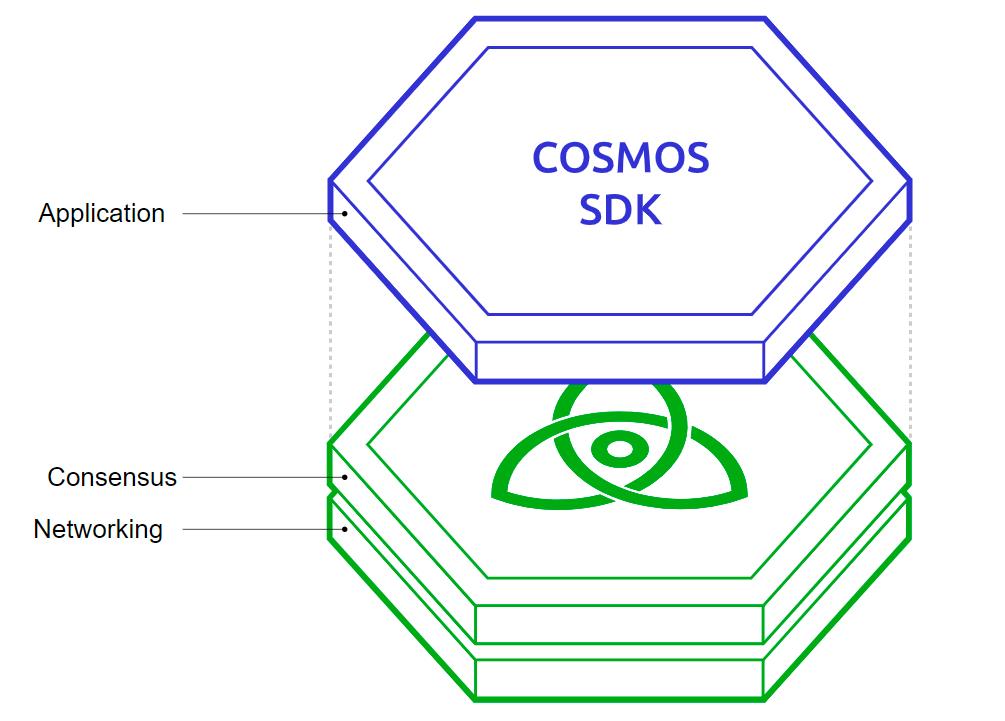
The Cosmos SDK is an almost ideal toolkit that enables developers to quickly and easily build blockchains from scratch. With the Cosmos SDK, developers can create fully independent blockchains with fast transaction processing speeds while maintaining interoperability and information exchange with other blockchains in the ecosystem. Crucially, developers can modify and optimize their blockchains to meet specific needs such as DeFi, NFTs, or gaming. Key advantages of the Cosmos SDK include:
-
Tendermint Consensus Mechanism: Tendermint Core is the default consensus engine for the SDK. Tendermint is currently the most widely adopted Byzantine Fault Tolerant (BFT) consensus mechanism in the industry and is regarded as the benchmark for Proof-of-Stake systems.
-
Open Source and Flexible: The SDK is open source and designed for easy blockchain construction using composable modules. As the ecosystem of open-source modules grows—with increasing contributions from developers—building complex decentralized platforms becomes even easier.
-
Security: The SDK incorporates capability-based security by design, making it an extremely secure environment for blockchain development. Firewalls manage access and protect on-chain applications from malicious modules.
-
Interoperability: Blockchains built with the Cosmos SDK can exchange tokens and value with other chains in Cosmos via the well-known IBC protocol.
2. Cosmos Ecosystem — Continuous Growth
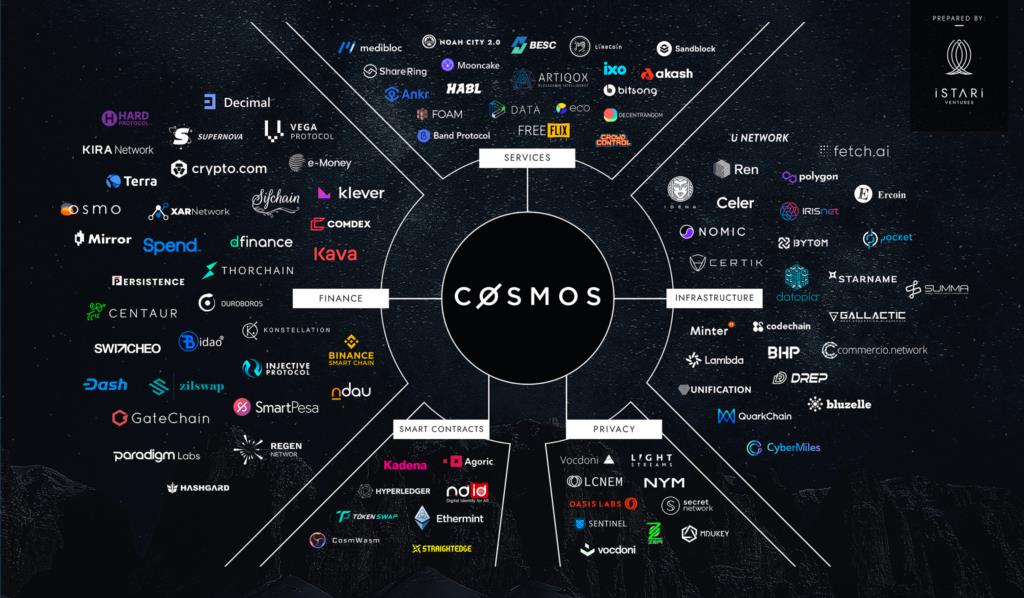
The Cosmos ecosystem is growing relatively sustainably, encompassing diverse components such as DeFi, gaming, NFTs, and infrastructure, forming a diversified, interoperable blockchain composite that fully meets community user needs. Moreover, shared usage value means shared users and cash flows, helping new blockchains gain traction from day one.
Additionally, leveraging the advantages of IBC bridges and new Cosmos updates—such as ICS (enabling blockchain launches without establishing independent validators) or Interchain Accounts (allowing interaction with dApps on the original chain)—new blockchains can more easily reach users (as long as demand exists), minimize initial infrastructure investment costs, and enhance network security.
3. Cosmos Culture
Ethereum co-founder Vitalik Buterin once mentioned Cosmos in an interview, saying: "They’re a cohesive group focused on their work and immune to external noise." This also explains the prosperity of the ecosystem—and this is precisely the culture of Cosmos.
Cosmos is built and contributed to by three independent organizations. Even projects created within Cosmos, such as Aura Network, provide useful toolkits for other developers. This philosophy and culture serve as an intrinsic and powerful force driving collective ecosystem growth.
4. Independence

Blockchains built on Cosmos have the ability to connect with many other blockchains in the system, but always retain autonomous control over whether to establish such connections. Blockchains on Cosmos are even entirely independent of the Cosmos Hub. This level of autonomy seems impossible on Polkadot and its parachains (where $DOT must be staked to bid for slots).
This factor is crucial in helping Cosmos attract Web2 companies looking to migrate to their own blockchains without worrying about external dependencies or influences (such as what happened with Terra).
Conclusion
These four reasons explain why Cosmos is the best choice for developing new blockchains. Beyond these primary factors, there are numerous secondary advantages such as support from the Cosmos Hub, relationships with Delphi, and the presence of many prominent funds. Given today’s need to build private blockchains tailored to specific requirements, Cosmos remains the optimal choice for developers in terms of both cost and time efficiency.
Join TechFlow official community to stay tuned
Telegram:https://t.me/TechFlowDaily
X (Twitter):https://x.com/TechFlowPost
X (Twitter) EN:https://x.com/BlockFlow_News
 @Beehive_Vali






