








Arbitrum's Vertical L3 Revolution: XAI Declares War on Optimism
TechFlow Selected TechFlow Selected
Arbitrum's Vertical L3 Revolution: XAI Declares War on Optimism
This battle against Optimism may have only just begun.
 Navigating Web3 tides with focused insights
Author: yyy
In the Rollup arena, the fierce battle between Arbitrum and Optimism is truly captivating. Optimism wields its OP Stack like a spear, expanding horizontally across the landscape, while Arbitrum takes a different path—initiating a vertical L3 transformation via Arbitrum Orbit. The launch of XAI, Arbitrum's first official L3 built on Arbitrum Orbit, marks Arbitrum Team’s direct declaration of war against Optimism.
In my view, the release of XAI holds significant strategic importance for Arbitrum—it is a direct challenge to OP. Leveraging strong B2B partnerships, OP has driven major players like Binance and Coinbase to build their L2 chains using the OP Stack, aggressively expanding its L2 ecosystem. Meanwhile, Arbitrum appeared relatively quiet with little visible progress. That XAI emerged so swiftly amid OP’s rapid growth seems far from coincidental.
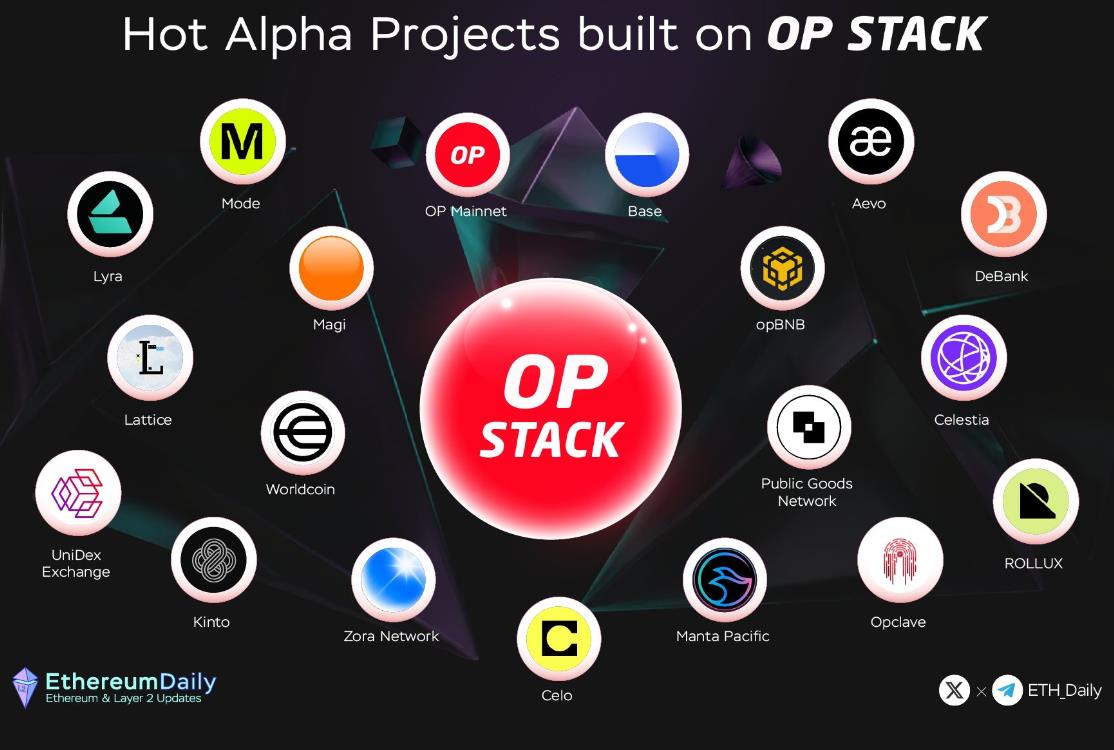
Arbitrum Orbit
Before discussing XAI, we must first understand Arbitrum Orbit. Arbitrum Orbit is a modular, general-purpose L3 stack that enables developers to build specialized L3 chains. Transactions on these L3s are settled through Arbitrum L2 (either Arbitrum One or Nova). XAI is precisely such an L3 chain built on Arbitrum Orbit, specifically tailored for gaming applications.
Arbitrum Nova vs. XAI
Nova is a general-purpose L2 focused on gaming. In theory, it should already meet the needs of gaming use cases—so why launch XAI? The answer is simple: unlike Nova, which serves as a shared gaming chain, XAI as a dedicated gaming L3 offers higher performance and exclusive compute and storage resources. This makes resource-intensive on-chain applications feasible—such as compute-heavy AI models.
XAI will natively benefit from Arbitrum’s technology stack: Nitro + BOLD + Stylus. Nitro represents a technical upgrade to Arbitrum One, achieving greater Ethereum compatibility by directly compiling Geth—the mainstream Ethereum client—into the base layer of the client software. For distinctions among Arbitrum Nitro, One, and Nova, refer to my previous analysis; I won’t repeat it here. (Related link)
BOLD
BOLD is a permissionless validation mechanism proposed by the Arbitrum team, designed to minimize state settlement latency. In plain terms, optimistic rollups typically have a one-week challenge period—users withdrawing from L2 to L1 must wait seven days. During this window, validators can challenge submitted L2 transactions if they detect errors.
Two key issues arise: 1) Who has the right to challenge? 2) Why isn’t challenging open to everyone?
Currently, fraud proof challenge mechanisms are not permissionless—they rely on specific designated challengers. If anyone could challenge, malicious actors might launch DDoS-style attacks, continuously disputing valid states and preventing finality.
For example, a withdrawal that should take one week might end up taking significantly longer in practice.
By introducing BOLD, Arbitrum achieves permissionless validation—better aligning with blockchain decentralization principles—while also minimizing settlement delays. BOLD allows a single honest validator to win disputes on Ethereum against any number of adversaries, effectively neutralizing DDoS attacks.
Stylus
Stylus is an open-source SDK developed by Arbitrum that supports multi-language application development—an implementation of EVM+ compatibility. Simply put, developers on Arbitrum can use traditional Solidity or WASM-compatible languages like Rust, C, and C++ to build apps. Moreover, Stylus improves execution efficiency and significantly reduces gas costs.
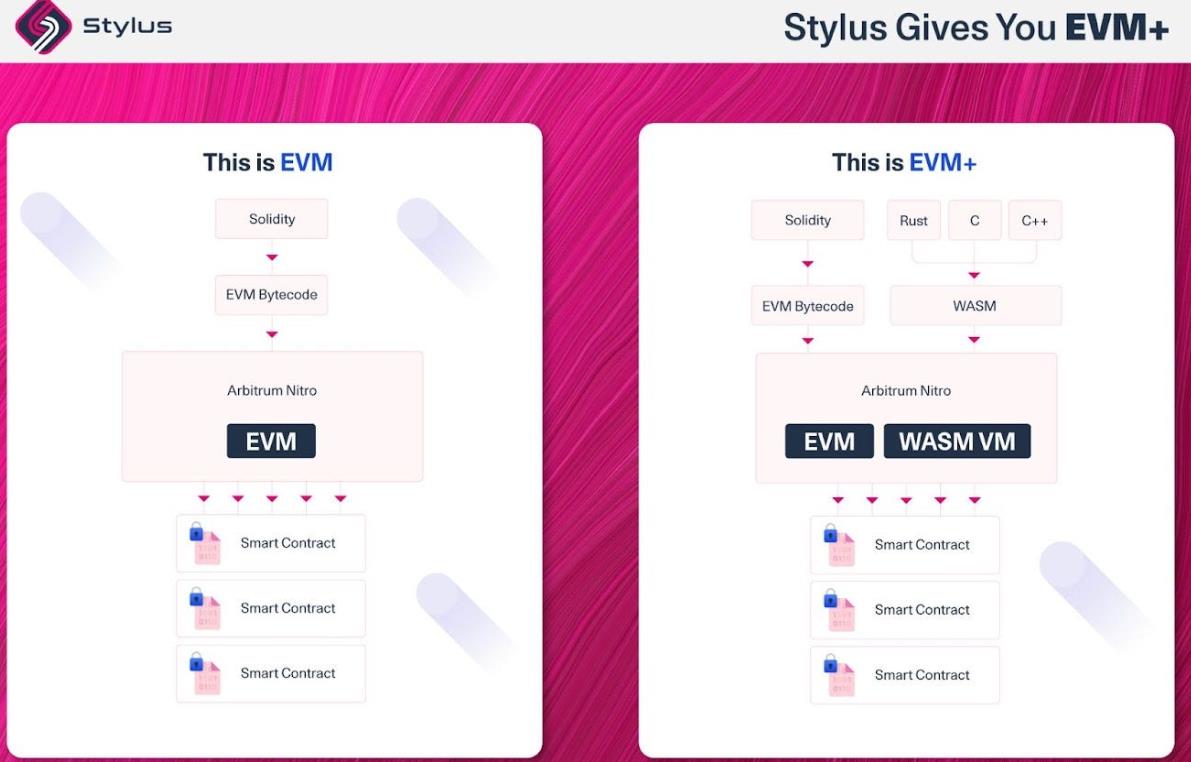
Stylus is not limited to Rust, C, and C++; it also supports languages such as Move, Sway, Cairo, and Go. Imagine being able to seamlessly migrate dApps from Aptos, Fuel, or StarkNet directly onto Arbitrum—or even perform one-click chain upgrades to L3s via Arbitrum Orbit.
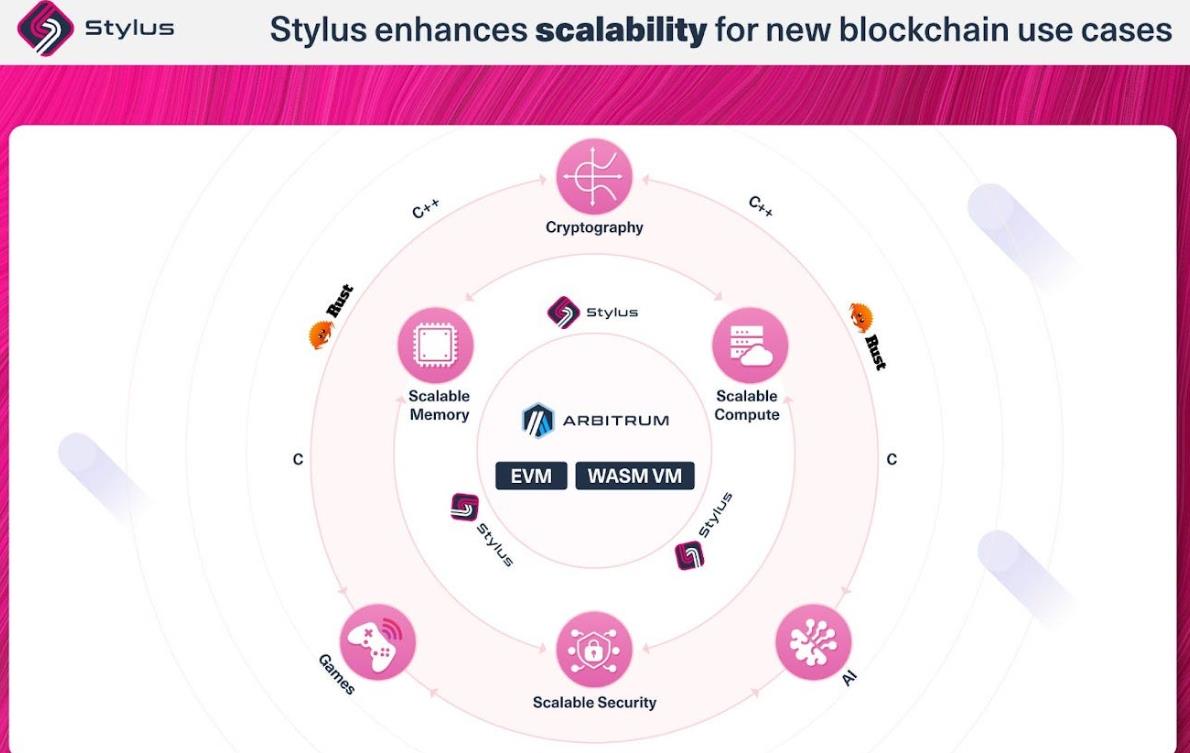
Even more interestingly, both BOLD and Stylus are modular components.
Developers launching use-case-specific L3s via Arbitrum Orbit can natively integrate BOLD and Stylus from the start,
or later decide via decentralized DAO governance whether to adopt these modular components after the L3 is launched and stabilized.
With XAI, Arbitrum has fired the first shot in its L2 defense campaign. The battle with Optimism may have only just begun.
Join TechFlow official community to stay tuned
Telegram:https://t.me/TechFlowDaily
X (Twitter):https://x.com/TechFlowPost
X (Twitter) EN:https://x.com/BlockFlow_News




