








As L2 becomes the trend, who is building decentralized sequencers that better align with the spirit of Web3?
TechFlow Selected TechFlow Selected
As L2 becomes the trend, who is building decentralized sequencers that better align with the spirit of Web3?
Decentralized sequencers have the potential to combine enhanced scalability with the benefits of true decentralization, paving the way for a more inclusive, secure, and resilient digital future.
 Navigating Web3 tides with focused insights
Author: PAUL VERADITTAKIT, Partner at Pantera Capital
Translation: TechFlow
In the ever-evolving landscape of blockchain technology, the pursuit of scalability and increased transaction throughput has led to the emergence of so-called Layer 2 solutions. These innovative enhancements to traditional blockchain protocols are strategically designed to alleviate the persistent inherent limitations of conventional blockchain architectures. As Layer 2 solutions rise to prominence by enabling faster and more efficient transaction processing, a new challenge has emerged—efficient transaction ordering.
To address this efficiency challenge, centralized sequencers are currently the dominant approach. These coordinating mechanisms are responsible for arranging the order of transactions across the network. However, the pursuit of harmony between blockchain’s decentralized philosophy and the centralization embedded in these sequencers introduces a friction point—the birth of decentralized sequencers. This emerging approach aims to enhance scalability, strengthen security, and establish genuine decentralization within the blockchain ecosystem.
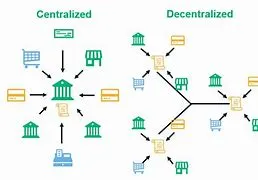
Centralized transaction sequencers are mechanisms adopted by blockchains or applications to ensure orderly and secure transaction execution. In contrast to the decentralized ordering concept used in blockchains—which relies on consensus algorithms and distributed networks—today's sequencers operate within a centralized environment overseen by a single authoritative entity. Below is an overview of how they function:
-
Centralized Control: In a centralized system, a single entity or authority exercises control over the database or application. This entity oversees transaction ordering and determines the sequence in which L2s execute these transactions.
-
Sequential Processing: Transactions are processed sequentially, one after another. The determination of this order is typically influenced by variables such as timestamps, submission times, MEV extraction, fees paid by users/block builders, or priorities assigned by the central managing entity.
-
Trust Dependency: Users relying on the system must trust that the central entity will process transactions fairly and accurately. However, this authority carries the risk of manipulation or malicious behavior, potentially compromising the integrity of the transactions themselves.
Advantages of Decentralized Sequencers
Decentralized sequencers offer multiple compelling advantages through their pioneering approach to transaction management. By establishing trust and transparency, these sequencers create an immutable, publicly accessible ledger that enables autonomous verification of transaction accuracy and sequence, eliminating the need for central oversight. Their impervious resistance to tampering ensures data integrity, virtually eliminating the possibility of fraud and affirming the authenticity of recorded information. Furthermore, decentralized sequencers advocate for censorship resistance and reduced monopolization, allowing transaction progression based on network consensus rather than centralized authority, fostering an open and inclusive ecosystem.
Beyond security features, decentralized sequencers demonstrate strong resilience against single points of failure and malicious intrusions. This robustness encourages participation from geographically diverse actors, cultivating an environment of global accessibility and financial inclusion. Consequently, this approach streamlines operations, automates transaction validation, and reduces reliance on intermediaries, thereby improving efficiency and significantly lowering costs. The adaptability of decentralized sequencers drives innovation, promoting the development of applications such as smart contracts and decentralized platforms that are revolutionizing traditional business models and economic paradigms. These sequencers align perfectly with decentralization principles, enhancing data ownership and solidifying their role as transformative catalysts capable of reshaping industries and redefining trust in the digital age.
Key Advantages
-
Trustless Environment: Decentralized sequencers eliminate the necessity for participants to place trust solely in a central authority. Transactions are validated and agreed upon via a distributed network of nodes, promoting transparency and reducing the potential for manipulation.
-
Immutability: In a decentralized sequence, transactions are recorded in an unchangeable and inviolable manner. Once integrated into the blockchain, they cannot be altered or deleted unless collectively agreed upon by the network, thereby enhancing data integrity.
-
Censorship Resistance: Traditional sequencers may be vulnerable to censorship or interference by a central authority. Decentralized sequencers counteract this vulnerability by ensuring transactions comply with network rules and are appended to the blockchain.
-
Resilience: Traditional sequencers are susceptible to single points of failure. In contrast, the widely distributed network architecture of decentralized systems enhances resilience, protecting against attacks or failures of individual nodes.
-
Reduced Intermediaries: Traditional sequencers often require intermediaries to validate and authorize transactions. In contrast, decentralized sequencers have the potential to reduce or eliminate the need for intermediaries, resulting in cost savings and improved operational efficiency.
Let us examine some exciting solutions, categorized by builder-proposer designs for sequencers.
Builders
Schnorr Sequencer: The Schnorr sequencer introduces a novel method for confirming transactions, departing from traditional transaction bundling approaches. In this innovative system, each transaction is assigned a unique index, initiating a collaborative process between the sequencer (or validator) and the sender. Together, they generate a Schnorr signature associated with the transaction index. This signature serves as proof of the sender’s intent to include the transaction with that specific index in the blockchain ledger. This technique offers multiple potential benefits, including increased efficiency, enhanced privacy, and smoother transaction sequencing. Additionally, it may provide fresh perspectives for addressing the complexities involved in arranging and ordering transactions within blockchain networks.
Suave: Suave is an innovative creation introduced by Flashbots, serving as a transformative response to the centralization challenges posed by miner-extracted value (MEV). At its core, Suave proposes a novel concept: a Single Unified Auction for Value Expression. This innovative solution aims to reshape the landscape of block building, with a focus on preserving decentralization principles. Suave’s framework consists of three key components: a Generalized Preference Environment, which empowers users to express message-based preferences guiding execution; an Optimal Execution Market, a sophisticated network of executors competing to deliver optimal execution (including MEV capture); and Decentralized Block Building, which aggregates preferences into blocks across various domains. The integration of these components within Suave’s architecture fosters a decentralized ecosystem enabling seamless collaboration among users, validators, builders, and searchers across multiple chains. In doing so, Suave not only mitigates centralization risks but also advances the crypto space toward a fairer and more decentralized trajectory, reshaping the future of blockchain technology.
Proposers
Espresso Sequencer: The Espresso sequencer is a decentralized network designed for rollups, aiming to provide secure, high-throughput, and low-latency transaction ordering and availability. This sequencer is compatible with both Optimistic and zk-rollups, enabling rollups to achieve interoperability while maintaining decentralization.
Based Rollup: Order-based rollups leverage the sequencing capabilities of the underlying Layer 1 (L1) blockchain. These rollups synchronize their block ordering with the L1, enabling seamless collaboration between L1 proposers and the rollup ecosystem. The result is a series of advantages: strong liveness guarantees, efficient settlement processes, resistance to MEV driven by censorship, protection from negative network effects, and compatibility with existing L1 infrastructure. With a simple architecture, recent innovations such as proposer-builder separation (PBS) enable gas efficiency and simplified development. Although they forgo some MEV revenue, their economic alignment with the L1 ecosystem strengthens security and economic scarcity. These rollups also retain sovereignty through governance tokens and base fee retention. The term “based rollup” interestingly echoes their dependence on the L1 foundation. This innovation reinforces decentralized consensus while seamlessly embodying the core spirit of blockchain.
Conclusion
From scalability constraints to the emergence of Layer 2 solutions, a transformation has taken place. The pivotal role of sequencers in managing transaction order is crucial to the efficiency and effectiveness of these solutions. As the blockchain community continues to embrace decentralization principles, the rise of decentralized sequencers presents a promising path forward. Decentralized sequencers hold the potential to merge enhanced scalability with the genuine advantages of decentralization, symbolizing the maturation of blockchain technology and paving the way for a more inclusive, secure, and resilient digital future—one that opens new directions in the delicate balance between innovation and ideology.
Join TechFlow official community to stay tuned
Telegram:https://t.me/TechFlowDaily
X (Twitter):https://x.com/TechFlowPost
X (Twitter) EN:https://x.com/BlockFlow_News
 Pantera Capital






