








Podcast Notes | Interview with the Founder of Compound: How Superstate Brings RWA to the Crypto World?
TechFlow Selected TechFlow Selected
Podcast Notes | Interview with the Founder of Compound: How Superstate Brings RWA to the Crypto World?
This episode primarily discusses the challenges and implications of tokenizing real-world assets (RWAs), Superstate's listing strategy and competitive landscape, and the upcoming battleground for stablecoins.
 Navigating Web3 tides with focused insights
Compiled & Translated by: TechFlow
On a recent episode of Empire, Jason invited Rob Leshner, former founder of Compound, to discuss his newly founded company Superstate.
The discussion covered the challenges and implications of bringing real-world assets (RWAs) on-chain, Superstate's market strategy and competitive landscape, as well as the upcoming battle for stablecoins.
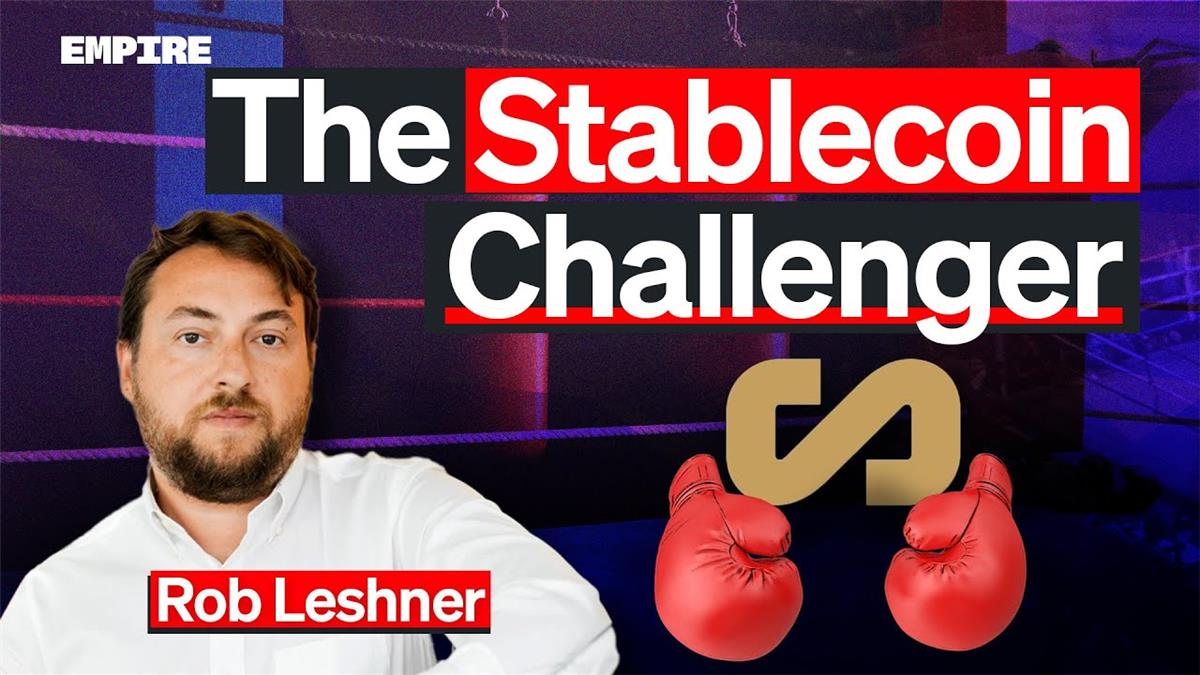
Host: Jason, Empire
Guest: Rob Leshner, Founder of Compound
Video Credit: Empire Podcast
Program Link: Link
Release Date: July 11
Superstate’s Founding Vision and Opportunity
-
Rob said that when he entered the crypto industry in 2017, he believed tokenization of real-world assets and things was imminent. However, six years later, there has been almost no visible traction or proof of traditional market assets moving onto blockchains.
-
He believes this represents one of the biggest opportunities for the blockchain ecosystem, investors, developers, and builders—assisting in the process of bringing assets on-chain.
-
Rob pointed out that the long-term advantages of bringing assets onto blockchains are diverse, including composability with other on-chain systems, significantly increased transparency, automation, faster settlement, and permanence.
-
Therefore, he founded Superstate with the goal of purchasing short-term government debt and tokenizing it on the blockchain. In terms of operations, Superstate primarily focuses on investment management, providing advisory services for mutual funds.
-
Unlike traditional mutual funds, shareholders of Superstate funds can request that their ownership records be sent to a blockchain address they control—either self-custodied or held with a qualified custodian.
-
The benefit of Superstate is enabling you to invest in a specific mutual fund while also being able to view your other investments at a custodian, track everything under a single portfolio management approach, and have a unified technical architecture to store, manage, and monitor your investments.
Challenges of Bringing RWAs On-Chain
-
Although many people are interested in bringing traditional assets like stocks and real estate onto blockchains, current market interest leans more heavily toward crypto-native assets. Rob believes this is because people can already access stocks off-chain, so they prefer new things they haven't yet experienced. However, he expects this trend will shift as more becomes possible on-chain.
-
Secondly, he mentioned technical challenges. He explained that bringing traditional assets on-chain isn't simple—it requires building a fund that can exist on-chain, where whatever is inside the fund exists as a digital record on-chain.
-
Third, he brought up interest rate considerations. He noted that if 5% Treasury yields are easily accessible on-chain, users may not accept lower returns from on-chain products. This could push DeFi interest rates upward and impact the broader market.
-
Finally, he addressed competition. He acknowledged they're not the only team developing solutions and won’t be the only one. He anticipates many strong teams will emerge, all striving to meet the market need: how to bring high-quality traditional market investments on-chain.
Impacts of Trading RWAs in a Crypto-Native Way
-
Rob first explained risk-free interest rates across different currencies. He emphasized that a 5% return on Ethereum is not equivalent to a 5% return in USD, because USD is stable, whereas Ethereum can fluctuate 3% daily in dollar terms. Thus, every currency has its own risk-free rate: for Ethereum, it comes from staking yields; for USD, from Treasuries.
-
Next, they discussed fixed-rate instruments in crypto markets. Rob expressed surprise that fixed-rate products haven’t gained popularity yet. He personally invested in 10 protocols offering fixed rates but hasn’t seen any large-scale adoption or product-market fit for fixed-rate offerings in crypto.
-
Then, they explored the possibility of companies borrowing on-chain. Rob believes that if a company seeks stable investments, they might simply buy 10-year or 5-year Treasuries without needing any existing crypto products.
-
As more enterprises, institutions, users, and investors interact with blockchains and access blockchain-based markets and services, they may become more willing to borrow on-chain—potentially impacting traditional lending markets.
Market Landscape and Regulatory Challenges Facing Superstate
-
Optimized fundraising strategy: Rob explained they adopted an optimized approach, raising capital only from companies they already know and believe would be ideal users and participants. Their goal was to secure sufficient capital to launch without engaging in numerous investor conversations.
-
Potential investors, especially large asset managers like BlackRock, Vanguard, or Fidelity, could invest in Superstate—as long as they don’t impose restrictive conditions. Such restrictions might include additional governance rights, information rights, or product preview privileges, which could negatively affect Superstate’s operations and development.
-
Lastly, they discussed regulatory issues. Rob explained they must conduct whitelist verification for anyone holding their products. He views this as a necessary trade-off since they need to verify whether someone is a U.S. investor.
-
He foresees a future DeFi world where permissioned and permissionless assets coexist within the same protocols, markets, and entities.
Stablecoins vs. RWA: Exploring New Models for On-Chain KYC
-
Rob also touched on the competition between stablecoins and investment products. He believes over time, these two will compete for users, capital, and use cases.
-
He predicts there will eventually be many stablecoins and on-chain investment products coexisting in the same market.
-
They also discussed a potential product idea: creating a KYC/AML protocol where, once a user completes KYC/AML, they receive a non-transferable NFT stored in their wallet.
-
Then, when users trade on platforms like Uniswap, the platform can check whether the user holds this NFT—only those who possess it would be allowed to trade Superstate fund tokens.
Perspectives on Business Models and Company Building
-
Rob shared that he enjoys bringing something non-existent into reality. He likes starting from zero or from one, but doesn’t enjoy starting from ten or a hundred.
-
Finally, they discussed Compound’s new leadership team. Rob praised Jason, saying he’s not just a product designer but also an excellent product thinker.
-
He believes there’s still significant room for improvement in user experience within crypto, so the space needs more people focused on users.
Join TechFlow official community to stay tuned
Telegram:https://t.me/TechFlowDaily
X (Twitter):https://x.com/TechFlowPost
X (Twitter) EN:https://x.com/BlockFlow_News
 深潮TechFlow


