SEC vs Ripple: What Does the 34-Page Court Ruling Actually Say?
TechFlow Selected TechFlow Selected
SEC vs Ripple: What Does the 34-Page Court Ruling Actually Say?
Are Cryptocurrencies Securities or Commodities?
 Navigating Web3 tides with focused insights
Author: 0xrc, Re
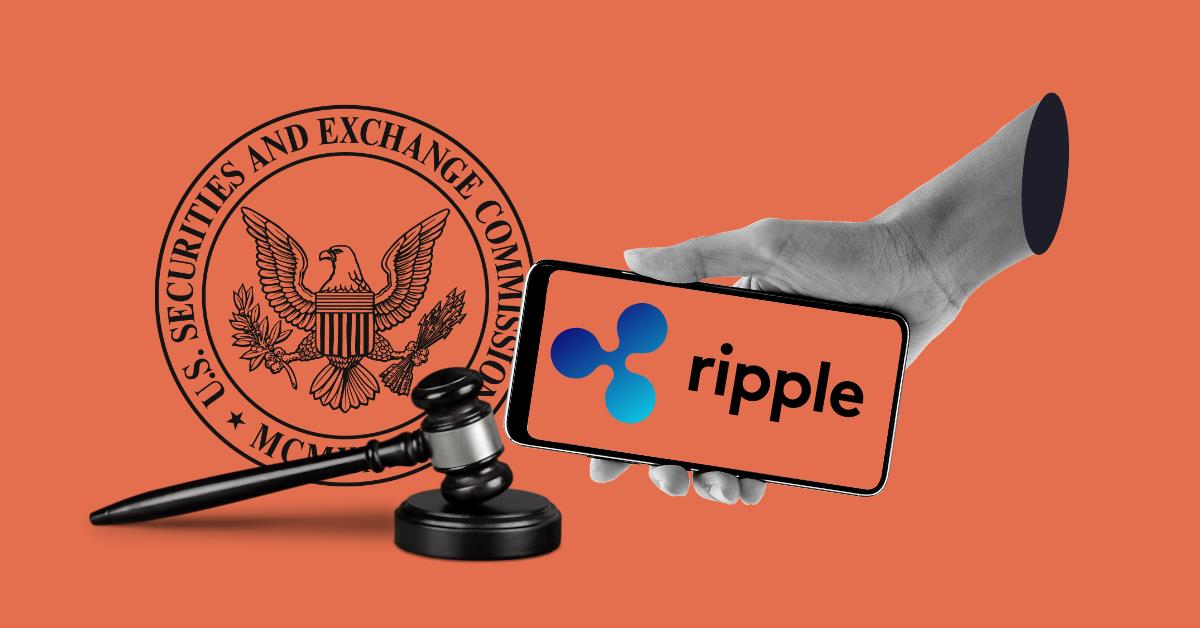
SEC's Allegations: The U.S. Securities and Exchange Commission (SEC) filed a lawsuit against Ripple, its CEO Brad Garlinghouse, and co-founder Chris Larsen, accusing Ripple of raising funds through unregistered sales of XRP. The SEC claims that XRP should be classified as a security and thus subject to the same regulations as other securities.
Ripple’s Defense: Ripple, Garlinghouse, and Larsen argue that XRP is not a security but a digital currency. They claim the SEC failed to provide Fair Notice that XRP could be considered a security. They also point to the SEC’s treatment of other cryptocurrencies like Bitcoin and Ethereum to demonstrate what they see as inconsistent and arbitrary enforcement.
Court Analysis: The court analyzed the case using the Howey Test, a framework established by the U.S. Supreme Court to determine whether a transaction qualifies as an Investment Contract—an essential category of securities.
Court Ruling: The court ruled that XRP constitutes a security when sold to institutional investors, but not in other contexts.
Impact of the Ruling: This decision carries significant implications for both XRP and the broader cryptocurrency industry. On one hand, Ripple may use this ruling to argue that XRP is not a security and therefore should not fall under SEC oversight. On the other hand, it may influence how the SEC regulates cryptocurrencies going forward, suggesting that the agency must carefully assess whether a given crypto asset behaves more like a security or a commodity. It is important to note that this is an initial ruling and remains subject to appeal.
Security vs. Commodity
Before delving into the legal battle between the SEC and Ripple, we must first address a fundamental question: "Are cryptocurrencies securities or commodities?" This distinction serves as the primary rationale for regulatory intervention in the crypto trading ecosystem.
Securities and commodities are two distinct types of financial instruments regulated by separate U.S. government agencies—the Commodity Futures Trading Commission (CFTC) and the Securities and Exchange Commission (SEC). Classifying a cryptocurrency within the traditional financial framework has broad consequences for how it can be sold, where it may be listed, and which authority has jurisdiction if issuers violate rules.
If a cryptocurrency is defined as a security
A security is a financial instrument representing ownership or debt in an issuer—such as stocks, bonds, or derivatives—and falls under SEC regulation. The SEC typically applies the Howey Test to determine whether an instrument qualifies as a security. If a transaction meets the criteria of the Howey Test, it is deemed a security and must comply with federal securities laws.
Specifically, the Howey Test determines whether a transaction constitutes an "investment contract." Selling such a contract without proper registration violates federal securities law. According to the test, a transaction qualifies as an investment contract if all four of the following elements are met:
-
An investment of money or assets into a common enterprise;
-
The investment is made with the expectation of profit;
-
Any anticipated profit depends primarily on the efforts of others (e.g., management or third parties);
-
Profits are derived from the collective efforts of the enterprise, rather than the investor’s own actions.
In simple terms, according to the SEC’s logic: in the U.S., any long-term investment relying on the success of a third party, where profits are expected and promoted as part of the business model, must be regulated.
If a cryptocurrency is classified as a security, its issuer and exchanges listing it must register with the SEC and undergo regulatory scrutiny.
What Did the Court Actually Rule?
Section 5 of the U.S. Securities Act prohibits the sale of securities before a registration statement is filed with the SEC. To prove Ripple violated Section 5, the SEC needed to show: (1) no registration statement was filed for the securities transaction; (2) the defendant (Ripple) directly or indirectly sold securities; and (3) the transactions involved interstate commerce.
Ripple did not dispute points (1) and (3), but challenged point (2), arguing that XRP is not a security. The SEC, however, claimed Ripple sold XRP as an Investment Contract—a form of security.
In SEC v. W.J. Howey Co., the Supreme Court defined an investment contract as “an investment of money in a common enterprise with profits to come solely from the efforts of others.” This means that if investors are betting on the success of a founding team, the arrangement may qualify as a security.
In its defense, Ripple introduced a novel concept called the "Essential Ingredients" Test, asserting that three additional elements must be present for a transaction to qualify as an Investment Contract:
-
A contract between the promoter and investors establishing investors’ rights;
-
The contract imposes post-sale obligations on the promoter to take specific actions benefiting investors;
-
The contract grants investors a right to share in profits generated by the promoter using investor funds.
However, the court rejected this framework because it was newly proposed by Ripple, lacked precedent, and had never been endorsed by the Supreme Court.
The SEC alleged that Ripple conducted unregistered XRP sales through three channels: First, $728 million via investment contracts with institutional investors; second, $757 million through exchange-based sales; third, $609 million distributed through other means—such as employee compensation and grants to developers building on the XRP Ledger. The SEC also charged Ripple’s founders Larsen and Garlinghouse with profiting personally—$450 million and $150 million respectively—from XRP sales.
The court examined each category separately. In the first case, the court ruled that institutional investors purchased XRP expecting returns from Ripple’s growth and development—thus constituting a security. Ripple’s marketing materials explicitly tied XRP’s value to company performance. Since 2013, Ripple has promoted XRP to institutional investors, distributing brochures stating, “If the Ripple protocol achieves widespread adoption, demand for XRP will increase,” and “If Ripple becomes the backbone of global payments… XRP’s value would be substantial.” Market reports and executive statements further reinforced the link between corporate effort and XRP price appreciation. Additionally, many institutional investors agreed to lock-up clauses, undermining arguments that XRP functions purely as a currency or consumable asset.

In summary, the court concluded that Ripple’s sales of XRP to institutional investors violated Section 5 of the Securities Act, and in these circumstances, XRP qualifies as a security.
The second category—exchange-based sales—differs significantly. Ripple used programmatic sales (not ICOs or IEOs) to distribute XRP via exchanges. While institutional investors might reasonably believe Ripple would reinvest proceeds into ecosystem development, retail buyers likely do not share this understanding. Retail investors purchasing XRP on exchanges have no knowledge of who sold them the tokens or where the funds go.
Moreover, the court found insufficient evidence that Ripple specifically targeted speculators. Retail investors may hope for price increases, but their expectations are influenced by broader market trends rather than reliance on Ripple’s efforts.
Additionally, promotional materials provided to institutions were not widely circulated among retail users. The court also noted that individual investors lack the expertise to interpret Ripple executives’ public statements in the same way institutional investors might. Therefore, the court determined that XRP sales to retail investors via exchanges do not constitute securities offerings.
The third category involves $609 million worth of XRP distributed through non-monetary channels—such as employee compensation or developer grants aimed at advancing the XRP Ledger or ecosystem. The SEC argued these distributions supported Ripple’s projects. However, the court found these transfers fail the first prong of the Howey Test: “investment of money.” Records show Ripple did not receive monetary consideration for these distributions—they were effectively free transfers. Ripple received no revenue from these disbursements. Thus, the court ruled these XRP distributions do not qualify as securities.
Finally, the SEC claimed that founders Larsen and Garlinghouse violated securities laws due to their close ties to Ripple. But the court reasoned that their XRP sales occurred on public exchanges. Neither the buyers nor sellers knew the counterparty identities. Therefore, the Howey Test does not apply in this context.
Ripple also raised a “Fair Notice” defense, arguing the SEC violated due process. The court held that in the case of institutional sales, no additional Fair Notice was required because the Howey Test clearly applies, and numerous precedents illustrate its application to real-world financial scenarios.
Growth and Regulation Are Two Sides of the Same Coin
The rise of the crypto world is unstoppable. Although the current global economic downturn has temporarily quieted the space, the immense potential rewards ensure continued interest from all corners.
From proactive to cautious approaches, from the erratic stance of the U.S. to Japan’s comprehensive control, from FTX’s collapse to Coinbase’s repeated attempts at compliance, regulation is not meaningless—but excessive oversight suffocates innovation in the crypto space.
Given the prevalence of illicit activities, some level of regulation may be necessary. Yet critical questions remain: Who should regulate? How can transparency and fairness be ensured? Who checks the regulators? And where should the boundaries of regulation lie?
We do not yet know the future path of crypto regulation. But we are witnessing pivotal moments—the tremors caused by clashes between innovation and oversight. Ripple and Coinbase continue to navigate America’s regulatory storms, while Japan’s tight controls shield its investors from fallout like that of FTX’s bankruptcy. Answers to the big questions may lie beneath the ripples stirred by these historic moments in Web3.
Join TechFlow official community to stay tuned
Telegram:https://t.me/TechFlowDaily
X (Twitter):https://x.com/TechFlowPost
X (Twitter) EN:https://x.com/BlockFlow_News
 @buildmoonshot