Smart people leverage resources: A brief analysis of six Web3 task platforms
TechFlow Selected TechFlow Selected
Smart people leverage resources: A brief analysis of six Web3 task platforms
Both users and project teams will achieve twice the result with half the effort if they learn to make good use of Web3 task-based platform tools.
 Navigating Web3 tides with focused insights
As the Web3 industry evolves, both user and project numbers are growing rapidly, and competition is intensifying. To stand out in this competitive landscape, selecting the right tools is crucial—just as the saying goes, "A craftsman must sharpen his tools to do his work well," and wise individuals succeed by leveraging available resources. Both users and projects can achieve twice the result with half the effort by mastering Web3 task platforms.
1. Introduction to Web3 Task Platforms
Web3 task platforms primarily offer tasks such as following project social media accounts, answering quizzes, performing on-chain operations, and completing bounty missions. Upon completion, users receive rewards in the form of points, NFTs, or tokens. These platforms serve as gateways for Web3 education and act as bridges connecting users with projects. The emergence of Web3 task platforms traces back to 2020 when Gleam.io, a Web2 social media marketing service provider, began offering services to the Web3 sector. Since then, numerous Web3 task platforms have emerged. After two to three years of development, hundreds of such projects now exist, and these platforms are becoming new traffic hubs in the crypto world.
2. How Users Can Leverage Web3 Task Platforms
-
Web3 task platforms generally offer good user experiences, with some even incorporating gamified elements, making them relatively simple and easy to operate. For newcomers to Web3, these platforms serve as excellent entry points for learning basic blockchain operations, acquiring foundational knowledge about the industry, and exploring various projects and communities.
-
For experienced Web3 practitioners, using Web3 task management platforms enables access to multiple projects and communities within a single interface. Some platforms provide categorization and filtering features, saving users significant time and effort in discovering high-quality projects aligned with their interests.
-
For users aiming to earn airdrop rewards, completing tasks on Web3 task platforms offers corresponding incentives such as NFTs, POAPs, airdrop eligibility, and token rewards. With relatively low costs and risks involved, these platforms function as advanced airdrop aggregation sites.
-
Additionally, by completing tasks on Web3 task platforms, users accumulate verifiable records of on-chain and off-chain activities, which helps build their personal Web3 identity and establish a strong Web3 reputation.
3. How Projects Can Utilize Web3 Task Platforms
-
Projects can attract user participation and boost visibility by issuing tasks with associated rewards. For early-stage projects with limited followings, leveraging the traffic effect of Web3 task platforms can yield significantly better marketing outcomes. Established projects can focus on user activation, retention, or new user acquisition campaigns.
-
Launching tasks on Web3 platforms is relatively simple, timely, and effective. Projects can quickly execute impactful Web3 operations to increase user base and product engagement.
-
Many Web3 task platforms offer on-chain and off-chain data analytics. Project teams can use this data to identify genuine users and distribute rewards accordingly, preventing distribution to inactive accounts and mitigating Sybil attacks—enabling precise targeting and efficient marketing.
-
Projects can collaborate with other projects or communities on Web3 task platforms to launch joint multi-project marketing initiatives.
-
Web3 task platforms typically feature visually appealing, multidimensional, and granular data dashboards. Project teams can evaluate campaign performance—including conversion rates, accuracy of targeted user profiles (measured by activity levels), and reasonableness of task design (via individual task completion rates)—and dynamically adjust their operational strategies accordingly.
4. Six Major Web3 Task Platforms
The current landscape of Web3 task platforms is vibrant and diverse. While they all share commonalities as task-based marketing tools and Web3 user growth enablers, each platform has its unique angle and focus. Based on their entry points, these platforms can be categorized into three types: traffic-oriented, educational, and niche vertical-focused. In terms of business model emphasis, they can be classified as consumer-facing (to C), business-facing (to B), or hybrid (to C + to B). VeDAO has selected six representative projects from the space to introduce briefly.
4.1 Galxe
Galxe, formerly known as Project Galaxy, is currently the largest Web3 task platform. As of June 24, 2023, it has partnered with over 2,700 projects and communities, launched more than 10,000 tasks, and attracted over 11 million users holding Galxe IDs. Galxe allows projects to issue NFTs on the platform, granting qualified users minting rights. It also enables customized services through data credentials. Users can view tasks posted by various projects, discover potential airdrops, participate in community events, and explore new projects.
Galxe has built its own digital identity system—Galxe ID—and issues on-chain achievement tokens (OATs). By analyzing on-chain data, it assigns various tags to users. Each quest generates a set of Credentials that can be exported as whitelists for third-party applications (e.g., token distributions).
Most quests on Galxe are project-specific, involving actions like following project Twitter accounts, retweeting, joining Discord servers, and on-chain interactions. Rewards mainly consist of OATs (on-chain achievement NFTs) and other NFTs, some of which can be sold. The large volume and complexity of tasks make Galxe less suitable for Web3 beginners but ideal for airdrop hunters and advanced users looking to build on-chain interaction histories. The platform's business model is primarily B2B, classifying it as a traffic-focused platform.
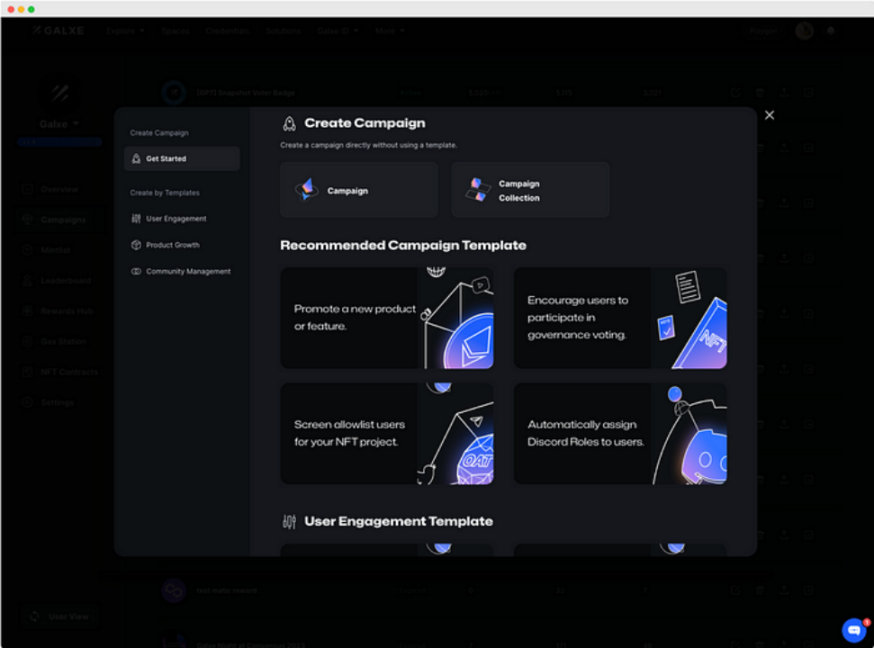
Galxe also includes a real-person verification module called Galxe Passport. After submitting KYC information, users can mint an SBT—a measure aimed at preventing Sybil attacks. Galxe Credentials represent user interaction proofs, automatically granted based on users' on-chain and off-chain activity records.
4.2 Zealy (formerly Crew3)
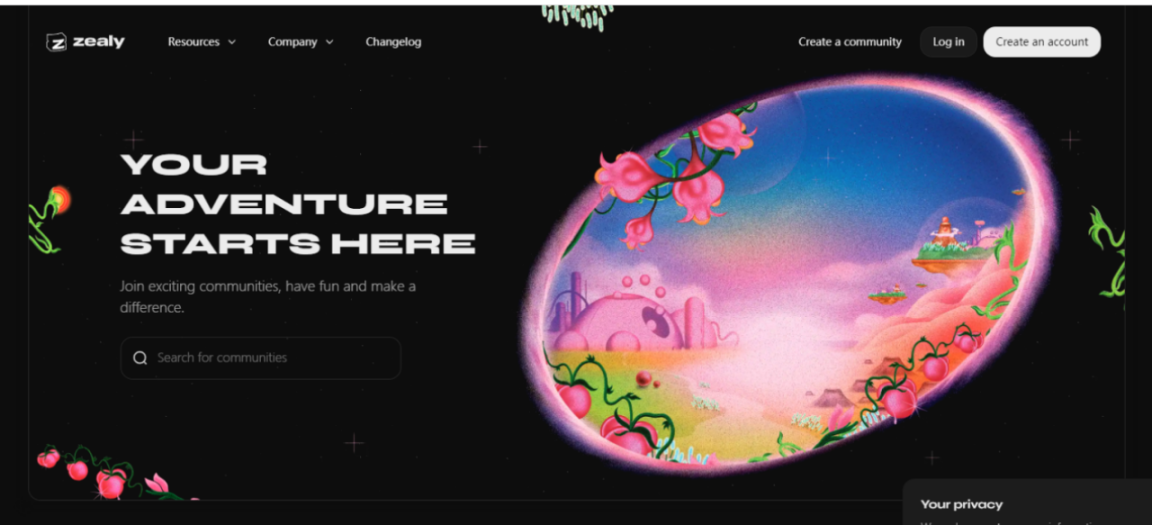
Zealy is a platform focused on community promotion, aiming to help Web3 communities grow continuously. Positioned around Web3 Discord communities, Zealy emphasizes strong social features. It offers abundant community activity templates, including daily check-ins, content creation, and referral tasks. Compared to other platforms, Zealy’s structure is more focused and clearly categorized. It also includes a points-based ranking system. On Zealy, certain tasks require writing articles, submitting screenshots, or inviting others—methods designed to filter out automated bot users and ensure authenticity.
Tasks offered on the platform are mostly project-specific, involving actions like following project Twitter accounts, retweeting, joining Discord, registering project accounts, and answering project-related questions. Since these tasks are designed for marketing and customer acquisition, the platform’s business model leans toward B2B, placing it in the traffic-oriented category.
4.3 QuestN
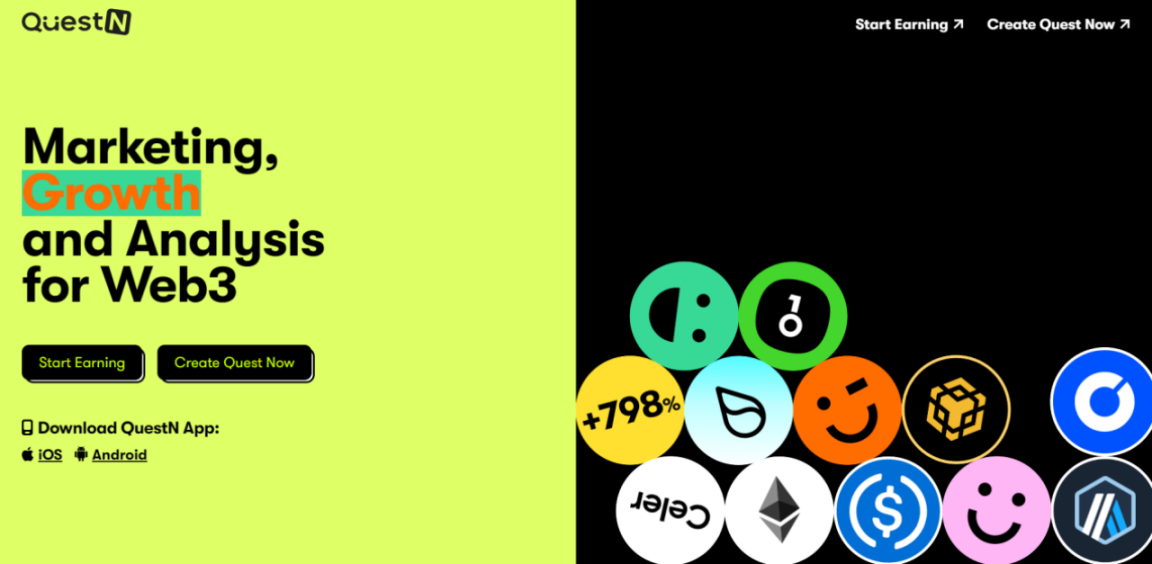
QuestN (formerly Quest3), incubated by Hogwarts Labs and funded by GRT14 grants, is a Web3 task and event platform distinguished by its support for long-tail B-end users. On most mainstream credential platforms like RabbitHole and Galxe, only sizable B-end clients pass screening to publish tasks. In contrast, QuestN imposes no entry barriers—allowing smaller entities such as KOLs, communities, and DAOs to create tasks. To maintain quality, however, creators must verify official websites and social accounts. For tasks offering token rewards, issuers must deposit the reward tokens into a treasury vault upfront, serving as proof of funds.
Tasks on QuestN are predominantly project-specific, requiring actions like following Twitter accounts, retweeting, joining Discord, and registering project accounts. Rewards include tokens, NFTs, and whitelist spots. Designed mainly for project marketing and user acquisition, the platform follows a B2B business model and belongs to the traffic-oriented category.
4.4 Layer3
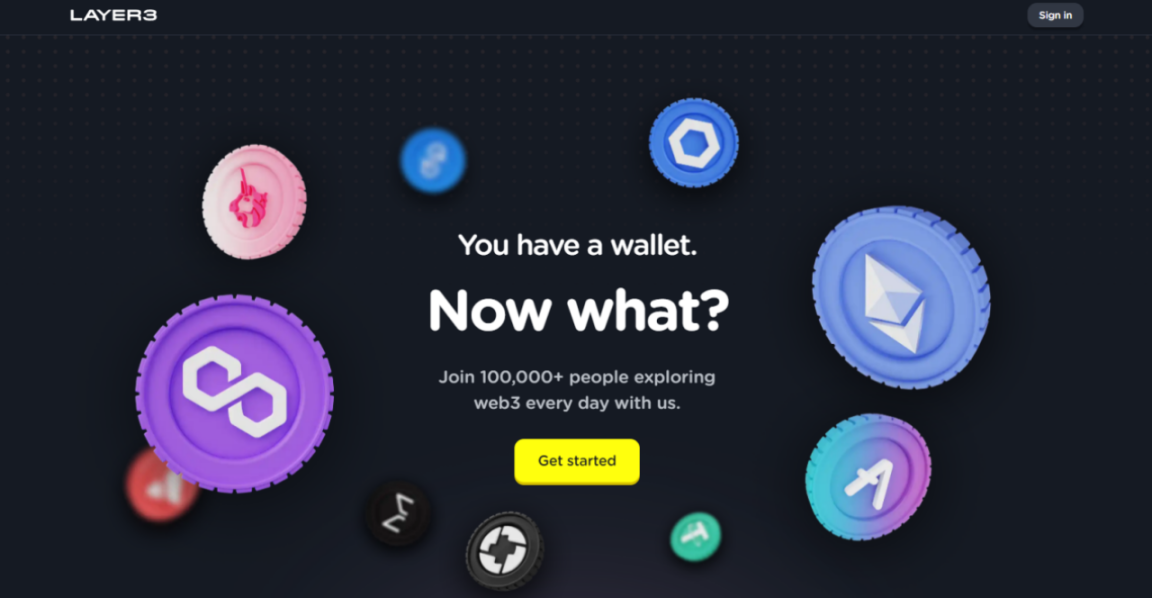
Layer3 has designed a “New to Web3” series of quests that guide users step-by-step through on-chain interactions in areas like Layer2, DAOs, DeFi, and NFTs, rewarding them with NFTs and experience points upon completion. These NFTs can be sold, though prices are generally low. The platform also offers project-specific tasks focused on on-chain transactions, staking, and liquidity provision. Unlike Galxe, these tasks are simpler, often without minimum transaction amount requirements—users can complete tasks with interactions worth just $1. Detailed task instructions are provided, making Layer3 particularly beginner-friendly for those who want to learn Web3 without spending much. Projects primarily aim to acquire users and often partner with various interaction platforms. Project teams pay fees to the platform and provide user incentives, which may include airdrops or other rewards. Thus, Layer3 adopts a combined B2B and B2C business model and is categorized as an educational platform.
4.5 RabbitHole

RabbitHole is a well-established decentralized on-chain incentive platform. Its current offerings are divided into two categories: Skill, an educational platform for new Web3 users, and Quest, an advertising-style task system. The first category, Skills, includes four types: Layer2, DAO, DeFi, and NFT. Tasks involve fundamental Web3 on-chain operations, each accompanied by detailed step-by-step tutorials. Upon completion, users receive a non-transferable “Intro to L2” NFT.
The second category, Quests, consists of interaction tasks issued by individual projects. Besides NFT rewards, some Quests offer project tokens as incentives. However, token-rewarded Quests usually require BrightID verification to prevent Sybil attacks (where one user masquerades as multiple identities).
Overall, RabbitHole provides comprehensive introductory education for Web3 on-chain operations, making it highly suitable for beginners. However, it partners with fewer major projects. In February 2022, RabbitHole announced an $18 million Series A funding round led by Greylock and TCG Crypto. Its business model leans toward B2C, classifying it as an educational project.
4.6 TaskOn
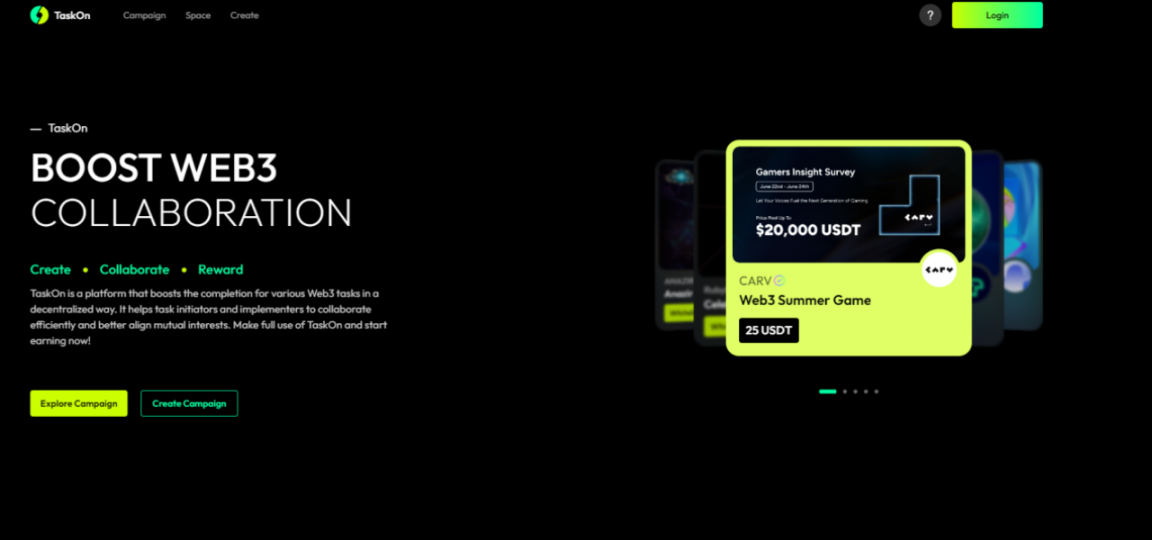
TaskOn is a Web3 task collaboration platform dedicated to marketing and operational growth for Web3 projects. It is part of the Moonbeam ecosystem. The platform offers automation features that streamline workflows. For example, API-Verified functionality automatically confirms whether participants have completed specific product actions. TaskOn also supports automatic reward distribution, enabling instant payouts after events conclude. Project teams only need to create the event and deposit sufficient rewards (tokens or NFTs) into their TaskOn account. The platform can even create events on behalf of organizers, further reducing operational burden. Among current Web3 task platforms, TaskOn stands out for its simplicity, ease of use, and rapid development. Thanks to a suite of anti-bot measures, it boasts one of the highest rates of authentic users today—reaching up to 92.9%. Its business model is primarily B2B, categorizing it as a traffic-focused platform.
Join TechFlow official community to stay tuned
Telegram:https://t.me/TechFlowDaily
X (Twitter):https://x.com/TechFlowPost
X (Twitter) EN:https://x.com/BlockFlow_News
 @TrendX_official