How to Identify Short Squeeze Risks in the Crypto Market? Analysis of 3 Recent Classic Cases
TechFlow Selected TechFlow Selected
How to Identify Short Squeeze Risks in the Crypto Market? Analysis of 3 Recent Classic Cases
Every coin has two sides, and short squeeze trading also involves a certain degree of uncertainty.
 Navigating Web3 tides with focused insights
Author: Jonas@Foresight Ventures

I. What is a short squeeze?
Short selling allows traders to profit from declining asset prices. It's a common way to hedge existing positions or express bearish market sentiment. However, short selling can carry significant risks. First, when buying pressure suddenly increases, a large number of short sellers may be forced to cover their positions by buying back the asset, creating demand that far exceeds available supply in the short term and driving up prices—this scenario is known as a short squeeze. Second, a manipulative short squeeze can occur when a group accumulates most of the circulating supply, leaving short sellers with no source other than this group to buy back shares.
Short squeezes are more likely to occur in low-market-cap or illiquid altcoins. Particularly in the highly leveraged crypto markets, cascading liquidations can trigger waterfall effects, leading to even more extreme price movements. Some sophisticated traders watch for potential short squeeze opportunities, accumulating positions early and exiting during rapid price surges.
II. Key indicators of a short squeeze
1. Funding rate: A precondition for a short squeeze is overwhelmingly bearish positioning—more short than long positions. Specifically, if an altcoin’s perpetual contract funding rate drops below -0.1% (equivalent to a daily interest cost of 0.3% for shorts, over 100% annualized), it signals extreme bearish sentiment. Rates falling below -0.75% often accelerate upward price movement. All the case studies discussed later show extremely negative funding rates.
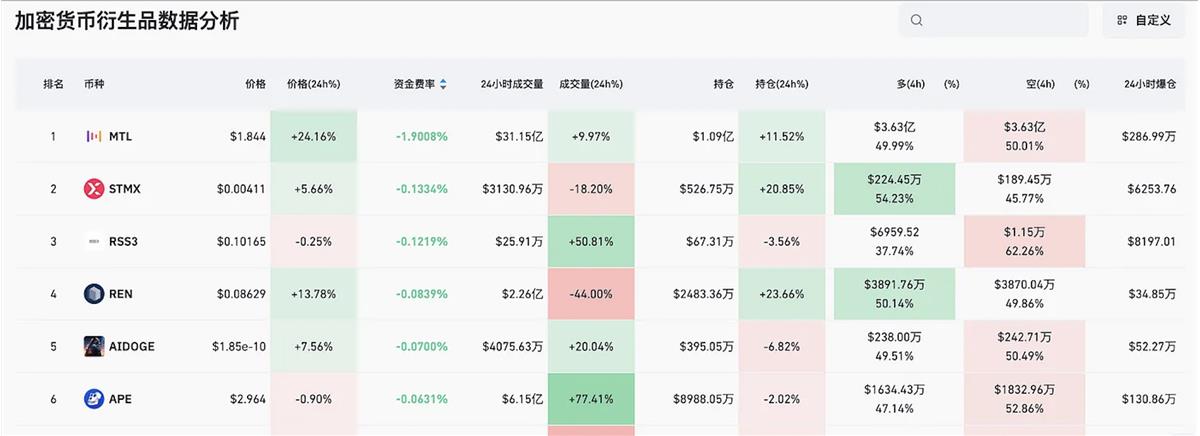
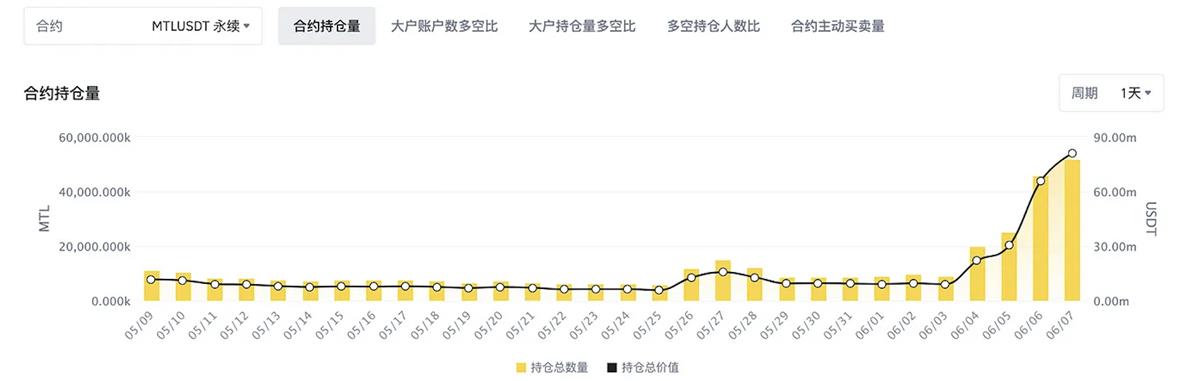
2. Open interest: The greater the trapped liquidity, the larger the volatility during a squeeze. This manifests in two ways. First, the closer open interest gets to the coin’s market cap, and the closer futures trading volume gets to 50% of spot volume, the more susceptible the market is to a short squeeze. Second, if open interest rises more than 50% in a short period, it indicates institutional or major players are entering. Conversely, if open interest declines, it suggests major players are exiting—time to take profits.
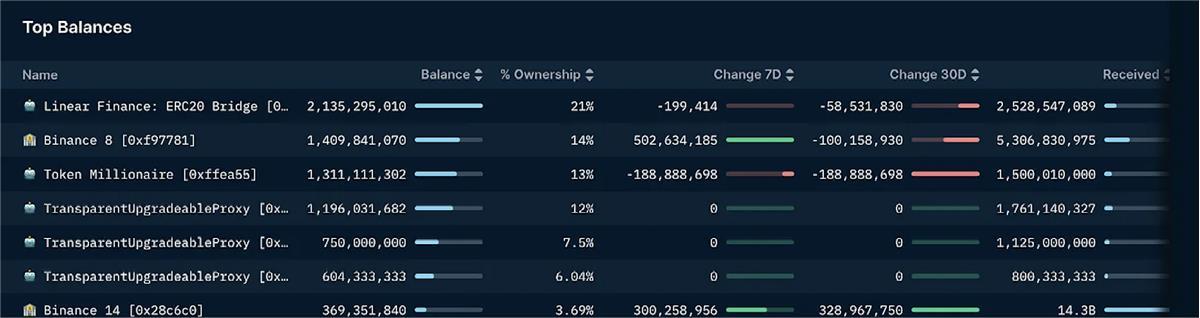
3. Token distribution: Relevant for manipulative short squeezes. The more concentrated the token holdings, the more extreme the price swings.
III. Recent classic case studies
1. LINA: Linear is a cross-chain compatible DeFi protocol for synthetic assets, with unremarkable fundamentals. At the end of May, users began staking to mint the stablecoin LUSD, with staked amounts reaching 22% of circulating supply. The LUSD-BUSD liquidity pool offered yields as high as 60% for mining LINA tokens, attracting an estimated 10% of holders to hedge mine. Major players accumulated approximately 23% of the circulating supply. Combined with the 22% locked in staking and 23% held by whales, nearly 50% of all LINA tokens were effectively locked up. This is a classic example of a manipulative short squeeze, where insiders control spot supply to manipulate futures.
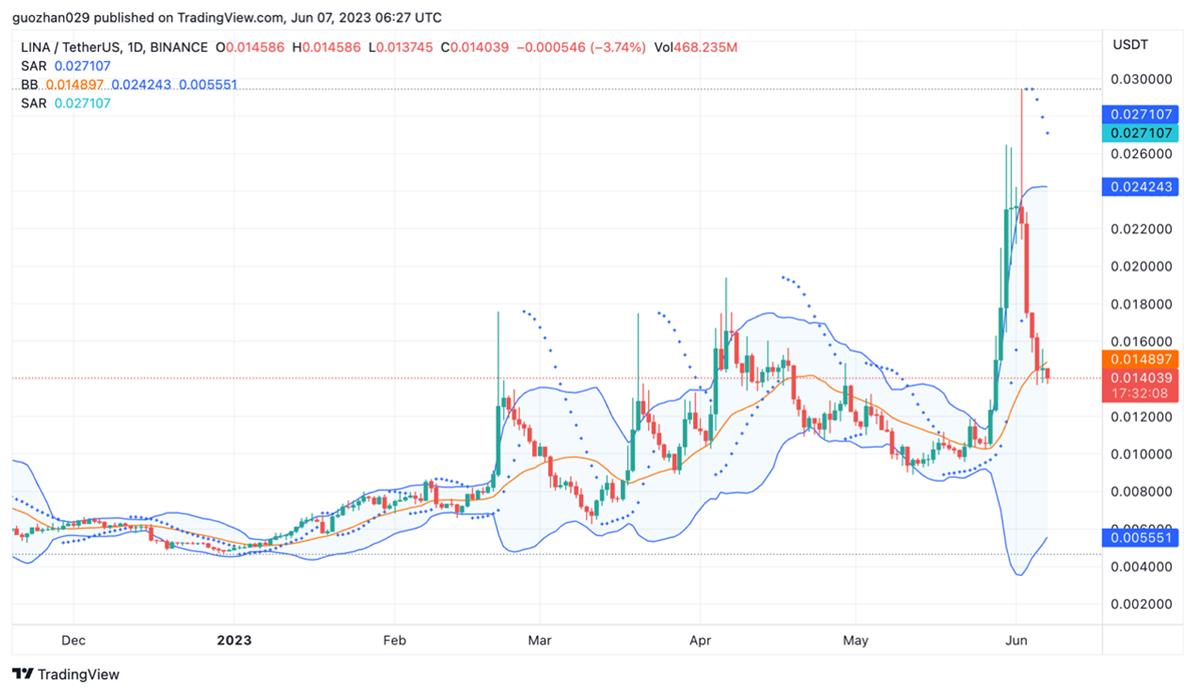
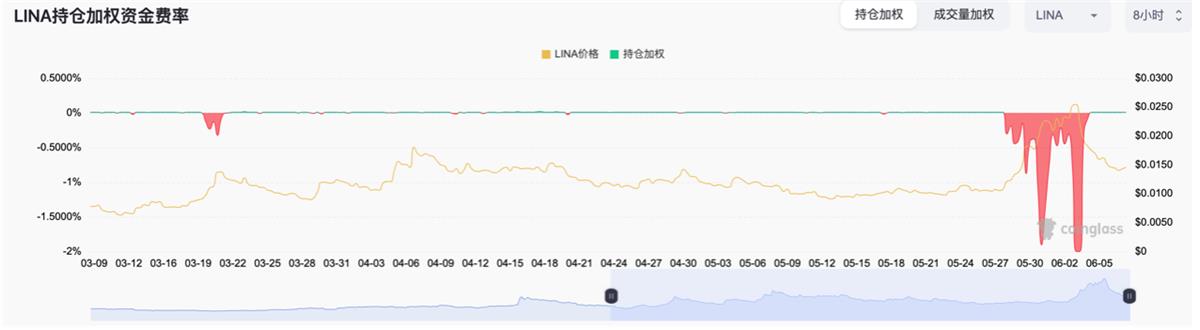
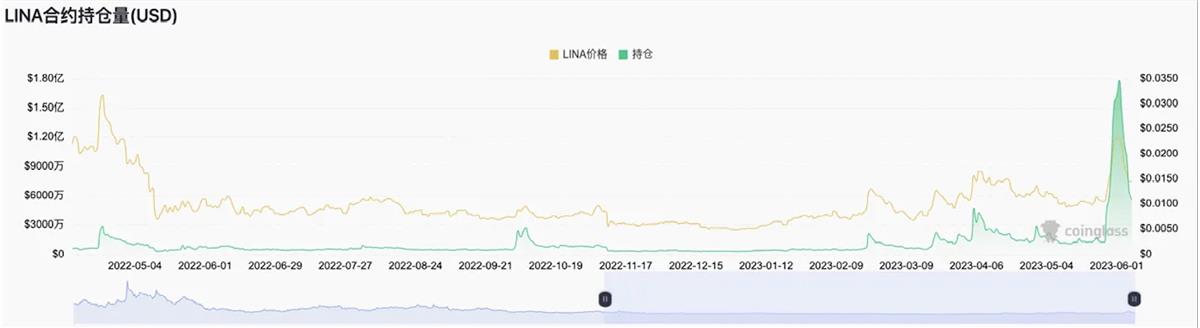
We can observe that LINA’s funding rate exceeded -0.1% starting May 28, peaking at -2% on May 31 and June 3—the maximum allowable rate. Open interest surged from May 28, reaching $50 million while the market cap was only $70 million. Futures trading volume hit $50 million, approaching 50% of spot volume ($90 million), making it easy for short covering to outstrip supply. As a result, LINA’s price surged 2–3x within one week, from May 28 to June 3.
2. ARPA: ARPA Network is a decentralized secure computation network, a privacy-focused public chain launched in 2018. Recently, it completed development of its random number generator and entered phase two of testnet trials, with mainnet launch expected soon. Market-making responsibilities shifted to DWF in April; DWF has historically manipulated several other crypto projects.
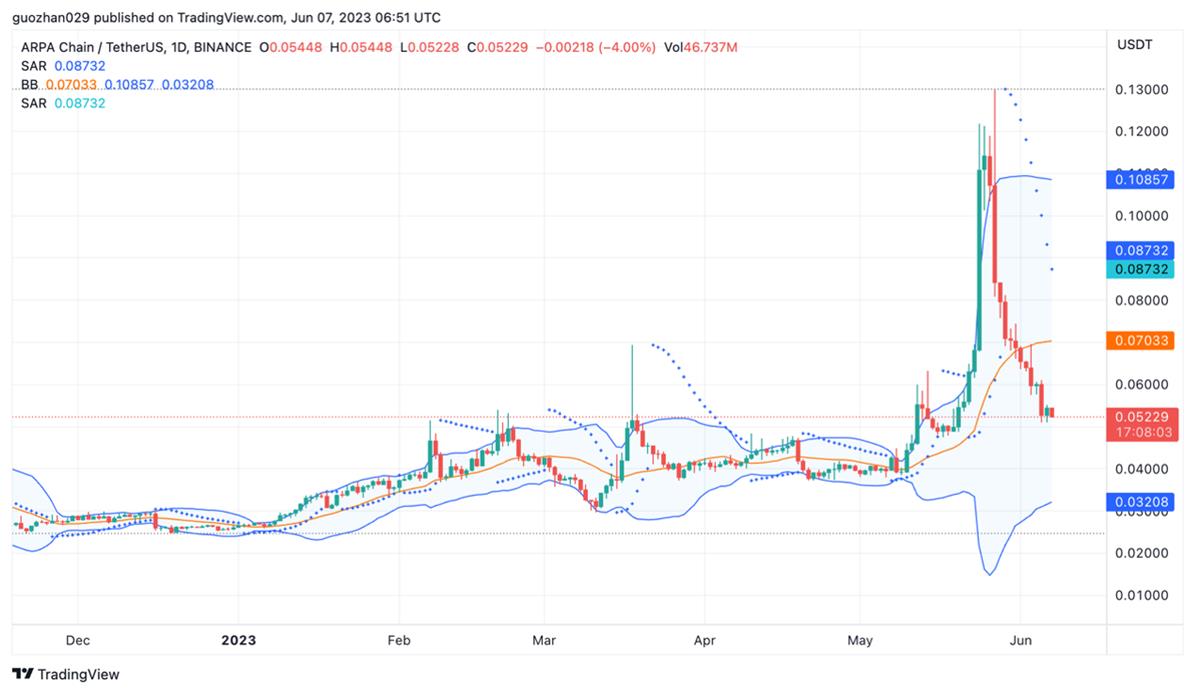
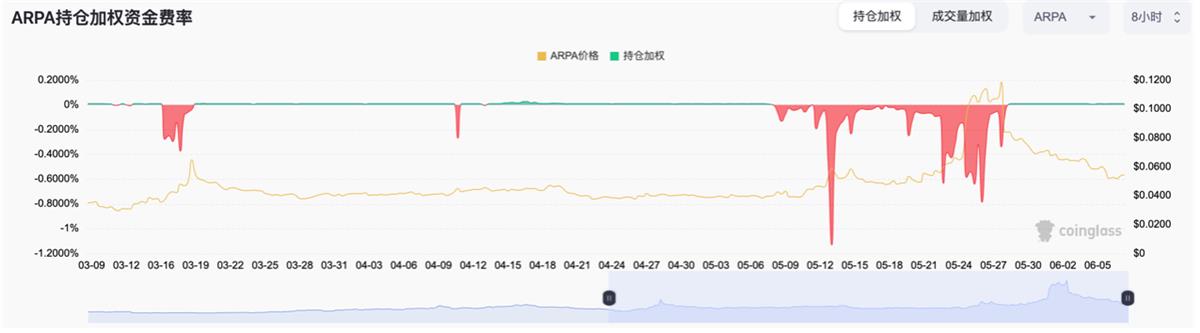
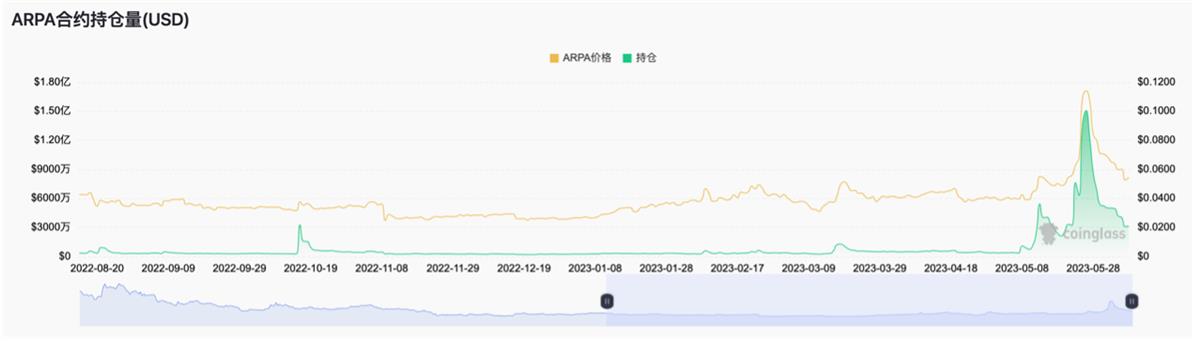
ARPA’s funding rate first dropped below -0.1% on May 12. Despite some fluctuations, high negative rates persisted until May 16, briefly hitting -1%. More importantly, open interest spiked from May 12, reaching $30 million—close to its $40 million market cap. Futures volume reached $30 million, near 50% of spot volume ($70 million). Over the next two weeks, ARPA surged 3–4x in a clear short squeeze.
3. MTL: Metal is a user-incentivized crypto payment platform, an old project dating back to 2017. Major players control about 10% of the circulating supply, and recently saw exaggerated trading volume on South Korea’s Upbit exchange.
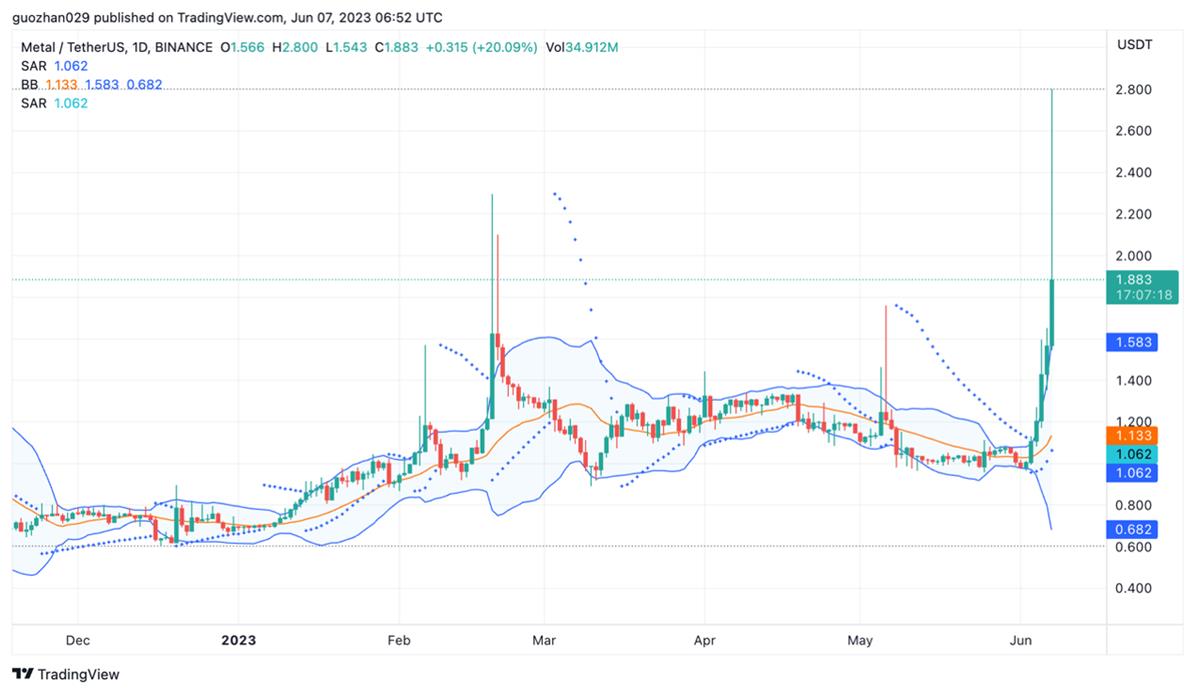
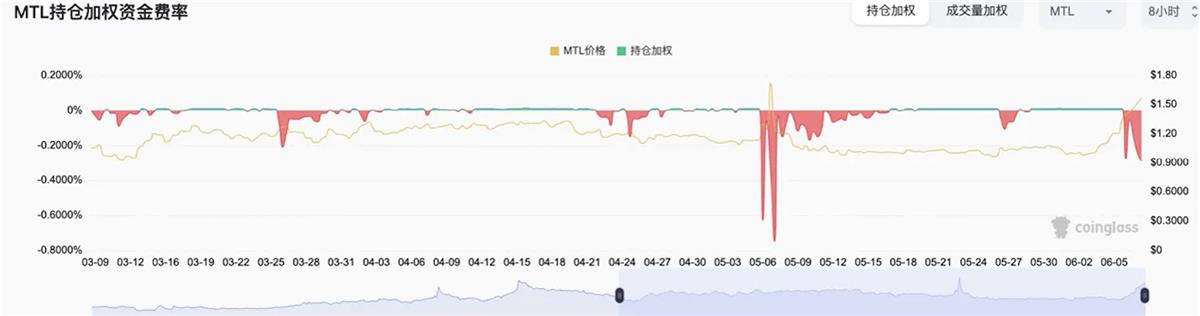
MTL’s funding rate first showed anomalies on May 6, but the squeeze ended too quickly after just one day. Then on June 6, another anomaly emerged, later spiking to -1.8%. More critically, open interest surged from June 6, reaching $60 million—very close to its $80 million market cap. Futures volume hit $80 million, approaching 50% of spot volume ($160 million). In one week, MTL rose 2–3x.
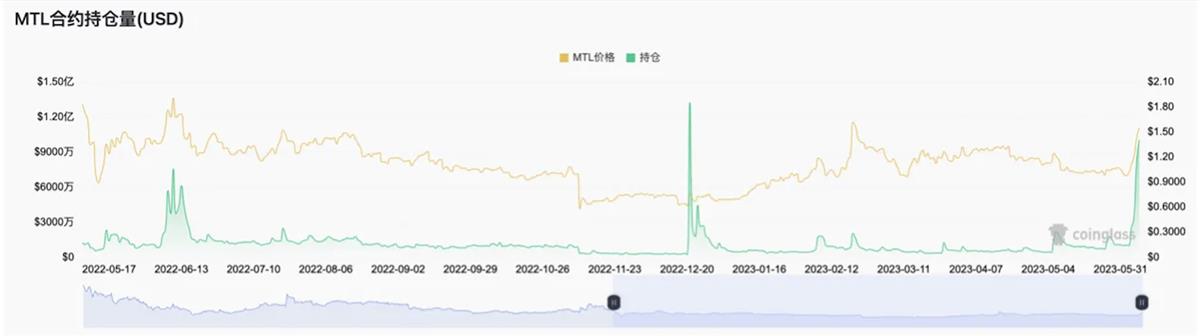
Similarly, last year LEVER, BEL, and other small-cap altcoins experienced comparable short squeeze patterns—extreme funding rates, high futures-to-spot open interest ratios, high futures-to-spot volume ratios, and sudden spikes in open interest. These cases won’t be detailed further here.
IV. Risks of short squeeze trading
Every coin has two sides—short squeeze trading also involves uncertainty.
1. Crypto exchanges may temporarily change rules. If default position limits increase, it’s bullish; if they decrease, it’s bearish. For example, Binance adjusted leverage and margin tiers for LINAUSDT on June 3 and for MTLUSDT on June 7. These moves sent a strong warning: “We can change the rules anytime”—essentially saying, “Don’t expect to profit while we bear the risk.”
2. Post-squeeze value regression in altcoins. While many altcoins rise after a squeeze, most eventually fall back as prices correct. A common topping signal is comparing an altcoin’s spot (or futures) trading volume to ETH’s. Historically, once an altcoin’s volume approaches or exceeds ETH’s, it often marks a short-term sentiment peak. Additionally, 4-hour price swings exceeding 20% suggest it’s time to take profits. Overall, short squeeze rallies are technical rather than fundamental events and often leave retail investors at a loss.
Join TechFlow official community to stay tuned
Telegram:https://t.me/TechFlowDaily
X (Twitter):https://x.com/TechFlowPost
X (Twitter) EN:https://x.com/BlockFlow_News
 Foresight Ventures