








Besides scalability and privacy, what other use cases does ZK have?
TechFlow Selected TechFlow Selected
Besides scalability and privacy, what other use cases does ZK have?
LongHash researcher Raghav Agarwal reviewed cutting-edge research and applications adopting ZK technology in the crypto space.
 Navigating Web3 tides with focused insights
Author: Raghav Agarwal
Compiler: TechFlow
Scaling and privacy are currently the two most common use cases for ZK, but ZK has far greater potential to enable many more innovative applications. Raghav Agarwal, researcher at LongHash, surveys cutting-edge research and adoption of ZK technology in the crypto space.
The application of ZK in web3 is becoming increasingly widespread. At present, scalability and privacy are the two most prevalent use cases, yet ZK holds much broader potential and can unlock numerous additional innovative applications. What new ZK use cases are emerging?
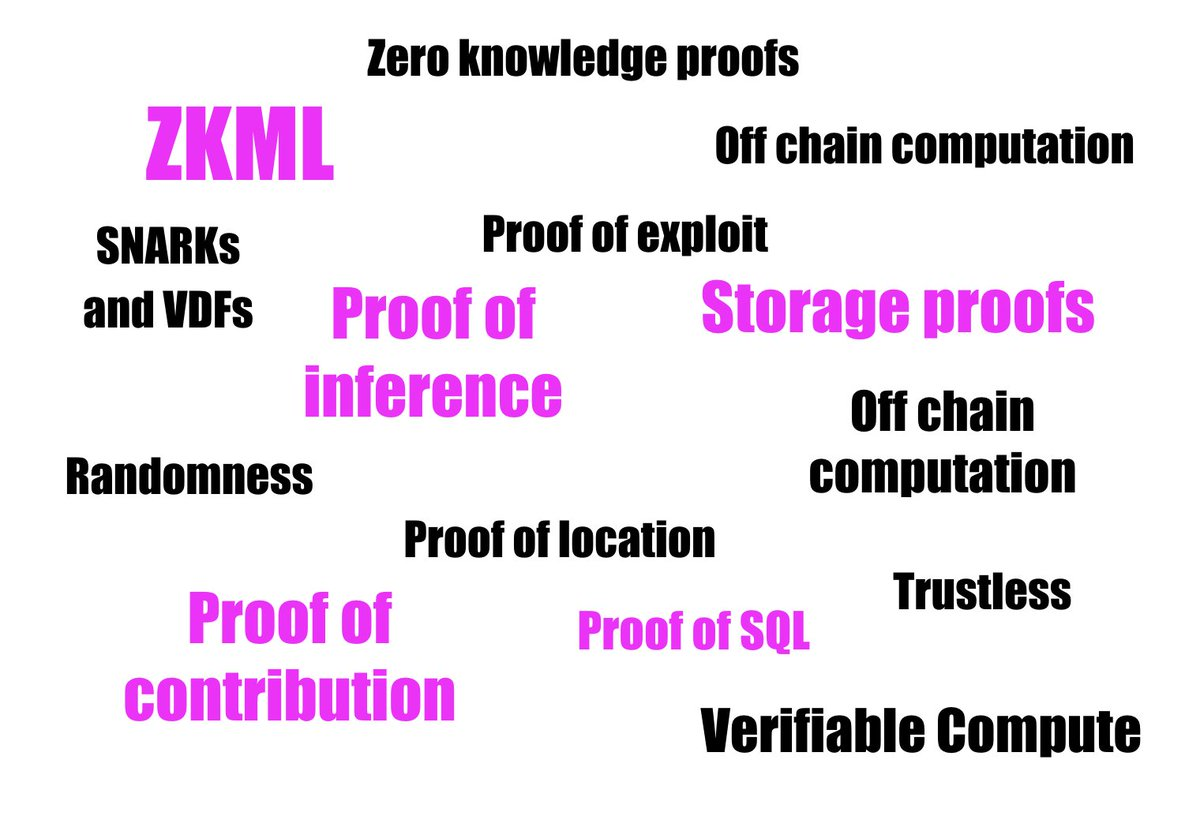
Randomness: ZK can be combined with VDFs (Verifiable Delay Functions) to achieve fully secure randomness on blockchains. While Ethereum offers several sources of randomness, they often suffer from subtle flaws such as bias, liveness issues, high cost, or additional trust assumptions. Paradigm has developed a native ETH randomness beacon compatible with VDFs, supported by RANDAO and a pluggable block hash oracle.
Off-chain Data Verification: Space and Time enables data warehouses to generate SNARK proofs for SQL query execution, proving that queries were computed accurately and that both the queries and underlying data are verifiable and tamper-proof.
For databases (DB), it's impractical for every individual DB node in a network to re-execute the same query thousands of times and reach consensus. Proof of SQL allows developers to directly connect transactional queries and scalable analytics results to their smart contracts.
DeFi Security: zkPoEX, the first-place winner at ETH Denver, enables white-hat hackers to report real-time vulnerabilities in smart contracts while preserving the confidentiality of the vulnerability itself.
This allows auditors to securely generate ZK proofs of vulnerabilities without revealing the actual exploit. An auditor can prove they know of a transaction that induces an undesirable state change in certain contracts, without disclosing any specific details about the vulnerability.
ZK Email Verification: Developed by Yush and Sampriti at PARC, ZK email allows users to anonymously verify email signatures while concealing any data they wish to keep private. It enables users to prove ownership of a Twitter account using their email, without revealing the connection.
GitHub Contribution Proof: ZkRepo allows users to create a proof that they contributed to a specific GitHub repository without revealing their identity. DAOs can use this to reward contributors while allowing them to remain anonymous.
Proof of Storage: Herodotus is leveraging ZK to build proof-of-storage technology enabling synchronous cross-layer data access between Ethereum chains. Developers can use it to build contracts that read L1 state from L2, L2 state from L1, and even synchronize reads across multiple L2s.
Location Verification: zkMaps can be used to verify that a user is within a certain geographic region without revealing their exact location. Private On-chain Voting: DeFROST, built by Poseidon, enables private voting on Nouns DAO, supporting both direct multi-sig voting and delegated voting.
ZK-powered Virtual Machines: Beyond zkEVMs being developed by Polygon, zkSync, and others, ZK can also power other virtual machines such as zkWASM. zkWASM allows developers to write ZKP applications in their preferred programming language, with end users able to run them directly in browsers.
Wasm is a web browser standard developed by the W3C working group, including Google, Meta, Intel, Microsoft, and others. It enables code to be deployed across any browser with consistent results and is now widely adopted in Web2 by major tech companies.
Figma adopted Wasm to reduce loading time by 3x; Google Earth uses Wasm to run on browsers beyond Chrome; Adobe used Wasm in the public beta of Photoshop in 2021.
Identity Systems: Digital identity remains a hard problem. In fact, nearly all identity systems require privacy, making ZK the natural choice for building secure, private identity solutions while eliminating centralized intermediaries.
The zk identity stack consists of three main layers: issuers, state, and data availability. Notable projects leveraging ZK to provide on-chain identity include holonym, Outdid.io, zCloak Network, Worldcoin, zkPass, and Sismo.
ZK Machine Learning (ZKML): ZKML is an increasingly prominent research area. ML trust issues are becoming ever more critical amid the explosive growth of ML applications. Below are brief introductions to some active projects.
Typically, the model parameters and inputs used in ML models are private, requiring users to trust the model owner. ML models themselves are often black boxes trained on large datasets, susceptible to bias or even discrimination.
ZKML can be applied to ensure model authenticity and integrity, integrate proofs from external validators into models, and support decentralized inference or training.
The ezkl library built by Zkonduit allows anyone to generate ZK proofs for ML models exported via ONNX. This enables ML engineers to create ZK proofs for their model inferences and prove the correctness of outputs to any verifier.
Gensyn is building a decentralized computing system where users submit public data and a decentralized network of nodes trains their models, while verifying the correctness of the training process.
Modulus Labs has benchmarked different proof systems for on-chain inference and created a trading bot powered by AI on Starknet.
This is not an exhaustive list of all possible applications, but rather an effort to document several use cases highlighting the vast potential of ZK. These examples can serve as inspiration for new applications, bringing Web3 one step closer to mass adoption.
Join TechFlow official community to stay tuned
Telegram:https://t.me/TechFlowDaily
X (Twitter):https://x.com/TechFlowPost
X (Twitter) EN:https://x.com/BlockFlow_News
 Raghav Agarwal






