Using Iris Data for Basic Income: Is Worldcoin Exploiting the Poor?
TechFlow Selected TechFlow Selected
Using Iris Data for Basic Income: Is Worldcoin Exploiting the Poor?
Collecting biometric information for identity verification consistently places Worldcoin on the edge of legal boundaries concerning personal data protection.
 Navigating Web3 tides with focused insights
Author: Mu Mu
Translator: Wen Dao
After ChatGPT went viral worldwide, Worldcoin—the cryptocurrency project founded by Sam Altman—has returned to public attention. The project was launched two years ago, back when OpenAI, still quietly iterating on its GPT models, wasn't yet famous and its CEO Sam Altman hadn't ascended to the ranks of tech elite.
At that time, Worldcoin was purely a crypto project, and from day one it faced widespread skepticism. Its stated mission—"achieving universal basic income"—sounded like giving money to every person on Earth. This seemingly "free lunch" attracted fraud allegations, especially as the project delayed launching its token.
Now, with ChatGPT and OpenAI globally renowned, Altman's Worldcoin is making a comeback, introducing the concept of a "human ID" for the AI era. It plans unconditional airdrops of Worldcoin tokens to everyone, aiming to offset job losses caused by artificial intelligence—an even more fantastical vision than universal basic income.
Despite ongoing criticism, Altman is seeking another $100 million in funding for Worldcoin. The project has also rolled out a global crypto wallet called World App. Is it finally time to distribute real "money"? Yet receiving these funds isn't unconditional. Worldcoin now faces accusations of illegally collecting biometric data from impoverished populations.
Exchange Your Iris Data for "Basic Income"?
After two bleak years in the cryptocurrency market, Worldcoin—a project claiming to "lift billions out of poverty"—is re-emerging into the Web3 landscape, this time with its crypto wallet "World App."
Since the official launch on May 8, World App—including its test versions—has been downloaded over one million times. The project team has even issued commemorative NFTs for the wallet launch, with more than 60,000 holders.
The main reason behind this rapid adoption lies largely in Worldcoin’s ever-expanding vision—from achieving universal basic income to offsetting job losses due to AI—with implementation promised via "unconditional token airdrops."
In the world of cryptocurrency, once a "token" appears on secondary markets, it becomes convertible into real money. Promising "unconditional airdrops" sounds just like offering people "free money," making it hard not to think, "Why not grab what's free?" With the arrival of the World App wallet, a token airdrop seems imminent.
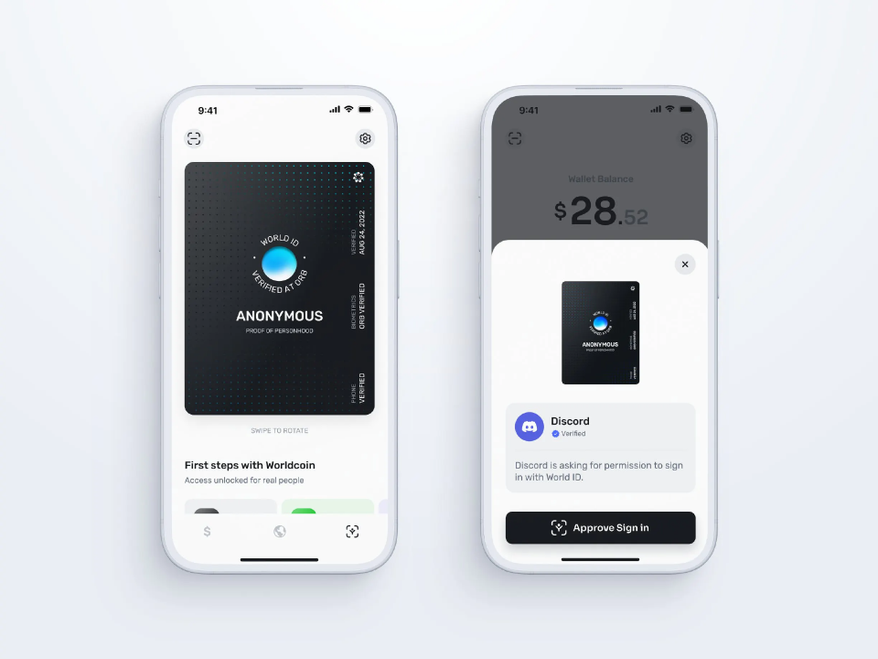
World App requires iris scanning for registration
Compared to typical Web3 wallets, World App allows users not only to receive, send, and buy crypto assets using fiat currency, but also features a "World ID" function. This aims to give each user a personal "human passport ID," ensuring one person, one identity. Once you verify your ID—proving you're human, not a bot—World App will airdrop a certain amount of Worldcoin tokens to you each month. These tokens can then be used within the app to purchase daily necessities.
Regardless of which merchants might accept such tokens, this "money" from Worldcoin isn’t truly unconditional.
Once you download World App, you'll quickly realize it doesn't allow easy registration like other mobile apps. This relates directly to another key feature: it claims not to leak any personal information. The method is simple—it simply doesn't collect standard personal data like email addresses, phone numbers, or ID numbers.
Not collecting data means nothing can be leaked—an effective way to protect privacy at the source. But if users want to register and claim their "money," what information do they provide?
Worldcoin’s solution: hand over your iris data.
Shortly after launching in 2021, Worldcoin developed a device called Orb—a biometric iris scanner designed to capture images of the eye and convert them into a unique IrisHash (a short string of numeric code). By scanning irises, the system attempts to ensure the uniqueness of each personal ID.
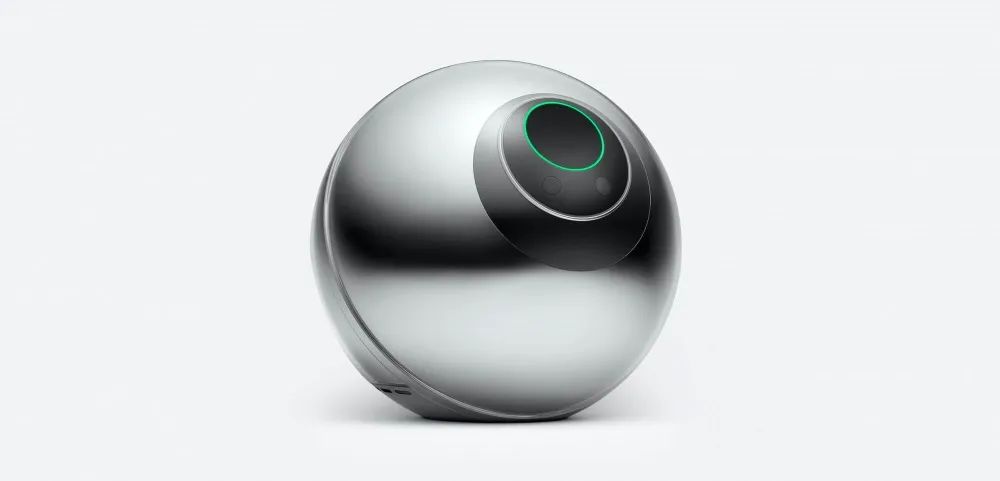
Orb, the iris biometric identification device
Soon, Orb operators took their spherical-shaped devices around various locations conducting grassroots campaigns ("ground promotion"). Anyone who scanned their eyes with the device became eligible to receive Worldcoin tokens. The project first targeted underdeveloped countries and regions, where tens of thousands of people had their eyes scanned by Orbs.
Why does Worldcoin insist on using iris scanning—an expensive and highly sensitive authentication method? Because it wants to distribute money to everyone. From its inception in 2021, the project set an ambitious goal: building a decentralized network-supported UBI (Universal Basic Income) system. This would enable economies generating substantial profits to redistribute part of those gains unconditionally to citizens.
The idea of UBI is deeply utopian, but Worldcoin attempted to put it into practice. It argued that the prerequisite for UBI is a reliable identity verification system to prevent "Sybil attacks"—where one individual controls multiple wallet addresses to gain unfair benefits. For this purpose, non-unique identifiers like phone numbers or emails are insufficient. Even government IDs can be forged. In contrast, the iris pattern in the human eye is absolutely unique and far harder to forge than fingerprints or facial features.
Thus emerged the Orb devices, traveling the globe scanning eyeballs.
However, the iris data collected by Worldcoin qualifies as personal biometric information—just like fingerprints or vein patterns. In sovereign nations such as China and the United States, such biometric data falls under legal protection.
Now, with the new World App still requiring iris verification, users must find an Orb device to scan their eyes for registration. According to previous disclosures, these devices are primarily located across twelve countries in Africa, South America, Europe, and Asia, operated by twenty-five entities. By October 2021, Worldcoin claimed to have reached 100,000 users.
Would you willingly submit your iris data to claim a token called Worldcoin? Hold on—this token hasn't even materialized yet.
Raising Another $100 Million Amid Ongoing Criticism
Because Worldcoin has yet to issue its token, users whose irises were scanned feel they hold nothing but an unredeemable "promissory note." Criticism has echoed since two years ago, accusing Worldcoin of misusing biotechnology and violating user privacy. Later, as the crypto market entered a bear phase, the controversy faded.
But after ChatGPT captured the tech world’s imagination, people suddenly realized that OpenAI’s CEO, Sam Altman, was also a co-founder of Worldcoin. Riding the wave of AI hype through its high-profile founder, the project now shows signs of revival.
In March this year, Worldcoin updated its long-standing "universal basic income" concept with a new AI context. In a blog post, the project argued that the AI era demands robust "human identity verification." As AI replaces most human jobs, establishing a trustworthy proof-of-humanity mechanism becomes essential for implementing universal basic income.
Thus emerged the World ID protocol and the birth of World App. Worldcoin is attempting to weave a futuristic economic narrative for the AI age using Web3 infrastructure—combining DID (decentralized identity), tokens, and wallets with biometric technology. Decades from now, robots may take over most human labor. Many people could become part of the "useless class," unemployed not out of failure but by design. They won’t need traditional jobs—just open their World App, tap to collect funds, meet basic needs, and pursue new forms of value creation.
Worldcoin has projected its dream of "universal basic income" into the future. At the end of 2021, it announced plans to launch its mainnet in 2022 and reach one billion users by 2023. Now, the mainnet launch has been delayed to the first half of 2023, with only about 1.7 million users onboard—far short of its target.
Even with Sam Altman’s endorsement, the project struggles to appear credible—and has drawn significant criticism.
First, what backs the value of the tokens distributed to users as purchasing power? Ari Paul, founder of crypto investment firm Block Tower Capital, pointed out that Worldcoin’s core business model involves stealing data from the world’s poorest people, testing it through exploitation of the poor, and monetizing it. “This is simply criminal behavior—stealing data from the poor through fraud,” he said.
Hudson Jameson, former member of the Ethereum Foundation, questioned the fairness of token distribution: 80% allocated to the public, 10% to investors, and another 10% to the team. “How does this create a fair global currency? Do they have any analysis to prevent widening wealth gaps in certain regions?”
Regulation remains an unavoidable risk for Worldcoin. Even Libra—the stablecoin project once backed by Facebook with over two billion users—ultimately failed because currency issuance is a sovereign right.
Altman is aware of this. During a public event, he noted that you may never be able to use Worldcoin in the United States: “It depends on how determined the U.S. government is to ban cryptocurrencies.” This inadvertently reveals that Worldcoin will ultimately have to contend with regulatory battles across nations.
Moreover, collecting biometric data for identity verification keeps Worldcoin operating near the legal boundaries of personal data protection.
In March this year, the newly launched World ID protocol adopted zero-knowledge proof technology, allowing users to retain control and anonymity over their ID data, thereby enhancing data privacy. Altman stated, “Personally, I’d rather give up the privacy involved in scanning my retina than the privacy I sacrifice using Facebook or similar services.”
But in reality, Worldcoin remains a commercial company. Most countries have clear regulations governing how businesses handle private data—including prohibitions on transferring sensitive personal information overseas. A project aiming to "benefit all humanity" clearly conflicts with these existing laws, which explains why Orb devices struggle to expand into more countries.

Orb devices conducting grassroots campaigns in some regions
To date, Worldcoin has not publicly launched its token. Early last year, a $100 million token financing round valued the total token supply at $3 billion. But according to recent official news, Altman is now seeking another $100 million in funding for the project.
The CEO of OpenAI is venturing boldly into the niche world of cryptocurrency. This raises concerns that failure could tarnish OpenAI’s reputation. As Liu Changyong, director of the Blockchain Research Center at Chongqing Technology and Business University, put it: “Different industries are like different mountains. While Sam Altman is an authority in AI, he might be a novice in blockchain—someone who needs to pay tuition. And this process could potentially ruin his core business.”
Join TechFlow official community to stay tuned
Telegram:https://t.me/TechFlowDaily
X (Twitter):https://x.com/TechFlowPost
X (Twitter) EN:https://x.com/BlockFlow_News