Token2049 Insightful Talks: Challenges and Opportunities for Mass Adoption of Crypto Wallets
TechFlow Selected TechFlow Selected
Token2049 Insightful Talks: Challenges and Opportunities for Mass Adoption of Crypto Wallets
Abstract accounts enable modularization of functions and contracts, further enabling differentiation and customization.
 Navigating Web3 tides with focused insights
Author: Chang-Wu Chen, Chief Scientist at imToken
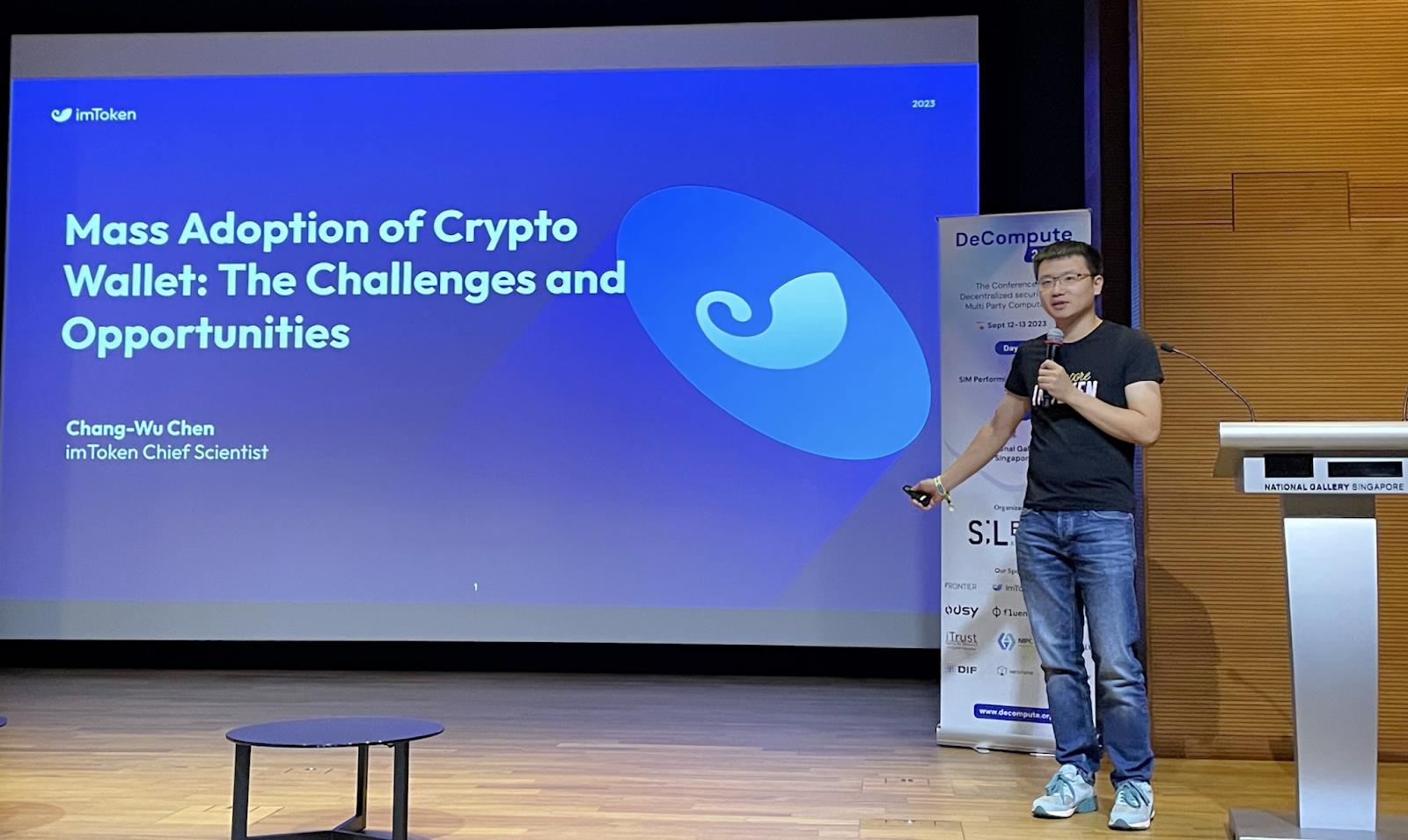
Hello everyone! I'm excited to share insights on how wallets can become more inclusive and accessible in the future. Today, we'll focus on potential opportunities and challenges for wallet evolution. But first, let’s explore some key design concepts behind account abstraction.
Difference Between Abstracted Accounts and Native Transactions
In a native transaction, users first generate an account address (EOA), then sign Ethereum transactions using the corresponding private key according to Ethereum's standard format. Once the signature is verified, the transaction is broadcast to the Ethereum network, validated by validators who collect gas fees, and finally executed. This is the traditional transaction flow.
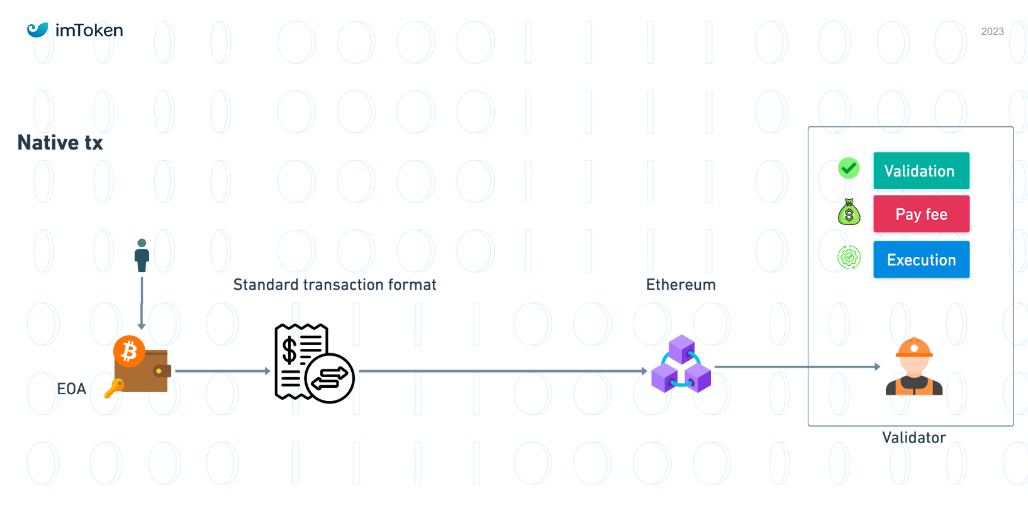
However, today’s focus is on abstracted account wallets, so we will examine how their transaction lifecycle differs from traditional methods. Notice the dashed circle in the diagram below—this component does not exist in conventional transaction flows. It represents information signed by the user, rather than a transaction formatted to Ethereum standards. I refer to this as the “intent”—the action the user wishes to perform. The user signs this intent using a method similar to EIP-712 signatures.
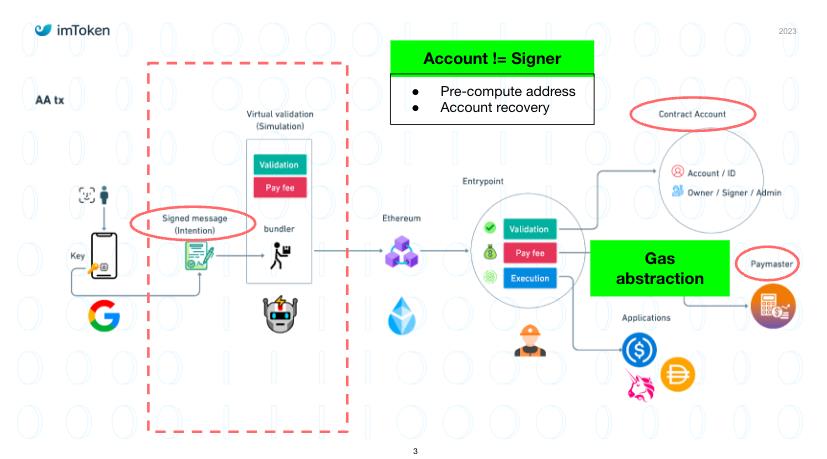
Next, who collects these “intents” and sends them to Ethereum nodes? Abstracted accounts introduce a new role called the bundler. Off-chain, the bundler evaluates whether the transaction can be successfully executed and whether fees can be properly deducted upon completion. I call this process “simulation validation,” which verifies the transaction before it enters the mempool. After simulation, the bundler forwards the transaction to the appropriate node to begin actual execution.
Compared to native transactions, abstracted accounts bring three major innovations:
-
Signature of Information: Unlike before, where users signed standardized transaction formats, now they only sign an intent—for example, specifying a recipient for a transfer—without signing a full Ethereum transaction payload.
-
Separation of Account and Signer: Traditionally, no account meant no tokens. Now, the account and the signer are distinct roles. This enables two key improvements: addresses can be pre-deployed via smart contracts; and because the signer is separate from the account, if a signing key is lost, users can replace the signer while preserving the same account.
Specifically, regarding pre-generated addresses: previously, if you wanted to encourage someone to use a wallet but they had no address, you couldn't even gift them a $10 voucher. With pre-generated addresses, you can now fund a new wallet immediately upon creation. -
Gas Fee Abstraction: Beyond account abstraction, gas itself has been abstracted. This means you don’t need ETH to pay gas fees—you can use ERC-20 tokens or even fiat currencies.
Opportunities and Challenges Brought by Abstracted Account Wallets
Key Management
Closely tied to wallets is key management—an essential consideration. In the Web2 world, existing standards like Passkey, FIDO2, or WebAuthn offer convenient ways to manage keys.
But abstracted accounts offer a new perspective on key management. Unlike traditional ECDSA signing mechanisms, abstracted accounts leverage smart contracts to support multiple signature algorithms. For instance, secure hardware chips in phones already store private keys. As long as the contract can verify the signature algorithm, a phone can function as a hardware wallet—eliminating the need to remember seed phrases.
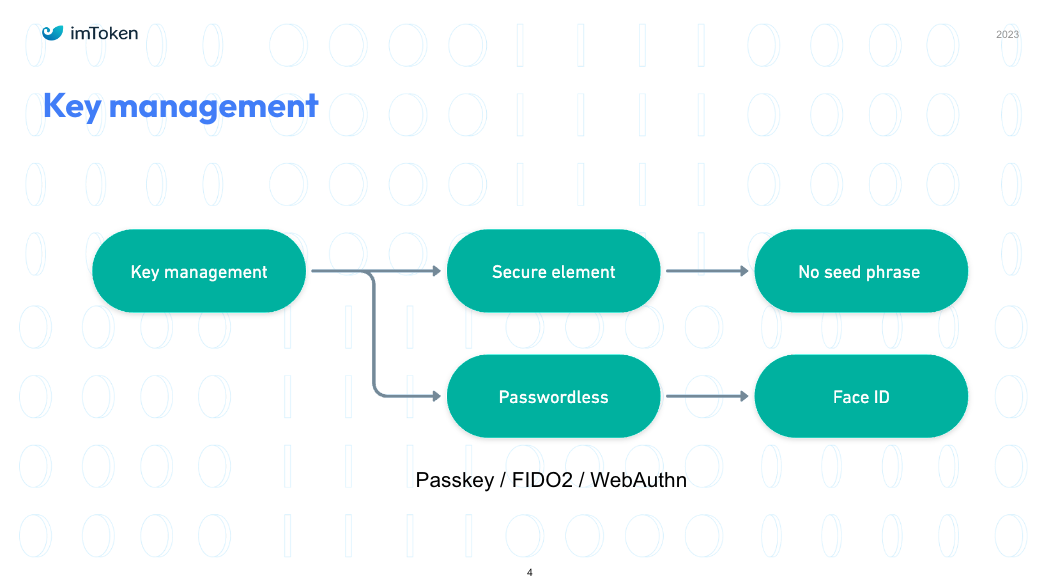
Abstracted accounts allow users to replace a lost signer without changing the account, enhancing wallet durability and upgradability. Moreover, since these accounts are built on open-source contracts, their logic and verification rules are transparent to all users, enabling greater customization and diverse front-end interfaces.
For example, both mobile apps and web versions can interact with the same account, giving users more flexibility. The persistence of abstracted accounts means that transaction history and accumulated reputation could eventually be used for digital identity (DID) applications.
Addresses
Traditional blockchain addresses are derived from public key encoding. As long as you have the private key, you can derive the public key and address. This approach offers consistency across chains—users only need to manage one private key for operations on multiple chains.
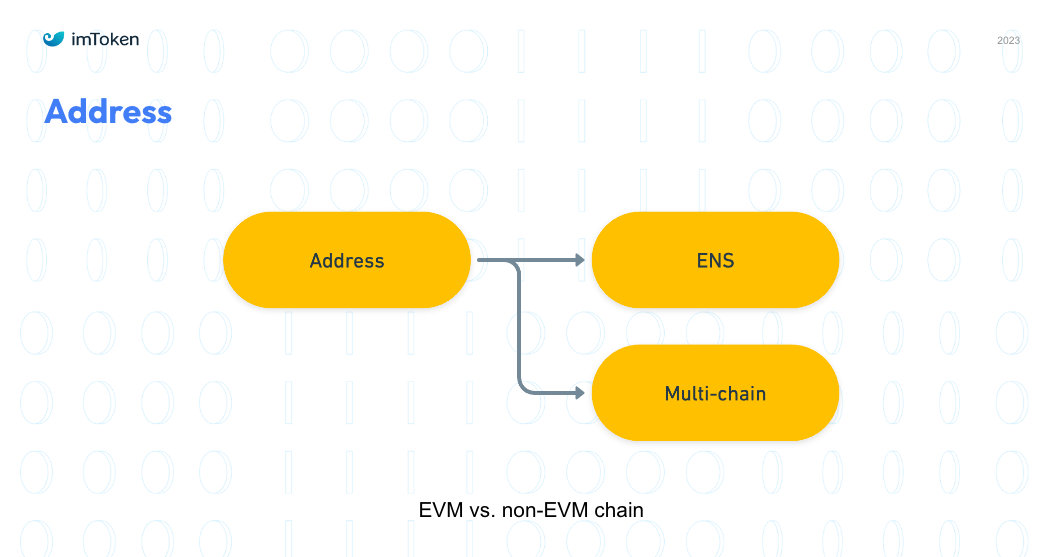
However, the use of contracts complicates address management in abstracted accounts. On EVM-compatible chains, addresses may remain traditional, but on non-EVM chains like StarkWare and zkSync, the situation differs. Despite these variations, ENS provides a unified way for users to maintain consistent experiences across multiple chains or Layer 2 solutions.
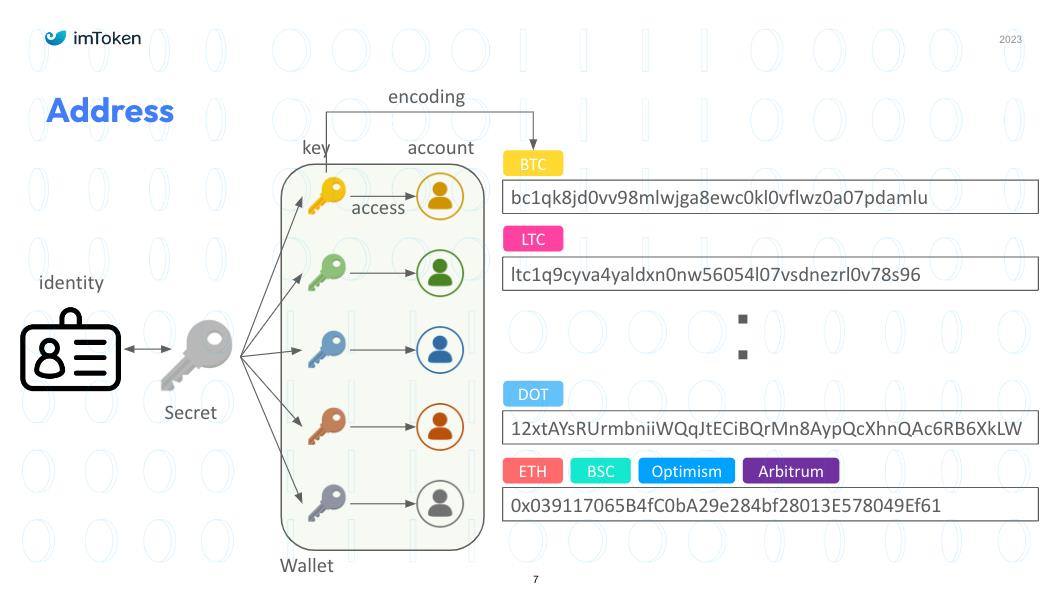
While native address management is popular due to its simplicity, abstracted accounts present new challenges. Ensuring a consistent user experience across multiple chains or Layer 2 platforms, while managing the complexity of contract-based accounts, remains a critical issue to solve.
Signed Intentions
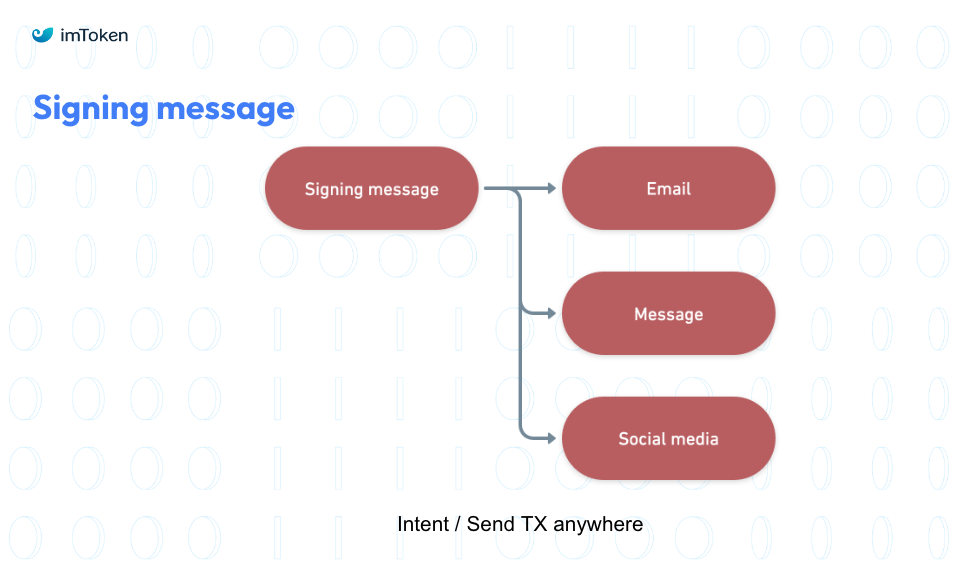
The signing of intentions showcases unique potential within abstracted accounts. Unlike fixed native transaction formats, users are no longer constrained by rigid structures and can freely express their intents. This flexibility brings revolutionary changes to blockchain interactions.
In abstracted accounts, signed messages go beyond simple fund transfers. By signing their intent, users can specify any desired action—on-chain or off-chain. This freedom allows interactions to occur seamlessly within emails, social platforms, or messaging apps.
Imagine being able to write in an email: “Send 50 ETH to Alice,” and the system automatically recognizes this intent and executes the transaction—just like typing a query into Google without worrying about backend processing. This model can extend across applications, enabling users to perform blockchain actions quickly and easily from almost anywhere.
Gas Fee Payment
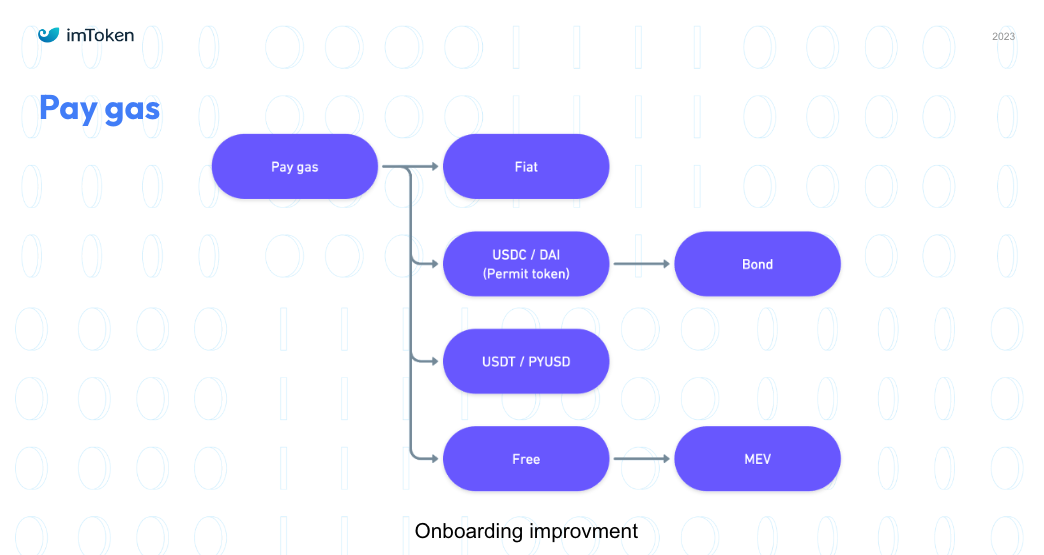
Paying gas fees has always been a hurdle in blockchain transactions. Traditionally, users must ensure their wallet holds enough ETH before executing any transaction. This creates friction—they may need to buy ETH with fiat on an exchange or obtain it through other means.
With abstracted accounts, this challenge is significantly reduced. Thanks to the Paymaster mechanism, users are no longer limited to paying gas in ETH, lowering entry barriers and complexity. Furthermore, abstracted accounts allow for highly customizable contracts—meaning fee collection and payment logic can be tailored to specific needs.
This new model ensures smooth, seamless transactions and greatly improves overall user experience.
Account Recovery
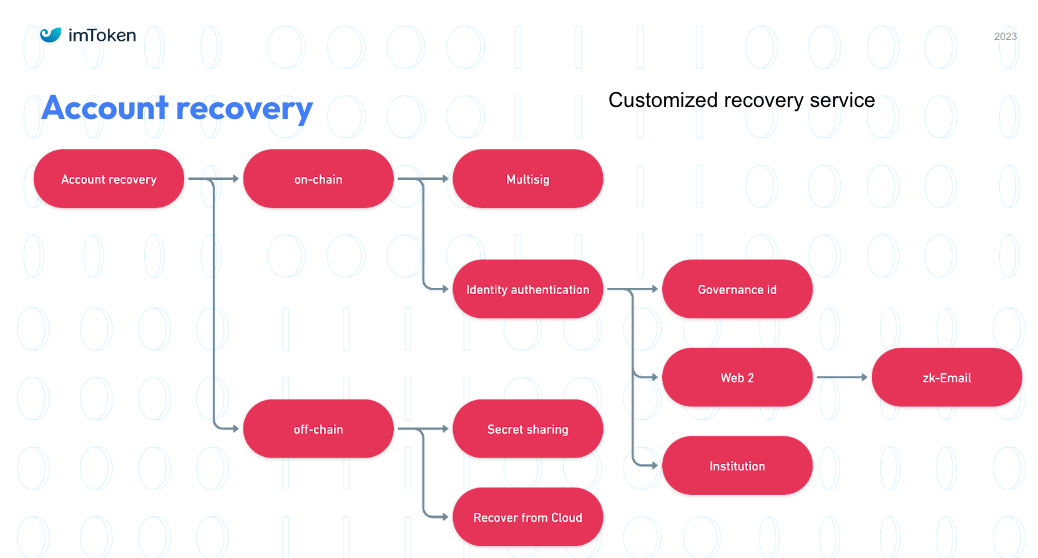
Account recovery is another crucial aspect. Traditionally, seed phrases are the primary method for restoring access. In abstracted accounts, even if the signer changes, the account remains intact. This opens multiple recovery pathways—multi-sig, biometric authentication, or off-chain techniques like MPC—greatly boosting user confidence knowing there are multiple fallback options.
Since abstracted accounts are contract-based, we can design modular contracts and add various plugins and features. User needs evolve—from beginners wanting simplicity to advanced users seeking DeFi capabilities or enhanced security.
To meet diverse demands, we can build contracts with different modules and functionalities. Abstracted accounts empower us to deliver flexible, personalized services.
Ultimately, the greatest benefit of abstracted accounts is enabling modular, composable contracts that support differentiation and customization. However, a current challenge is high execution costs. Therefore, we urgently need scalable solutions to reduce transaction fees. I believe future wallets will increasingly rely on Layer 2 technologies, especially for implementing and executing abstracted accounts.
Join TechFlow official community to stay tuned
Telegram:https://t.me/TechFlowDaily
X (Twitter):https://x.com/TechFlowPost
X (Twitter) EN:https://x.com/BlockFlow_News
 @imTokenOfficial