








Sharp critique of Apollox V2, "more suitable for BSC babies' constitution"
TechFlow Selected TechFlow Selected
Sharp critique of Apollox V2, "more suitable for BSC babies' constitution"
This article will critically review the features, product strengths and weaknesses of ApolloX V2, as well as its significance to the BSC ecosystem.
 Navigating Web3 tides with focused insights
ApolloX, a veteran derivatives exchange on BSC, has launched its V2 version, integrating partial mechanisms from GMX and GNS while introducing unique innovations tailored to BSC's "chain-specific" characteristics.
This article provides a sharp analysis of ApolloX V2’s features, product strengths and weaknesses, and its significance for the BSC ecosystem.
The core features of ApolloX V2 can be summarized as follows:
1. ALP is an index asset model similar to GLP, enabling BTC/ETH and other major crypto assets to achieve trading experience and risk control comparable to GMX;
2. A CEX-like funding rate mechanism with equal rates for longs and shorts, along with a dynamic slippage mechanism inspired by GNS;
3. Support for synthetic asset trading, with risk managed through capacity controls;
4. Close collaboration with Binance Oracle, enabling flexible support for additional tradable assets.
Distinctive Features of ApolloX V2:
A. Funding Rate
Although ApolloX V2’s funding rate formula closely resembles those of GMX V2 and GNS—pricing based on long-short ratio and volatility—ApolloX applies the same rate to both long and short positions.
When Long OI > Short OI, the portion calculated as ShortOI * Funding Fee Rate is paid to short traders, while the remaining (LongOI - ShortOI) * Funding Fee becomes system revenue.
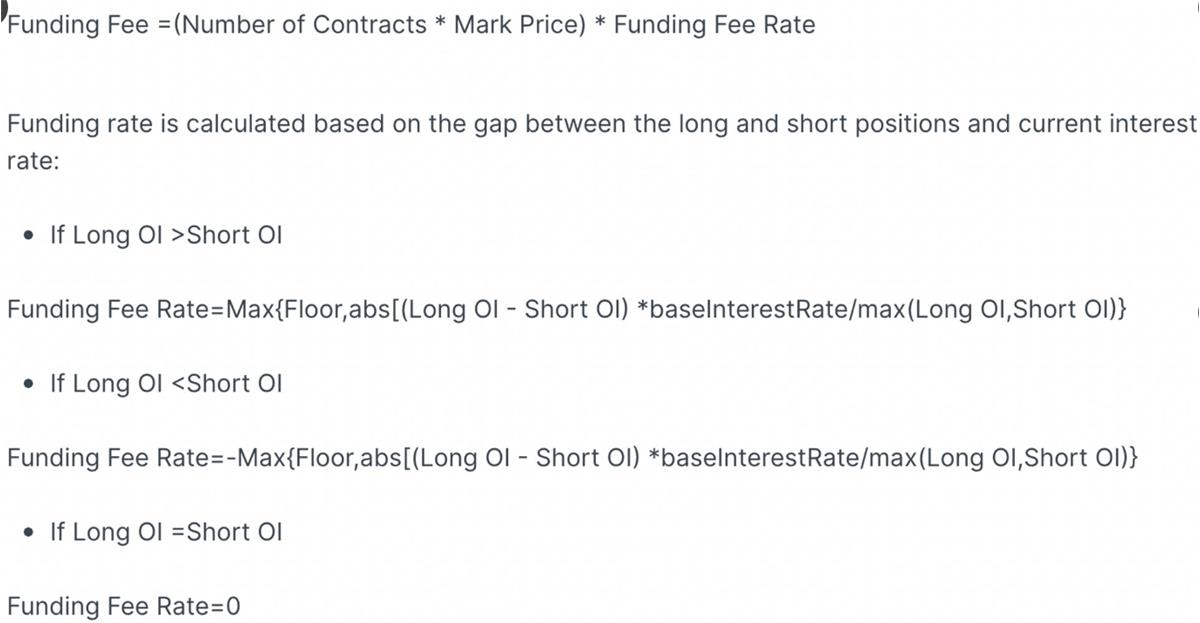
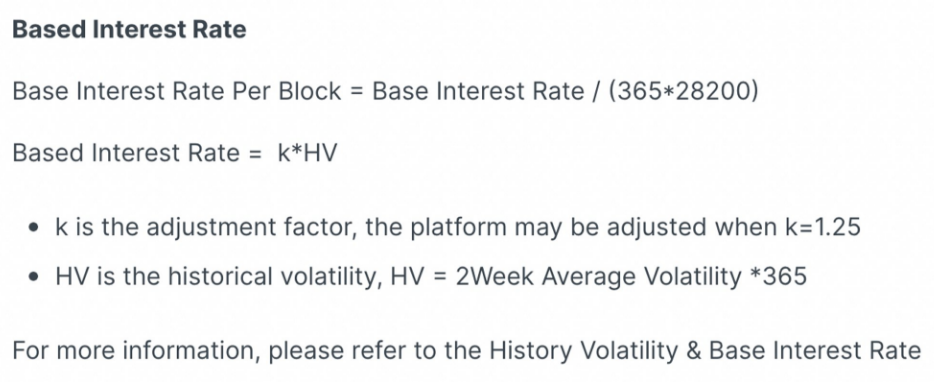
Yes, although it lacks a Borrow Fee, in a sense, it effectively combines Borrow Fee and Funding Fee into one mechanism. Given that BSC users are largely retail and accustomed to Binance Futures' model, this represents a form of localization innovation.
B. Dynamic Slippage
ApolloX V2’s opening trade slippage is similar to GNS:
1. The higher the overall open interest (OI), and the larger the position size, the greater the slippage;
2. The deeper the corresponding trading pair’s order book on CEXs, the lower the slippage.
This dynamic slippage mechanism increases the cost of price manipulation attacks, thereby reducing risks.
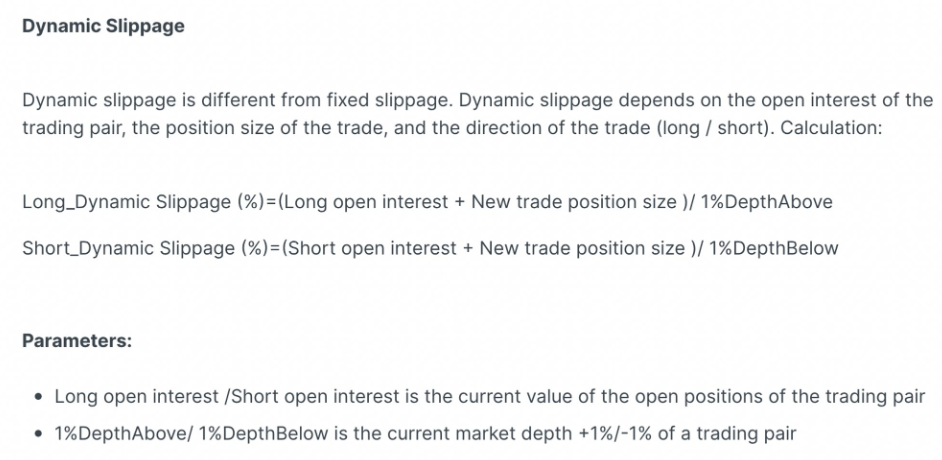
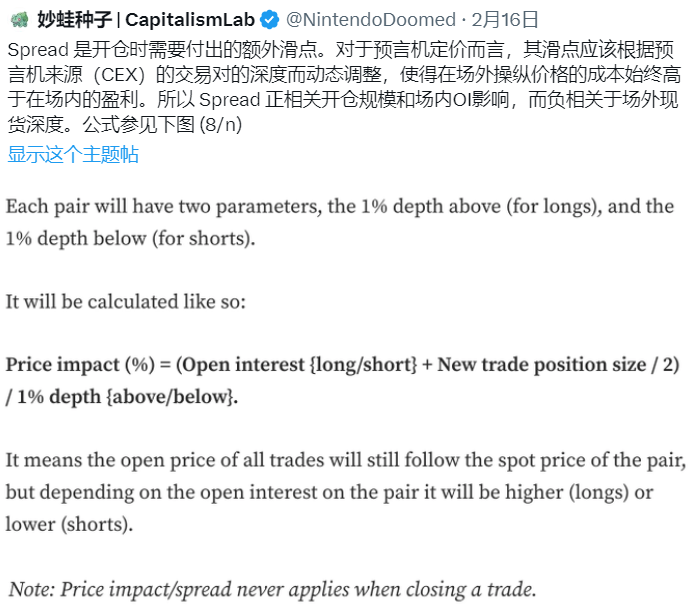
Currently, this mechanism closely mirrors GNS’s slippage design—a market-validated approach.
C. Flexible Synthetic Asset Categories
ApolloX also supports synthetic assets, directly leveraging ALP for their issuance. Since synthetic assets lack underlying collateral, risks are amplified; ApolloX mitigates this by capping the scale of such assets, thus expanding tradable options while maintaining risk control.
Given that ApolloX was originally backed by Binance Labs and integrates tightly with Binance Oracle, it can rapidly customize new asset types—unlike projects constrained by Chainlink. If it could eventually support A-share-related assets, that would be particularly interesting (though admittedly unlikely).
D. Core Trading Experience
As a veteran project, ApolloX has accumulated significant expertise in trading, which is expected to carry over into V2:
1. Essential trading functions such as modifying take-profit/stop-loss levels and adding margin;
2. A trading notification bot that alerts users via platforms like Telegram—an elementary but often missing feature among most DEXs;
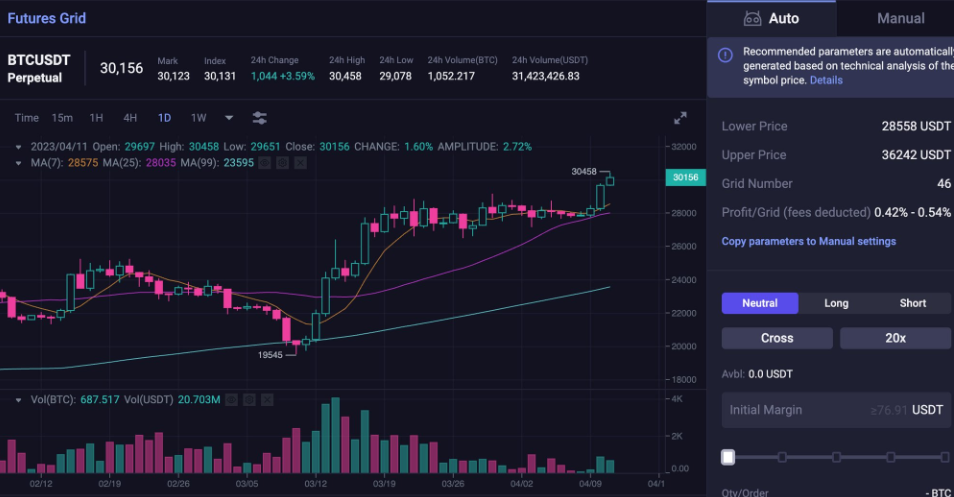
3. Features like grid orders, currently absent in competing platforms, may also be migrated to V2 at relatively low cost in the future.
These capabilities help establish meaningful differentiation.
E. External Collaborations
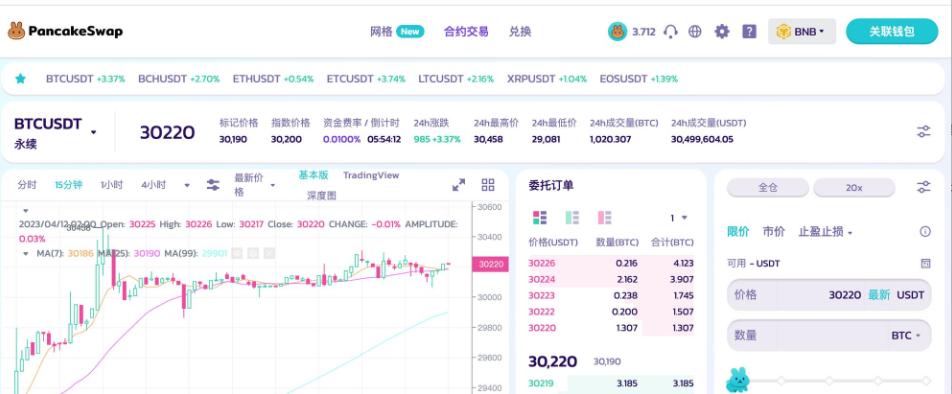
ApolloX has consistently provided technical infrastructure to third parties—for example, PancakeSwap’s futures module is powered by ApolloX. Currently, this follows a traditional web2-style partnership model: protocols like Pancake provide branding and traffic, while ApolloX delivers technical support, with both parties sharing trading fees. If this model evolves toward more decentralized, web3-native collaboration in the future, it could unlock further potential.
Product Strengths and Weaknesses
As discussed, ApolloX’s competitive advantages primarily lie in:
1. BSC-localized innovation—“better suited to BSC users’ needs”;
2. Strong business development resources, backed by Binance Labs, enabling smooth collaborations within the BSC ecosystem;
3. Solid foundational trading experience—having operated as a seasoned derivatives exchange for over a year and a half, it has built up valuable expertise.
Its disadvantages include:
1. V2 is only a subset of ApolloX’s broader offerings. Compared to dedicated GMX clones, its token utility is ambiguous, and its tokenomics cannot fully support V2;
2. Its brand-and-traffic partnership model remains largely web2, lacking deeper integration. Combined with BSC’s currently modest traffic, these partnerships yield limited benefits.
If ApolloX can explore deeper forms of collaboration and introduce dedicated tokenomics that protect the interests of APX and CAKE holders, it may find a significant breakthrough opportunity.
Significance for the BSC Ecosystem
The BSC ecosystem often gives off a “short-term” vibe, with most teams operating in a hit-and-run manner. In contrast, ApolloX’s team choosing to evolve an established project into something new brings a refreshing sense of “long-term” commitment.
Moreover, expanding reach through broad partnerships is no small feat. While the current efforts haven’t fully activated growth, they have at least secured strategic positioning—offering room for iterative improvement over time.
In short, shifting the ecosystem culture from “short-term” and “isolated” to “long-term” and “collaborative” won’t happen overnight—but early signs of this transition are emerging. Gud!
Conclusion
ApolloX V2 is an innovative derivatives exchange built upon integrating advanced protocol designs, yet uniquely tailored to BSC’s environment.
Rumors suggest ApolloX plans to launch liquidity mining on V2 in the coming weeks—potentially offering attractive farming opportunities.
Appendix: ApolloX V1 data (V1 operates essentially as a CEX like dYdX, so its data is not on-chain)
Join TechFlow official community to stay tuned
Telegram:https://t.me/TechFlowDaily
X (Twitter):https://x.com/TechFlowPost
X (Twitter) EN:https://x.com/BlockFlow_News
 CapitalismLab






